Kravice Falls in summer — what to actually expect
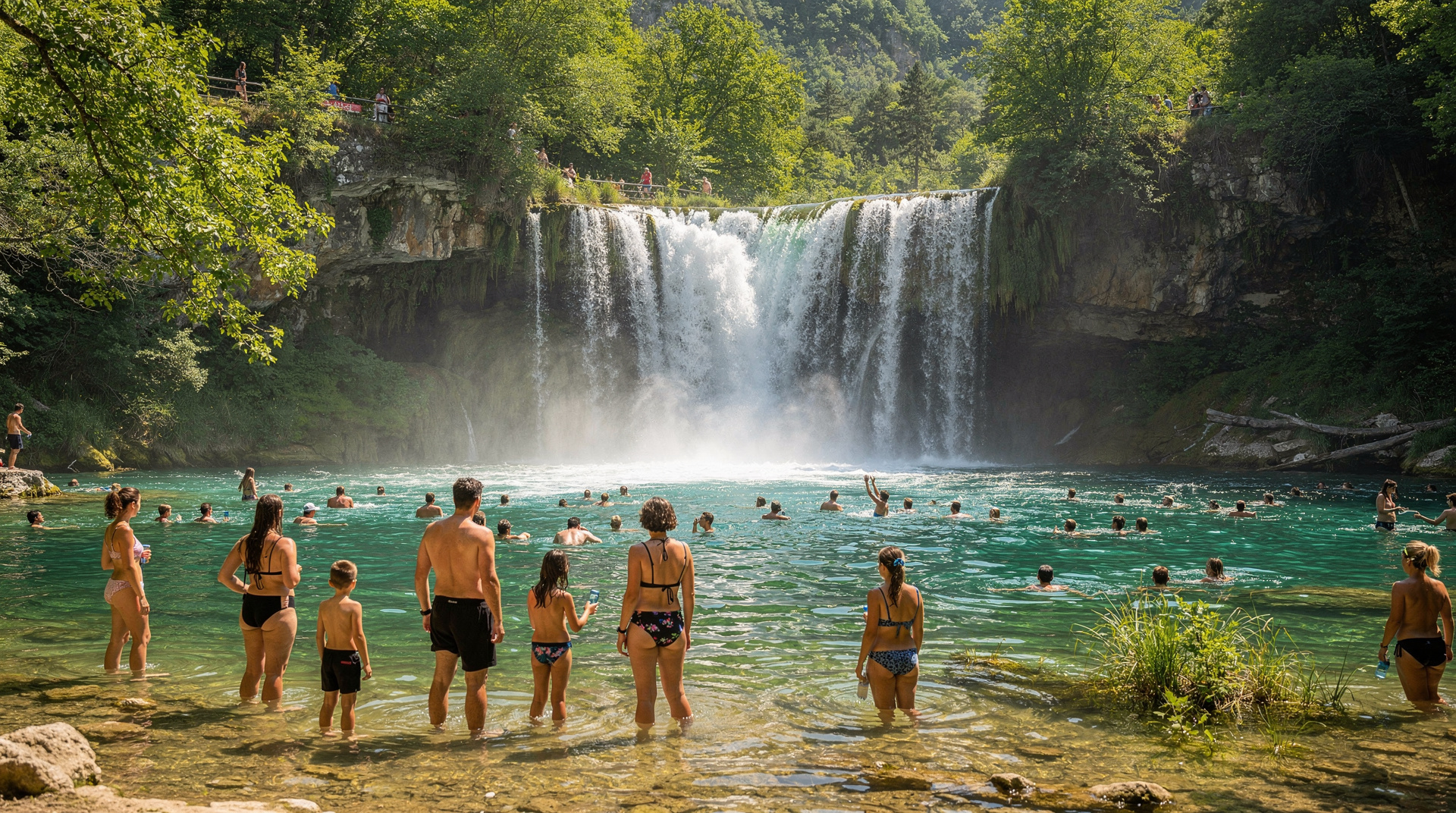
I am going to be direct: Kravice Falls on a Saturday in late July is one of the most crowded places in Bosnia. The car park fills up. The natural beach below the falls is shoulder-to-shoulder. The smell of sunscreen competes with the mist.
| At a glance | |
|---|---|
| Where | Trebišat River, near Studenci, roughly 40km south of Mostar |
| Cost | Adult entry 20 BAM, paid at the site |
| Time needed | Half a day, more if pairing with Blagaj/Počitelj |
| Getting there | Self-drive (about 45 min from Mostar) or an organised half-day tour |
| Best time | Early morning in summer, or late September–October to avoid crowds |
And it is still magnificent.
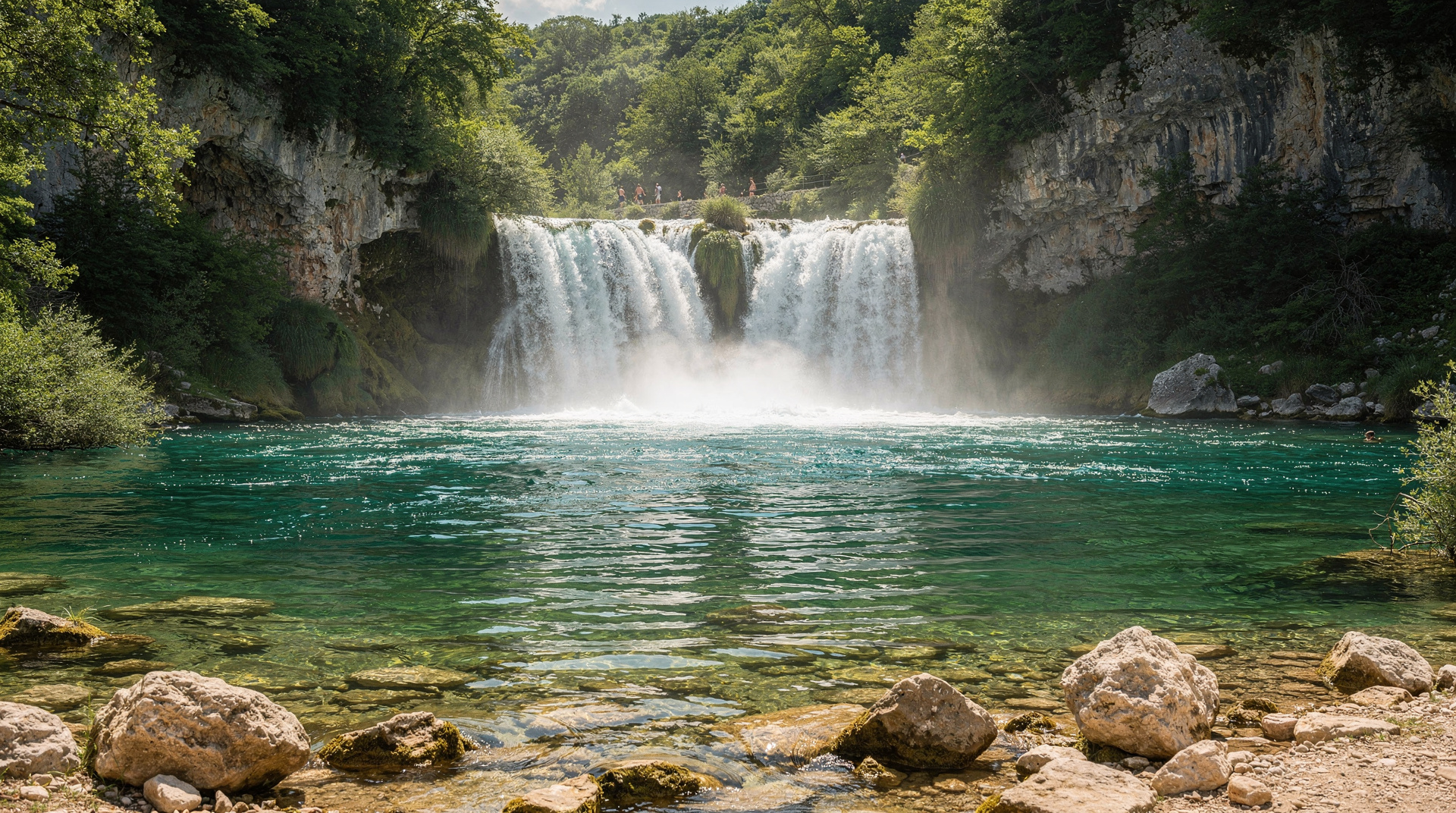
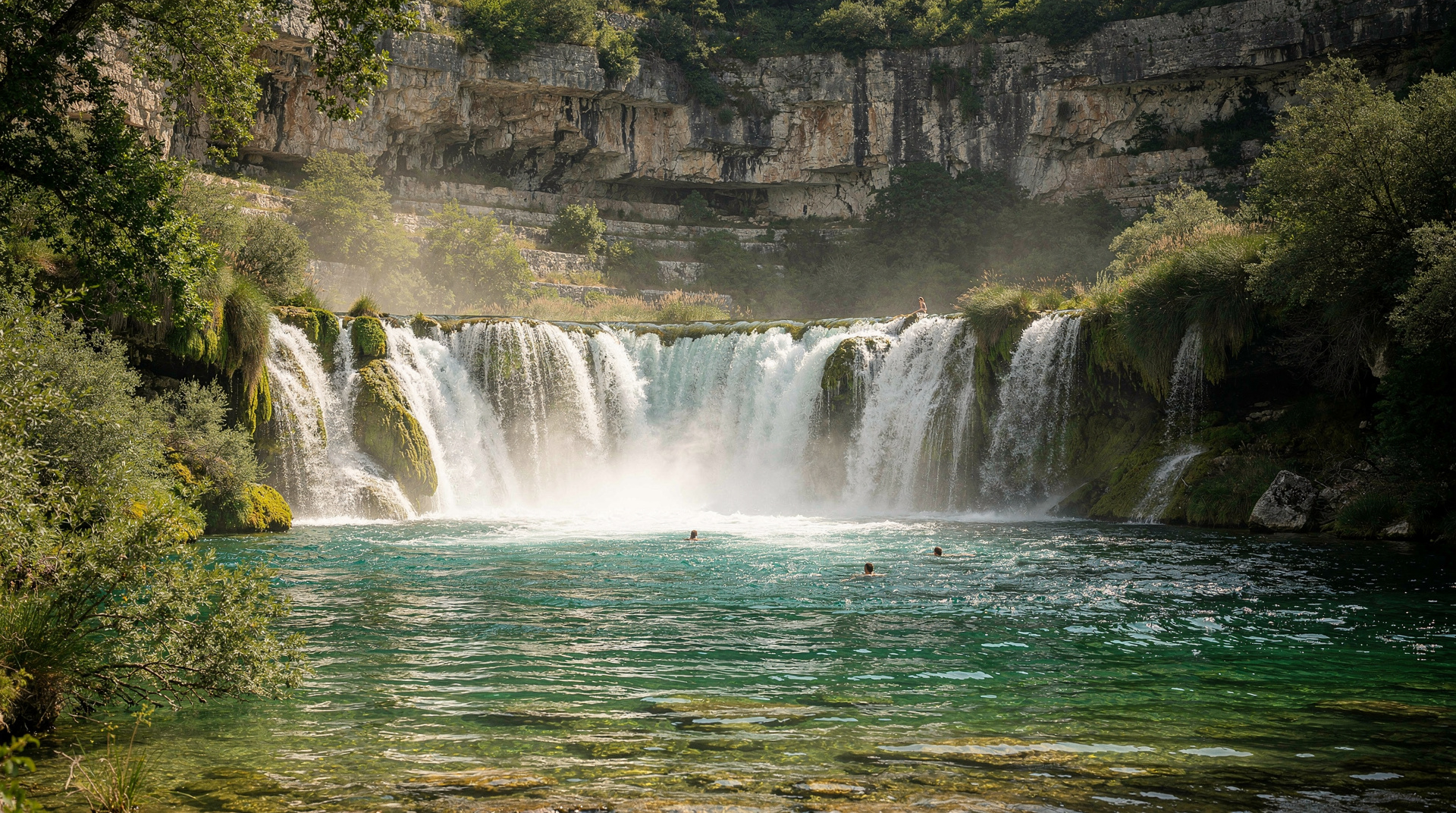
This is the tension of visiting one of Herzegovina’s most photographed spots in peak season. The horseshoe of tufa waterfalls — roughly 120 metres across, the tallest curtain about 26 metres — is genuinely stunning regardless of company. But summer has real implications for how you experience it, and the honest thing is to explain those before you go.
What Kravice is
Kravice Falls (sometimes spelled Kravica, from the Croat) is a natural amphitheatre on the Trebišat River, roughly 40 kilometres south of Mostar, near the village of Studenci. The falls are formed by travertine rock — calcium carbonate deposits that build up over centuries into a series of ridges and curtains. Below the main drop, a wide shallow pool extends into a natural river beach.
Unlike most major European waterfalls, you can swim directly in the pool below Kravice. This is much of its appeal — and most of the reason it is so busy in summer.
The Trebišat runs through one of Herzegovina’s most productive agricultural regions. The water here is genuinely warm in July and August — 18 to 22 degrees Celsius — which makes swimming comfortable rather than merely bracing.
The summer reality
Peak season (July–August) brings several thousand visitors per day on the busiest days. The car park is roughly two kilometres from the falls; a path runs through fields and light forest to the viewpoint and then down to the beach. Entry is paid — a few BAM per person.
By 11am on most summer days, the beach below the falls is full. The water itself is still swimmable and still beautiful, but the experience of sitting quietly watching the falls alone has evaporated.
The solution is timing. The falls open early — arriving before 9am on a July day puts you there before the first coaches from Mostar and Dubrovnik arrive. The light in the morning is also better for photography: the sun hits the falls frontally in mid-morning, backlighting the mist.
Getting there
Most visitors arrive on organised tours from Mostar, Dubrovnik, or Split — the Mostar to Kravice half-day tour is one of the most-booked short excursions in Herzegovina. A guided half-day trip from Mostar handles the logistics and usually includes Blagaj or Počitelj as a pairing.
By car from Mostar, the drive is about 45 minutes via the Čapljina road. Parking fills up; if you arrive and it’s full, there’s usually overflow parking along the road with a short walk.
From Dubrovnik, it’s a longer drive (around 90 minutes each way) but very doable as part of a day that includes Mostar. If you would rather not handle the border and the driving yourself, a semi-private day trip from Dubrovnik to Mostar and the falls keeps the logistics in someone else’s hands, and the Mostar from Dubrovnik guide explains what the day looks like.
What to bring
- Swimwear and a towel; there are no rental facilities
- Water shoes or sandals — the rocks can be slippery and sharp
- Cash for entry and the small food stalls at the top
- Sunscreen and shade — the beach has minimal shade in peak afternoon hours
- More water than you think you’ll need if you’re arriving early and staying through midday
Swimming with kids and less-confident swimmers
The main pool is shallow near the beach and deepens gradually toward the falls, which makes it genuinely family-friendly compared to most of Bosnia’s rivers. There’s no lifeguard, so keep an eye on children near the deeper sections close to the falls themselves. If you’re planning a broader family trip, the Bosnia with kids guide covers other easy, low-effort stops.
By car, self-driving gives you the flexibility to leave before the tour buses if you’re staying nearby; the driving in Bosnia guide covers road conditions and rules if you haven’t driven in the country before.
Pairing it with Blagaj and Počitelj
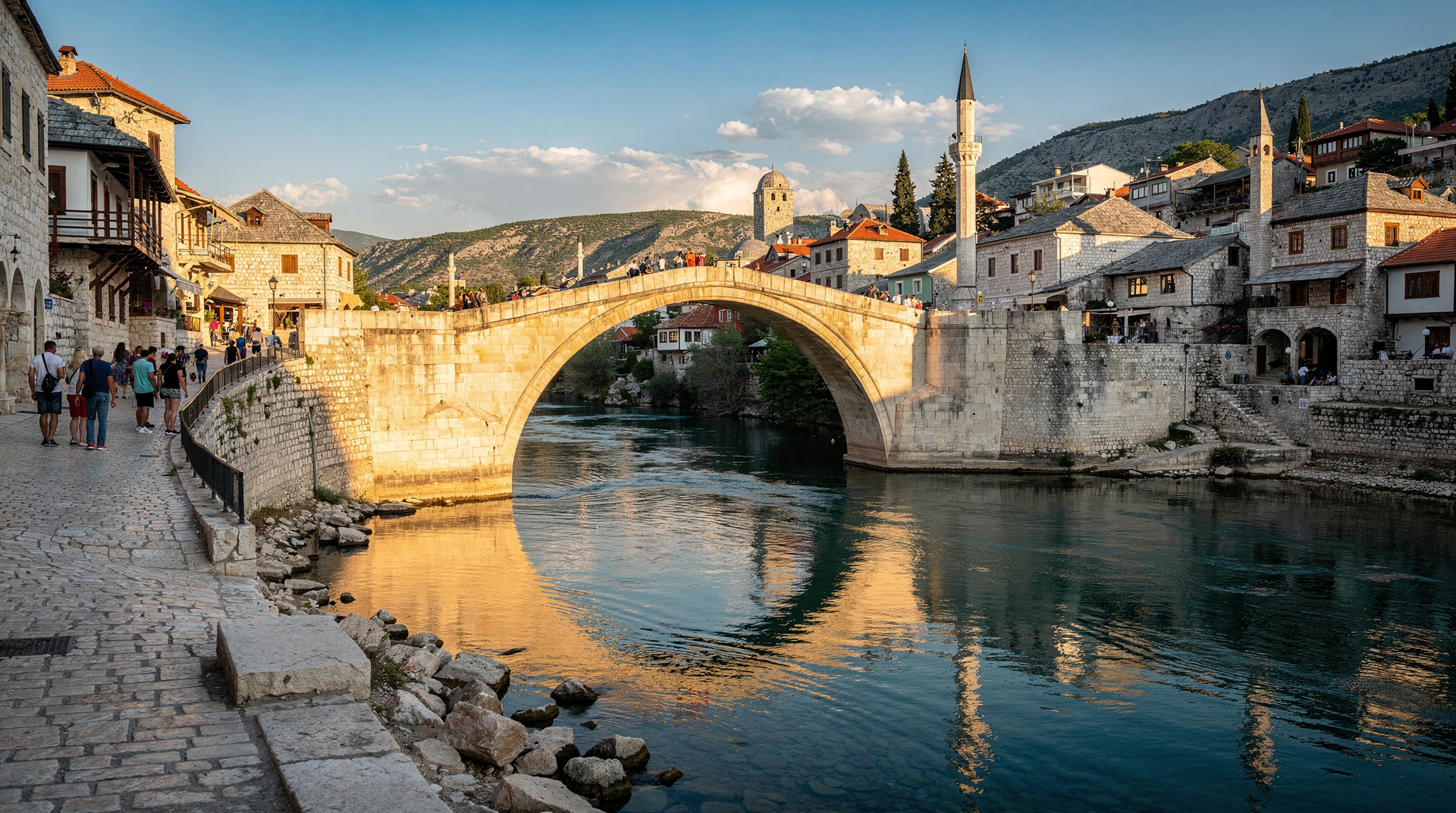
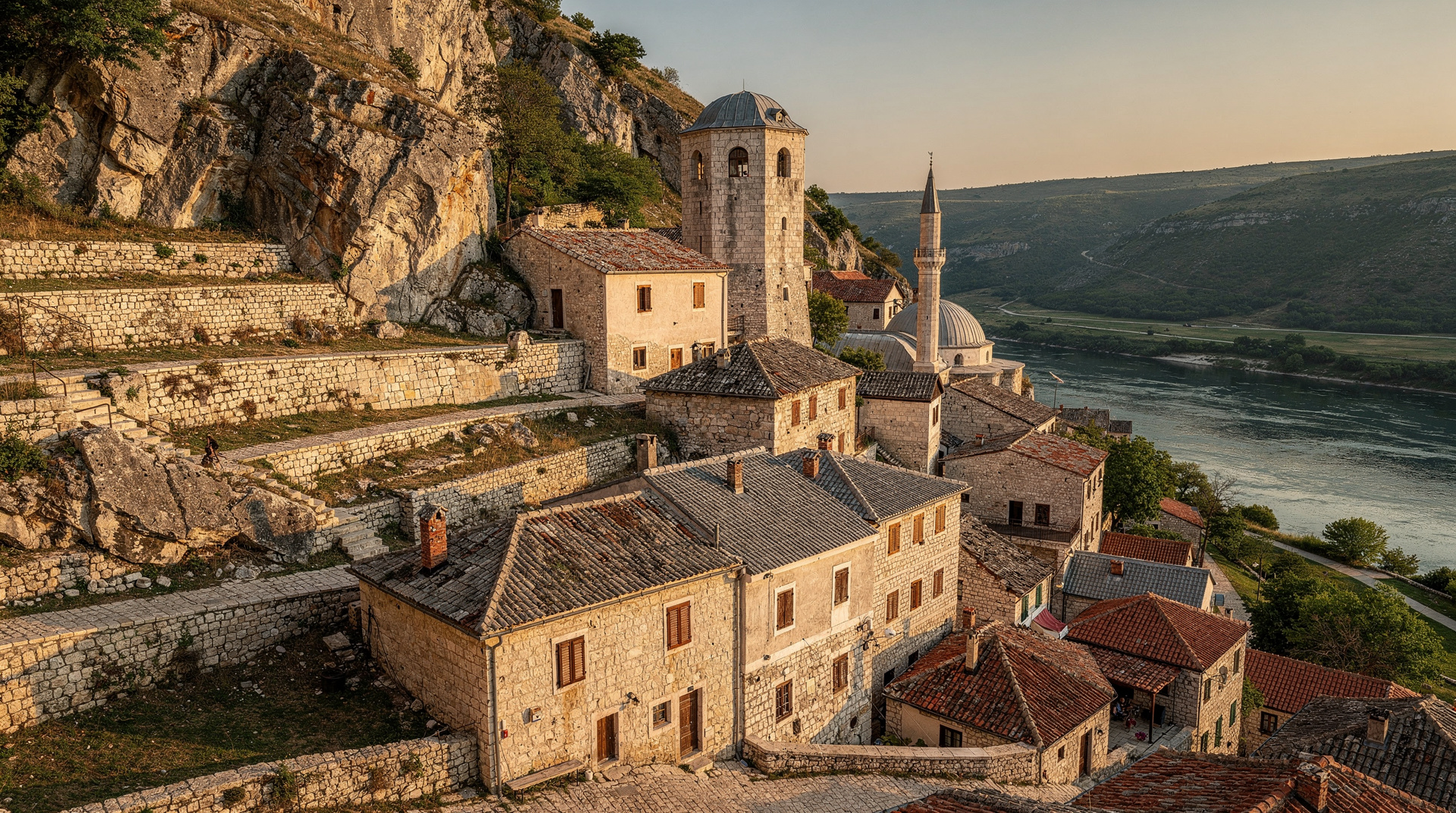
The standard Herzegovina day trip from Mostar pairs Kravice with Blagaj and Počitelj, and this itinerary makes a lot of sense. The three sites are all within roughly 50 kilometres of Mostar.
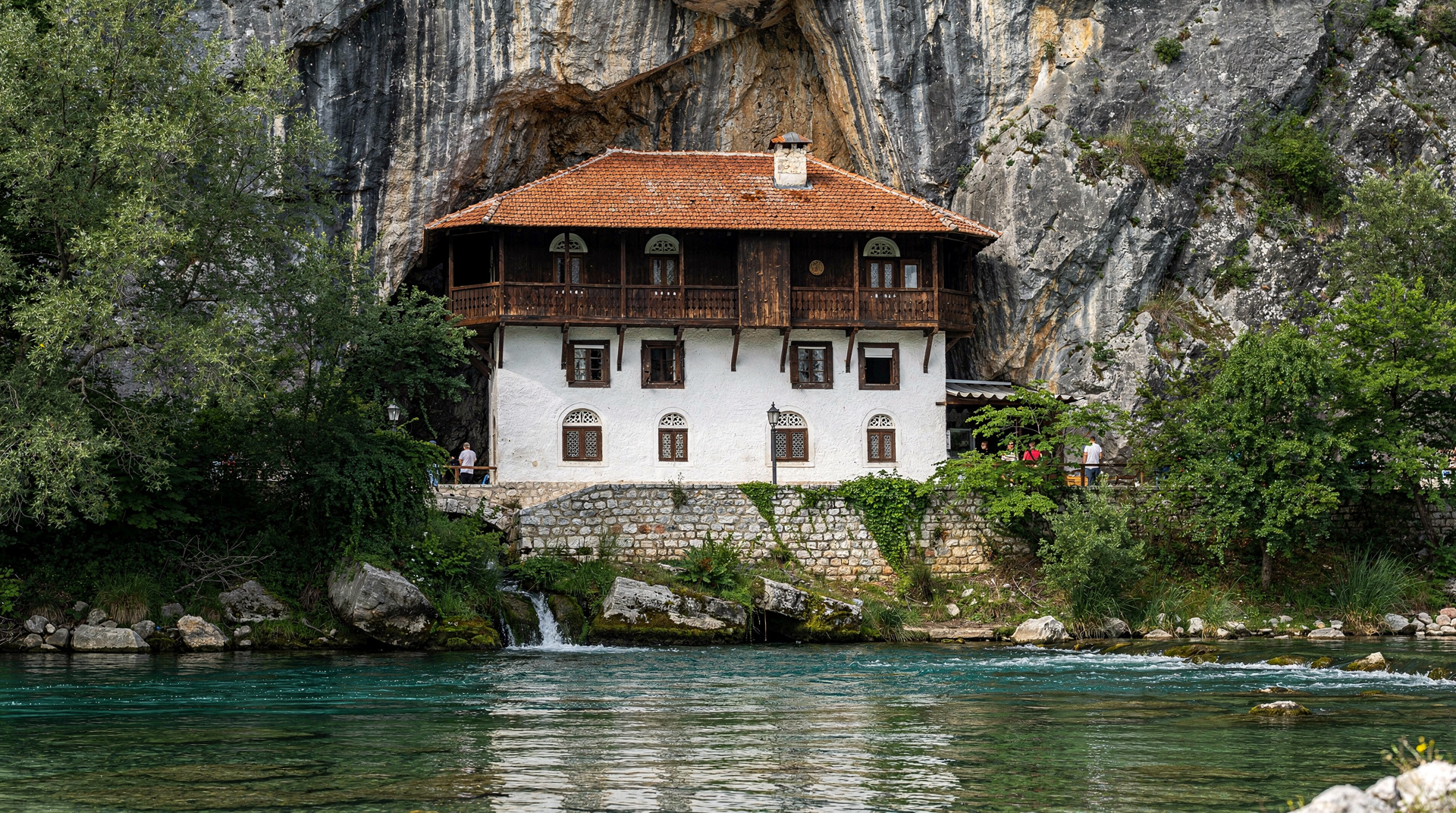
A logical summer sequence: leave Mostar early, hit Kravice first at 8–9am before the crowds arrive, then move to Blagaj (the Tekija dervish monastery — a genuinely cool, literally and figuratively, place to sit during midday heat), then Počitelj in the late afternoon when the light on the stone is golden.
The Herzegovina day trip guide covers this route in detail.
If you prefer not to plan the sequence yourself, a full-day tour from Mostar covering the falls, Blagaj and Počitelj follows this same logic. Whichever way you go, ask about the order of stops when you book, since an early start at the falls is what makes a summer visit pleasant.
Autumn and spring visits
If you have flexibility, late September and October are arguably the best times for Kravice. The water level is higher than in summer (the Trebišat drops significantly in August), the crowds are minimal, and the autumn colours on the surrounding hills add to the setting.
Spring (April–early June) is also excellent: high water, lush green, almost no tourists except organised group tours.
The Bosnia in summer guide has broader seasonal context if you’re still deciding when to go.
The honest bottom line
In summer, plan to arrive early or accept the crowds. The falls are worth it either way — genuinely one of the most beautiful natural sites in the Balkans. But the difference between arriving at 8am and arriving at noon is the difference between a memorable experience and a busy beach day with excellent scenery.
Frequently asked questions about Kravice Falls in summer — what to actually expect
Is Kravice Falls worth visiting in peak summer despite the crowds? Yes, especially if you arrive before 9am — the falls themselves don’t lose their appeal, only the quiet does. Later arrivals should expect a busy beach-day atmosphere rather than a tranquil nature stop.
Can you swim at Kravice Falls? Yes — it’s one of the few major Balkan waterfalls where swimming in the pool below is standard and encouraged, unlike more fragile sites such as those in Una National Park.
Top experiences
Bookable activities with verified prices and instant confirmation on GetYourGuide.