Jajce
Discover Jajce, where a waterfall drops through the town centre, a medieval fortress dominates the skyline, and the Pliva lakes await nearby.
Sarajevo: Jajce Waterfall, Travnik & Pliva Lake Tour
Quick facts
- Region
- Central Bosnia Canton
- Distance from Sarajevo
- 150 km north (2.5 h)
- Distance from Travnik
- 25 km northwest (30 min)
- Currency
- BAM (1 EUR = 1.95583 KM)
| At a glance | |
|---|---|
| Where | Central Bosnia, 150 km / around 2.5-3 hours north of Sarajevo |
| Cost | Fortress around 3 BAM, mill area around 2 BAM; a full lunch runs 15-25 BAM |
| Time needed | A full day trip, or one night if pairing with Travnik and the Pliva lakes |
| Getting there | Self-drive, intercity bus (3-3.5h) or a guided day tour from Sarajevo |
| Best time | May-October; waterfall is fullest in spring after snowmelt |
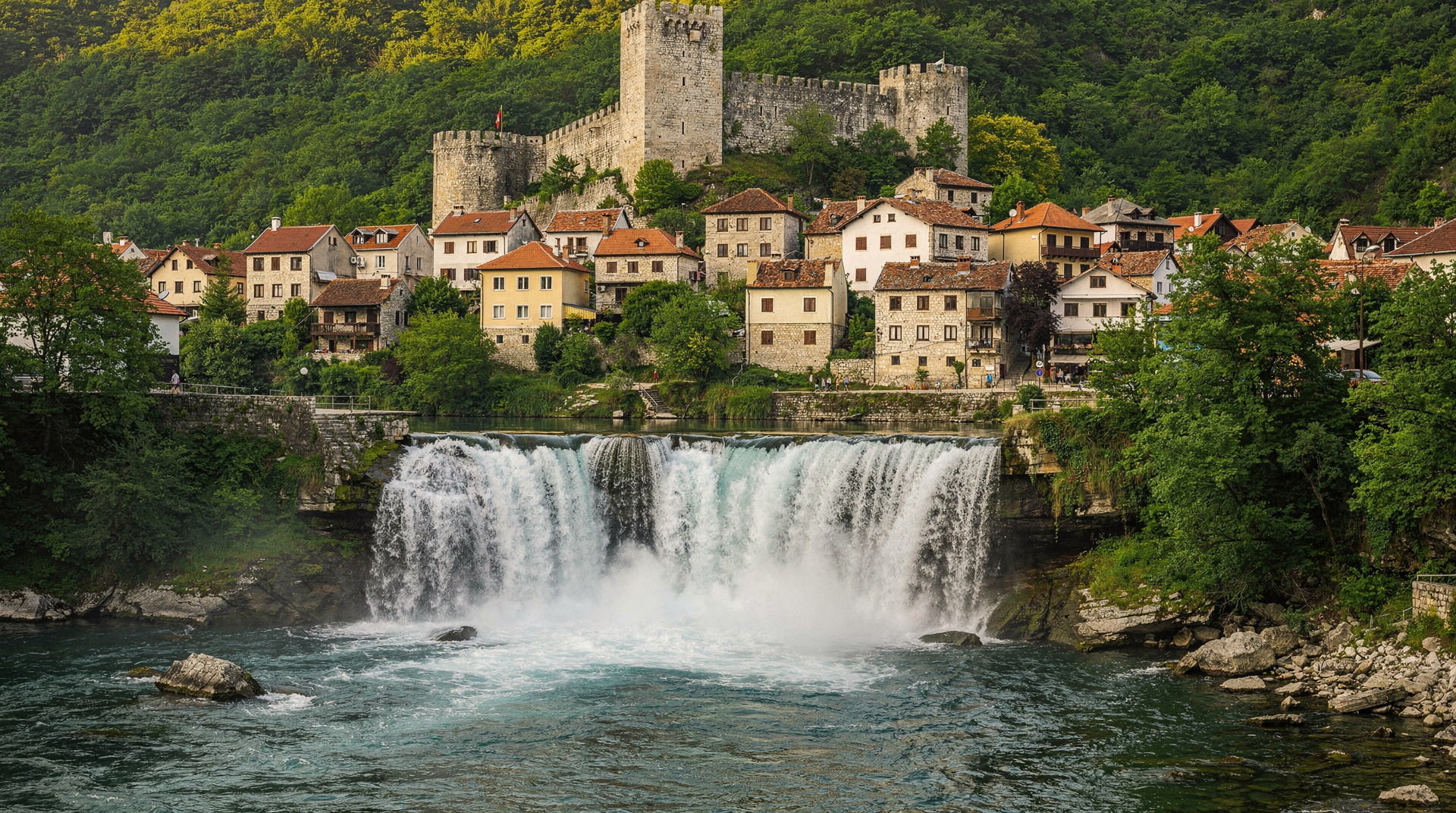
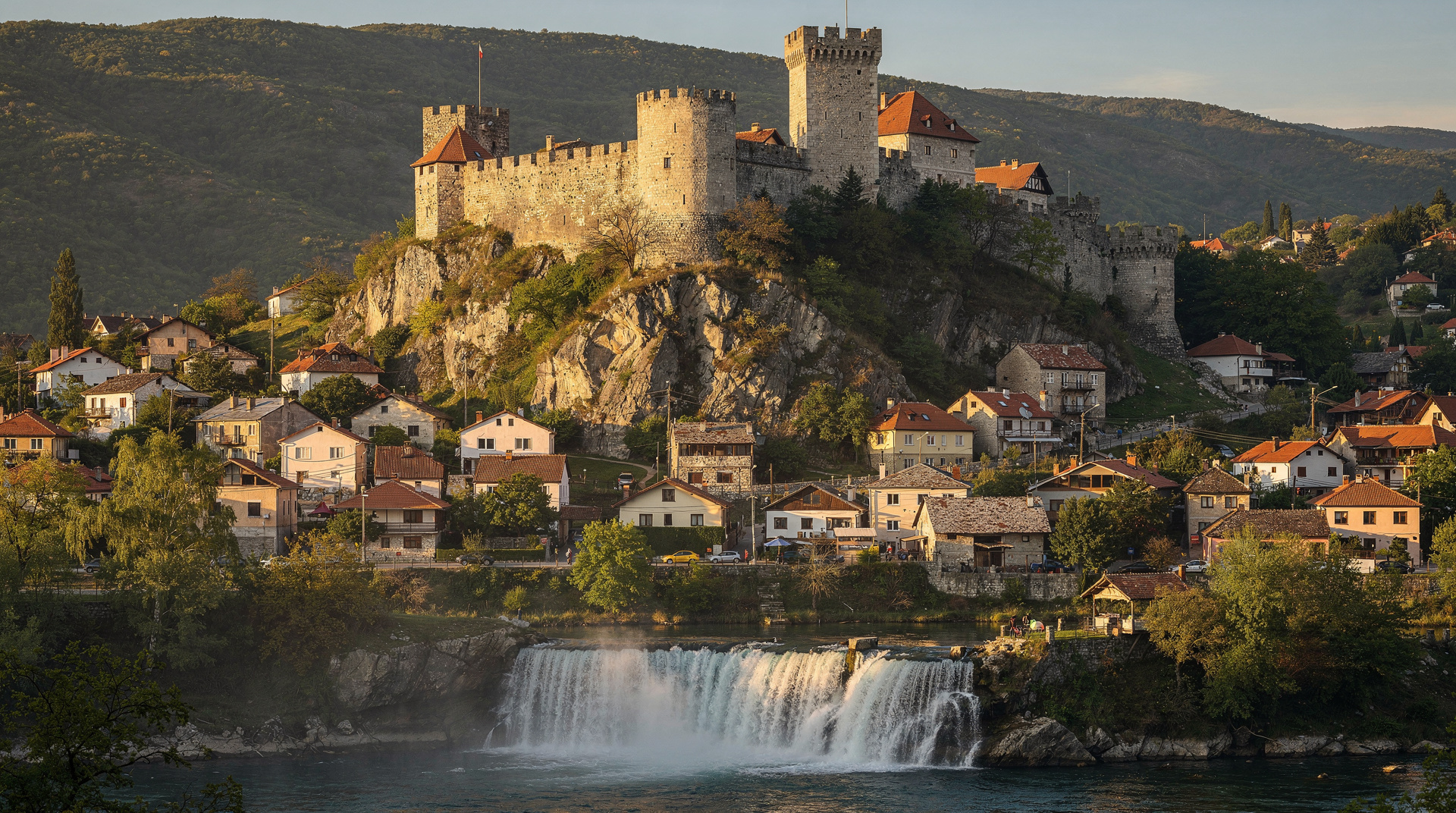
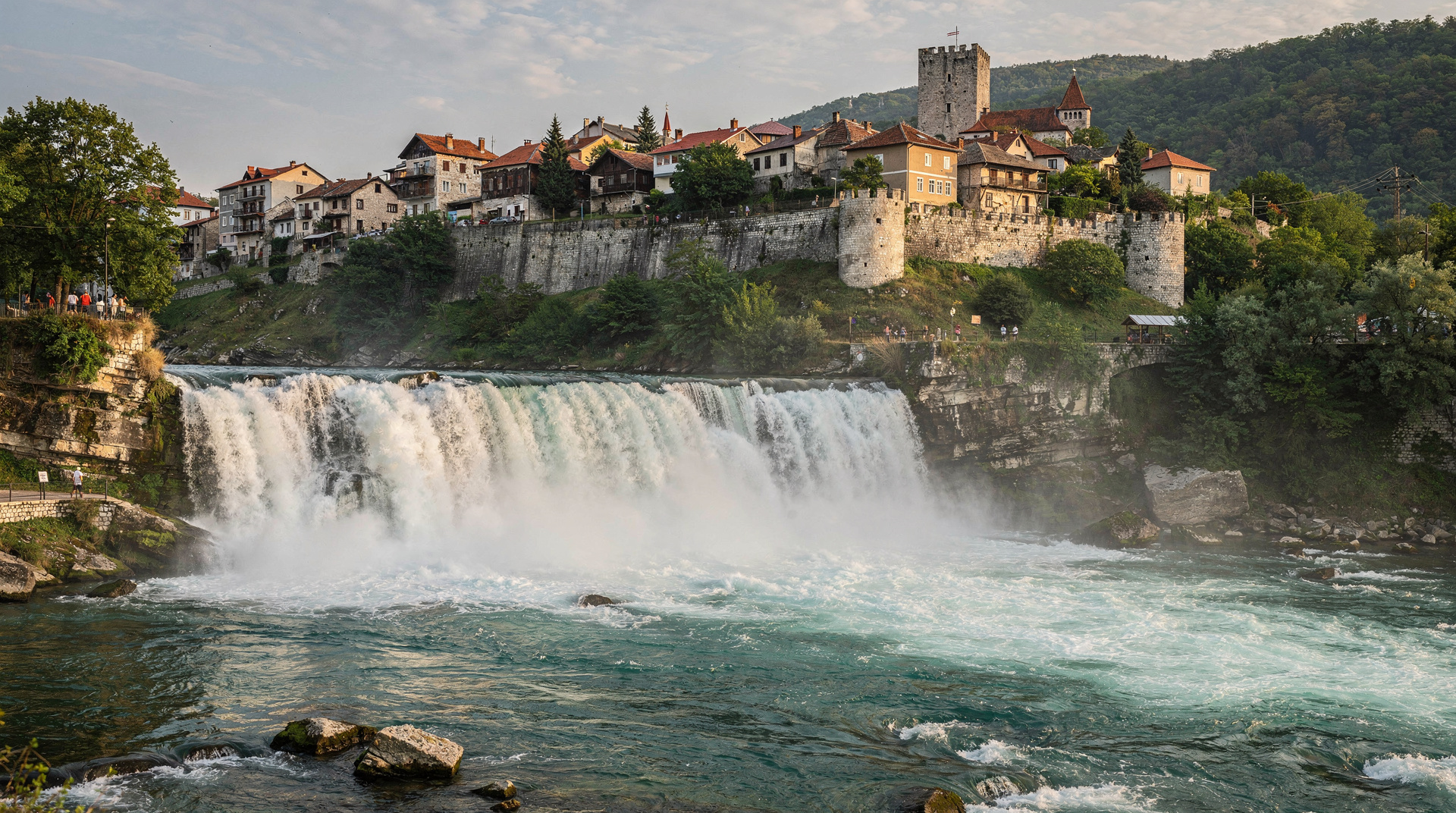
Few towns in Bosnia make an immediate visual impact the way Jajce does. The Pliva river drops 21 metres over a travertine ledge right at the edge of the old town — a waterfall that exists within city limits, audible from the streets above and visible from the fortress walls. Add a medieval fortification, catacombs, a set of 15th-century churches, and two lakes surrounded by Jurassic-looking wooden watermills just two kilometres away, and you have one of central Bosnia’s most rewarding day destinations.
Getting to Jajce from Sarajevo
The drive from Sarajevo takes 2.5 to 3 hours on the M5 and M16 roads via Zenica and Donji Vakuf. The route is not motorway throughout — there are sections of winding mountain road past Donji Vakuf where overtaking is difficult and lorries are slow. Allow extra time in summer when construction diversions are common.
Buses from Sarajevo to Jajce run several times daily from the main bus station; the journey takes 3-3.5 hours and costs 15-20 BAM (8-10 EUR) each way. The bus drops you in the lower town, from which it is a 10-minute walk up to the waterfall viewpoint and the old town entrance.
A guided day trip combining Jajce, Travnik and the Pliva watermills from Sarajevo is the most efficient way to see all three without worrying about bus schedules or parking. Most tours depart at 07:30-08:00 and return by 19:00-20:00.
The Pliva waterfall
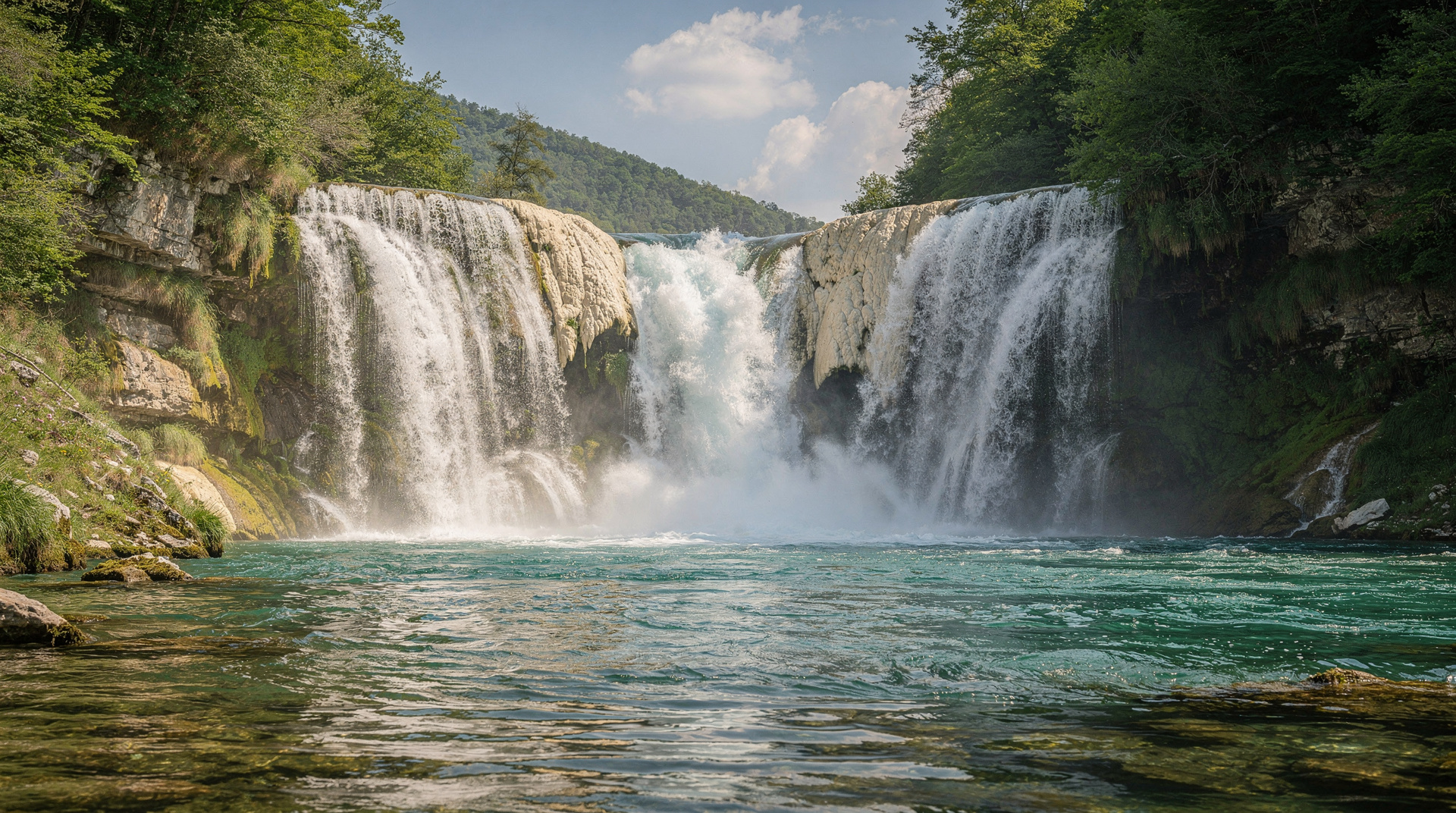
The waterfall (Slap Plive) is the town’s centrepiece. At its best after rainfall and snow-melt in spring, when the volume of water is greatest and the curtain of white foam against the old stone buildings creates the images you have seen on every tourism poster for central Bosnia. In late summer the flow can reduce significantly, but the drop and the setting remain impressive. There is a walkway and viewpoint platform on the south bank; admission is free. The view is best from the lower platform, closest to the base of the falls, in morning light.
Jajce fortress and the old town
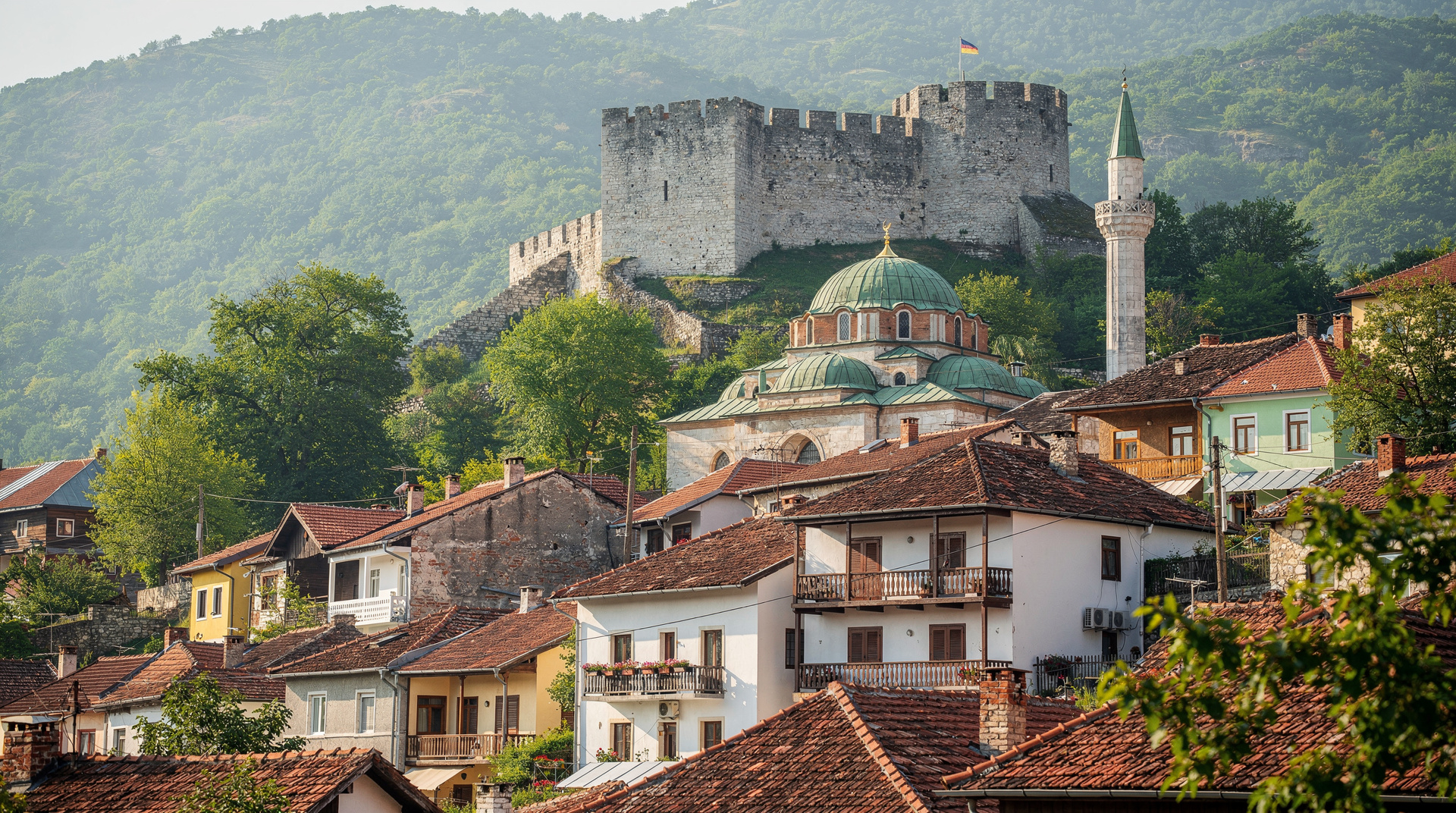
The fortress above the town was the seat of the last kings of Bosnia before the Ottoman conquest of 1463 — the same political centre that also governed from Visoko and Bobovac. The walls are substantially intact and the views from the battlements over the confluence of the Pliva and Vrbas rivers, the waterfall and the Pliva lakes are worth the steep 15-minute climb from the old town gate. Entry to the fortress: 3 BAM (1.50 EUR).
Inside the old town, look for the catacombs beneath the church of St Luke — an unusual 15th-century underground structure, and one of the few examples of pre-Ottoman Christian architecture still standing in Bosnia. The church tower above is one of the oldest in the country. Our Jajce fortress guide covers the full historical depth.
The Pliva lakes and watermills
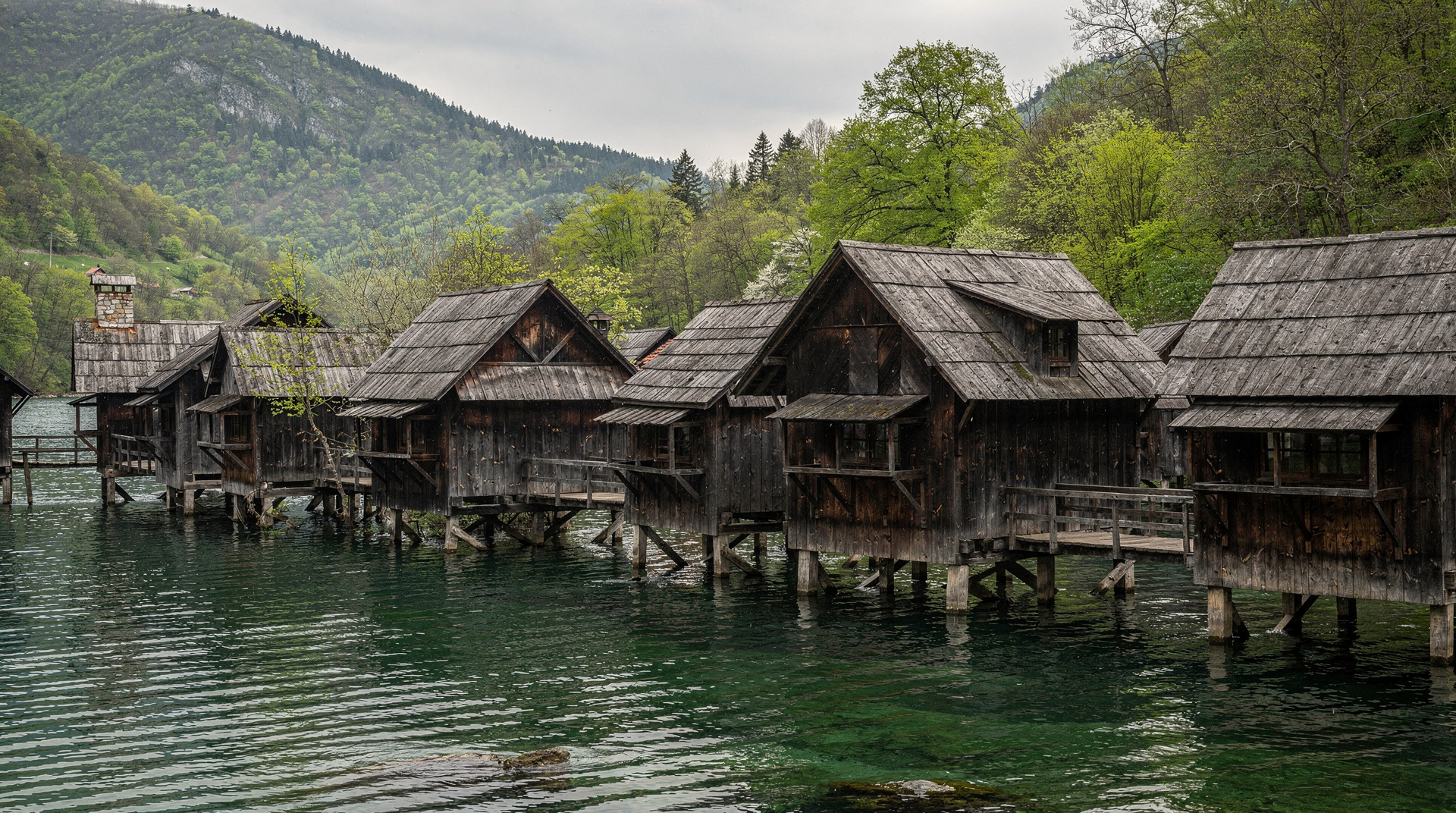
Two kilometres from the town centre on the road toward Banja Luka, the Veliko Plivsko Jezero (Large Pliva Lake) and Malo Plivsko Jezero (Small Pliva Lake) stretch through a valley of limestone cliffs and dense forest. The lakes are used for swimming in summer — the water is clear and relatively warm by July — and the Small Lake has a set of wooden watermills clustered at its outflow that are among the most photographed subjects in central Bosnia.
The mills, some dating to the 17th century, are still technically operational during the summer tourist season; a few grind grain on request for visitors. They are built on a narrow tongue of land between the lake and the river, and their wooden structures over the rushing water make for extraordinary photographs at golden hour. Entry to the mill area: 2 BAM.
A separate Jajce day trip including Štrbački Buk waterfall on the Una river — about 100 km further northwest — extends the day for those who want to combine central Bosnia’s water landscapes with the Bosanska Krajina region. This is a long day (300 km round trip from Sarajevo) but feasible.
Travnik as a natural pairing
Jajce and Travnik are only 25 kilometres apart and combine naturally as a single day’s itinerary from Sarajevo. Most visitors do Travnik first (stopping for coffee and a look at the fortress) then continue to Jajce for the waterfall and lunch before the return drive. Our Pliva lakes guide has more detail on the mills and lake circuit.
Where to eat in Jajce
The old town has several restaurants serving traditional central Bosnian food. The house speciality is tava (oven-baked meat with vegetables, usually lamb or veal), which costs 10-15 BAM per portion. Cold trout from the Pliva river appears on menus from May onwards at 12-18 BAM. The best-regarded spot for river fish is by the lower waterfall viewing area; expect to pay 25-35 BAM for a full fish lunch with salad and bread.
Where to stay
Jajce has a handful of small guesthouses in and around the old town charging 50-80 BAM (25-40 EUR) per double room, including breakfast. The town is quietest on weekday evenings; weekend summer nights see groups from Sarajevo and the Bosnian diaspora from abroad. Most visitors do Jajce as a day trip from Sarajevo.
Jajce packs an improbable amount of genuine spectacle — a functioning medieval town plan, a living waterfall, ancient mills and two lakes — into a single manageable visit. It is the central Bosnia highlight that the main tourist trail too often bypasses in favour of the Sarajevo-Mostar corridor.
A royal and revolutionary history
Jajce’s fortress was the last seat of the medieval Kingdom of Bosnia before the Ottoman conquest of 1463, and its significance did not end there: in 1943, the town hosted the second session of AVNOJ, the assembly that laid the foundations of socialist Yugoslavia, making Jajce a pivotal site in two very different chapters of Bosnian history separated by five centuries. That double layer — royal capital and revolutionary meeting point — is part of what makes the old town’s narrow streets feel weightier than their small size suggests. Read more in our Jajce, the royal town blog post for a first-person account of walking those layers.
Seasonal guide to visiting Jajce
| Season | Waterfall | Lakes & mills | Crowds |
|---|---|---|---|
| Spring (April-May) | Fullest flow, most dramatic | Cold for swimming, lush green | Light |
| Summer (June-August) | Reduced flow but still impressive | Warm enough to swim by July | Busiest, especially weekends |
| Autumn (Sept-Oct) | Moderate flow, good light | Cooling water, forest colour | Quiet |
| Winter (Nov-March) | Reduced flow, occasional ice | Mills mostly dormant | Very quiet, some closures |
For a broader seasonal picture across the whole country, see the best time to visit Bosnia guide or, if you’re coming specifically in spring, the Bosnia in spring guide.
How to spend a day in Jajce
A good day here follows the water. Start at the waterfall while the light is soft and the viewpoints are quiet, then walk up through the old town gate toward the fortress before the heat builds. The streets between the two are narrow and sloping, so comfortable shoes matter more than any equipment. Once you have the view from the battlements, drop back down into the old town for the church of St Luke and its catacombs, and leave the afternoon for the lakes and mills, where the pace slows and the photography is at its best as the light lowers.
If you only have a few hours, prioritise the waterfall and the fortress, which sit almost on top of each other, and treat the lakes as the part to cut. If you have a full day, the lakes deserve unhurried time: sit by the water, watch the mills, and let lunch run long. Our Jajce fortress guide and the Pliva waterfall guide help you decide how much time each stop deserves.
Why Jajce works for photographers
Few places in the country offer so many distinct subjects within walking distance. The town waterfall tumbles beside old stone houses, the fortress walls frame the confluence of two rivers, and the wooden mills sit over fast water with forest behind them. Morning is kind to the falls, while late afternoon suits the mills. Bring a lens that handles both wide views and close detail, and be patient on weekends in summer, when the best viewpoints fill with other visitors. Spring brings the greenest backdrop, autumn the warmest colour, and winter the emptiest streets.
Jajce in a wider Bosnian route
Jajce rarely sits alone on a plan. It slots naturally into a loop through central and western Bosnia, and it makes a gentle counterweight to the busier southern trail. If you are building a longer trip, the Bosnia 7-day itinerary shows where a central Bosnia stop can fit, and the western Bosnia and Krajina itinerary continues the water theme toward the north-west. Travellers heading on to Banja Luka will find that Jajce makes a natural halfway pause, and those drawn to rivers and canyons can follow up with the Una National Park or the lakes at Pliva.
For readers still deciding how much of the country to cover, the Bosnia travel guide gives the overview, and the guide to getting around Bosnia explains how buses, cars and tours compare once you leave the main cities.
Practical tips before you go
Carry some cash in convertible marks, since small cafés, entry points and family-run guesthouses often prefer it to cards. Start earlier than you think you need to, because the drive is slower than the map suggests and the best light is in the morning. If you are renting a car, read our driving in Bosnia guide before setting out, and keep to marked paths and established viewpoints when you wander around the lakes and hillsides. Respect the working character of the place too: the mills and cafés are real local businesses as much as attractions, and a coffee or a meal there is the simplest way to say thank you.
Weather can change quickly in the hills, so pack a light layer even on warm days, and check conditions if you are visiting outside the main season, when some services run on reduced schedules. If rain is forecast, do not write the day off: the waterfall is often at its most dramatic then, and the old town’s churches and catacombs offer shelter between showers.
Who will enjoy Jajce most
History readers get the most from the town, because the royal and Yugoslav layers are both visible on a short walk. Families find the lakes and the open spaces easy, though the steep fortress approach calls for some care with small children. Couples and solo travellers tend to remember the evening, when the day groups leave and the old town goes quiet. Anyone chasing a calm alternative to the larger tourist centres will find that Jajce gives them real atmosphere without the pressure, which is why so many visitors leave wishing they had stayed the night.
Frequently asked questions about Jajce
Is Jajce doable as a day trip from Sarajevo? Yes, though it makes for a long day — expect 5-6 hours of driving round-trip on top of sightseeing time. Many travellers prefer to pair it with an overnight stay or combine it with Travnik using the Jajce-Travnik day trip guide.
Is the Jajce waterfall free to see? Yes — the viewing platforms along the south bank are open and free to access; only the fortress and the mill area at the Pliva lakes charge a small entrance fee.
Top experiences
Bookable activities with verified prices and instant confirmation on GetYourGuide.