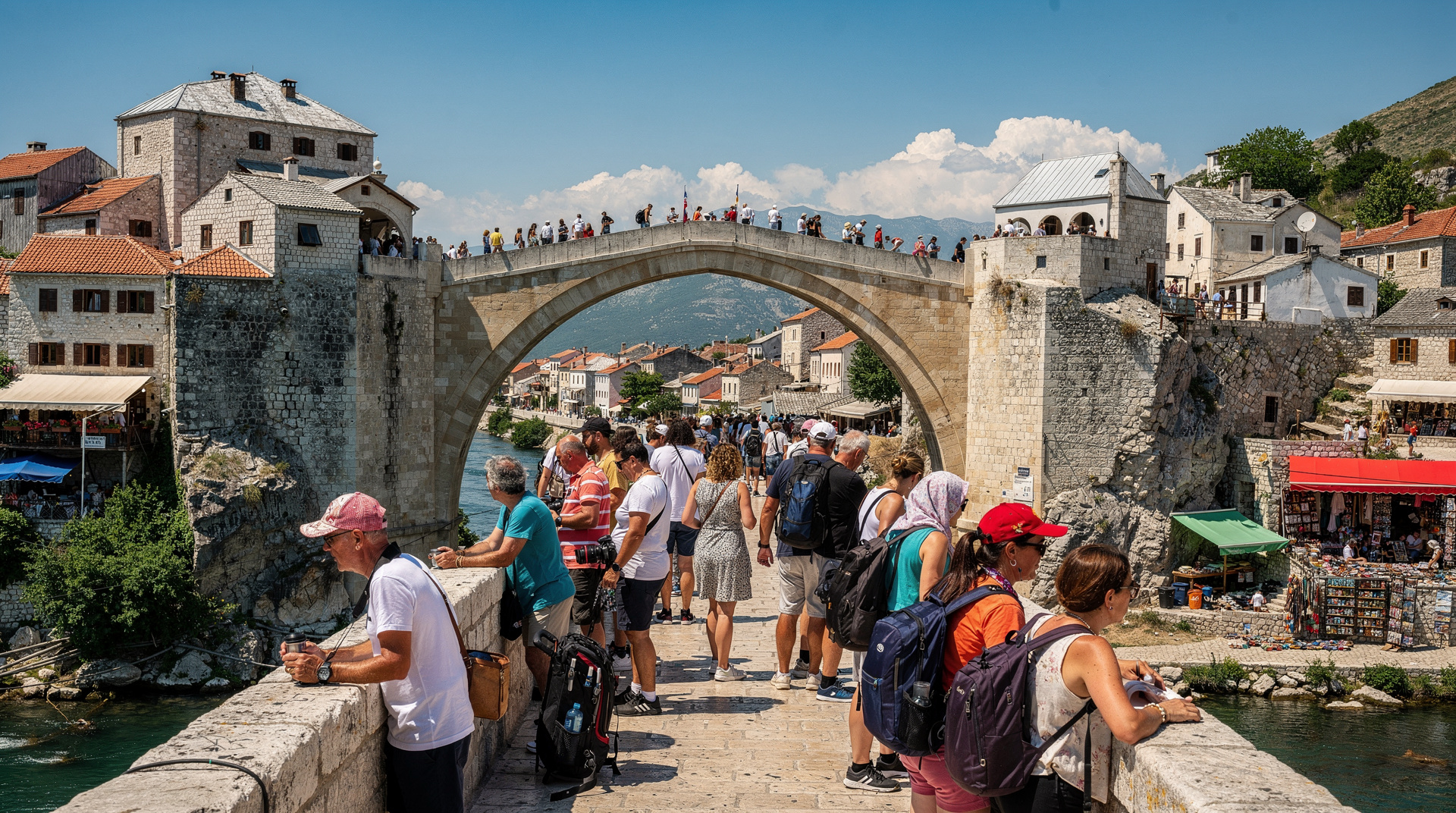
Mostar
Your complete guide to Mostar: Stari Most bridge, the old town bazaar, bridge divers, and day trips from Dubrovnik, Split and Sarajevo.
Mostar: Private Walking Tour with Local Guide
Quick facts
- Region
- Herzegovina-Neretva Canton
- Days needed
- 1-2
- Currency
- BAM (1 EUR = 1.95583 KM)
- Distance from Sarajevo
- ~130 km / 2h30 by bus or car
- Distance from Dubrovnik
- ~90 km / 1h40 by car
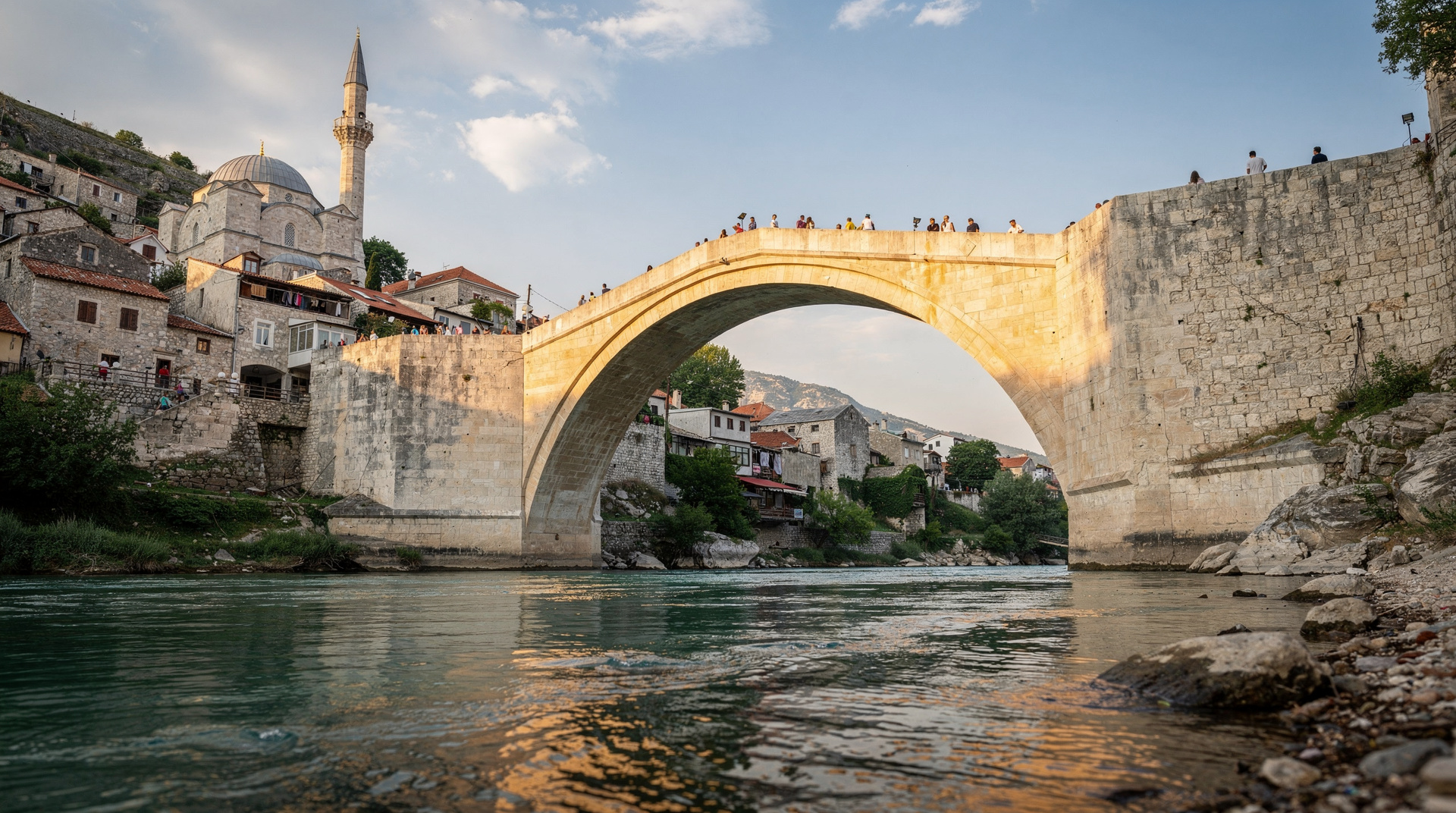
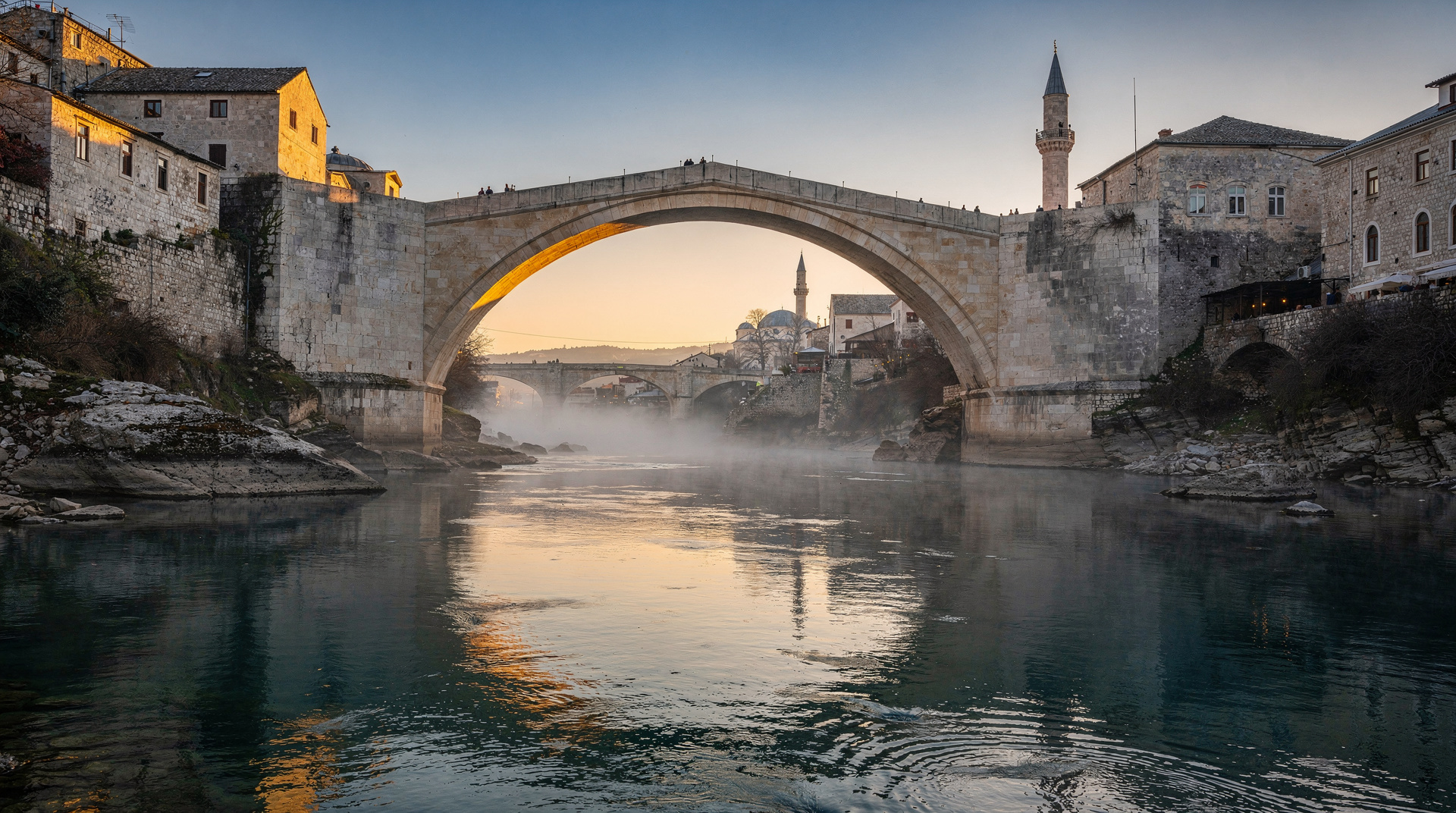
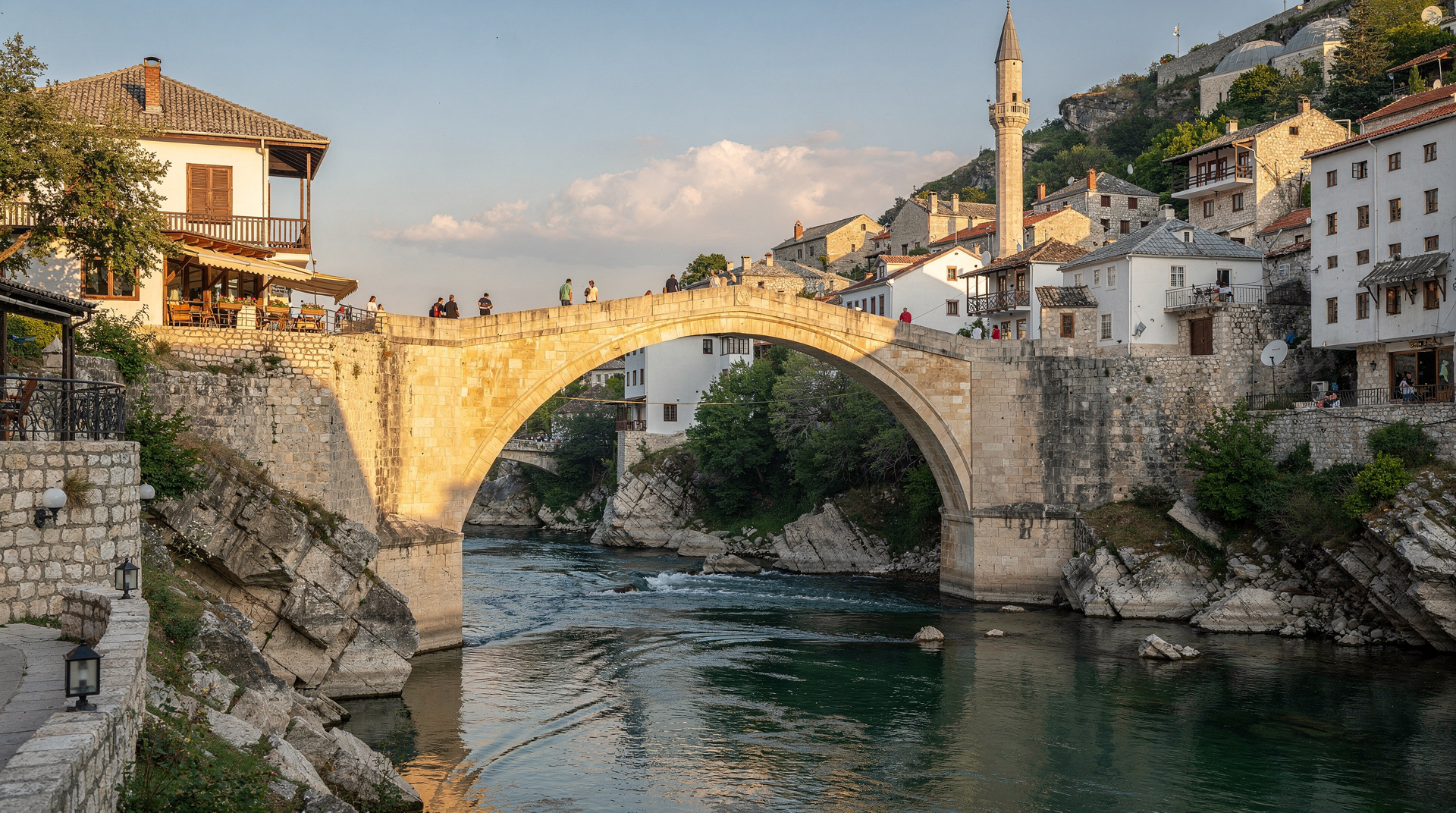
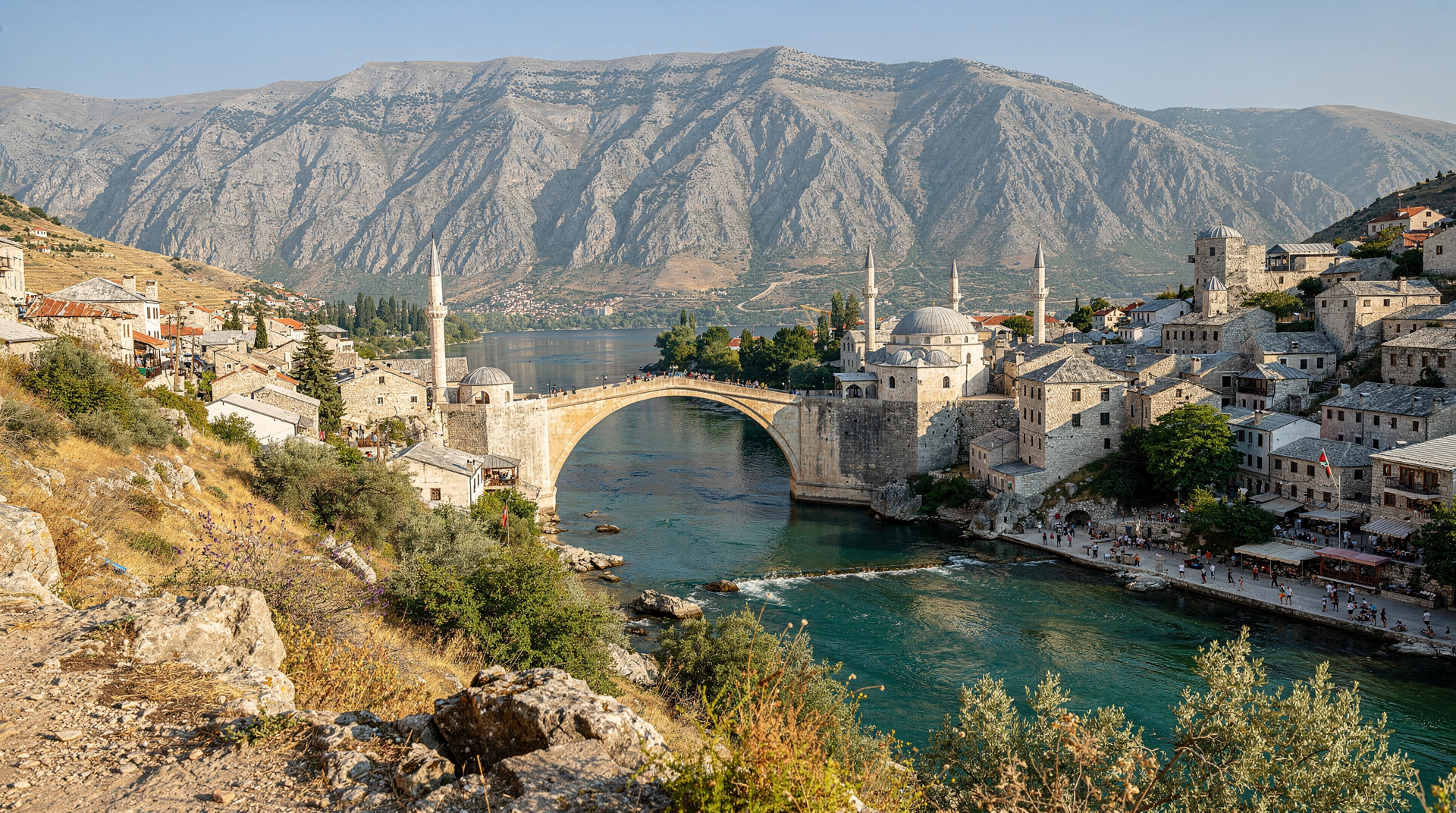
Mostar is one of the most photographed cities in the Balkans — and for good reason. The rebuilt Stari Most (Old Bridge) arcing over the turquoise Neretva, surrounded by Ottoman-era stone houses and minarets, is genuinely stunning. But Mostar is also a city that rewards honesty: it is compact, crowded in high season, and not without its tourist-trap pitfalls. Knowing how to navigate it makes all the difference.
| At a glance | |
|---|---|
| Where | Herzegovina, on the Neretva river |
| Cost | Free to walk Stari Most; museum/mosque entries around 6 BAM each; meals from around 12-18 BAM |
| Time needed | 1-2 days, ideally with an overnight stay |
| Getting there | Bus or scenic train from Sarajevo (~2h30); car or organised tour from Dubrovnik (~1h40) |
| Best time | May-June and September-October, avoiding the midday coach rush |
Getting to Mostar
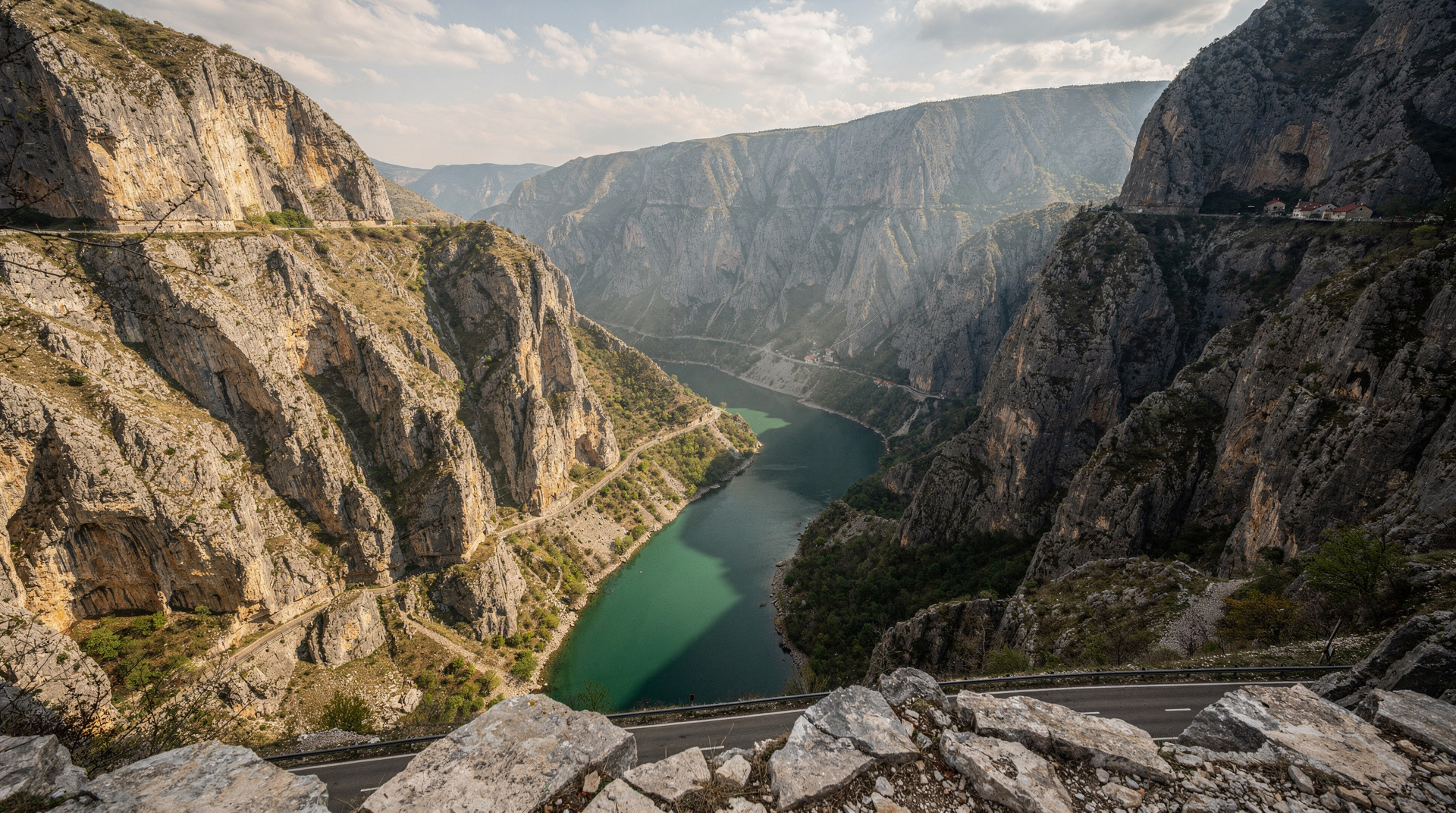
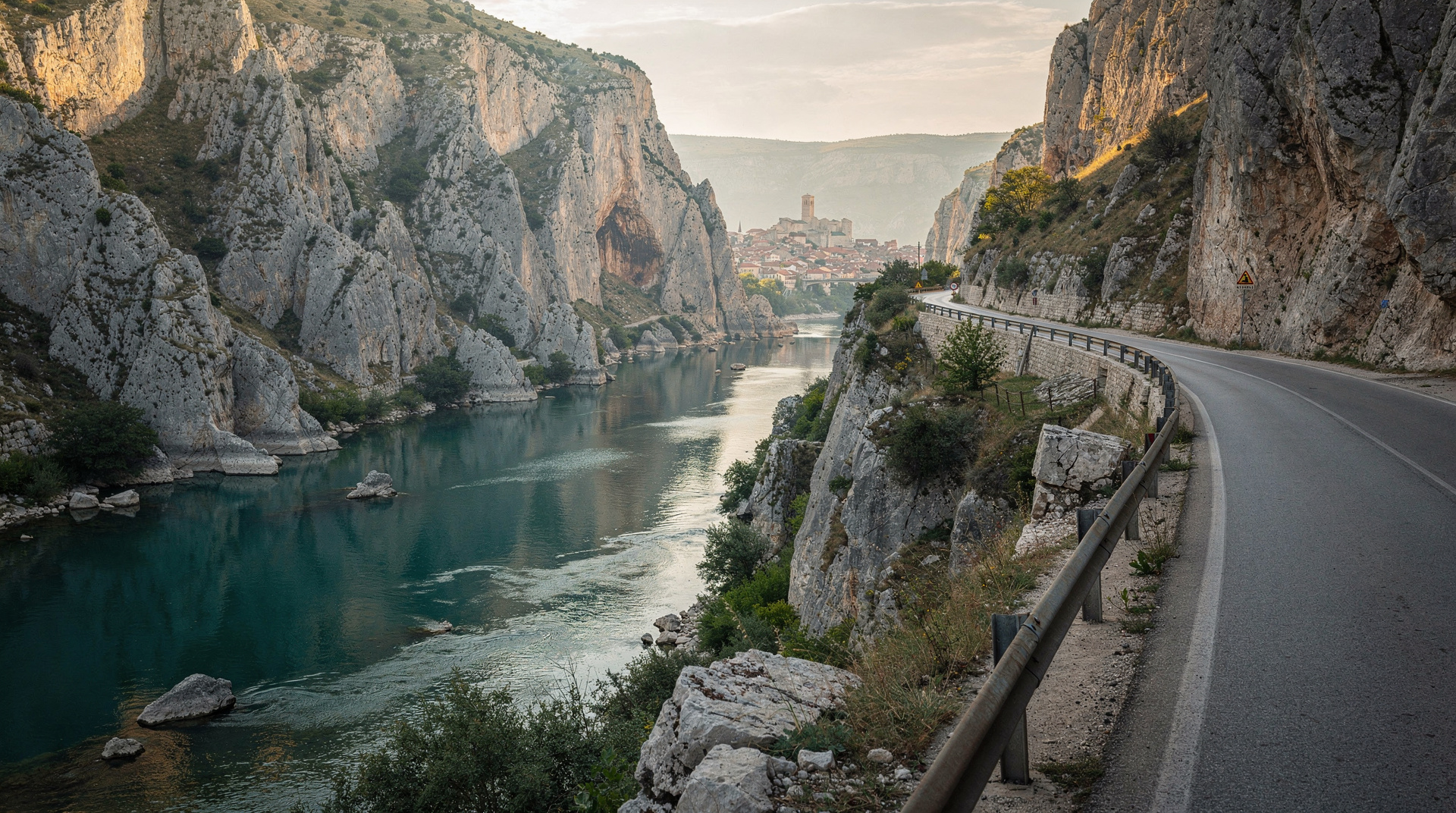
From Sarajevo, the most common options are bus (several daily, about 2h30, 15-18 BAM) or the scenic Sarajevo–Mostar train (runs in season, longer but beautiful through the Neretva canyon). By car it is around 2h30 via the M17 highway.
From Dubrovnik, Mostar is about 90 km and 1h40 by car — making it one of the most popular day trips from the Croatian coast. Dozens of organised tours depart daily from Dubrovnik, Split, and Makarska. If you are coming independently, the road crosses the Bosnian border near Metković/Bijača — bring your passport and, if driving a hire car, check it is permitted to enter Bosnia.
The city has no airport. Bus connections from Split take around 3h30-4h.
Stari Most and the old town
The Stari Most bridge, originally built in 1566 by Ottoman architect Mimar Hayruddin, was destroyed during the 1993-94 war and painstakingly rebuilt and reopened in 2004. Walking across it is a symbolic act — the city’s name literally means “old bridge,” and the reconstruction is a statement about reconciliation. The bridge itself is made of local Tenelija limestone that turns a warm white in sunlight.
The old town (Stari Grad) on both sides of the river is Ottoman in character: cobblestone alleyways, copper workshops, carpet sellers, and small restaurants hanging over the water. The Kujundžiluk bazaar street north of the bridge is picturesque but also where most tourist shops are concentrated. For a more local experience, cross to the west bank (Kujundžiluk is on the east).
A private walking tour with a local guide is the most efficient way to understand the layers — Ottoman, Yugoslav, wartime, post-war — in two hours.
The bridge divers: what to know
The Mostari (Mostar divers) have been jumping from the bridge since the Ottoman era. Today, members of the Mostar Diving Club still perform jumps — but this is not a regular show. Divers will stand on the bridge parapet collecting donations; once they have gathered enough (typically 50-100 BAM in the pot), one of them jumps the 21 metres into the Neretva. The water is cold year-round.
Do not assume a jump is imminent or free to watch. The practice is legitimate and the club has a long history, but the solicitation can feel aggressive in high season. Budget travellers sometimes wait 30-40 minutes hoping for a jump that never comes.
Timing your visit: beat the midday crowd
July and August see Mostar at its most crowded, with temperatures frequently exceeding 35°C and the old town’s stone streets radiating heat. Tour buses from Dubrovnik and Split typically arrive between 10am and 2pm. If you are staying overnight (strongly recommended), explore Stari Most before 9am and after 6pm for photos without crowds and more manageable heat.
Day-trippers from the coast who arrive at noon and leave by 4pm see Mostar at its worst. An overnight stay — even one night — transforms the experience: the bridge is lit after dark and the city relaxes significantly.
May, June, September and October offer the ideal balance: comfortable temperatures (20-28°C), green Neretva gorge, and far fewer day-trip groups.
| Season | Weather | Crowds | Notes |
|---|---|---|---|
| May-June | Mild, 20-28°C, occasional rain | Moderate, rising toward June | Green landscape, good hiking weather for Blagaj |
| July-August | Hot, often 35°C+ | Very high, coach buses 10am-2pm | Overnight stays essential to see the bridge without crowds |
| September-October | Warm, 18-26°C | Low to moderate | The best overall balance of weather and quiet |
| November-March | Cold, occasional snow | Low | Many day-trip tours from the coast stop running; some guesthouses close |
Beyond the bridge: what else to see
Koski Mehmed Pasha Mosque on the east bank offers river views from its minaret and is worth the small entry fee (around 6 BAM). The Museum of War and Genocide Victims 1991-1995 provides important historical context that many day-trippers skip entirely. The Crooked Bridge (Kriva Ćuprija), a smaller Ottoman bridge a few minutes’ walk upstream, is frequently overlooked despite being beautiful.
East Mostar (the Bošnjak quarter) and West Mostar (the Croat quarter) remain subtly divided — the dominant language and signage shifts as you cross the Neretva. This is not dangerous; it is simply the reality of the city’s post-war geography.
Understanding the city’s story
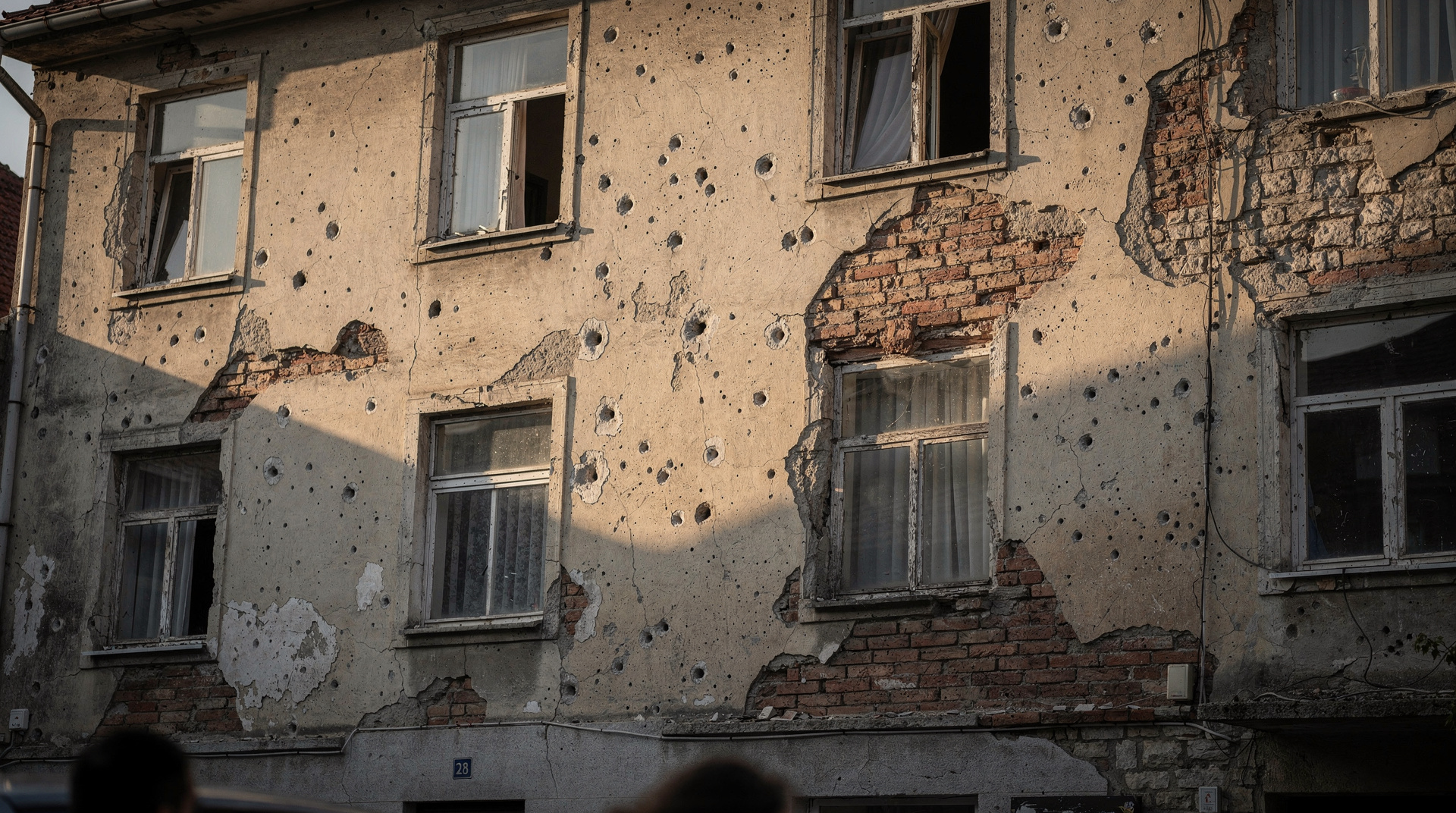
Mostar is easier to appreciate when you know what you are looking at. The bridge, the mosques and the stone houses of the old town belong to the Ottoman centuries, but the scars on the surrounding streets belong to the 1990s. Our Mostar war history guide walks through that period carefully, and the broader Ottoman heritage of Bosnia explains why so many towns in the country share this architectural language. For the wider backdrop, Bosnia history for travelers is a good primer before you arrive.
If you are deciding between Bosnia’s two best-known cities, Sarajevo vs Mostar compares them honestly, and Sarajevo makes a natural contrast: larger, more layered, and far less dependent on a single monument.
A suggested rhythm for your visit
Arrive, drop your bags and walk straight to the river while the light is still soft. Cross Stari Most once without stopping to photograph, simply to feel the stone underfoot, then return and take your pictures from the banks on either side. The views from the lower paths give a better sense of the arch than the bridge itself does.
Spend the middle of the day away from the busiest lanes. This is a good moment for the mosque, the museum, or a long lunch in a quiet corner. Return to the river in the evening, when the day-trip groups have gone and the old town gradually empties out. The next morning, head out to a nearby site before the heat builds; Blagaj and Počitelj both suit an early start.
If you want food recommendations beyond the two named above, see the best restaurants in Mostar, and for the local specialities worth ordering, the Bosnian food guide and Bosnian coffee culture explain what to ask for and how it is traditionally served.
Day trips from Mostar
Mostar is the ideal base for Herzegovina:
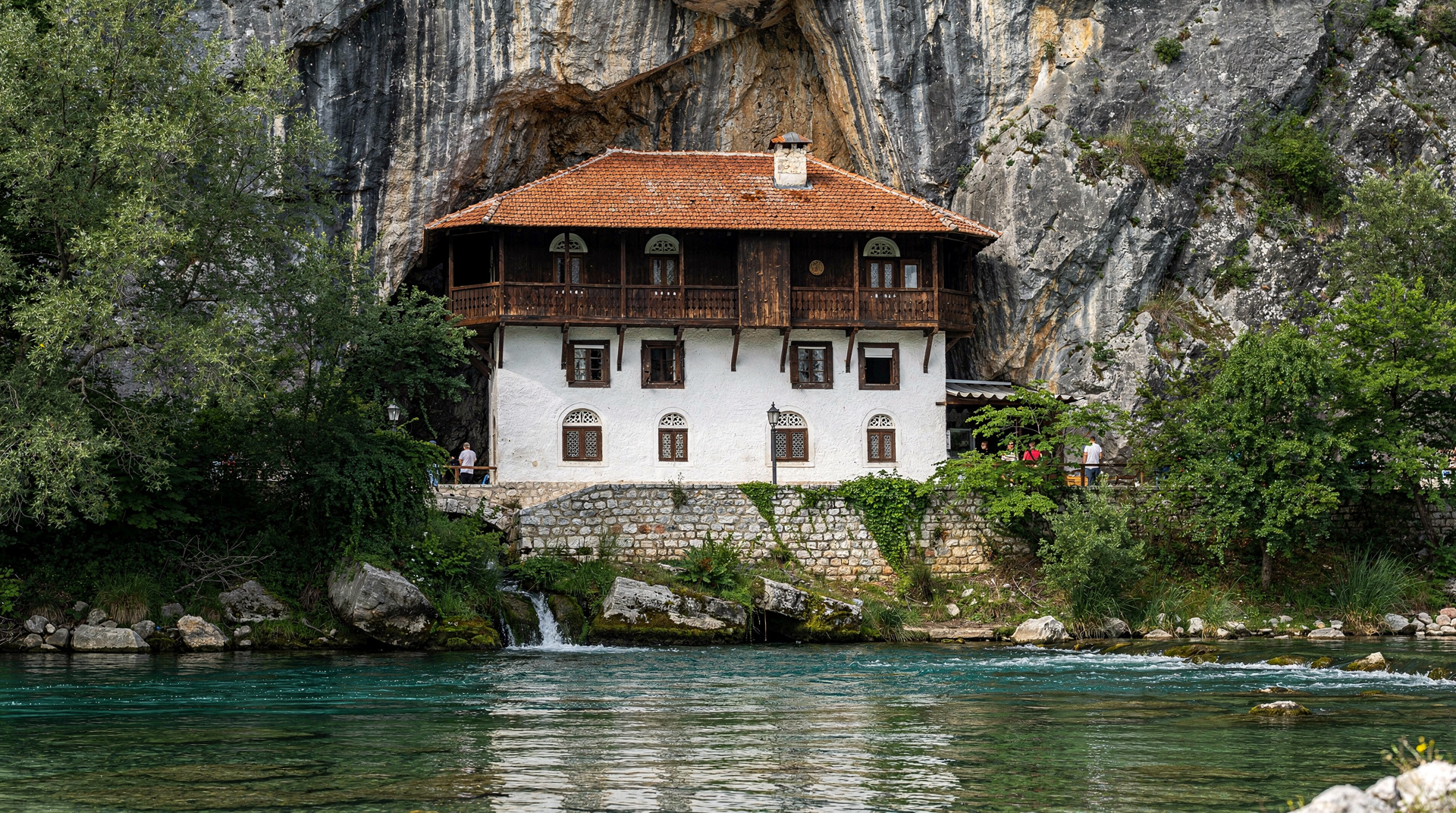
- Blagaj Tekija and Buna spring (12 km south): a Dervish monastery at the foot of a cliff above a river source. Half a day.
- Počitelj (25 km south): an intact Ottoman hilltop village with a hexagonal tower and mosque. An hour or two.
- Kravice Waterfalls (40 km west): a curtain of cascades above a swimming lagoon. Half a day.
- Rafting the Neretva canyon north of Konjic: a full day from Mostar.
Many tours combine several of these into one day. A combined Blagaj, Počitelj and Kravice tour is a popular choice for visitors with one full day.
For a fuller list of options, including less obvious ones, read our best day trips from Mostar. Visitors who want a single, well-organised outing may also like the Herzegovina day trip guide, and those interested in the wider area can add the Kravice Waterfalls as a stand-alone stop.
Where to stay
Choosing the right side of the river matters more than the star rating. Staying in or close to Stari Grad puts the bridge, the bazaar and the evening atmosphere on your doorstep, and it means you can walk everywhere without a taxi. Our detailed where to stay in Mostar guide compares neighbourhoods and styles of accommodation in more depth. Book early for summer weekends, and ask your host about parking or luggage storage if you are arriving by car or leaving late. Smaller guesthouses often give the most useful local advice on where to eat, when to cross the bridge and which quiet corners are worth finding.
Budget: Hostel Nina and Hostel Majdas (both east bank, Stari Grad) — around 30-40 BAM per dorm bed. Mid-range: Villa Fortuna (Stari Grad, rooms with views, 120-160 BAM/night). Boutique: Hotel Kriva Ćuprija (built into a 16th-century mill, rooms from 180-220 BAM). Avoid chain hotels outside the old town — you lose the atmosphere.
Where to eat
Tima-Irma (east bank, Kujundžiluk) is consistently recommended for ćevapi and local dishes; prices are honest (meal 12-18 BAM). Restaurant Hindin Han (by the river on the west bank) is more atmospheric and slightly pricier. Avoid restaurants with men standing outside flagging you in — they typically have inflated tourist menus.
Practical details
- Entry: Free to walk Stari Most; mosque and museum each ~6 BAM.
- ATMs: Available on both sides of the river; withdraw BAM to avoid poor EUR exchange rates.
- Taxis: Negotiate the price before you get in; there is no meter culture. The city centre is walkable.
- Rafting the Neretva: Most operators depart from Konjic, 50 km north. A Neretva rafting tour from Mostar typically includes transport to the put-in point.
- Safety: Mostar itself is safe. As with all of Bosnia, stay on marked paths if you hike outside the city — landmine residue from the 1990s war remains a concern in unmarked rural and mountain areas.
Arriving from other places
Most visitors reach Mostar as part of a longer route. Coming from the north, Sarajevo to Mostar transport lays out the choices, and the Mostar day trip from Sarajevo is useful if time is tight. From the coast, Mostar from Split vs Dubrovnik helps you pick the better departure point, while driving from Croatia to Bosnia covers the border crossing for those with their own car. For general planning, see getting around Bosnia.
For a longer route that includes Mostar, the Sarajevo and Mostar in 3 days itinerary strikes a sensible balance, and a personal account of the bridge adds a more human perspective before you go.
Avoiding the common disappointments
Most complaints about Mostar come from timing rather than from the city itself. Visitors who treat it as a quick stop between coach tours tend to remember crowds, heat and souvenir stalls. Those who slow down remember the river, the call to prayer drifting over the rooftops and the quiet evening walks. The bridge divers explained is worth reading before you stand on the parapet waiting, and the general advice in avoiding crowds in Bosnia applies here more than almost anywhere. Newcomers planning their wider trip can also check Bosnia scams to avoid and is Bosnia safe.
Mostar as a base for Herzegovina
Beyond the classic day-trip trio of Blagaj, Počitelj and Kravice, Mostar also works as a launchpad for less-visited Herzegovina. Trebinje, a wine-producing town near the Montenegrin border, is a longer but rewarding day out. Adventure travellers use Mostar as a staging point for Neretva canyon rafting near Konjic or for exploring Prenj mountain. If your route continues to the coast, our Mostar to Split and Mostar to Dubrovnik guides cover the transport logistics both ways.
Mostar is at its best when you give it time. One night or two is enough to see Stari Most at dawn, eat well, and explore the surrounding Herzegovina sites at a pace that does not feel rushed. See our Herzegovina weekend itinerary for a practical two-day route, or read the full Stari Most guide for deeper history on the bridge itself.
Frequently asked questions about Mostar
Is one day enough to see Mostar? You can see the bridge and old town in a few hours, but an overnight stay is strongly recommended to avoid the midday coach crowds and to experience the city after dark, when it is quieter and the bridge is lit.
Is Mostar safe to visit? Yes, the city itself is safe for tourists. The only real caution concerns hiking off marked trails in rural areas of Bosnia, where landmine residue from the 1990s war persists in some unmarked zones.
Top experiences
Bookable activities with verified prices and instant confirmation on GetYourGuide.