Trebinje
Trebinje, Herzegovina's charming southern city: wine tasting, the Hercegovačka Gračanica church and an old town, 40 minutes from Dubrovnik.
Trebinje Tour with Luxury Transport and Wine Tasting
Quick facts
- Region
- Republic of Srpska (Trebinje municipality)
- Distance from Dubrovnik
- ~30 km / 40 min by car
- Distance from Mostar
- ~100 km / 1h30 by car
- Days needed
- 1 full day
- Currency
- BAM (1 EUR = 1.95583 KM)
- Wine varieties
- Vranac (red), Žilavka (white)
Trebinje is the kind of city that rewards travellers who venture beyond the main circuit. Just 30 km from Dubrovnik (and far better value), it is Herzegovina’s southernmost city: a warm, unhurried place of stone-paved squares, river cafés, Orthodox churches, and serious wine production. Most visitors to the region never make it here; those who do tend to wonder why it is not better known.
| At a glance | |
|---|---|
| Where | Republic of Srpska, Herzegovina, around 30 km north of Dubrovnik |
| Cost | Old town and Arslanagić Bridge free; church free; wine tasting around 20-35 BAM |
| Time needed | Around 4-5 hours as a day trip, or an overnight for the evening korzo |
| Getting there | Self-drive or tour from Dubrovnik (40 min); bus (around 1 h) |
| Best time | May-October; late September-October for the wine harvest |
Getting to Trebinje
The easiest approach is from Dubrovnik: 30 km north and about 40 minutes by car through the Croatian border crossing at Karasovići/Ivanica. The border is generally smooth outside peak July-August weekends. Public buses run once or twice daily from Dubrovnik bus station; the journey takes about an hour.
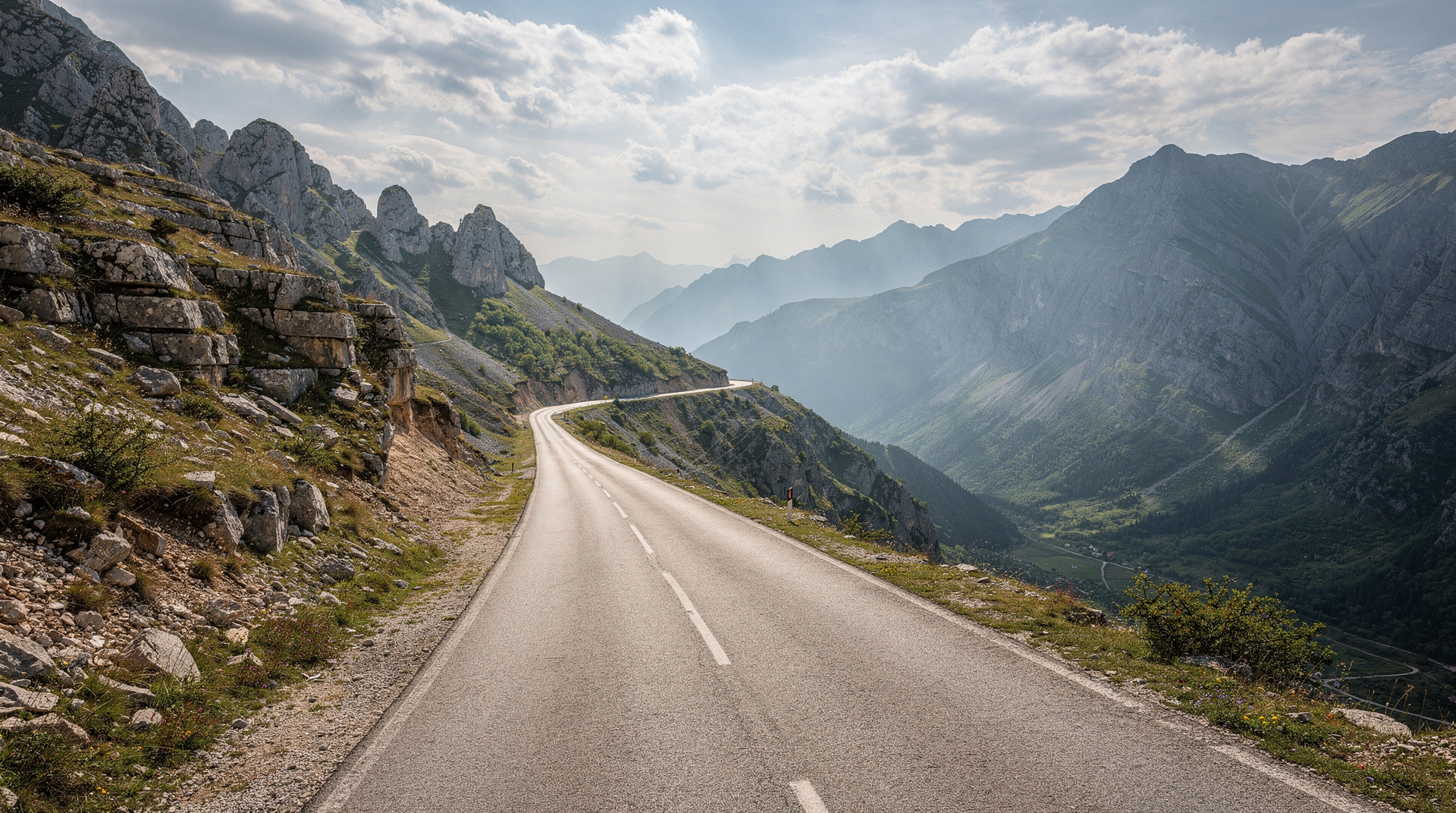
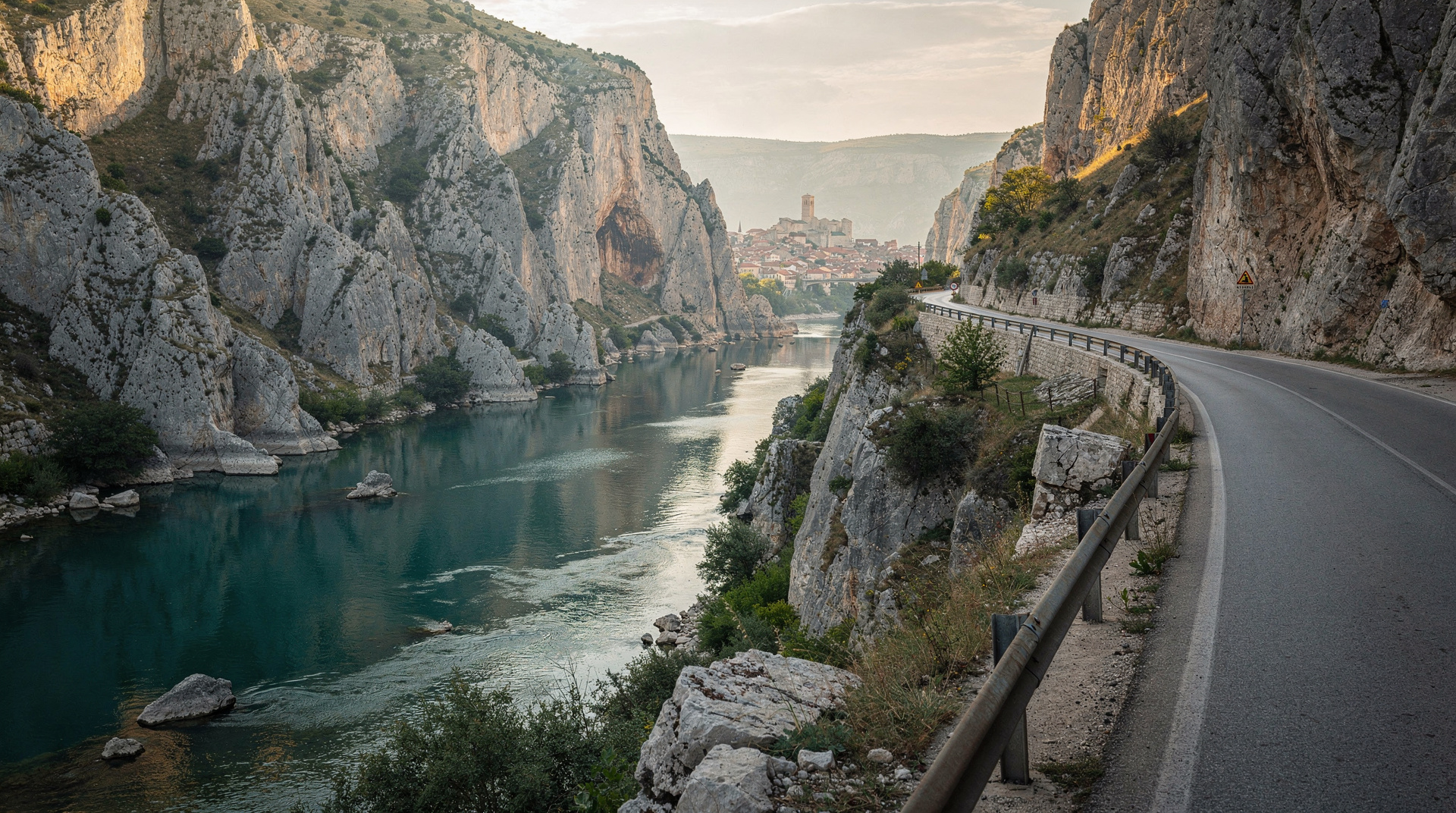
From Mostar, Trebinje is roughly 100 km southeast via a scenic but winding road through the Bregava valley and Herzegovina’s dry limestone karst — allow 1h30-2h by car.
A luxury wine and Trebinje day trip from Dubrovnik is a popular option for those without a car, covering the old town, winery visits, and a lunch with local wines. For independent visitors, a private Trebinje city tour is available with a local guide.
The old town
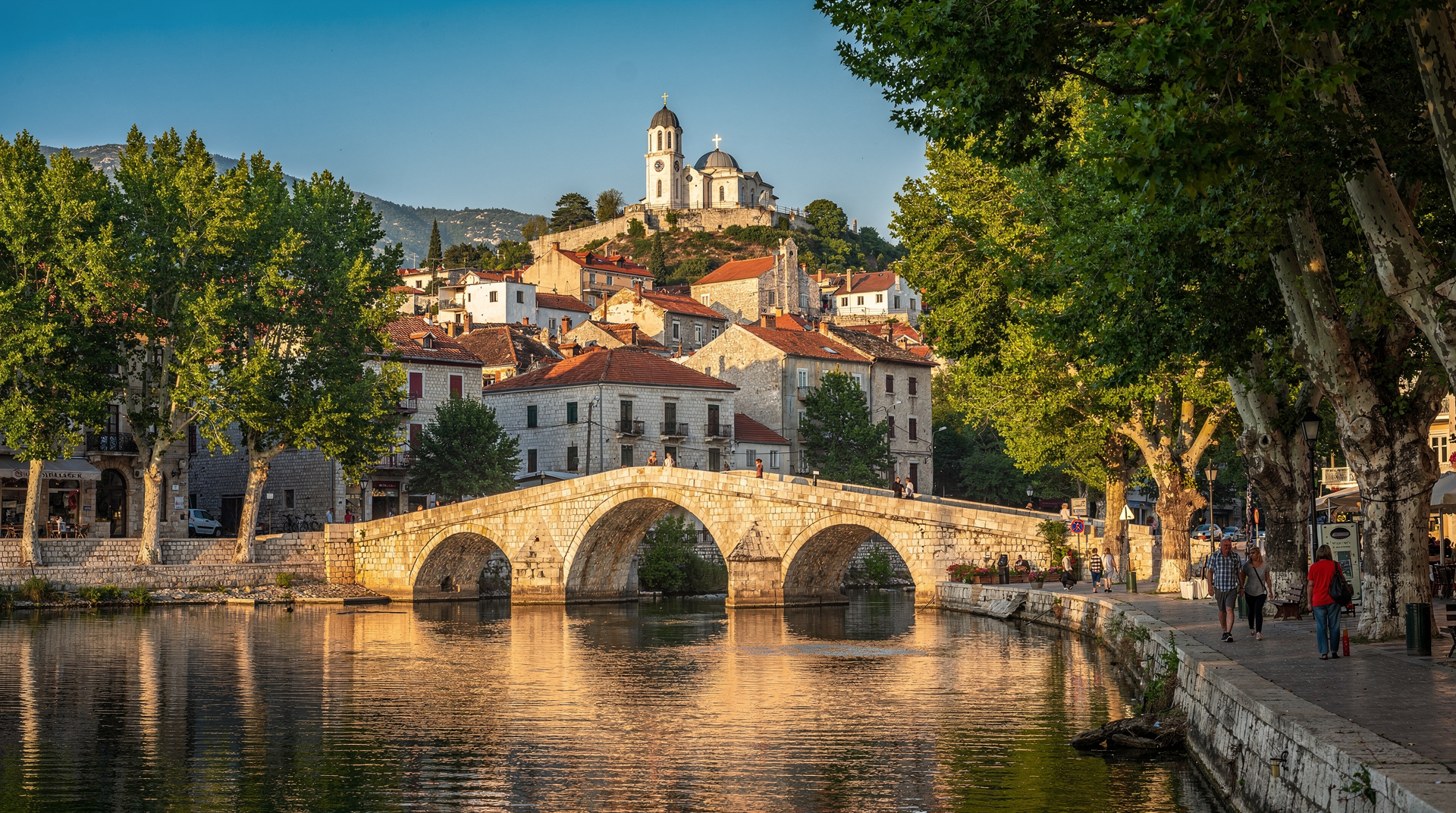
Trebinje’s old town is a compact, walled Ottoman-era core beside the Trebišnjica River. The main square, Trebišnjica Square (locally called Trg slobode), is shaded by large plane trees and lined with café terraces — in the evenings, this is where the town takes its evening walk (korzo). The pace is distinctly slower than Mostar; Trebinje is primarily a city for Bosnian and Serbian tourists, not international day-trippers.
The nearby Arslanagić Bridge (also called Perovića Bridge) is a 17th-century Ottoman arched bridge spanning the Trebišnjica — quieter and less commercialised than Mostar’s Stari Most, and free to approach at any hour.
Hercegovačka Gračanica
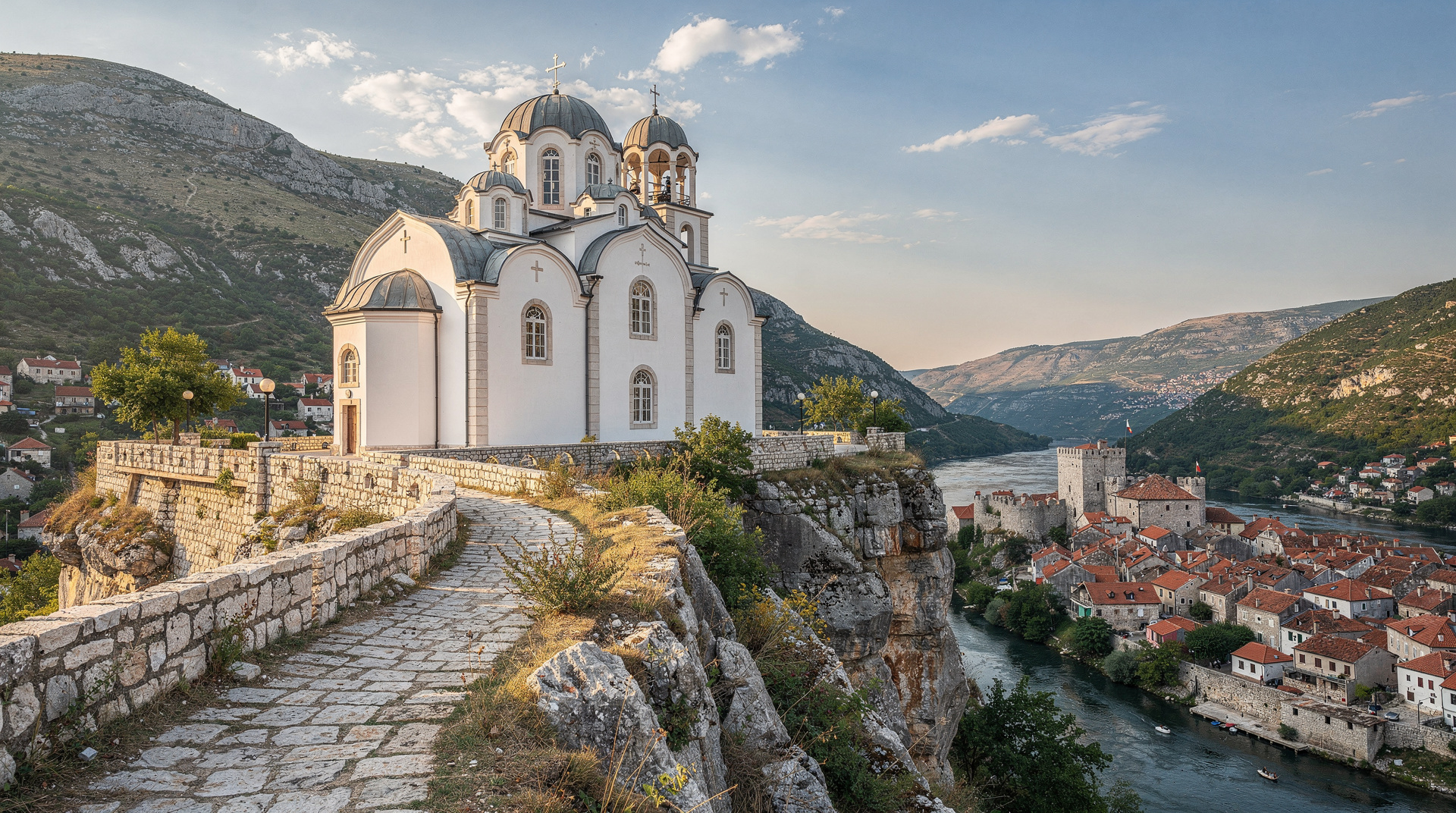
The most distinctive sight in Trebinje is the Hercegovačka Gračanica church, perched on a hilltop above the city. Built in 2000, it is modelled on the 14th-century Serbian monastery of Gračanica in Kosovo — a deliberate cultural statement. The church is Serbian Orthodox, and the interior contains frescoes in Byzantine style.
The hill (Crkvina) also holds the mausoleum of Jovan Dučić, the poet and diplomat who is considered one of the greatest Serbian poets of the modern era; he was born in Trebinje and requested burial here. Views from the hilltop over the Trebišnjica valley and toward the Adriatic mountains are excellent.
Access is by a footpath from the old town (20-25 minutes uphill) or by car. Entry to the church is free; modest dress expected.
Wine: Trebinje’s best-kept secret
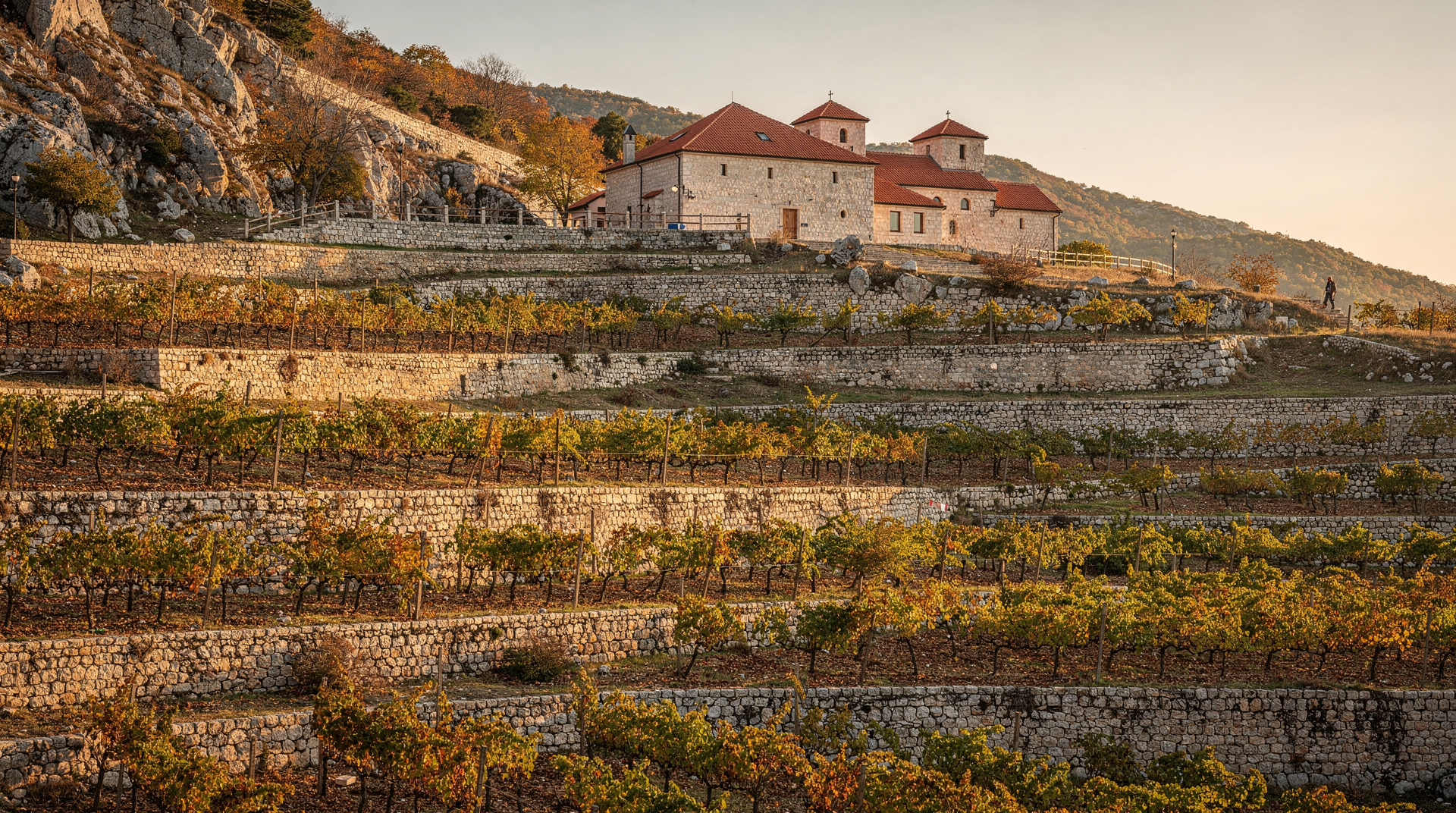
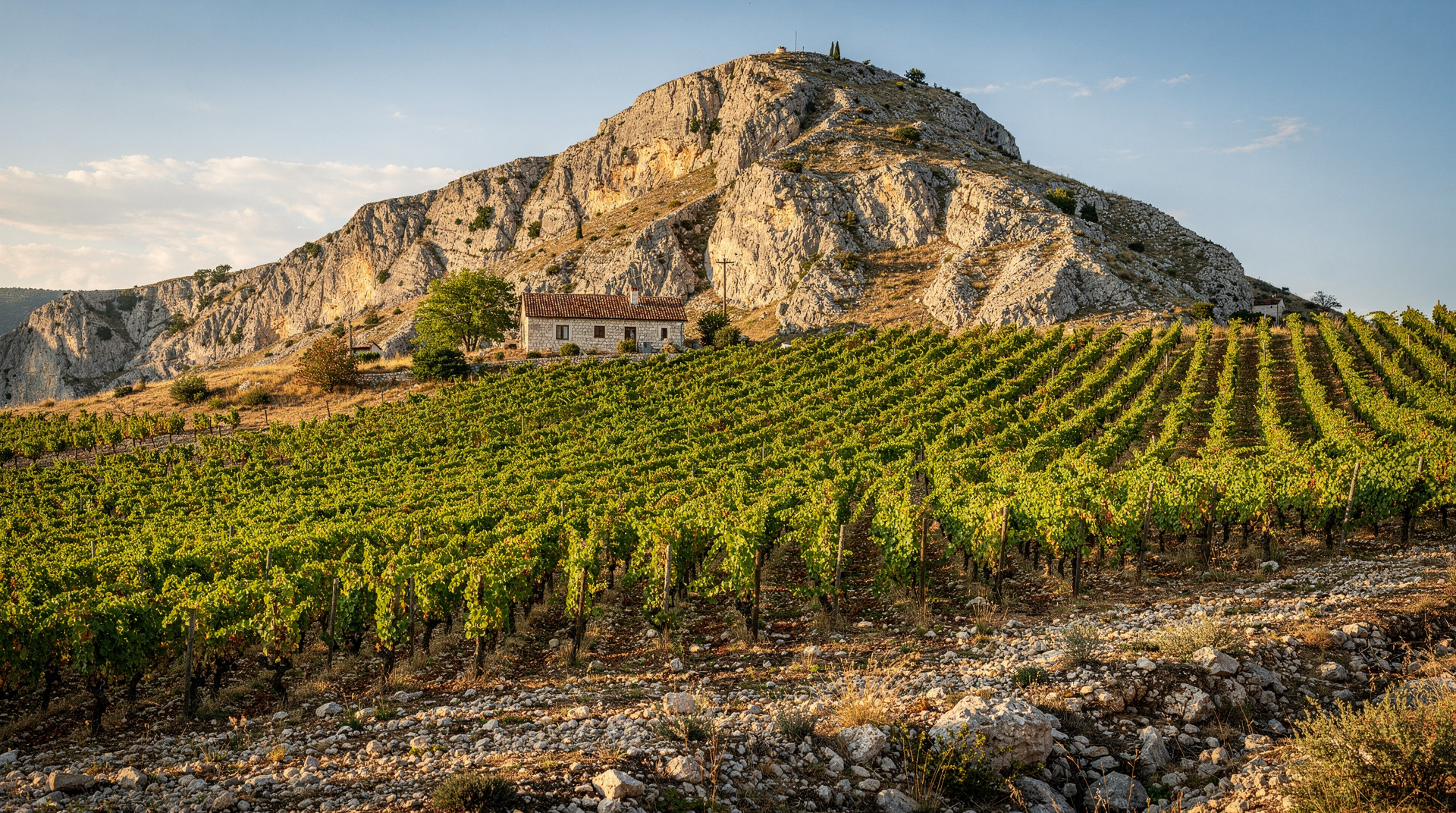
Herzegovina’s wine country centres on the Trebinje and Mostar areas, and Trebinje is increasingly regarded as the finer of the two for red wine production. The dominant grape is Vranac (a robust, tannic red native to the western Balkans), alongside Blatina and the white Žilavka.
Key wineries near Trebinje include Tvrdoš Monastery Winery (a functioning Orthodox monastery 4 km from the city that has produced wine since the 15th century — their Vranac is sold across Bosnia) and Anđelić Winery (boutique, appointment recommended). The annual wine harvest festival takes place in late September to early October.
Winery visits are generally possible with advance notice; prices for a tasting and bottle are modest by European standards (20-35 BAM for a tasting). A wine-focused day trip from Dubrovnik that includes winery visits and a meal is the most structured way to experience this side of Trebinje.
Where to eat and drink
Stari Grad restaurants along the riverfront (Obala Luke Vukalovića) offer ćevapi, roštilj (grill) and fresh fish at reasonable prices — a full meal with wine runs 25-40 BAM. Restoran Park (main square) is a reliable, affordable choice. For coffee and local ambience, any of the plaza cafés on Trg slobode are authentic.
Trebinje has no pretentious tourist restaurant scene. Prices are noticeably lower than Mostar or Dubrovnik.
Trebinje vs the Dubrovnik day-trip crowd
Trebinje makes an excellent base for day trips to Dubrovnik (reversed from the usual direction) — parking in the old walled city costs nothing, and hotel prices in Trebinje are 40-60% lower than comparable options in Dubrovnik. If your priority is the Dalmatian coast but you want a non-Croatian base, Trebinje is worth considering. The border crossing adds 10-15 minutes each way.
Practical details
- Accommodation: Hotels and guesthouses start from around 60-100 BAM per night. Hotel Leotar and Hotel Platani are well-regarded options in the old town area.
- ATMs: Available in the old town; BAM is the standard currency (EUR less reliably accepted here than in the tourist hotspots of Herzegovina).
- Language: Serbian/Croatian/Bosnian (Cyrillic and Latin scripts both used). English is spoken in hotels and some restaurants but less commonly than in Mostar.
- Day trip logistics: A day trip from Dubrovnik is viable; allow 4-5 hours in Trebinje. Those who stay overnight appreciate the evening atmosphere. See the Herzegovina wine guide for winery details and the Trebinje church guide for background on the Gračanica.
Trebinje vs Mostar as a Herzegovina base
Travellers deciding between Trebinje and Mostar as a Herzegovina stop should know they offer different experiences. Mostar has the iconic bridge, the bigger tourist infrastructure, and easy onward links to Blagaj, Počitelj and Kravice Waterfalls — but it is busier and pricier in peak season.
Trebinje is quieter, cheaper, and centred on wine rather than a single monument; it suits travellers who have already done the Mostar circuit or who specifically want the Dubrovnik-adjacent, off-the-radar option. Read Trebinje: the other Herzegovina for a first-hand comparison, and see the balkans multi-country guide for combining both towns with Croatia and Montenegro.
A half-day walking route
For independent visitors with a car or arriving by bus, a sensible half-day sequence: start at Trg slobode for coffee, walk the old town’s stone lanes to the Arslanagić Bridge, then climb to Hercegovačka Gračanica (20-25 minutes uphill, or drive) for the view and the Dučić mausoleum, before returning for a late lunch on the riverfront. Add a winery stop at Tvrdoš Monastery, 4 km out of town, if you have transport and want to taste Vranac at its source.
What the town feels like
Trebinje is easier to enjoy than to describe. There is no single headline monument that you tick off and leave; the appeal is cumulative. You sit under the plane trees with a coffee, watch the town go about its day, cross an old stone bridge without a crowd, and drift towards a long lunch. Visitors arriving from Dubrovnik often comment on how quickly the atmosphere changes once the border is behind them: fewer souvenir stalls, more locals at the café tables, and a clear sense that the town exists for its residents first.
That also means you should adjust your expectations. Opening hours can be relaxed, English is less common than on the coast, and the best moments tend to be unplanned. Build some slack into the day and the town repays it.
How to structure a full day
If you have a whole day rather than a few hours, the town works best when you split it by the heat and the light.
- Morning: arrive early, have coffee on the main square and walk the old town while the lanes are still quiet. The Arslanagić Bridge is pleasant at this hour, with soft light on the river.
- Midday: this is the time for a winery visit or a long lunch in the shade. In summer, the middle of the day is the hottest part of Herzegovina’s karst landscape, so indoor tastings and shaded terraces make sense.
- Late afternoon: climb to the Hercegovačka Gračanica when the heat eases. The view over the valley is at its best in warmer evening light, and the walk is more comfortable.
- Evening: if you are staying overnight, finish with the korzo on the main square. This is the part of Trebinje that day-trippers miss most often.
For a broader plan that links Trebinje with other southern stops, see the Herzegovina weekend itinerary and the Herzegovina day trip guide.
Crossing the border smoothly
The crossing from Croatia is part of the experience, and a little preparation removes most of the stress. Carry a valid passport or national ID for everyone in the car, and keep rental-car paperwork within reach. If you are driving a hire car, check in advance that the rental company allows travel into Bosnia and Herzegovina; our guide to renting a car in Bosnia and the driving from Croatia to Bosnia page cover the paperwork in more detail.
Travellers who are combining the whole coast should also read the Neum corridor crossing guide, because the short stretch of Bosnian coast near Neum affects the road between Split and Dubrovnik. If you are coming from the south instead, the Bosnia from Kotor guide explains how the approach differs from Kotor.
Without a car, the buses in Bosnia guide explains how the intercity network generally works, and the getting around Bosnia guide gives the wider picture.
Food, wine and local drinks
A meal in Trebinje usually centres on grilled meat, fresh bread, local cheese and whatever is in season. If you want to understand the dishes before you order, the Bosnian food guide is a good primer, and the ćevapi guide for Sarajevo shows how the same grilled staple varies from city to city.
Wine is the real reason many people come. The Herzegovina wine guide explains the grapes and the regional style, while the Trebinje wine region guide goes deeper on the estates around the town. Many hosts will also pour a glass of local fruit brandy; the rakija guide explains the etiquette so you can accept a glass gracefully. If you plan to drive afterwards, nominate a driver or book a guided tour instead.
Culture, history and context
Trebinje sits at a meeting point of Ottoman, Orthodox and Austro-Hungarian influences, and the old town shows traces of all three. For a wider introduction to the Ottoman layer, read the Ottoman heritage in Bosnia guide. For the bigger picture behind the region’s modern borders and communities, the Bosnia history guide for travellers is a respectful starting point.
The church and mausoleum on the hill are active places of worship and remembrance, not simply viewpoints. Dress modestly, keep your voice low inside, and ask before photographing anything that looks ceremonial. Visitors who have a spare day can compare this Orthodox heritage with the pilgrimage atmosphere of Medjugorje or the Ottoman layers of Počitelj.
Combining Trebinje with nature and other stops
Trebinje pairs naturally with the wider south. Nature lovers should look at Hutovo Blato Nature Park, a wetland reserve that makes a very different outing from the wine country. Those continuing north can plan the road towards Mostar with the Mostar from Dubrovnik guide, or build Trebinje into a longer route using the Croatia and Bosnia two-week itinerary.
Money, timing and planning
Carry some local cash, and read the Bosnia money and currency guide before you go so you know what to expect from cards and ATMs. For timing, the best time to visit Bosnia page will help you choose between the quieter shoulder months and the livelier summer season. If you are building a longer trip, the Bosnia travel guide ties the regions together.
Frequently asked questions about Trebinje
Is Trebinje worth visiting instead of Mostar? Not instead of, but alongside if you have time — Mostar is the essential first stop for its bridge and old bazaar, while Trebinje suits travellers who want a quieter, wine-focused second stop in Herzegovina.
Can I visit Trebinje as a day trip from Dubrovnik without a car? Yes. Public buses run once or twice daily from Dubrovnik’s bus station in about an hour, or a guided day tour handles the border crossing and winery visits for you.
Top experiences
Bookable activities with verified prices and instant confirmation on GetYourGuide.