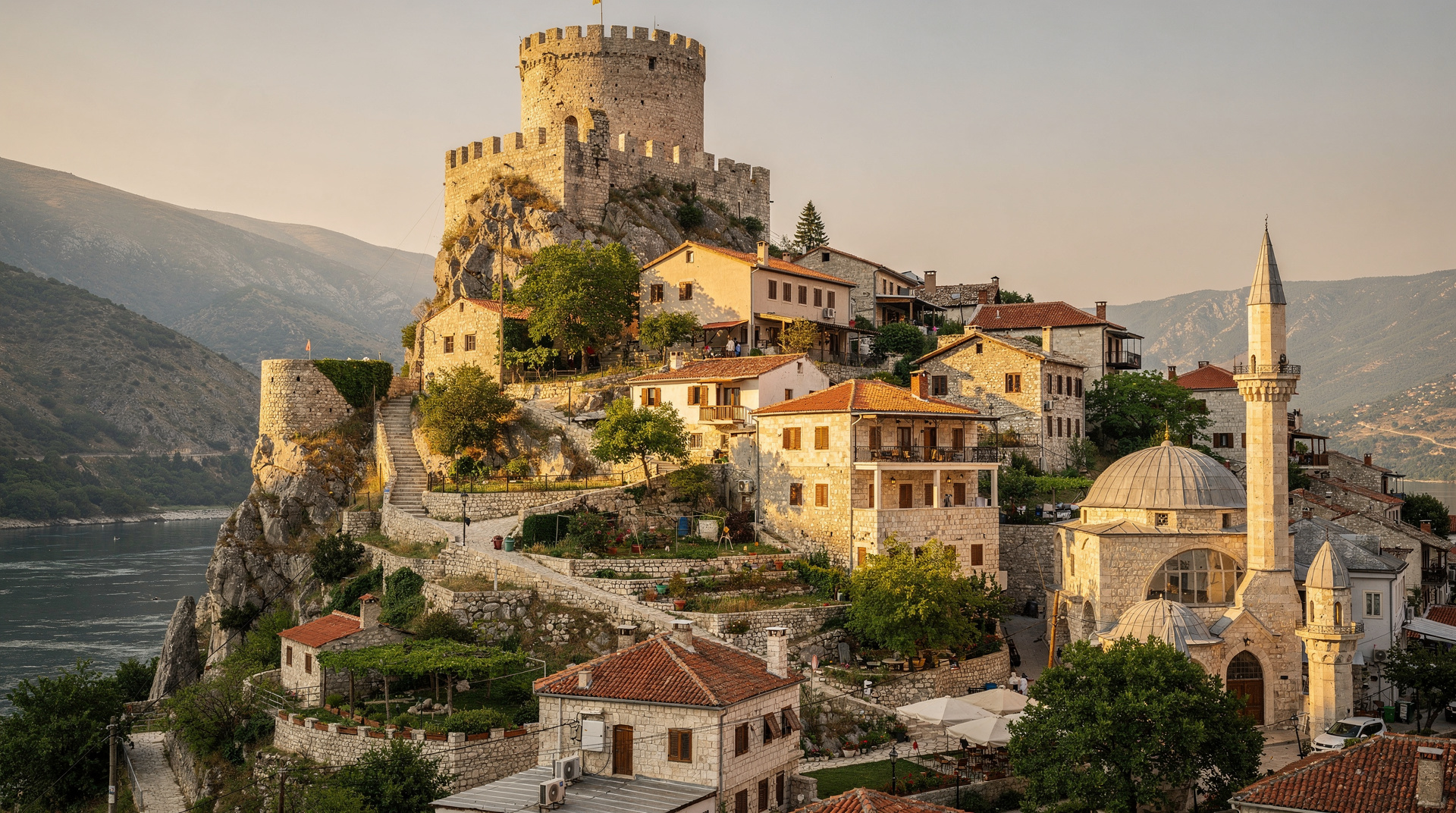
Blagaj
Visit Blagaj: the Ottoman Tekija dervish monastery above the Buna spring, canoeing on the river, and the fortress hill. 12 km from Mostar.
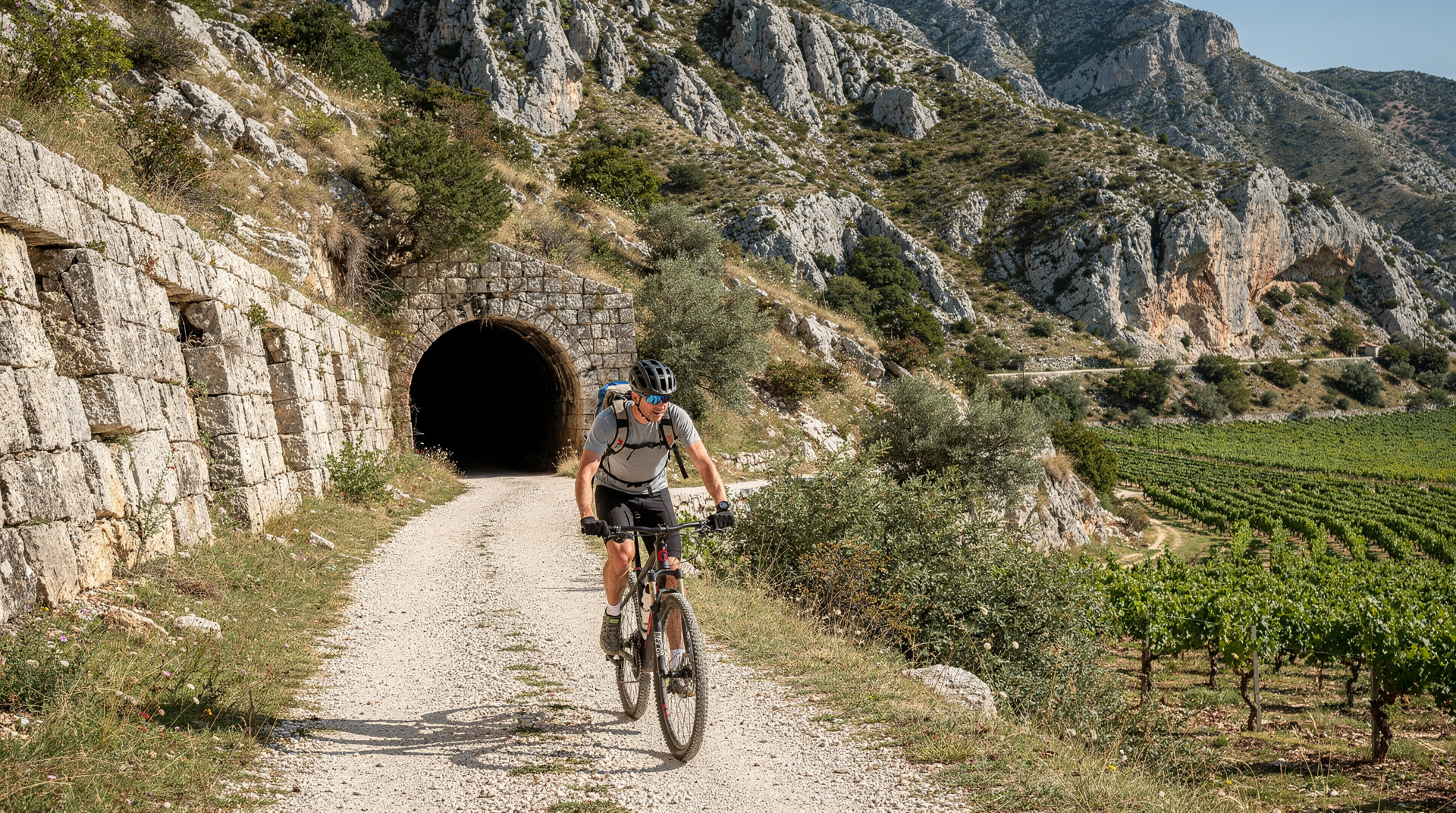
Mostar: Guided Cycling Tour to Blagaj
Quick facts
- Region
- Herzegovina-Neretva Canton
- Distance from Mostar
- 12 km / 20 min by car
- Days needed
- Half-day (combine with Počitelj/Kravice)
- Currency
- BAM (1 EUR = 1.95583 KM)
- Entry fee
- Tekija: fee paid at the door (check the current price); modest dress required
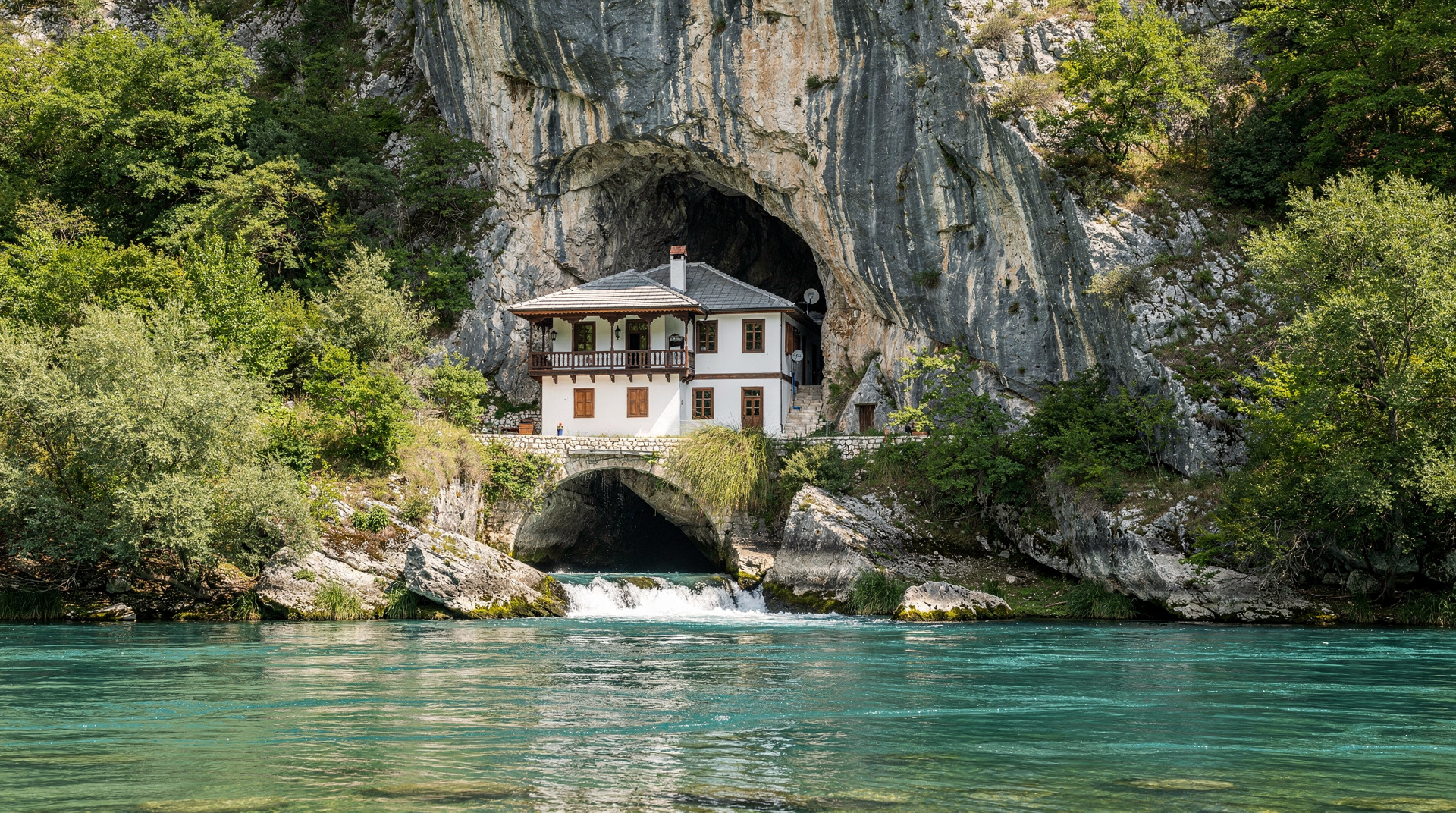
Blagaj is the kind of place that makes you wonder why more travellers do not extend their Mostar visit by half a day. The Blagaj Tekija — a 16th-century Dervish monastery built at the foot of a 200-metre cliff, directly above the source of the Buna River — is one of the most striking scenes in Herzegovina, and one of the most photographed. The Buna erupts from the cliff base as a full river, turquoise and cold even in August, flowing beneath the wooden-balconied tekke (monastery).
| At a glance | |
|---|---|
| Where | Herzegovina-Neretva Canton, 12 km south of Mostar |
| Cost | Tekija entry paid at the door (check the current price); taxi from Mostar around 15-20 BAM one-way |
| Time needed | 1.5-2 hours for the tekke; add 2 hours for canoeing |
| Getting there | Around 20 minutes by car or taxi from Mostar; no reliable public bus |
| Best time | April-October; arrive before 9:30am or after 4pm to beat groups |
Getting to Blagaj
Blagaj is 12 km south of Mostar, about 20 minutes by car. There is no reliable public bus; most visitors come by taxi (around 15-20 BAM one-way from Mostar), hire car, or on an organised tour. A guided cycling tour from Mostar via the Buna valley is an enjoyable way to cover the distance while taking in the Herzegovina countryside.
From Dubrovnik or Split, Blagaj is typically included in full-day Herzegovina combination tours that also take in Počitelj and Kravice Waterfalls.
The Blagaj Tekija
The Tekija (also spelled Tekke) is a functioning place of worship for the Naqshbandi Sufi order — it is not a museum. Visitors are welcome, but modest dress is required (cover shoulders and knees; headscarves are available at the entrance for women). Remove shoes before entering. Photography inside the prayer rooms may be restricted depending on the day.
The tekke was built in the early 16th century, with the main structure dating to around 1520 during the Ottoman period. It sits on a narrow ledge between the cliff and the river: looking up from the water level, the scale of the stone wall above is vertiginous.
Entry costs around 4 BAM. The complex includes a café and restaurant directly over the water — this is a good spot for Bosnian coffee or lunch, though prices are tourist-oriented (a full meal runs 20-35 BAM). The spring is considerably colder and more powerful in spring (snowmelt from Prenj mountain) than in late summer.
Canoeing the Buna
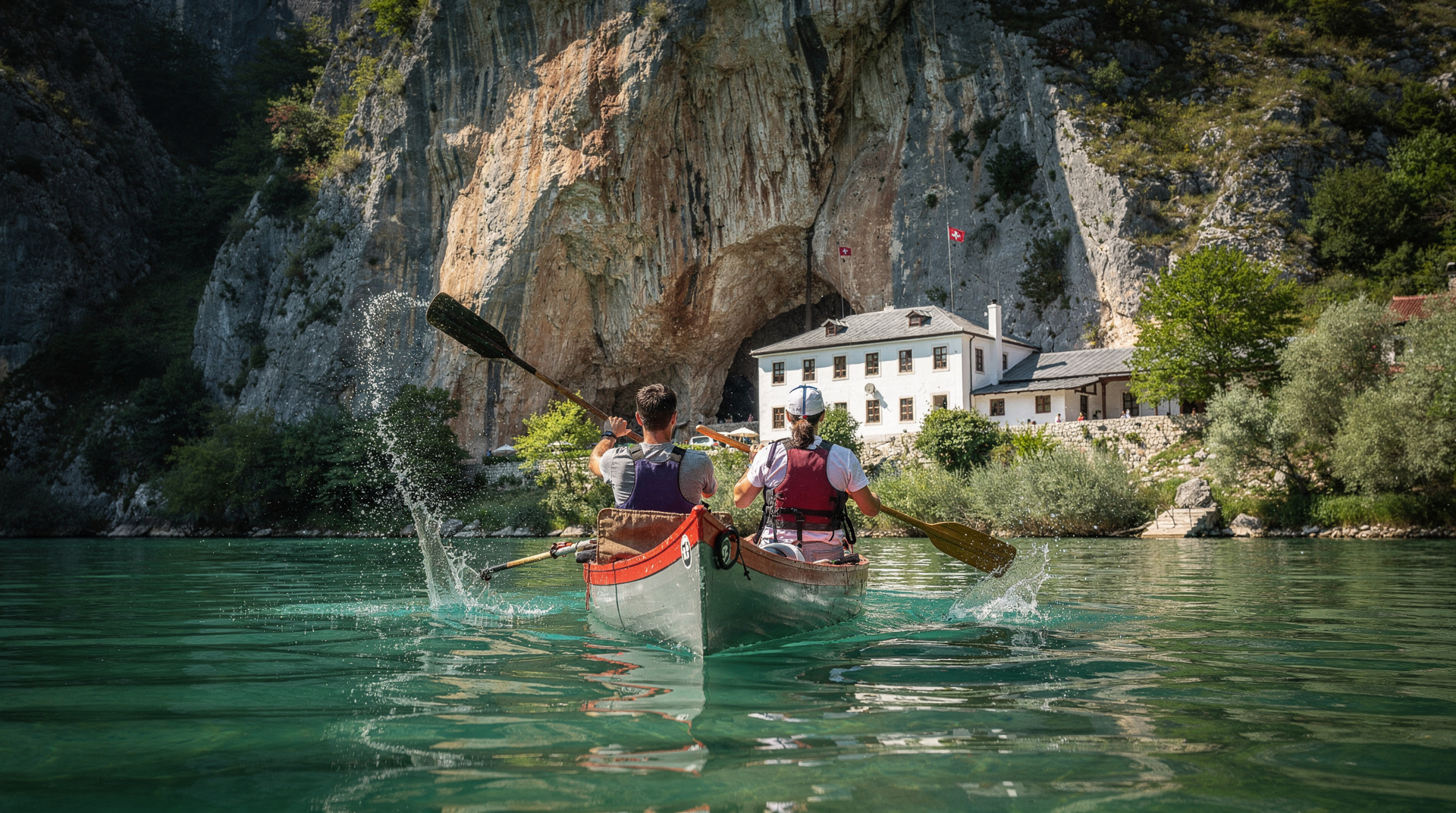
A quieter and more active way to experience Blagaj is from the water. Canoeing on the Buna River lets you paddle beneath the cliff and see the tekke from river level — a perspective that photographs cannot fully convey. Tours typically run 1-2 hours on the calm, clear upper Buna. The river is suitable for beginners and families; no prior paddling experience is needed.
Stjepan Grad fortress
Most visitors see only the tekke, but a 20-minute hike up the hillside behind the car park leads to Stjepan Grad, the ruined medieval fortress that gave Blagaj its name (“blag” meaning gentle or mild in old Slavic, though most historians link the name to the medieval lords Stjepan). The fortress is unstaffed and partly ruined, but the views over the Buna valley and Neretva plain are excellent. Wear sturdy shoes; the path is steep and loose in places.
Combining Blagaj with Počitelj and Kravice
Blagaj slots neatly into a half-day or full-day Herzegovina circuit from Mostar:
- Morning: Blagaj Tekija (arrive before 10am to beat the groups), canoe if time permits
- Late morning: Počitelj (25 km south of Mostar, 35 km from Blagaj via backroads)
- Afternoon: Kravice Waterfalls (45 km from Mostar, swimming April-October)
This circuit is the backbone of the Herzegovina day trip guide and covers the highlights of the region in roughly 7-8 hours by car.
Practical details
- Parking: A small fee car park by the tekke (around 2 BAM). Can fill quickly in summer.
- Summer crowds: July-August brings bus groups, particularly between 10am and 2pm. Arrive before 9:30am or after 4pm if possible.
- Dress code: Non-negotiable at the tekke — bring a scarf or light layer even in summer.
- Where to eat: The restaurant over the water at the tekke is convenient; better value options are back in Mostar. Bring water; the village has limited shops.
- Time needed: 1.5-2 hours for the tekke, monastery, cliff base and a coffee. Add 2 hours for canoeing.
Is Blagaj worth a dedicated trip?
For anyone based in Mostar, yes without hesitation — the 20-minute drive and modest entry fee are trivial against the payoff of the tekke and spring. Blagaj rarely justifies a special trip from Sarajevo on its own, but it fits naturally into any Herzegovina day trip, whether self-driven or as part of an organised tour from Dubrovnik or Split that also covers Mostar and Kravice.
Sufi heritage and the Naqshbandi order
The tekke’s continued function as a place of worship, rather than a museum piece, is part of what makes it distinctive among Bosnia’s Ottoman-era sites. The Naqshbandi order has practised at Blagaj for centuries, and the building’s wooden balconies and low-ceilinged rooms reflect a dervish lodge’s practical needs — communal prayer and simple lodging — rather than the grandeur of a mosque like Sarajevo’s Gazi Husrev-beg. Respecting the dress code and quiet is not a formality; it is a working religious site.
What to expect on arrival
The first impression of Blagaj is sound before it is sight. As you walk from the car park towards the tekke, you hear the Buna long before you see it: water pushing out of the base of the cliff and running fast over stones. The path is short and easy, lined with small stalls and cafés, and the whole site is compact enough that nobody feels rushed. Take a few minutes at the riverside before going inside; the view of the wooden balconies against the rock face is the one most people came for, and it is better when you are not queuing behind a tour group.
Inside, the mood changes. Voices drop, shoes come off and the rooms feel cool and dim after the glare outside. Guides and attendants will usually explain what you are looking at, and it is worth listening rather than rushing to the next photograph. Treat the visit as a short window into a living tradition, not a quick tick on a checklist.
A suggested pace for the visit
If you want the place to leave an impression rather than just a photograph, give it a slow rhythm:
- Start at the water’s edge and simply look at the cliff and the spring for a few minutes.
- Go into the tekke, dressed appropriately, and move quietly through the rooms.
- Sit at a table over the river for coffee. Our guide to Bosnian coffee culture explains how the ritual works, and Blagaj is a lovely place to try it properly.
- Finish with the climb to the fortress if your legs and the weather allow, or with a paddle on the river.
Doing it in this order means the busiest part of the visit, the tekke itself, happens while you are still fresh, and the quieter, more active parts fill the rest of the morning.
Photography tips
Blagaj rewards patience with a camera. The cliff faces the light in a way that changes through the day, so the same view looks very different in the morning and in the late afternoon. A few practical points:
- Shoot the tekke from the riverbank first, then from the bridge or the opposite side, to get both the wide scene and the detail of the balconies.
- Keep a polarising filter or simply watch your angle: the river surface reflects the sky and can hide the turquoise colour that makes the spring famous.
- Avoid pointing a camera at worshippers or into prayer rooms. Photography inside may be restricted, and asking first is basic courtesy.
- If you want a picture without crowds, the early and late hours recommended above are your best chance.
Seasons at the spring
The character of Blagaj shifts with the calendar, and the best time to visit depends on what you want from it. In spring the Buna is at its most powerful and the surrounding hills are green, which makes for dramatic photographs, although the cold of the water is more noticeable. Summer brings the most visitors and the strongest heat, and the shade by the river becomes a real attraction. Early autumn is a very good compromise, with softer light and fewer groups. For wider planning, our pages on Bosnia in spring, Bosnia in summer and Bosnia in autumn give the regional picture, and the best time to visit Bosnia page ties it together.
Blagaj on a wider Herzegovina route
Blagaj works as a calm counterpoint to livelier stops. After the crowds and the bridge-watching of Mostar, it feels like a different country. If you are building a longer trip, it pairs naturally with other Ottoman-era and landscape stops in the region: Počitelj for its stone village, Kravice Waterfalls for swimming, and Konjic on the way towards Sarajevo. The Herzegovina weekend itinerary shows how these places can be linked over two days, while the Sarajevo to Mostar 3-day plan fits Blagaj into a shorter first visit.
For travellers who like the idea of the region’s food and drink, the area is also a good place to connect with the local table. Read our Herzegovina wine guide and the Bosnian food guide before you go, so you know what to order when you sit down for lunch near the water.
Getting around without a car
Not having a car is not a barrier. A taxi from Mostar is the simplest option, and many drivers will agree to wait while you visit, which makes a half-day easy to organise. Cyclists and active travellers can follow the route described in the Ćiro trail cycling guide, and the broader guide to getting around Bosnia explains how buses, taxis and rentals compare. If you do plan to drive, the renting a car in Bosnia and driving in Bosnia pages cover what to expect from roads and paperwork.
Responsible visiting
The spring and its surroundings are fragile, and the tekke is a place of worship. Carry your rubbish out, keep to the paths, and do not climb on walls or ledges for a photograph. On the river, follow your guide’s instructions and stay clear of the cliff base. If you walk up to the fortress, stay on the marked route: the country’s landmine safety advice applies across Bosnia, and sticking to established paths is the sensible habit everywhere. Buying a coffee or a snack from the local businesses is a simple, direct way to support the village.
Where Blagaj fits in Ottoman Bosnia
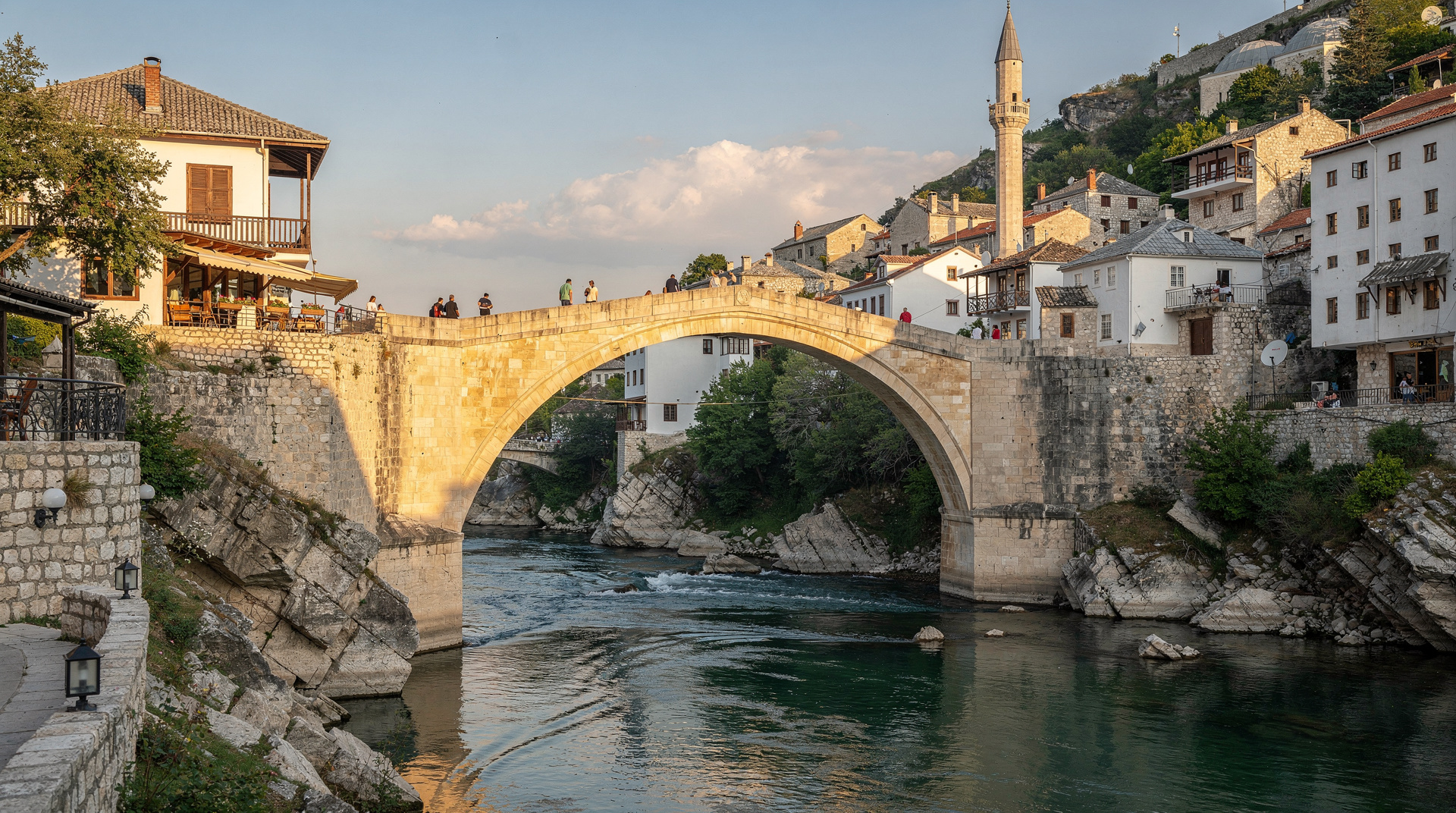
Blagaj is one stop in a larger story. The same empire that left the tekke on the river also shaped the mosques, bridges and bazaars found elsewhere in the country. To see how the pieces connect, read about Ottoman heritage in Bosnia, then compare Blagaj with the old town of Travnik or the bridge at Stari Most. Together they show how varied Ottoman-era building could be, from a quiet dervish lodge to a famous arched bridge. Our Bosnia history guide for travellers gives the wider background for readers who want it.
Who will enjoy Blagaj most
Blagaj suits photographers, travellers curious about religious and architectural history, and anyone who simply likes sitting beside clear running water. It is easy for families because the walking is gentle and the canoeing is calm, and our Bosnia with kids page has more ideas for travelling with children. It is less suited to travellers who want constant activity or nightlife: the pleasure here is slow and quiet. If you also like paddling, the canoeing the Buna guide goes into more detail, and the Herzegovina day trip guide shows how to build the rest of the day around it. Anyone based in Mostar can also browse the best day trips from Mostar for alternatives if the weather turns.
Frequently asked questions about Blagaj
Is Blagaj a day trip from Mostar or can I stay there? Most visitors treat it as a half-day trip from Mostar. A handful of guesthouses exist in the village, but Mostar has far more accommodation and dining choice, so basing yourself there and visiting Blagaj by taxi, car or cycling tour is the more practical approach.
Do I need to book the Tekija in advance? No. It’s open daily to visitors outside prayer times and tickets are bought on arrival; advance booking is unnecessary except for organised canoeing tours in peak summer.
Blagaj is easy to combine with Počitelj and Kravice Waterfalls — read the full Blagaj Tekija guide for deeper historical context on the Dervish monastery and Buna spring.
Top experiences
Bookable activities with verified prices and instant confirmation on GetYourGuide.