Herzegovina day trip guide — Mostar, Blagaj, Počitelj and Kravice
From Mostar: Blagaj, Počitelj & Kravice Waterfalls Day Tour
How do you do Herzegovina in a day?
The classic Herzegovina day combines Mostar (Stari Most and old town), Blagaj Tekke (Ottoman monastery at the Buna source), Počitelj (medieval walled village), and Kravice Waterfalls (swimming in the tufa crescent). From Mostar as a base, this circuit is 3-4 hours of driving and a full day of sightseeing. From Sarajevo, it is a 13-14 hour day.
| Where | Mostar, Blagaj, Počitelj and Kravice Waterfalls, all within about 50 km of Mostar |
| Cost | Around 26 BAM total in entry fees (Blagaj 3 + Počitelj 3 + Kravice 20), plus fuel or a guided tour |
| Time needed | A full day (8-10 hours) from Mostar; 13-14 hours if starting and ending in Sarajevo |
| Getting there | Rental car is easiest; guided day tours run from both Mostar and Sarajevo |
| Best time | Late spring or early autumn for comfortable heat; arrive at Kravice before 10:00 or after 16:00 in July-August |
Herzegovina — the southern wing of Bosnia & Herzegovina — packs an extraordinary variety of landscapes and history into a small area. The narrow valley of the Neretva, its lower reaches cutting through limestone karst before reaching the Adriatic hinterland, is lined with Ottoman monuments, medieval villages, and limestone rivers of breathtaking colour. A single day spent driving this circuit from Mostar will take you from the most iconic bridge in the Balkans to a spring-fed Dervish monastery, a perfectly preserved Ottoman hilltop town, and a waterfall you can swim beneath. It is one of the finest day trips in southeastern Europe.
The four key stops
Mostar and Stari Most
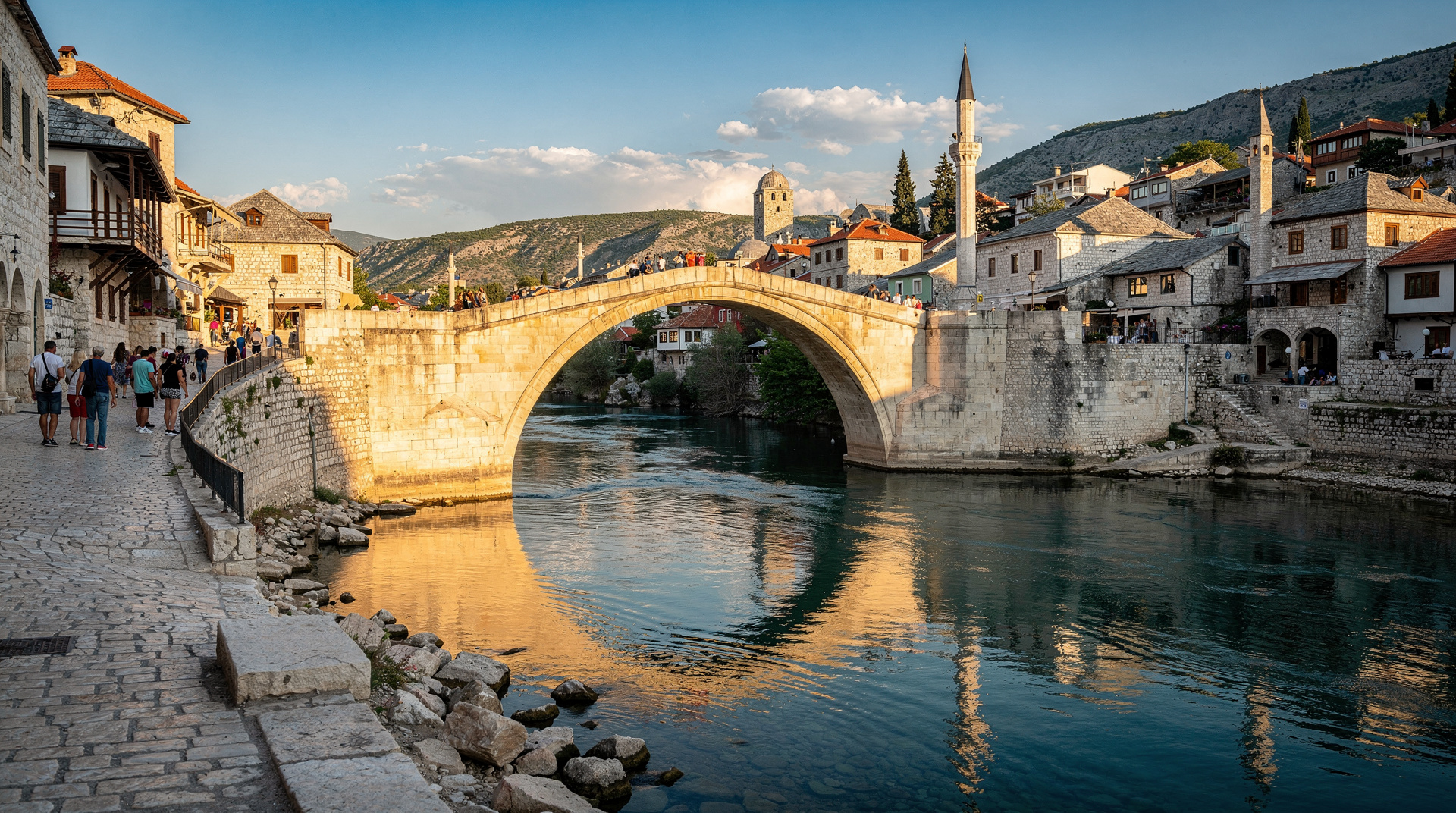
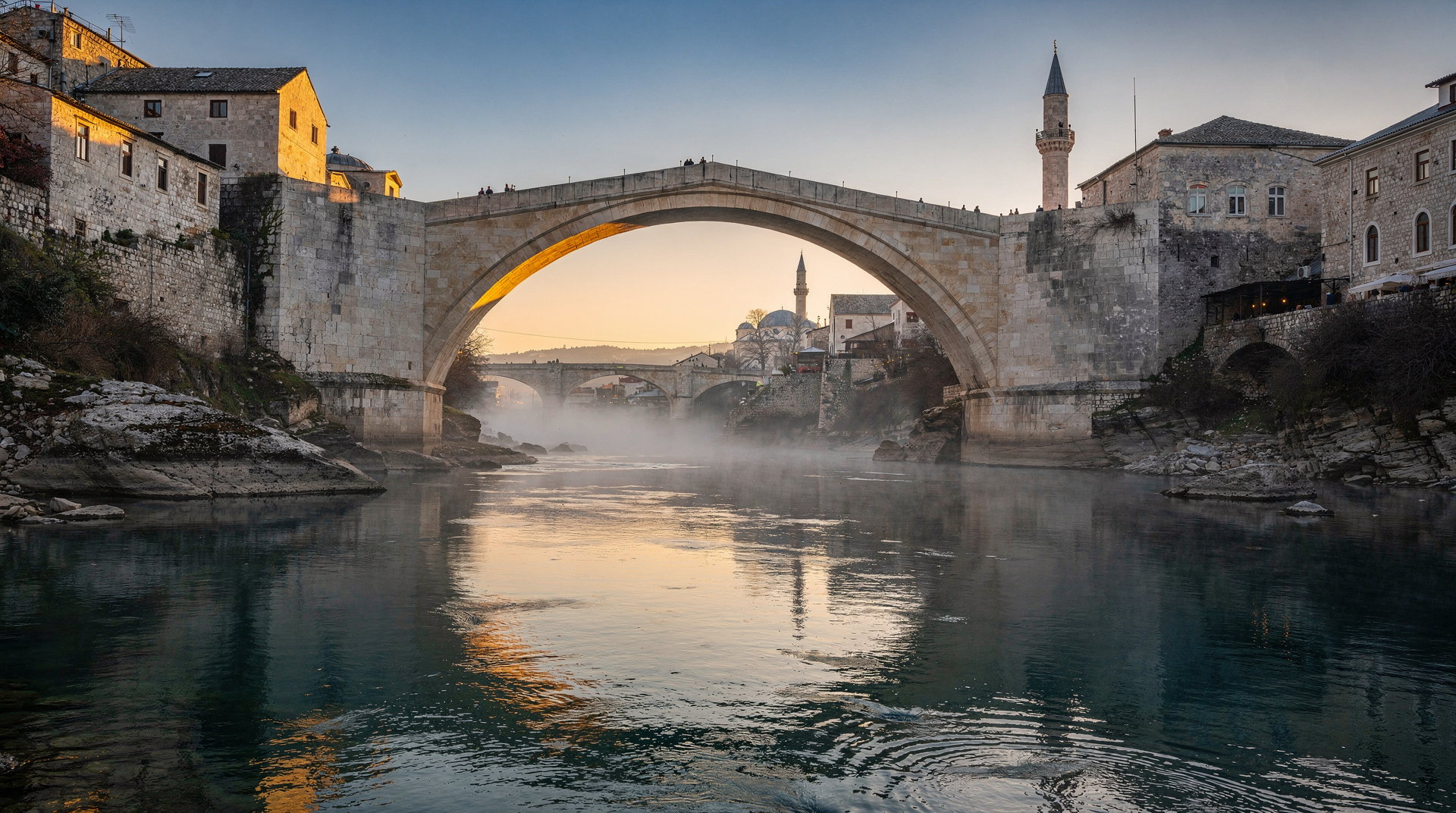
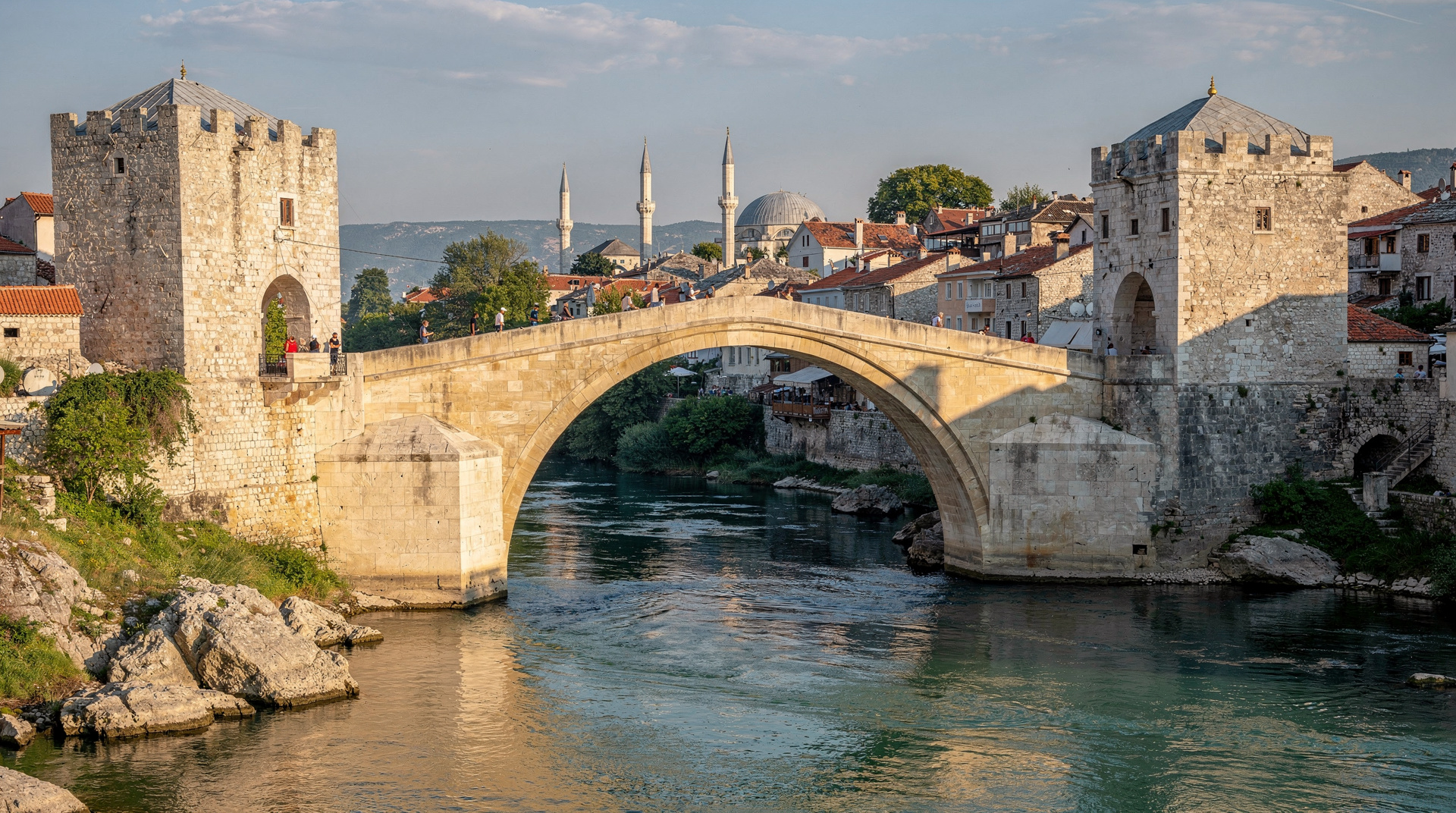
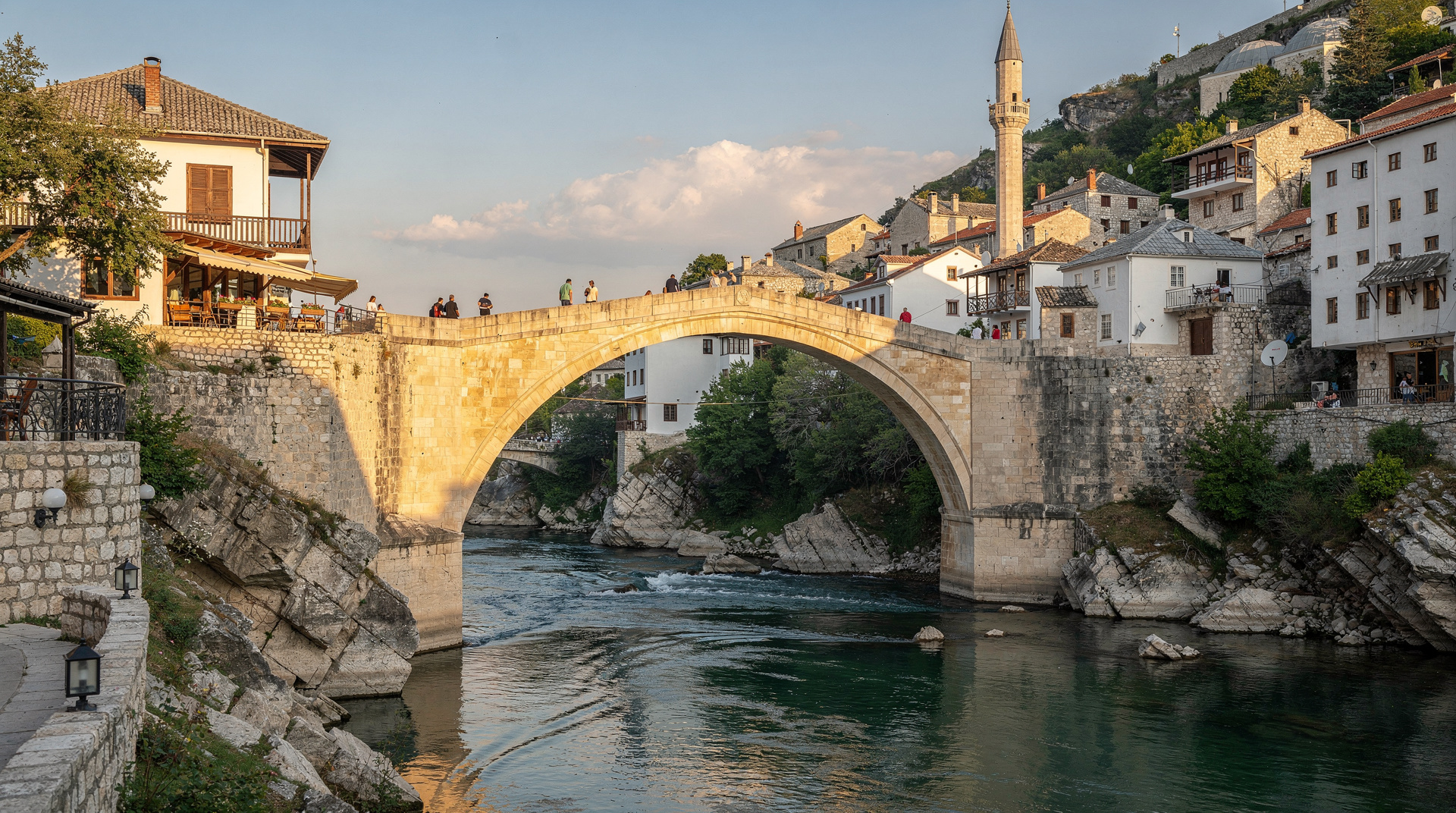
Mostar’s old town (Stari Grad) straddles the Neretva at the narrow point where the Ottomans built their bridge in 1566. Stari Most — the Old Bridge — is the most emotionally charged structure in Bosnia: built by a master architect, destroyed by wartime artillery in 1993, and rebuilt stone by stone by Bosnian craftsmen reopening in 2004. It is a UNESCO World Heritage Site, and standing on the bridge looking down at the jade-green Neretva is one of those travel experiences that stays with you.
Allow 2.5-3 hours in Mostar. Cross the bridge in both directions. Walk north into the relatively quiet Bjelusine quarter on the east bank. Have lunch at one of the konobas overlooking the water — a traditional Bosnian meal of lamb under the sac, spit-roast chicken, or Herzegovinian trout costs 15-30 BAM.
Blagaj Tekke
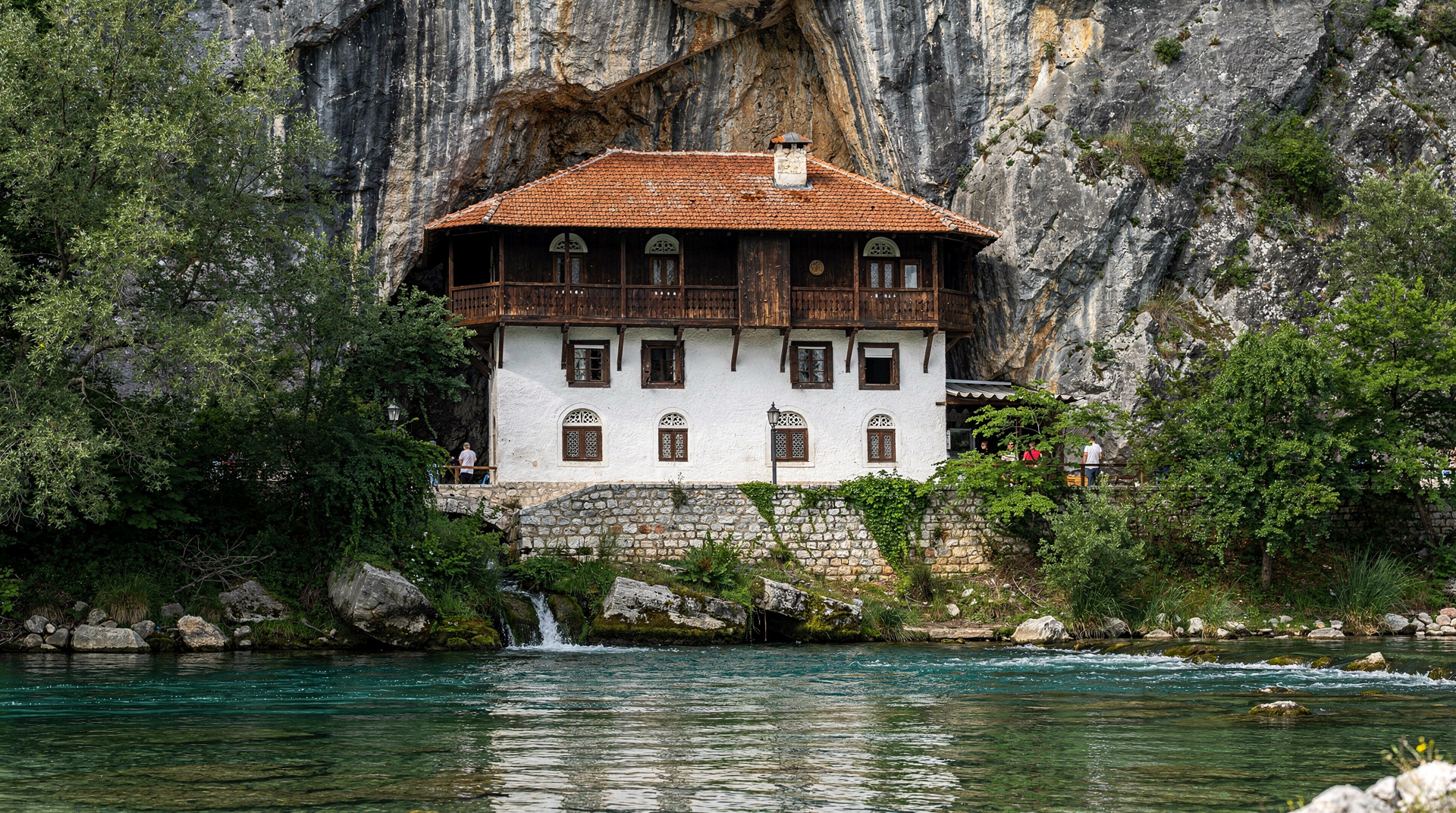
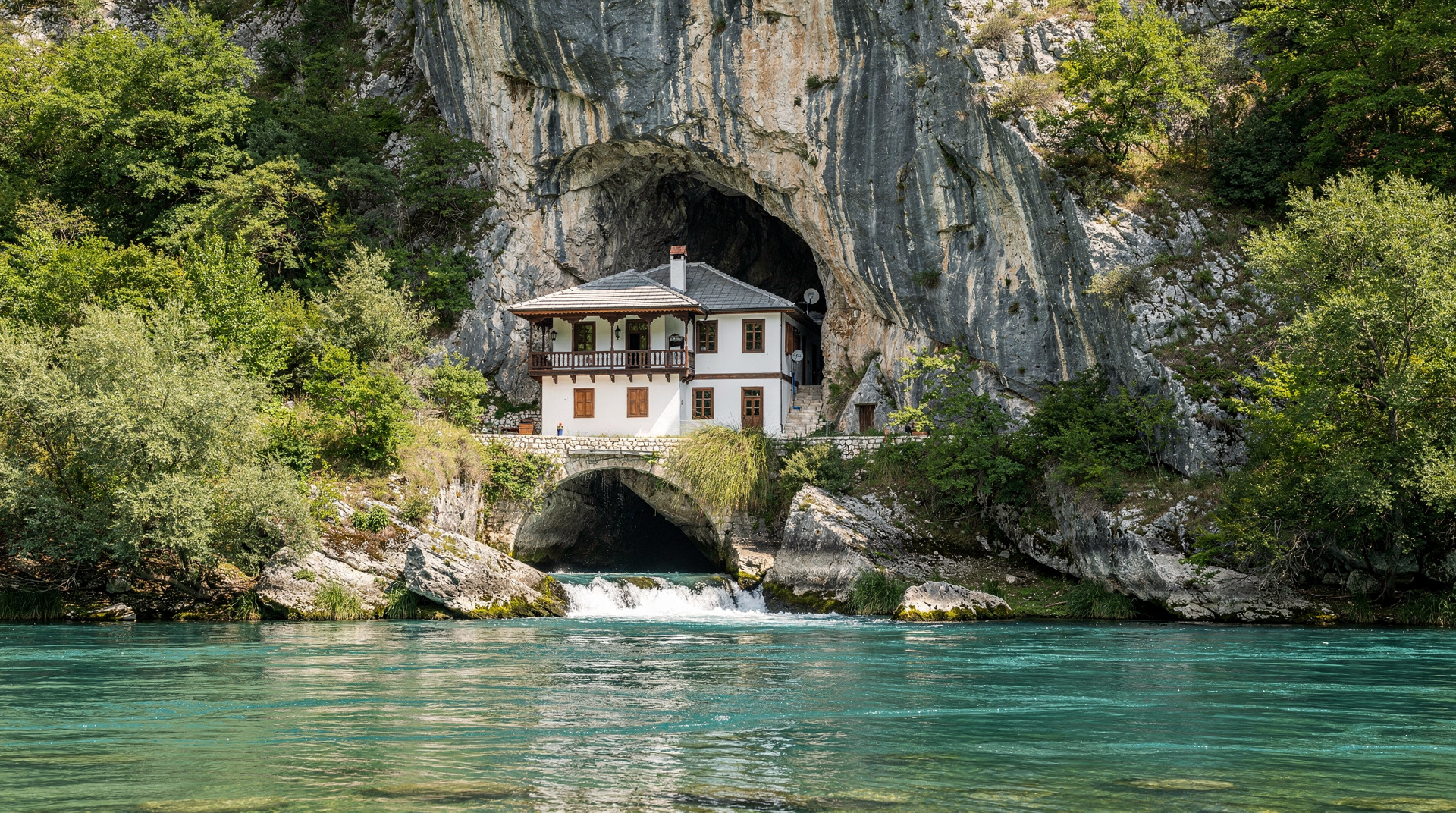
Twelve kilometres southeast of Mostar, the Buna river emerges from a cave at the base of a 200-metre limestone cliff at a rate that makes the spring physically visible — a column of ice-cold water rising from beneath the earth. The Blagaj Tekke, a Dervish monastery (tekija) built in the early 16th century, stands at the water’s edge, its white plaster and stone walls half-covered by overhanging rock. The interior is spare and beautiful: a prayer hall with carved wooden balconies, the tombs of founding dervishes, and the sound of the Buna’s emergence audible through the walls.
Entry is 3 BAM. The path along the riverbank above the tekke, accessible from the car park, offers a view looking down to the source and the building from above — allow an extra 20 minutes for this. The village of Blagaj has several good restaurants serving eel and Buna trout at the water’s edge; worth a lunch stop.
See the Blagaj Tekke guide for the full history of the site.
Počitelj
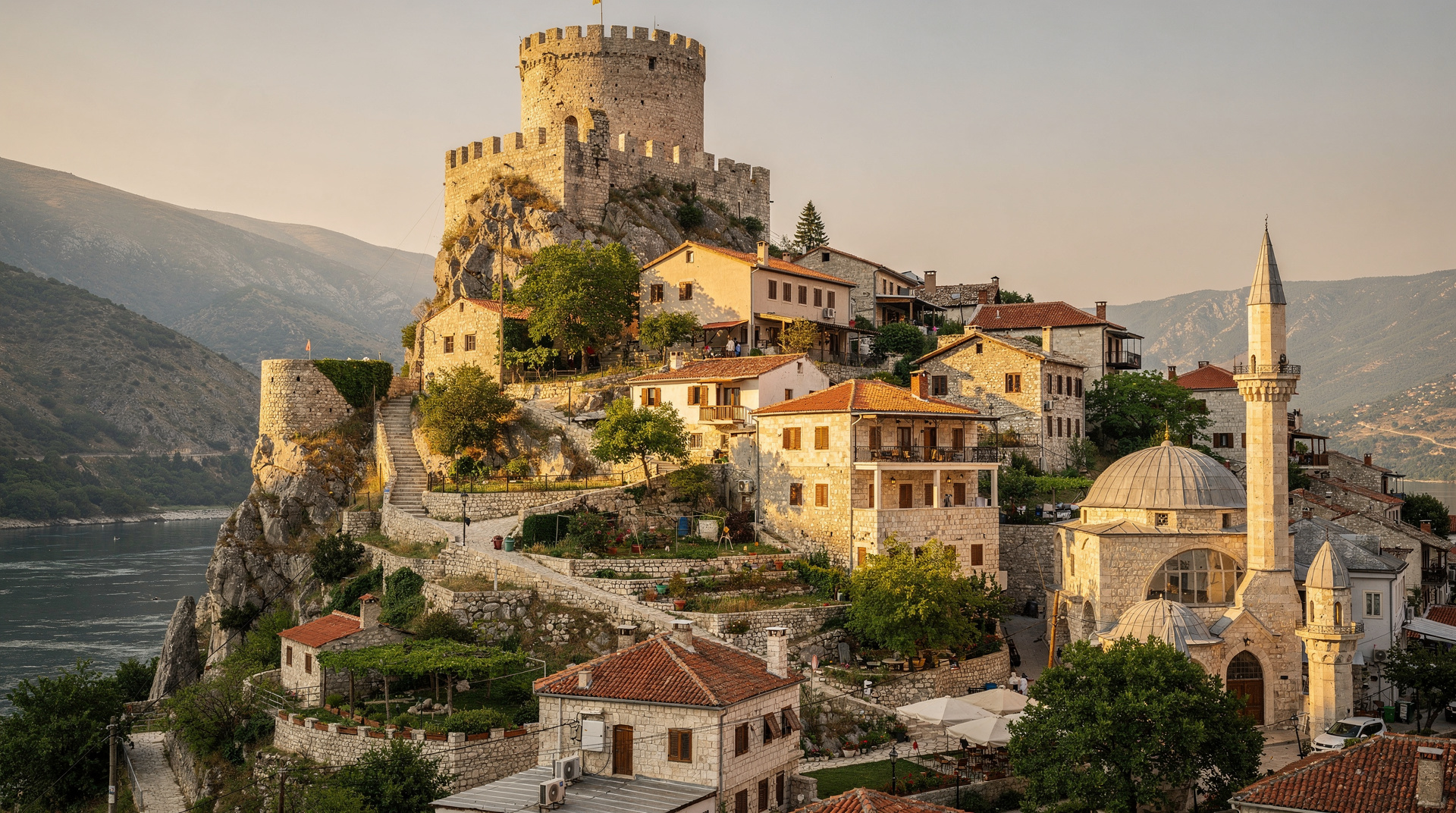
Počitelj is the Ottoman Balkans frozen in place. The walled village climbs a limestone hill on the east bank of the Neretva roughly 30km south of Mostar, and from a distance it looks like an illustration from a history textbook: a cluster of stone houses, a clocktower, a white mosque with a minaret, all enclosed by medieval walls, with a 15th-century castle on the summit. Up close it is equally impressive — though much of the village was damaged in the 1993-1994 war and some houses remain uninhabited.
The Šišman Ibrahim-paša mosque (1563) at the base of the village is the finest Ottoman mosque in Herzegovina. The climb to the Gavrankapetan tower at the top takes 15 minutes but gives panoramic views over the Neretva valley. Entry to the fortress area costs 3 BAM.
The village is entirely pedestrianised. A few souvenir stalls and one or two small cafes operate in season. Buy the locally produced pomegranate products — Herzegovina’s karst landscape suits pomegranates and figs extremely well.
See the Počitelj Ottoman village guide for more background.
Kravice Waterfalls
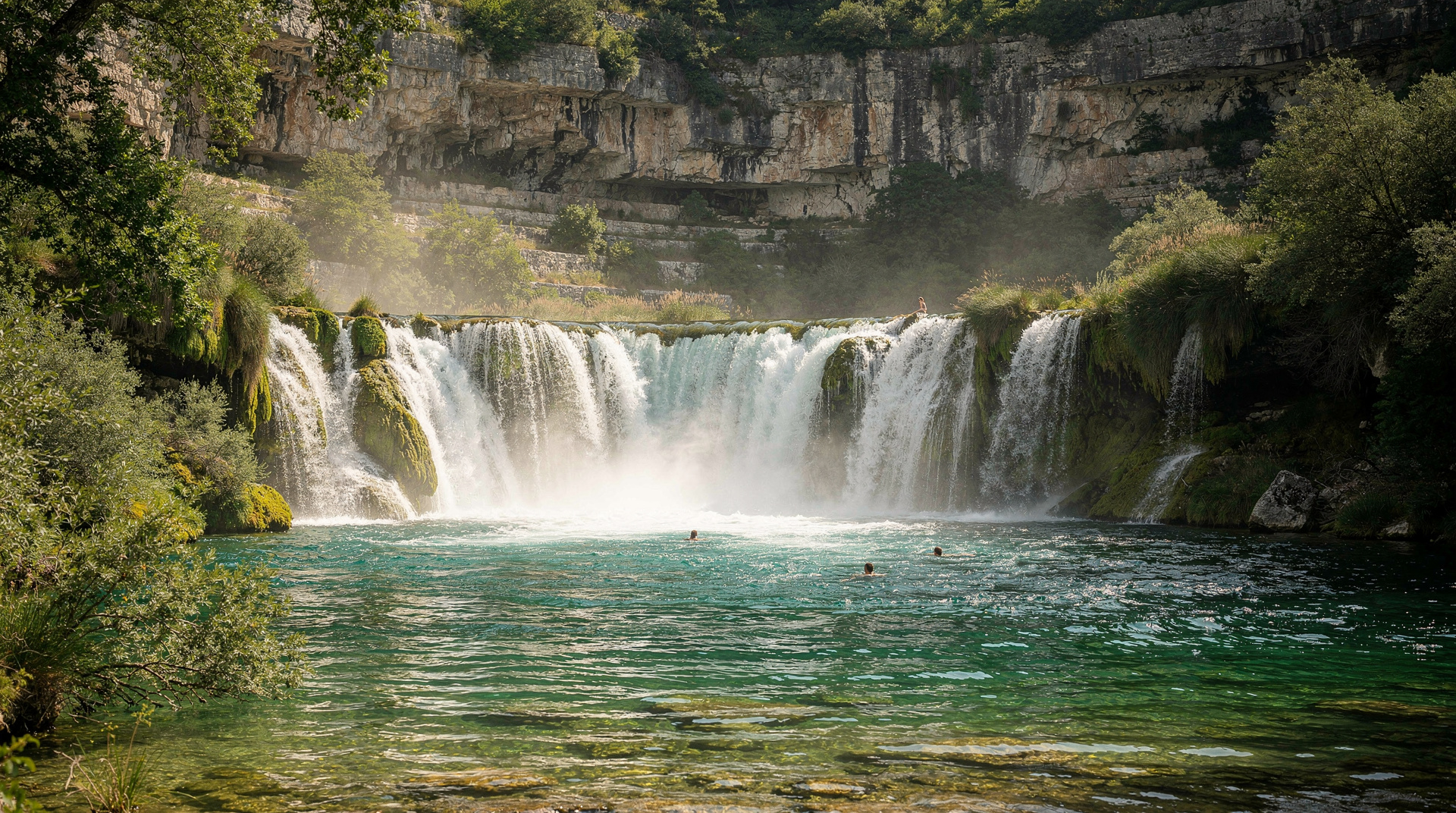
The final stop on the Herzegovina day trip circuit is one of the most satisfying. The Kravice Waterfalls — a horseshoe-shaped tufa cataract approximately 120 metres wide and 25 metres high — sit on the Trebižat River 42km southwest of Mostar. The water is a distinctive blue-green (the same calcium carbonate chemistry that colours Plitvice in Croatia) and flows into a series of natural pools at the base where swimming is permitted and enthusiastically practised from June to September.
Entry is 5 BAM. There are simple restaurants (konobas) at the entrance. The pools are walkable and the entire natural area takes about 60-90 minutes to explore at a comfortable pace. In summer, the waterfall is lower and the pools wider; in spring, the flow is tremendous. Both are worth seeing.
See the Kravice Waterfalls guide for detailed logistics and timing.
Organised tour options
If you don’t have a car, an organised tour from Mostar is the practical solution. Tours cover all four sites in a guided day with transport, entrance fees and often lunch included.
From Mostar: Blagaj, Počitelj and Kravice Waterfalls day tourFrom Sarajevo, a longer day trip covers the same circuit. Most tours depart at 08:00 and return to Sarajevo around 20:00-21:00.
From Mostar: Herzegovina day tourBlagaj, Počitelj, Kravice and Medjugorje sit within forty kilometres of one another but on three different roads out of Mostar, which is what makes them awkward without a driver: a full-day four cities of Herzegovina heritage tour links them in one circuit.
Driving the circuit
By car, the full circuit from Mostar runs: Mostar old town, south on the M17 to Počitelj (30 min), west via Čapljina to Kravice (25 min), north via Ljubuški to Blagaj (50 min), return to Mostar (20 min). Total driving time: approximately 2.5 hours. Total recommended time: 8-10 hours.
Alternatively, going anti-clockwise: Mostar to Blagaj (20 min), Blagaj to Kravice via Čapljina (70 min), Kravice to Počitelj (25 min), Počitelj to Mostar (30 min).
Both routes work; the clockwise version allows you to visit Blagaj (cooler, less crowded) first thing and end at Počitelj (good evening light on the fortress).
Practical information
| Site | Entry fee | Distance from Mostar | Time needed |
|---|---|---|---|
| Mostar old town | Free (bridge free) | — | 2.5-3 hours |
| Blagaj Tekke | 3 BAM | 12 km, 20 min | 45-60 min |
| Počitelj | 3 BAM (fortress) | 30 km, 30 min | 45-60 min |
| Kravice Waterfalls | 20 BAM | 42 km, 50 min | 60-90 min |
The Herzegovina wine guide adds another dimension if you want to combine the circuit with a stop at a local winery — the limestone terrain around Mostar and Stolac produces excellent Žilavka white wine and Blatina red.
Choosing your base and your starting point
Most of the logistics of this circuit come down to where you sleep the night before. Mostar is the natural base: every stop sits within easy reach, you start the day fresh instead of watching the clock on a long drive, and you can linger at the bridge in the evening once the day-trippers have left. If you are still deciding where to stay, the Mostar where to stay guide sets out the neighbourhoods and what each one is like.
Travellers coming from the coast have a different problem. Dubrovnik and Split both feed Mostar with day-trip traffic, and the border crossings can eat into the morning. The Mostar from Dubrovnik guide and the Mostar from Split guide explain how those journeys work, and the driving from Croatia to Bosnia guide covers what to expect at the frontier if you are behind the wheel. If you are comparing the two coastal starting points, Mostar from Split vs Dubrovnik lays out the trade-offs.
From the capital, the picture changes again. The Sarajevo to Mostar transport guide compares the train, bus and driving options, and it is worth reading before you commit to the long single-day version of this circuit. Many visitors who start in Sarajevo discover that the Herzegovina loop deserves more than the tail end of an exhausting day.
How to pace the day
The circuit looks simple on a map, but it rewards a loose plan rather than a rigid timetable. The four stops are very different in mood. Mostar is busy and atmospheric, Blagaj is quiet and contemplative, Počitelj is a slow climb through stone lanes, and Kravice is social and splashy. Putting two crowded stops back to back tends to wear people out, so try to alternate the calm places with the lively ones.
Build in breathing room around lunch. The konobas in Mostar and the riverside restaurants in Blagaj both make good midday stops, and a long unhurried meal is part of the point of the trip, not a delay to be minimised. Herzegovinian cooking is generous, and travellers who rush through it often regret not eating more slowly. If you want to understand what is on the menu before you arrive, the Bosnian food guide is a good primer.
Carry water and a light layer. The limestone landscape reflects the sun, the walled village has little shade on its upper paths, and the spring at Blagaj feels cool even when the day is hot. A pair of shoes with decent grip helps on the worn stone steps at Počitelj, and a swimming costume and a towel are worth keeping in the car for Kravice even if you are not sure you will swim.
Driving tips for the loop
Driving in Herzegovina is straightforward by the standards of the region, but it helps to know what you are getting into. Roads are generally in good condition on the main routes, though local drivers can be assertive and village streets are narrow. The driving in Bosnia guide covers road rules, parking habits and what to do if something goes wrong, and the renting a car in Bosnia guide explains what to check before you sign for a vehicle, including the paperwork you need if the car is going to cross a border.
Fill the tank before you leave Mostar rather than hoping for a convenient station near the smaller sites. Keep small coins for the entry fees and car parks, since the ticket booths at the smaller sites are not set up for large notes. The Bosnia money and currency guide explains how the convertible mark works and where you can still pay in euros, and it is a useful read before your first cash payment.
Leave yourself a margin at the end of the day. Light fades gradually in the valley, but unfamiliar roads feel longer in the dark, so aim to be heading back toward Mostar before the evening is far advanced.
Reading the landscape and its history
What makes this circuit more than a sightseeing list is how neatly the four stops tell one story. The Neretva carved the valley that made Mostar a crossing point, the Ottomans fortified and settled it, and the same rivers and springs that fed their towns still shape the scenery today. The Ottoman heritage in Bosnia guide places Stari Most, the tekke and the walled village in that wider context, and it makes the day feel less like a series of photo stops and more like a connected journey.
The recent past is present too. Mostar and Počitelj both bear the marks of the 1990s war, and visitors who want to understand what happened should read the Mostar war history guide before or after the trip. Treat damaged and empty buildings with the same respect you would show anywhere people lost their homes, and stay on marked paths and established routes when you wander.
If you have more than one day
Travellers with a spare day or two can stretch this loop into something richer. The Herzegovina weekend itinerary spreads these sights over a gentler schedule and leaves time for the evenings, which are some of the best moments in Mostar. For a wider view, the best day trips from Mostar shows what else sits within reach, so you can swap stops in and out according to your own interests and the season.
Extending the day: what to add or drop
If the four core stops feel light for a full day, Herzegovina has two natural extensions. A wine tasting stop near Čitluk (see the Herzegovina wine guide) fits neatly between Počitelj and Kravice, and adds roughly 90 minutes including the detour. For travellers heading further south, Trebinje — “the other Herzegovina” — is a further 90 minutes past Počitelj and works better as an overnight add-on than a same-day stop; see the Trebinje the other Herzegovina blog post for a first-hand account.
If time is tight, the stop most travellers safely drop is Počitelj — it is the smallest of the four sites (45-60 minutes) and the least essential if you have already seen Mostar’s Ottoman architecture. Blagaj and Kravice are the two stops nearly everyone rates as unmissable.
Frequently asked questions about Herzegovina day trip guide — Mostar, Blagaj, Počitelj and Kravice
What is the best order to visit Mostar, Blagaj, Počitelj and Kravice?
How far apart are Blagaj, Počitelj and Kravice from Mostar?
Is Herzegovina day trip possible without a car?
What should I wear at Blagaj Tekke?
How much does entry to Kravice Waterfalls cost?
Top experiences
Bookable activities with verified prices and instant confirmation on GetYourGuide.