Trebinje and Hercegovačka Gračanica — the Orthodox gem of southern Herzegovina
Trebinje Tour with Luxury Transport and Wine Tasting
What is Hercegovačka Gračanica?
Hercegovačka Gračanica is a Serbian Orthodox monastery church built in 1996 on Crkvina Hill above Trebinje, modelled on the medieval Gračanica Monastery in Kosovo. It holds the heart of the poet Jovan Dučić and offers panoramic views over the Trebišnjica river valley.
Most visitors to Herzegovina stick to the Mostar–Kravice–Blagaj triangle. Trebinje, 80 km to the south-east, barely features in most itineraries. This is a mistake. Trebinje is arguably the most handsome small town in Bosnia, its old quarter preserved and unhurried in a way Mostar — battered by war and rebuilt for tourists — can no longer claim to be. Above it, on Crkvina Hill, a Serbian Orthodox monastery church commands views of the Trebišnjica river valley that justify the climb alone.
| At a glance | |
|---|---|
| Where | Southernmost Herzegovina, about 30 km from Dubrovnik, 80 km from Mostar |
| Cost | Monastery entry by donation; old town free to walk; a full meal around 20–40 BAM per person |
| Time needed | 4–5 hours for a Dubrovnik day trip; a full day if adding wine tasting |
| Getting there | Car via the Ivanica border crossing (around 45 min from Dubrovnik) or an organised day tour |
| Best time | Late spring and early autumn for mild weather; the monastery hill is exposed in midsummer heat |
The town
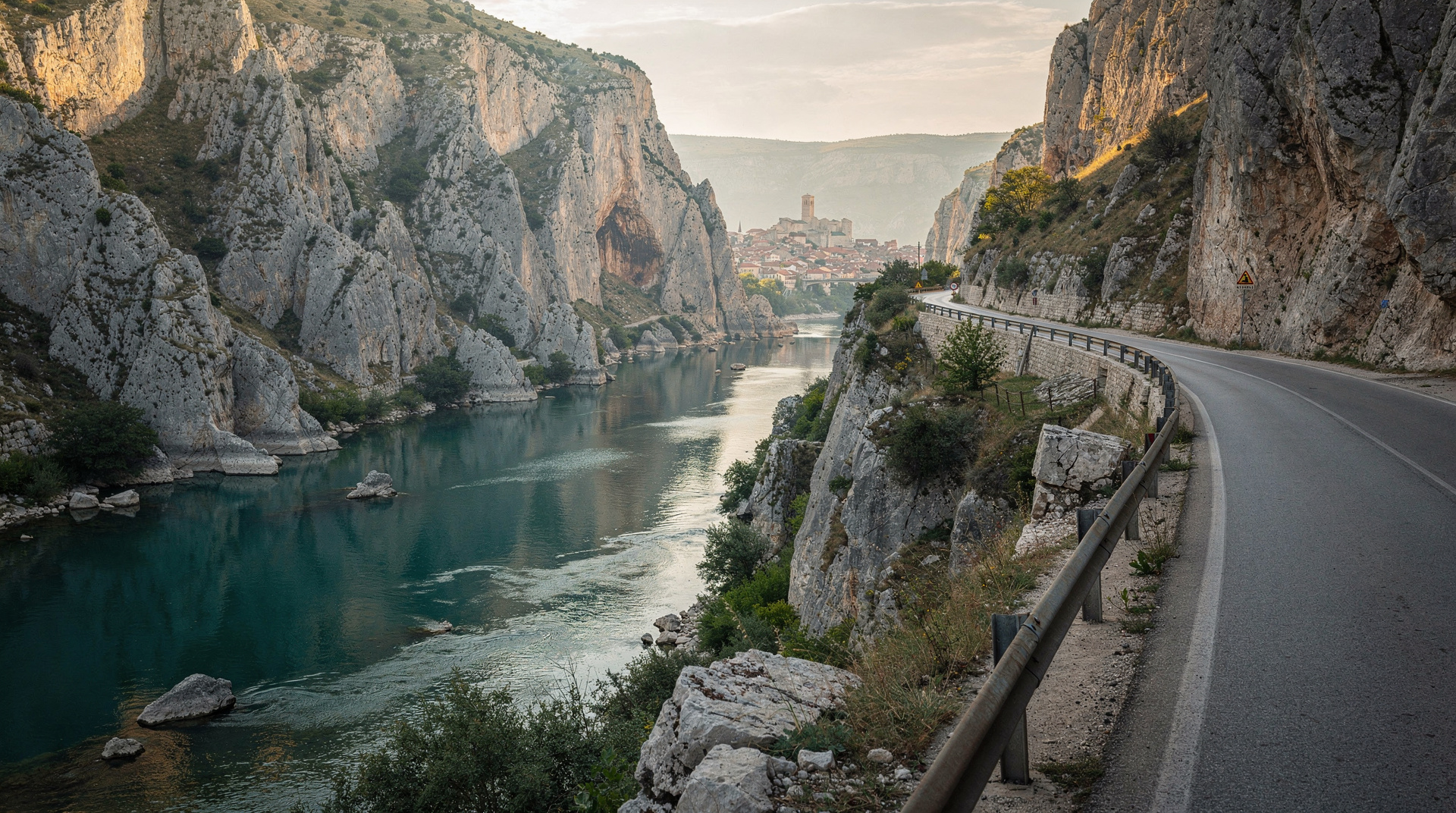
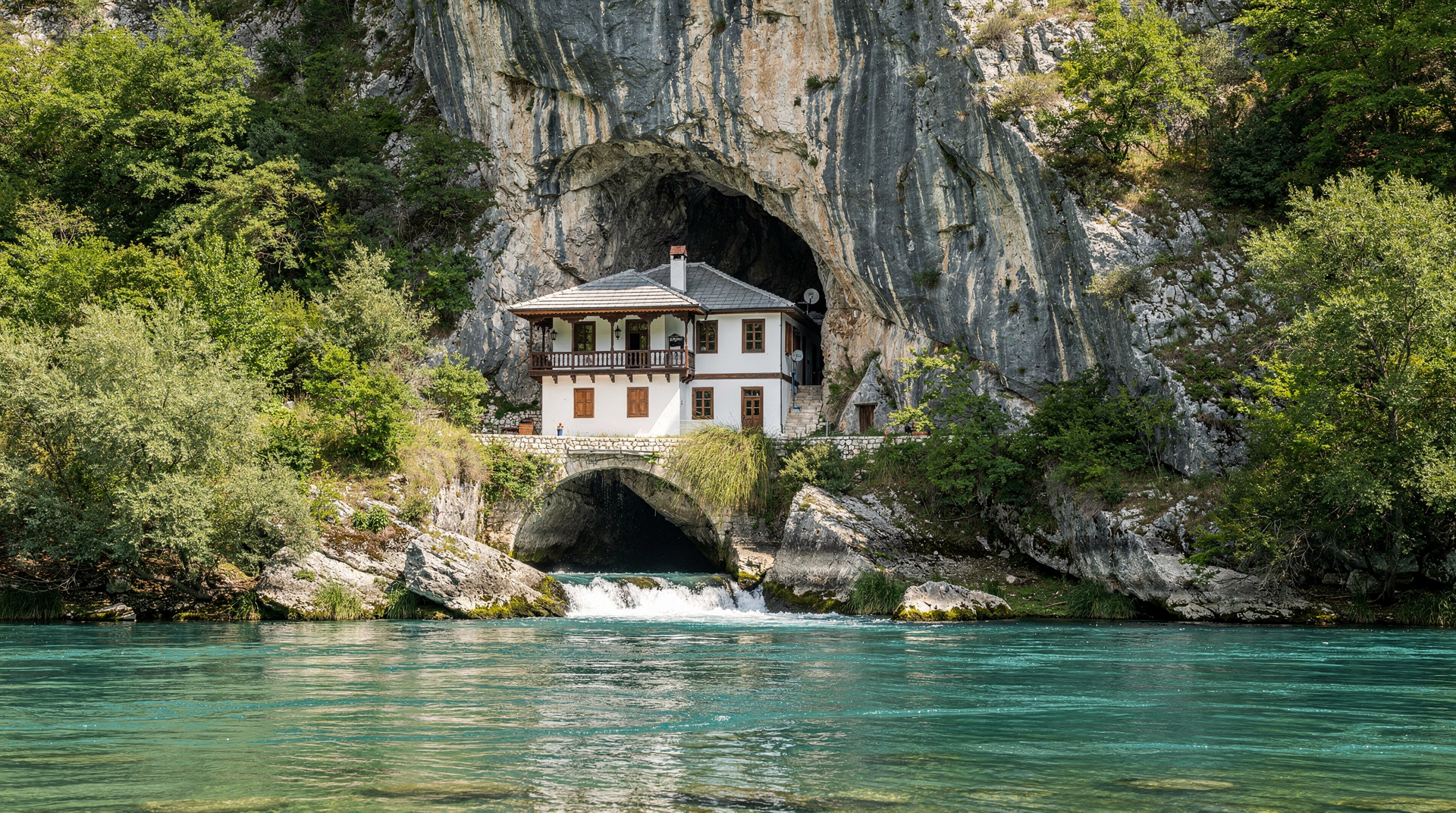
Trebinje sits on a bend of the Trebišnjica river, the largest sinking river in Europe — an underground river that disappears for long stretches through the Karst and resurfaces near Dubrovnik as the Ombla spring. The valley is wide and fertile, planted with vines and pomegranate trees, and ringed by limestone ridges that shimmer white in summer.
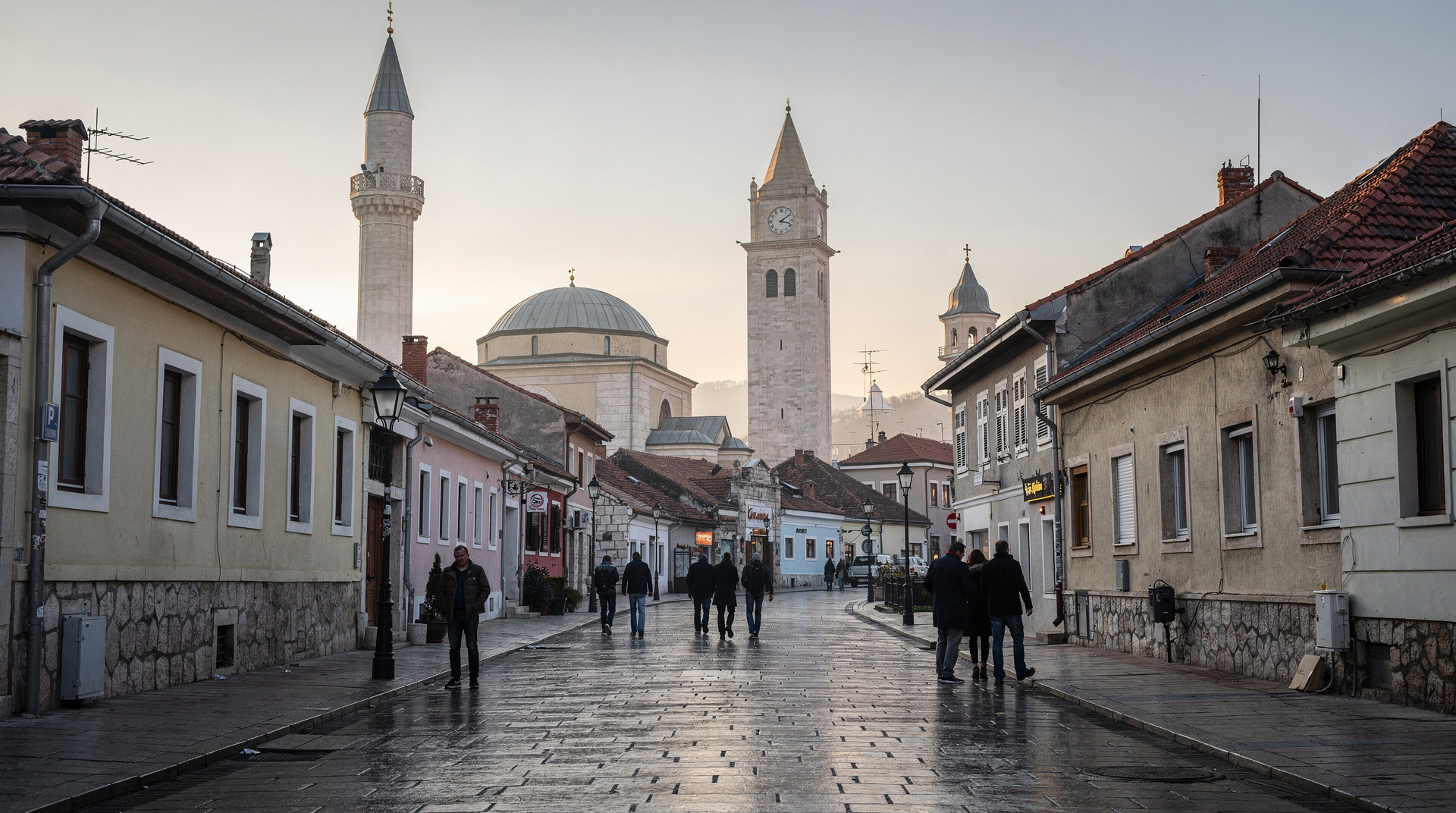
The modern town is unremarkable. Walk through it to reach the Stari Grad — the old fortified town built in the 18th century by the Ottoman commander Osman Resulbegović. The old town is barely 200 metres across, enclosed by stone walls with a single main gate, and contains a dozen or so houses, a small mosque (Arslanagića džamija), a clock tower and a central courtyard. The scale is intimate rather than monumental. A café occupies one corner; locals sit in the shade and play cards.
Outside the walls, the main square (trg) is animated in the evenings with café terraces and a small outdoor market. Trebinje’s food scene punches above its weight for a town of 35,000 — fresh trout from the river, smoked prosciutto from the village, local cheeses, and above all local wine.
Hercegovačka Gračanica monastery
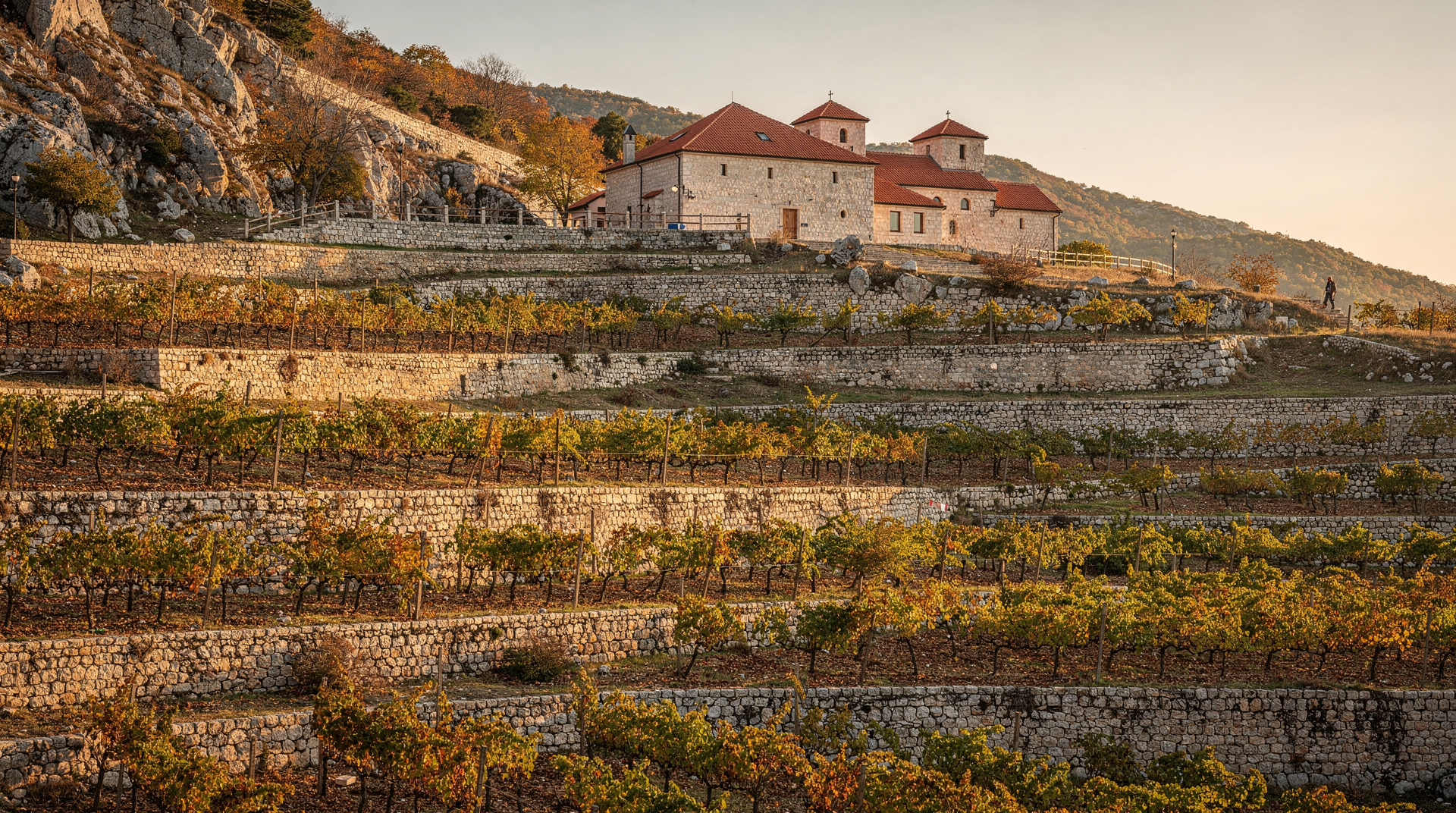
The Serbian Orthodox monastery church on Crkvina Hill is the reason most visiting Christians come to Trebinje. Built in 1996 as a replica of the 14th-century Gračanica Monastery in Kosovo — one of the masterworks of Serbian medieval architecture — it stands on a flat-topped hill above the town, reached by a winding road or a steep footpath.
The original Gračanica, built by King Stefan Milutin in 1321, is famous for its elaborate system of interpenetrating arches and domes, considered one of the high points of the Raška school of Serbian medieval architecture. The Trebinje copy is smaller but faithfully reproduces the cascading rooflines, the Byzantine cross plan, and the frescoed interior.
Inside, the church is decorated throughout with contemporary frescoes in the Byzantine tradition — gold-ground icons, elongated saints, the Pantocrator in the central dome. Whether or not you are Orthodox, the visual coherence and devotional intensity of the space are striking. The church holds the urn containing the heart of the poet Jovan Dučić, returned from the United States in 2000 as his last wish — to rest in his native town.
Book a Trebinje wine and heritage tour from Dubrovnik — the most efficient way to combine the monastery, the old town, and wine tasting in the Popovo Polje region in a single day from the Croatian coast.
Dress modestly to enter the church: covered shoulders and knees for both men and women. Photography is permitted in the nave but not during services. There is no entrance fee; a donation box is near the door.
Tvrdoš Monastery and the winery
About 3 km south-west of the town centre, Tvrdoš Monastery sits in a narrow gorge above the Trebišnjica river. It is one of the oldest active Orthodox monasteries in Herzegovina, with documented history going back to the 15th century, though the present buildings are largely 18th and 19th century reconstructions.
The monks here produce wine — specifically Žilavka (white) and Vranac (red) — under the Tvrdo label. The winery is one of the most respected in Herzegovina and the wines are sold throughout Bosnia and exported to Orthodox diaspora communities in Europe and North America. A tasting room is available to visitors; call ahead or ask at the monastery gate.
The gorge setting — limestone cliffs above, dark water below — is dramatic even without the wine.
Wine in the Trebinje region
The Popovo Polje plateau stretching north of Trebinje is one of Herzegovina’s most productive wine areas. The karst terrain, high sun exposure, and relatively low summer rainfall produce grapes of intense concentration. Žilavka, a Herzegovinian white variety, gives dry, minerally whites with citrus and green apple notes. Blatina and Vranac are the main reds — full-bodied and tannic, best with roast lamb or grilled meats.
Several private wineries have opened in recent years, welcoming visitors by appointment. The town’s restaurants all carry local wines; a glass costs 3–6 BAM (1.50–3 EUR), a bottle 15–30 BAM (8–15 EUR) at the source.
For a full treatment of Herzegovina wine, see the Herzegovina wine guide.
Trebinje from Dubrovnik — a natural day trip
Dubrovnik lies only 30 km from Trebinje. The border crossing at Ivanica is one of the quickest on the Bosnian frontier — rarely more than 10–15 minutes even in summer. The combination of Dubrovnik’s Adriatic baroque and Trebinje’s Ottoman-Slavic heritage, separated by half an hour of driving, is one of the Balkans’ finest contrasts.
Most Dubrovnik visitors spend at most 4–5 hours in Trebinje, which is enough for the monastery, the old town and a long lunch. A full day allows wine tasting and a drive to Tvrdoš or the Popovo Polje. See the Bosnia from Kotor guide if you are approaching from the Montenegrin coast, where Trebinje is equally accessible.
If you would rather not handle the border and the driving yourself, a private guided tour into Bosnia and Herzegovina lets you set the pace at the monastery and in the old town. Travellers staying around Mostar can instead pick a day tour through Herzegovina starting from Mostar to see more of the region in one outing.
How to pace your time in Trebinje
The simplest order is to start with the monastery while the light is soft and the hill is at its most comfortable, then come down into the old town for a slow wander and a late lunch. Leave Tvrdoš and any tasting for the afternoon, when you no longer need to climb anything. Reversing this order works too, but the hilltop is the part of the day that suffers most from heat and from tired legs.
Give the church itself more time than a quick photograph. The interior rewards patience: let your eyes adjust to the candlelight, look up into the dome, and watch how the frescoes change as you move around the nave. If a service is under way, step back, keep quiet and simply listen; the chanting is part of why people travel here. Afterwards, walk out to the terrace edge and look down over the river valley and the rooftops of the town. It is the best place to understand how the Trebišnjica shapes everything below.
In the old town, the pleasure is in not having a plan. Sit in the shade, order a coffee, and watch the rhythm of the place. Locals treat these streets as an extension of their living room, which is exactly why the town feels so different from the busier destinations of the region. If you want a counterpoint to this calm, the Mostar tourist traps guide explains what the more crowded Herzegovina stops can feel like at peak hours.
Who this stop suits
Trebinje suits travellers who like places where little is staged for visitors. History readers will enjoy the layers: Ottoman fortification, a Serbian Orthodox revival church and a monastic winery all within a short distance. Food and wine lovers get a relaxed introduction to Herzegovinian cooking without the queues. Photographers will find the old walls, the plane trees and the view from the hill rewarding in morning and evening light.
It is less suited to anyone who wants nightlife, big museums or a checklist of famous sights. Think of it as a place to slow down. If you are building a wider route, the Herzegovina day trip guide and the Herzegovina weekend itinerary show how Trebinje can sit alongside Mostar, Blagaj and Počitelj without feeling rushed. For the cultural background that makes the monastery easier to read, the Bosnia history guide for travellers and the Ottoman heritage guide are good companions.
Where to eat and drink in Trebinje
Platani (Trg slobode): the most popular café-restaurant on the main square, under plane trees, with reliable Bosnian staples and local wines. Good for a long lunch.
Restaurant Most: near the old bridge, specialising in fresh river fish — trout from the Trebišnjica, prepared simply. Prices 20–40 BAM (10–20 EUR) for mains.
Kafana Anex: traditional Bosnian grillhouse in the old town, popular with locals. Ćevapi (grilled meat sausages) 10–15 BAM (5–8 EUR).
Brewery Trebinje (Pivara Trebinje): a small craft brewery near the bus station that has become a social hub. Local Trebing beer on tap; bar snacks.
Practical information
Distance from Dubrovnik: 30 km, 45–50 minutes by car. Distance from Mostar: 80 km, 1h20 by car via the Neretva valley. Currency: BAM (1 EUR = 1.95583 BAM). Euros may be accepted but at a worse rate. ATMs in the town centre. Accommodation: Small hotels and guesthouses from 50–90 EUR/night. Not many options — book ahead in June–September. Border crossing: Ivanica (Trebinje–Dubrovnik) is the most used. Bring passport or EU ID card. Green card insurance required for vehicles registered outside Bosnia. Language: Serbian (Cyrillic and Latin scripts both used). English spoken at hotels and some restaurants; limited elsewhere.
Frequently asked questions about Trebinje
Is Trebinje worth visiting without a car?
Buses run from Dubrovnik bus station to Trebinje several times daily (approximately 90 minutes, 10–15 EUR). Organised tours from Dubrovnik are the easiest option. Within Trebinje, everything worth seeing is walkable.
What is the difference between Trebinje and Mostar for visitors?
Mostar is bigger, more touristic, ethnically mixed (Bosniak and Croat), and anchored by the famous Old Bridge. Trebinje is smaller, quieter, predominantly Serbian Orthodox, and less visited by international tourists. If you have time for both, they complement each other well. If forced to choose for a day trip from Dubrovnik, the two are so different that the choice depends entirely on your interests.
Is it safe to drive into Republika Srpska?
Entirely. Republika Srpska is part of Bosnia and Herzegovina. The political situation between the entities is sometimes tense at the governmental level, but there are no security issues for tourists. Standard road rules apply; third-party insurance (green card) is required for foreign-registered vehicles.
Trebinje as part of a wider Herzegovina or Adriatic loop
Trebinje works well as one leg of a longer trip rather than a stand-alone destination. Coming from the Adriatic, many visitors base themselves in Dubrovnik or Kotor and treat Trebinje as a half-day departure from the coast.
Others come the other way, treating it as the final stop of a Herzegovina loop that starts in Mostar — the Blagaj Tekke dervish monastery guide covers a similarly atmospheric religious site closer to Mostar, useful for comparison if you are deciding how many spiritual sites to fit into one trip. For the wider wine picture beyond the monastery vineyards mentioned here, the Trebinje wine region guide goes into far more depth on individual wineries and tastings.
If you are driving across the frontier, the Croatia to Bosnia driving guide covers what to expect at the border, and the Trebinje destination page gathers the town’s essentials in one place. For a more personal account of the region, the blog post Trebinje, the other Herzegovina is worth a read before you go.
Before crossing between currencies and entities, it is worth a quick read of the Bosnia money and currency guide — Trebinje uses the same convertible mark (BAM) as the rest of Bosnia and Herzegovina, but ATMs and card acceptance are noticeably less dense here than in Sarajevo or Mostar, so carrying some cash matters more than usual.
Top experiences
Bookable activities with verified prices and instant confirmation on GetYourGuide.