Trebinje wine region guide
Trebinje Tour with Luxury Transport and Wine Tasting
What is the wine scene like in Trebinje?
Trebinje, in southernmost Herzegovina near the Montenegro and Croatian borders, produces Žilavka white and Blatina red in a warm Mediterranean microclimate. The Tvrdoš Monastery is the most famous producer; several private wineries offer tastings, and the city itself is one of Bosnia's most pleasant wine-and-culture destinations.
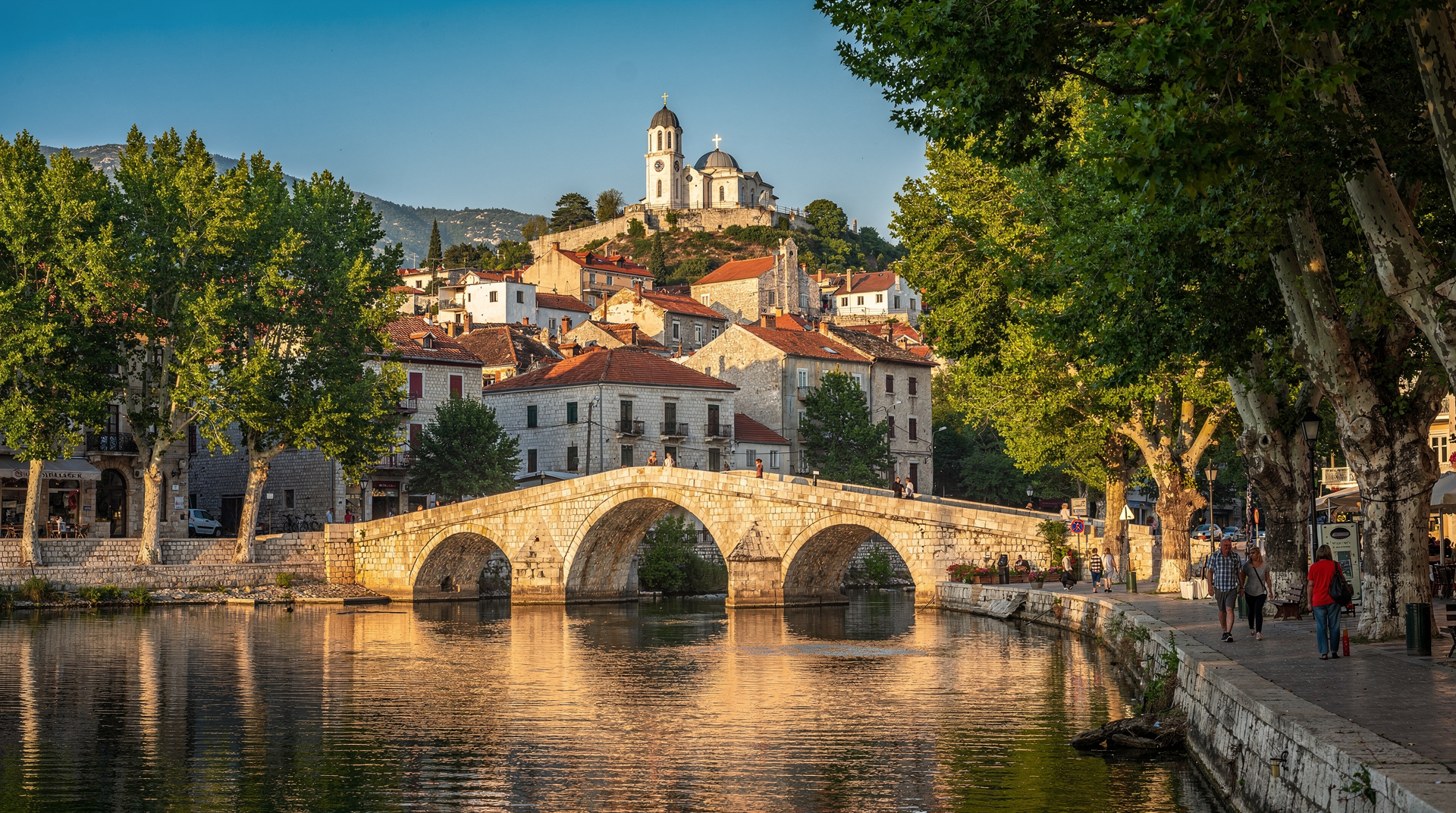
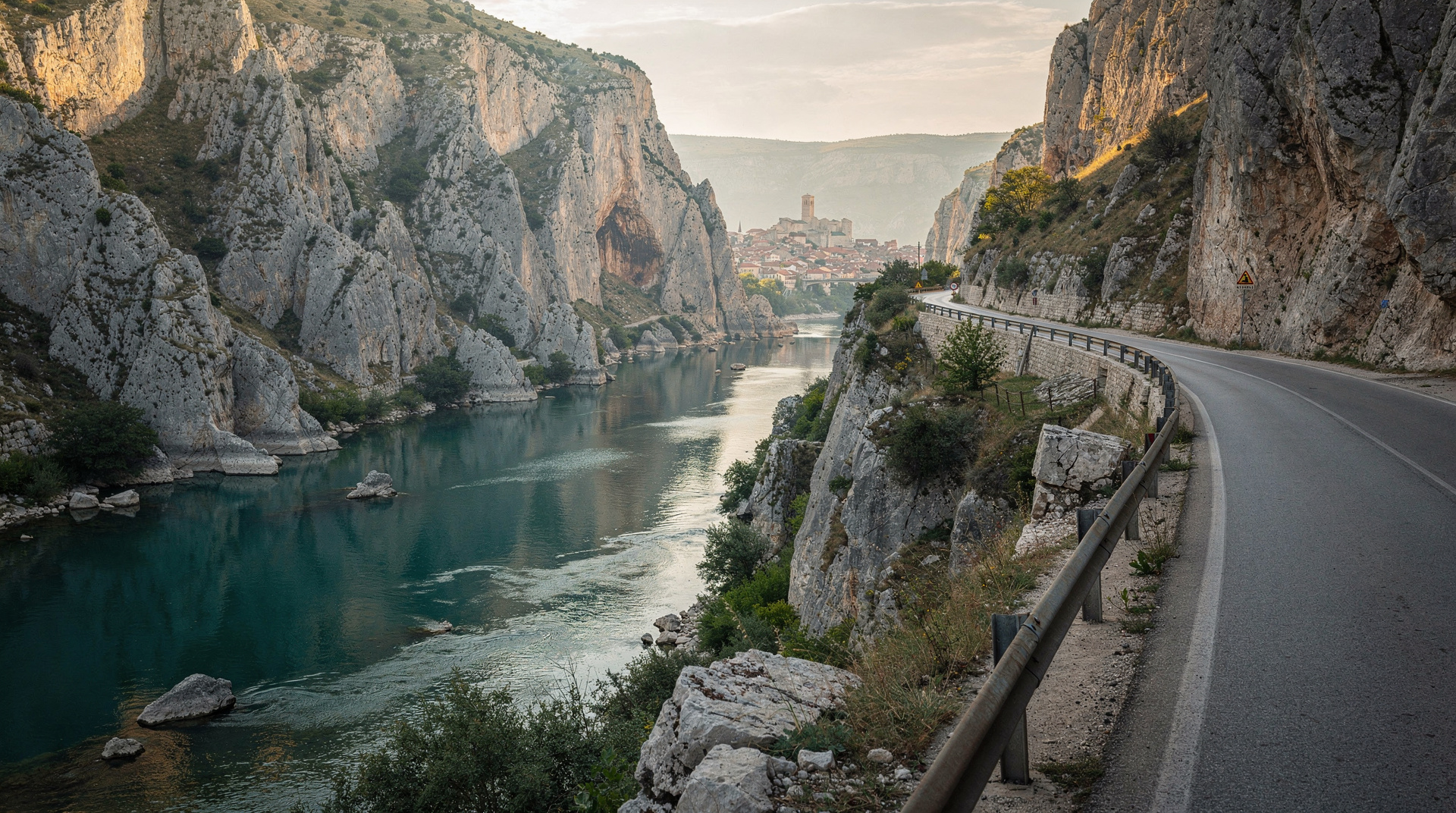
Trebinje sits at the extreme south of Bosnia & Herzegovina, tucked into a valley where the Trebišnjica River runs quietly under a canopy of ancient plane trees. Most visitors who know it come from Dubrovnik — it is closer to the Adriatic coast than most Bosnian towns, and the drive through the karst hills takes less than an hour. Those who come for a morning often stay until evening, lured by the wine, the food, and the quiet beauty of a city that the tourist masses have not yet discovered.
| At a glance | |
|---|---|
| Where | Southern Herzegovina, about 30 km from Dubrovnik |
| Cost | Tastings vary by winery; a glass of local wine in town around 3–6 BAM, a bottle 15–30 BAM |
| Time needed | Half a day for the town and one winery; a full day (8–9 hours) for an organised wine tour from Dubrovnik |
| Getting there | Car via the Ivanica border crossing, or a guided day tour from Dubrovnik |
| Best time | May–June and September–October for ideal weather and photogenic vineyards |
Wine grape varieties to know before you go
Understanding the local grapes makes tastings far more rewarding. Žilavka is the signature Herzegovinian white — dry, aromatic, with citrus and green apple notes and, from the Trebinje microclimate specifically, a touch more freshness than examples from further north around Mostar. Blatina is the main red, tannic and full-bodied, traditionally paired with roast lamb. Vranac, though more strongly associated with neighbouring Montenegro, is also grown around Trebinje and tends to produce softer, more approachable reds than Blatina. A few producers, such as Vukoje, experiment with rosé and sparkling styles that are unusual for the region and worth trying if offered.
For readers comparing this trip with a wider Herzegovina wine circuit around Mostar, the Herzegovina wine guide covers that region’s wineries in detail. If you are deciding whether to base a Herzegovina trip in Split or Dubrovnik, the Mostar from Split vs Dubrovnik guide is a useful companion for planning logistics, since Trebinje is realistically only a day trip from the Dubrovnik side.
Trebinje and the Mediterranean microclimate
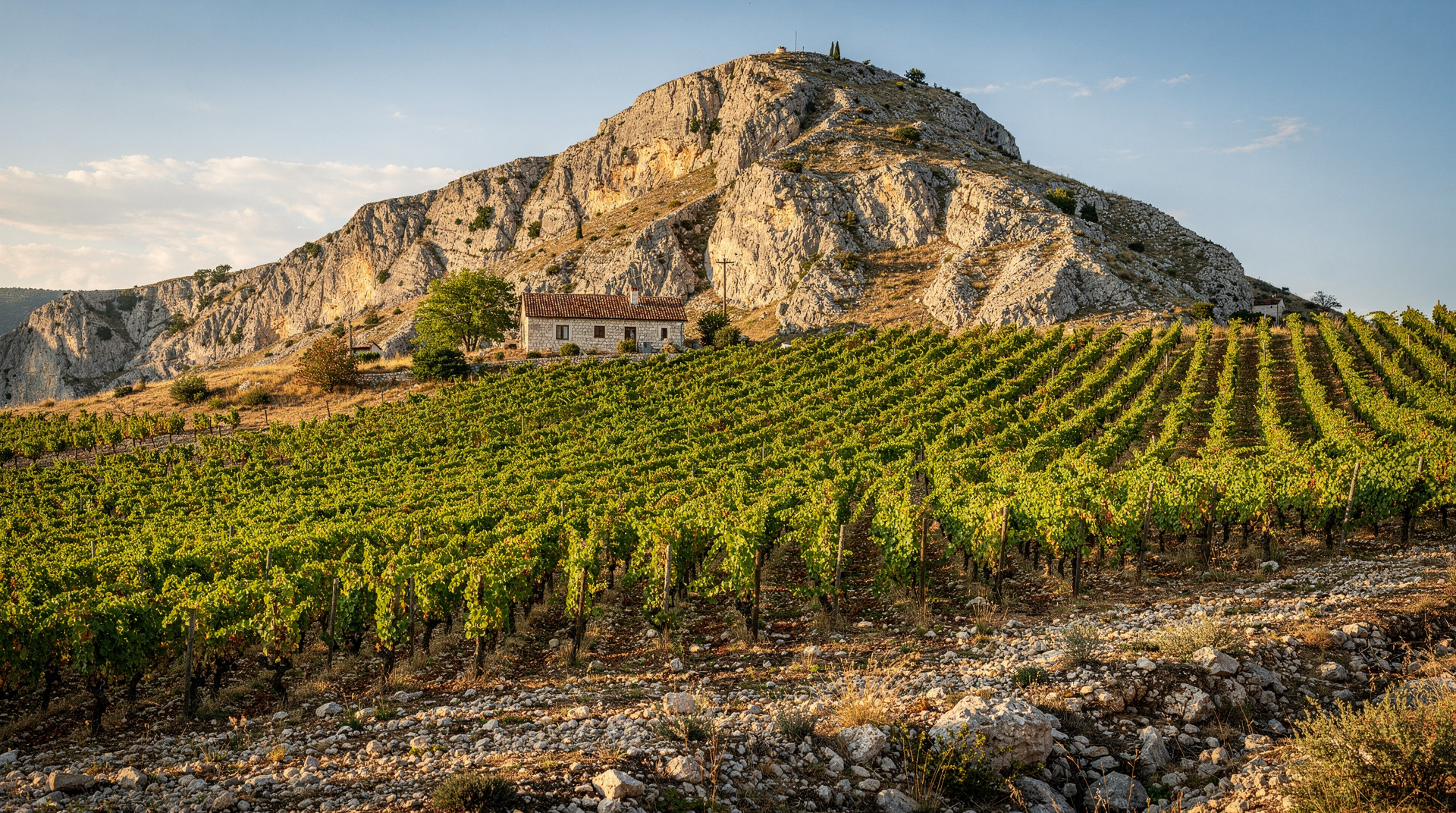
The wine of Trebinje owes much to its geography. At roughly 270m above sea level, the city is protected from harsh northern winds by the Dinaric Alps but open enough to the south to receive Mediterranean warmth. Summer temperatures are slightly cooler than in Mostar, and the Trebišnjica River valley retains moisture that prevents the extreme heat stress seen in some other Herzegovinian vineyards.
The result is wines with slightly more finesse and complexity than those from the hotter Mostar area — Žilavka from Trebinje tends to be particularly aromatic and fresh.
How to taste like a local
Herzegovinian wine is made to sit at the table, not on a shelf. Order it with food, let the waiter suggest a pairing, and expect it to arrive alongside bread, cheese and cured meat. A glass of Žilavka with a plate of local cheese is the simplest introduction, and a glass of Blatina with lamb is the classic second lesson. If you are travelling with someone who drives, share the tasting duties: the roads are winding and a designated driver is part of any sensible plan, as the driving in Bosnia guide explains.
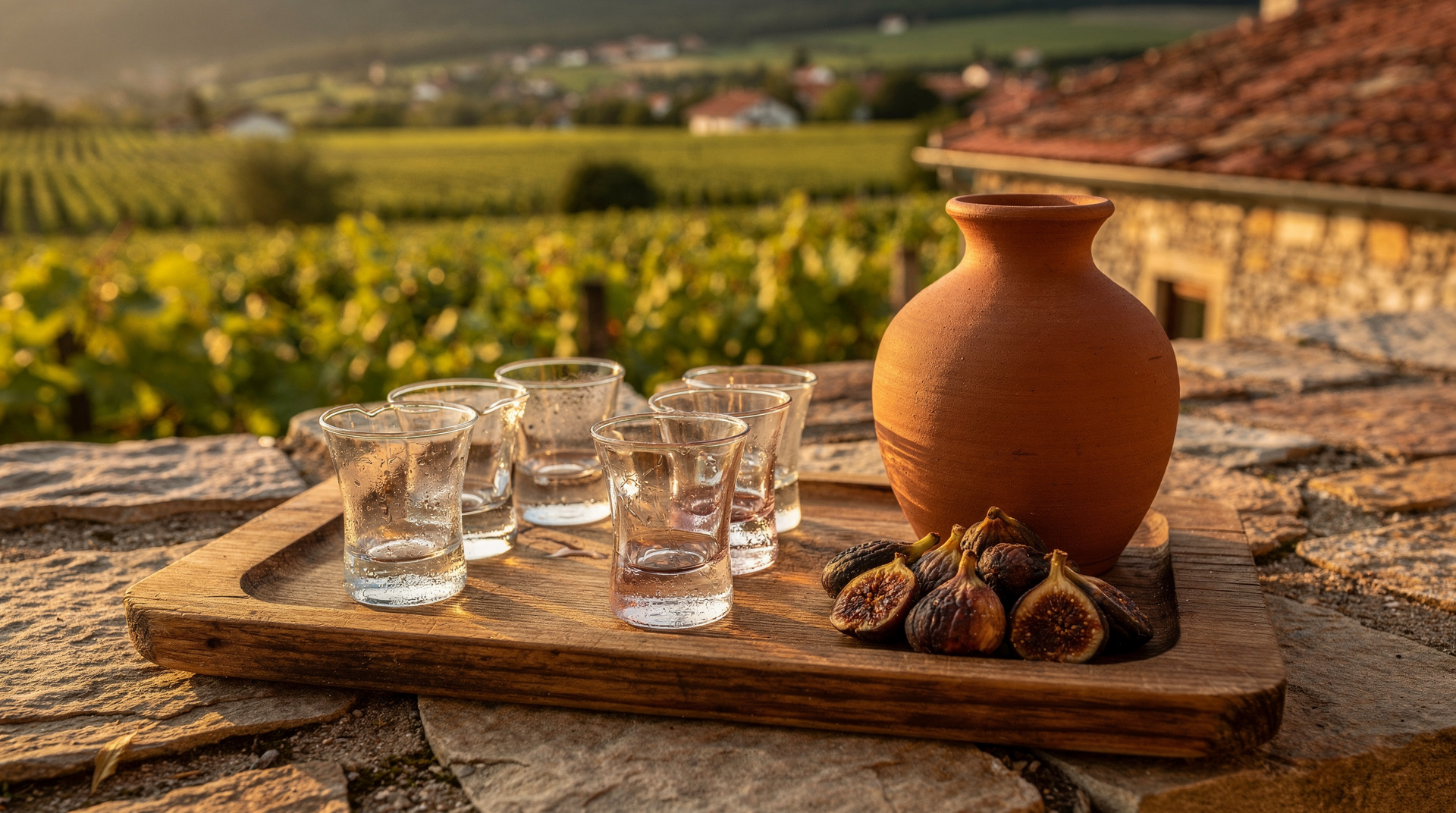
Ask questions at every stop. Small producers are usually delighted to explain how their grapes are grown, why a particular vintage tastes the way it does, and which dish they would serve with each bottle. Tasting is also a good moment to try the local spirit: many families pour a small glass of rakija at the end of a visit, and the rakija guide will help you know what you are being offered. For a wider food context beyond the vineyards, the Bosnian food guide covers the dishes you will keep meeting on menus across the country.
Tvrdoš Monastery and its wine
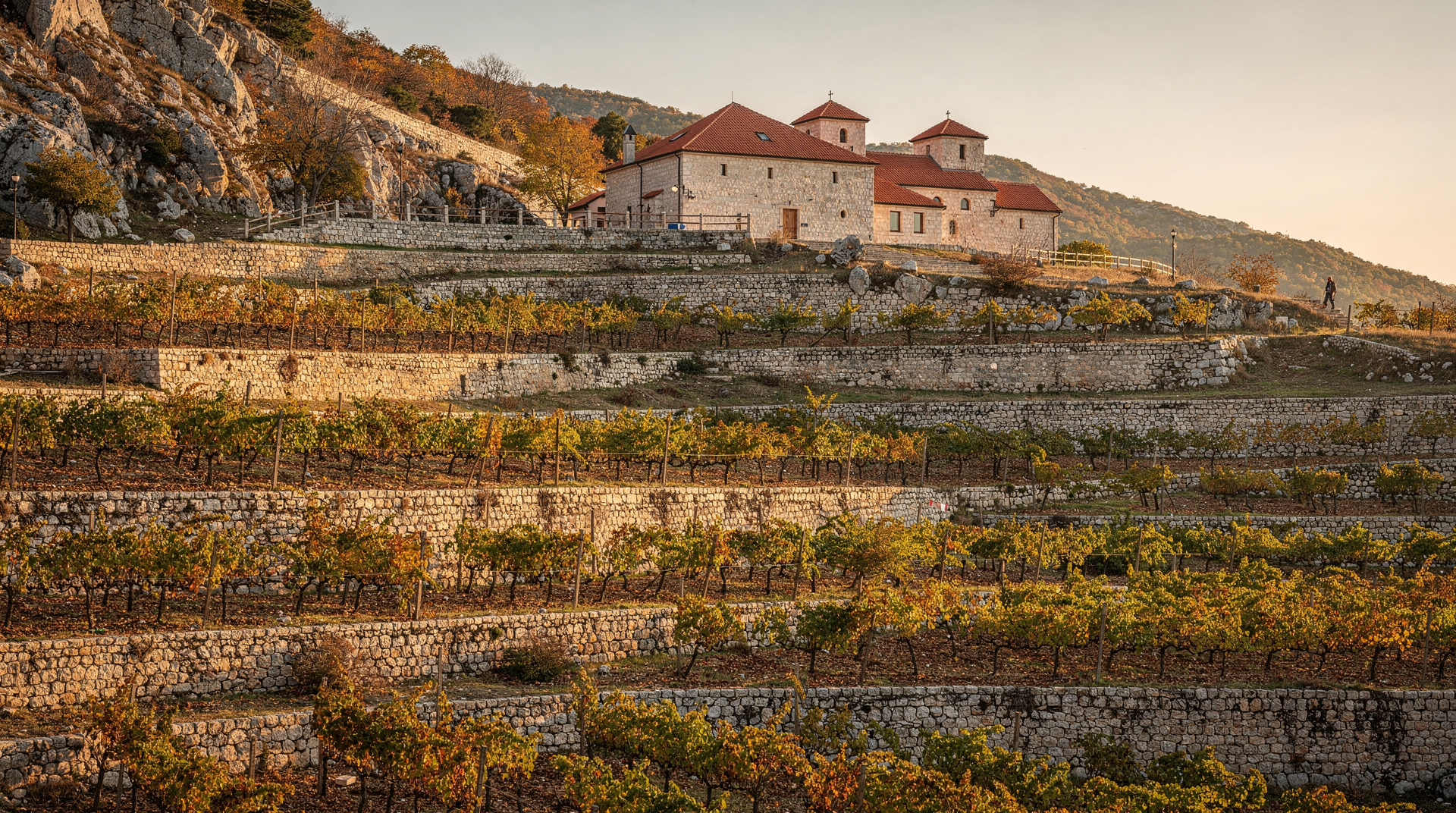
The most visited winery in the Trebinje area is not a commercial operation at all. Manastir Tvrdoš (Tvrdoš Monastery) is an Eastern Orthodox monastery dating to at least the 15th century, set in rocky hills about 5km southwest of Trebinje. The monks have maintained vineyards here for centuries, and today the Tvrdoš label is one of the best-known in Bosnia.
The monastery produces two main wines: a crisp, mineral Žilavka-dominant white and a structured red from Vranac and Blatina grapes. Both are available for purchase in the monastery shop at 12-18 BAM per bottle — significantly below what you would pay for similar quality in a Trebinje restaurant.
Visiting the monastery is free; the wine shop is open during daylight hours. The monastery church and its frescoes are worth thirty minutes of your time. Dress modestly (shoulders and knees covered).
Other Trebinje wineries
Vinarija Tvrtković
A family estate a few kilometres from the city centre, Tvrtković produces single-variety Žilavka and aged Blatina. The estate offers tastings by appointment; call ahead or arrange through your accommodation in Trebinje.
Vinarija Anđelić
One of the larger commercial producers in the region, Anđelić is more visitor-friendly with a dedicated tasting room. Their premium Žilavka (labelled as Stara Podrum, or Old Cellar) is aged on lees and shows more complexity than their entry-level expression.
Vinarija Vukoje
Established in the 1970s, Vukoje is one of the oldest family wineries in Herzegovina. They produce a wide range including a notable rosé (from Blatina) and a sparkling wine — unusual for the region.
Choosing between wineries
You do not need to visit every producer. For most travellers, one monastery stop and one private estate give a fuller picture than a rushed run through all of them. If you like a polished tasting room, lean towards the larger commercial cellar; if you prefer a conversation across a kitchen table, choose a family estate and call ahead. Wine lovers who want to compare Trebinje with the vineyards further north can pair this trip with the Herzegovina day trip guide, and those building a longer southern loop will find the Herzegovina weekend itinerary a natural frame for it.
A guided wine tour from Dubrovnik
The Trebinje wine tour with luxury transport from Dubrovnik is the most popular way to visit. The tour covers the drive through the Herzegovinian karst landscape, a tasting at a private winery or the Tvrdoš Monastery, a walk through Trebinje’s old town, and lunch at a local restaurant. Small-group format with a maximum of 6-8 guests; transport is typically a comfortable van or SUV.
Duration: full day (8-9 hours from Dubrovnik). Cost: higher-end, reflecting the private transport. This tour is particularly popular in May-June and September-October when the weather is ideal and the vineyards are at their most photogenic.
For a private independent visit, a private tour of Bosnia and Herzegovina based in Trebinje covers the city and surrounding area with a local guide.
Going independently or with a guide
A guided tour removes the logistics: someone else handles the border, the parking and the choice of winery, and you can taste freely. Going independently gives you freedom to linger where you like, and a rental car is the usual way to do it; the renting a car in Bosnia guide and the driving from Croatia to Bosnia guide cover paperwork and border habits. If you would rather avoid the wheel entirely after a few glasses, the guided option is the more relaxed choice. Either way, the Dubrovnik to Sarajevo route shows how Trebinje fits on a longer drive inland.
Trebinje old town
The stari grad of Trebinje is a compact baroque quarter — pedestrianised, lined with honey-coloured stone buildings, and centred on Trg slobode (Freedom Square), where cafes spread onto the pavement under the plane trees. The Arslanagića Bridge, a graceful Ottoman bridge originally built in 1574 and relocated stone by stone in the 1970s to avoid flooding from a new dam, crosses the Trebišnjica River nearby.
Saturday is the best day to visit: the weekly organic market on the square sells local produce, cheese, olive oil (Herzegovina is at the northern limit of olive cultivation), and honey. Arrive by 09:00 for the best selection.
Hercegovačka Gračanica
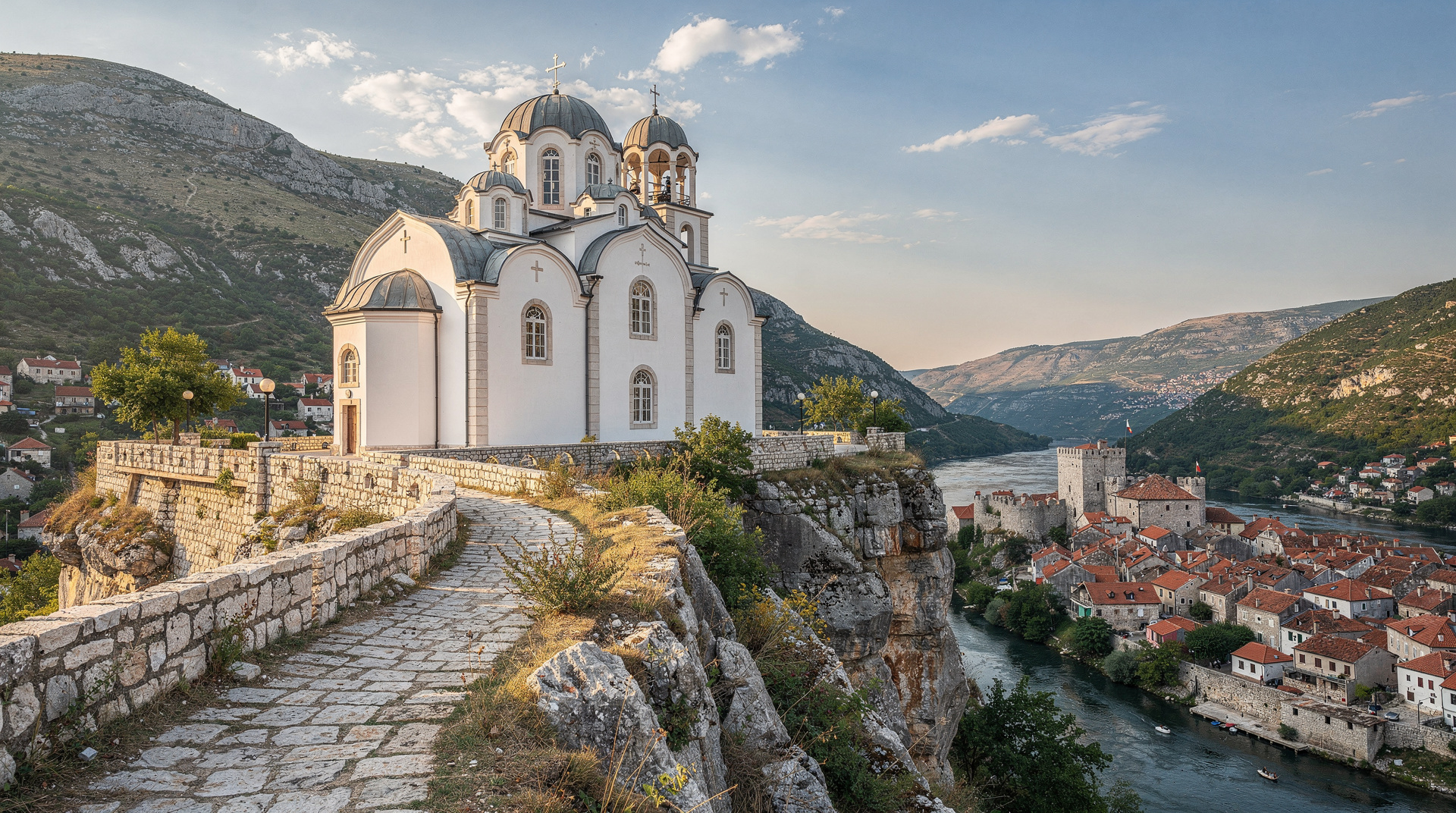
On the hill above Trebinje, the Hercegovačka Gračanica is a small replica of the famous medieval Gračanica monastery in Kosovo, built in the 1990s in honour of the poet Jovan Dučić, a native of Trebinje. The church itself is modest, but the views over the city, the valley, and towards Montenegro and Croatia are exceptional. Walk up (20-30 minutes) or drive; the path is well marked. Entrance to the grounds is free.
More in the Trebinje Hercegovačka Gračanica guide.
A relaxed day in town
Trebinje rewards slow travel. A good rhythm is a morning at the monastery, a wander through the old town, a long lunch, and a late-afternoon walk up to the hilltop church for the view. Between stops, sit under the plane trees with a coffee; the local habit is to take your time, and the Bosnian coffee culture guide explains the ritual behind the cup. Nothing here needs rushing, and the town is at its best when you leave gaps in the schedule. For a first-hand account of the region’s character, read the blog piece on Trebinje, the other Herzegovina, and see the Trebinje destination page for the town as a whole.
Where to eat and drink in Trebinje
Trebinje restaurants are unpretentious and excellent. Lamb is the dominant protein — sourced from the Herzegovinian hills and often prepared ispod sača (under the iron dome). Look for:
- Restoran Stari Grad: reliable traditional food in the old town, good Žilavka list
- Restoran Plava Laguna: riverside setting, slightly more formal, with an extensive local wine menu
- Kafana Pod Lipu: in a 19th-century building on the main square, serves coffee, rakija, and light food in an atmospheric setting
Expect to pay 25-50 BAM (13-25 EUR) for a full meal with local wine.
Combining Trebinje with a Balkans circuit
Trebinje is ideally placed for a three-countries day trip from Dubrovnik — Bosnia (Trebinje), Montenegro (Perast, Kotor), and Croatia (Dubrovnik) in a single loop. See the Bosnia from Kotor guide and Mostar from Dubrovnik guide for the logistics of each direction.
For the broader Herzegovina wine picture, the Herzegovina wine guide covers the Mostar region. The rakija guide explains the local spirits tradition that accompanies wine culture across Bosnia.
Extending the trip
Trebinje works as a single stop, but it also slots into bigger plans. Many travellers continue inland to Mostar and the Blagaj area, while others add the wetlands of Hutovo Blato nature park for a change of pace from the vineyards. If you are weighing how long to give the south, the how many days in Bosnia guide helps you decide, and the Bosnia travel guide gives the wider picture for first-time visitors. Travellers who like Ottoman history will also enjoy the Ottoman heritage guide, which places the old bridge and the town’s layers in context.
What to bring home
The monastery shop and the small estates are the best places to buy bottles, and a few bottles of Žilavka or Blatina make far better souvenirs than anything sold near the coast. Wrap them well, check the rules of your onward journey before you buy in quantity, and keep your purchases cool if the day is warm. Local olive oil and honey from the Saturday market travel easily and make good companions to the wine. If you are comparing what to buy across the country, the Bosnia on a budget guide offers a sense of what good value looks like, and the Bosnia scams to avoid guide is worth a glance before you shop in busier towns.
Choosing the right season
Spring and early autumn are the gentlest seasons for a wine day: the light is soft, the walking is comfortable, and the vineyards look their best. Summer can be hot, so plan tastings for the morning and keep the afternoon for shade and a slow lunch. Winter is quieter, with fewer visitors and some places keeping shorter hours, which suits travellers who prefer an unhurried visit. The best time to visit Bosnia guide sets the seasons in a national context, and the Bosnia in autumn guide is especially useful if the harvest season is what draws you south.
Practical money and timing notes
Carrying cash matters more here than in Sarajevo or Mostar — small family wineries and the Saturday market often prefer BAM cash to cards. See the Bosnia money and currency guide for exchange tips before you cross into Bosnia from Croatia or Montenegro. If you are basing yourself on the coast, Dubrovnik is the natural launch point for a Trebinje wine day, while travellers coming from Montenegro can treat it as a detour from Kotor.
Frequently asked questions about Trebinje wine region
How far is Trebinje from Dubrovnik?
What wine is Trebinje famous for?
What is Tvrdoš Monastery wine?
Is Trebinje worth visiting for a day?
Are there wine tours from Dubrovnik to Trebinje?
Top experiences
Bookable activities with verified prices and instant confirmation on GetYourGuide.