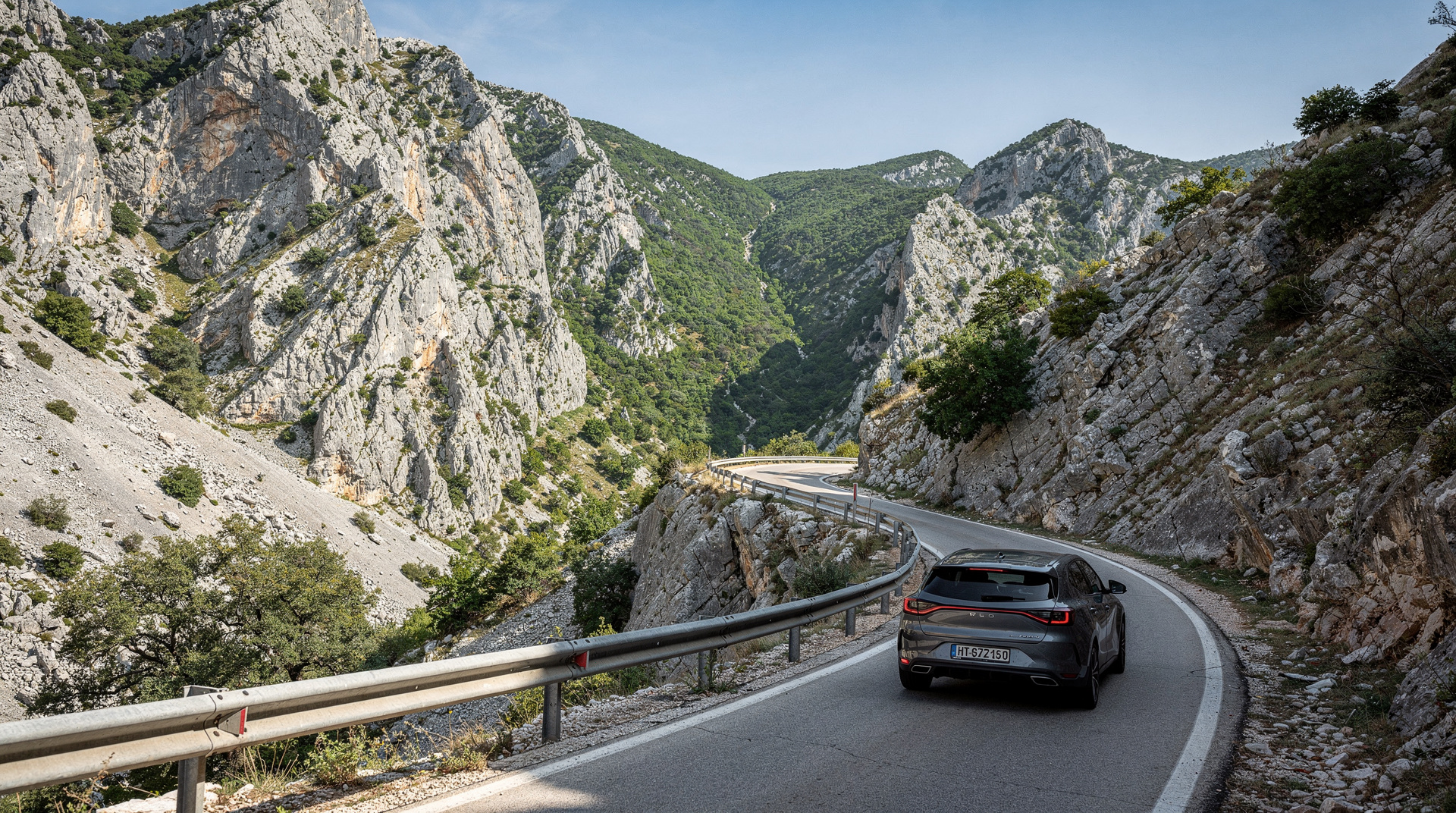
Croatia, Bosnia and Montenegro multi-country Balkans guide
Three Countries Day Trip: Trebinje, Perast & Kotor
How do I combine Croatia, Bosnia and Montenegro in one Balkans trip?
The classic Balkans triangle covers Dubrovnik (Croatia), Mostar and Sarajevo (Bosnia), and Kotor (Montenegro). Allow 7-10 days minimum. Dubrovnik to Mostar is 2h30 by road; Mostar to Sarajevo is 2h30; Sarajevo to Kotor is 5-6 hours via Trebinje. Day tours from any of these bases can cover the cross-border highlights in both directions.
Three countries, one bay, the Dinaric Alps, and a concentration of UNESCO heritage sites that rivals anywhere in Europe — the Balkans triangle of Croatia, Bosnia and Herzegovina, and Montenegro is one of the most compelling travel destinations on the continent. From the walled city of Dubrovnik to the Ottoman bridge at Mostar, the war-history museums of Sarajevo, the medieval city walls of Kotor and the wine country of Trebinje, this region rewards travellers who invest more than a single destination and actually cross the borders that divide it.
| At a glance | |
|---|---|
| Countries | Croatia, Bosnia & Herzegovina, Montenegro |
| Minimum time | 7 days; 10 days is more comfortable |
| Getting between hubs | Self-drive rental car, or day tours/transfers from Dubrovnik, Split or Kotor |
| Currencies | EUR (Croatia, Montenegro), BAM (Bosnia) — carry cash for Bosnia |
| Best time | May-June or September-October, avoiding the worst of the July-August coastal crowds |
The regional geography
Why these three countries work together
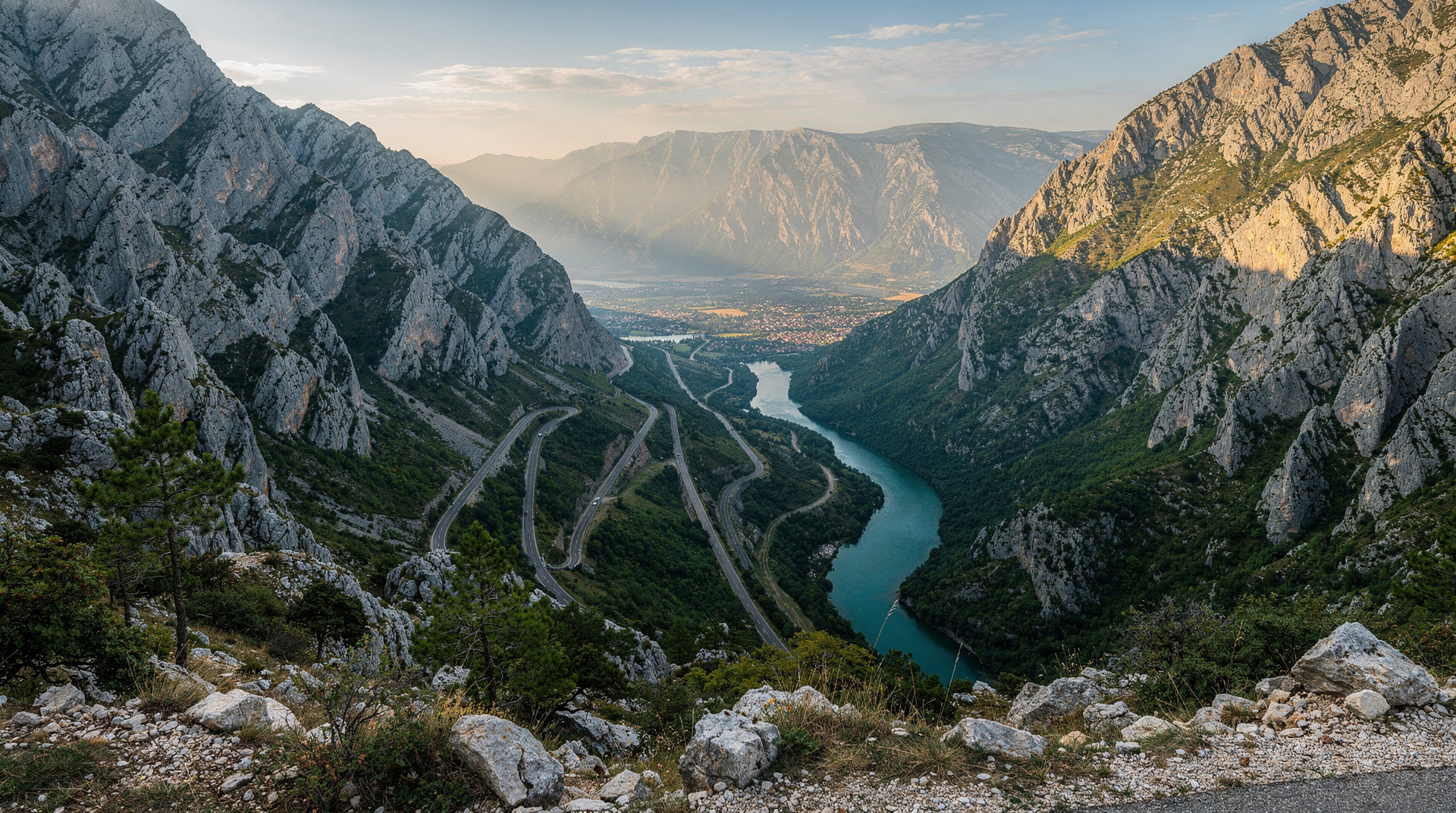
Croatia, Bosnia & Herzegovina, and Montenegro share a compact geography centred on the Dalmatian coast and the Dinaric karst — the same limestone geology that creates the turquoise rivers, the waterfalls of Kravice and Plitvice, the bay of Kotor, and the extraordinary mountain scenery throughout. The borders between them are recent (1991-1995) and in many areas cross landscapes that were unified under Ottoman and later Austro-Hungarian administration.
The driving distances are short: Dubrovnik to Mostar is 130 km (2h30); Mostar to Sarajevo is 130 km (2h30); Sarajevo to Trebinje is 90 km (1h30); Trebinje to Kotor is 55 km (1h30). You can stand in all three countries in a single day without difficulty.
The key cities
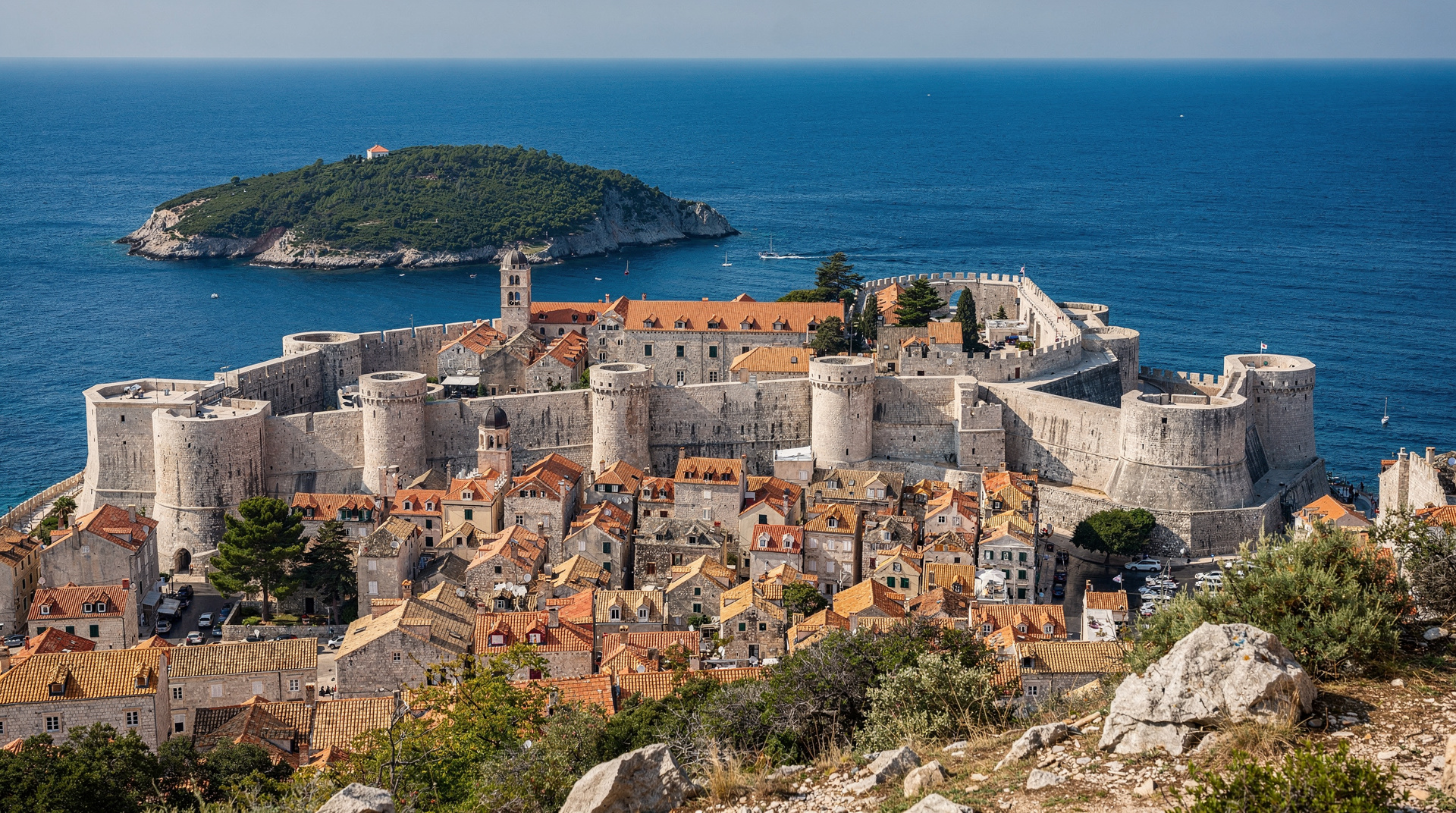
Dubrovnik (Croatia): The walled medieval city on its peninsula is one of the most visited places in the Mediterranean — and justly famous. Allow 2-3 days for the walls, the Lokrum island ferry, the cable car up Mount Srđ, and the beaches of Lapad. Avoid midday in the old town in July-August — it is overwhelmed with cruise passengers.
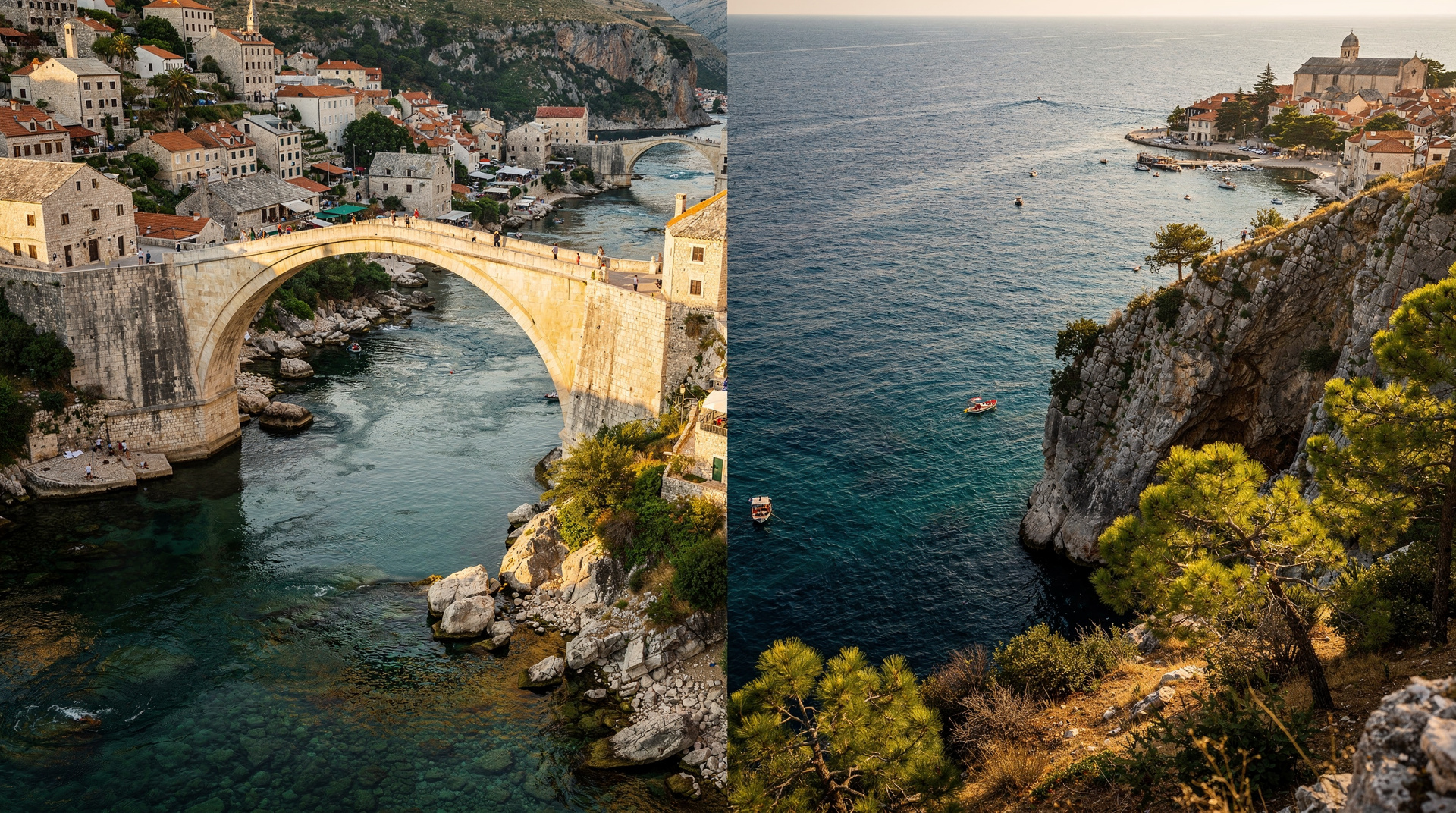
Mostar (Bosnia): The Herzegovina heartland, Ottoman bridge, and the contrast between the reconstructed bridge and the still-visible war damage makes Mostar one of the most emotionally complex cities in Europe. Allow 1-2 nights. See the Mostar from Dubrovnik guide for what to do.
Sarajevo (Bosnia): The Bosnian capital is extraordinary — four faiths and centuries of Ottoman, Habsburg and Yugoslav history layered in a valley. Budget 2-3 days. The war-history sites alone (Tunnel of Hope, Sniper Alley, the roses in the pavement) justify a full day.
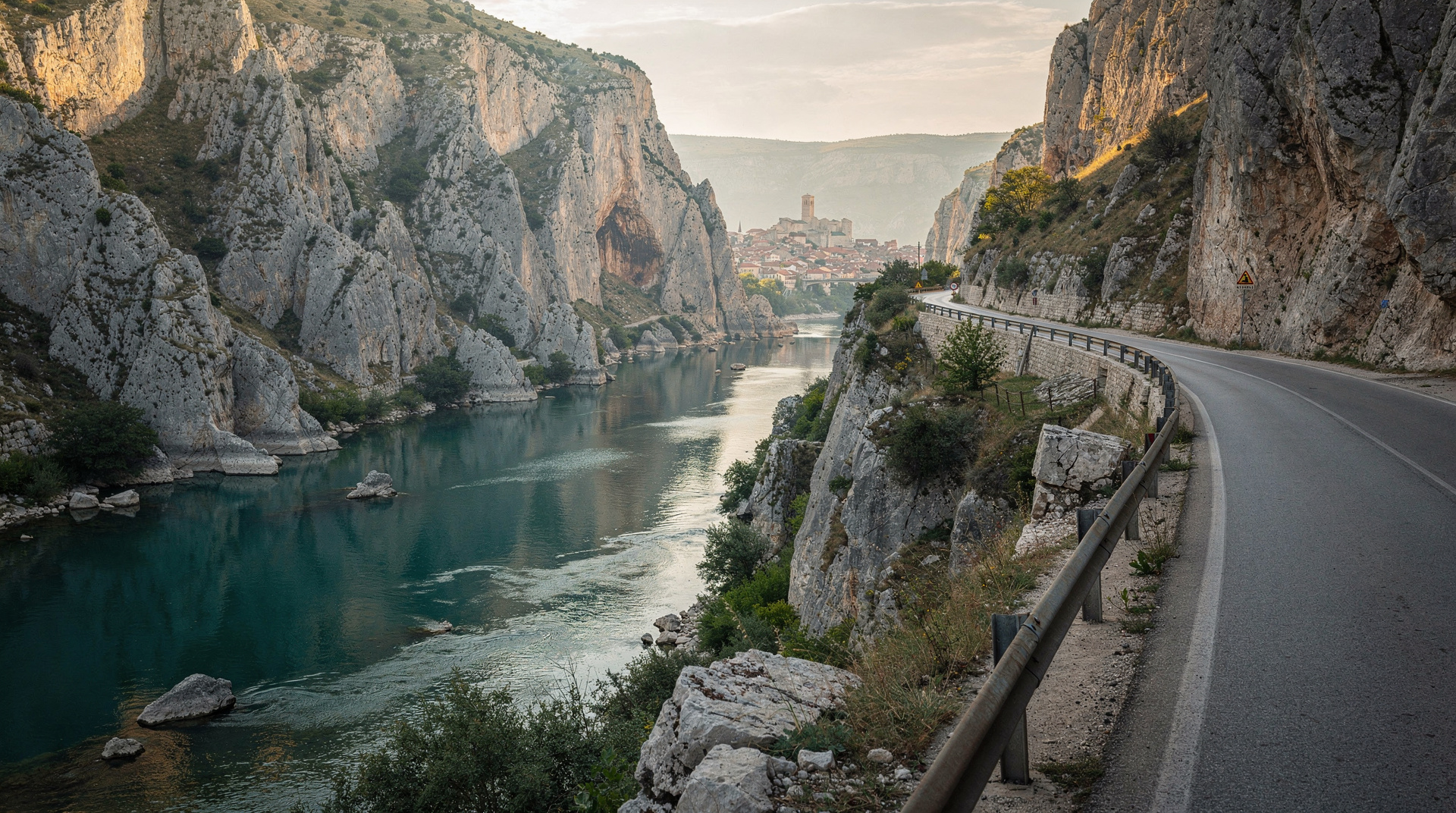
Trebinje (Bosnia): Often skipped, always regretted. The Ottoman bazaar, the Trebišnjica river, the local wine — Trebinje is the Balkans’ best-kept secret for travellers coming from the coast.
Kotor (Montenegro): The Bay of Kotor (Boka Kotorska) is the deepest fjord-like inlet in the Mediterranean, ringed by mountains that rise directly from the water. Kotor’s medieval walled city is UNESCO-listed. Allow 2 nights minimum.
Suggested itineraries
7-day classic loop
| Day | Location | Highlights |
|---|---|---|
| 1-2 | Dubrovnik | City walls, Stradun, cable car, Lokrum |
| 3 | Mostar | Stari Most, Blagaj, Kravice (via Neum corridor) |
| 4 | Sarajevo | Travel north; Baščaršija, Tunnel of Hope |
| 5 | Sarajevo | War history sites, Konjic or Lukomir day trip |
| 6 | Trebinje | Travel south; Ottoman bazaar, wine tasting |
| 7 | Kotor | Bay of Kotor, city walls, Perast |
10-day deep-dive
Add: Počitelj and Stolac (between Mostar and Sarajevo); Neretva rafting from Konjic; the village of Lukomir (day hike from Sarajevo); and an extra day on the Montenegro coast (Budva or Perast).
Day tours combining all three countries
From Dubrovnik: Three Countries in one day
The most popular multi-country day tour from Dubrovnik crosses into Bosnia at Trebinje, then into Montenegro at Herceg Novi or Risan, and returns to Dubrovnik via Croatia.
Three Countries day trip: Trebinje, Perast and KotorFrom Dubrovnik: 4-day Bosnia and Montenegro tour
For a more extended multi-country experience from a Dubrovnik base:
Small group tour: Bosnia and Montenegro from Dubrovnik (4-day)From Kotor: Bosnia, Montenegro and Croatia
Guided private tour of Bosnia, Montenegro and CroatiaBorder crossings across the three countries
Croatia to Bosnia
Two main options:
- Neum corridor (on the Split-Dubrovnik coastal road): two crossings, 15-90 minutes total in summer. Passport required.
- Kamensko-Vinjani (on the Split-Mostar inland road): one crossing, 5-20 minutes. Passport required.
See the Neum corridor guide for full details.
Bosnia to Montenegro
The main crossing is at Sitnica on the Trebinje-Herceg Novi road (1h30 from Trebinje to Kotor). A second option is Šćepan Polje in the north of Montenegro, used for the Tara canyon routes.
Montenegro to Croatia
The main crossing is at Debeli Brijeg on the main coastal highway north of Herceg Novi. Straightforward checkpoint; 5-30 minutes.
Documents and insurance
Passport required at all crossings for non-EU travellers. EU national ID cards work at most EU-to-EU or Schengen crossings but Bosnia and Montenegro are not in the EU — bring a passport. For rental cars: ensure your agreement permits travel in all three countries; a Green Card international insurance certificate is required for Bosnia (included in most rental packages but verify). See the driving Croatia to Bosnia guide for insurance and practical details.
Currency across the three countries
| Country | Currency | Notes |
|---|---|---|
| Croatia | EUR (euro) | Standard card use; ATMs everywhere |
| Bosnia | BAM (Bosnian Mark) | 1 EUR = 1.956 BAM; take cash |
| Montenegro | EUR (euro) | Cash preferred in rural areas |
Take a supply of BAM cash before entering Bosnia — while euros are sometimes accepted in tourist areas, the exchange rate offered by vendors is poor. ATMs in Sarajevo and Mostar dispense BAM.
What makes this trip exceptional
The Croatia-Bosnia-Montenegro triangle is exceptional not despite but because of its complexity. Three different modern states overlay a shared Ottoman, Mediterranean and Austro-Hungarian history. The contrast between Dubrovnik’s polished tourism infrastructure and the rawer, more authentic experience of Sarajevo or Trebinje is not a flaw in the itinerary — it is the point. Crossing from one country into the next, often within minutes of driving, reveals how recent and somewhat arbitrary these borders are, and how deeply the underlying culture and landscape connect the whole region.
For travellers willing to cross borders and change currencies, the Balkans triangle is one of the most rewarding multi-country trips available at any budget in Europe.
Beyond the classic triangle
Travellers with extra time can extend the loop in either direction. From Sarajevo, a short detour reaches Konjic for Neretva rafting and Tito’s Cold War bunker, or Jajce for a waterfall in the town centre and the last capital of medieval Bosnia — see the Jajce day trip guide.
Hikers with a spare day should consider the best day hikes from Sarajevo, particularly the highland village of Lukomir, which is easily combined with a Bjelašnica detour before heading south to Trebinje. For those approaching from the Montenegro side rather than Dubrovnik, the Bosnia from Kotor guide lays out the reverse-direction logistics in detail.
If your itinerary allows a full two weeks rather than the minimum seven to ten days, folding in Split to Sarajevo as an alternative entry point opens up western Bosnia and the Una National Park region as well, rather than doubling back through Mostar.
Choosing your base and direction
The loop works in either direction, and the right choice usually comes down to flights and temperament. Starting in Dubrovnik eases you in: the coast is polished, signage is easy, and you meet Bosnia only once you are ready for something rougher around the edges. Starting in Sarajevo does the opposite, and many travellers find it the more memorable way to begin, because the coast then feels like a reward at the end. If you are still deciding how long to commit, the how many days in Bosnia guide helps you weigh the Bosnian share of the trip against the coastal stops.
Whichever way you go, resist the urge to sleep in a new place every night. The cities on this route reward a second evening, when the crowds thin and you can wander without a plan. Two bases in Bosnia, one in Croatia and one in Montenegro is a far calmer rhythm than five or six one-night stops.
For a first visit, the Bosnia travel guide gives the wider picture, and the Balkans three countries itinerary turns the ideas on this page into a day-by-day plan. If you would rather spend longer on the Croatian side before crossing, the Croatia and Bosnia two-week itinerary is built for exactly that.
Getting between the hubs
Self-driving gives the most freedom, especially for stops such as Počitelj and Blagaj that sit just off the main road and are awkward by public transport. Before you collect a rental car, read the renting a car in Bosnia guide so that the paperwork, cross-border permission and insurance are settled in advance. Mountain roads are slower than the map suggests, so leave generous margins and avoid planning a long drive after dark. The driving in Bosnia guide covers road conditions and local habits.
If you prefer not to drive, buses connect the main cities and are inexpensive, though timetables thin out and the coastal-to-inland links need more planning. The buses in Bosnia guide and the getting around Bosnia guide explain how the options fit together, and the Sarajevo to Mostar transport guide covers the most common inland leg. Guided day tours and private transfers are the third option, and they remove border queues and parking from your list of worries entirely.
What to see between the big stops
The pleasure of this route is often found in the places between the headline cities. Between Mostar and the coast, Kravice waterfalls make a natural swimming stop in warm weather, and the Herzegovina day trip guide strings together the villages, monasteries and viewpoints of the region. Wine drinkers should slow down in the south: the Herzegovina wine guide explains the local grapes and where to taste them, and Trebinje is the easiest base for it. Nature lovers heading south from Mostar can also detour to Hutovo Blato nature park, a wetland reserve far from the coastal crowds.
In Sarajevo, give yourself time beyond the obvious sights. The Sarajevo war tour guide and the Sarajevo siege and Tunnel of Hope guide put the recent past in context, while the Baščaršija guide is the place to start for coffee, crafts and the old bazaar streets. Travellers who want to understand how the three countries came to be separate will find the Yugoslav wars explained a useful background read before the trip begins.
Eating and drinking across the borders
Food changes as you cross, and that is part of the fun. Coastal Croatia and Montenegro lean on seafood, olive oil and grilled fish, while Bosnia moves towards grilled meats, flaky pies and thick coffee served in small copper pots. Come hungry to Bosnia: the Bosnian food guide lists the dishes worth seeking out, and the burek and pita guide is a good primer for the many bakeries you will pass. Order a Bosnian coffee slowly rather than gulping it, as locals do, and you will understand why coffee culture matters so much in the country.
Practical habits that save time
A few habits make the loop smoother. Keep your passport somewhere easy to reach rather than buried in a suitcase, and have the car documents ready before you join a queue. Fill the fuel tank before a remote stretch, and keep some small change for tolls, parking and coffee. Check opening hours for religious sites and museums, which often shift with the season and with prayer times, and dress modestly where required.
Safety on this route is generally good, but a little awareness goes a long way. Read the Bosnia safety guide and the landmine safety guide before any off-road walking, and stay on marked paths in rural and mountain areas. If you want to avoid common tourist mistakes, the Bosnia scams to avoid guide is short and worth skimming. Finally, the best time to visit Bosnia guide helps you pick the season that fits your priorities, whether that is swimming, hiking or quiet city streets.
Frequently asked questions about Croatia, Bosnia and Montenegro multi-country Balkans
What is the best order for a Croatia-Bosnia-Montenegro itinerary?
How many days do I need for Croatia, Bosnia and Montenegro?
What are the border crossings between Croatia, Bosnia and Montenegro?
Do I need different currencies in Croatia, Bosnia and Montenegro?
Which is the best day tour combining all three countries?
Top experiences
Bookable activities with verified prices and instant confirmation on GetYourGuide.