Štrbački Buk waterfall guide
Sarajevo: Strbacki Buk & Jajce Waterfalls Day Trip
What is Štrbački Buk and how do I get there?
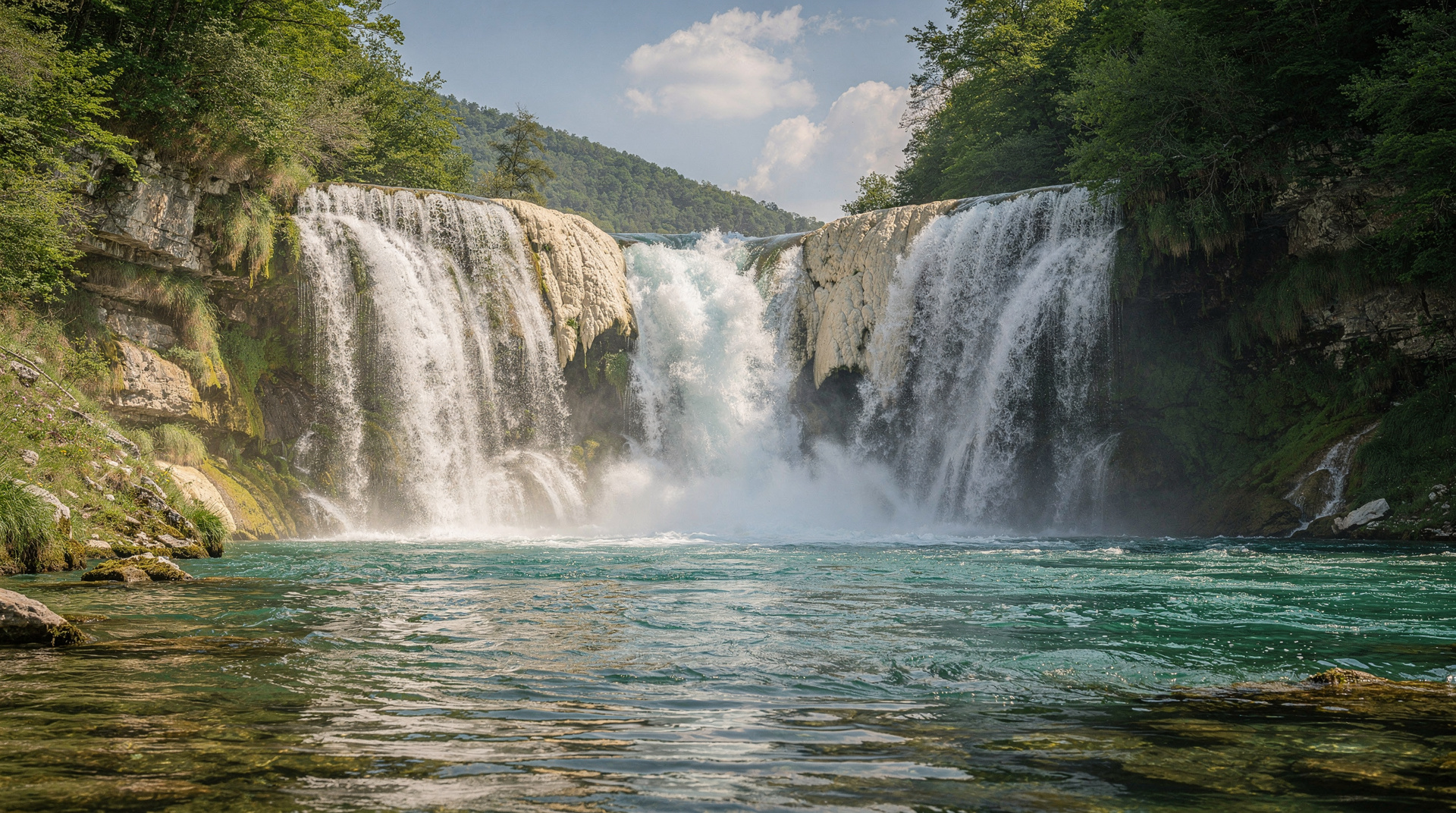
Štrbački Buk is a 24-metre horseshoe waterfall on the Una River near Martin Brod in Una National Park, considered Bosnia's most powerful waterfall. It is reached by a 2km riverside walk from Martin Brod village, or by raft through the canyon. Best visited in spring for maximum power.
Štrbački Buk is not easy to reach, which is why it remains one of the least crowded spectacular waterfalls in the Balkans. Set in the Una canyon near the small village of Martin Brod in Una National Park, it requires either a drive along an unpaved forest road or a rafting journey through the canyon to arrive at its banks. The effort is rewarded with a waterfall of genuine scale and power — a 24-metre horseshoe cataract that fills the canyon with noise and spray.
The waterfall
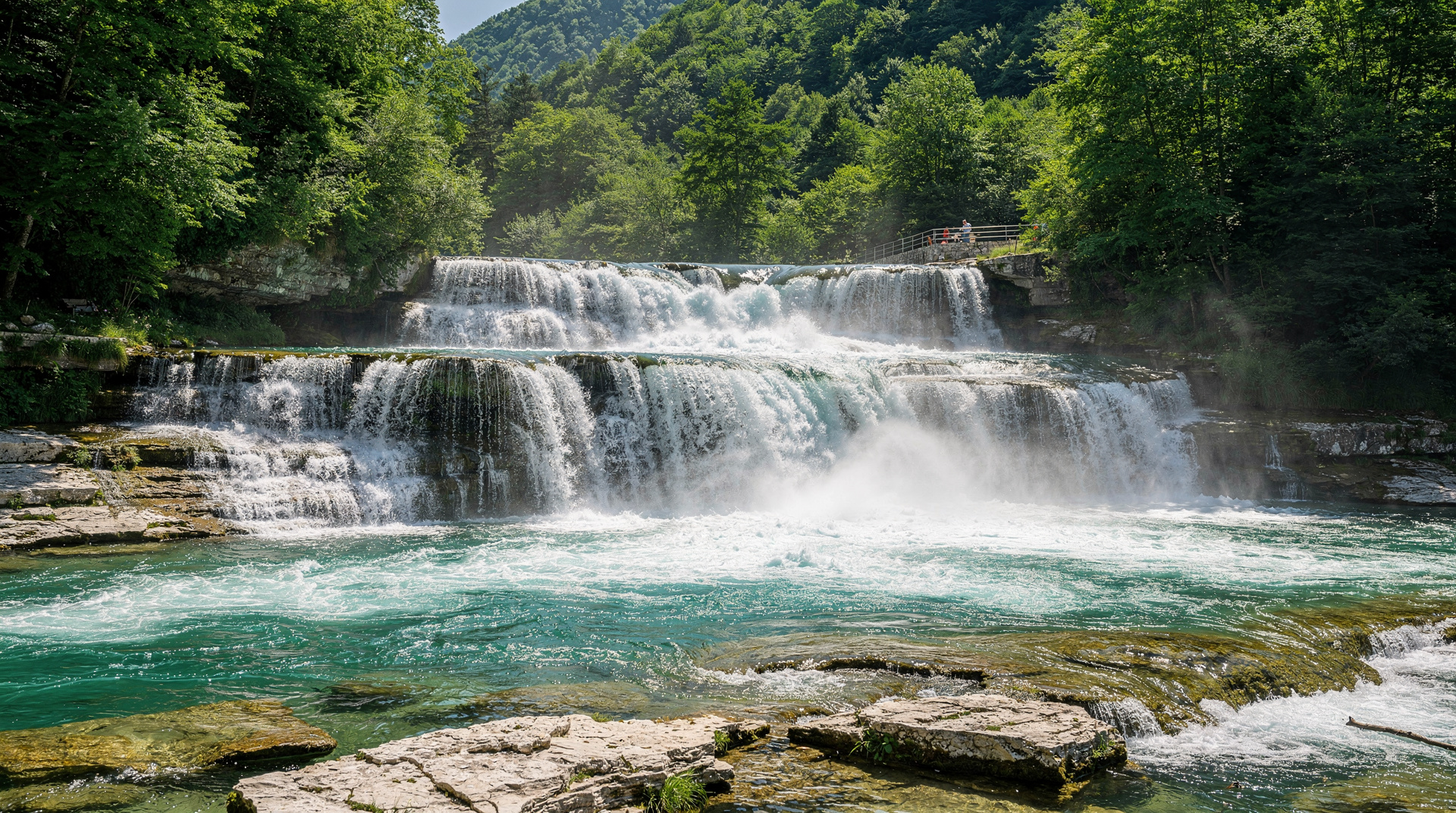
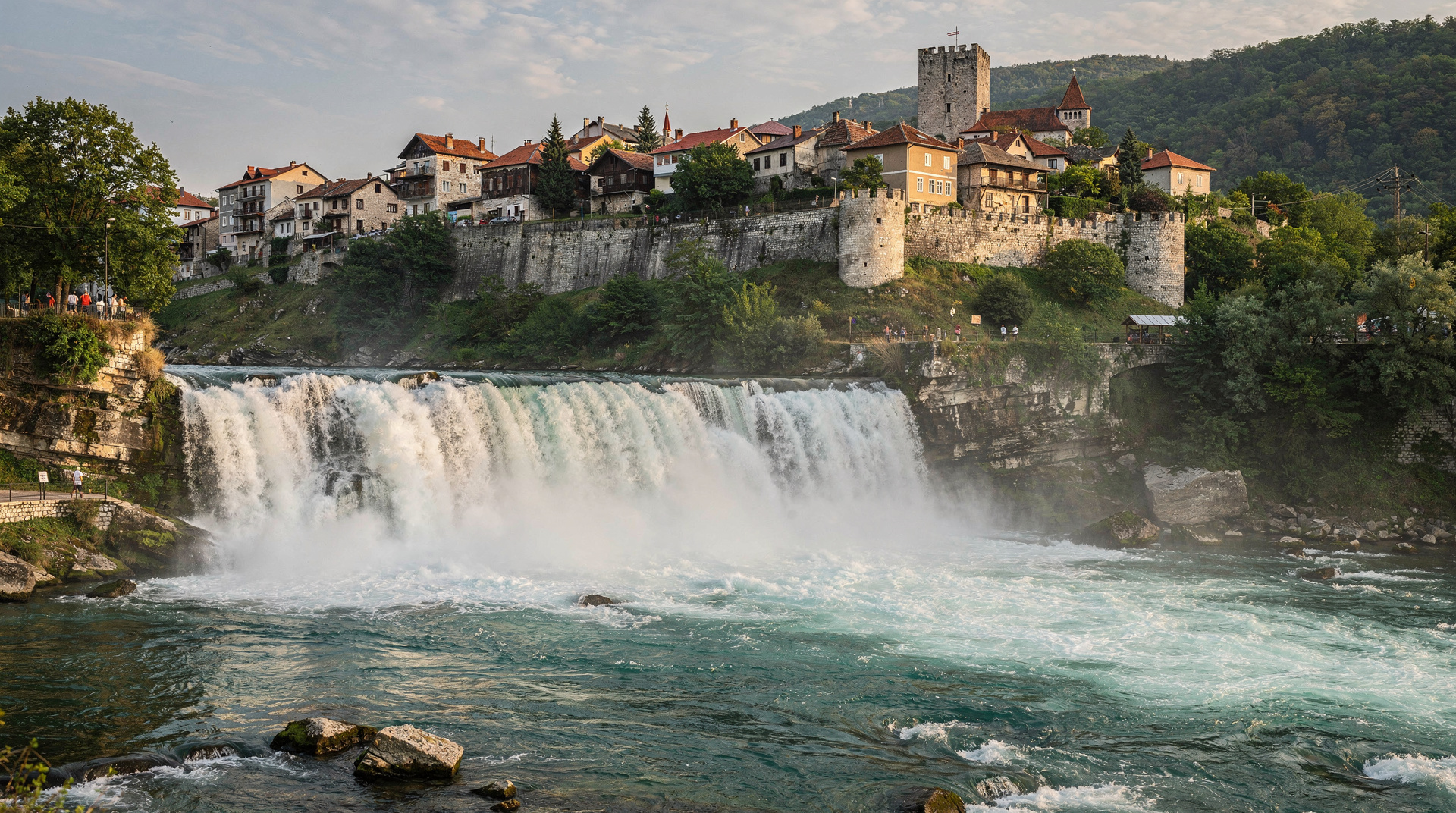
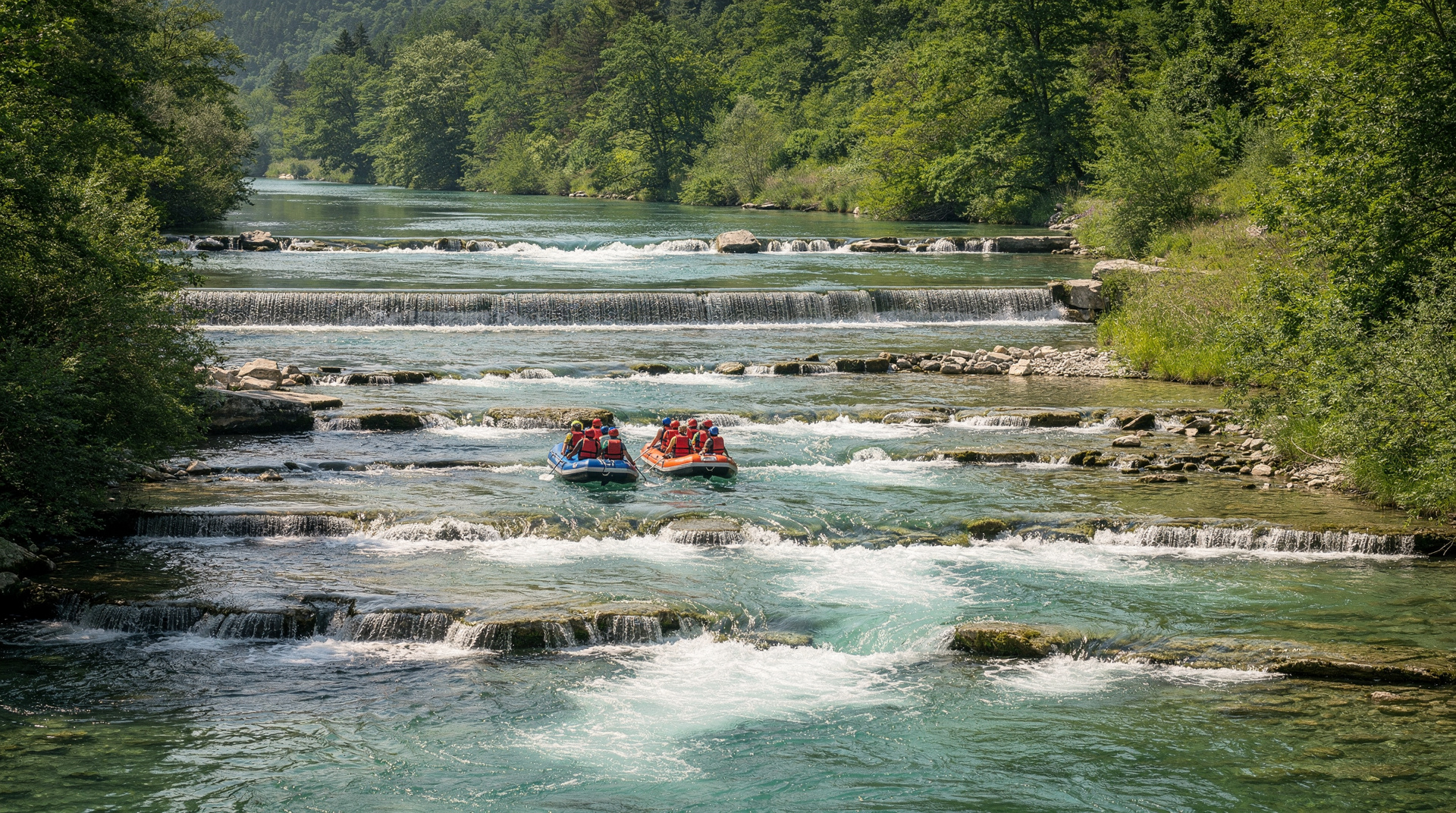
Štrbački Buk is a horseshoe-shaped tufa waterfall approximately 60-70 metres wide and 24 metres high at its main drop, with smaller cascades above creating a multi-step descent. At peak flow (March-June), the volume is extraordinary — the turbulent pool at the base sends spray across the entire viewing area, and the sound can be heard several hundred metres away.
Like Kravice and the Pliva Falls in Jajce, the colour of the water above the falls is that distinctive Bosnia blue-green — a result of calcium carbonate suspended in the slow-moving river creating the same effect as travertine pool water anywhere in the Dinaric karst.
The name Štrbački comes from the Štrba family, historically one of the main families in the Martin Brod area.
Getting to Štrbački Buk
By car
From Bihać: drive south on the road toward Martin Brod (approximately 60km, about 1 hour on roads that vary in quality — the final section is unpaved). Park in Martin Brod and walk approximately 2km along the river to the falls. The path is flat, follows the Una bank closely, and passes a viewpoint about 500m before the falls.
From Jajce: an alternative approach is from the east via Bihać-Drvar-Srb road; somewhat longer but navigable on a secondary road.
By raft
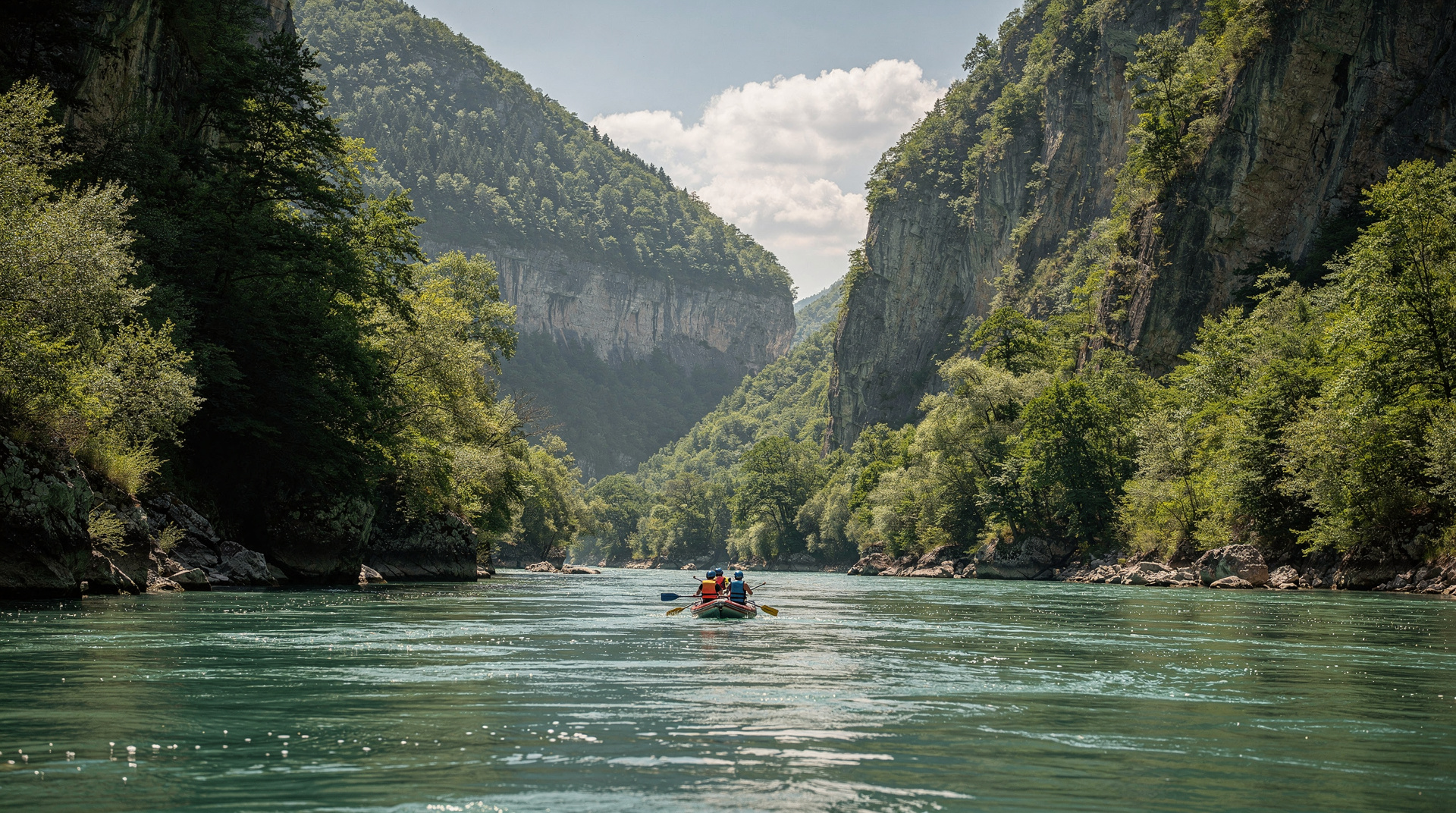
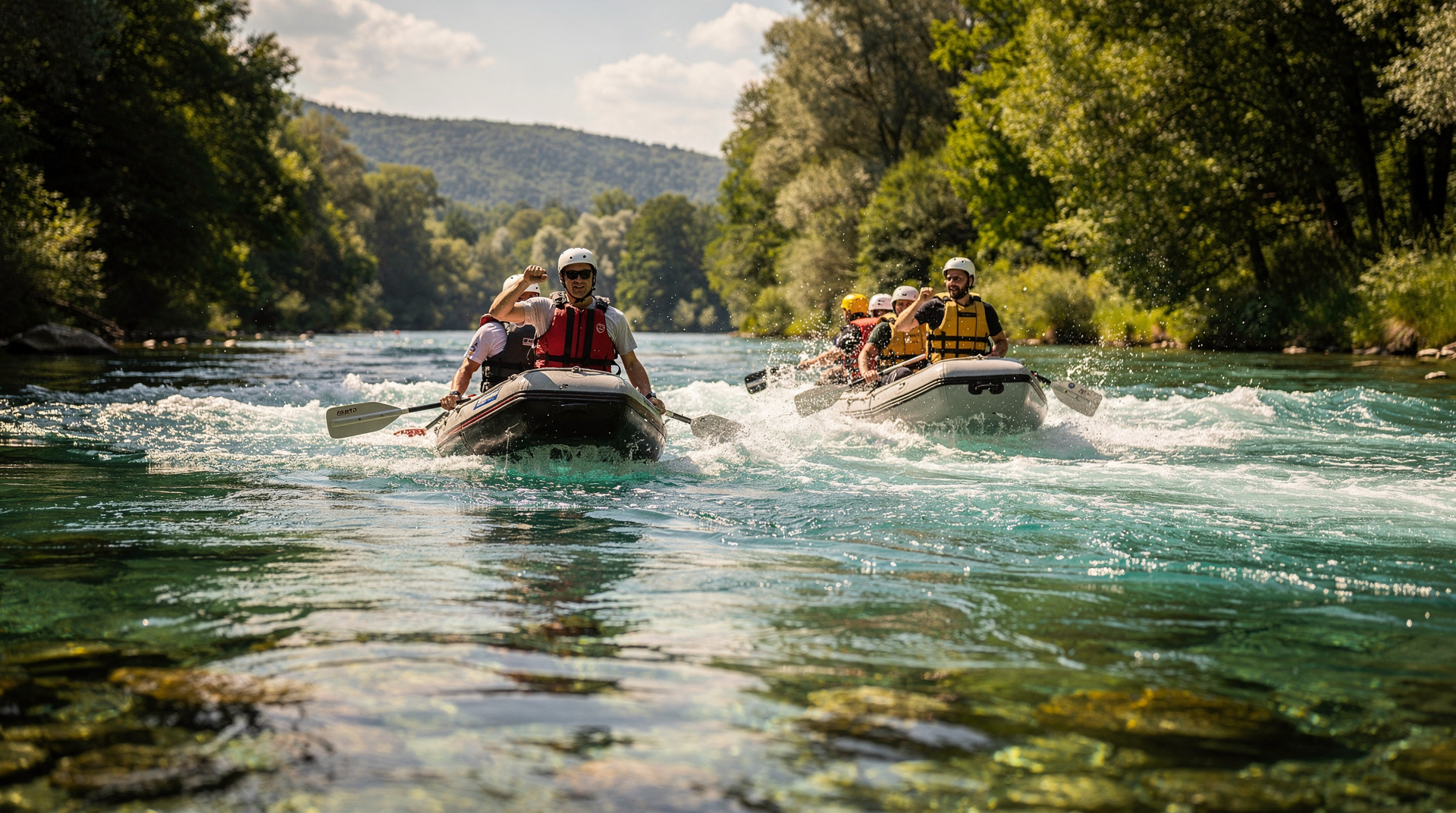
The Una canyon rafting route passes Štrbački Buk as part of the technical upper-river section. Una National Park guided rafting includes the Štrbački Buk area in the canyon route. This is the most dramatic way to arrive — approaching the falls by river as rafters have done for generations.
Day trip from Sarajevo
The Sarajevo to Štrbački Buk and Jajce day trip combines two of central Bosnia’s most impressive waterfalls in a single full day. It is a long day (departure early morning, return late evening) but covers a significant amount of the country’s best natural scenery without requiring a car or overnight stay.
Martin Brod: the base village
Martin Brod sits at the confluence of the Unac and Una rivers, framed by forested hills and the ruins of a medieval fortress (Ostrovica). The monastery of the Assumption (early 20th century) stands in the village; its churchyard is planted with old walnut trees.
The village has a small konoba (restaurant) serving grilled fish from the Una — particularly the Huchen (mladica), a large freshwater fish related to salmon that is endemic to Dinaric rivers. A meal of fresh Una fish with local bread and salad costs 20-35 BAM.
Visiting the Una canyon: broader context
Štrbački Buk is the dramatic anchor, but the canyon between Martin Brod and Bihać holds much more:
- Buk waterfall at Martin Brod: a second, smaller waterfall immediately adjacent to the village, visible from the road
- Ostrovica fortress ruins: above the village, accessible by a short steep path
- Klokot springs: near Bihać, where large karst springs emerge from the base of cliffs and feed the Una — among the largest spring systems in the western Balkans
- Una canyon walls: visible on the rafting route, the canyon walls reach 30-50m in places and support nesting peregrine falcons and eagle owls
What the walk from Martin Brod feels like
The approach is half the pleasure. Leaving the village, you follow the river bank on a flat, unpaved path with the Una beside you almost the whole way. The first stretch is quiet and shaded, and you hear the waterfall long before you see it: a low, steady roar that grows with every bend. That sound is a good way to judge the season, because in spring it reaches you early and in late summer it arrives more gently.
Take it slowly. The path is easy enough that nobody needs to hurry, and the river offers reasons to stop: clear shallows, overhanging trees, and small pools where the current slackens. Bring water and a light layer, since the spray near the falls cools the air even on a warm day. Sturdy shoes are better than sandals, because the ground near the viewpoint can be wet and slippery from the mist.
When you reach the main viewing area, give yourself time rather than taking a photo and leaving. The horseshoe shape means the water arrives from several directions at once, and the smaller cascades above the main drop make the whole scene look layered. Watching the light change on the spray is one of the better reasons to linger. Early in the day the canyon is often at its calmest, and you are more likely to have the place to yourself.
Choosing between walking and rafting
The two ways of reaching the falls give very different days. Walking from Martin Brod is the relaxed option: you set your own pace, stop where you like, and finish with a meal in the village. It suits families, mixed groups and anyone who prefers solid ground. Rafting is the adventurous option, and it places the falls inside a longer river experience rather than as a single destination.
If you are undecided, think about what you want to remember. A walker comes away with a clear picture of the waterfall and the village around it. A rafter comes away with a sense of the whole canyon, its walls, its rapids and its quiet stretches. Many visitors who base themselves around Bihać do both on separate days, which is easy to arrange from there. The Una National Park destination page and the Bihać destination page help you plan that kind of stay.
Combining Štrbački Buk with other stops
Because the falls are remote, it makes sense to pair them with something else on the same trip rather than treating them as a standalone excursion.
- With Jajce: the town has its own famous waterfall in the middle of the old centre. Seeing both lets you compare a powerful wild cascade with a waterfall set among houses and fortress walls. See the Jajce destination page and the Jajce fortress guide.
- With Bihać and the wider park: the town is the most practical base for the Una valley, with more places to sleep and eat than anywhere near the falls. The Una National Park guide covers the park as a whole.
- With a western Bosnia route: if you are building a longer trip through the Krajina region, the western Bosnia Krajina itinerary places the falls in a sensible sequence, and the Bosnia adventure itinerary fits them alongside rafting and hiking.
Getting around the region
Public transport in this part of the country is limited, so the practical choices are a rental car, an organised tour or a long day with local buses. If you want freedom to stop at viewpoints and villages, a car is the most flexible option, and the renting a car in Bosnia guide and the driving in Bosnia guide explain what to expect on rural roads. If you would rather leave the driving to someone else, the organised options described above remove the navigation entirely. For a wider view of the options, the getting around Bosnia guide compares the main ways to travel between regions.
Choosing your season
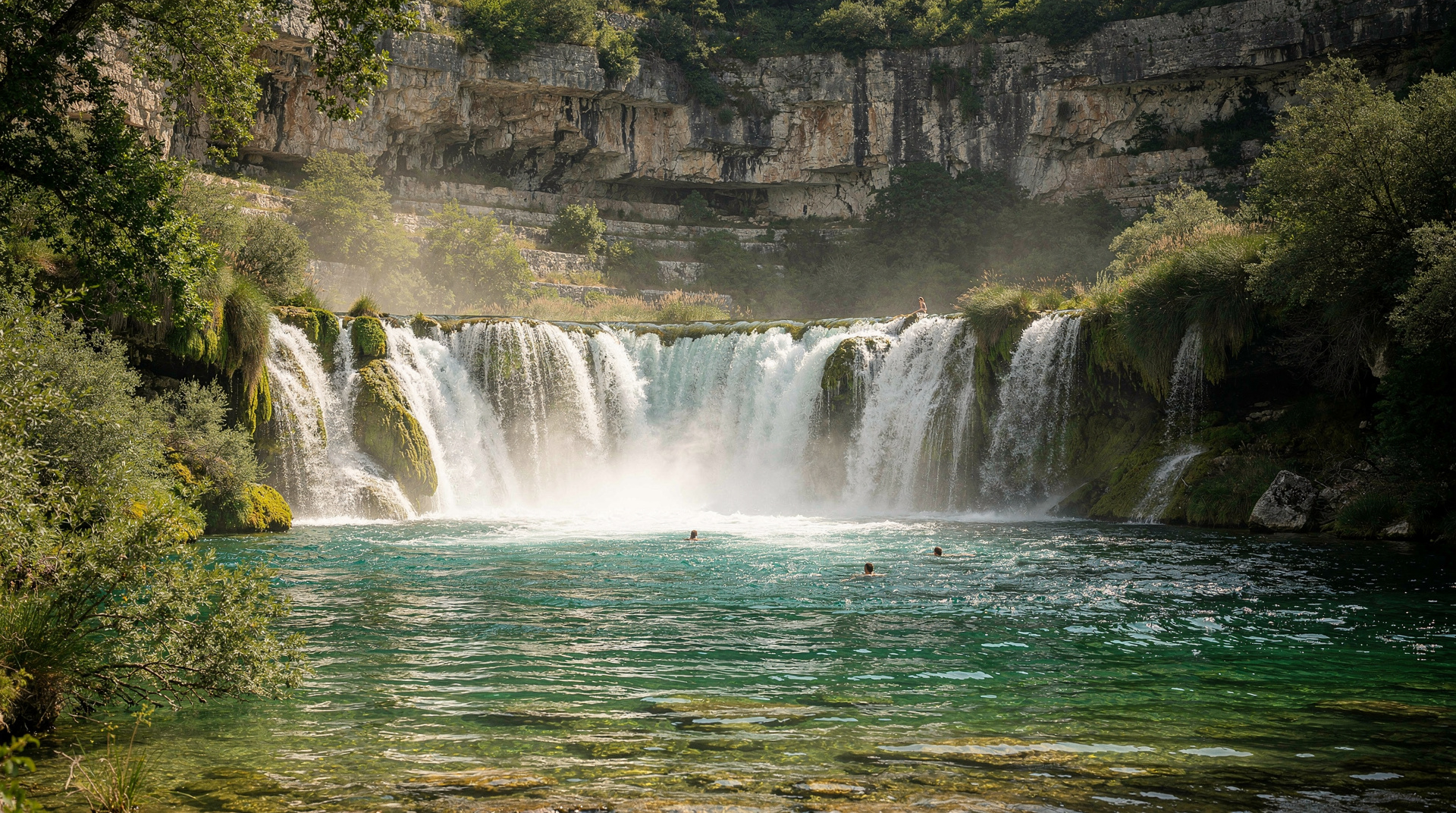
Seasons change the character of the waterfall more than almost any other factor. In spring the river is full, the forest is fresh and green, and the falls are at their most dramatic. Later in the summer the flow eases and the pools become more inviting, which suits visitors who care more about a relaxed day by the water than about sheer power. Autumn brings softer light and fewer people, though you should expect cooler weather and check the road before you set out.
For a wider look at timing across the country, the best time to visit Bosnia guide and the Bosnia in spring guide show how the seasons shape other outdoor destinations. If you are travelling in warmer months, the Bosnia in summer guide is a useful companion.
Respecting the place
Part of the appeal of Štrbački Buk is that it has stayed wild. There are few facilities, which means the usual rules apply: take your rubbish with you, stay on the marked path, and keep noise to a minimum so others can enjoy the sound of the water. Tufa formations are fragile, so avoid climbing on them. In remote parts of the country it is also wise to stay on established trails, and the landmine safety guide explains why that habit matters across Bosnia.
If you are travelling with children, keep them close near the water. The base of the falls is wet and the current is strong, so the calmer areas away from the main drop are the right place for them to play. A short stop at the viewpoint before the falls is a good way to let younger walkers rest.
A suggested rhythm for the day
A simple plan works best here. Arrive in Martin Brod in the morning, walk to the falls while the light is soft, and spend a generous stretch at the viewing area. Return to the village for a meal at the konoba, then, if energy allows, explore the village itself, its monastery and the hill of the fortress ruins. This pace turns a single waterfall into a full, unhurried day, and it leaves the remaining hours free for the drive back. If you are after more ideas for slow, scenic travel in the country, the bosnia off the beaten path blog post and the best viewpoints in Bosnia post are good next reads.
Practical notes
- No entrance fee for the waterfall itself; Una National Park day fee applies (5-10 BAM) if you enter the official park zone
- The road to Martin Brod is passable with a standard car in dry conditions; a 4WD is useful in early spring after rain
- Mobile phone coverage: limited in the canyon; download offline maps before visiting
- Best months: May-June (high water, lush forest, moderate temperatures). July-August (lower water but warmer for swimming). April can be cold and the road muddy.
- Nearest petrol: Bihać or Bosanska Krupa (50+ km); fill up before driving to Martin Brod
For the full Una National Park picture — including the easier lower-river rafting and the Bihać base — see the Una National Park guide. For Bosnia’s other great waterfall systems, the Kravice guide and Pliva Jajce guide cover the most accessible alternatives. If rafting the canyon rather than walking to it appeals, the Una river rafting guide and the broader rafting in Bosnia guide cover the technical sections and operators in detail.
Frequently asked questions about Štrbački Buk waterfall
How difficult is the hike to Štrbački Buk?
Is swimming allowed at Štrbački Buk?
How is Štrbački Buk different from Kravice Waterfalls?
Can I visit Štrbački Buk on a day trip from Sarajevo?
What is Martin Brod village?
Top experiences
Bookable activities with verified prices and instant confirmation on GetYourGuide.