Pliva waterfall Jajce guide
Sarajevo: Jajce Waterfall, Travnik & Pliva Lake Tour
What is the Pliva waterfall in Jajce?
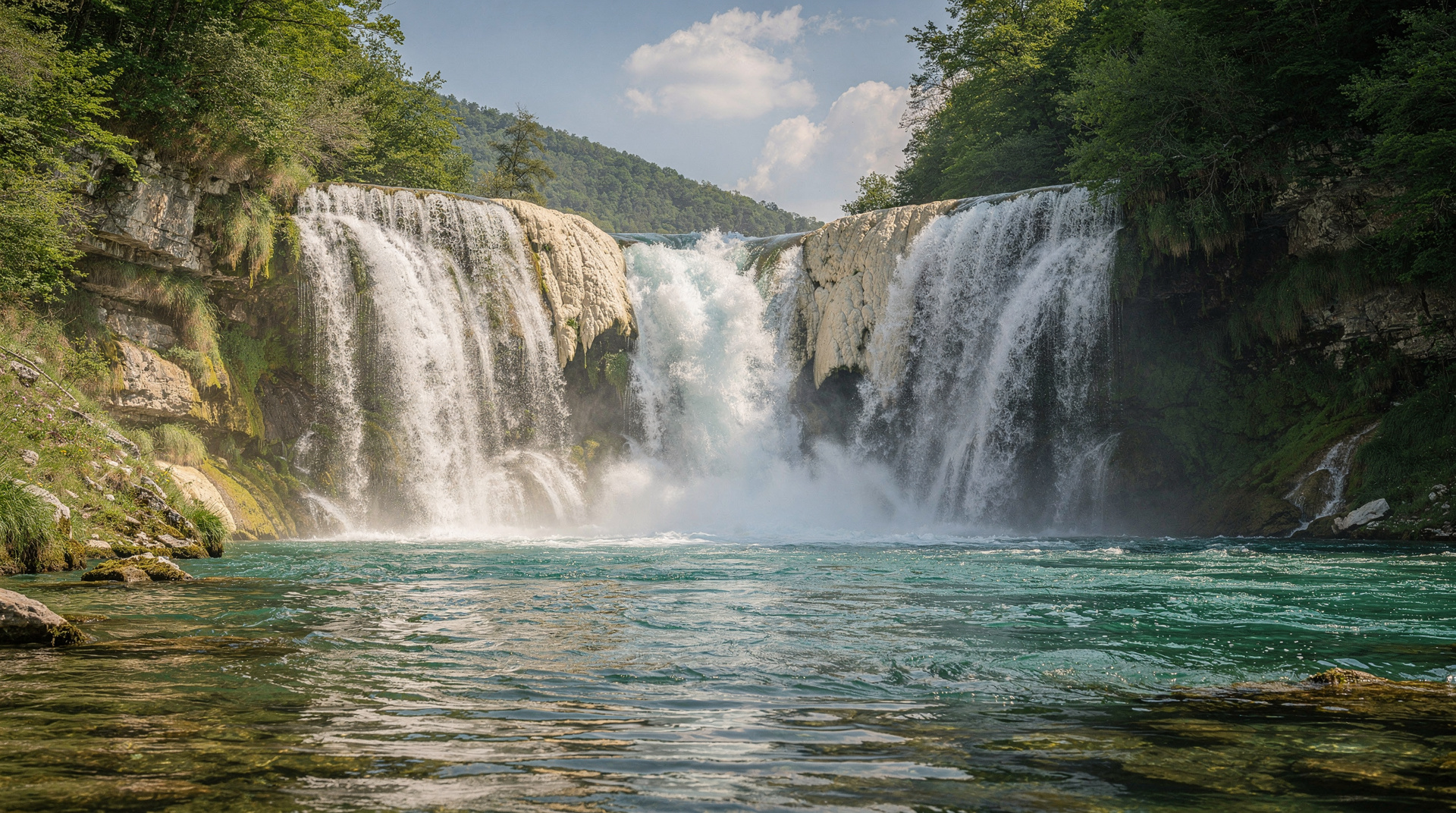
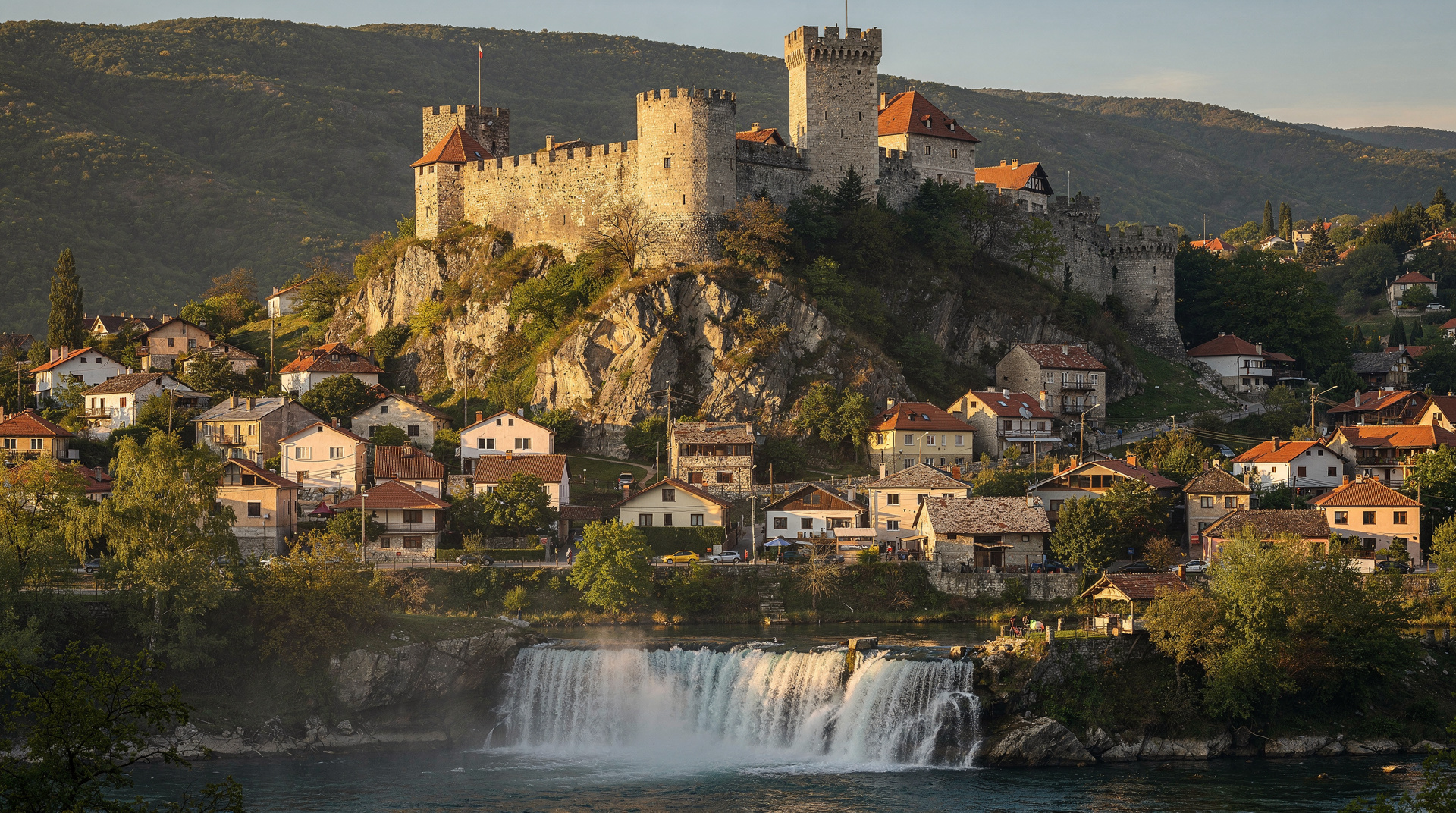
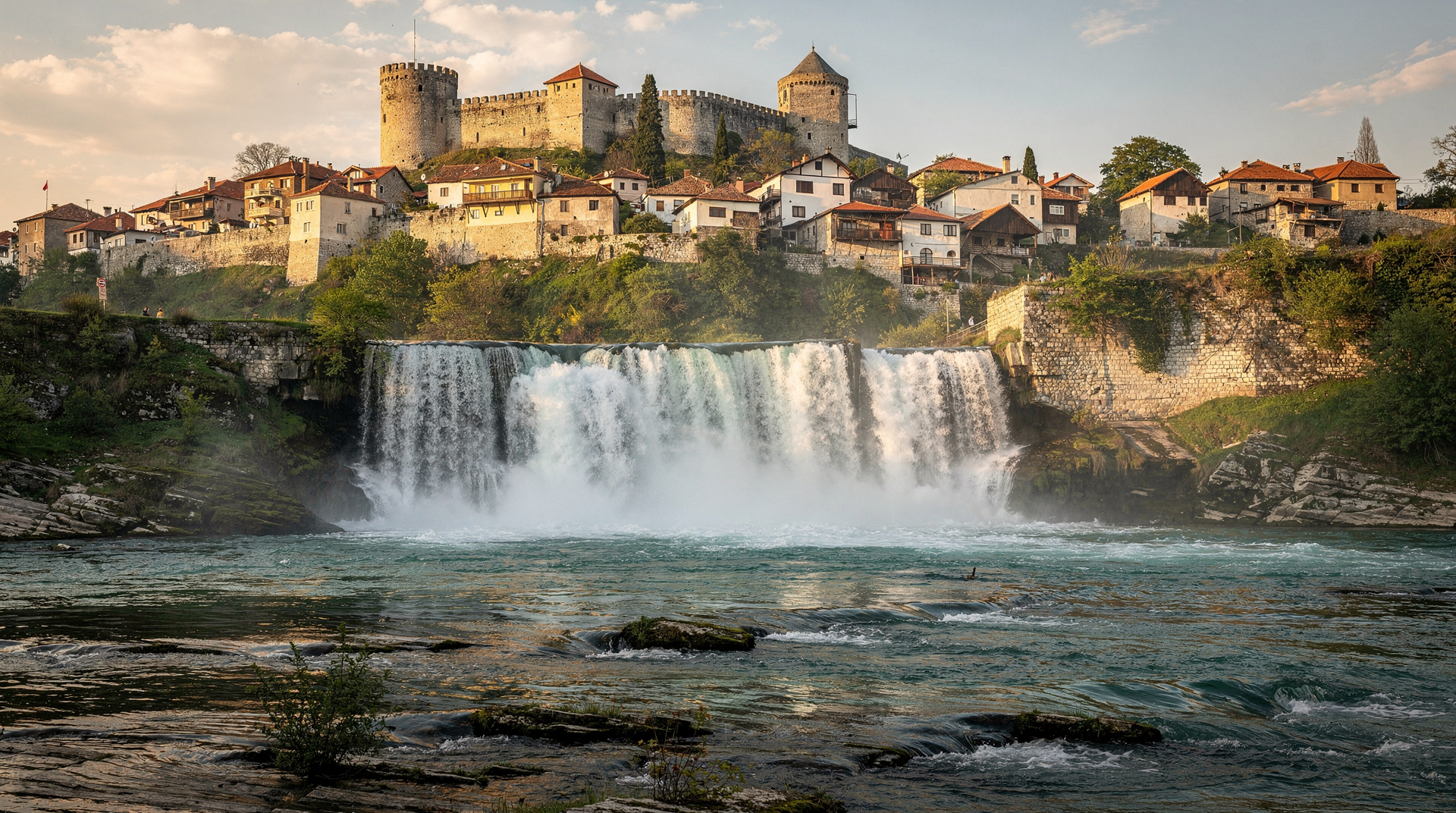
The Pliva waterfall in Jajce is a 21-metre cascade where the Pliva River drops directly into the Vrbas River in the middle of the town — the only place in Bosnia where a significant waterfall flows through an inhabited settlement. A short walk from the fortress and watermills, it is the most distinctive sight in central Bosnia.
Bosnia has many waterfalls, but none quite like the Pliva in Jajce. Most significant waterfalls in the region are found in remote canyons or national parks, reached by hiking trails. The Pliva falls directly into the Vrbas River at the centre of a lived-in medieval town, audible from the main street, visible from a café terrace, and accessible to anyone who walks down a short path from the old quarter. It is one of the defining images of central Bosnia.
At a glance
| Where | Jajce, central Bosnia, around 160km northwest of Sarajevo |
| Cost | Waterfall viewing terrace: free; fortress entry: a few BAM; catacomb church: small fee |
| Time needed | Half a day for the core sights, a full day with Travnik |
| Getting there | Direct bus from Sarajevo (around 2.5-3 hours) or self-drive via Zenica and Donji Vakuf |
| Best time | Spring (April-June) for maximum water flow; early morning for photos year-round |
The waterfall and the town
Jajce (pronounced YAI-tseh) sits at the confluence of the Pliva and Vrbas rivers in central Bosnia, roughly 160km northwest of Sarajevo. It was the royal capital of the medieval Bosnian kingdom — its fortress crowns the hill above the town — and the site where Tito’s Anti-Fascist Council proclaimed the future Yugoslavia in November 1943.
The Pliva waterfall (Buk Plive or simply the Jajce waterfall) is about 21 metres high and 25-30 metres wide. The river drops as a broad, even curtain of white water into a deep plunge pool, then into the wider Vrbas. The sound is considerable even from the town above. A viewing terrace and a path down to the pool base allow close inspection.
The Pliva watermills
About 1km upstream from the main waterfall, where the Pliva River connects the two Pliva Lakes, a colony of small wooden watermills sits on platforms jutting into the water. There are approximately 17 mills, each privately owned and historically used for grinding grain. A few are still in occasional use; most are maintained as heritage structures. The mills photograph beautifully — particularly in early morning when mist rises off the lakes and the wooden structures reflect in the still water.
The short walk from town along the river bank to the mills is pleasant in all seasons. Allow 30-45 minutes for the mill colony and the lower lake.
Jajce fortress
The medieval fortress above the town dates primarily to the 14th-15th centuries and served as the capital of the Bosnian kingdom under King Stjepan Tomašević, who was killed here when the Ottomans captured the town in 1463. The walls and towers have been partially restored; the views from the upper ramparts over the waterfall confluence and the surrounding hills are excellent.
Entrance to the fortress area is a few BAM; the interior walls and towers are freely explorable. Allow 45-60 minutes.
The catacomb church
A unique feature of Jajce, the 15th-century catacomb church is carved partially into the rock beneath the old town. It was used as a Franciscan chapel before the Ottoman conquest and later repurposed. The frescoes are largely gone but the unusual rock-cut space is worth seeing. Located near the fortress entrance.
Getting to Jajce and getting around
From Sarajevo: Direct buses run approximately every 2-3 hours (journey time 2.5-3 hours; cost 20-25 BAM). The bus station in Jajce is a short walk from the old town.
By car: The A1 motorway runs to Zenica; from there the road is single-carriageway through Donji Vakuf to Jajce. Allow 2.5-3 hours from Sarajevo.
Day trip tours: The Sarajevo to Jajce, Travnik and Pliva Lake day trip covers all the main sites in a guided full day, with transport included. It is the most efficient option for those without a car.
Combining Jajce and Štrbački Buk
An unusual combination offered in tour form: the Strbacki Buk and Jajce waterfalls day trip combines the urban Pliva waterfall with Štrbački Buk in Una National Park — two entirely different waterfall experiences in a single day. See the Štrbački Buk waterfall guide for the Una NP waterfall context.
Combining Jajce with Travnik
Travnik, 35km south of Jajce, was the seat of Ottoman governors (viziers) in Bosnia for two centuries and retains a well-preserved old town including a colour fortress, several mosques, and the clock tower. The combination of Jajce (waterfalls, medieval fortress, history) and Travnik (Ottoman quarter, Travnički sir cheese, mosque architecture) makes a satisfying full-day circuit from Sarajevo. See the Jajce and Travnik day trip guide.
Practical notes
- Entrance to the waterfall area: free (viewing terrace); there may be a small fee to access the pool base
- Restaurants: several riverside restaurants near the waterfall serve grilled trout from the Pliva River — the best regional speciality. A meal costs 20-35 BAM.
- Photography: early morning (before tourist groups arrive, typically before 09:30) gives the waterfall and mills without people in frame
- Accommodation: Jajce has a handful of small hotels and guesthouses; staying overnight allows more relaxed exploration of the town in the evening when day-trippers have left
For the broader waterfall picture in Bosnia, the Kravice waterfalls guide covers Herzegovina’s most popular site, and the Una National Park guide describes the Una’s extraordinary waterfall system in the northwest.
Where to stay and eat near the falls
Jajce’s small hotel scene sits mostly within walking distance of the waterfall and old town, so an overnight stay removes the need to rush between the fortress, the mills and the catacomb church before the last bus back to Sarajevo. Riverside guesthouses near the confluence often have terraces looking directly onto the falls. For dinner, look beyond the tourist-facing restaurants closest to the viewing terrace — the better trout kitchens tend to be a five-minute walk upstream toward the mills, where locals eat.
If you are combining Jajce with a wider central Bosnia loop, the town also works well as a stop on the way to or from the Una National Park in the far northwest, given the road broadly runs that direction from Jajce via Bihać.
How to pace your visit
The simplest way to enjoy Jajce is to resist the urge to tick everything off in a hurry. The town is compact, and its sights cluster tightly: the waterfall at the lower edge, the old quarter and fortress above, the catacomb church close to the fortress entrance, and the watermills a pleasant riverside walk in the other direction. Start with the waterfall while the light is soft and the terrace is quiet, climb to the fortress while you still have energy, and leave the mills for a slower, later stroll. This order also keeps the steepest walking early, when you are fresh, and finishes with the flat riverside path.
If you arrive by bus, drop your bag only if you plan to stay; otherwise travel light. The old town streets are cobbled in places and sloping, so comfortable shoes matter more here than at most city stops. Bring a light layer even in summer, because the spray from the falls and the shade of the gorge can feel cool when the town above is warm.
Seeing the falls from different angles
The Pliva waterfall rewards more than one viewpoint. From the main terrace you get the classic frontal view: the broad curtain of water, the roofs of the old town, and the spray rising into the air. Walking down toward the pool base changes the scale completely, because the sound grows and the water suddenly feels much closer. From the fortress ramparts you see the whole picture at once, with the two rivers meeting and the town wrapped around the confluence. Each angle tells a slightly different story, and together they explain why the town grew where it did.
Photographers should think about the direction of the light and the movement of the water. A slower shutter speed softens the curtain into silk, while a faster one catches the texture of the drop. In every season the colour of the water and the surrounding greenery shifts, so a repeat visit in another month can look like a different place. The best viewpoints in Bosnia blog post gives wider inspiration for where else to look for the country’s great panoramas.
The history behind the view
It helps to know a little of the story before you walk the old streets. Jajce was a royal seat, a frontier fortress, and later a place of symbolic importance in the twentieth century, and traces of each period remain visible in the stone. The medieval walls, the rock-cut church and the later Ottoman and Austro-Hungarian layers of the town sit side by side within a few minutes’ walk. For a broader sense of how these eras fit together, read Bosnia history for travelers, and for the Ottoman chapter in particular, Ottoman heritage in Bosnia places Jajce alongside other towns that kept their old character.
Visitors who want a deeper walk through the town itself will enjoy the longer Jajce fortress guide, which focuses on the citadel, and the Jajce watermills guide, which expands on the mill colony described above. For a more personal account of the town, the Jajce, the royal town trip report is a pleasant companion read.
The lakes beyond the mills
Beyond the mill colony the river opens into the Pliva Lakes, a quieter, greener side of the area that many day-trippers never reach. If you have the time and the weather is kind, a gentle wander along the shore shows how different the landscape feels away from the town: still water, reeds, wooded slopes and very little noise. It is a good place to slow down after the busier sights, and an easy way to stretch a short stay into something more restful. The Pliva Lakes destination page describes the area in more detail, and the main Jajce destination page gathers everything else the town has to offer.
Eating well in Jajce
Trout from the Pliva is the dish most visitors come for, usually grilled simply and served with potatoes or a fresh salad. Order it the way locals do and let the fish speak for itself. Elsewhere on the menu you will meet the familiar Bosnian staples, and the Bosnian food guide explains what to look for and how to order with confidence. If you want a quick, cheap bite between sights, the burek and pita guide is a useful primer on the pastry shops that feed the whole country.
A relaxed lunch beside the water is also the best way to use the middle of the day, when the light is harsh for photography and the terraces are most crowded. Sit, eat slowly, and return to the viewpoints later, when the shadows lengthen and the crowds thin out.
Planning the onward journey
Jajce is rarely a final destination, so think about where you are heading next. Many travellers continue toward the northwest and the rivers around Bihać, while others loop back to the capital. If you are building a longer route, the western Bosnia and Krajina itinerary shows how Jajce fits into a wider journey, and the seven-day Bosnia itinerary offers a more general frame. For help with transport choices on the road, getting around Bosnia compares the main options, and driving in Bosnia is worth reading if you plan to take the wheel yourself.
When the weather is poor
Rain does not ruin a visit to Jajce, and in some ways it improves the waterfall, which looks fuller and louder after wet weather. The downside is that stone steps and cobbles become slippery, so take extra care on the path to the pool base and on the fortress approach. If the weather turns properly bad, the catacomb church and the covered corners of the old town make good shelter, and a long lunch is never a wasted hour. Check the forecast the evening before, and keep a flexible plan so that you can swap the outdoor sights for the indoor ones if needed.
Travelling with others
Families will find Jajce easy and rewarding, since the sights are short, varied and close together, and children tend to love both the noise of the falls and the fortress walls. Take care near the edges, and keep younger children close on the steps. Older travellers can enjoy the main terrace without much effort and can pick the gentler parts of the old town. Anyone planning a trip with children may also like the Bosnia with kids guide for wider ideas.
Frequently asked questions about Pliva waterfall Jajce
How do I get to Jajce from Sarajevo?
What is the best time to see the Pliva waterfall?
What else is there to see in Jajce?
What are the Pliva watermills?
Is Jajce worth a full day?
Can I visit Jajce as a day trip without a tour?
Is the Pliva waterfall accessible for those with limited mobility?
Top experiences
Bookable activities with verified prices and instant confirmation on GetYourGuide.