Una National Park guide
Bihać: Una National Park Guided Rafting Adventure
What are the highlights of Una National Park in Bosnia?
Una National Park protects the Una River canyon in northwest Bosnia, home to Štrbački Buk (the most powerful waterfall in Bosnia), multi-grade white-water rafting, kayaking, travertine pools, and the medieval town of Bihać as base. Best season is April-October for rafting; the falls are most powerful in spring.
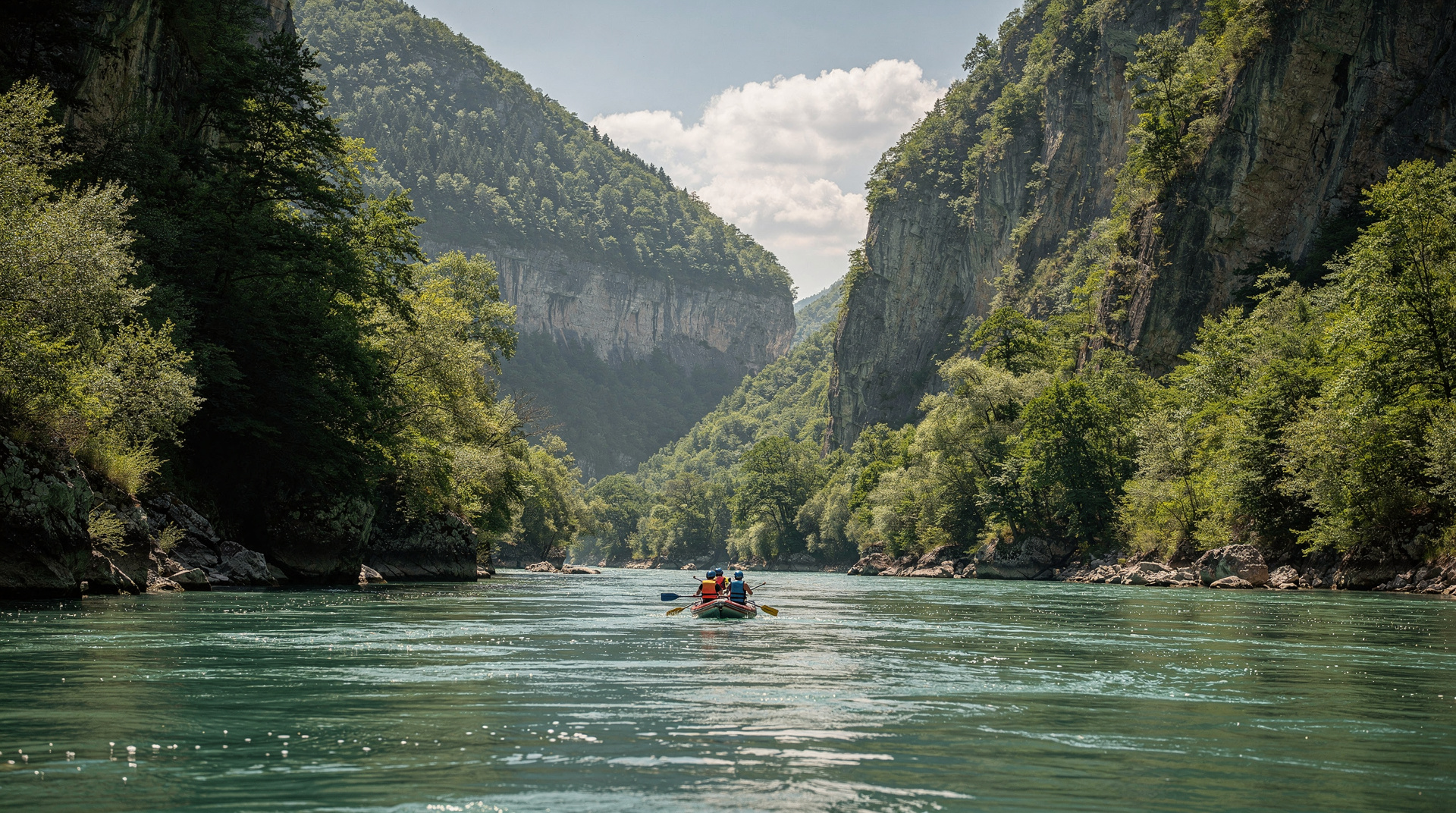
Una National Park sits in a quiet corner of northwest Bosnia that most visitors never reach — and that is precisely its appeal. The Una River has carved one of the most spectacular canyon systems in the western Balkans, creating a sequence of waterfalls, travertine pools, rapids, and turquoise pools that rivals anything in Croatia’s Plitvice or Krka parks, without the crowds or the entrance queue. The park was established in 2008 and protects 198 square kilometres of river canyon, mixed forest, and traditional villages.
| At a glance | |
|---|---|
| Where | Una-Sana canton, northwest Bosnia, base town Bihać |
| Cost | Park entry around 5-10 BAM/day; rafting around 45-120 BAM depending on section |
| Time needed | 1 full day minimum for rafting + falls; 2 days to also see Bihać and hike |
| Getting there | Bus or car from Sarajevo, around 4-5 hours (290km) |
| Best time | April-October for rafting; May-June for the most powerful falls |
The Una River: character and course
The Una rises in Croatia near Srb and enters Bosnia near Bihać, where it begins a series of increasingly dramatic descents through the Unac canyon and the Štrbački Buk gorge before joining the Sava River at Jasenovac. The name Una is Latin for “unique” — a name given, according to legend, by a Roman soldier who had never seen a river of such colour and character.
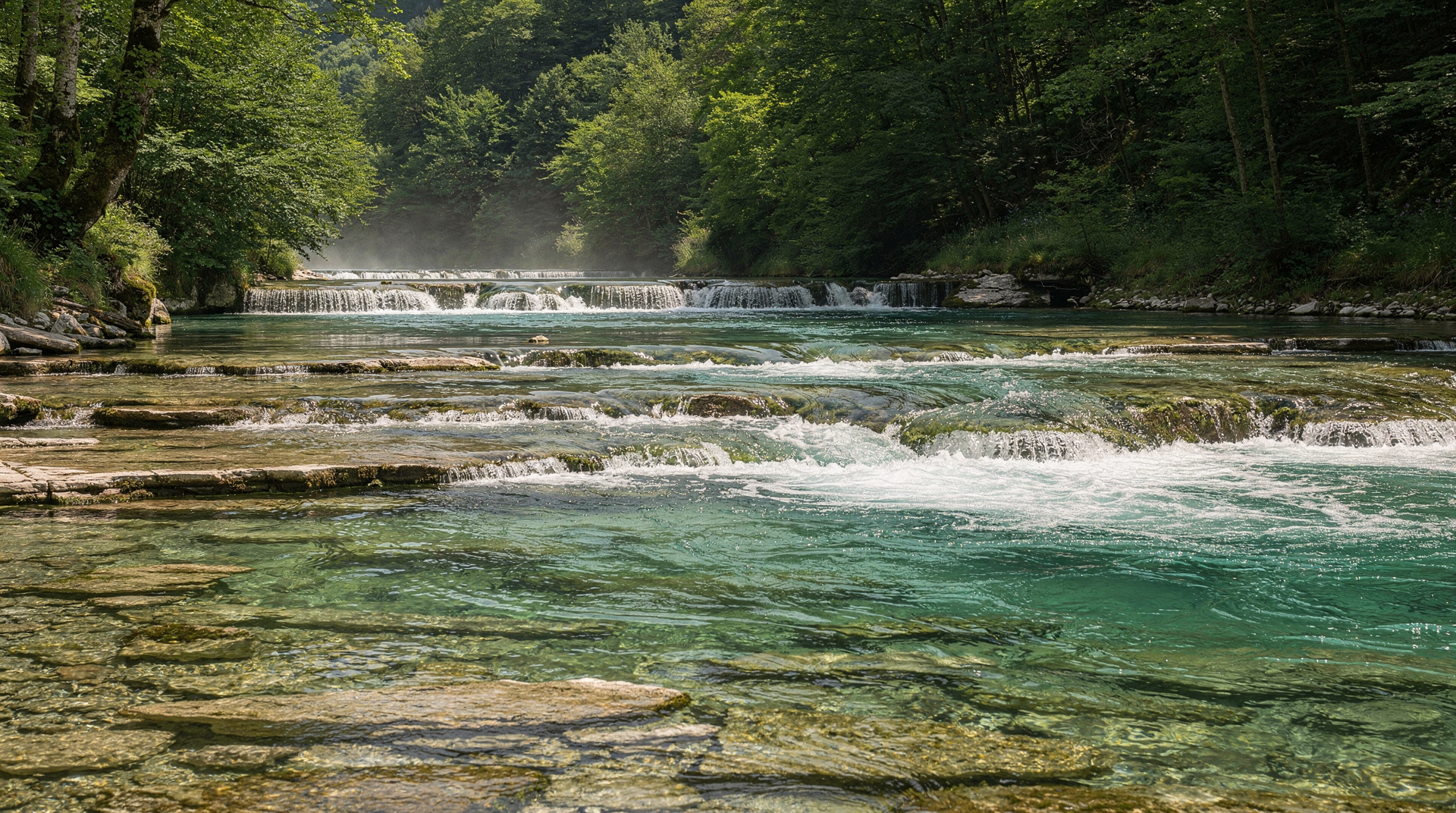
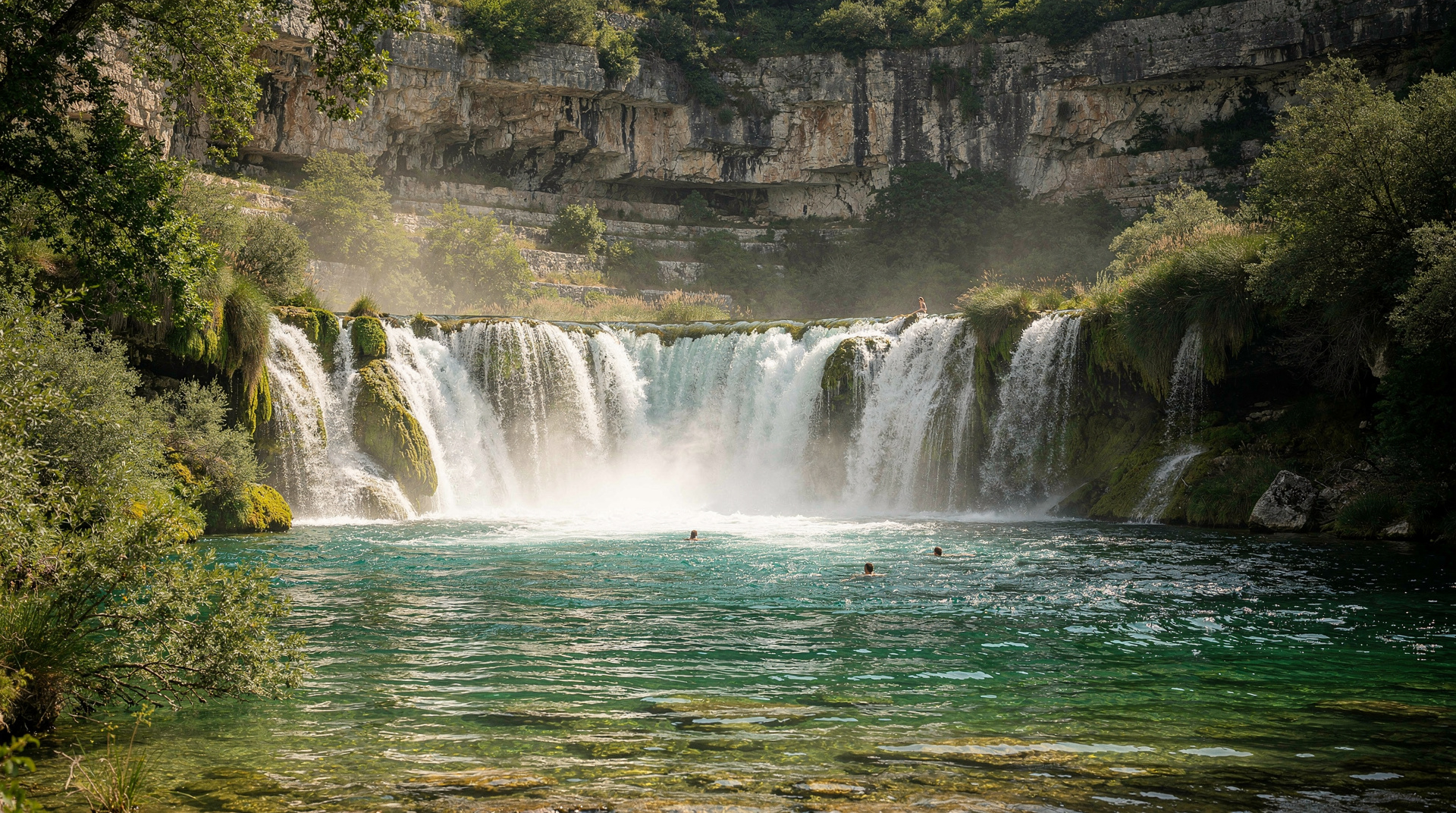
The river’s colour is its defining feature: a shifting palette of turquoise, emerald, and white foam that changes with depth, light, and season. The tufa (travertine) formations that colour the riverbed are the same calcium-rich deposits seen at Kravice and Plitvice, but on a larger and more varied scale.
Štrbački Buk: the crown waterfall
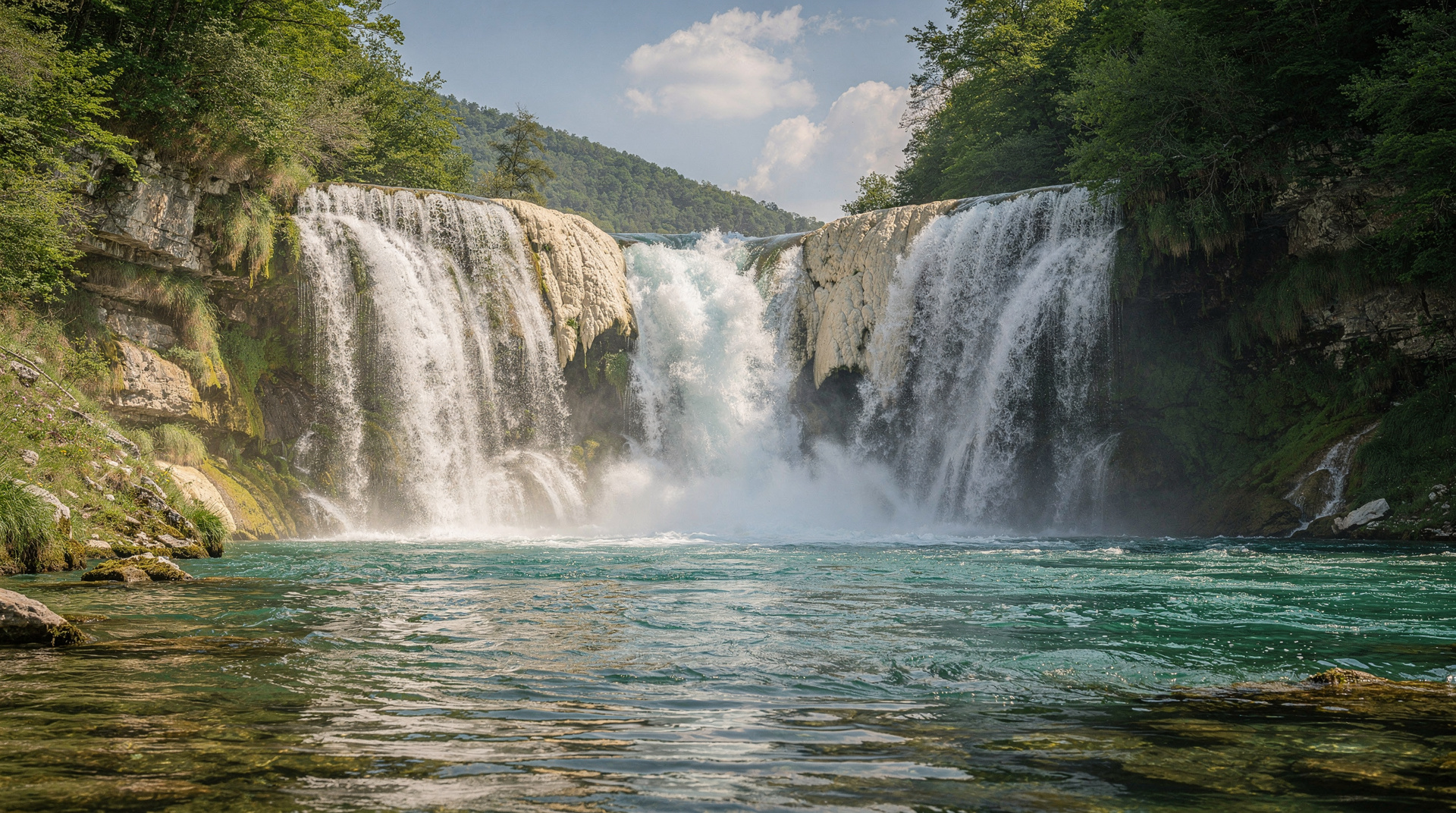
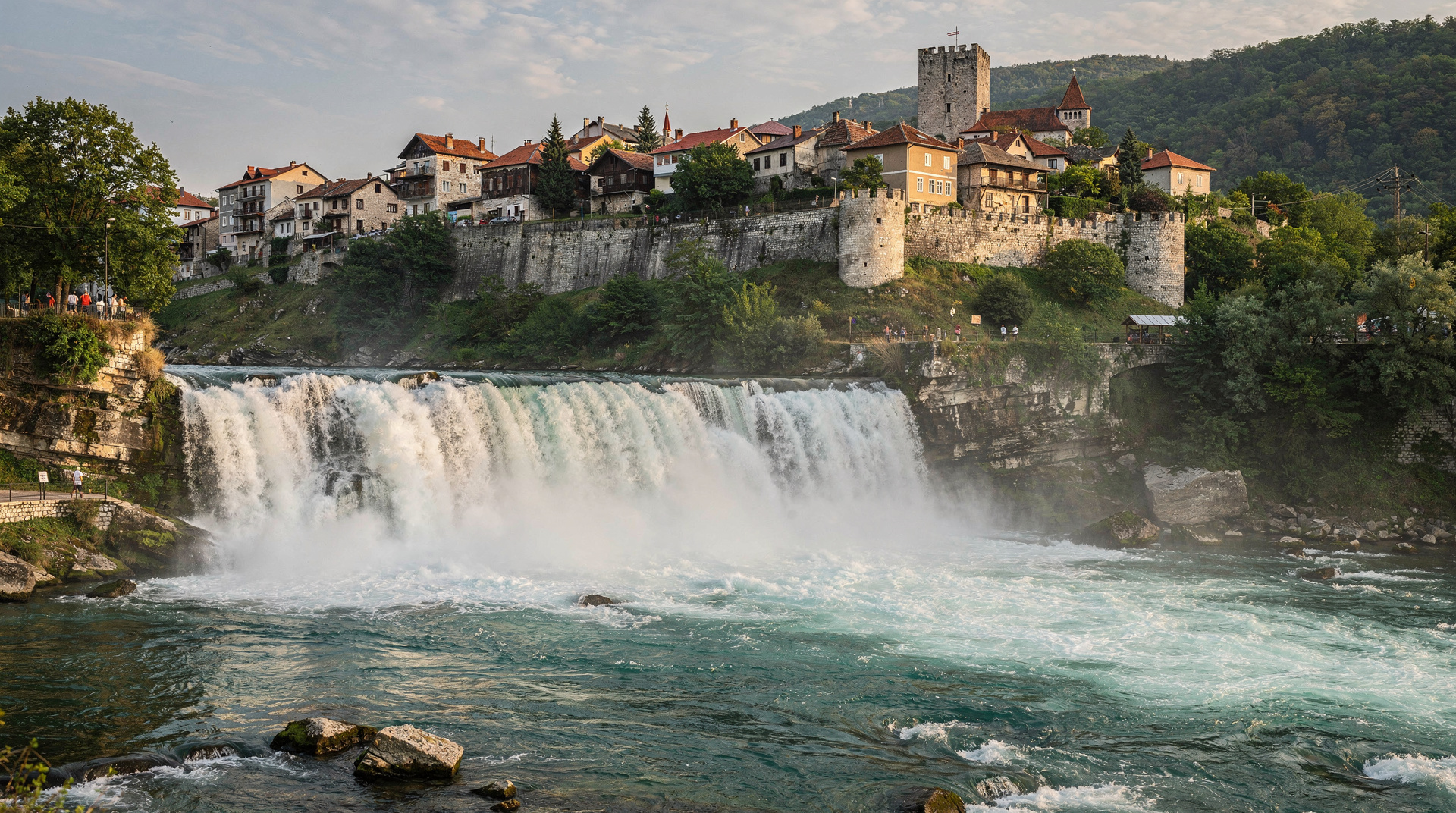
Štrbački Buk, near the village of Martin Brod in the southern part of the park, is the most dramatic waterfall in Bosnia. The Una drops approximately 24 metres in a series of steps across a width of roughly 60 metres, creating a thunderous horseshoe cataract with spray visible from 200 metres away.
The falls are most powerful from March to June when snowmelt and spring rains bring the river to full flow; in summer the water level drops but the falls remain impressive. Access requires a short hike (2-3km from the nearest road) or passage by raft; the isolation contributes to the experience. See the full Štrbački Buk guide for the detailed visit logistics.
Rafting the Una
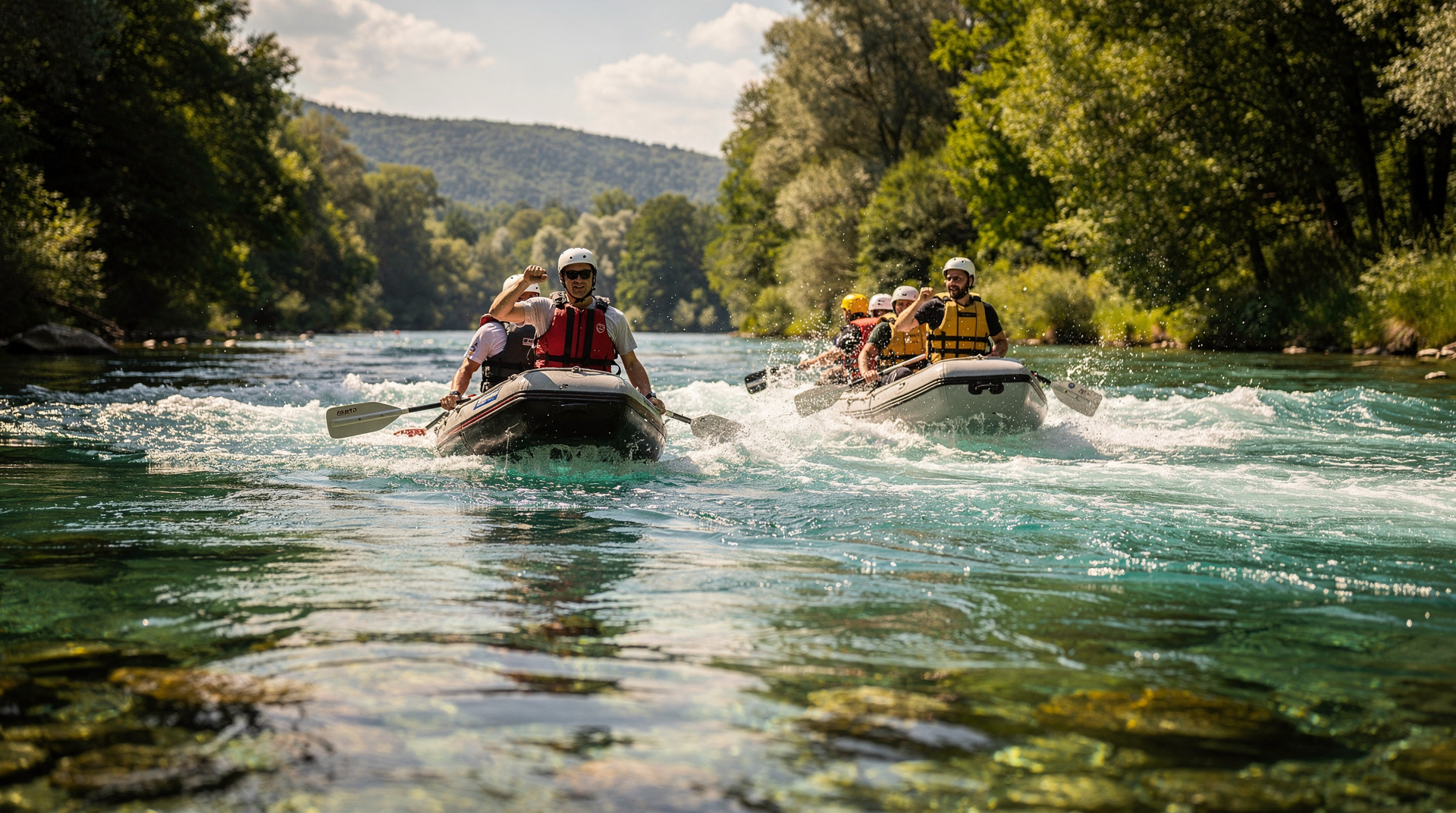
White-water rafting is the reason most active travellers come to Una National Park. The river offers several distinct sections:
Lower Una (Bihać area) — Relaxed Rafting
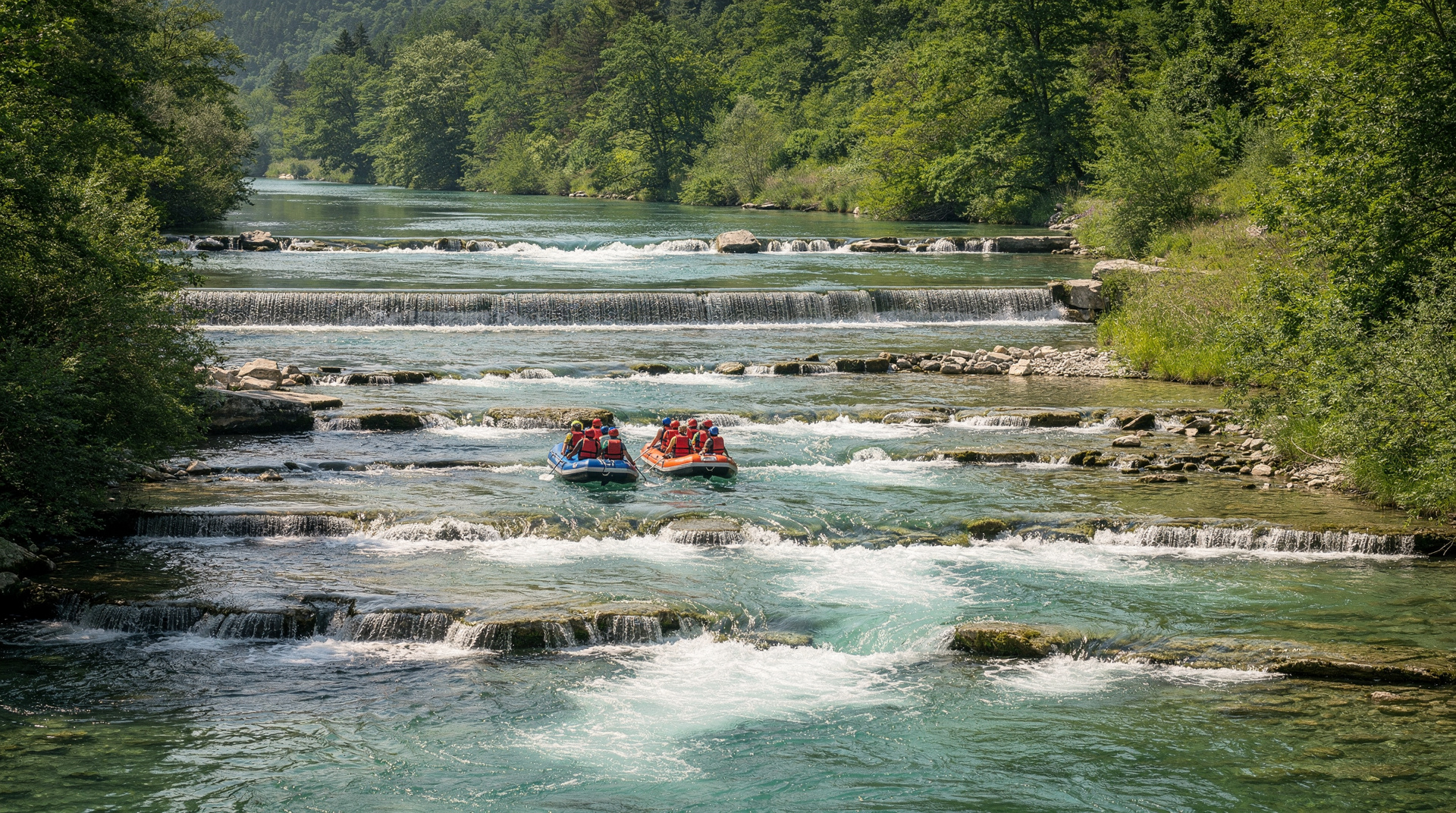
The Relaxed Rafting tour on the Lower Una covers the gentle stretches near Bihać — grades I-II, crystal-clear water, minimal technical challenge. Suitable for families with children and anyone new to rafting. Duration: 2-3 hours on the water. Cost: approximately 45-70 BAM per person.
Upper Una (Martin Brod canyon) — Technical Rafting
The Una National Park guided rafting adventure covers the more technical canyon sections including passage through the Štrbački Buk area (grades III-IV at peak flow). This is a full-day experience requiring a minimum age and some paddling fitness. Cost: approximately 80-120 BAM per person including transport from Bihać.
Both tours operate April-October; peak season is May-June (highest water) and July-August (warmest water for swimming between rapids).
Kayaking the Una
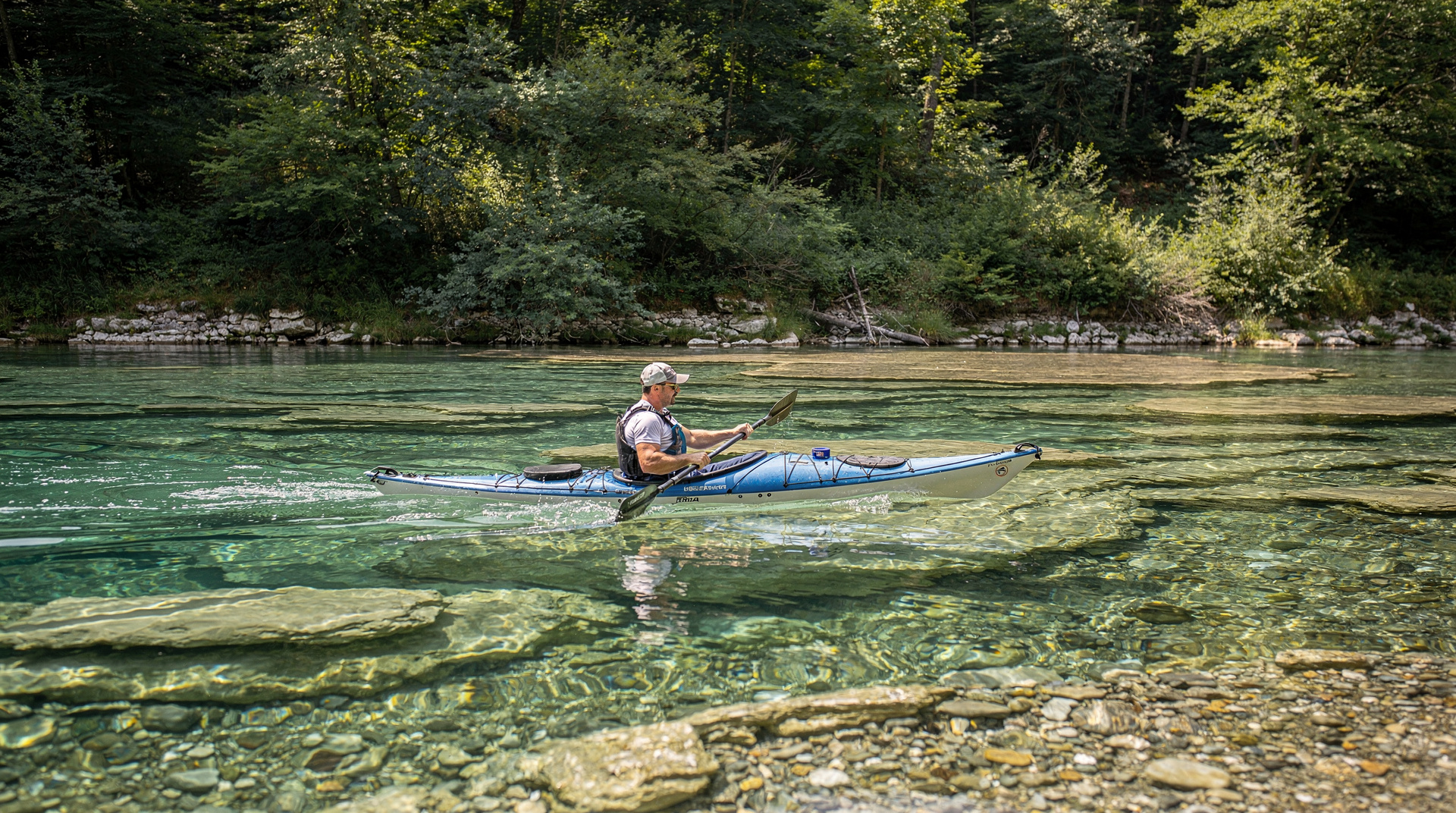
Kayak with Una Pirates is an independent kayak experience on the Una River, navigating specific sections with guides. Suitable for those who prefer individual craft to a group raft. Duration: 2-4 hours depending on the route.
Walking and hiking in Una NP
The park has a network of marked trails ranging from easy riverside walks to longer ridge routes above the canyon. Key hikes:
- Štrbački Buk trail (from Martin Brod): 2km each way on a flat riverside path to the falls
- Klokot springs circular: a 6km loop starting from Bihać, visiting the Klokot karst springs (among the largest in Bosnia)
- Grmuša ridge: above the Grmuša canyon, 12km, panoramic views over the Una valley
Trails are marked but not always maintained to the standard of national parks in Western Europe. A 1:50,000 park map (available in Bihać) is useful for longer routes.
Bihać: the base town
Bihać, the regional capital of the Una-Sana canton, is the logical base for the park. It is not a particularly tourist-oriented town but has adequate accommodation, restaurants, and transport connections. The old town retains an Ottoman tower (Kapetanova kula) and a medieval mosque (originally a church) that are worth an hour’s walk.
The Una River flows through the centre of Bihać itself, and a riverside walk between the two main bridges gives a taste of the river before any organised activity.
Getting there
- By bus: Bihać is connected to Sarajevo by daily buses (4-5 hours). Buses also run to Zagreb and other Croatian cities.
- By car: From Sarajevo, drive north via Zenica and Jajce, then northwest toward Bihać. Total 290km, approximately 4 hours on good roads.
- Day trip tours: Some operators offer full-day tours from Sarajevo to Una NP including transport, rafting, and a park visit (very long day — 10+ hours). Staying overnight in Bihać is strongly preferred.
Season and practicalities
| Month | Rafting | Water Temp | Waterfall Power | Crowd Level |
|---|---|---|---|---|
| April | Good | Cold (10°C) | High | Low |
| May-June | Excellent | Cool (14-17°C) | Very high | Low-Medium |
| July-August | Good | Warm (20°C+) | Medium | High |
| September-October | Good | Cool | Medium | Low |
| Nov-March | Closed/limited | Cold | Variable | Very low |
Entry to the national park: 5-10 BAM per person. Rafting and kayaking tours include park fees. Camping is permitted in designated areas within the park.
For the broad Bosnian rafting picture, the rafting in Bosnia guide compares Una, Neretva, and Tara. See also the Kravice waterfalls guide for Herzegovina’s most accessible waterfall.
Where to stay near Una National Park
Bihać has the widest choice of accommodation — small hotels and guesthouses along the river, plus a handful of pensions in the old town within walking distance of the riverside promenade. For those wanting to be closer to the falls, a few family-run guesthouses operate in Martin Brod itself, useful if visiting Štrbački Buk at sunrise before the day-trip crowds arrive, though options are limited and booking ahead is sensible in July-August. Staying in Bihać keeps transport simple for both the rafting operators and the bus connections back to Sarajevo.
How Una compares to Bosnia’s other rafting rivers
Bosnia has three serious rafting rivers, and each has a different character. The Neretva at Konjic is the most accessible from Sarajevo and Mostar and suits a half-day itinerary; the Tara River (technically in Montenegro but run from Bosnia-side operators) is the deepest canyon and the biggest rapids; the Una is the most scenic at low effort, with turquoise water and waterfalls that reward non-rafters too. If time only allows one river, choose Una for scenery and a family-friendly option, Tara for the most serious white water, and Neretva for convenience.
Planning a two-day visit
A realistic plan gives the first day to the river and the second to the falls and the town. Arrive in Bihać the evening before, settle into a guesthouse, and walk along the water while the light fades; it is a gentle introduction and it lets you ask your host about the current water level. On the first morning, join the rafting or kayaking trip that matches your group, then spend the rest of the day drying off, eating well, and resting tired arms.
The second day suits a slower rhythm. Head south toward Martin Brod for Štrbački Buk, walk the riverside path to the falls, and give yourself time to simply stand and watch the water. The Štrbački Buk guide explains how the approach works. If you still have energy afterwards, the Klokot springs loop from Bihać makes a quiet end to the trip, and the old town is a good place for a last coffee before the bus.
Travellers who prefer a single active day can choose between the two headline experiences. Pick the raft if you want movement, spray, and a sense of the whole canyon from the water. Pick the falls if you prefer to walk, take photographs, and keep the budget low. Both are rewarding, and neither requires previous experience beyond a reasonable level of fitness.
What to bring and how to dress
The Una is cold early in the season, so rafters and kayakers should plan for the water rather than the air temperature. Operators normally supply helmets, life jackets, and wetsuits where needed, but you should bring a swimsuit, a quick-dry layer, a towel, and a full change of clothes to leave in the vehicle. Shoes that can get wet and stay on your feet matter more than anything else; leave open-toed sandals at the hotel.
For walking, sturdy shoes with grip are the sensible choice, because riverside paths and travertine rock become slippery near spray. Bring water, sun protection, and a light waterproof layer, since mountain weather in the canyon can change within an hour. A small dry bag protects phones and cameras, and a printed or offline map is wise because mobile signal can be patchy in the narrower parts of the valley. Cash in BAM is also handy for small guesthouses, cafés, and roadside stalls.
Food and rest stops around Bihać
Eating in the Una-Sana region is simple and satisfying. Expect grilled meats, fresh bread, local cheese, and river fish on some menus, served in unpretentious restaurants where portions are generous. After a cold morning on the water, a bowl of hot soup or a plate of grilled food feels earned. For wider context on what to order across the country, the Bosnian food guide covers the classics, and the Bosnian coffee culture guide explains why a slow coffee is part of any itinerary here.
Small cafés beside the river are the best place to unwind between activities. Sit outside, watch the colour of the water, and let the pace of the town set your own. Because Bihać is not built around mass tourism, service is relaxed and friendly, and you will often be the only visitors in the room.
Combining Una with the rest of western Bosnia
Una National Park fits naturally into a wider loop through the northwest. The route from central Bosnia passes close to Jajce, where the town waterfall and the Pliva waterfall guide make an excellent stop on the way. Travellers building a longer journey can follow the western Bosnia and Krajina itinerary, which links these northwestern highlights into a coherent route, or fold Una into the Bosnia adventure itinerary if rivers and trails are the priority.
The same area is also a natural fit for those arriving from Croatia, since the park sits close to the border and works as an unusual entry point into the country. If you are crossing by road, the driving in Bosnia guide covers what to expect behind the wheel, and the renting a car in Bosnia guide helps if you want the freedom to reach Martin Brod independently. For a deeper look at the town itself, see the Bihać destination page, and for the park as a place, the Una National Park destination page.
Respecting the park
The canyon stays beautiful because visitors treat it gently. Keep to marked paths, carry out all rubbish, and avoid stepping on fragile travertine formations that take a very long time to build. Do not light fires outside designated areas, and keep noise low near wildlife. In this part of Bosnia, travellers should also follow general safety advice about staying on established trails; the landmine safety guide explains why this matters across the country. Following these simple habits keeps the Una quiet, clean, and worth the journey for the next traveller.
Frequently asked questions about Una National Park
How do I get to Una National Park from Sarajevo?
What is the best activity in Una National Park?
Is Una National Park safe for families?
What is the entry fee for Una National Park?
Can I visit Una National Park without a car?
Is Una National Park better than Kravice Waterfalls?
How many days should I budget for Una National Park?
Top experiences
Bookable activities with verified prices and instant confirmation on GetYourGuide.