Herzegovina weekend itinerary
From Mostar: Blagaj, Počitelj & Kravice Waterfalls Day Tour
Herzegovina distils the best of Bosnia into a compact region that rewards a focused weekend. With a rental car or a booked day tour, you can cover Mostar, Blagaj, Počitelj and Kravice Waterfalls in two full days — arriving from Dubrovnik or Split in around 2.5–3 hours.
| At a glance | |
|---|---|
| Where | Mostar, Blagaj, Počitelj, Kravice Waterfalls |
| Cost | mid-range — entry fees are all under 10 BAM; main costs are car hire/tour and accommodation |
| Time needed | 2 full days; extend to 3 to add Trebinje |
| Getting there | around 2.5–3 hours by car from Dubrovnik or Split, via the Neum corridor |
| Best time | May–June or September–October for Kravice without peak crowds — see the seasonal table below |
When to go: month by month for this route
| Season | Weather | Kravice | Crowds |
|---|---|---|---|
| May–June | warm, occasional rain | swimmable, cool water | moderate |
| July–August | hot, dry | swimmable, warm water, best swim | heavy — arrive before 09:30 |
| September–October | mild, clear | swimmable into September | light |
| November–March | cold, wet | closed | minimal, but less to do |
Day 1: Mostar — Old Bridge, minarets and evening wine
Arrive in Mostar by mid-morning. If driving from Dubrovnik (2 h 30 min via the coastal highway and Stolac crossing) or Split (2 h 30 min via Imotski), you will pass through the narrow Neum corridor on the Adriatic coast — two brief border crossings, a passport check each way, rarely more than 5 minutes. Leave the Pelješac bridge route for the return if you want to avoid Bosnia entirely on the drive back to Croatia.
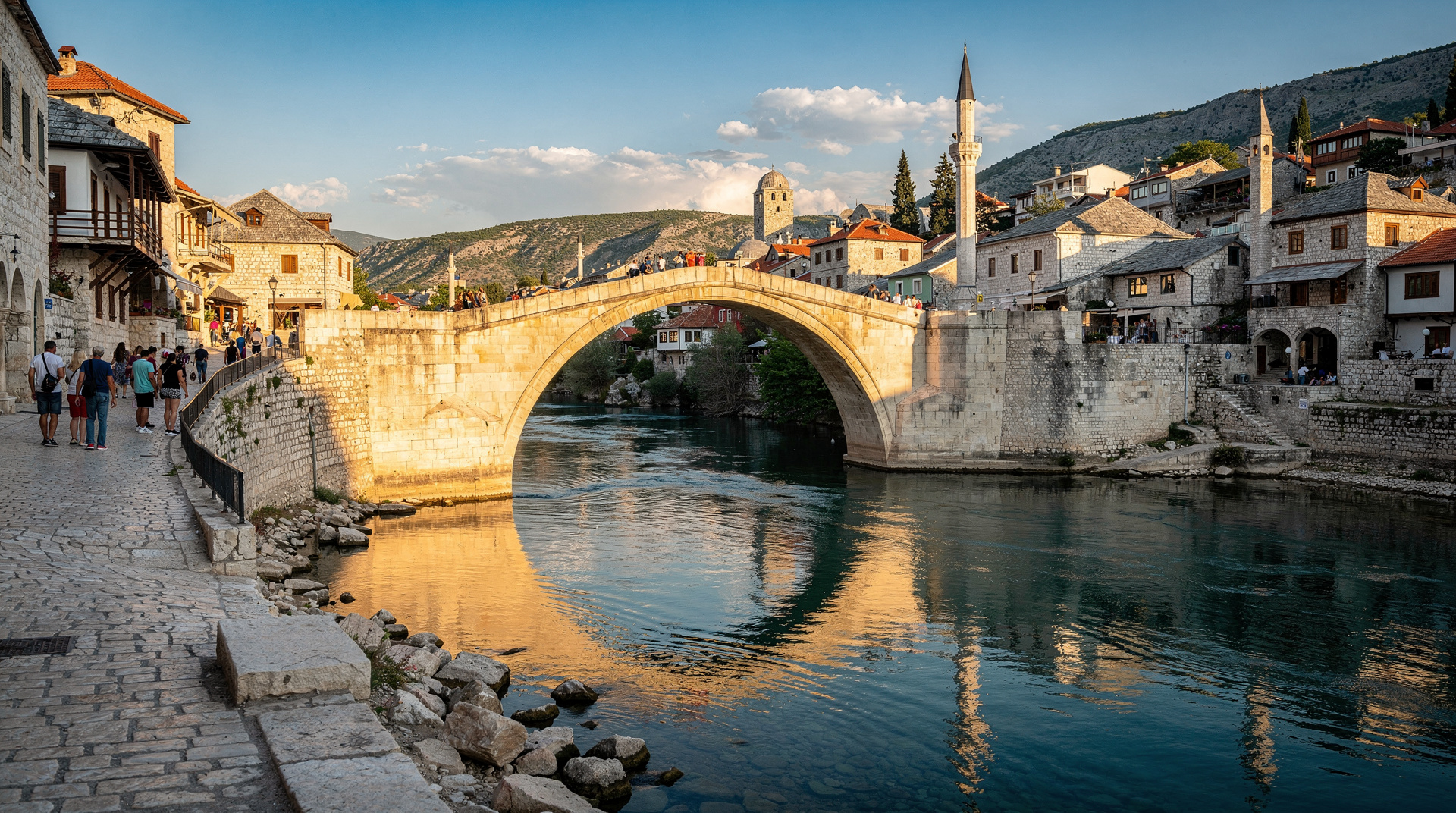
Park on the western bank of the Neretva and cross on foot into the old town. Stari Most, the 16th-century Ottoman stone bridge, spans the narrowest point of the emerald river between two towers (Tara and Halebija). The bridge divers — members of the local diving club who leap 21 metres into the Neretva for tips — perform daily from spring to autumn; they ask for a contribution before jumping, which is perfectly legitimate for a remarkable feat. A private walking tour with a Mostar local guide takes 2 hours and places the bridge, the bazaar and the wartime destruction in their proper context.
After the tour, explore the Kujundžiluk coppersmith street for hand-beaten ćase (coffee cups) and the Tepa market on the western bank for cheese, olives and wine. Lunch at one of the terrace restaurants overlooking the Neretva: a full meal with local wine costs 35–50 BAM (~18–26 EUR).
Afternoon: visit the Koski Mehmed Pasha Mosque (entry 10 BAM, minaret panorama included) and the 16th-century Old Bazaar. The Stari Most Museum on the eastern bank is compact but well curated — 30 minutes is enough.
Evening: Herzegovina produces two excellent wines. Žilavka is a dry white unique to the region — crisp, high-acidity, pairs brilliantly with local trout. Blatina is the indigenous red — earthy, medium-bodied. Several wine bars on the Kujundžiluk street pour both by the glass.
Day 2: Blagaj, Počitelj and Kravice Waterfalls
The classic Herzegovina day trip, all reachable in a 100-km loop from Mostar. Start early to beat the coaches.
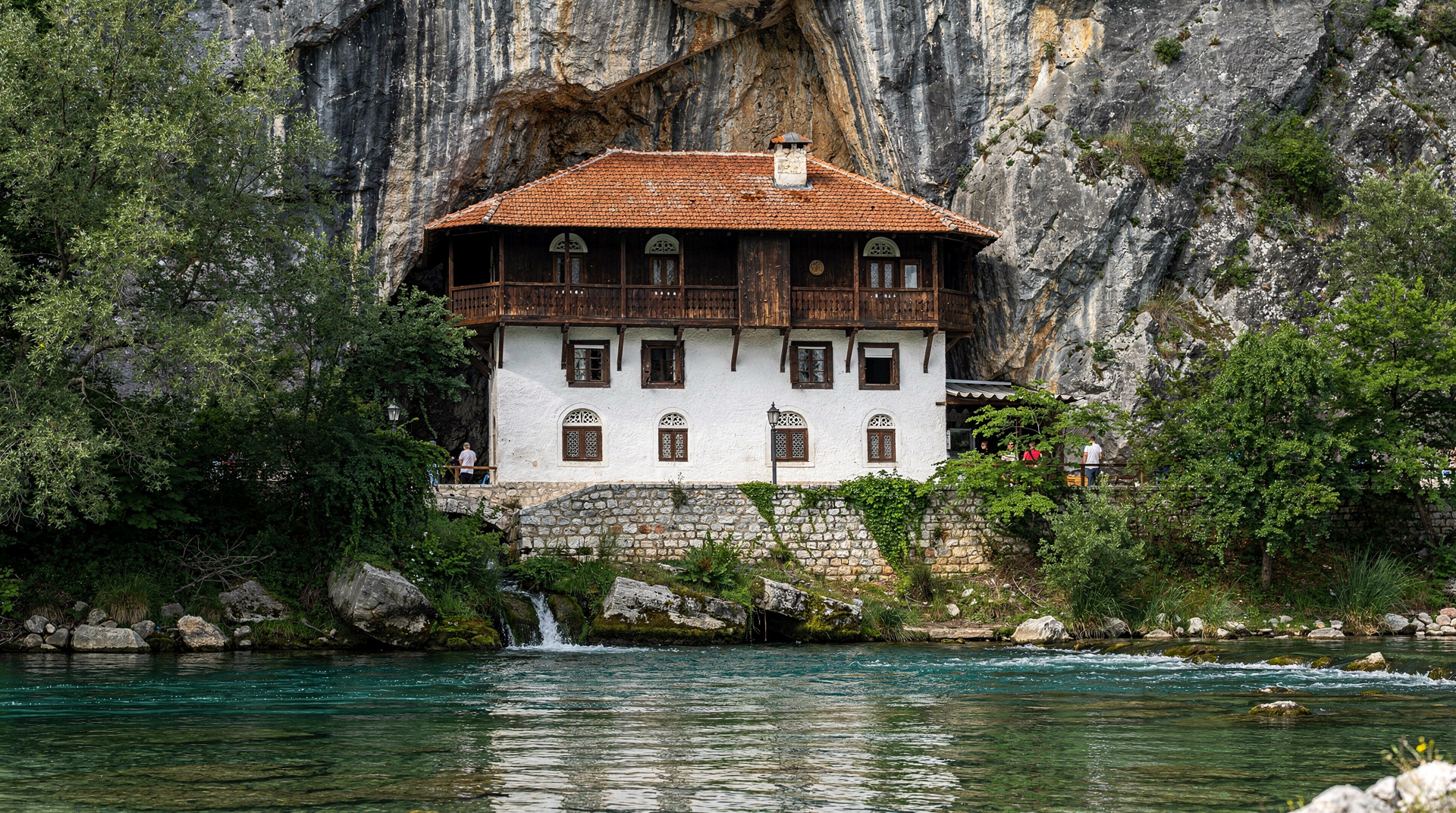
Blagaj (20 min south of Mostar): The Blagaj Tekija is a 16th-century dervish monastery built into a cliff face at the spring-source of the Buna river. The source of the Buna emerges from a cave at the base of a 200-metre rock wall and is one of the most dramatic natural settings in the Balkans — a landscape that prompted the Bektashi order to choose this spot for their tekija. The monastery is still active; entry is 5 BAM, head covering provided. Trout farm restaurant on the spring pool for a late breakfast or coffee. Allow 1.5 hours.
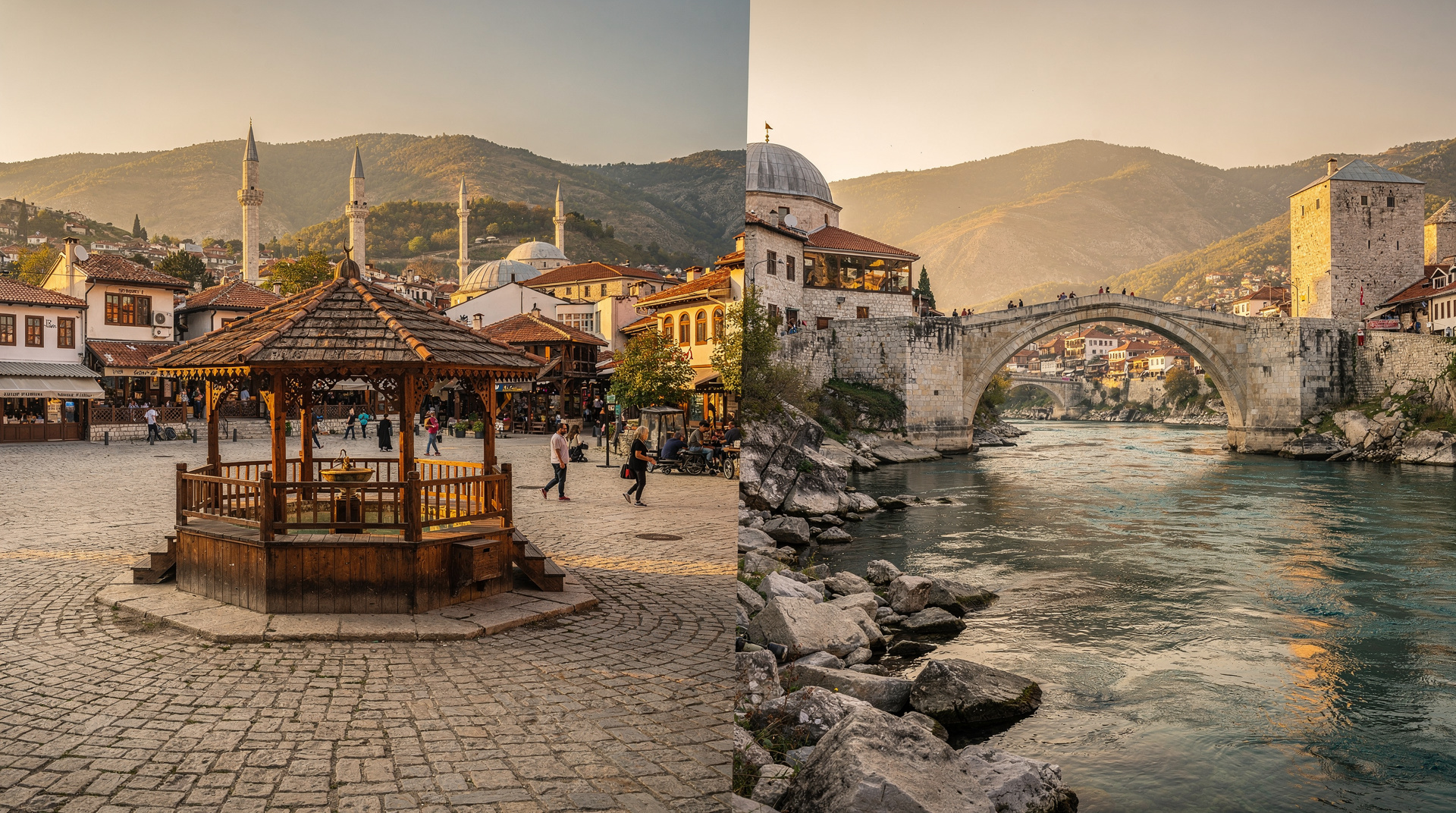
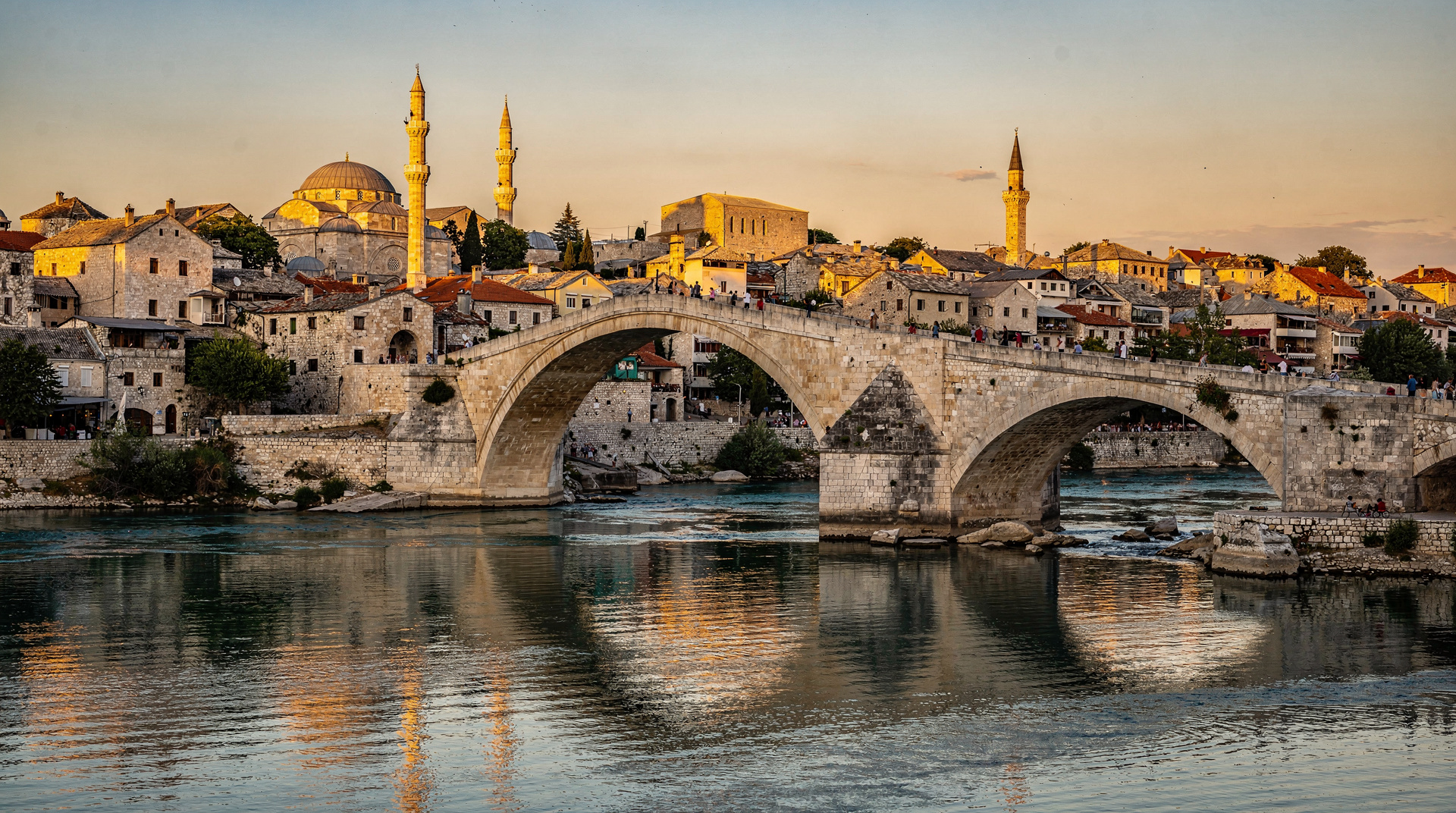
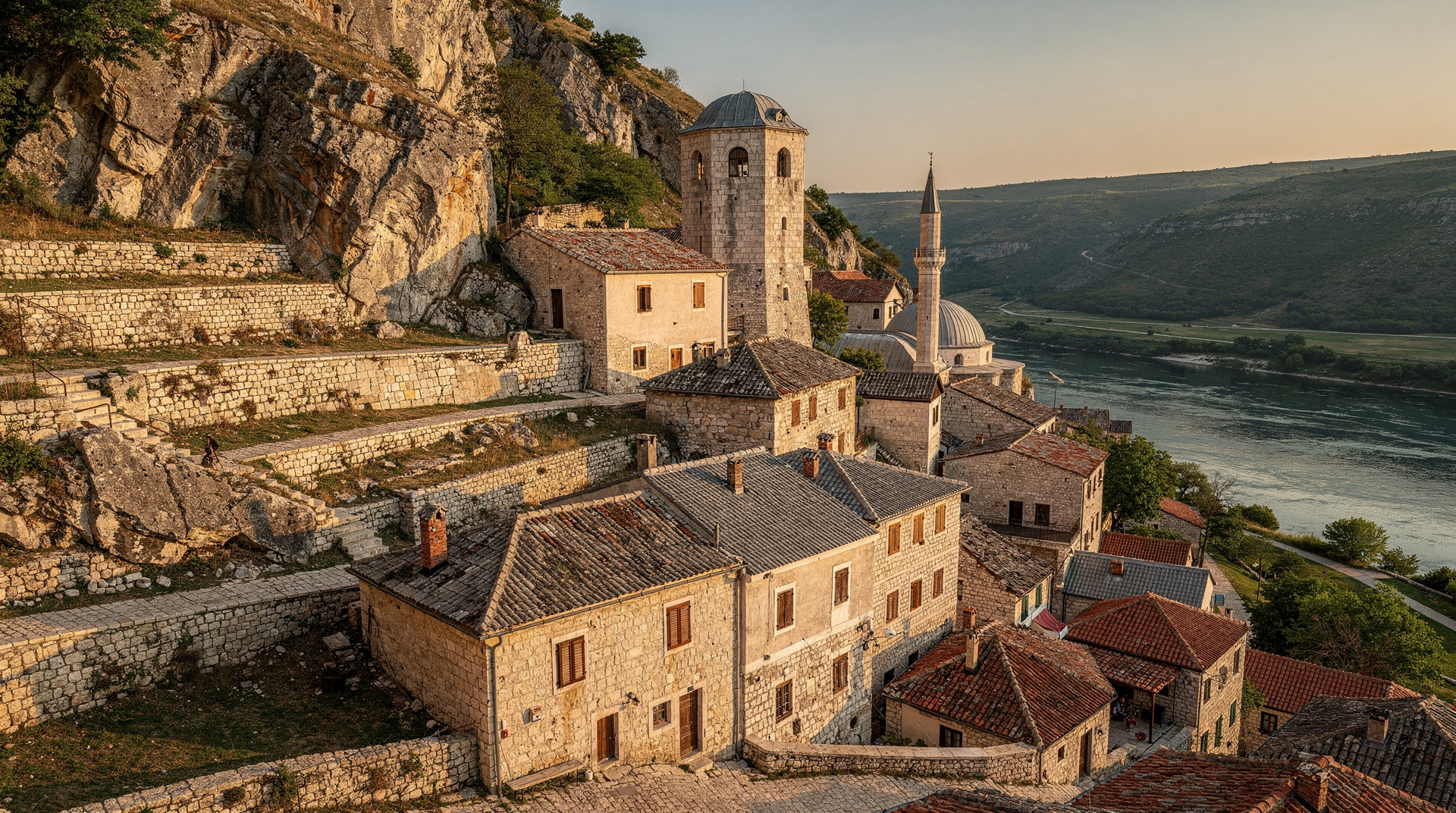
Počitelj (40 min south of Mostar): A near-perfectly preserved Ottoman walled village on a hillside above the Neretva floodplain. The stone clock tower, the Hadži Ali Bey Mosque and the crumbling Gavran fortress provide one of Bosnia’s most photogenic views. The village is best seen in the morning before it gets hot — the cobbled streets are steep in summer sun. Entry to the mosque is 3 BAM. Allow 1 hour.
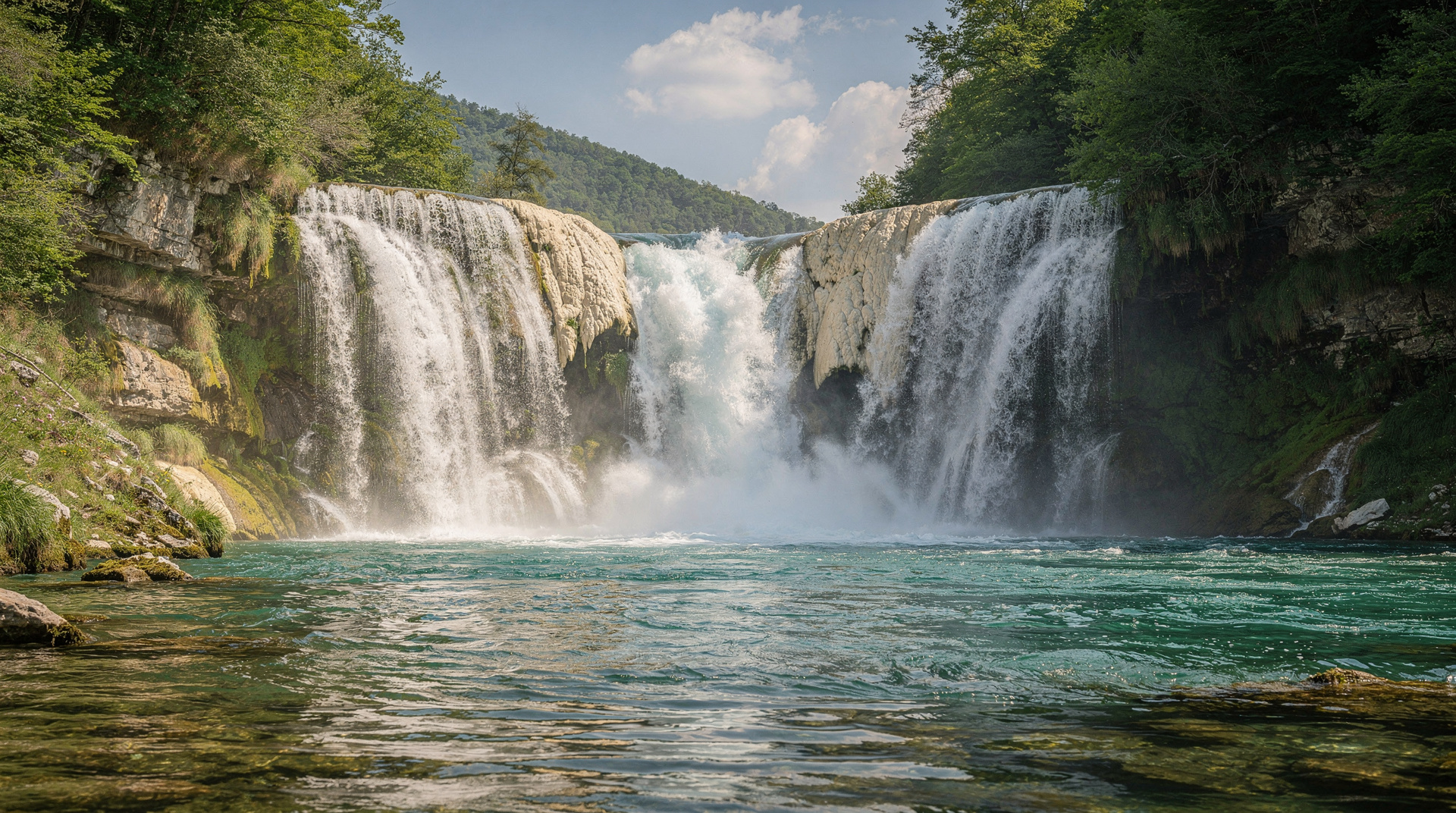
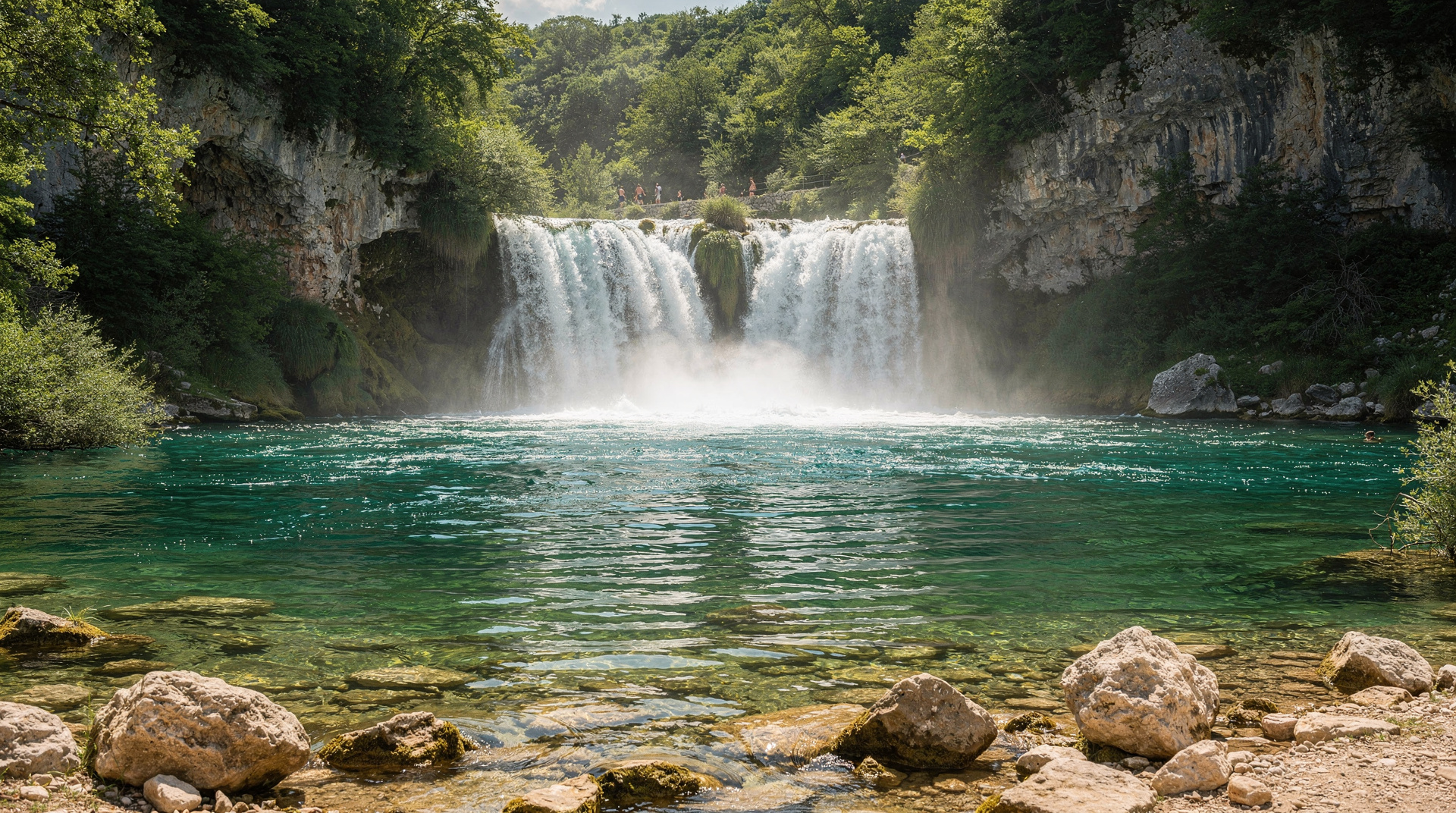
Kravice Waterfalls (50 min south of Mostar): A 25-metre horseshoe waterfall on the Trebižat river — remarkably similar to a smaller Niagara in shape. The main pool is swimmable from June to September and the water stays cool even in peak summer heat. In July and August the main parking area is full by 10:00; arrive before 09:30 or after 16:00. Entrance is 20 BAM. The Kravice half-day trip from Mostar is the most convenient option if you prefer not to self-drive.
Allow 1.5–2 hours at Kravice. Lunch at the riverside snack bar is basic but fine (grilled meats, 15–25 BAM).
Return to Mostar or drive directly to Dubrovnik/Split for the evening. If heading to Dubrovnik from Kravice, continue south via Čapljina and Neum — total drive 1 h 45 min.
How to pace the two days
The weekend works best when Day 1 is slow and Day 2 is early. Mostar rewards wandering without a schedule, so resist the urge to tick off every sight; the old town looks different in the soft light of late afternoon than it does at midday, and the evening, once the day-trip groups have left, is when the stone lanes feel most like a place people live. If you want the history behind what you see, the Stari Most guide and the Mostar war history guide explain why the bridge you cross today is a reconstruction and what the city went through.
Day 2 is the opposite: a sequence of short stops where the order matters more than the detail. Going south from Mostar and ending at the waterfalls means you reach the busiest place after the heat has built but while you can still cool off, and you see the quiet villages while they are empty. The Blagaj Tekija guide, the Počitelj village guide and the Kravice Waterfalls guide each go deeper on one stop if you want to choose where to linger.
Eating and drinking along the route
Herzegovina’s food is simple and generous. Grilled meat, fresh trout near the Buna spring, cheese, olives and bread are the staples, and the region’s wines are a reason to travel in their own right. If the evening in Mostar leaves you curious, read the Herzegovina wine guide and the Bosnian food guide, and for a sit-down dinner see best restaurants in Mostar. Coffee is part of the rhythm of the day too; the Bosnian coffee culture guide explains how it is served and why you should never rush it.
Getting the logistics right
Drivers coming from the coast should read the Neum corridor crossing guide and the driving from Croatia to Bosnia guide before leaving, since documents and car insurance are the two things that catch people out. If you start in Split or Dubrovnik, the Mostar from Split guide and the Mostar from Dubrovnik guide cover the road in more detail, and renting a car in Bosnia helps if you are hiring on the Bosnian side instead. Travellers without a vehicle will find options in the Sarajevo to Mostar transport guide and the wider getting around Bosnia guide.
Extending the weekend
Many visitors find a weekend too short once they arrive. If you have an extra day, the best day trips from Mostar list other options, and the Herzegovina day trip guide covers the same region in a single-day format. For a longer journey that continues north, the Sarajevo and Mostar in 3 days itinerary links the two cities, and Medjugorje is a different kind of stop for those interested in pilgrimage; is Medjugorje worth it helps you decide honestly. If you would like first-person impressions before you go, the Mostar old bridge story on the blog is a good read.
Alternatives and add-ons
No car option: The Mostar day tour to Blagaj, Počitelj and Kravice covers all three in one guided day from Mostar — the easiest option for anyone arriving by bus or staying without a vehicle.
Longer trip: Add Trebinje (1 h 15 min south of Mostar) for wine and a slower pace — see the Bosnia 7-day itinerary.
Best season: May–June and September–October for Kravice without summer crowds. July–August is spectacular but busy; arrive before 09:30. Mostar and Blagaj are pleasant year-round; Kravice closes November–March.
Where to base yourself
Mostar is the obvious base — central to all three day-trip sites and with the best range of accommodation. Staying in Blagaj itself is a quieter, more atmospheric option if you want to see the Tekija at dawn before the coach groups arrive, though restaurant and shop options are limited compared to Mostar. Avoid basing yourself in Počitelj, which has very few overnight beds and is better as a stop than a base. For a fuller rundown of neighbourhoods and prices, see Mostar: where to stay.
If your weekend coincides with the Mostar bridge divers performing, plan to watch from the bridge itself rather than the riverbank restaurants — the view and atmosphere are considerably better up close.
Frequently asked questions about Herzegovina weekend itinerary
Can I visit Herzegovina as a day trip from Dubrovnik instead of staying overnight? Yes, though it is a long day — around 2 h 30 min each way plus sightseeing means 12+ hours out. A guided day tour covering Mostar and Kravice is more relaxing than self-driving the whole loop in a single day.
Is Kravice worth it if I cannot swim there? Yes — the waterfall and viewing platforms are worthwhile even outside swimming season or if you simply prefer to look rather than swim; just note the site itself is effectively closed November–March.
Top experiences
Bookable activities with verified prices and instant confirmation on GetYourGuide.