Neum
Everything about Neum: Bosnia's only coastal town, the Neum corridor crossing on the Split-Dubrovnik road, beaches, and the Pelješac bridge alternative.
Mostar – Bosnia and Herzegovina Day Trip from Dubrovnik
Quick facts
- Region
- Herzegovina-Neretva Canton
- Coastline length
- ~9 km (Bosnia's only sea access)
- Distance from Dubrovnik
- ~55 km / 45 min by car
- Distance from Mostar
- ~95 km / 1h20 by car
- Currency
- BAM (1 EUR = 1.95583 KM)
- Border crossings
- 2 required on Split-Dubrovnik road (Karamatići + Zaton Doli)
| At a glance | |
|---|---|
| Where | Bosnia’s only coastal strip, on the Adriatic between Split and Dubrovnik |
| Cost | Coffee 2-3 BAM, seafood lunch around 25-45 BAM, hotels from around 80-130 BAM/night |
| Time needed | A lunch stop of an hour, or half a day to a night if you want the beach |
| Getting there | Self-drive or bus on the E65 coastal road; two border crossings unless using the Pelješac bridge |
| Best time | June-early July or September; July-August is busiest and hottest |
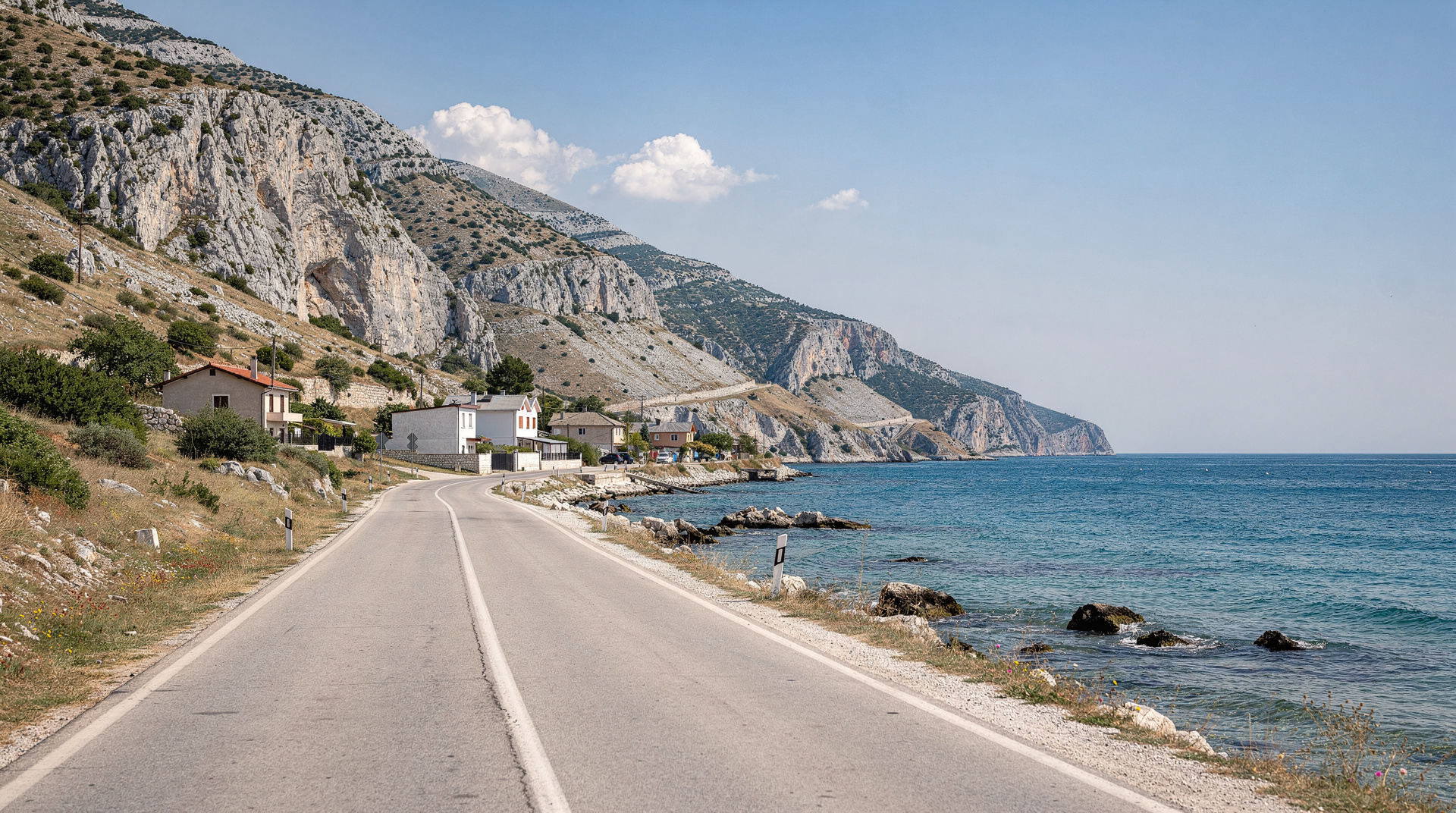
Neum is Bosnia and Herzegovina’s only coastal town — and at roughly 9 km of shoreline, it is a sliver of Adriatic access that has outsized geopolitical significance. For most travellers, Neum is either a curiosity, a lunch stop on the drive between Split and Dubrovnik, or an unavoidable complication on the E65 coastal road. Understanding what Neum actually is — and how the Neum corridor affects your journey — is practical knowledge for anyone travelling the Dalmatian coast.
What is the Neum corridor?
The Neum corridor is a strip of Bosnian territory approximately 9 km wide that bisects the Croatian coast, interrupting the road between Split and Dubrovnik with two border crossings. If you are driving or taking a bus south along the E65, you will:
- Cross from Croatia into Bosnia at Karamatići (north)
- Drive through Neum (approximately 12 km through Bosnian territory)
- Cross back into Croatia at Zaton Doli (south)
Both crossings require a valid passport or EU identity card. Driving a hire car between the two countries requires that your rental agreement permits entry into Bosnia — check this before you leave the rental desk.
In peak summer (July-August), queues at these crossings can add 30-60 minutes to the journey each way. The Pelješac Bridge, which opened in 2022, now offers a direct Croatian coastal road alternative that bypasses the Neum corridor entirely — it is a 2.4 km bridge over the Pelješac strait. Most travellers on a tight schedule use the bridge to skip the border crossings altogether.
Corridor road vs Pelješac Bridge
| Option | Time added | Border crossings | Notes |
|---|---|---|---|
| Neum corridor (E65 through Bosnia) | Baseline, plus 30-60 min queues in peak summer | 2 (Karamatići, Zaton Doli) | Lets you stop in Neum; passport required |
| Pelješac Bridge | Roughly 30 km / 20-30 min longer route, but no queues | 0 | Faster and simpler if you don’t want to stop in Bosnia |
Drivers on a tight schedule generally prefer the bridge; those curious about setting foot in Bosnia’s only coastal town, or wanting a cheap fuel and lunch stop, take the corridor road.
Neum as a destination
Neum itself is a small resort town of around 4,500 permanent residents. The town was developed as a Yugoslav-era resort, and much of the hotel infrastructure dates from the 1970s-80s. It lacks the historical old towns or dramatic scenery of the Croatian coast; the appeal is relatively affordable Adriatic beach access without the prices of Dubrovnik or Split.
Beaches: The main pebble/concrete beaches are near the centre of town. The water is clean and Adriatic-warm in summer. Sunbeds and parasols are rented by the hotels; day visitors can use public areas.
Prices: Noticeably lower than the Croatian coast. A coffee runs 2-3 BAM; a seafood lunch 25-45 BAM. Hotel accommodation starts around 80-130 BAM per night in mid-range establishments.
Tax-free shopping: Neum has traditionally offered duty-free shopping (tobacco, alcohol, electronics) at lower prices than Croatia. This remains, though the arrival of the Pelješac bridge has reduced through-traffic significantly.
Who should stop in Neum?
Road trippers: If you are driving the Split-Dubrovnik route, Neum is a natural lunch or coffee stop. The town has several waterfront restaurants and cafés.
Budget beach seekers: Neum’s hotels and apartments are 30-50% cheaper than comparable options in Dubrovnik. If you are based in Dubrovnik for the old city and the day-trip circuit (Mostar, Trebinje), Neum is not a compelling alternative. But as a cheaper Adriatic base for one or two nights, it is functional.
Bosnia completists: If you want to set foot in every entity of Bosnia and Herzegovina, Neum is worth a brief stop — it is the only place in the country where you can be in Bosnia and swim in the sea.
Getting there
From Dubrovnik: 55 km northwest on the E65. Allow 45-60 minutes (longer in summer with border queues if using the coastal road). The Pelješac bridge route adds approximately 30 km but avoids the crossings.
From Mostar: 95 km southwest, approximately 1h20 by car. The road via Počitelj and Čapljina is straightforward.
There is no GYG tour coverage for Neum specifically — the town does not have a GetYourGuide presence. For the Herzegovina day-trip circuit, Mostar remains the better base. For the corridor crossing logistics, see the Neum corridor guide and the full driving Croatia to Bosnia guide.
Practical details
- Fuel: Petrol stations in Neum are worth using — prices are typically lower than in Croatia (no Croatian fuel tax applies in Bosnia).
- ATMs: Available; BAM is the local currency, though EUR is widely accepted given the tourist traffic.
- Beaches: Most are free public access; hotel beaches may require buying a drink or paying a daily fee.
- Border crossing hours: Both Karamatići and Zaton Doli crossings are open 24 hours.
- Best season: June and early July before the peak; September after the August crowds. Neum in winter is quiet and many establishments close from November to March.
Combining Neum with the rest of Bosnia
Neum sits far from Bosnia’s main sights, so it rarely makes sense as a standalone destination for visitors focused on Sarajevo or Mostar. It works best as a coastal add-on for travellers already road-tripping the Dalmatian coast, or as a short detour for those following the driving Croatia to Bosnia guide. If your itinerary includes both the coast and the interior, pair Neum with Trebinje to the southeast — a wine-producing town with a genuine old town, reachable within about 90 minutes — rather than trying to extend a Neum stop into a full day.
How a Neum stop fits into a Dalmatian road trip
Most people never plan Neum; it happens to them. You leave Split in the morning with Dubrovnik as the target, and somewhere along the E65 the road quietly turns into another country. The smartest way to treat it is to decide in advance whether the stop is a feature or an obstacle. If it is a feature, build lunch around it, keep your passports within reach, and enjoy the small novelty of having a coffee in Bosnia before you are back among Croatian signs. If it is an obstacle, take the Pelješac Bridge and forget the town exists.
The full picture of how the border works, what officers tend to ask, and how to avoid the worst queues is laid out in the Neum corridor crossing guide. Drivers who are new to crossing between the two countries by car should also read the driving Croatia to Bosnia guide before leaving, because insurance and rental paperwork matter more than the crossing itself. If you are weighing the two neighbours against each other more broadly, Bosnia vs Croatia explains why the same coastline can feel so different on either side of the line.
A relaxed half-day in Neum
If you do stop, resist the urge to rush. A sensible rhythm is to park near the waterfront, walk the promenade to get your bearings, and pick a restaurant with a view of the bay. Seafood is the obvious order, and it is usually grilled simply, with olive oil, lemon and a side of vegetables. Linger over the meal, then spend the rest of the time by the water. Swimming is the real reason to stay longer than a lunch: the sea is calm in the bay and the shallow edges suit children and cautious swimmers alike.
Afterwards, stretch your legs along the shoreline, buy a few snacks or small supplies for the road, and fill the tank before you leave. By the time you pull away, you will have seen everything Neum has to offer, and that is perfectly fine. The town is honest about what it is: a modest, practical seaside stop rather than a showpiece.
Neum with children and in a group
Families often find Neum easier than the busier Croatian resorts. The beaches are simple, the pace is slow, and there is no pressure to tick off monuments. Bring sandals for the pebbles, plenty of water and sun protection, and plan shade breaks in the middle of the day. For more ideas on travelling with younger ones elsewhere in the country, see Bosnia with kids and the wider list of family activities in Bosnia.
Groups of friends sharing a car can use Neum as a cheap-and-cheerful pause: split the bill at a waterfront table, swim, and move on. Just keep everyone’s documents together before the border, since a single missing passport slows the whole vehicle.
Nature beyond the beach
Neum is not only about the sea. The wetlands inland offer a quiet contrast to the resort strip, and birdwatchers and slow travellers will enjoy Hutovo Blato Nature Park, which makes a rewarding detour on the way up towards Mostar. It is a good reminder that the Herzegovina side of the coast has more to offer than hotels and beach umbrellas, and it pairs naturally with a stop at the historic stone village of Počitelj, which sits on the road between Neum and Mostar.
Continuing inland from Neum
The best use of Neum is often as a springboard. From here the road turns inland through a landscape of karst hills, vineyards and small villages that feel a world away from the coast. A few natural next steps:
- Mostar is the obvious inland target, and the Mostar from Dubrovnik guide explains how the journey works in practice.
- Blagaj rewards travellers who want a quieter, more atmospheric stop than Mostar’s crowds, with its riverside setting and the dervish house described in the Blagaj Tekke guide.
- Kravice Waterfalls are a refreshing swim spot in warm weather, and a natural companion to a day that began on the coast.
- If you are building a longer plan around Herzegovina, the Herzegovina weekend itinerary strings several of these places together sensibly.
For a wider view of what to do from the Mostar side, best day trips from Mostar has more ideas than most travellers can fit into a single visit.
Letting someone else do the driving
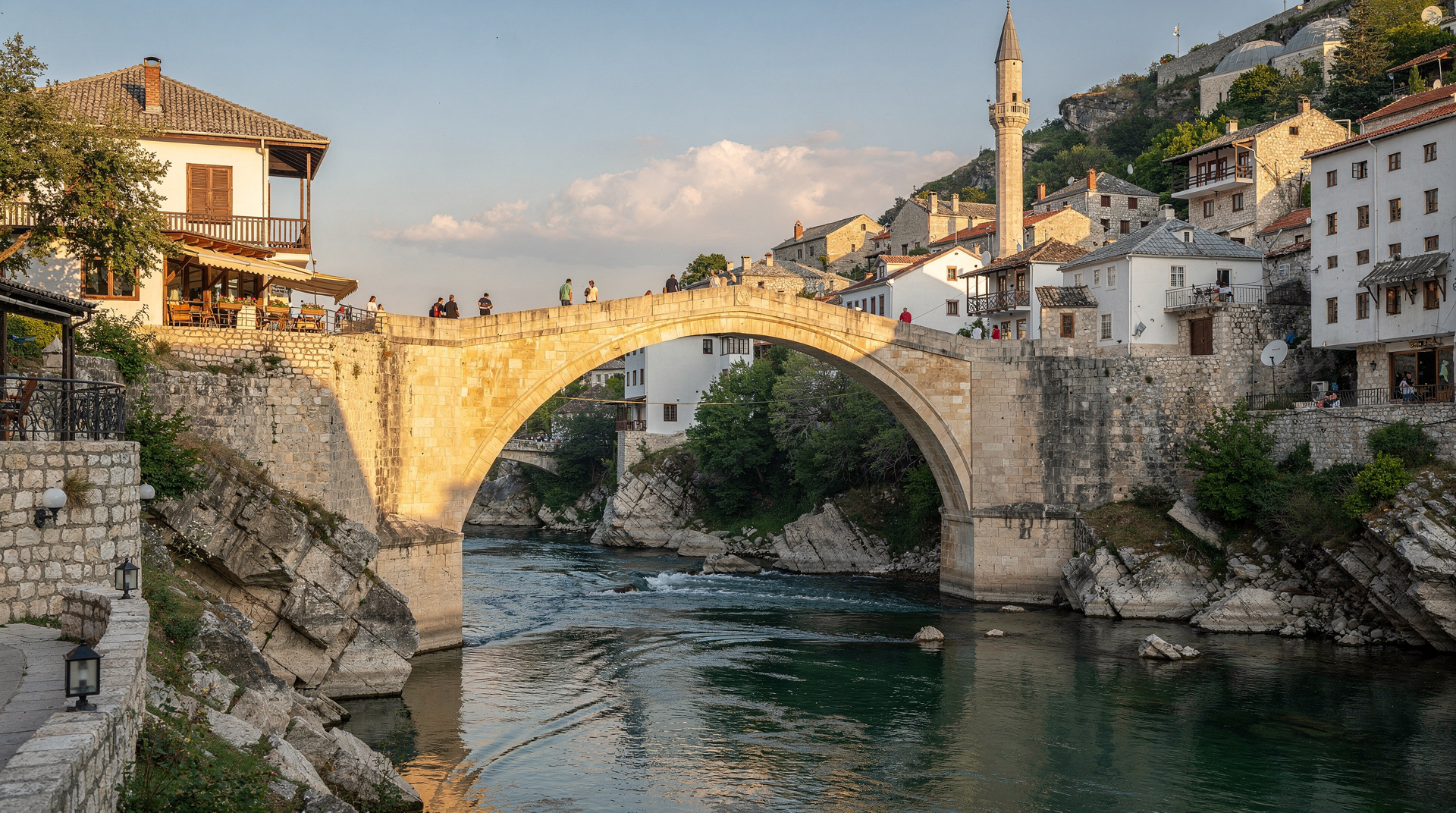
If the border queues and the mountain roads put you off, a guided day is the easy answer. Travellers based in Dubrovnik can join a group day trip into Bosnia and Herzegovina that ends in Mostar, which passes through the same corridor without you handling the paperwork at the wheel. Those who prefer their own pace and a flexible schedule can look at a private day trip from Dubrovnik across the border instead. Once you reach the interior, a guided walk through the old town and across the Old Bridge helps the history of the place make sense.
Neighbouring coastal bases
Neum rarely works as your only base on this coast. Dubrovnik is the stronger choice if you want a historic old town and plentiful tour options, while Split suits travellers heading north or planning a longer Croatian stay. If your plans lean towards the Montenegrin side, Kotor makes a dramatic alternative, and the Bosnia from Kotor guide shows how that route connects with Bosnia. Travellers combining several countries in one trip may find the Croatia and Bosnia two-week itinerary a helpful template for where Neum belongs.
Choosing the right season
Neum has two moods. In early summer and September it is warm, calm and pleasantly low-key: the sea is inviting, tables are easy to find and the border is manageable. In the height of summer it becomes crowded and hot, and the road itself can slow to a crawl. Out of season, the town is quiet and many businesses close, so it suits only those who value solitude over services. If you are unsure when to travel overall, the best time to visit Bosnia and the Bosnia in summer pages help you match the weather to your plans.
Final planning tips
Keep your plan flexible, keep your documents handy, and decide early which route you will take. Check opening arrangements for any restaurant or hotel you particularly want, especially outside the main season. Carry some local currency for small purchases, and remember that card payments are not guaranteed everywhere. With those basics covered, Neum is an easy, unhurried stop that adds a small and memorable footnote to a Balkan journey, and a useful reminder of how unusual the geography of this region really is.
Frequently asked questions about Neum
Do I need a visa or special document to pass through Neum? A valid passport or EU identity card is sufficient at both border crossings; no separate Bosnian visa is required for most nationalities for a short transit.
Is it worth staying overnight in Neum instead of Dubrovnik? Only if budget is the deciding factor. Neum accommodation runs 30-50% cheaper than comparable Dubrovnik options, but you lose the old town, restaurants and day-trip infrastructure that make Dubrovnik a better base for exploring Mostar and Trebinje.