The Neum corridor crossing guide
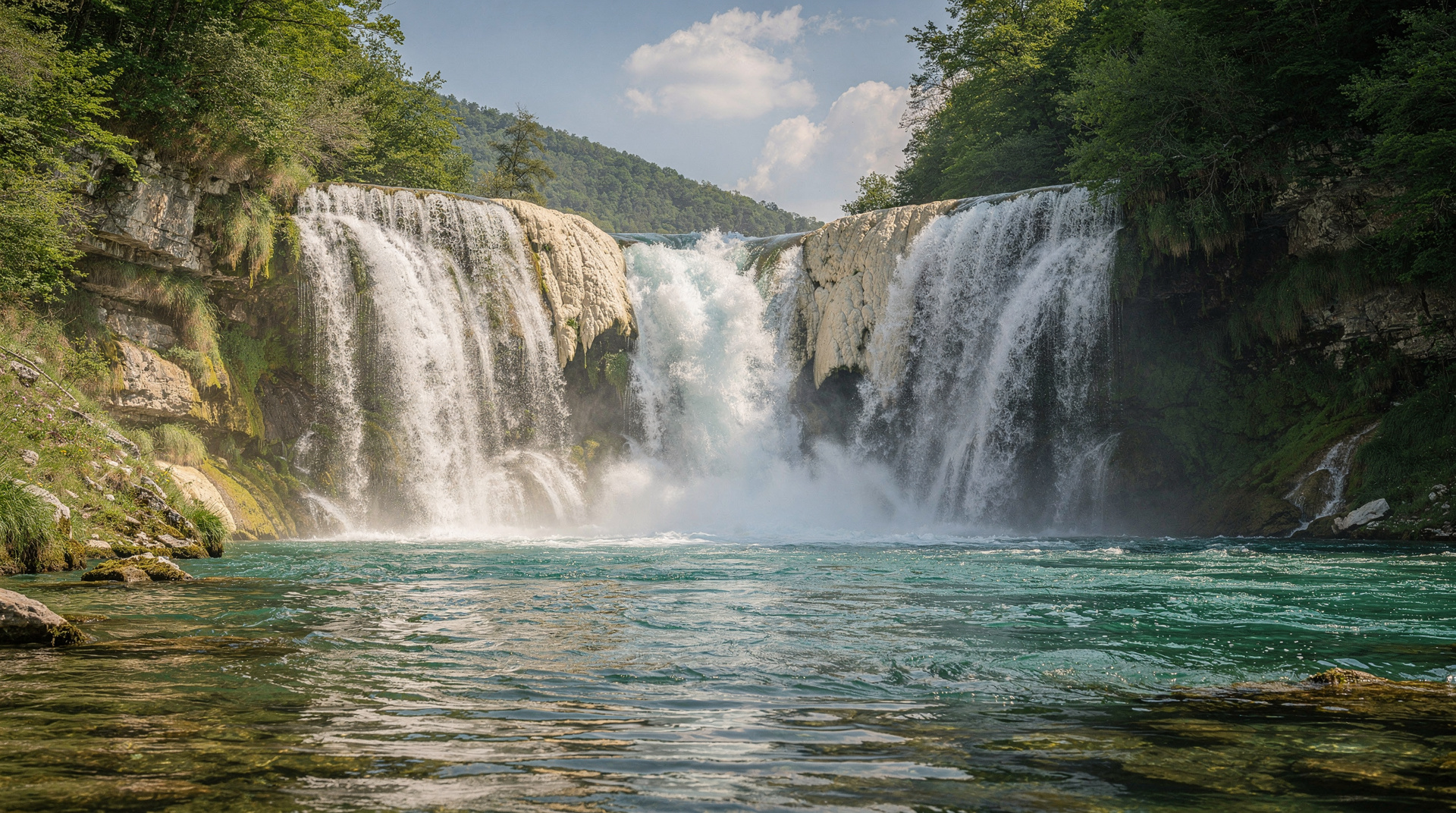
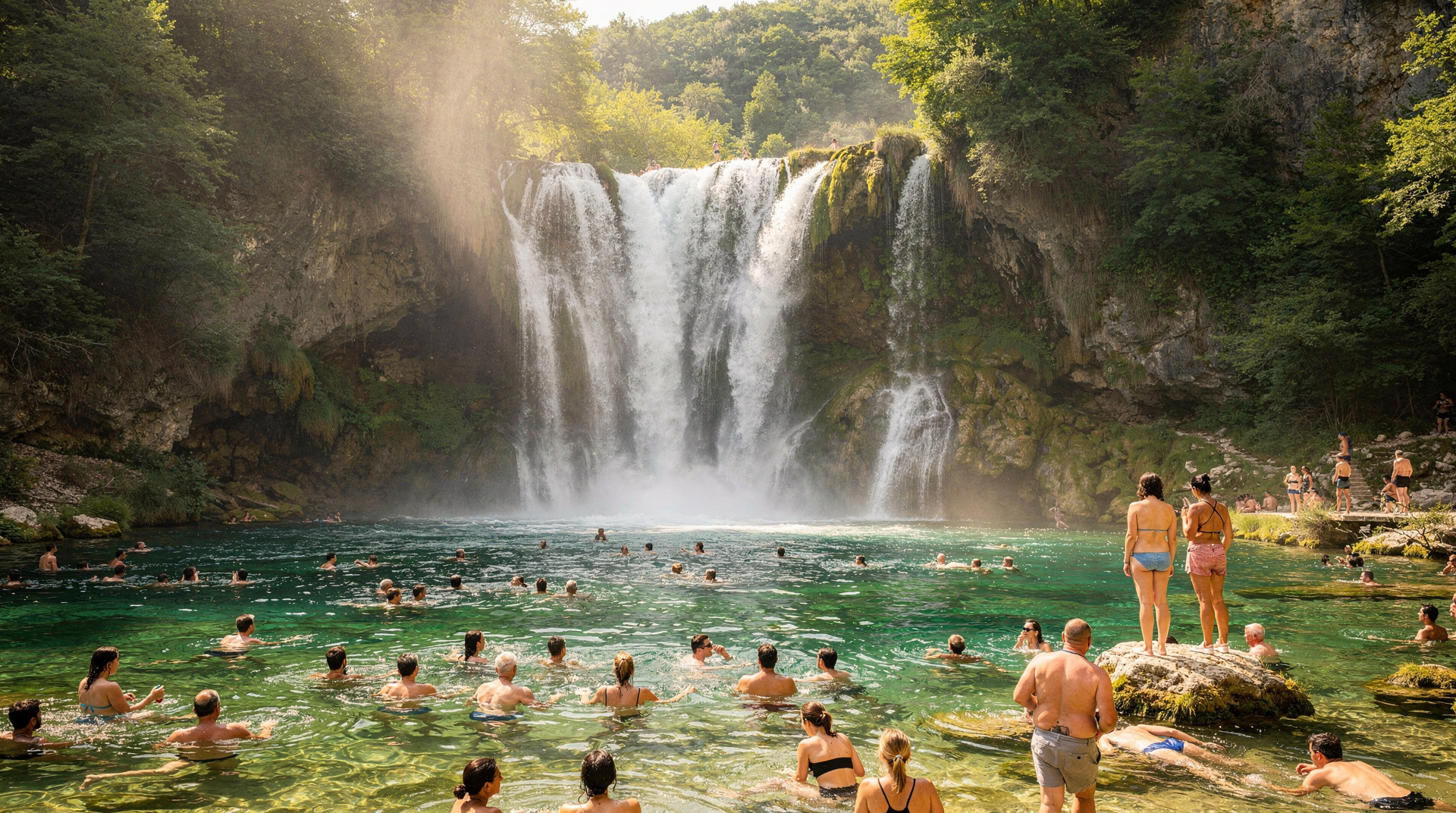
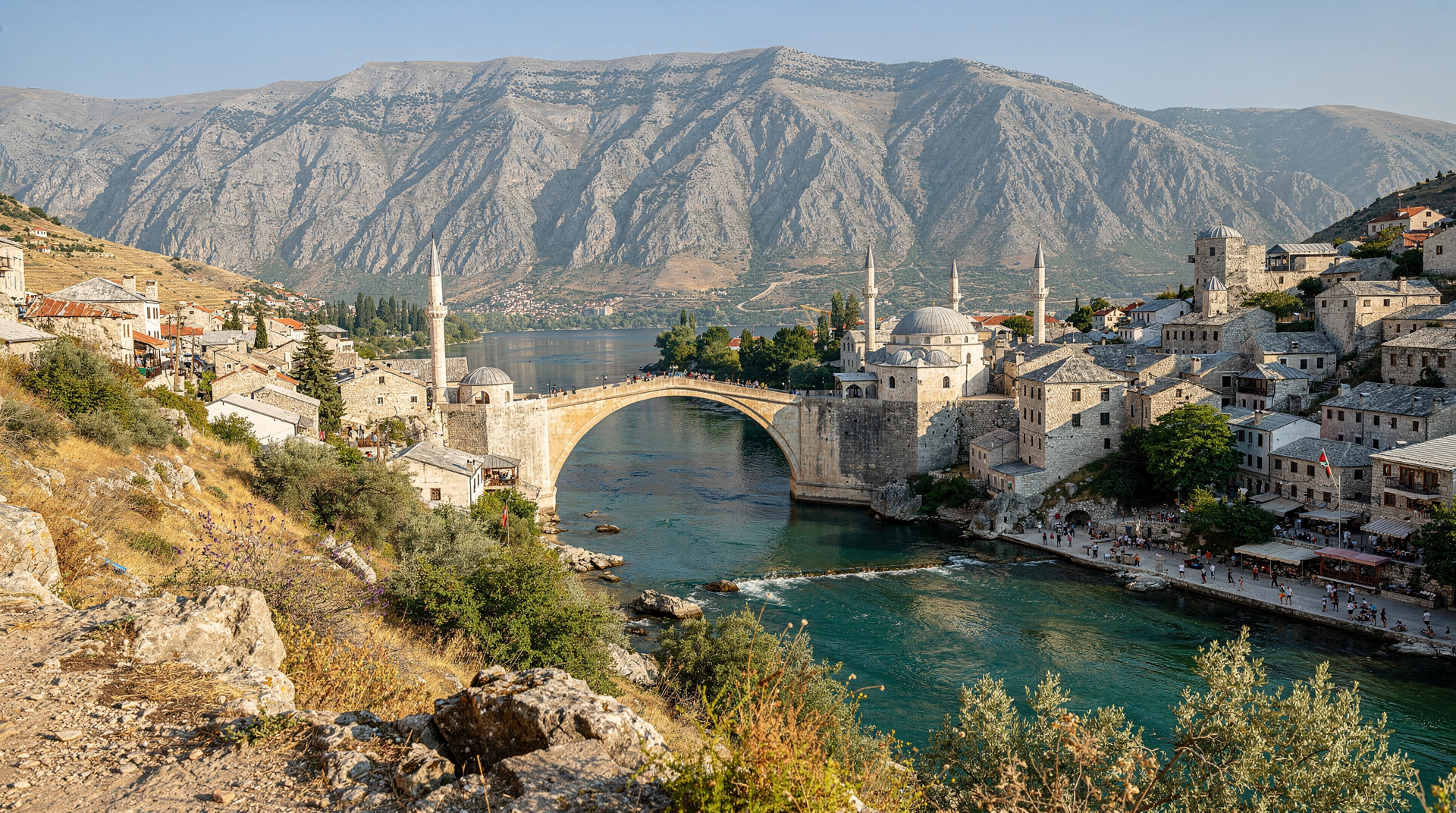
From Dubrovnik: Mostar and Kravica Waterfall Day Trip
What is the Neum corridor and how do I cross it?
The Neum corridor is a 9 km strip of Bosnian coastline that cuts the Croatian coastal highway between Split and Dubrovnik. Crossing it involves two Croatian-Bosnian border checkpoints within a few kilometres. Have passports ready for all passengers. The crossing usually takes 5-15 minutes per checkpoint in low season; up to 45 minutes per checkpoint in summer peak. The Pelješac Bridge is the alternative that bypasses Bosnia entirely.
| Where | 9 km strip of coast around Neum, between Split and Dubrovnik |
| Cost | Free to cross (no toll); allow for fuel/coffee stop prices, which are lower than in Croatia |
| Time needed | 15-30 minutes in low season; up to 90+ minutes on summer weekends |
| Getting there | Any car, bus or organised tour on the Split-Dubrovnik coastal road passes through it |
| Best time | Early morning (before 09:00) crossings, and avoid Saturday afternoons in July-August |
The Neum corridor is one of Europe’s most unusual geographical peculiarities — and an important practical consideration for anyone driving the Croatian coast between Split and Dubrovnik, or planning a day trip from Dubrovnik to Mostar. This guide explains what the corridor is, why it exists, exactly what happens when you cross it, how long it takes, and how to use the Pelješac Bridge alternative.
What is the Neum corridor?
The geography
Between Split and Dubrovnik, at roughly the midpoint of the Dalmatian coast, the highway passes through a 9 km strip of Bosnian territory known as the Neum corridor (or Neum-Klek corridor). This narrow strip of coastline around the town of Neum is the only point where Bosnia & Herzegovina touches the Adriatic Sea. As a result, anyone driving the coastal highway between Split and Dubrovnik passes through two Croatian-Bosnian border crossings within a few kilometres — entering Bosnia at one end of the corridor and re-entering Croatia at the other.
Why it exists
The corridor has its roots in Ottoman-era diplomacy. In the 17th and 18th centuries, the Ottoman Empire maintained a coastal foothold at Neum to prevent the Habsburg territories of Dalmatia from connecting directly to the Republic of Ragusa (Dubrovnik), which was nominally under Ottoman suzerainty. When Yugoslavia dissolved in 1991 and international borders were drawn following the Dayton Agreement in 1995, Bosnia & Herzegovina retained this strip of coast as internationally recognised territory.
The arrangement is geographically inconvenient for Croatian north-south road traffic but is legally protected under international agreements. EU membership (Croatia joined in 2013) partially mitigated the practical impact, but because Bosnia is not in the EU, the crossings remain full international border checkpoints.
The two crossing points
Neum 1 (Klek crossing) — entering Bosnia from Croatia
Coming from Split heading south toward Dubrovnik, you cross from Croatia into Bosnia at the Neum/Klek crossing near Klek village. This is the first checkpoint. Present documents for all passengers; the border officer will check passports or EU ID cards. This crossing is typically simpler as it is the entry into Bosnia.
Neum 2 (Zaton Doli crossing) — re-entering Croatia from Bosnia
After the town of Neum, you cross back into Croatia at Zaton Doli. This second checkpoint can have longer queues than the first, particularly on southbound traffic in summer (people returning to Dubrovnik). Both EU and non-EU citizens must present documents.
What to have ready
- Valid passport for all passengers (recommended over national ID card, which works for EU but can occasionally cause delays)
- Vehicle registration documents (in the car glovebox)
- Green Card (international insurance certificate) — required for all vehicles entering Bosnia; most rental cars include this automatically
- Vehicle rental agreement if applicable — some budget rental companies restrict cross-border travel; check before you go
How long does the crossing take?
| Season | Each crossing | Total corridor transit |
|---|---|---|
| October-May (low season) | 5-15 minutes | 15-30 minutes |
| June, September (shoulder) | 10-25 minutes | 25-50 minutes |
| July-August (peak season) | 20-45 minutes | 45-90+ minutes |
| Saturday afternoon peak | Up to 60 minutes | Can exceed 90 minutes |
Best times to cross: Early morning (06:00-09:00) or late evening (after 19:00). Midday Saturday and Sunday afternoons in July-August are the worst times.
Organised tours from Dubrovnik to Mostar factor in the corridor crossing time. If you are driving independently in summer, plan for up to 90 minutes of total delay at both crossings on a bad day.
The Neum corridor bypass: Pelješac Bridge
What is the Pelješac Bridge?
The Most Pelješac (Pelješac Bridge) opened in July 2022, connecting the Croatian mainland north of Neum to the Pelješac peninsula south of the corridor. The bridge is 2.4 km long and crosses the Mali Ston channel, allowing drivers to bypass the Neum corridor entirely.
Using the Pelješac Bridge route from Split to Dubrovnik: follow the A1 south past Ploče, cross the Pelješac Bridge, drive south through Pelješac to the car ferry connection or the Korčula bridge to the mainland, then south to Dubrovnik. This route adds approximately 30-50 km but eliminates both border crossings.
Should I use the Pelješac Bridge or the Neum corridor?
| Route | Distance extra | Border crossings | Best for |
|---|---|---|---|
| Neum corridor | Shorter | 2 (10-90 min each in summer) | Low-season travel; those visiting Neum |
| Pelješac Bridge | +30-50 km | 0 | Summer peak travel; non-EU passport holders |
For day trips from Dubrovnik into Bosnia (Mostar, etc.), you will use the Neum corridor route regardless — the bridge bypasses Bosnia and you need to enter Bosnia. The bridge is useful only when you want to stay entirely in Croatia.
What to do in Neum
If you are passing through anyway, Neum itself is worth a brief stop — it is Bosnia’s only coastal resort town. The waterfront promenade has cafes and restaurants, and the prices are significantly lower than in Croatian coastal towns (Neum is in Bosnia, outside the EU VAT zone). Fuel and duty-free goods are also cheaper in Neum. Allow 30 minutes for a coffee stop and a walk by the sea.
Organised tours and the Neum corridor
All organised day trips from Dubrovnik to Mostar pass through the Neum corridor. The tour operator handles the crossing logistics; you just need your passport ready. Tours factor in corridor delays when calculating departure times.
From Dubrovnik: Mostar and Kravica Waterfall day trip From Dubrovnik: Mostar and Kravice Falls semi-private tourPlanning your day around the corridor
The corridor rarely ruins a trip, but it does reward a little planning. The simplest habit is to treat the two checkpoints as a fixed block in your schedule rather than a surprise. If you have a ferry, a restaurant reservation or a tour start time on the far side, build in a cushion and treat any time you save as a bonus. Travellers who leave Split or Dubrovnik early in the day tend to notice the crossing least, because traffic builds as the morning goes on and holiday traffic gathers in the afternoon.
It also helps to decide in advance who is driving, who holds the documents and where they are kept. Keep every passport together in one easy-to-reach place, not buried in a suitcase in the boot. When the officer asks for documents, you want to hand them over in one go. Passengers on buses are usually asked to have their documents ready as well, and on a coach the driver will often collect or check them, so keep yours accessible rather than packed away in the luggage hold.
If you are travelling with children, bring their passports or ID too. Everyone in the vehicle is a passenger as far as the border is concerned, whatever their age. The same applies to anyone asleep in the back seat: it is easier to prepare everyone before you reach the queue than to rummage through bags while other drivers wait behind you.
Driving tips for the queue
Queues at the checkpoints move in fits and starts, so patience matters more than speed. Switch off the engine if the line stops for a long stretch, keep water in the car in hot weather and avoid changing lanes in the approach, which tends to slow everyone down. On a warm summer afternoon the air conditioning may be your best friend, but watch your fuel level before you join a long line.
Fill up before you reach the corridor if you are unsure of your range. Fuel in Neum is a popular stop precisely because it is cheaper, as noted above, but you should not depend on a long queue to decide where you refuel. If you are following a satnav, expect it to treat the corridor as a normal road and to show no delay; the real wait is at the barrier, not on the map.
Be courteous and calm with the officers. Answer questions plainly, remove sunglasses if asked and keep phones down while documents are checked. Most crossings are routine and brief. The few that take longer usually do so because of volume, not because anything is wrong with your papers.
Crossing by bus or on a tour
Many travellers never drive the corridor at all. Coaches on the coastal road make the crossing as part of the normal route, and the driver handles the stop while you wait in your seat or step out as instructed. This is the least stressful way to see the corridor if border queues make you nervous, though you still need your passport ready. The getting around Bosnia guide and the buses in Bosnia guide explain how coach travel works once you are inside the country.
If your real goal is the interior, an organised excursion removes nearly all the friction. The Mostar from Dubrovnik guide and the Mostar from Split guide both describe what a day trip looks like, and the Mostar from Split vs Dubrovnik comparison helps you pick the better starting point. For a wider look at what lies beyond the border, the Bosnia from Kotor guide shows how the same cross-border logic works from the south.
Making a stop worthwhile
Because the corridor sits roughly between two famous Croatian cities, many drivers see it only as an obstacle. A better approach is to treat Neum as a pause in the journey. A walk along the waterfront, a coffee and a look at how everyday life differs on the Bosnian side can turn a bureaucratic interruption into a pleasant break. If you want to see more of the coast side of Bosnia, Neum is the natural base, and the nearby Hutovo Blato nature park guide points to a wilder side of the region for anyone with extra time.
Those with more days to spare can use the corridor as the first step of a bigger loop. The Herzegovina day trip guide and the Croatia and Bosnia two-week itinerary show how coastal and inland stops fit together, and the Balkans multi-country guide places the crossing in the context of a longer regional trip.
Rental cars and paperwork before you leave
Check your rental agreement before the trip starts, not at the border. The key points are whether Bosnia entry is permitted, whether cross-border cover is included and whether the company wants advance notice. Keep the paperwork in the car, not in the hotel. The renting a car in Bosnia guide goes into the questions to ask at the desk, and the driving in Bosnia guide covers the road rules once you are on the other side of the border.
If something goes wrong, such as a missing document, stay calm and explain the situation. Officers deal with confused travellers every day. The best protection is preparation, which is why the checklist above is worth running through the night before you travel.
Practical summary
- Always carry your passport (not just an ID card) when crossing the Neum corridor
- In July-August, budget 45-90 minutes for total corridor crossing time
- Cross in the morning (before 09:00) to minimise queues
- The Pelješac Bridge bypasses the corridor but only works if you are staying in Croatia
- Green Card insurance is required in Bosnia — check your rental agreement
- Neum is a valid stop for fuel, coffee and cheaper prices
The driving Croatia to Bosnia guide covers all aspects of the cross-border car journey including insurance, road rules and what to expect at all border crossings. For the day-trip context, see the Mostar from Dubrovnik guide.
Currency and paperwork inside the corridor
Bosnia’s currency is the convertible mark (BAM/KM), not the euro, even in this coastal sliver. Most cafes and fuel stations in Neum accept euros informally at a rough exchange rate, but you get a better deal paying in BAM if you are stopping for anything more than a coffee — the Bosnia money and currency guide explains where to change money and what rates to expect. Border officers rarely ask more than to see your passport; there is no visa fee for most Western nationalities and no customs declaration needed for ordinary luggage. General road-safety and border etiquette are covered in the is Bosnia safe guide if this is your only contact with the country.
Corridor crossing vs. a full Bosnia trip
Passing through the Neum corridor on the coastal highway is a completely different experience from actually travelling into Bosnia’s interior. If the corridor whets your appetite for more than a fuel stop, the Split to Sarajevo route guide and Dubrovnik to Sarajevo route guide lay out how to turn the same border crossing into the start of a multi-day inland trip, and the getting around Bosnia guide covers buses and driving once you are past the corridor and into the country proper.
Frequently asked questions about The Neum corridor crossing
Why does Bosnia have a corridor to the sea through Croatia?
Do I need a visa to cross the Neum corridor?
How long does it take to cross the Neum corridor?
What is the Pelješac Bridge and does it avoid the Neum corridor?
What happens if I forget my passport at the Neum crossing?
Can I stop in Neum overnight instead of just passing through?
Do rental car companies allow crossing into Bosnia at Neum?
Top experiences
Bookable activities with verified prices and instant confirmation on GetYourGuide.