Best day trips from Mostar
From Mostar: Herzegovina Full-Day Tour
What are the best day trips from Mostar?
The top day trips from Mostar are Kravice Waterfalls (50 min), Blagaj Tekke (20 min), Počitelj (30 min), Trebinje (1h30), and Sarajevo (2h30). Kravice is the most popular in summer. All three Herzegovina sites can be combined in a single day. Trebinje adds wine country. Sarajevo is a full-day commitment.
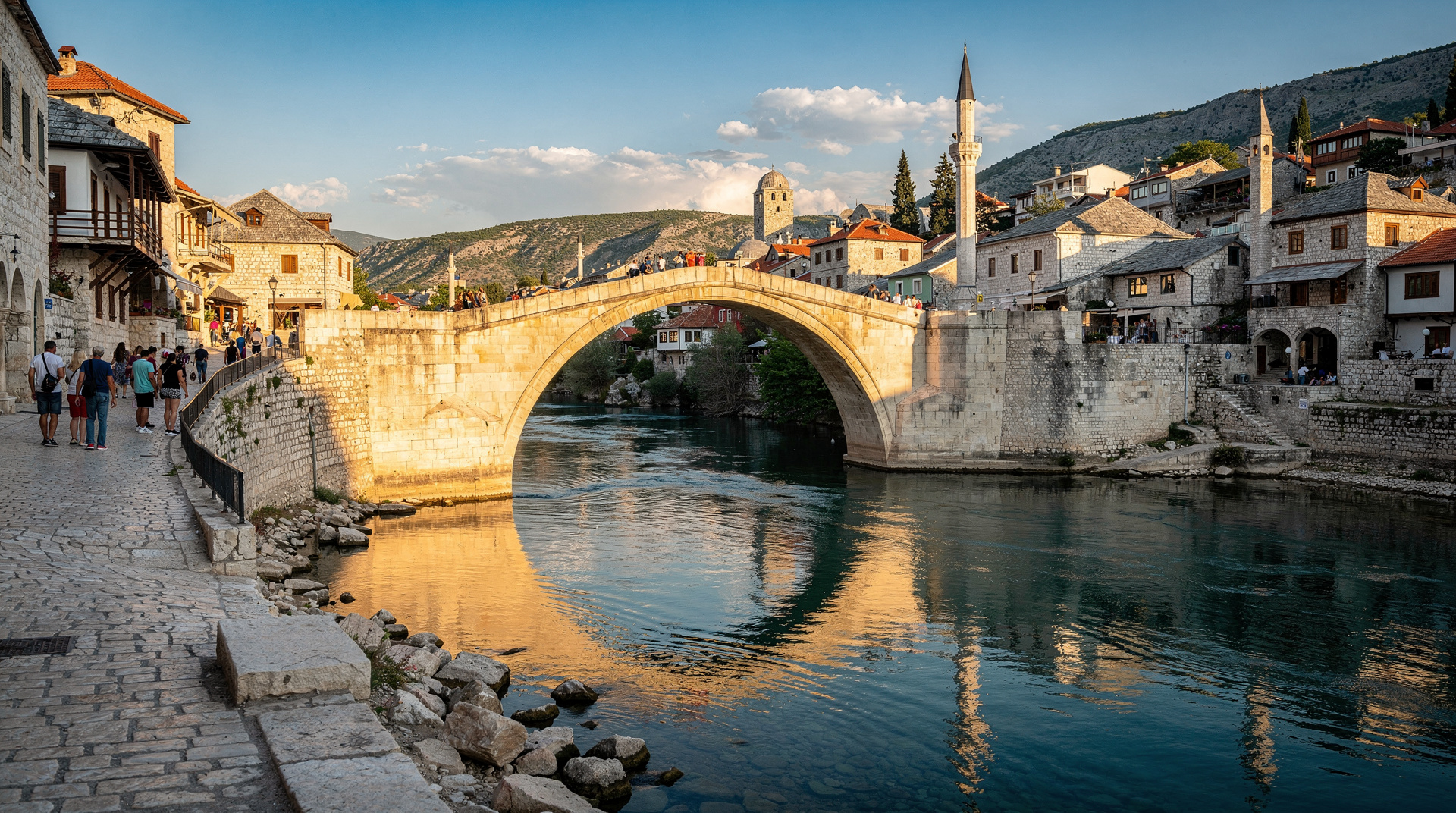
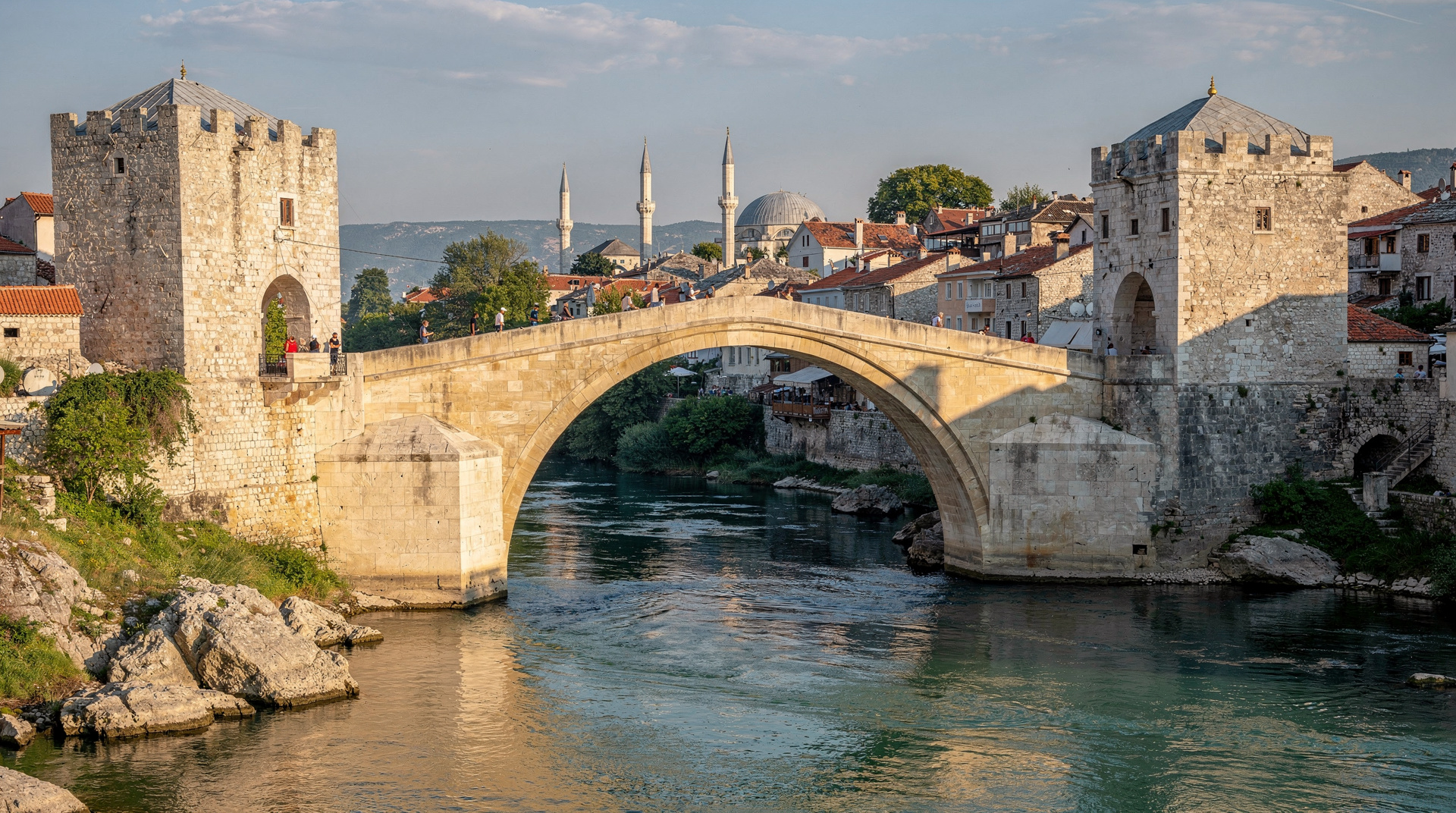
Mostar is one of the best bases in the entire Balkans for day trip travel. The city sits at the heart of Herzegovina’s limestone landscape, within striking distance of a remarkable concentration of natural and historical sites. From a base in Mostar you can swim under a tufa waterfall, sit in a medieval Ottoman monastery, explore a perfectly preserved walled village, taste Herzegovina’s indigenous wines, or start a full-day push north to Sarajevo. The distances are short, the roads are good, and the rewards are high.
| Where | Herzegovina, based in Mostar |
| Cost | Entry fees around 3-5 BAM per site; organised tours roughly 40-90 EUR per person |
| Time needed | Half-day (Blagaj, Počitelj) to full day (Kravice, Trebinje, Sarajevo) |
| Getting there | Rental car, taxi, or organised day tour from Mostar |
| Best time | Morning (before 10:00) or late afternoon to beat midday heat and crowds |
Kravice Waterfalls — the must-do day trip
Distance from Mostar: 42 km, approximately 50 minutes.
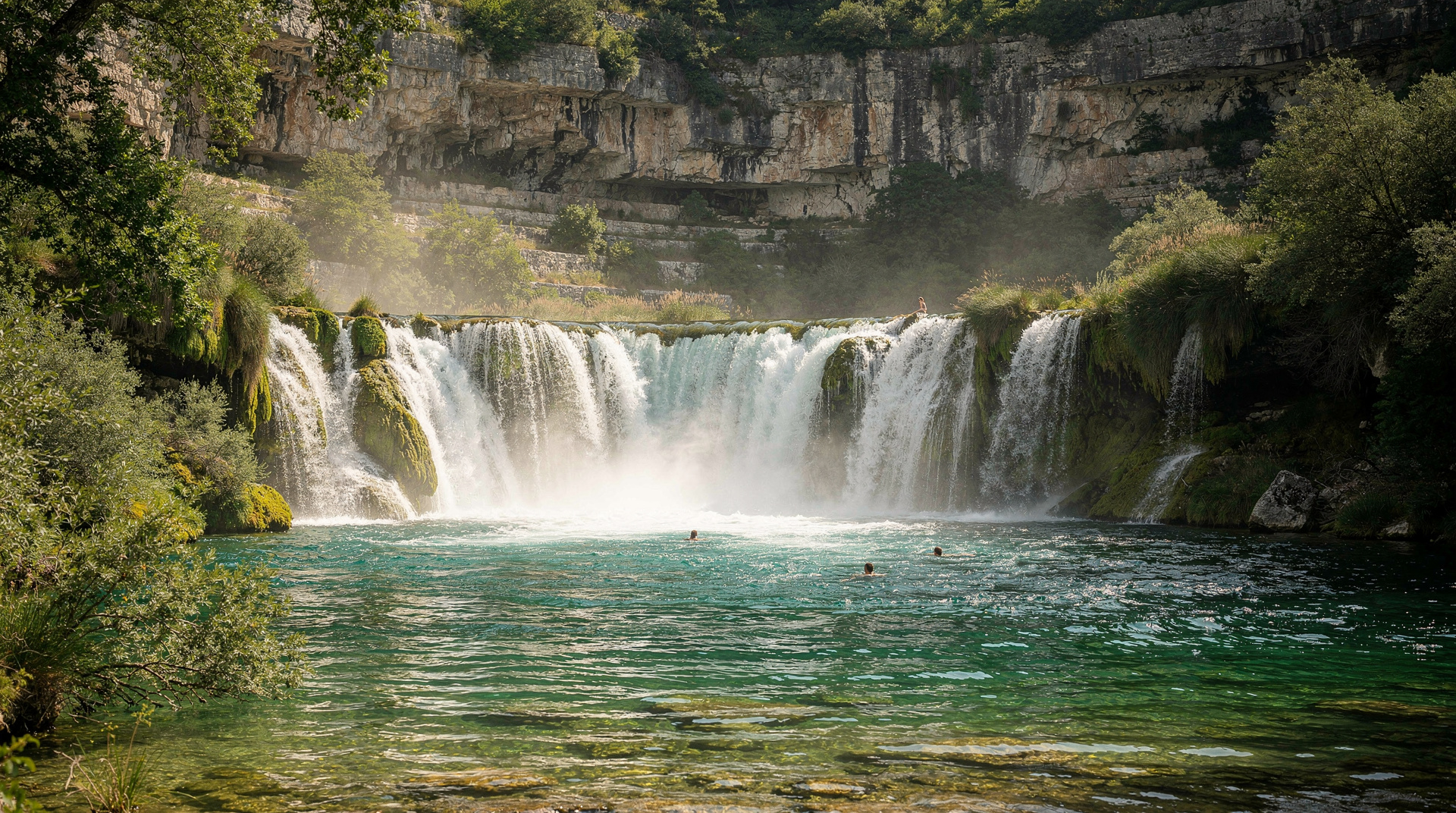
Kravice (Kravica) is the most popular day trip from Mostar in summer, and the reasons are obvious: a horseshoe of tufa limestone waterfalls 25 metres high and 120 metres wide, enclosing natural swimming pools of ice-blue water. Entry is 20 BAM. Swimming is permitted and is the main draw from June to September. The surrounding konobas serve grilled meats and fish at reasonable prices.
The one caveat is crowds: between 11:00 and 15:00 on summer weekends, Kravice can be seriously overcrowded. Arrive by 09:00 or after 16:00 for a transformed experience. The waterfall is also magnificent in spring — April and May bring the strongest flow and a more powerful natural spectacle.
From Mostar: Blagaj, Počitelj and Kravice Waterfalls day tourFor comprehensive practical information, see the Kravice Waterfalls guide.
Think of Kravice as a place to slow down rather than a box to tick. Bring something to sit on, pick a spot near the water before the busiest hours, and let the day unfold around the swimming. If the crowds worry you, the advice in avoiding the crowds in Bosnia applies here more than almost anywhere, and when to visit Bosnia helps you decide between the roaring spring flow and the warm swimming season.
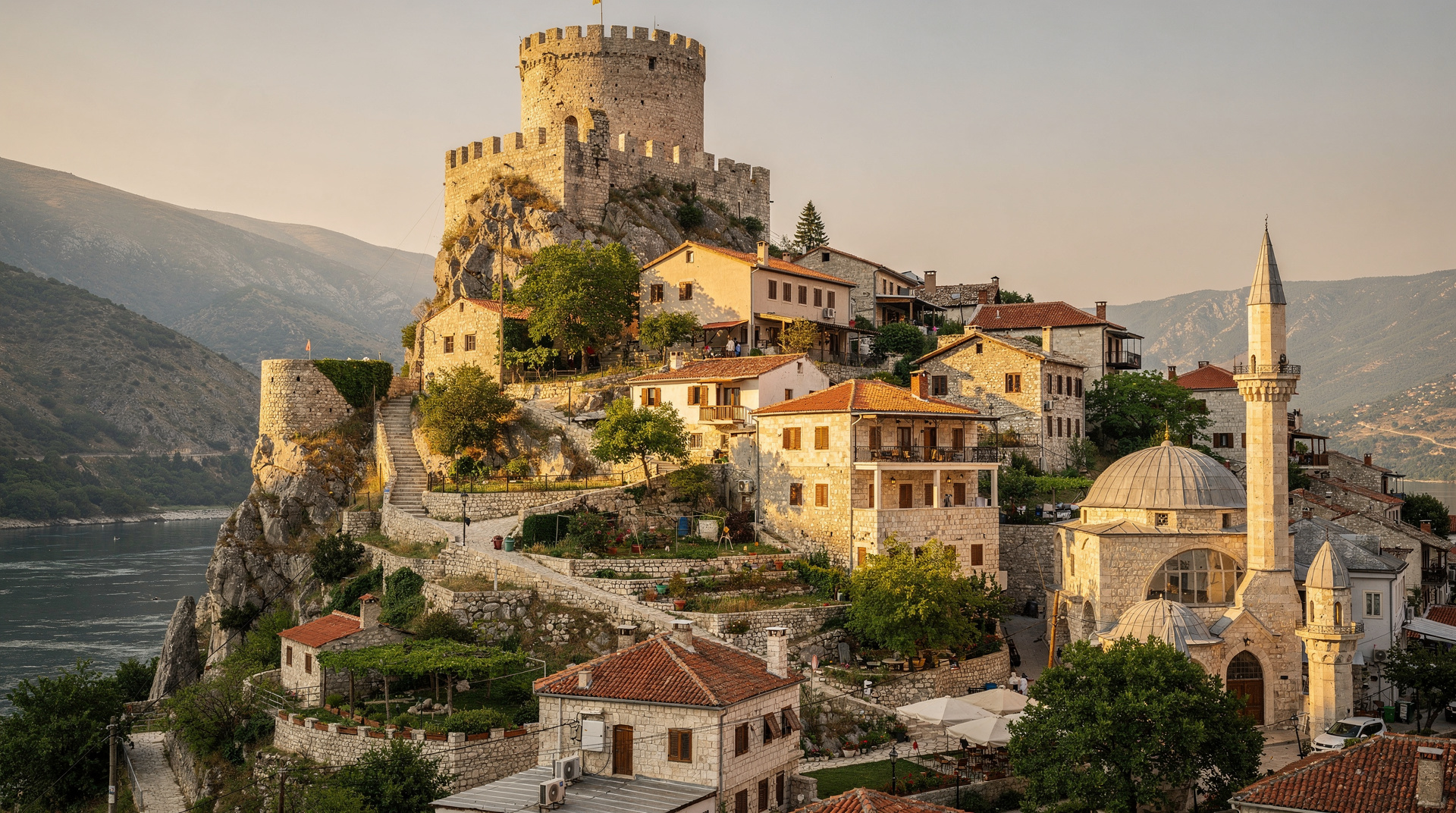
Počitelj is an Ottoman hill town abandoned in the war and only partly reoccupied, which is why it feels different from the restored places on the same road: a Kravice, Blagaj and Počitelj day tour from Mostar puts the three in one southbound loop.
Blagaj Tekke — the closest beauty
Distance from Mostar: 12 km, approximately 20 minutes.
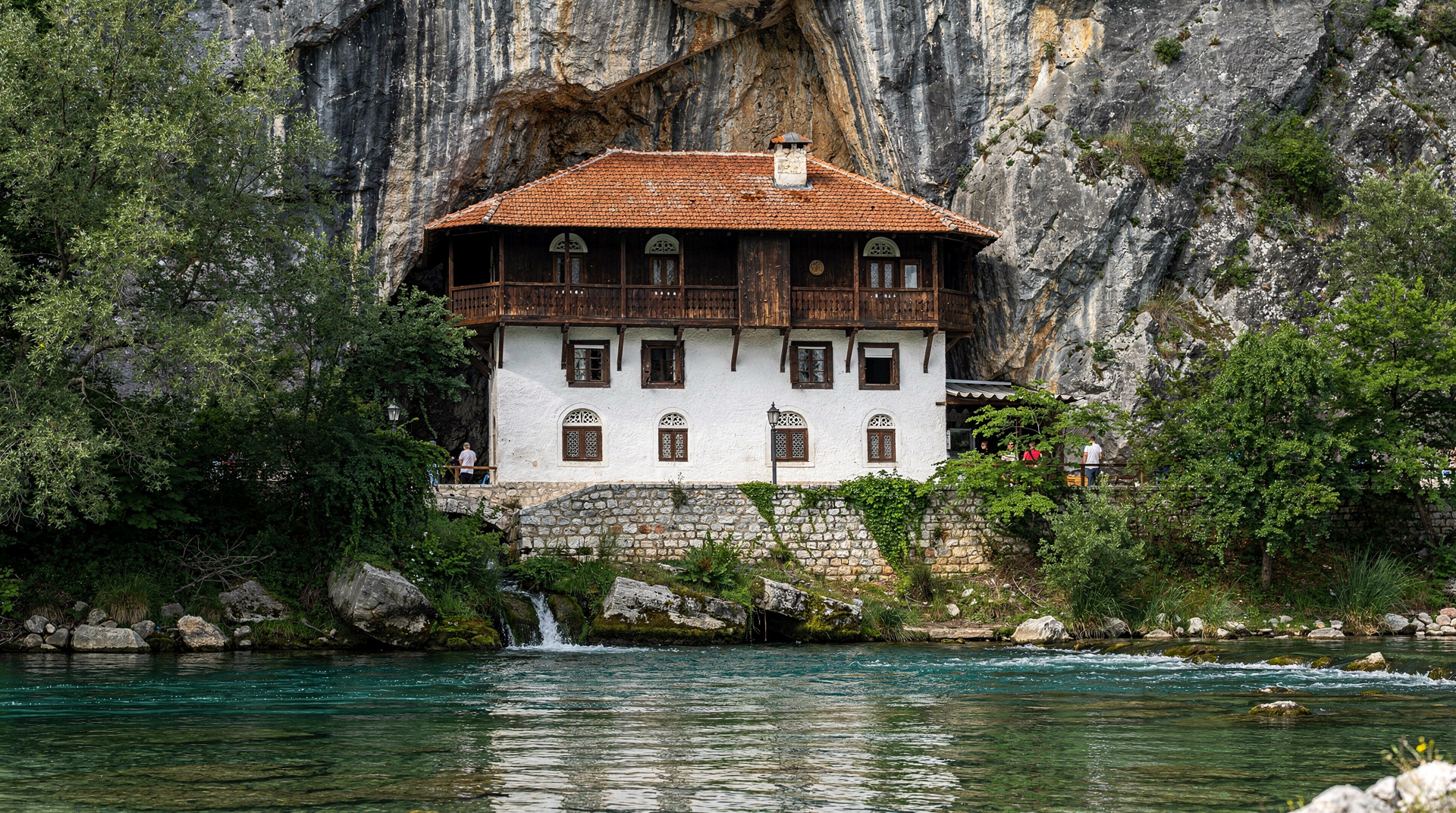
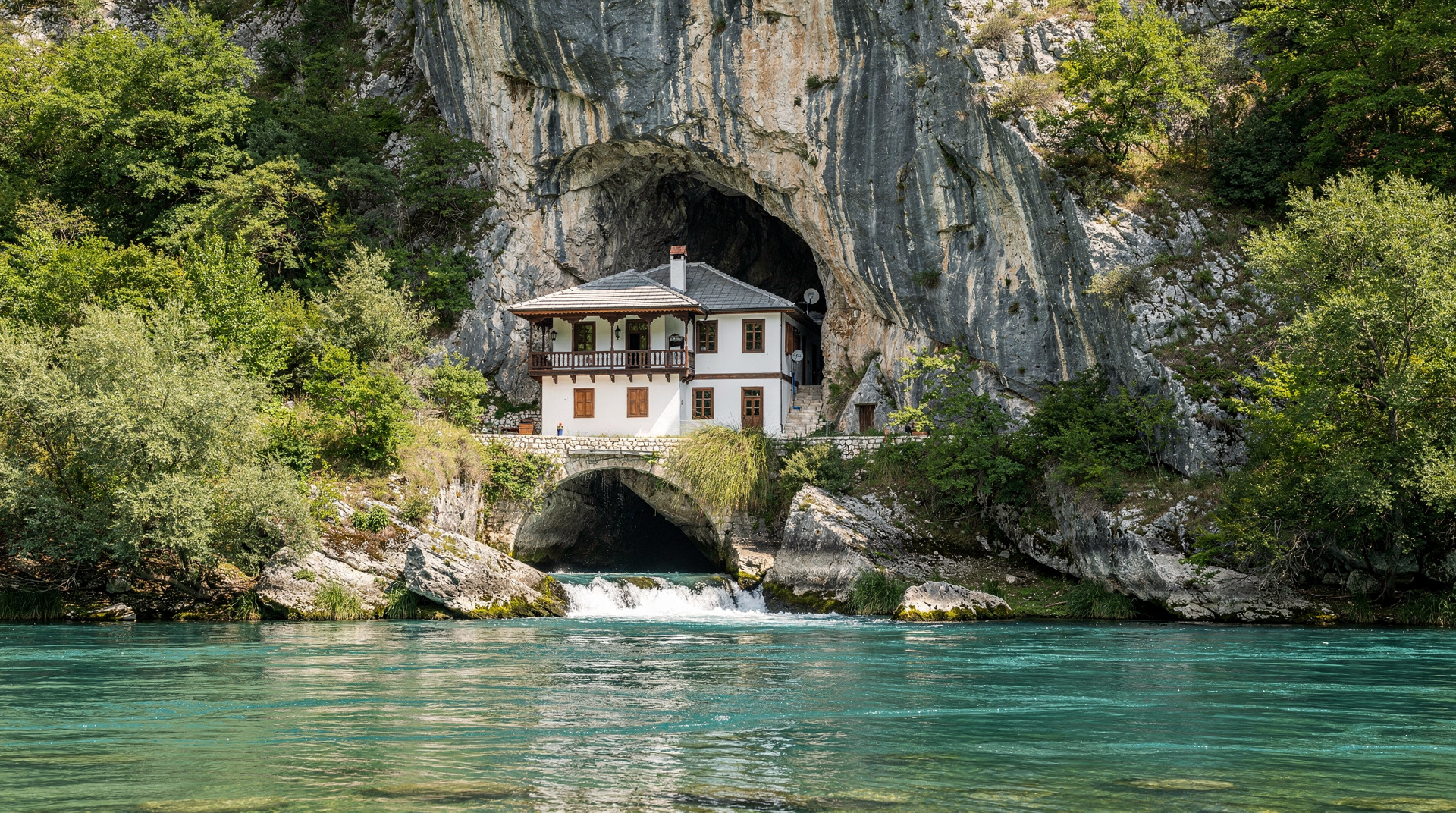
Blagaj is Mostar’s nearest major attraction and one of the most beautiful places in Bosnia & Herzegovina. The Buna river emerges from a cave at the base of a 200-metre cliff at a rate of 43 cubic metres per second — one of the most powerful karst springs in the Balkans. The 16th-century Dervish tekke (tekija) built at the water’s edge is a masterpiece of Ottoman architecture: whitewashed stone under overhanging rock, reflected in the ice-blue Buna. Entry 3 BAM; dress modestly.
Half a day is enough for Blagaj itself, but combine it with a canoe trip on the Buna river or a walk along the cliffs above the source for a fuller experience. See the Blagaj Tekke guide for details.
What makes Blagaj work as a short trip is its pace. There is no need to rush: sit by the water, watch the river come out from under the rock, and let the setting do the work. If you would rather be on the river than beside it, the canoeing on the Buna near Blagaj guide explains how that option fits around a visit to the tekke. Because it is so close to the city, Blagaj also suits a flexible day: go early, return to Mostar for lunch, and still have the afternoon free.
Počitelj — Ottoman village frozen in time
Distance from Mostar: 30 km, approximately 30 minutes.
Počitelj is the Ottoman Balkans in near-perfect preservation: a walled village on a limestone hill above the Neretva river, with a 15th-century fortress, a domed mosque, a clock tower and stone houses cascading down the slope. It is partially damaged from the 1993-1994 war — some houses are still uninhabited — but the essential character is intact and deeply impressive.
The climb to the Gavrankapetan tower at the top takes 15 minutes and gives panoramic views over the Neretva valley toward the Croatian border. Entry to the fortress is 3 BAM. The village is hot in summer — visit in the morning or late afternoon.
Wear shoes with real grip: the lanes are stone and polished by centuries of feet, and the climb rewards patience more than speed. Stop often, look back at the river and the roofs below, and let the unrestored houses remind you that this is a place with a recent history, not a film set. The Počitelj village guide walks through the mosque, the fortress and the quieter corners in more detail, and is worth reading before you go.
All three of the above sites — Kravice, Blagaj and Počitelj — can be combined in a single long day from Mostar. See the Herzegovina day trip guide for the full circuit.
From Mostar: Herzegovina full-day tourTrebinje — wine country and ancient city
Distance from Mostar: approximately 75 km, 1h30 by car.
Trebinje is the most-overlooked gem in Herzegovina, and the least visited by tourists arriving from Dubrovnik. The old town (staro jezgro) has a remarkable Ottoman bazaar (čaršija) of the 17th-18th century, entirely car-free, surrounded by plane trees and small cafes. The Trebišnjica river (technically a sinking river that disappears into karst aquifers) reflects the town’s stone walls.
Above the town, the Hercegovačka Gračanica — a Serbian Orthodox church built in 1999 as a replica of the medieval Gračanica monastery in Kosovo — commands the hill with views over the old town and the reservoir below. It is controversial (built over what was previously a mosque site), but architecturally beautiful.
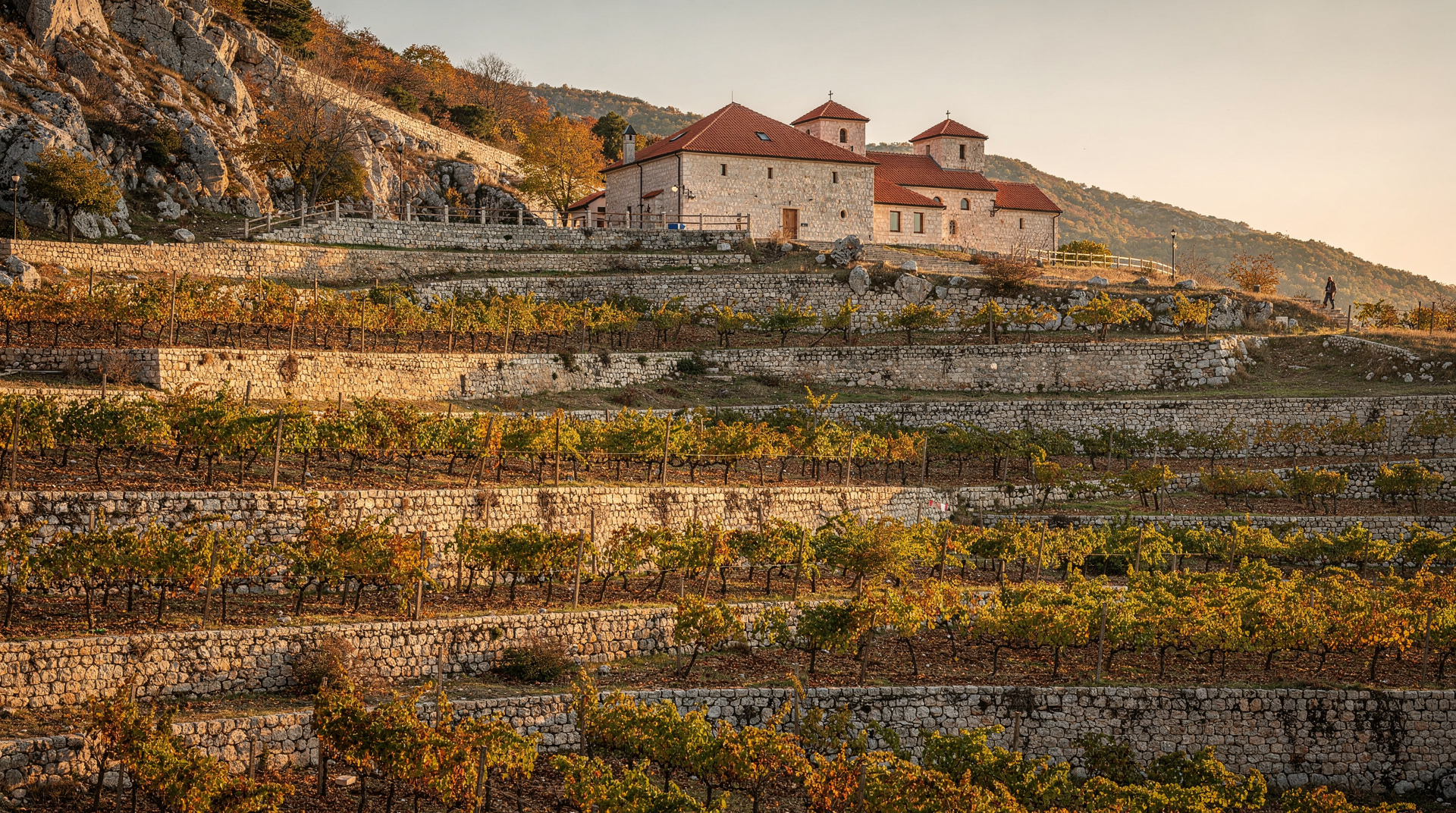
The countryside around Trebinje produces Herzegovina’s best wines: Žilavka (a white grape with high acidity and mineral notes, unique to this region) and Blatina (a robust red). Several wineries in the Popovo polje near Trebinje offer tastings — the Trebinje wine guide covers the best.
A tasting works best as a slow lunch rather than a quick stop: ask the winery what to pair with each glass, and let the driver, or the tour, handle the road. The wider story of grapes, producers and villages is in the Herzegovina wine guide, while the story of the church on the hill, including why it divides opinion, is told in the Hercegovačka Gračanica guide. Because Trebinje is quieter than the sites near Mostar, it also makes a gentle contrast after a busy day at the waterfalls.
Medjugorje — pilgrimage town
Distance from Mostar: 25 km, approximately 30 minutes.
Medjugorje is one of the world’s most visited Catholic pilgrimage sites, where six young Bosnian Croats reported apparitions of the Virgin Mary from 1981. The site attracts 2-3 million visitors per year. The main draws are Apparition Hill (Brdo Ukazanja), where the first apparitions occurred, and Cross Mountain (Križevac), a 40-minute climb with the Stations of the Cross.
For religious visitors, Medjugorje is deeply meaningful. For secular visitors, the site is culturally interesting — a vast pilgrimage infrastructure built around an active disputed religious phenomenon. See the Medjugorje guide for an honest assessment of what to expect.
If you only want the main landmark, the Apparition Hill guide covers the walk up and what you will find there. If you are unsure whether the detour suits you, read is Medjugorje worth it before committing a half-day. Whatever your beliefs, dress respectfully and keep your voice low around people who are praying.
Sarajevo — the full day option
Distance from Mostar: 130 km, approximately 2h30.
Mostar to Sarajevo is a natural day trip in reverse — or a one-way journey continuing north. The train through the Neretva canyon is one of the great railway journeys in southeastern Europe. Buses run several times daily (18-25 BAM each way, 2-2.5 hours). If you are basing yourself in Mostar, a day in Sarajevo gives you access to Baščaršija, the Tunnel of Hope, the war history sites and the city’s unique multi-cultural atmosphere.
See the Mostar day trip from Sarajevo guide for the route in the opposite direction. The options for making the journey are compared in the Sarajevo to Mostar transport guide, and once you arrive, the Tunnel of Hope is the stop that best explains the city’s recent past. Honestly, Sarajevo deserves more than a rushed day, so treat this version as a taster.
Konjic and the road north
Konjic is less a destination to return from than a place to break a journey. It sits where the Neretva valley narrows, and it rewards people heading toward Sarajevo with a different kind of day: history in the form of a hidden Cold War bunker, an old bridge, and a river that draws rafting groups. The Konjic day trip guide lays out the stop in full, the Tito’s Bunker guide explains what the underground complex is, and the Neretva rafting guide is the one to read if you want to get on the water.
Looking toward the coast
Many visitors ask whether Mostar can be reached from, or combined with, the Croatian coast. It can, but it changes the shape of the day. If you are arriving from the sea, the Mostar from Dubrovnik guide is the starting point, and the Neum corridor crossing guide explains the border crossings you will meet on the way. For that reason, we suggest treating the coast as a separate plan rather than squeezing it into a Mostar-based day.
Practical planning from Mostar
By car from Mostar: A rental car opens up all the sites above, including the more obscure Ottoman villages of Stolac and Ljubinje. Parking in Mostar’s old town area costs 2-3 BAM/hour. The roads to Blagaj, Počitelj and Kravice are all good quality.
Without a car: Organised tours from Mostar cover all the major sites. Local buses serve Blagaj and Čapljina (near Kravice) but the timetable requires planning.
Currency: All sites take BAM cash for entry fees. Some restaurants and larger shops accept card payments, but have BAM available for small purchases.
The Bosnia travel guide has full advice on getting around Herzegovina by car and by public transport.
If you are weighing up a rental, the renting a car in Bosnia guide covers the practical side, and the getting around Bosnia guide compares all the options side by side. A car gives you freedom to stop where you like, but a tour removes the parking and navigation, and lets everyone in the group enjoy the scenery. Neither is wrong; choose based on how much you value flexibility.
Where you sleep also shapes how easy these trips feel. A base within walking distance of the old town makes early starts painless, and the where to stay in Mostar guide helps you pick one. Whichever you choose, plan your days so that you are never rushing between sites: one or two stops done well beat four done in a blur. Leave room for a long lunch, a swim, and the unplanned detour that often turns out to be the best part of the day.
Which day trip should you pick?
| Trip | Time from Mostar | Best for | Skip if |
|---|---|---|---|
| Kravice Waterfalls | 50 min | Swimming, summer | You dislike crowds midday |
| Blagaj Tekke | 20 min | Short half-day, architecture | You need a full day out |
| Počitelj | 30 min | Photography, Ottoman history | Extreme midday heat |
| Trebinje | 1h30 | Wine, a quieter old town | Time-limited to one day |
| Medjugorje | 30 min | Religious/pilgrimage interest | Purely secular sightseeing |
| Sarajevo | 2h30 | War history, big-city energy | You only have a half day |
Combining sites into one itinerary
The three closest Herzegovina sites — Blagaj, Počitelj and Kravice — sit roughly along the same southbound corridor from Mostar, which is why nearly every organised tour bundles them together. A realistic order is Blagaj first (cooler, early morning), Počitelj mid-morning, then Kravice for the afternoon swim once the sun is highest. Trying to add Trebinje to the same day is unrealistic — it pulls you an additional 45 minutes further south and deserves its own half-day. If war history matters more to you than waterfalls, swap Kravice for a half-day in Mostar’s own museums instead and save Herzegovina’s nature sites for a second day.
Frequently asked questions about Best day trips from Mostar
Can I visit Kravice Waterfalls from Mostar without a car?
How far is Trebinje from Mostar?
Is Medjugorje worth a day trip from Mostar?
Can I do a day trip to Dubrovnik from Mostar?
What is the easiest half-day trip from Mostar?
Can I combine Konjic with a day trip from Mostar?
What should I pack for a Herzegovina day trip from Mostar?
Top experiences
Bookable activities with verified prices and instant confirmation on GetYourGuide.