Bosnia money and currency guide — BAM, cards and ATMs
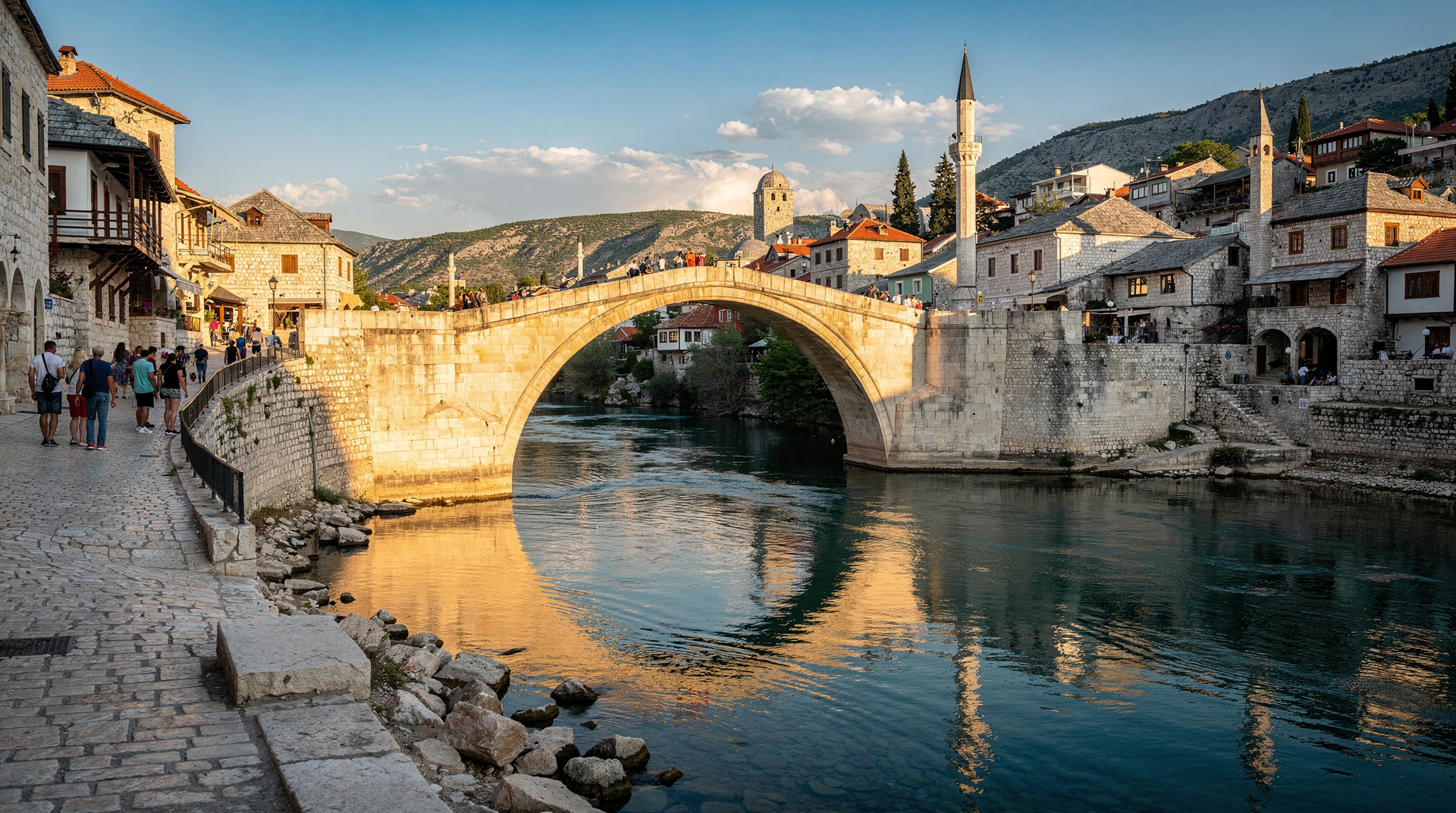
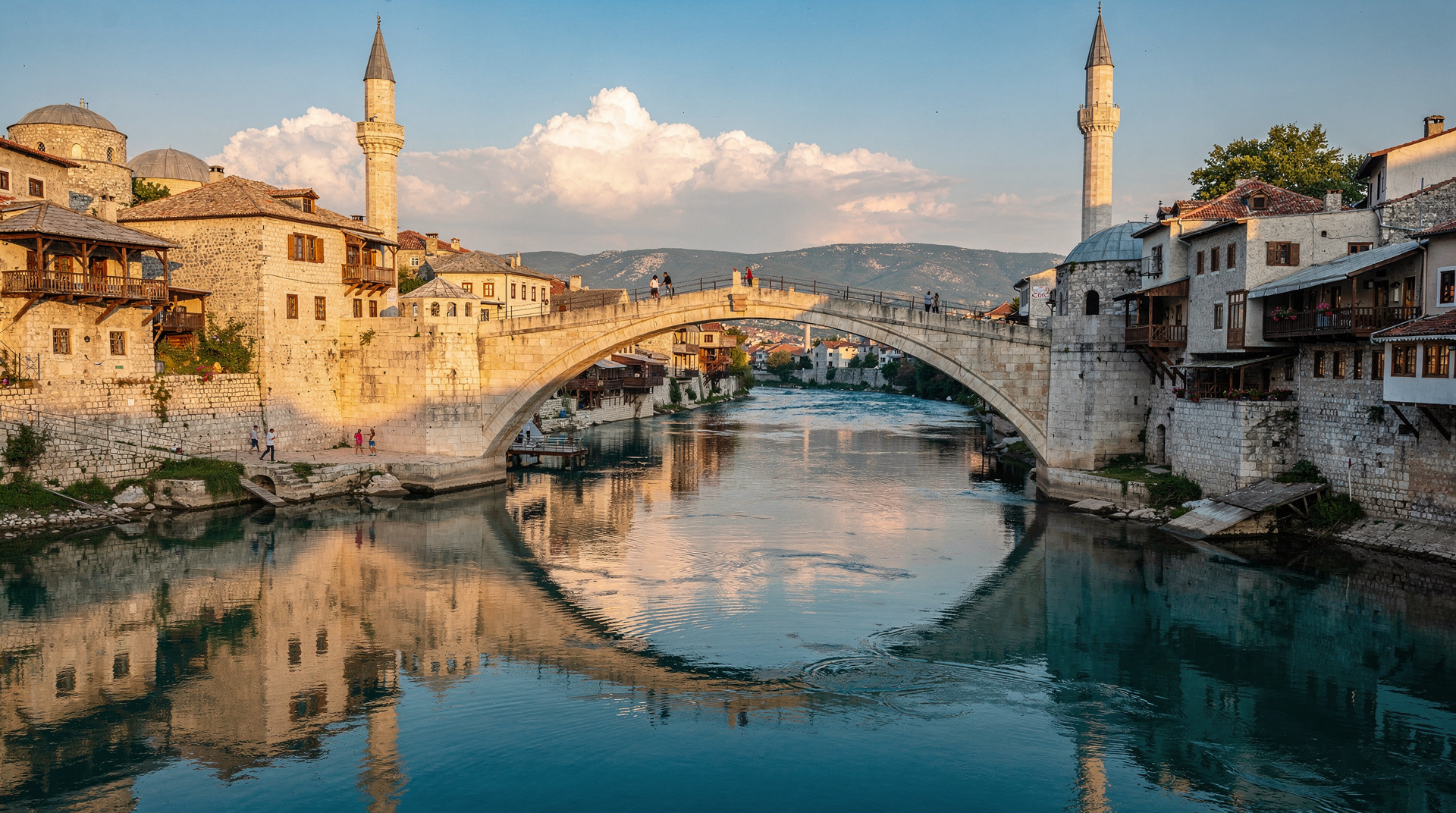
Mostar – Bosnia and Herzegovina Day Trip from Dubrovnik
What currency does Bosnia use?
Bosnia uses the Bosnian Convertible Mark (BAM, also written KM). The rate is fixed at 1 EUR = 1.95583 BAM — it does not fluctuate. Withdraw BAM from ATMs on arrival. Euros are sometimes accepted in tourist areas but at a worse rate than the official exchange.
Bosnia uses its own currency, the Bosnian Convertible Mark (BAM, code: BAM; symbol: KM for Konvertibilna marka in Bosnian). If you’re coming from the EU, this means arriving with euros that need to be exchanged or withdrawn. It is a simple process, and the fixed exchange rate makes budgeting very predictable.
| At a glance | |
|---|---|
| Where | ATMs in Sarajevo and Mostar city centres and both airports |
| Cost | No conversion fee at ATMs if you decline dynamic currency conversion |
| Time needed | A few minutes at any bankomat on arrival |
| Getting there | Every main street in central Sarajevo has at least one ATM |
| Best time | Withdraw before heading to rural areas or national parks — ATMs thin out fast outside towns |
The Bosnian Convertible Mark (BAM)
The BAM has been the official currency since 1995, established under the Dayton Peace Agreement to stabilise the post-war economy. It is managed by the Currency Board of Bosnia and Herzegovina and is pegged to the euro at a fixed rate.
The rate: 1 EUR = 1.95583 BAM. This does not change.
This is a hard peg — not a managed float, not an approximation. The rate is fixed in law and has not moved since 1995. This means:
- No currency risk when planning your budget
- Easy mental arithmetic: think of 2 BAM as roughly 1 EUR
- BAM cannot be significantly exchanged outside Bosnia (it is not traded internationally)
Denominations
Banknotes: 1, 5, 10, 20, 50, 100, 200 BAM Coins: 5, 10, 20, 50 feninga (100 feninga = 1 BAM); 1, 2, 5 BAM coins
The 1 BAM coin is the most useful for tram tickets and small purchases. Keep some small change — smaller market stalls and bakeries prefer not to break large notes.
ATMs
ATMs (called “bankomati” in Bosnian) are the best way to get local currency. The exchange rate you receive at an ATM is the official fixed rate, without markup. Fees depend on your home bank; check before travelling.
Reliable ATM networks in Bosnia
- Raiffeisen Bank — widespread in Sarajevo and Mostar, generally reliable
- UniCredit (Hypo Bank) — good coverage in cities
- Addiko Bank — many ATMs in the Sarajevo city centre
- Baština banka — particularly common in Herzegovina
- NLB Banka — useful in Sarajevo
Where to find ATMs
Sarajevo: Every main street in the centre has at least one ATM. Baščaršija, Ferhadija, the bus station area and the airport all have machines. You will never be more than 5 minutes from a bankomat in the city centre.
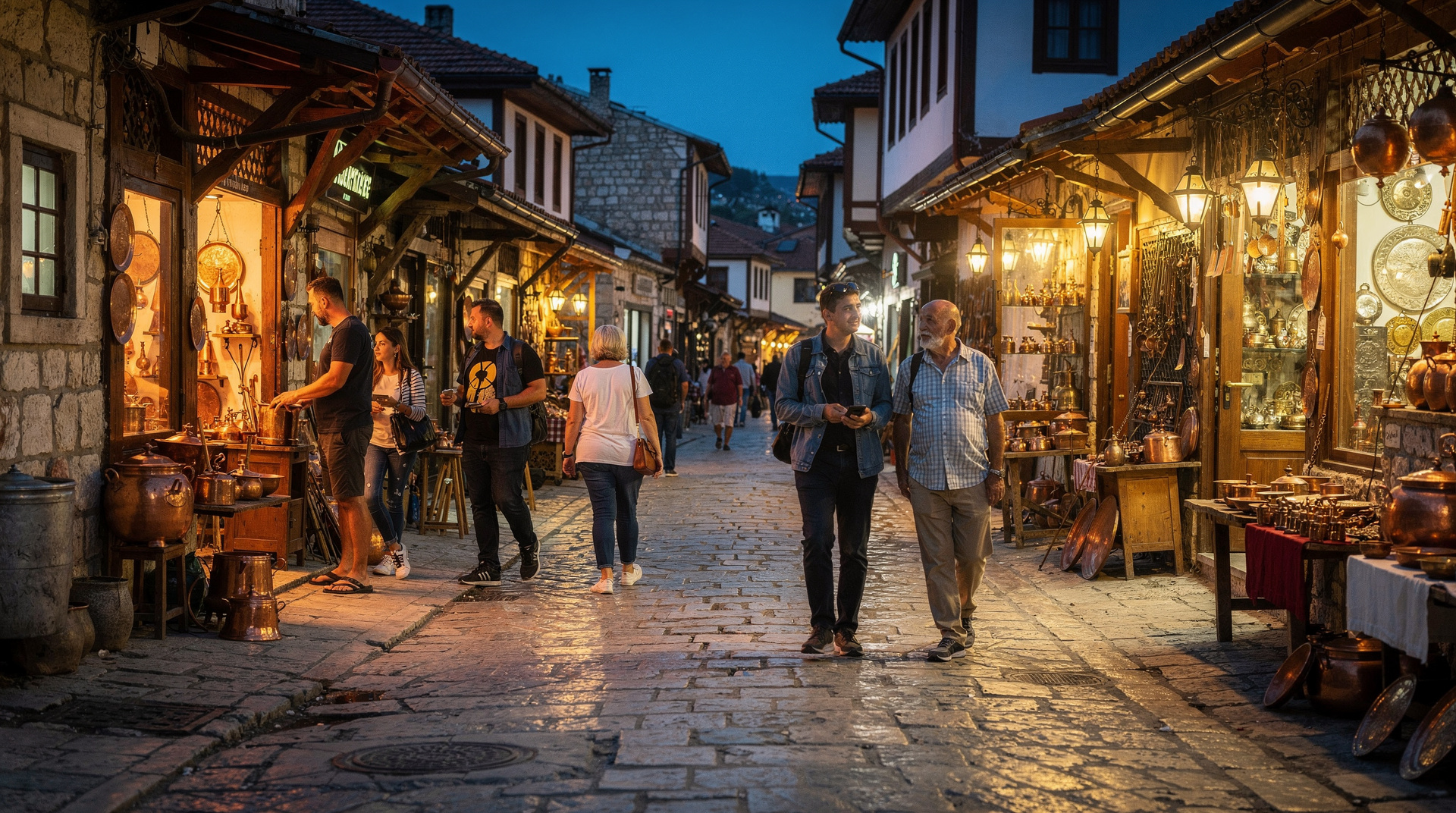
Mostar: ATMs on the Bulevar main road and near the bus station. Fewer in the old town itself — withdraw before exploring the bazaar.
Rural areas: ATMs exist in larger towns (Konjic, Jajce, Trebinje, Bihać) but not in villages or mountain areas. Before heading to Sutjeska, Una National Park or rural Herzegovina, ensure you have sufficient cash.
ATM tips
- Always choose “no conversion” (pay in BAM): If the ATM offers to charge you in euros, decline. This is “dynamic currency conversion” and uses a bank’s own exchange rate, which is worse than the official rate.
- Withdraw enough for rural areas: Carry at least 200–300 BAM when leaving cities for day trips or mountain areas.
- Check your card’s fee structure: UK Revolut and Wise cards work well in Bosnia with no conversion fee. Most UK and EU bank cards charge a 1.5–3 percent foreign transaction fee. A Wise or Revolut card set to EUR will spend in BAM at exactly the fixed rate.
Card payments
Card acceptance has improved significantly in recent years, particularly in Sarajevo and Mostar tourist areas. As of 2025–2026:
Generally accept cards:
- Hotels (almost all, including small guesthouses)
- Larger restaurants in cities
- Supermarkets (Bingo, Konzum, Tommy chains)
- Fuel stations on main roads
- Museum ticket counters in Sarajevo
- Some tour operators
Often cash-only:
- Local kafanas (traditional coffee houses)
- Market stalls and fresh produce markets
- Small village restaurants and rural guesthouses
- Church/mosque donation boxes
- Smaller bakeries
- Taxis (some do, most don’t)
Carry at least 100–150 BAM in cash at all times. Even in cities, a card-only approach will leave you unable to buy street food, tip a guide, or pay a taxi.
Exchanging euros in Bosnia
Exchange offices (mjenjačnica) are common in Sarajevo and Mostar. The rate you receive at an exchange office is typically very close to the official rate (perhaps 0.5–1 percent worse). Exchange offices at airports and hotels typically have worse rates.
Where to exchange in Sarajevo: Exchange offices along Ferhadija and around Baščaršija are competitive. The airport exchange office is convenient but charges a premium.
Bring euros, not dollars or pounds: EUR is the most useful foreign currency. USD and GBP are exchanged at most offices but at less favourable rates. Avoid trying to exchange at hotels — they have the worst rates.
Tipping in Bosnia
Tipping is appreciated but carries no social obligation. Bosnians tip modestly and do not expect tourists to be generous beyond local norms.
| Situation | Suggested tip |
|---|---|
| Restaurant (good service) | Round up or 10 percent |
| Café/bar | Round up (1–2 BAM) |
| Taxi | Round up to nearest 5 BAM |
| Guided tour (per person/day) | 5–10 EUR (guide), 2–5 EUR (driver) |
| Hotel porter | 2–5 BAM per bag |
| Housekeeping | 3–5 BAM/day |
In local kafanas, leaving change on the table is common and appreciated. At tourist restaurants, a 10 percent tip is the norm among international visitors and happily received.
Quick reference: what things cost in BAM and EUR
| Item | BAM | EUR |
|---|---|---|
| Bosnian coffee (kafana) | 2–3 | 1.00–1.50 |
| Burek (meat pastry, 220g) | 3–4 | 1.50–2.00 |
| Ćevapi portion with bread | 8–14 | 4.00–7.15 |
| Restaurant main course | 18–35 | 9.20–17.90 |
| Beer (0.5L local) | 4–6 | 2.00–3.07 |
| Glass of local wine | 5–8 | 2.55–4.09 |
| Tram ticket (Sarajevo) | 2.20 | 1.12 |
| Bus Sarajevo–Mostar | 20–25 | 10.22–12.78 |
| Hostel dorm | 20–35 | 10.22–17.89 |
| Budget private room | 50–80 | 25.56–40.90 |
| Tunnel of Hope entry | 20 | 10.22 |
Sending money and paying online
Booking platforms: Booking.com, Airbnb, GetYourGuide and similar platforms charge in euros (or your home currency) and handle the conversion internally. No need to worry about BAM for advance bookings.
Wire transfers: If you need to pay a Bosnian business in advance, BAM accounts use SWIFT/BIC via Bosnian banks. Wise (formerly TransferWise) offers good rates for EUR-to-BAM transfers.
Frequently asked questions about Bosnia’s currency
Can I use cryptocurrency in Bosnia?
Very occasionally at modern cafés or some tech-sector businesses in Sarajevo — but this is extremely niche. Practical travel spending requires BAM cash and standard cards.
What happens if I leave Bosnia with leftover BAM?
BAM is very difficult to exchange outside Bosnia. Exchange remaining marks before leaving, or spend them at Sarajevo Airport (there are decent food and drink options). The fixed rate means you always know exactly how much you have left in euro terms.
Is the BAM the same in both entities (Federation and Republika Srpska)?
Yes. BAM is the official currency throughout Bosnia and Herzegovina — both the Federation of BiH and Republika Srpska use it. There is no difference crossing between entities.
Will shops accept Serbian dinars near the border?
No. BAM is the only valid currency in Bosnia. Near the Serbian or Montenegrin border, some markets may accept dinars or euros informally, but do not count on it — use BAM.
Card fees: Revolut/Wise versus traditional bank cards
| Card type | Foreign transaction fee | Notes |
|---|---|---|
| Revolut / Wise (EUR balance) | None, at the fixed BAM rate | Best value for most travellers |
| UK/EU high-street bank card | 1.5-3 percent typical | Still usable, just slightly costlier |
| US credit cards | Varies, often 1-3 percent | Check your specific card’s foreign fee policy |
| Cash withdrawn with a foreign card | Occasional flat ATM fee from your home bank | Withdraw larger amounts less often to reduce fees |
Planning your cash by region
How much cash you need depends far more on where you are going than on how long you stay. In Sarajevo, cards and ATMs are easy, so a modest cash float is enough for coffee, pastries and the odd taxi. If you are building a city stay around Baščaršija, expect to pay by card at hotels and larger restaurants but in cash at the small stalls and kafanas that make the old bazaar worth visiting. The same goes for where to stay in Sarajevo: many small guesthouses take cards, but it is worth asking when you book.
In Herzegovina the pattern is similar but with fewer machines. Before a day around Mostar, Blagaj and Počitelj, top up your wallet in town. Village cafés, parking attendants and small family restaurants near the sights usually want cash, and the nearest bankomat can be a drive away.
Mountain and national park trips need the most preparation. For Sutjeska National Park, Lukomir or the Una National Park, treat your last town as your last chance to withdraw. Park entry, a homemade lunch at a rural guesthouse or a lift from a local host are all easier to settle in BAM notes, ideally in smaller denominations.
Small habits that save money
A few routines make money matters almost effortless in Bosnia:
- Break big notes early. Pay for a coffee or a bakery stop with a large note in a busy place, not at a village stall where change may be scarce. Keep the coins for trams and tips.
- Withdraw less often, in larger amounts. If your home bank charges a flat fee per withdrawal, a few bigger withdrawals in a city cost less than many small ones. Keep the cash split between your daypack and your accommodation rather than all in one place.
- Check the screen before you confirm. Whether it is an ATM or a card terminal, the question about charging you in BAM or in your home currency is the one that matters. Always pick BAM.
- Ask about card payment before ordering. In smaller restaurants, a quick question before you sit down avoids an awkward walk to find a machine. For more on avoiding overcharging and other pitfalls, read the Bosnia scams to avoid guide.
- Keep a little cash for transport. Intercity buses and local rides often work on cash at the counter or on board; see the buses in Bosnia guide and the Sarajevo public transport guide for how paying works on each.
Money and border crossings
If you reach Bosnia by road from the coast, you will probably carry euros in your pocket and need BAM only once you are inside the country. That is easy to manage: withdraw at the first sizeable town rather than hunting for an exchange desk at a crossing. Drivers should also budget for fuel, parking and any extras covered in the renting a car in Bosnia guide and the driving in Bosnia guide.
Travellers combining several countries, for example on the Balkans three-country itinerary, should plan on spending down their marks before leaving, since BAM is hard to use or exchange elsewhere. A small leftover amount is best spent on a last meal, a coffee or souvenirs rather than carried home.
Reading prices and bills
Most menus in Bosnia show prices in BAM, often with the KM symbol after the number. Where a place also quotes euros, check which figure you are being charged, and remember that the peg means the two are always related by the same fixed rate. At a restaurant, the bill is normally brought to the table when you ask for it, and a service charge is not usually added, so the tipping table above applies. If you are eating your way through the city, the Bosnian food guide will help you recognise what a fair meal looks like, so a price on a menu never feels like a guess.
Budgeting day to day
Since the BAM is pegged hard to the euro, planning a daily budget is unusually simple — see the Bosnia on a budget guide for a full cost breakdown by travel style. If you’re combining Bosnia with Croatia or Montenegro, remember those countries use the euro directly (Croatia) or the euro informally (Montenegro), so you’ll be juggling BAM only while inside Bosnia itself — see driving Croatia to Bosnia for the practical border-crossing side of that.
Paying for tours and activities
Most organised tours and day trips — Sarajevo food tours, rafting trips, or a Mostar day trip from Sarajevo — are booked and paid in euros online in advance, with the balance often payable in BAM cash on the day if there’s a guide tip or optional extra. Always carry enough BAM for tips even when the tour itself is prepaid.
If you are crossing from the coast, a prepaid option keeps the money question simple: a guided day trip to Mostar from Dubrovnik is settled online in advance, so you only need a little cash for coffee and a tip. Travellers starting inland can do the same with a private multi-day tour through Sarajevo, Mostar and Jajce, which removes most small payments from the trip.
Top experiences
Bookable activities with verified prices and instant confirmation on GetYourGuide.