Getting around Bosnia — buses, trains, cars and taxis
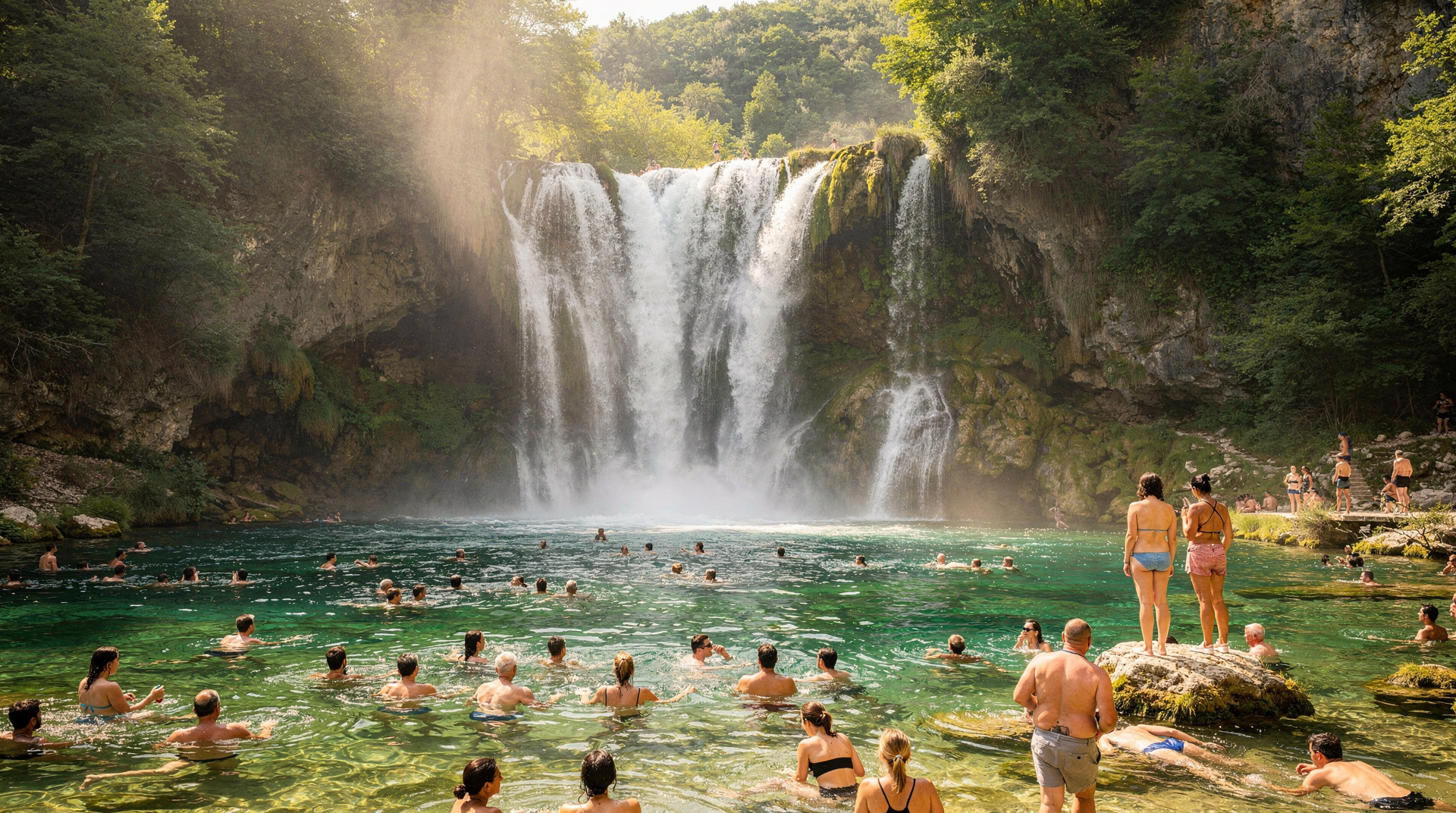
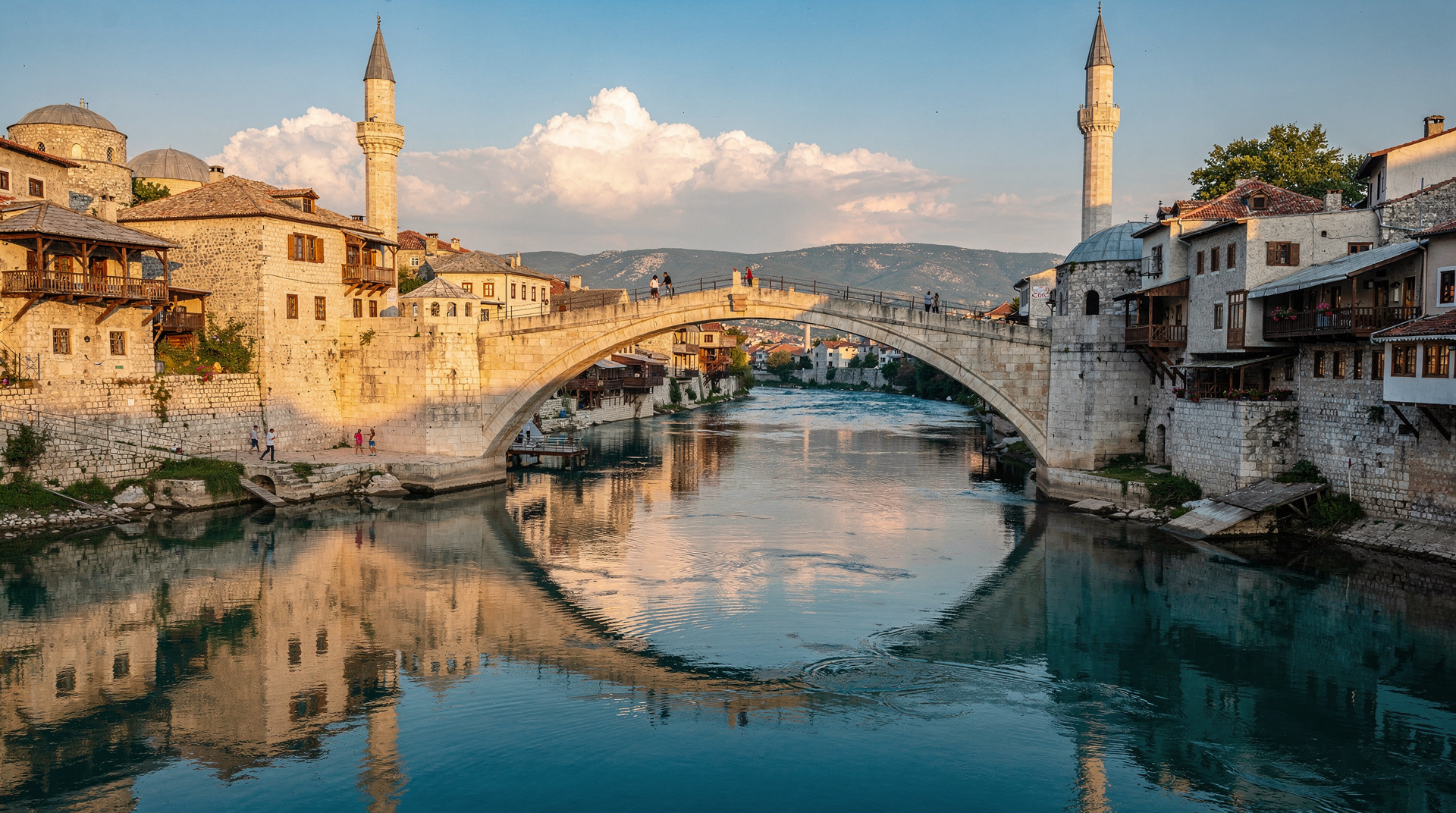
Sarajevo: Tour to Mostar, Blagaj, Počitelj & Kravice Falls
What is the best way to get around Bosnia?
Buses connect all major towns reliably and cheaply. A rental car is the best option for exploring beyond the Sarajevo–Mostar corridor — mountain roads are slow but manageable. The panoramic train to Mostar is a seasonal highlight. There are no motorways linking most of the country.
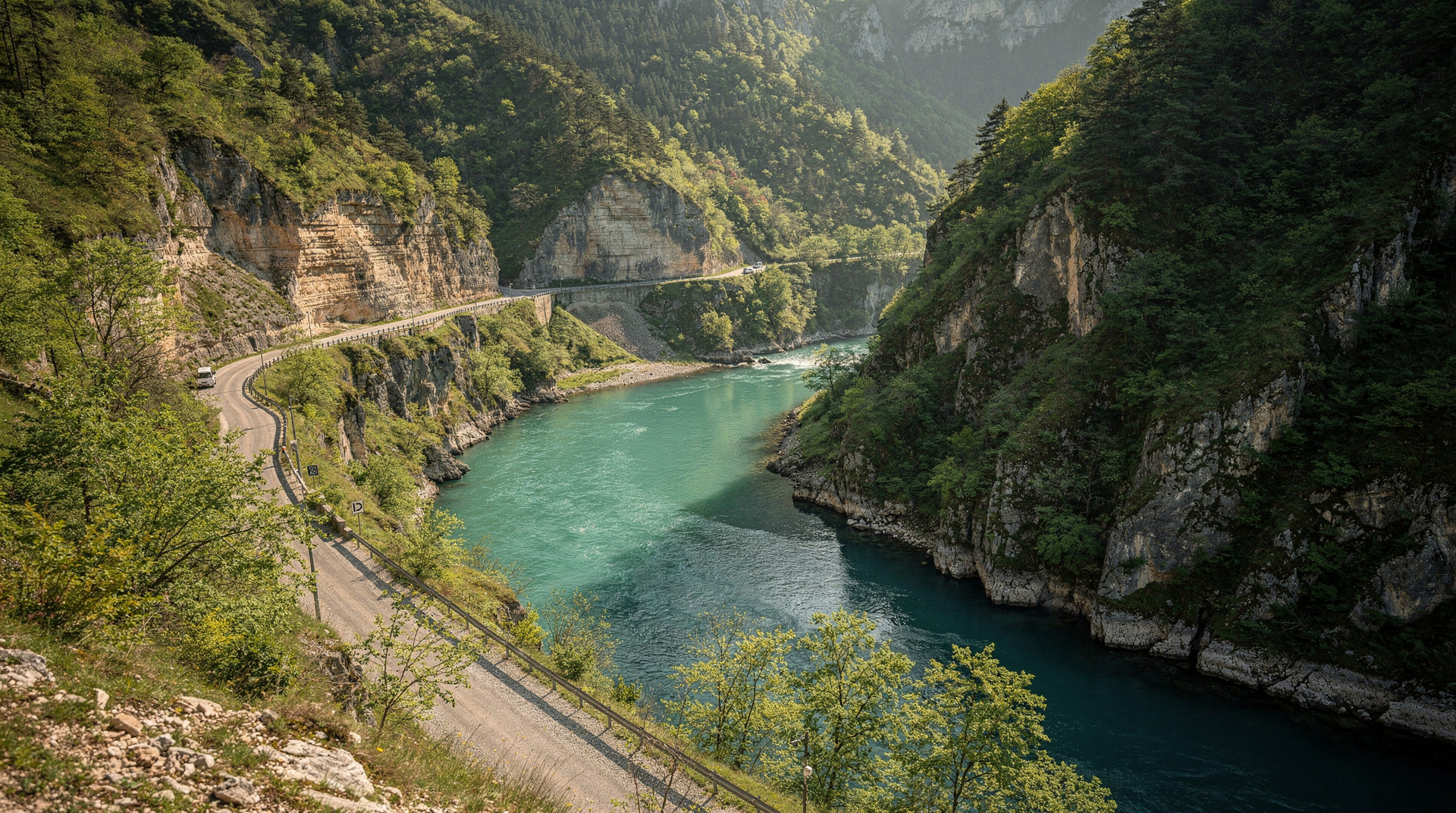
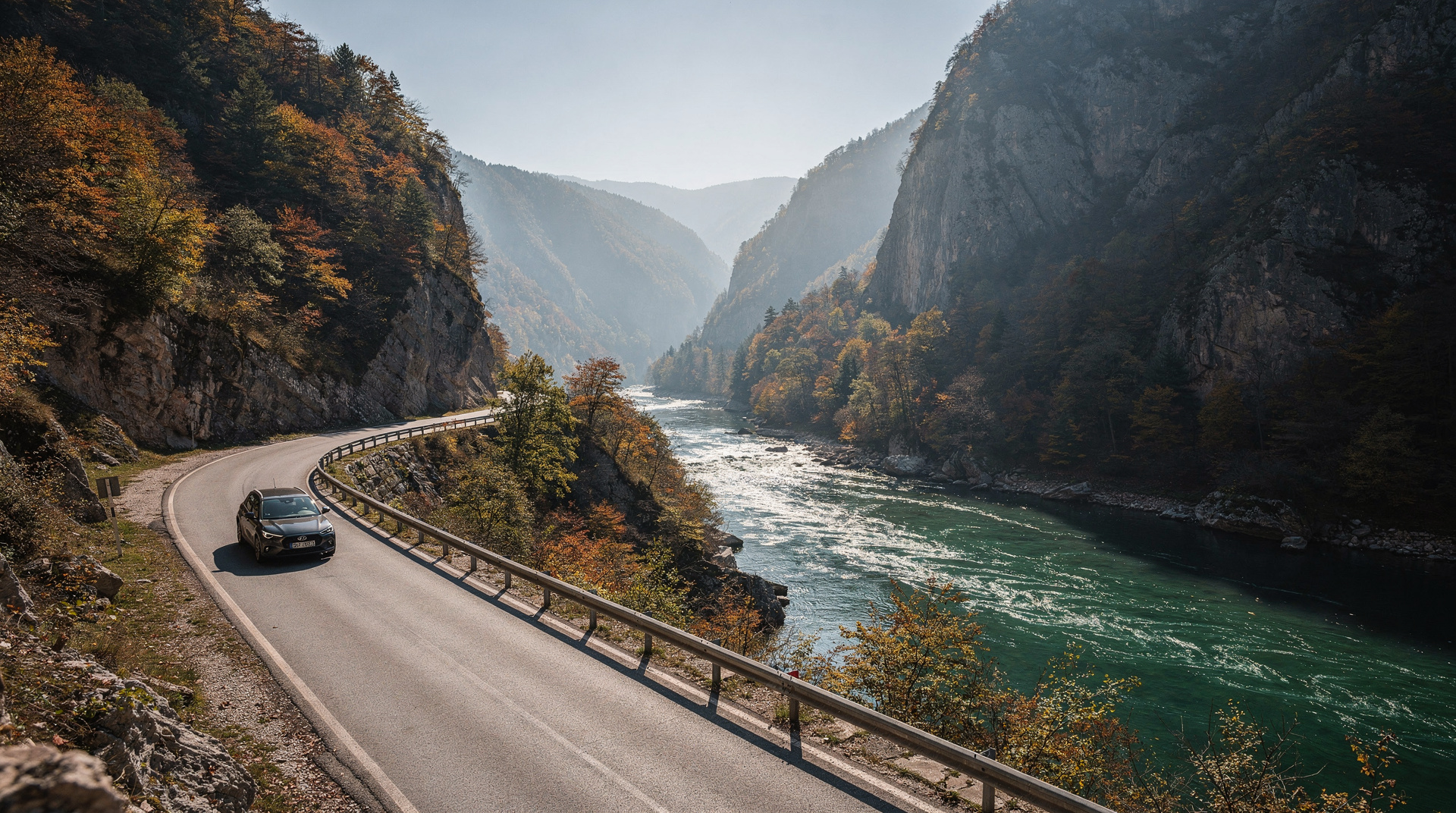
The first thing to understand about getting around Bosnia is the roads. There is no full motorway network linking the country’s major cities. Sarajevo sits in a mountain valley; Mostar is in the Neretva gorge; the Una valley is four hours west. Every journey involves mountain roads, and mountain roads are slow. This is not a complaint — it is a key planning factor.
At a glance
| Main hub | Sarajevo (bus station + tram network + airport) |
| Best for most visitors | Bus (cheap, frequent on the Sarajevo–Mostar corridor) |
| Best for flexibility | Rental car (around 50–90 EUR/day) — needed for Kravice, Blagaj, Una NP, mountain villages |
| Scenic option | Sarajevo–Mostar train (around 3h15, a handful of departures daily) |
| Typical in-city trip | 5–12 BAM (around 2.50–6 EUR) by taxi or app |
| Best time to drive mountain routes | Late spring to early autumn — winter can bring snow on higher passes |
Buses — the backbone of Bosnian travel
Buses are Bosnia’s primary public transport network and they work well for the main tourist corridor. Private companies operate the routes; tickets are cheap and services are generally punctual.
Key routes and prices
| Route | Duration | Price (approx.) |
|---|---|---|
| Sarajevo → Mostar | 2h30 | 20–25 BAM (10–13 EUR) |
| Sarajevo → Jajce | 2h15 | 18–22 BAM (9–11 EUR) |
| Sarajevo → Bihać | 4h30 | 35–42 BAM (18–22 EUR) |
| Sarajevo → Srebrenica | 3h30 | 28–35 BAM (14–18 EUR) |
| Mostar → Dubrovnik | 4–5h | 25–35 BAM (13–18 EUR) |
| Mostar → Split | 3h30 | 25–32 BAM (13–16 EUR) |
| Sarajevo → Banja Luka | 3h | 25–30 BAM (13–15 EUR) |
Bus tickets can be bought at bus stations (best to go in person and buy on the day or the day before). Online booking is available for some routes via Balkanviator or FlixBus on certain corridors. Station staff rarely speak English well; have your destination written down.
Main bus stations
Sarajevo: The main East Sarajevo bus terminal (Istočno Sarajevo) handles most intercity departures. The Sarajevo City Bus Station on the west bank of the Miljacka also handles some routes. Confirm which station your bus departs from when you buy.
Mostar: The bus station is near the train station, a 15-minute walk from the old bridge.
The Neum corridor
If you are crossing between Croatia and Bosnia by bus, note that the coastal route between Split and Dubrovnik passes through the Neum corridor — Bosnia’s 9 km of Adriatic coast. This means two border crossings (entering and leaving Bosnia). Have your passport out; in summer the queues can add 30–60 minutes. The Pelješac Bridge now offers an alternative road that stays entirely in Croatia and avoids Neum. Some buses use it, others still go through Neum — check your ticket.
The Sarajevo–Mostar train — scenic, not fast
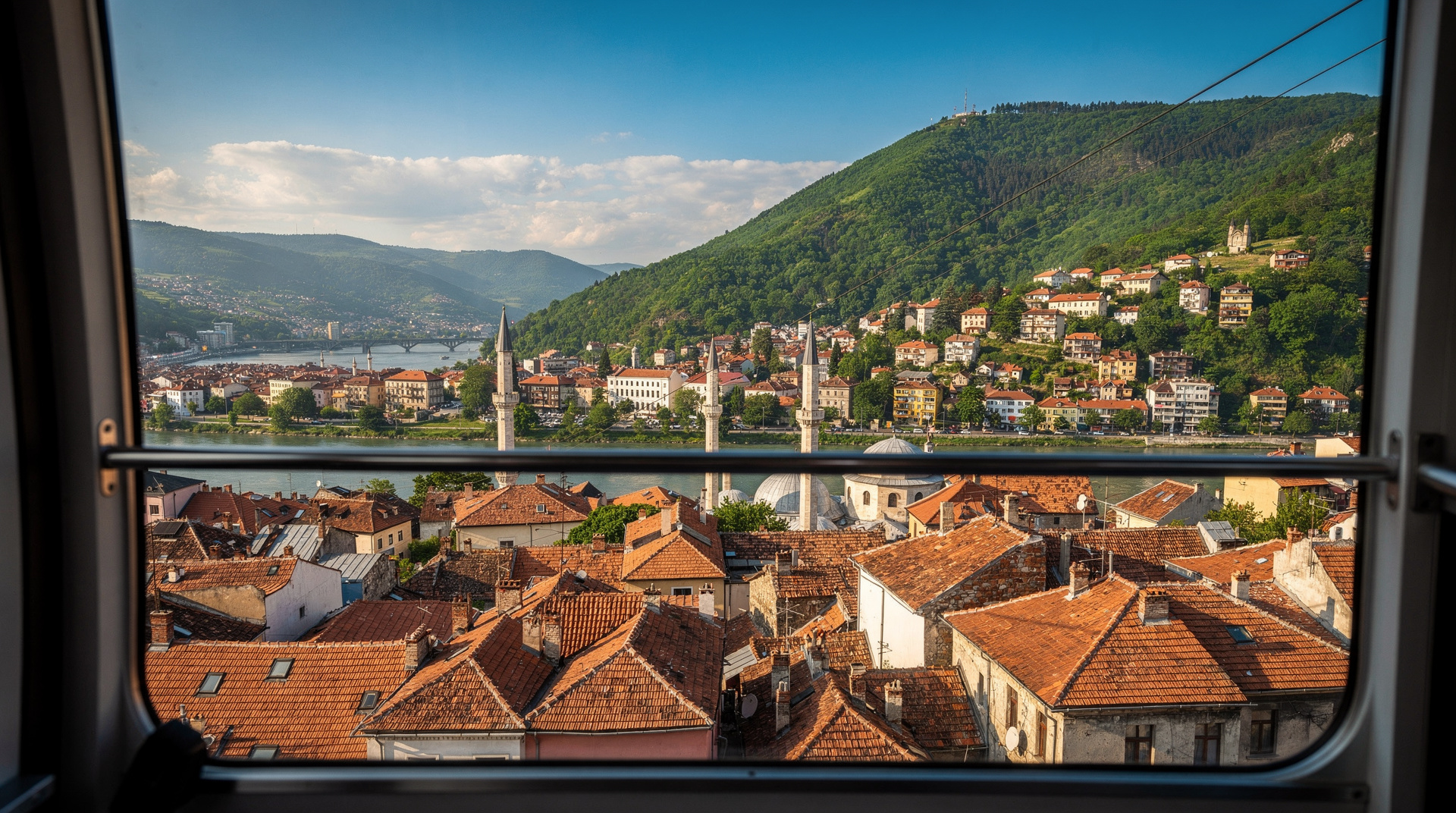
The train through the Neretva canyon is one of the most beautiful rail journeys in Europe. The line descends from Sarajevo’s highland valley, follows the Neretva river through increasingly dramatic limestone gorges, passes Konjic, and emerges at Mostar. The carriages are basic but the views compensate.
The journey takes around 3h15. There are typically two or three departures daily in each direction (schedules vary by season — check at Sarajevo station). Tickets cost approximately 18–22 BAM (9–11 EUR) one way.
For travellers with time and a camera, the train is a genuine highlight. For travellers with a schedule, take the bus.
Rental cars — the transformative option
A rental car changes what Bosnia is possible. With a car, you can visit:
- Blagaj Tekija on the way to Mostar
- Počitelj whenever you choose, not when a tour bus stops
- Kravice Falls early morning before the crowds
- Trebinje as a day trip from Dubrovnik
- Una National Park on a proper exploration
- Mountain villages and viewpoints that no bus reaches
Rental practicalities
Where to rent: Sarajevo Airport (SJJ) has all major international companies. City centre rentals are available but slightly more expensive. Book in advance for peak season (July–August).
Cost: Standard compact (VW Polo class), including basic insurance: 50–90 EUR/day. Larger SUVs: 80–130 EUR/day. Long-term rentals (7+ days) get significant discounts.
Insurance essentials:
- Check that your rental contract explicitly covers Bosnia and Herzegovina — some car hire contracts exclude BiH, requiring additional cover (usually 10–20 EUR/day)
- Green card (Zelena karta) is required for vehicles entering Bosnia from Croatia or Montenegro — ensure your policy includes it
- Collision damage waiver strongly recommended given narrow mountain roads
Driving in Bosnia:
- Drive on the right, as in the rest of continental Europe
- Speed limits: 50 km/h in towns, 80 km/h outside built-up areas, 100 km/h on divided roads (these are rare), 130 km/h on motorways (only the short Sarajevo bypass motorway applies)
- Alcohol limit: 0.3 per mille (stricter than UK/Germany)
- Mountain roads are slow: Sarajevo to Konjic is 50 km but takes 45–55 minutes; add significant time for all mountain routes
- Fuel is available in all towns; rural mountain stretches can have long gaps between stations
For a complete driving guide, see driving in Bosnia.
Taxis and ride-hailing
In Sarajevo: Bolt app works well in Sarajevo and is the most transparent option (metered, visible route). Traditional yellow taxis (Sarajevo Taxi, Yellow Cab) use meters; a city-centre trip costs 5–12 BAM (2.50–6 EUR). Avoid unmarked vehicles.
In Mostar: There is no Bolt coverage in Mostar (as of 2025). Use taxis recommended by your accommodation or ask the price before getting in. A typical old-town–bus station trip should cost 7–12 BAM (3.50–6 EUR). Overcharging of tourists is an occasional problem.
Airport taxi: From Sarajevo Airport to the city centre, 25–35 BAM (13–18 EUR) by official airport taxi (white vehicles with airport sticker). Uber/Bolt sometimes has surge on this route; the official airport taxis are competitive.
Day tours from Sarajevo and Mostar
If a car rental feels like too much hassle for a short trip, organised day tours are an excellent alternative. They cover the logistics, include a guide, and typically visit more sights than you could independently in the same time.
Book a full-day tour from Sarajevo to Mostar, Blagaj, Počitelj and Kravice Falls — this covers the most important Herzegovina highlights in a single day without requiring a car.
Day tour prices from Sarajevo for Herzegovina circuits: 55–90 EUR per person. Day tours from Dubrovnik/Split to Mostar: 45–70 EUR including transport.
Getting to Bosnia from neighbouring countries
From Dubrovnik: Bus (4–5h, via Neum), rental car (2h15 to Mostar), or day/overnight tour. See Mostar from Dubrovnik guide.
From Split: Bus to Mostar (3h30) or Sarajevo (5–6h). Day tours to Mostar operate year-round. See Mostar from Split guide.
From Kotor/Montenegro: Car or private transfer. Kotor to Trebinje is about 1h30; Kotor to Mostar is 2h30. See Bosnia from Kotor guide.
By air: Sarajevo Airport (SJJ) has direct flights from Frankfurt, Vienna, Istanbul, Ljubljana, Zurich, London, Stockholm and other European cities. Tuzla Airport (TZL) has some low-cost connections.
Sarajevo public transport
Within Sarajevo, trams and trolleybuses cover the main tourist corridor. Tram lines 1, 2 and 3 connect the airport-side areas, the bus station, the old town and the city centre. A single ticket costs 2.20 BAM (about 1.10 EUR). Buy at kiosks near tram stops; validate on board.
For a detailed city-level guide, see Sarajevo public transport.
Matching transport to the kind of trip you are planning
The right choice depends less on budget than on what you want to see. A few common trip shapes, and how they tend to work in practice:
City-break travellers. If your trip is built around Sarajevo and Mostar, public transport is enough. Read the Sarajevo to Mostar transport guide for the comparison between bus, train and car, and the buses in Bosnia guide for how tickets and stations work. The ready-made Bosnia by public transport itinerary shows how far you can get without ever touching a steering wheel.
Waterfalls, canyons and rivers. Many of the most photogenic places sit at the end of a side road. Kravice Falls, the Pliva Lakes near Jajce and the rafting stretches around Konjic and Bihać all reward a driver, or a guided transfer. If you would rather not drive, the Neretva rafting guide and the Una River rafting guide explain how operators handle pickups.
Hikers and mountain people. Trailheads in Bosnia are rarely served by regular buses. For Lukomir, the Bjelašnica hiking guide or the Via Dinarica in Bosnia, plan your access by car, taxi or arranged transfer before you plan the walk itself. Mountain weather can change quickly, so keep a margin in your schedule on days when you depend on a single ride back.
Road-trippers crossing borders. If you are arriving from the coast, the Dubrovnik to Sarajevo route and the Split to Sarajevo route lay out the stages, while the Neum corridor crossing guide covers what to expect at the two checks. For the Croatian side of the paperwork and road rules, see driving from Croatia to Bosnia.
When a transfer is built into the tour
Some trips are simply easier when someone else handles the road. For the Lukomir walk, where no regular bus reaches the trailhead, a small-group full-day hike to Lukomir village from Sarajevo removes the question of how to get there and back. The Lukomir village hike guide and the best day hikes from Sarajevo explain what the walking itself involves.
If you are based on the coast and do not want to drive across the border, a full-day guided tour from Dubrovnik into Bosnia handles the crossings for you. Compare it with the self-drive option in the Mostar from Dubrovnik guide and the Neum corridor crossing guide before you decide.
For more ways to link the regions without a car, the Sarajevo vs Mostar comparison and the Bosnia travel itinerary planning guide help you decide where to base yourself, and the Sarajevo airport guide covers the first leg if you are flying in.
Practical habits that make travel days easier
A few habits save more time than any app does:
- Travel in the morning. Buses are easier to find, connections are easier to fix if something slips, and you arrive with daylight to find your accommodation. This matters most on mountain legs.
- Keep your destination written down. Place names are sometimes spelled differently on bus boards, maps and tickets, so having the local spelling on your phone avoids confusion at the window.
- Carry some cash. Not every kiosk, small station or rural taxi takes cards. The money and currency guide explains what to carry and how to handle exchange.
- Check the season before you commit. Passes, trails and some seasonal services behave very differently in summer and winter; the best time to visit Bosnia and Bosnia in winter guides help you judge what to expect.
- Do not overpack the day. Bosnia rewards slow travel. Fewer stops with more time at each usually make for a better trip than a long list of ticked-off names.
- Know the common traps. Taxi overcharging and similar annoyances are covered in Bosnia scams to avoid, and a calm, polite price check before you get in solves most of them.
If you are travelling with children, a slower pace and shorter legs matter even more; the Bosnia with kids guide has ideas for building a trip around that. And if you are still deciding where to begin, the main Bosnia travel guide ties the regions together before you pick your transport.
Frequently asked questions about transport in Bosnia
Is there a bus from Sarajevo to Dubrovnik?
Yes. Several daily departures via the Neum corridor or the Pelješac Bridge route. Journey time 5–6 hours; price around 30–45 BAM (15–23 EUR). Buy tickets at Sarajevo bus station. The route involves two border crossings if via Neum, one if via Pelješac.
Can I use an international driving licence in Bosnia?
An EU driving licence is fully valid. For non-EU drivers, an International Driving Permit alongside your national licence is recommended — technically required under Bosnian law for non-EU nationals, though enforcement is inconsistent.
Is the train network useful for tourists?
Mostly for the Sarajevo–Mostar scenic route (tourism) and Sarajevo–Zenica (commuter, no tourist use). The network does not cover Bihać, Trebinje, most of Herzegovina or any national parks — bus or car is required for those areas.
Choosing your transport style for the whole trip
Most visitors mix methods rather than picking just one. A sensible default: bus or train for the Sarajevo–Mostar leg (no need to drive a corridor with good public transport), then a rental car for 3–5 days to reach Kravice Falls, Blagaj, Počitelj, Trebinje or Una National Park at your own pace, then hand the car back in Mostar or Sarajevo before flying out. This avoids paying for a car on days you would only use it for a single intercity hop, while still giving you access to the sights that buses do not reach.
If your itinerary is short (see how many days in Bosnia if you have not decided yet), a full Bosnia 7-day itinerary or a tighter Sarajevo–Mostar 3 days plan can both work bus-only if you are willing to skip the more remote waterfalls and villages.
Border crossings and regional transport
Bosnia shares land borders with Croatia and Montenegro, and most travellers arrive or continue overland. Expect passport checks (not just a wave-through) at every crossing, including the short Neum corridor crossings mentioned above. If you are combining countries, see the Bosnia from Kotor guide or a wider Croatia–Bosnia 2 weeks itinerary for how the legs connect. Renting a car one-way between countries (e.g. picking up in Split, dropping in Sarajevo) is possible with some agencies but usually carries a one-way fee — confirm this before booking, and see renting a car in Bosnia for the fine print.
Top experiences
Bookable activities with verified prices and instant confirmation on GetYourGuide.