Bosnia on a budget — daily costs, tips and real prices
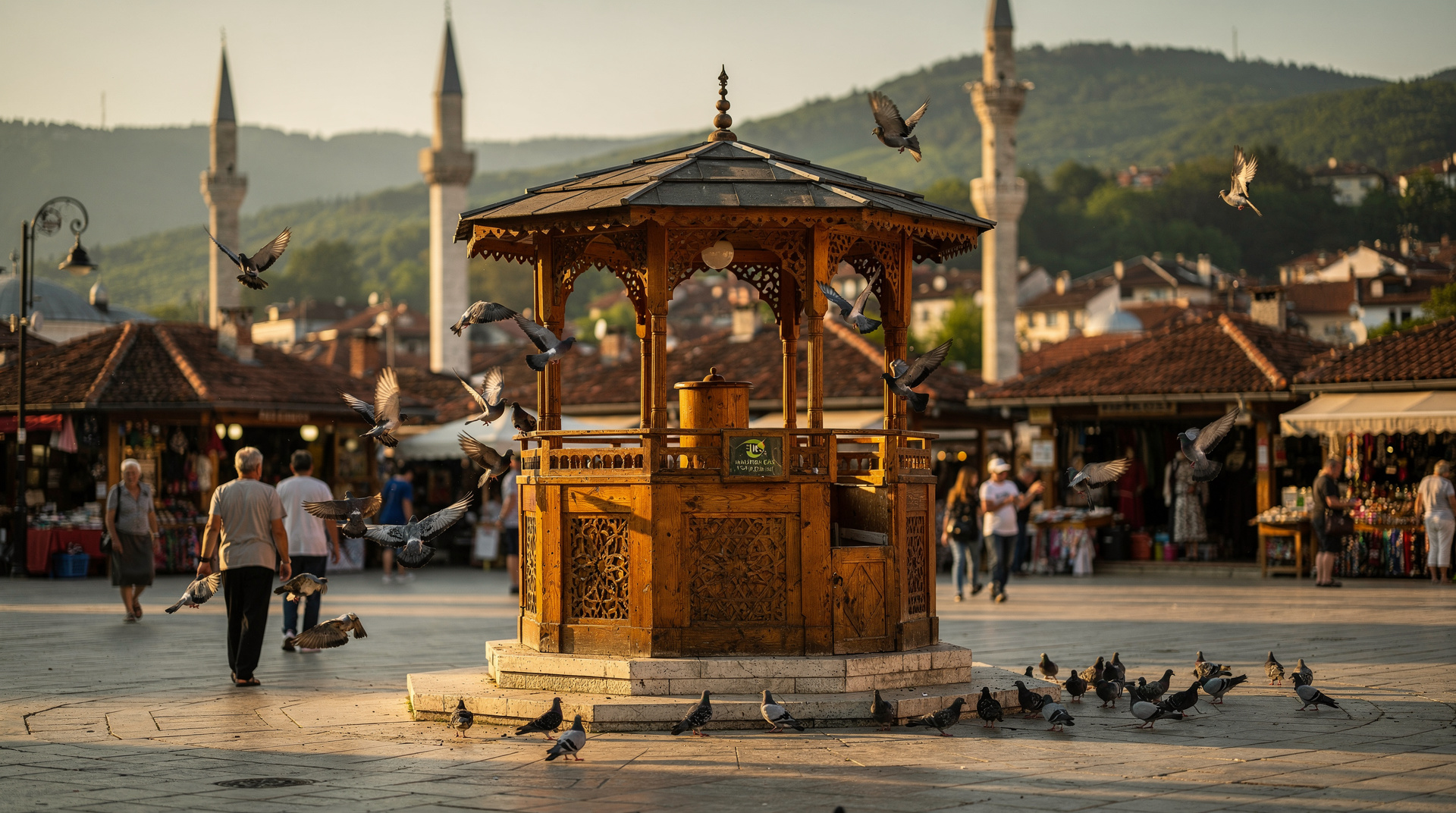
Sarajevo: Free Walking Tour
How much does Bosnia cost per day?
Budget travellers can manage comfortably on 40–55 EUR/day (78–107 BAM): hostel or budget guesthouse, local restaurants, public transport and most museum entries. Mid-range travellers spend 70–110 EUR/day for private rooms or small hotels, restaurant meals and organised tours.
Bosnia is one of the best-value travel destinations in Europe — full stop. Cities that rival Dubrovnik and Prague in heritage and atmosphere cost half the price to sleep, eat and move around in. If you are travelling the Balkans on a budget, Bosnia rewards you disproportionately for the money you spend.
Here are the real numbers, based on 2025–2026 prices.
| At a glance | |
|---|---|
| Currency | Convertible Mark (BAM/KM), fixed at 1 EUR = 1.95583 BAM — not the euro |
| Budget tier | Around 40-55 EUR/day for hostel/guesthouse + local food + public transport |
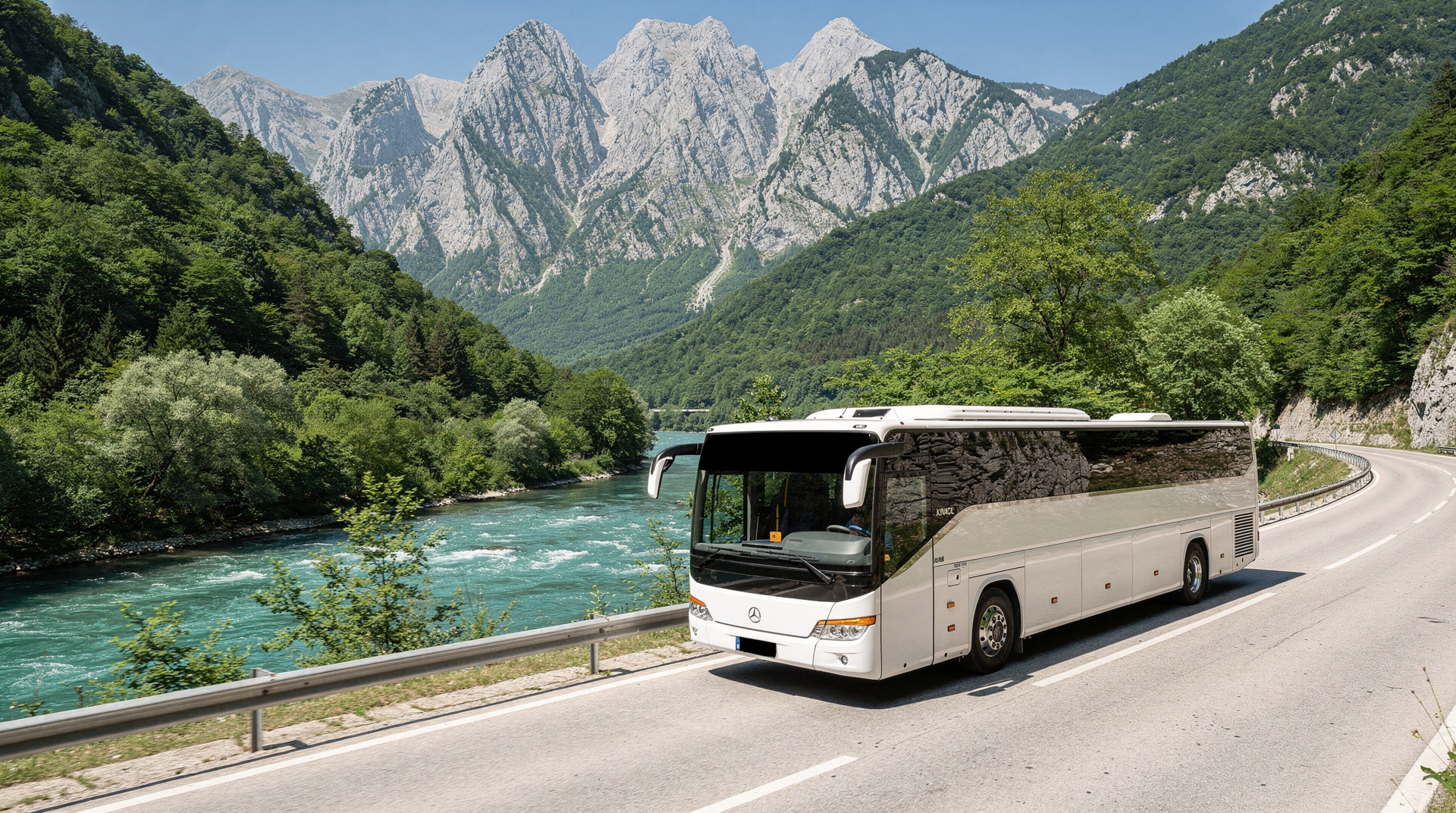
| Cheapest way around | Intercity buses (see the buses in Bosnia guide) |
| Cash vs card | Keep 50-100 BAM cash for smaller guesthouses, markets and village restaurants |
| How long to budget | 5-7 days covers Sarajevo, Mostar and a Herzegovina day trip without rushing |
The currency — BAM at a glance
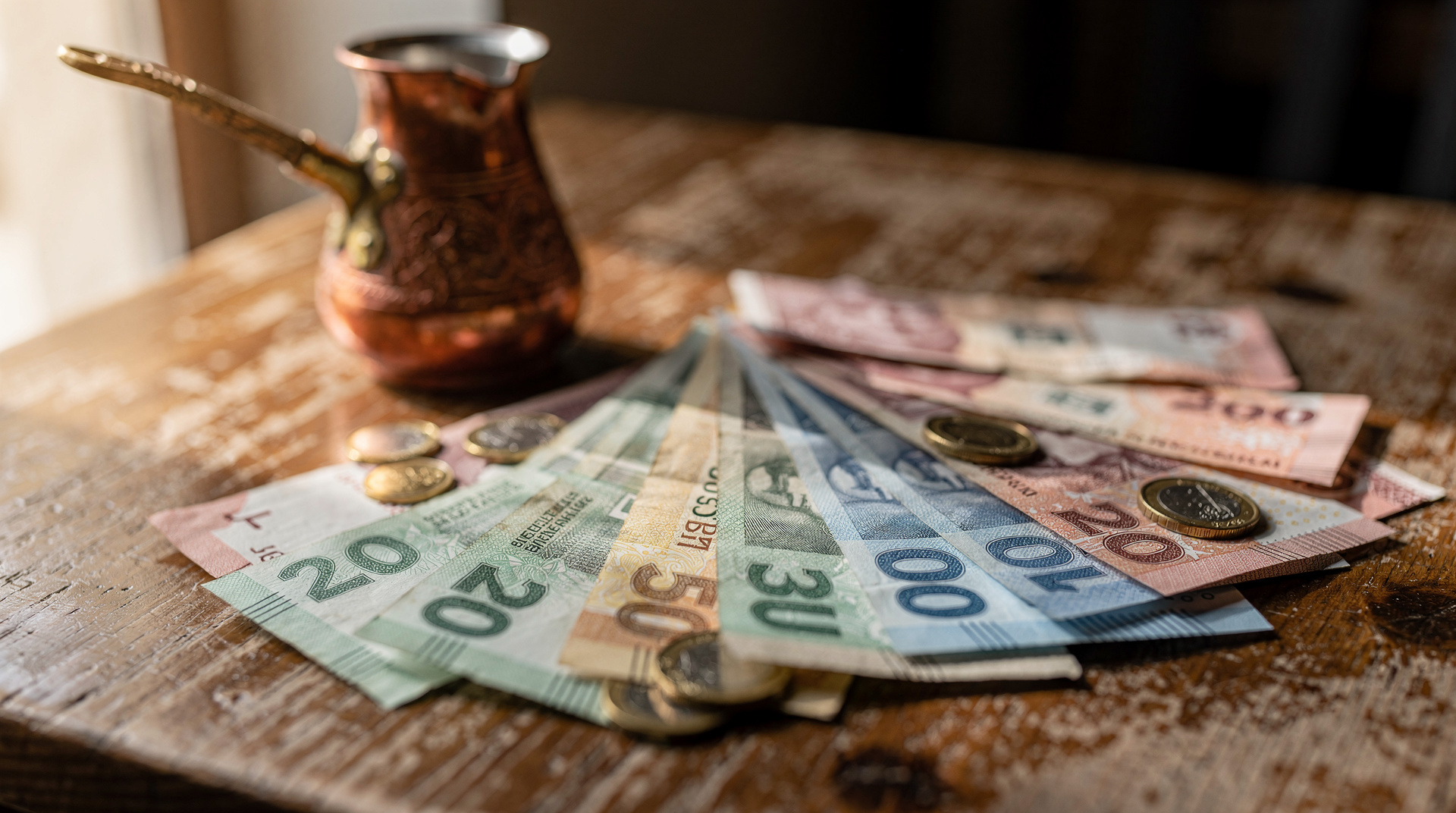
Bosnia uses the Bosnian Convertible Mark (BAM, also written KM). The key fact: 1 EUR = 1.95583 BAM, a rate that has been fixed since 1995 and is not floating. This makes conversion simple: roughly 2 BAM to 1 EUR.
Euros are sometimes accepted in tourist restaurants and hotels in Mostar and Medjugorje, but typically at 1:2 or worse — you lose about 2–3 percent. Always pay in BAM from an ATM withdrawal. See the currency guide for full ATM and card details.
Budget tiers
Budget traveller: 40–55 EUR/day (78–107 BAM)
This tier covers:
- Dormitory bed in a well-rated Sarajevo hostel: 20–30 BAM/night
- Breakfast at a pekara (bakery): burek + juice, 5–7 BAM
- Lunch at a local restaurant: ćevapi or pita + drink, 18–25 BAM
- Museum entry or two: 10–20 BAM
- Tram or bus transport: 3–8 BAM/day
- Coffee at a kafana: 2–3 BAM
- Dinner at a mid-budget restaurant: 25–35 BAM
This is entirely comfortable for sightseeing in Sarajevo. Adding a guided day tour (35–50 EUR) pushes the budget tier up by 15–25 EUR for that day.
Mid-range traveller: 70–110 EUR/day (137–215 BAM)
- Private room in a guesthouse or boutique hotel: 80–140 BAM/night
- Café breakfast: 15–20 BAM
- Lunch at a sit-down restaurant: 30–40 BAM
- Day tour or guided activity: 40–70 EUR (one or two per stay)
- Dinner with wine: 45–70 BAM
At this level you eat well (beyond ćevapi — proper restaurant meals with local wine), sleep comfortably, and can afford a couple of organised tours.
Comfort traveller: 120–200 EUR/day
- Boutique hotel room: 140–250 BAM/night
- Private guided tours and transfers
- Fine dining options in Sarajevo (Inat Kuća, Park Princeva, Dveri): 80–130 BAM for two
- Private car hire for flexibility
Accommodation prices
Sarajevo:
- Hostel dorm: 20–35 BAM (10–18 EUR) per night
- Budget private room/guesthouse: 50–80 BAM (26–41 EUR)
- Mid-range hotel: 100–160 BAM (51–82 EUR)
- Boutique hotel: 160–280 BAM (82–143 EUR)
- High-end (Hotel Europe, Holiday Inn Sarajevo): 200–400 BAM (102–204 EUR)
Mostar:
- Hostel dorm: 20–30 BAM (10–15 EUR)
- Guesthouse near old bridge: 70–130 BAM (36–66 EUR)
- Mid-range hotel: 120–200 BAM (61–102 EUR)
Herzegovina (Blagaj, Trebinje): Generally less supply, slightly higher prices for equivalent quality. Private rooms in Trebinje from 60–90 BAM.
The Sarajevo where-to-stay guide and Mostar where-to-stay guide give neighbourhood recommendations for each tier.
Food and drink — what things cost
The cheap way to eat:
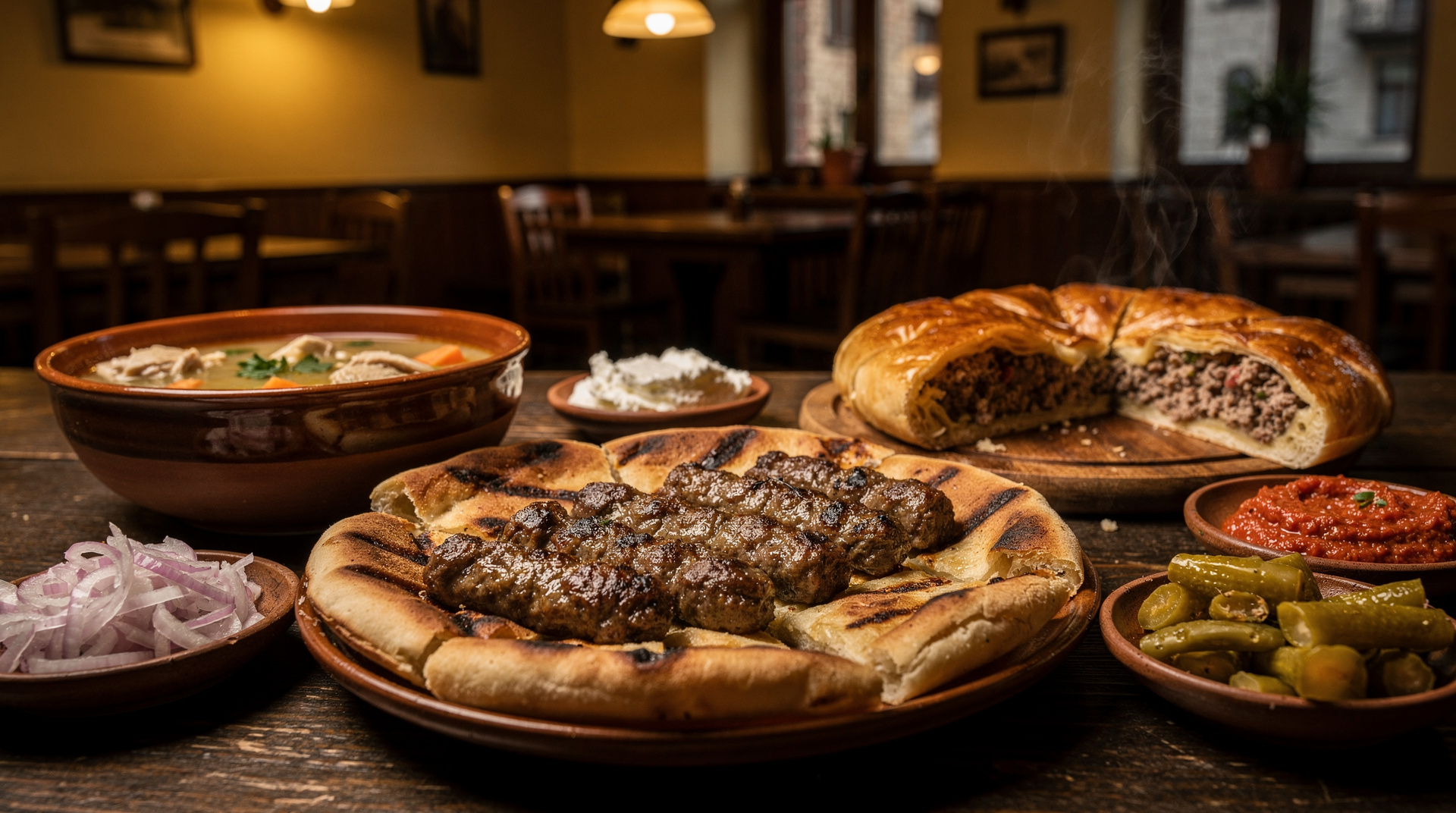
- Burek (meat pastry, ~220g): 3–4 BAM (1.50–2 EUR) — one of Europe’s greatest cheap breakfasts
- Bosnian coffee (strong, served with sugar and Turkish delight): 2–3 BAM
- Ćevapi (grilled minced meat, served 5 or 10 per portion with lepinja bread): 8–14 BAM
- Bosanski lonac (slow-cooked stew, a restaurant staple): 18–25 BAM
- Local wine (glass): 5–8 BAM in a restaurant
At restaurants:
- Starter: 8–15 BAM
- Main course: 18–35 BAM
- Local beer (0.5L): 4–6 BAM
- Bottle of Herzegovinian Žilavka white wine: 20–40 BAM in a restaurant
Tip: Food markets in Sarajevo (the market at Markale, the covered market near the bazaar) offer cheap, fresh produce if you have a kitchen. The pekara (bakery) culture means quality pastry and bread is available everywhere at very low cost.
Getting around — transport costs
Within Sarajevo:
- Single tram/trolleybus ticket: 2.20 BAM (1.12 EUR)
- Day pass: 5.50 BAM
- Bolt taxi (city centre to Baščaršija): 5–8 BAM
Intercity buses:
- Sarajevo → Mostar: 20–25 BAM (10–13 EUR)
- Sarajevo → Jajce: 18–22 BAM
- Sarajevo → Bihać: 35–42 BAM
Rental car: 50–90 EUR/day (cheapest category). For a 7-day rental the total (including insurance) might be 300–450 EUR — shared between two or three people, this is comparable to taking buses and tours.
Tours and activities
Sarajevo’s free walking tour is tip-based (the guide is paid by what you give at the end — 10–15 EUR per person is standard). It is one of the best introductions to Sarajevo and genuinely free to join.
Other typical costs:
- War history walking tour Sarajevo: 20–35 EUR per person
- Tunnel of Hope entry: 20 BAM (10 EUR)
- Full-day day trip (Mostar + Herzegovina from Sarajevo): 55–80 EUR
- White-water rafting half-day: 40–60 EUR
- Bosnia cycling tour: 35–50 EUR
For multi-day tours, a 3-day Sarajevo–Mostar–Jajce private tour starts at around 250–350 EUR per person. If you would rather have a private three-day route linking Sarajevo, Mostar and Jajce arranged for you, it is the main splurge worth pricing against doing the same legs by bus.
Entrance fees — main sites
| Site | Cost |
|---|---|
| Tunnel of Hope (Sarajevo) | 20 BAM (10 EUR) |
| War Childhood Museum (Sarajevo) | 10 BAM |
| National Museum Sarajevo | 10 BAM |
| Old Orthodox Church Sarajevo | 3 BAM |
| Gazi Husrev-beg Mosque | free / small donation |
| Kravice Falls | 20 BAM |
| Blagaj Tekija | 3 BAM |
| Mostar old bridge area | free (some viewpoint terraces charge) |
| Tito’s Bunker Konjic | 40 BAM (20 EUR) per person |
| National Park Sutjeska | 5–10 BAM vehicle fee |
Saving money — practical tips
Eat breakfast at a pekara. A burek and a glass of milk costs 5–6 BAM. The best burek spots in Sarajevo include Buregdžinica Bosna (near Baščaršija) and neighbourhood bakeries — look for the queue.
Avoid hotel breakfasts. Marked up to 3–5x the kafana price.
Use the tram. Sarajevo’s trams cover the main tourist corridor efficiently for 2.20 BAM per journey.
Book tours in advance. Peak-season (July–August) prices for guided tours rise by 10–20 percent. Book May or September for best prices.
Stay in guesthouses over chain hotels. Bosnia’s family-run pansions consistently offer better value, local knowledge and breakfast quality than chain hotels at the same price point.
Shop at the market. Produce, local cheeses, wine and rakija (grappa) at market prices are 30–50 percent cheaper than tourist-facing shops.
Where the budget really goes
Most travellers expect food to be the big expense and are surprised to find it is not. Bosnian eating is cheap and filling, so the lines that move your daily total are accommodation, intercity transport and paid activities. Decide on those three first and the rest sorts itself out. A traveller who sleeps in dorms, takes buses and picks one or two paid experiences can eat very well without ever thinking about the menu prices. If you want to know what you are ordering, the Bosnian food guide, the burek and pita guide and the ćevapi in Sarajevo guide explain the dishes that make up the cheapest, most satisfying meals.
Timing matters as much as the choices you make. Shoulder months bring lower accommodation pressure and fewer crowds at the headline sights, which is why the best time to visit Bosnia is worth reading before you fix dates. Winter can be cheaper still for city stays, and the Sarajevo in winter guide shows what the city offers when the mountains turn white, though some excursions run less often in the cold months.
Free and low-cost things to do
Some of the best experiences in Bosnia cost almost nothing. Wandering the old town, sitting over a slow coffee and watching the city go by is a real activity here, and the Baščaršija guide shows how much there is to see on foot. The Sarajevo roses and memorials guide follows a trail of quiet landmarks that you can walk at your own pace, and the Vrelo Bosne guide covers a green escape on the edge of the capital that suits a low-spend afternoon.
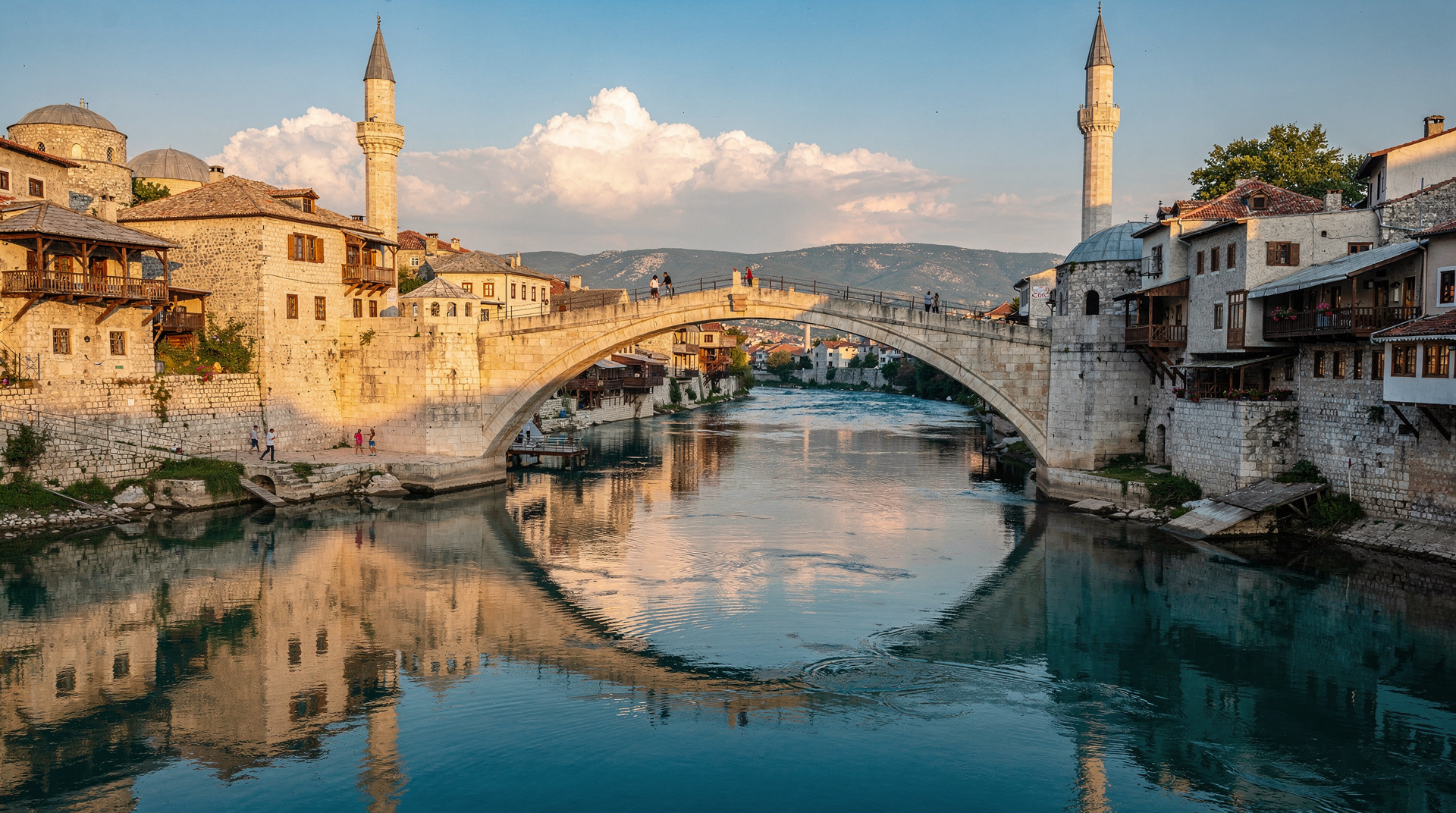
In Mostar the Stari Most guide explains the bridge and its surroundings, and the old town can be enjoyed simply by walking it early in the morning before the day-trip groups arrive. For a gentler pace outside the cities, the Počitelj Ottoman village guide and the Blagaj Tekke guide describe places that reward a slow visit without a heavy outlay. Check the entrance table above before you go so that small fees never come as a surprise.
Combining a budget trip with the wider region
Bosnia is often the cheapest stretch of a longer Balkan journey, so plan the expensive parts around it rather than the other way round. If you are arriving from the coast, the Mostar from Split guide and the Mostar from Dubrovnik guide compare the options. If you are already on the coast and want a single paid outing without the hassle of buses and border queues, a guided day trip from Dubrovnik to Mostar is the simplest way to do it. The Bosnia vs Croatia guide puts the two countries side by side for travellers deciding where to spend more nights. For a ready-made plan that favours buses over cars, follow the Bosnia by public transport itinerary or the 7-day Bosnia itinerary, and keep the Sarajevo to Mostar transport guide open when you book the one leg most visitors take.
A last habit worth building: keep a simple note of what you spend each day in BAM. Because the exchange rate is fixed, it is easy to compare against the tiers above and adjust the next day without stress.
How many days do you need on a budget trip
A budget-friendly week works well: 3-4 nights in Sarajevo (old town, war history sites, a free walking tour), 2 nights in Mostar with a Blagaj/Kravice day trip, and travel by bus rather than rental car to keep costs down. The how many days in Bosnia guide breaks down shorter and longer versions of this route, and the driving in Bosnia guide is worth reading before deciding whether a rental car is worth the extra cost for your group size.
Avoiding scams and overpaying
Bosnia is a genuinely safe, low-scam destination, but a few situations catch budget travellers out: unmetered taxis quoting inflated fares from Sarajevo airport, bridge divers at Stari Most who expect payment before jumping, and tourist-menu pricing at restaurants directly on Baščaršija’s main strip versus a block away. The scams to avoid guide and Sarajevo airport guide cover the specifics, including reliable airport transfer options and typical fair-price ranges.
Frequently asked questions about budget travel in Bosnia
Is Bosnia good for backpacker travel?
Excellent. Bosnia has a growing hostel scene (Sarajevo especially), cheap intercity buses, tip-based walking tours, and incredible value for food. It sits at the sweet spot of developed enough to be comfortable, affordable enough to be accessible on a tight budget.
Can I use Revolut or Wise in Bosnia?
Yes. Both Revolut and Wise work well in Bosnia — you load euros and spend in BAM at the market rate (approximately 1:1.956). Avoid dynamic currency conversion (always pay in BAM). ATM fees apply from some Bosnian banks; check your card’s policy.
How much cash do I need to carry?
Keep 50–100 BAM in cash at all times. While Sarajevo and Mostar now have widespread card acceptance at restaurants and hotels, smaller guesthouses, village restaurants, market stalls and smaller attractions are cash-only. ATMs are available in all cities and main towns.
Is it cheaper to travel Bosnia by bus or rental car?
For a solo or two-person budget trip, buses are usually cheaper — a Sarajevo-Mostar ticket runs around 20-25 BAM versus 50-90 EUR/day for even the cheapest rental category. A car starts paying off once you’re three or more people splitting the cost, or if you want to reach villages like Lukomir or Počitelj that have limited bus service.
Top experiences
Bookable activities with verified prices and instant confirmation on GetYourGuide.