Dubrovnik to Sarajevo route guide
From Dubrovnik: 1-Way Tour to Sarajevo via Mostar and Konjic
What is the best way to get from Dubrovnik to Sarajevo overland?
The Dubrovnik to Sarajevo overland route is 275-300 km and takes 4.5-5.5 hours by car including the Neum corridor border crossings. The best approach is a one-way journey with stops at Mostar (2h30 from Dubrovnik) and optionally Konjic. Bus services run daily but take 5-6 hours with connections. A guided one-way tour that serves as transport AND sightseeing is the smartest option.
The overland journey from Dubrovnik to Sarajevo is one of the great road trips in the Balkans — not despite the complexity but partly because of it. You pass through three distinct cultural landscapes in a single day: the Croatian walled city on its peninsula of limestone, the Ottoman heartland of Herzegovina with its bridges and minarets, and the multi-layered capital of Bosnia with its Austrian boulevards, Ottoman bazaar and war-era bullet holes. If you are moving between the two cities and have the flexibility to travel by land, this is not a journey to rush.
| Where | Dubrovnik to Sarajevo via the Neum corridor, Mostar and Konjic |
| Cost | Bus 30-50 BAM; one-way sightseeing tour roughly 80-150 EUR per person |
| Time needed | 4.5 hours driving only; realistically 8-10 hours with the Neum crossings and a Mostar stop |
| Getting there | Self-drive, direct bus, or a one-way guided transfer-plus-tour |
| Best time | Spring/autumn for lighter border queues; avoid Saturday/Sunday afternoons in July-August |
The route
Distance and timing
Dubrovnik to Sarajevo is approximately 275-300 km depending on your precise route. Direct driving time without stops is about 4.5 hours. Adding the Neum corridor border crossings (15-45 minutes each in summer) and a meaningful stop in Mostar (2-3 hours), the realistic total for the full journey is 8-10 hours — a full day from morning to evening.
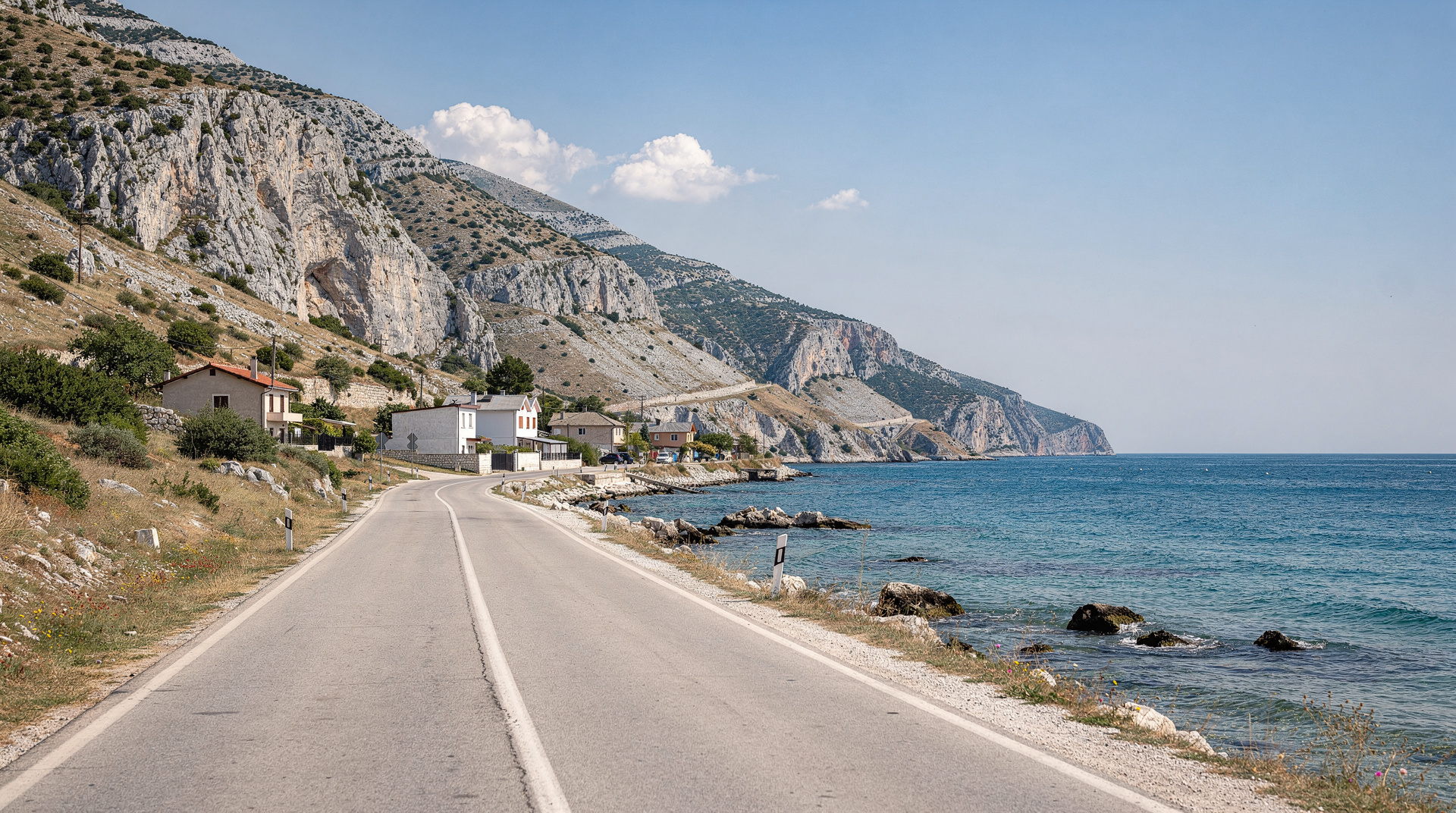
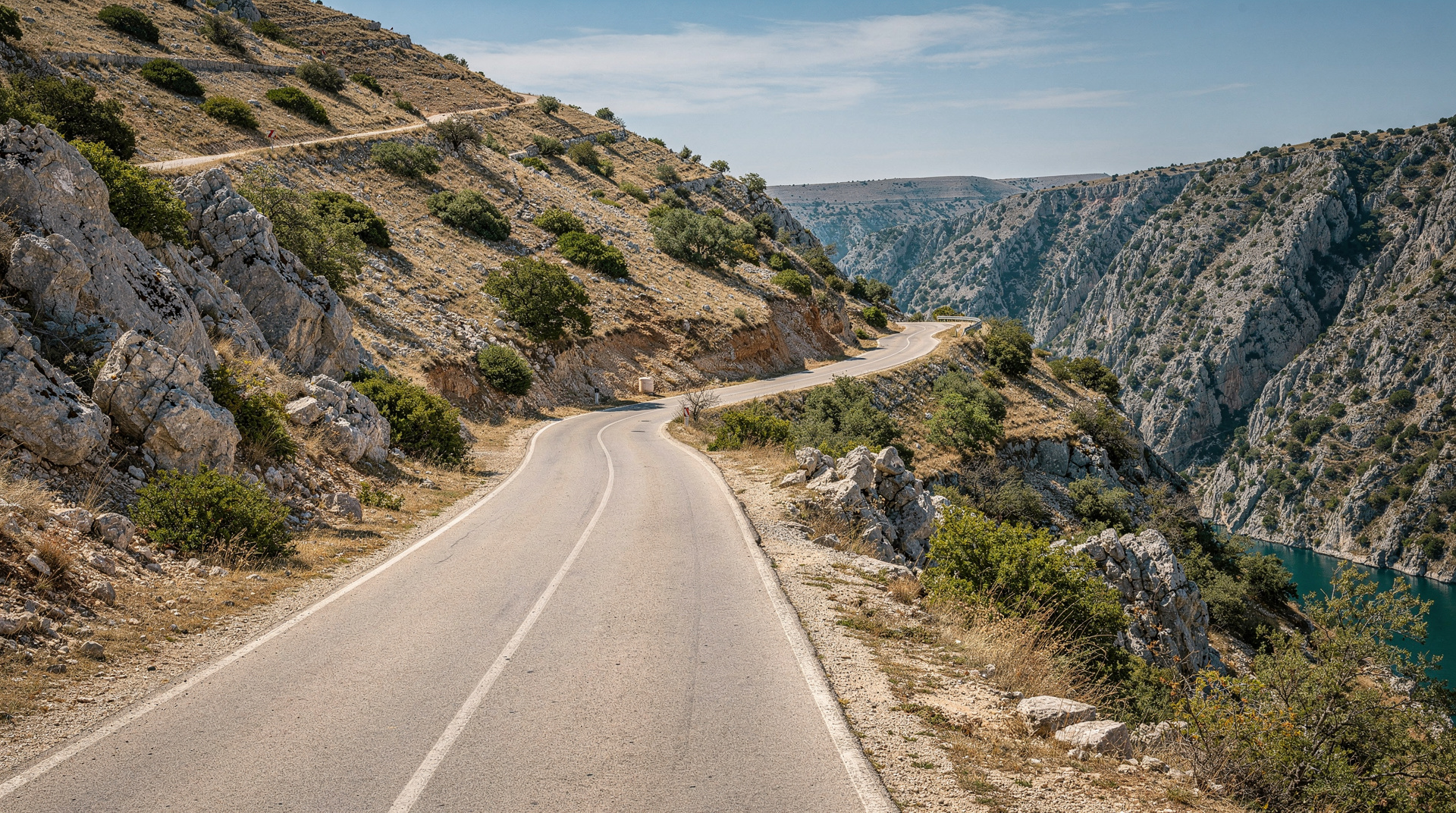
The road from Dubrovnik heads north along the Croatian coast, passes through the Neum corridor (see below), continues through Ploče, turns inland toward Čapljina and Mostar, then follows the Neretva valley north through Jablanica and Konjic before climbing to the Sarajevo plateau.
The Neum corridor
This is the element that surprises most travellers planning the route. Neum is the only Bosnian town on the Adriatic coast — a 9 km strip of coastline that physically separates the Croatian mainland from the Dubrovnik peninsula. As a result, the main coastal road north of Dubrovnik passes through two Croatian-Bosnian border crossings:
- Klek crossing — entering Bosnia from the north (coming from Dubrovnik direction)
- Zaton Doli crossing — re-entering Croatia after Neum
All passengers must present a valid passport or EU national ID card at each crossing. Vehicle registration documents and insurance (Green Card) are checked for cars. In July and August, queues at the Neum crossing can reach 30-60 minutes on peak days (typically Saturdays and Sunday afternoons). Allow for this when planning your day.
Pelješac Bridge option: Since 2022, a bridge connecting the Pelješac peninsula allows traffic to bypass the Neum corridor entirely via the Pelješac route. This adds 30-40 km but avoids Bosnia. If you are doing the journey for pure transport reasons and want to minimise complications, the Pelješac bridge route is worth considering. If you want to see Neum or simply take the most direct route, use the Neum corridor.
See the Neum corridor guide for comprehensive crossing advice.
Key stops on the route
Mostar — the essential stop
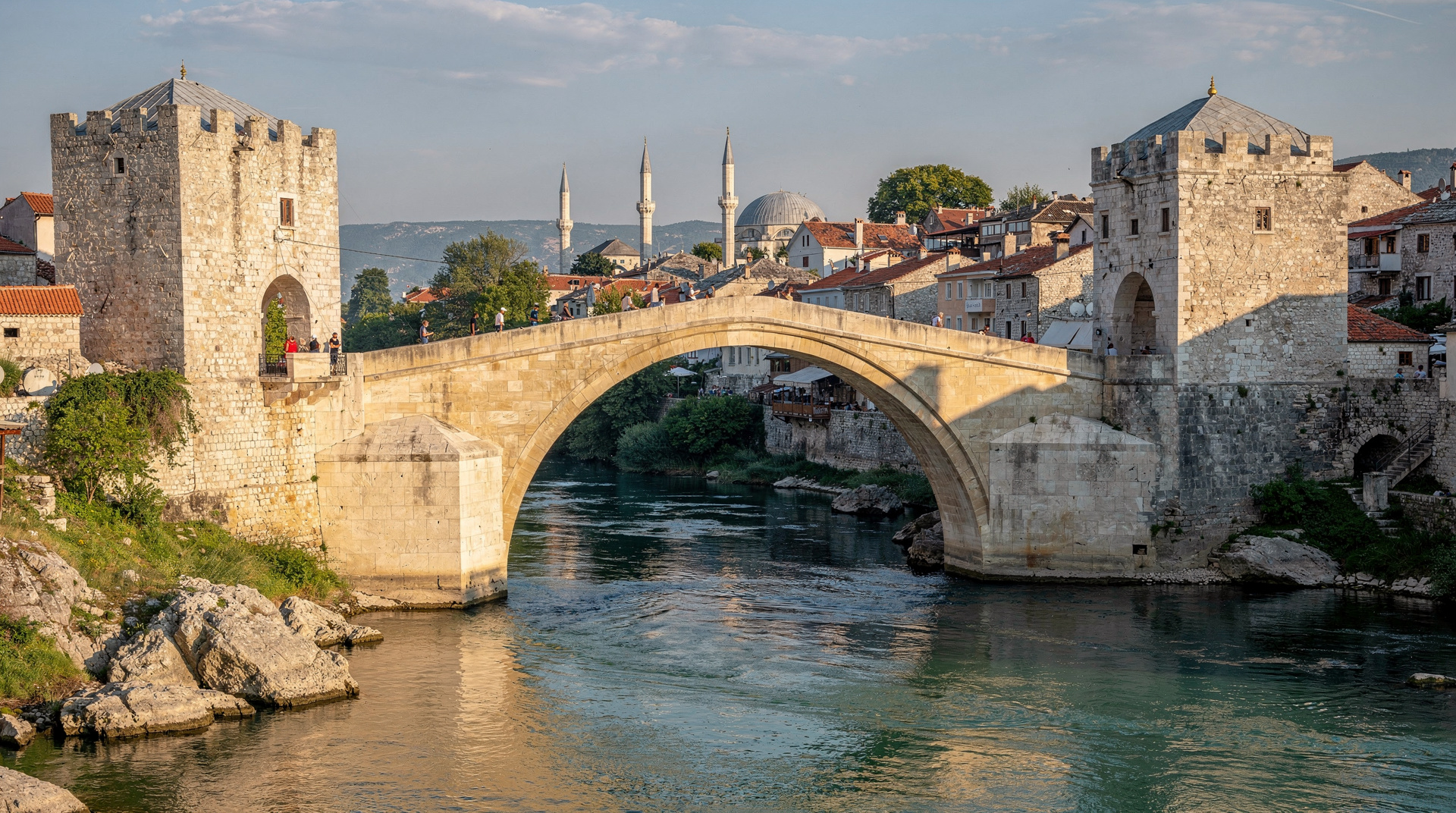
Mostar is the logical midpoint of the Dubrovnik-Sarajevo journey — approximately 2h30 from Dubrovnik and 2h30 from Sarajevo. Stopping for 2-3 hours in Mostar transforms a transit journey into a memorable day. The Stari Most bridge is at its most beautiful in the late morning light, before the midday tourist peak.
If you stop only briefly in Mostar, prioritise: crossing Stari Most (15 min), walking the Kujundžiluk market lane (30 min), and having coffee or lunch at a waterside konoba (45 min). For a fuller visit, add Blagaj or Počitelj.
See the Mostar from Dubrovnik guide for comprehensive Mostar day-trip planning, and the Herzegovina day trip guide for the Blagaj-Počitelj-Kravice circuit.
Konjic — the hidden gem
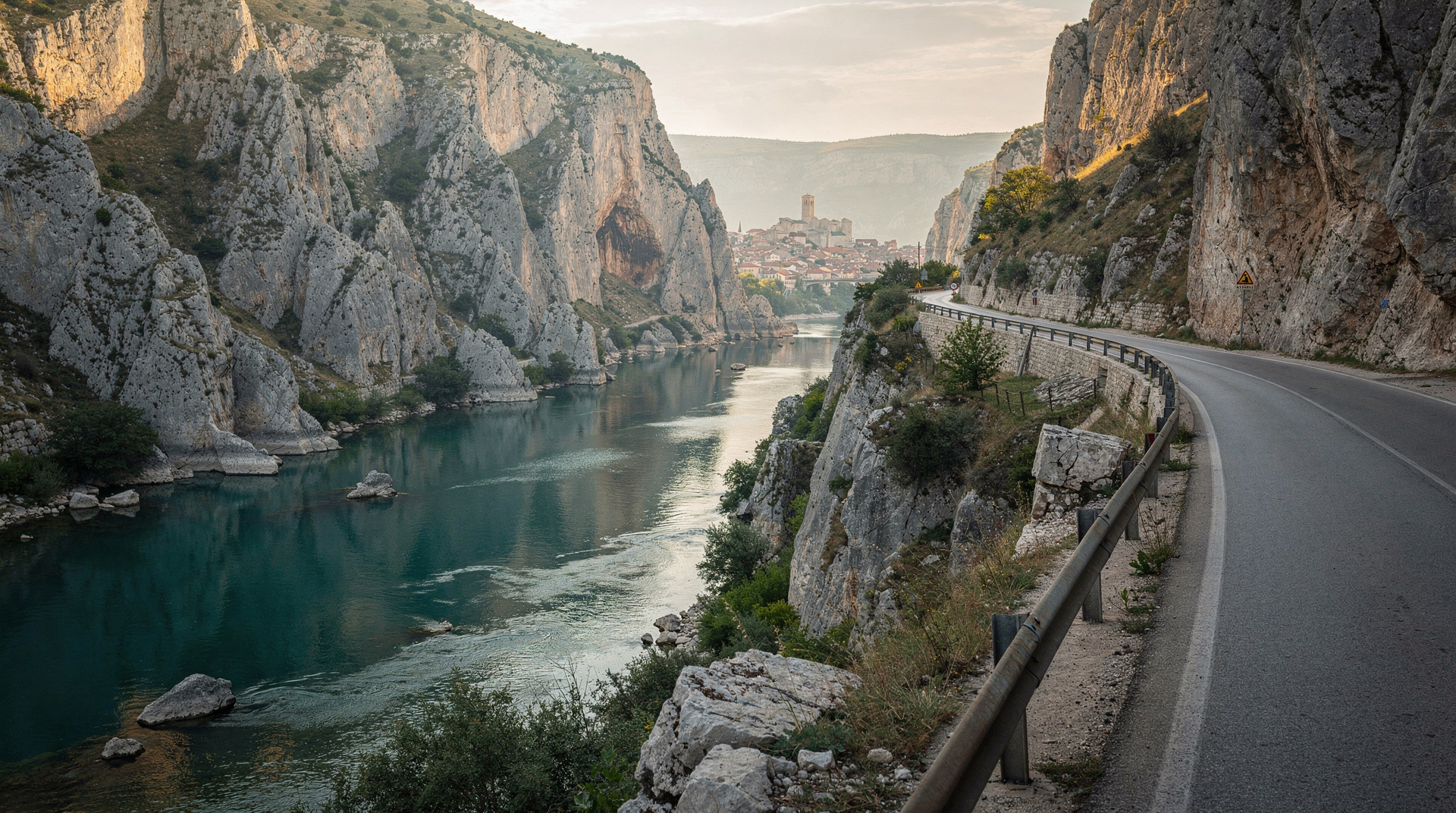
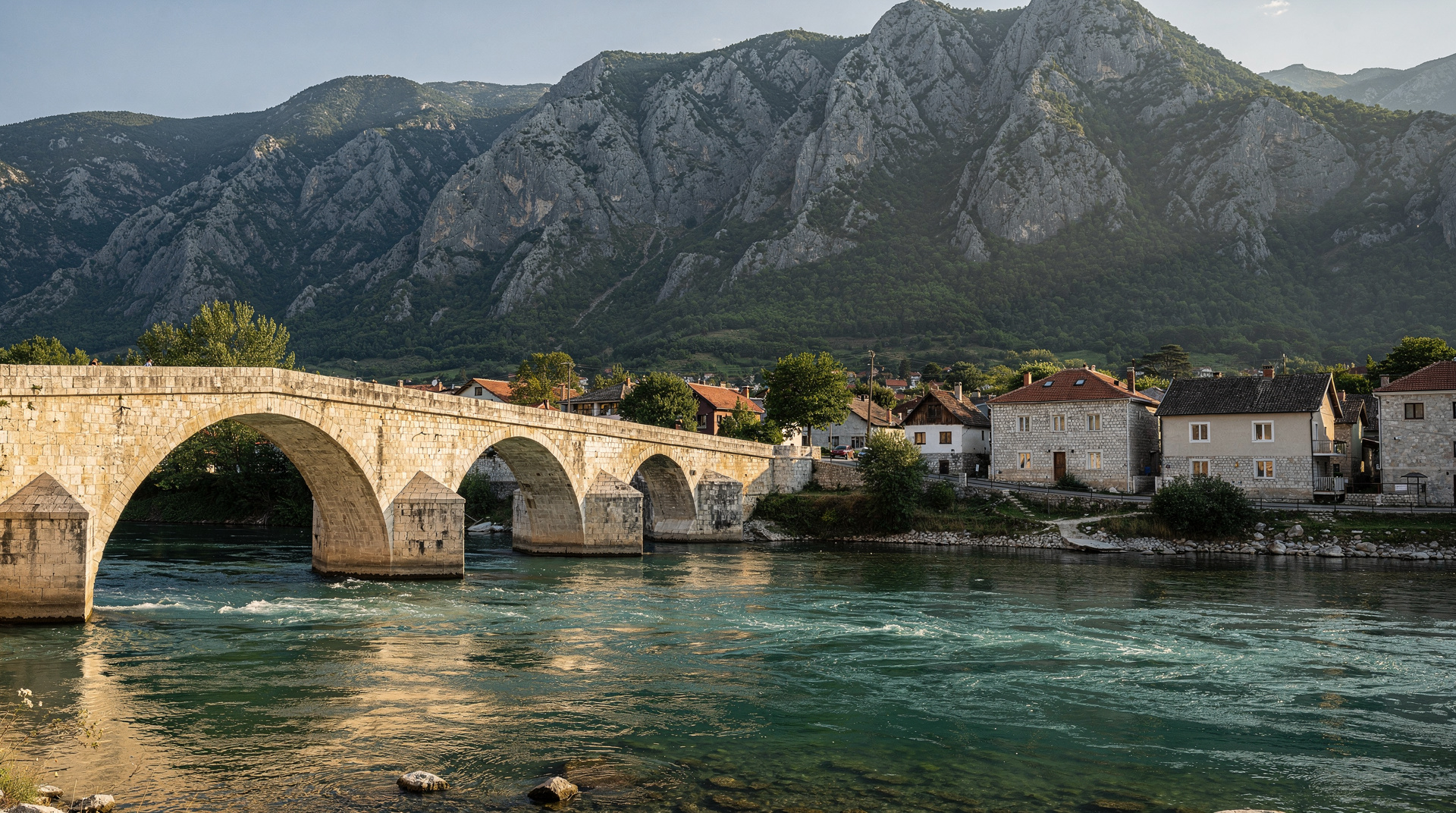
One hour north of Mostar, the small town of Konjic sits where the Neretva narrows into its dramatic canyon. It has a beautiful Ottoman bridge, a woodcarving tradition, and the access point to ARK D-0 — Tito’s secret Cold War nuclear bunker. If you want to add a genuinely extraordinary stop to the Dubrovnik-Sarajevo journey, Konjic is it.
The bunker requires advance booking and a 2.5-hour guided tour, so it is only realistic if you leave Dubrovnik early (06:30-07:00). See the Konjic day trip guide and Tito’s Bunker guide for details.
One-way tour options
The smartest way to travel from Dubrovnik to Sarajevo is a one-way sightseeing transfer — a guided service that functions as both transport and tour, dropping you in Sarajevo in the evening having covered the Herzegovina highlights en route.
From Dubrovnik: 1-way tour to Sarajevo via Mostar and KonjicFor a route that focuses on the Ottoman heritage sites of Blagaj and Počitelj:
Dubrovnik to Sarajevo: 1-way Mostar, Blagaj and Počitelj tourThese one-way tours typically depart at 07:00-08:00 from Dubrovnik and arrive in Sarajevo at 19:00-21:00, combining transport with 6-8 hours of sightseeing at the Herzegovina stops.
Bus options
Direct bus Dubrovnik to Sarajevo
Several bus companies operate daily services between Dubrovnik and Sarajevo. The journey takes approximately 5-6 hours and costs 30-50 BAM (15-25 EUR). Buses depart from Dubrovnik’s bus station (Autobusni Kolodvor, Gruz) at various times; check current schedules at the station or online.
The bus passes through the Neum corridor — passengers have their passports checked at the border crossings without leaving the bus in most cases. The bus makes brief stops in Neum and in Mostar; these are not sightseeing stops but allow you to stretch your legs.
Practical information
| Detail | Information |
|---|---|
| Total distance | 275-300 km |
| Drive time (no stops) | 4.5 hours |
| With Neum queues + Mostar stop | 8-10 hours |
| Border crossings | 2 (Neum corridor) + 1 entering Bosnia |
| Documents | Passport or EU ID card |
| Bus fare | 30-50 BAM each way |
| One-way tour cost | 80-150 EUR per person |
| Currency in Bosnia | BAM (1 EUR = 1.956 BAM) |
The split to Sarajevo route guide covers the comparable journey from Split, which has a slightly different routing and only one border crossing. For the reverse journey, see the Sarajevo to Dubrovnik transport guide.
Where to break the journey overnight
If a single 8-10 hour day feels rushed, splitting the route over two days is worth considering. Staying overnight in Mostar lets you see Stari Most lit up in the evening and again in the early morning light before the day-trip crowds arrive, then continue to Sarajevo the next day with time for Konjic or the Tito’s Bunker guide en route. This also removes the pressure of an early Dubrovnik departure if you want to include the ARK D-0 bunker tour, which requires advance booking.
Currency along the route
Croatia uses the euro; Bosnia uses the convertible mark (BAM), not the euro. Euros are informally accepted in some Neum and Mostar tourist businesses, but expect change in BAM and BAM-only pricing once you are further from the border. Withdraw BAM from an ATM in Mostar or Sarajevo rather than relying on euros for the whole trip — see the Bosnia money and currency guide.
Choosing between driving, the bus and a tour
The three ways of making this journey suit three different kinds of traveller, and the right choice depends less on price than on how you want to spend the day.
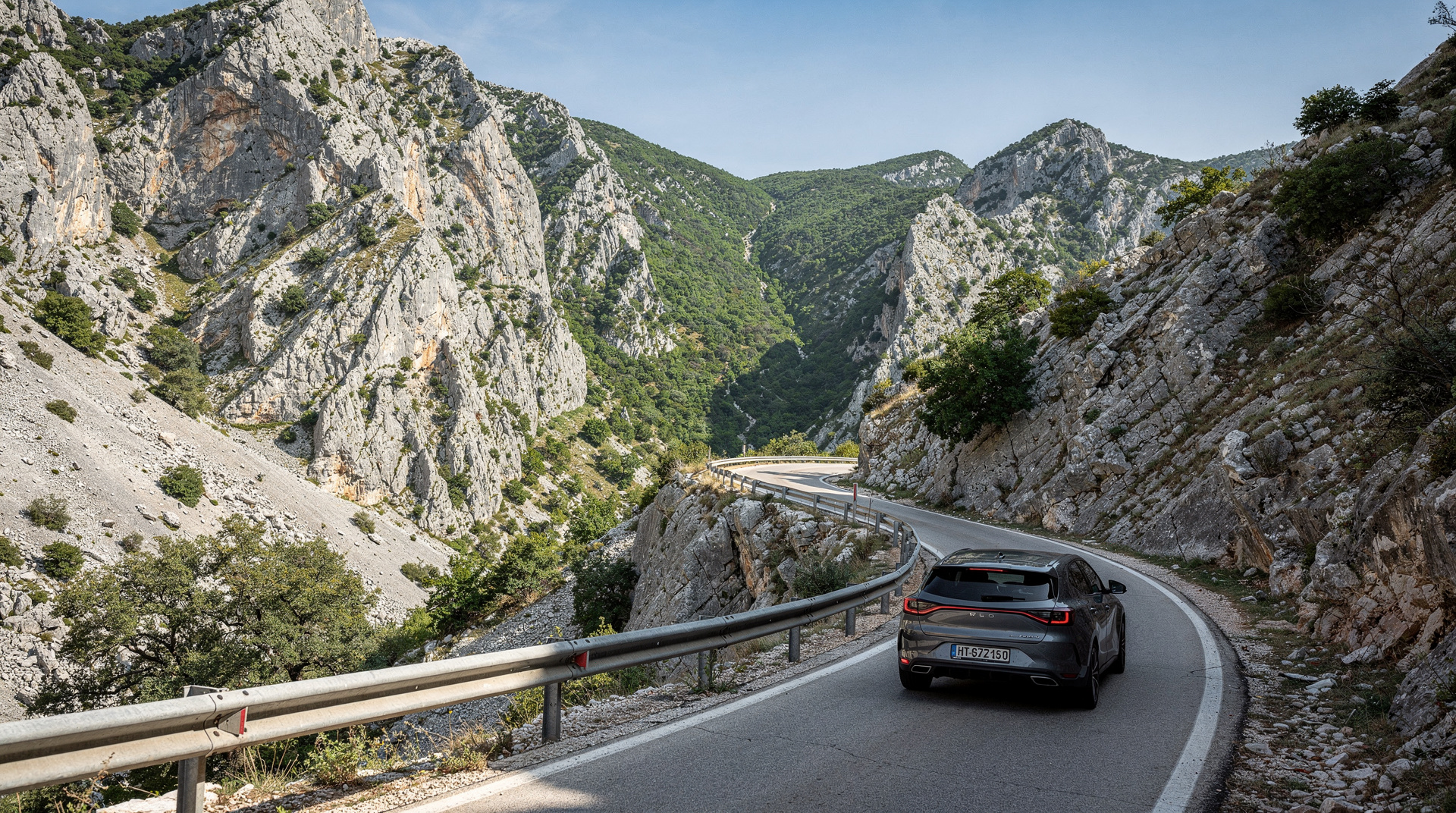
Driving yourself gives you control over every stop. You can linger in Mostar when the light is good, skip a village that feels too busy, or detour to a waterfall on a whim. The trade-off is the paperwork and the concentration: a cross-border drive means documents for the car, a rental agreement that allows travel into Bosnia, and mountain roads that are slower than the map suggests. If you are renting, read the renting a car in Bosnia guide and the driving in Bosnia guide before you book, and the driving from Croatia to Bosnia guide for the border-specific details.
Taking the bus is the low-effort option. You sit, you read, you watch the landscape change, and someone else handles the driving. The cost is flexibility: you cannot choose where to stop, and a bus is not a sightseeing day. Travellers who want to see Mostar properly often take the bus to Mostar, stay a night, and continue the next day — the Buses in Bosnia guide explains how the network works, and the Sarajevo to Mostar transport guide covers the second leg in the other direction.
Booking a one-way tour is the compromise most first-time visitors prefer. You hand over the logistics, including the border queues, and the day is built around the places that matter. If your priority is seeing Herzegovina rather than driving through it, this is usually the least stressful way to do it.
A suggested rhythm for the day
Whichever option you choose, the day works best if you think of it in three movements rather than as one long transfer.
The morning is the coast and the border. Leave Dubrovnik early, before the traffic builds, and treat the Neum corridor as a short administrative pause rather than an obstacle. Have every passport within reach, keep the vehicle documents together, and do not wait until the queue is moving to start searching bags. Early crossings tend to be calmer, which is one more reason to start the day without delay.
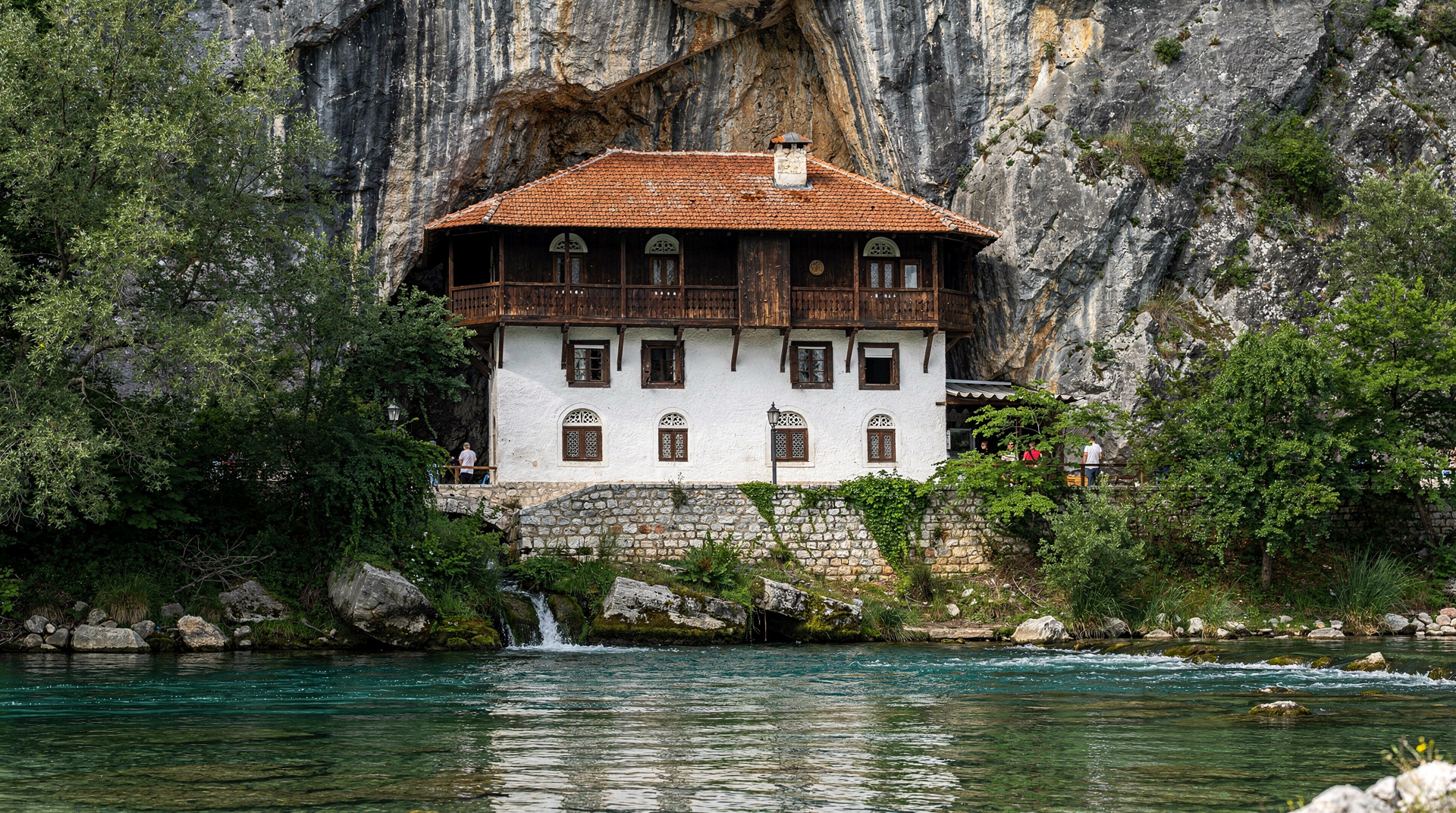
The middle of the day is Herzegovina. This is the heart of the journey. The landscape turns drier and more rugged, the architecture shifts to stone houses and minarets, and the pace slows. Mostar is the natural place for a long break, and the villages around it reward anyone with a little extra time: Blagaj with its riverside setting and Počitelj with its hillside Ottoman fortress town are both close enough to add without wrecking the schedule. If you have only one extra stop in you, choose the one that matches your interests — the Blagaj Tekke guide and the Počitelj guide will help you decide. For nature rather than heritage, the Kravice waterfalls guide is the alternative.
The afternoon is the Neretva valley and the climb to Sarajevo. After Mostar the road follows the river north, and the scenery becomes some of the best of the whole route. Konjic is the sensible place for a final break before the last stretch. Arriving in the capital in the early evening means you can check in, walk to the old bazaar and have a relaxed dinner rather than fighting for a late table.
Where to eat along the way
Food is one of the pleasures of this route, and it is worth planning at least one proper meal rather than relying on petrol-station snacks. Mostar is the obvious place for lunch, and the best restaurants in Mostar guide lists places worth stopping for. If you want to try the regional specialities that appear all along the route — grilled meats, fresh bread, soft cheeses and the layered pies that Bosnians love — the Bosnian food guide explains what to order and the burek and pita guide is useful if you want something quick and local. Once you reach Sarajevo, the best restaurants in Sarajevo guide is a good starting point for the evening.
After you arrive in Sarajevo
The end of a long travel day is not the moment to start an ambitious itinerary. Settle in first. The where to stay in Sarajevo guide will help you choose a base close to the old town, which makes the first evening easy on foot. From there, the Sarajevo destination page gives an overview of the city, and the Baščaršija guide is the right first walk after dark, when the bazaar lanes are atmospheric and the day’s heat has gone.
If you plan to stay a few days, the Sarajevo 4-day deep dive and the Sarajevo and Mostar in 3 days itinerary both build on the route described here. Travellers combining coast and interior will also find the Croatia and Bosnia in 2 weeks itinerary useful for fitting this journey into a longer trip, and the Bosnia travel guide gives the wider context.
Practical habits that make the journey smoother
A few small habits make a large difference on a cross-border day. Keep passports and vehicle papers in one easy-to-reach place instead of buried in luggage. Carry a little BAM in cash from the first stop in Bosnia, because small cafés and parking attendants may not take cards. Download offline maps before you leave Dubrovnik, since mobile coverage can be patchy in the valley sections. Fill the tank or charge the car before the mountain stretch rather than hoping to find a convenient station. And allow generous margins: the pleasure of this route comes from arriving relaxed, not from shaving minutes off the clock.
If you are unsure whether to travel in the other direction or to include Split in your plans, the Mostar from Split vs Dubrovnik comparison is a quick read, and the Bosnia from Kotor guide covers the same idea from the south. For the practical side of getting around once you are inside the country, the getting around Bosnia guide is the place to start.
Frequently asked questions about Dubrovnik to Sarajevo route
How long does it take to drive from Dubrovnik to Sarajevo?
Is there a direct bus from Dubrovnik to Sarajevo?
What stops should I make between Dubrovnik and Sarajevo?
Are there one-way tours from Dubrovnik to Sarajevo?
What is the Neum corridor and how does it affect the Dubrovnik-Sarajevo journey?
Top experiences
Bookable activities with verified prices and instant confirmation on GetYourGuide.