Herzegovina wine guide
Mostar: Afternoon Guided Tour and Wine Tasting
What wines does Herzegovina produce?
Herzegovina grows two indigenous varieties: Žilavka, a crisp white with mineral notes and high acidity, and Blatina, a tannic red with dark fruit character. Both thrive in the rocky Herzegovinian terrain and are produced mainly around Mostar, Čitluk, and Trebinje.
| Where | Čitluk, Čapljina and Ljubuški area, 25-40 minutes from Mostar; Trebinje further south |
| Cost | Tastings typically around 15-30 BAM per person; bottles 12-25 BAM at the winery |
| Time needed | A half-day for one or two wineries; a full day to combine with Kravice or Blagaj |
| Getting there | Rental car recommended (most wineries have no roadside signage); guided afternoon tastings run from Mostar |
| Best time | Year-round for tastings; September for harvest atmosphere, though most cellars need a phone call ahead regardless of season |
Herzegovina is one of Europe’s least-known wine regions, which is partly why it is so rewarding for travellers who make the detour into the vineyards. The region’s indigenous grape varieties — Žilavka and Blatina — have been grown here for centuries in conditions that are genuinely unusual: a harsh, rocky karst landscape baked by Mediterranean sun, with cool nights and almost no topsoil. The wines that result are unlike anything produced elsewhere.
The Herzegovinian terroir
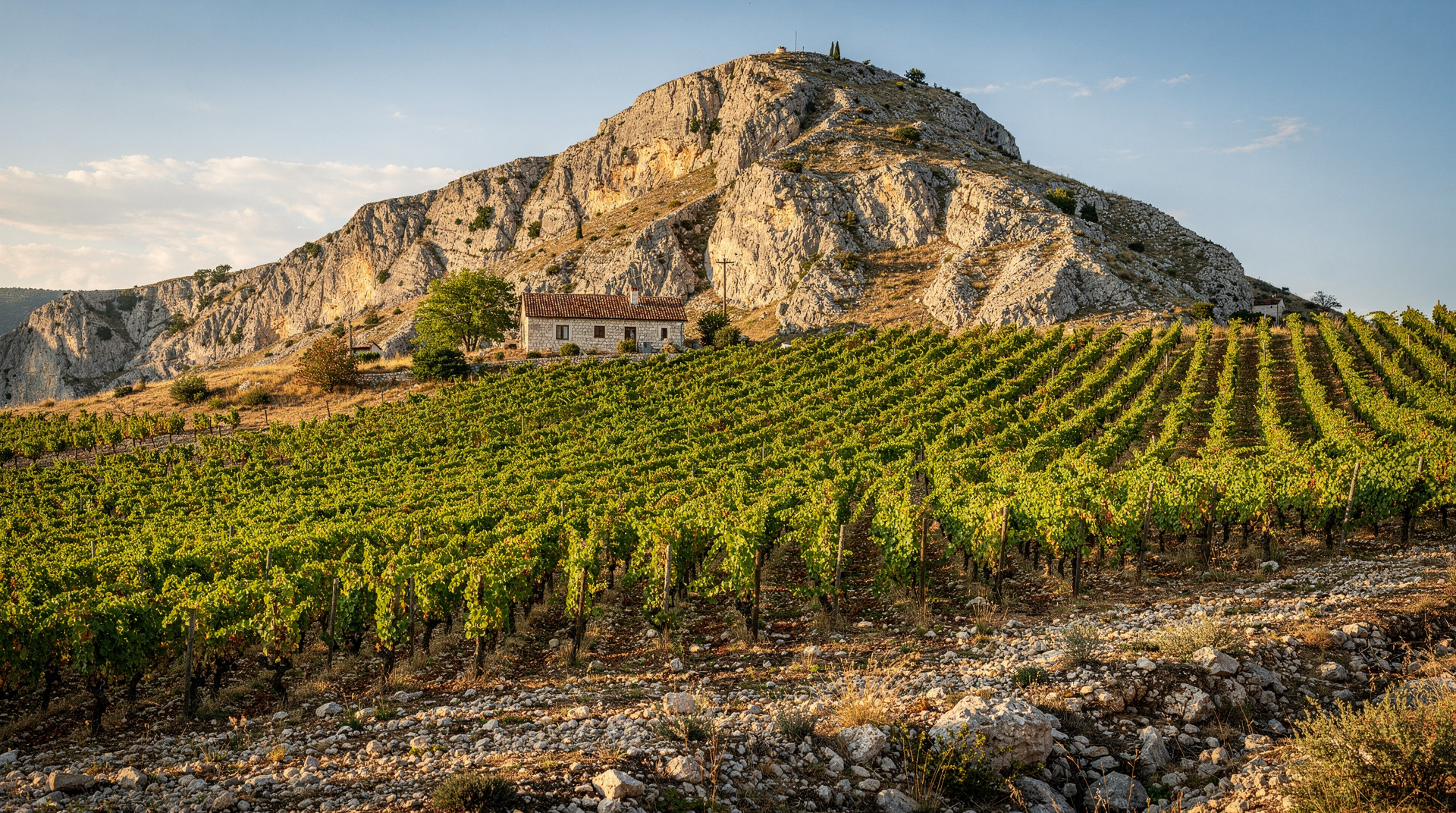
The vineyards of Herzegovina occupy the Neretva River valley and its tributaries south of Mostar, extending towards Čitluk, Čapljina, and Ljubuški. The soil is predominantly white limestone karst — the same stone you see in the old bridges and walls of Mostar — which drains freely and forces the vines to push deep roots. Summer temperatures in the valley regularly exceed 35°C, producing high sugar levels in the fruit, but the altitude (400-600m) brings cool nights that preserve acidity.
The result is wines with a distinctive combination of ripeness and freshness — qualities that make both Žilavka and Blatina genuinely interesting for wine drinkers accustomed to better-known regions.
Žilavka: the white
Žilavka (pronounced ZHEE-lav-kah) is Herzegovina’s signature white grape and one of the Balkans’ most distinctive indigenous varieties. The name derives from žilav, meaning “sinewy” or “wiry” — a reference to the vine’s tough, resilient character.
In the glass, Žilavka is pale straw-yellow with green hints. On the nose: fresh citrus (lime, lemon zest), green apple, and a pronounced mineral quality that wine writers often describe as “flinty” or “chalky.” On the palate: high acidity, medium body, a clean, dry finish with some saline length.
It is best drunk young (within 2-3 years of vintage) and pairs naturally with the food of its region: freshwater fish from the Neretva, grilled sea bass brought up from the Adriatic coast, Travnički sir (the local white cheese), and grilled vegetables.
A bottle of good Žilavka from a serious producer costs 12-25 BAM (6-13 EUR) at the winery or in Mostar restaurants.
Blatina: the red
Blatina (blah-TEE-nah) is Herzegovina’s indigenous red variety, named after the “muddy” or “swampy” terrain where it was originally cultivated along the Neretva floodplain. It is a challenging grape — low natural sugar levels mean it needs the warmest sites to achieve full ripeness — but in good hands it produces wines of real character.
Young Blatina shows dark fruit (plum, blackberry, dried cherry), firm tannins, and a distinctive herbal quality. With three or more years of bottle age, the tannins soften and the fruit integrates into something more complex. A few producers are now experimenting with new oak aging, pushing the wine toward an international style.
Blatina pairs well with the heavier dishes of the Bosnian table: grilled lamb ispod sača, slow-cooked veal, and game birds from the Herzegovinian hills.
Why Herzegovina rewards a slow approach
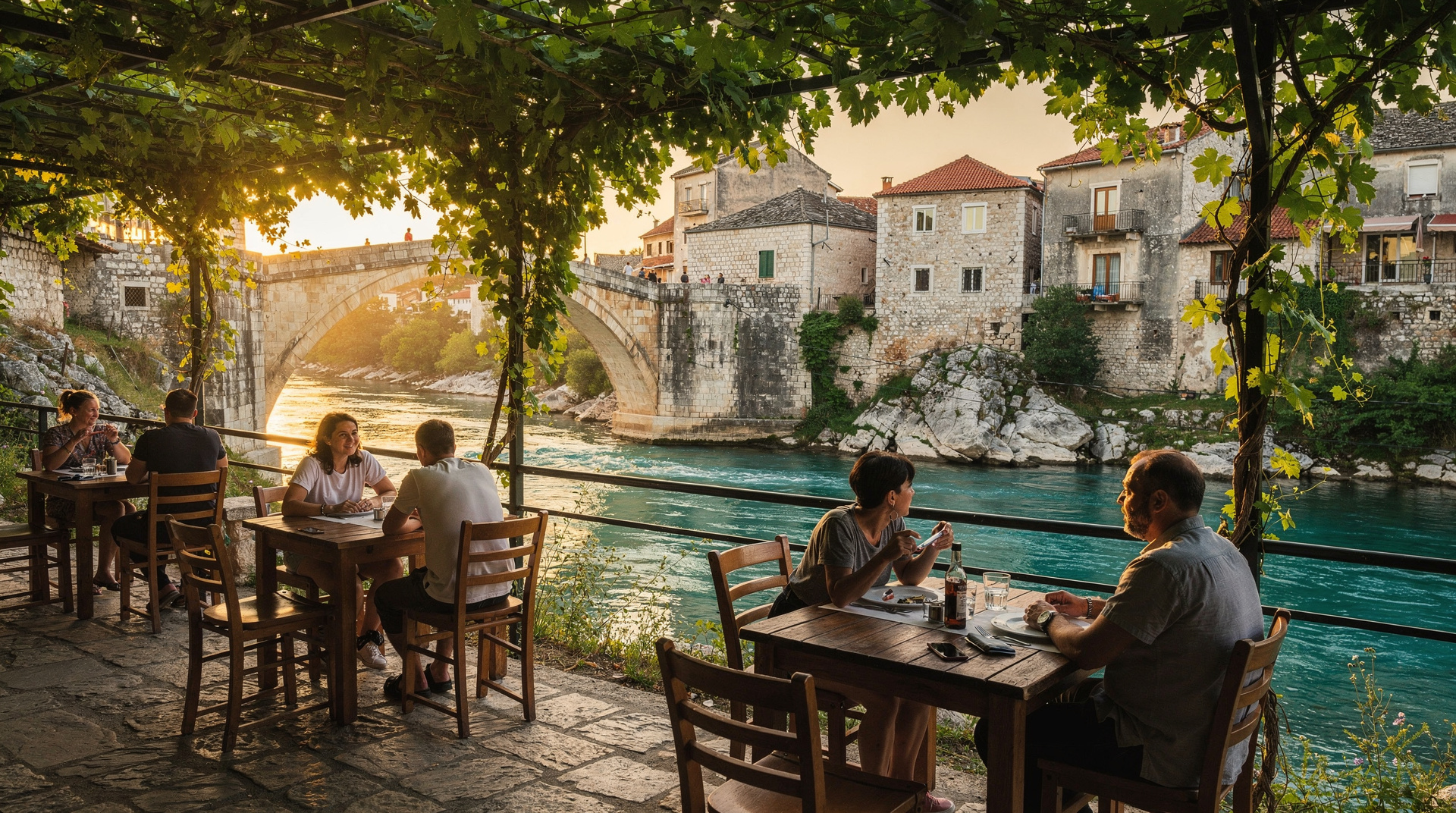
Wine tourism here does not look like Tuscany or the Douro. There are no grand visitor centres, no long lines of tour buses and, in many places, no formal tasting menu. What you get instead is a table, a bottle opened in front of you, and a conversation with someone whose family has tended the same rows of vines for generations. That informality is the main attraction, and it works best when you arrive without a tight schedule.
It also helps to think of the vineyards as part of the wider landscape rather than a separate attraction. The same limestone hills that shape the wine shape the villages, the stone houses and the food. A winery visit slots naturally into a day that also takes in Mostar, the spring at Blagaj or the fortified hillside village of Počitelj, and the wine will make more sense for having seen the country around it.
Getting to the vineyards
Most visitors base themselves in Mostar, and our guide to where to stay in Mostar covers the options. If you are arriving from the capital, the Sarajevo to Mostar transport guide explains how to reach the city before you head out to the cellars. Travellers coming up from the coast can read the Mostar from Dubrovnik guide or the Mostar from Split guide, and anyone crossing the short stretch of Bosnian coast should check the Neum corridor crossing guide first.
For the vineyards themselves, a car gives the most freedom. Our guide to renting a car in Bosnia and the driving in Bosnia guide cover paperwork, road habits and what to expect on rural lanes. If you would rather not drive at all, a guided tasting removes the logistics, and the designated-driver question with it.
The best wineries near Mostar
Vinarija Andrija (Čitluk)
One of the most established family producers in Herzegovina, Andrija has been bottling Žilavka and Blatina under their own label since the 1990s. The winery is in Čitluk, about 25 minutes from Mostar by car. Tastings are by appointment; the wine shop is open daily during the tourist season.
Vinarija Škegro
A boutique producer also based near Čitluk, Škegro has received international attention for its single-vineyard Žilavka and reserve Blatina. The winery is small and visits feel intimate — phone ahead.
Vinarija Brkić (near Čapljina)
Jozo Brkić produces some of the most natural, minimal-intervention wines in Herzegovina — Žilavka with no added sulphur, orange-wine-style Žilavka with extended skin contact, and Blatina aged in old Slavonian oak. His approach is considered unconventional by local standards but has attracted export interest.
Tvrdoš Monastery (Trebinje)
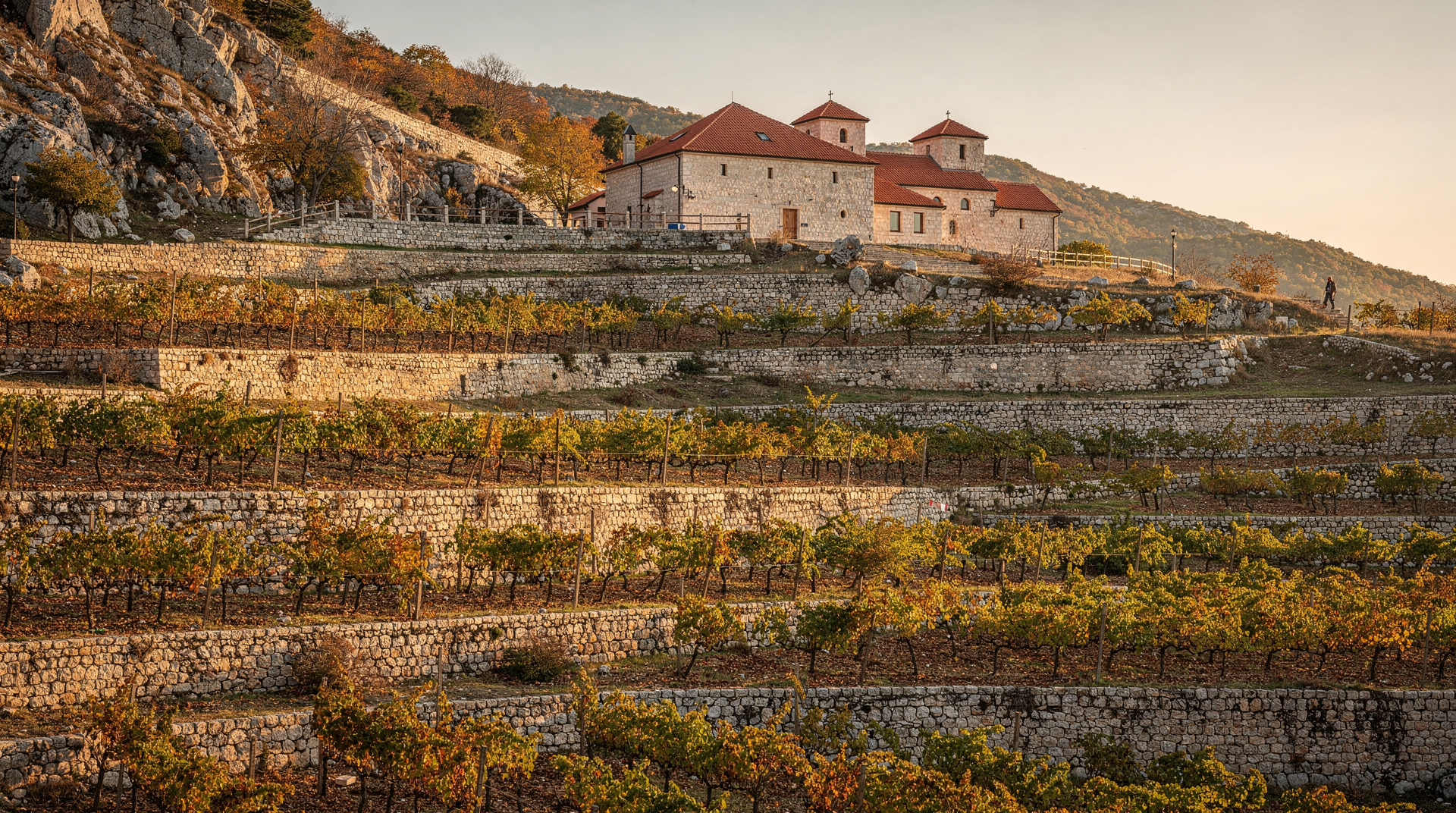
The Herzegovačka Gračanica monastery near Trebinje produces its own wine, sold in the monastery shop and in Trebinje restaurants. The wine, made from grapes grown in the monastery’s own vineyards, is reliable and reasonably priced. More details in the Trebinje wine guide.
What a tasting visit usually feels like
Expect a relaxed, hospitable rhythm rather than a scripted presentation. A host will typically pour the white first, then the red, and talk about the vintage, the vineyard and how the family makes the wine. Cheese, cured meat and bread often appear on the table, and a small glass of rakija may close the visit. Ask questions freely: producers here tend to enjoy explaining their grapes to curious visitors, especially when you show interest in the indigenous varieties rather than asking for international names.
A few habits make the visit smoother:
- Taste the Žilavka before the Blatina, and take small sips between wines with water and bread.
- Buying a bottle or two is the natural way to thank a small producer for their time.
- Ask which vintage is drinking best now, and which bottle the family itself opens at home.
- Carry some cash in local currency, since small cellars do not always take cards. Our money and currency guide explains how to handle this.
- Wrap bottles well in your luggage if you are flying out; a soft jumper works as well as anything.
Wine tasting from Mostar
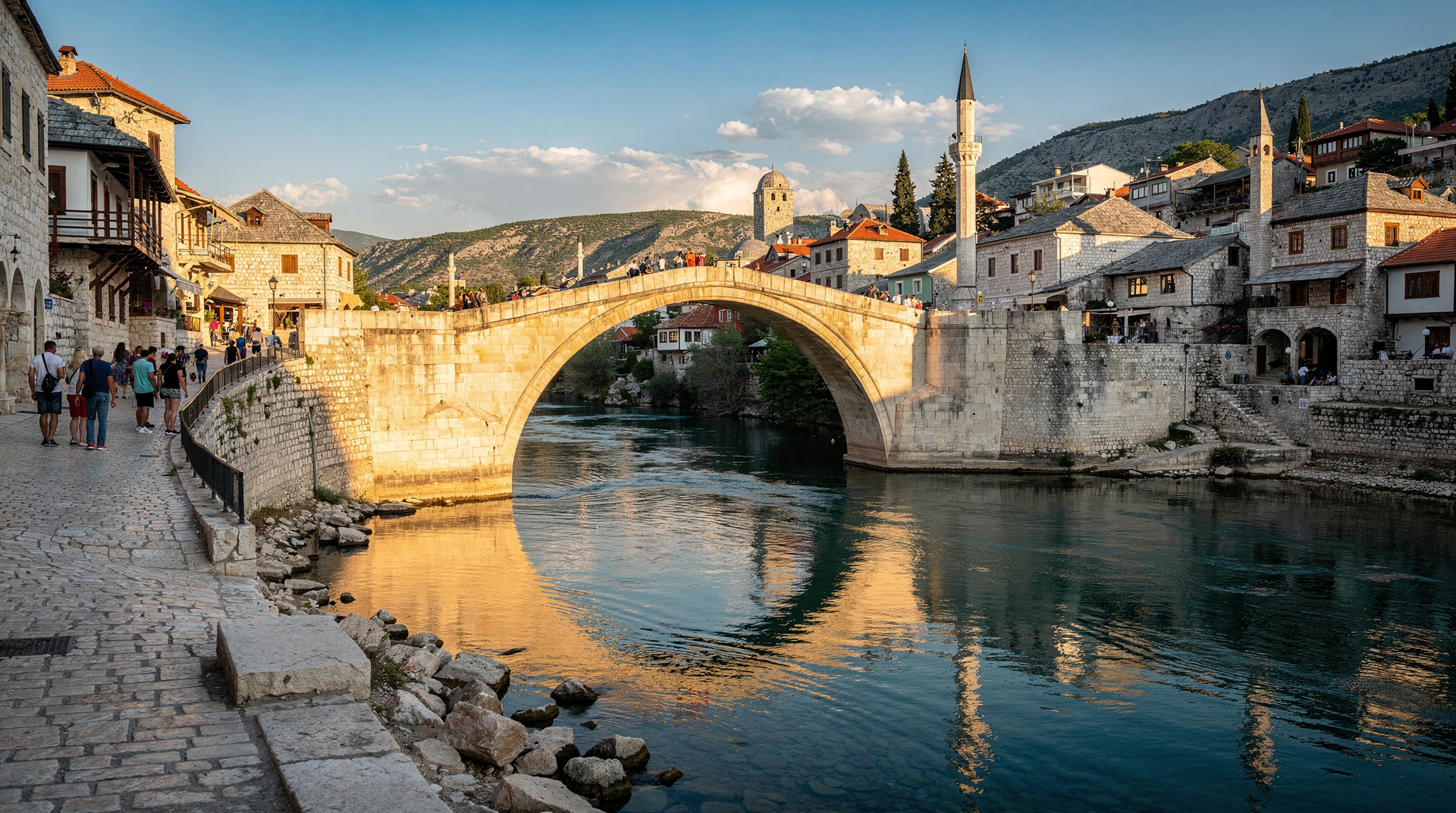
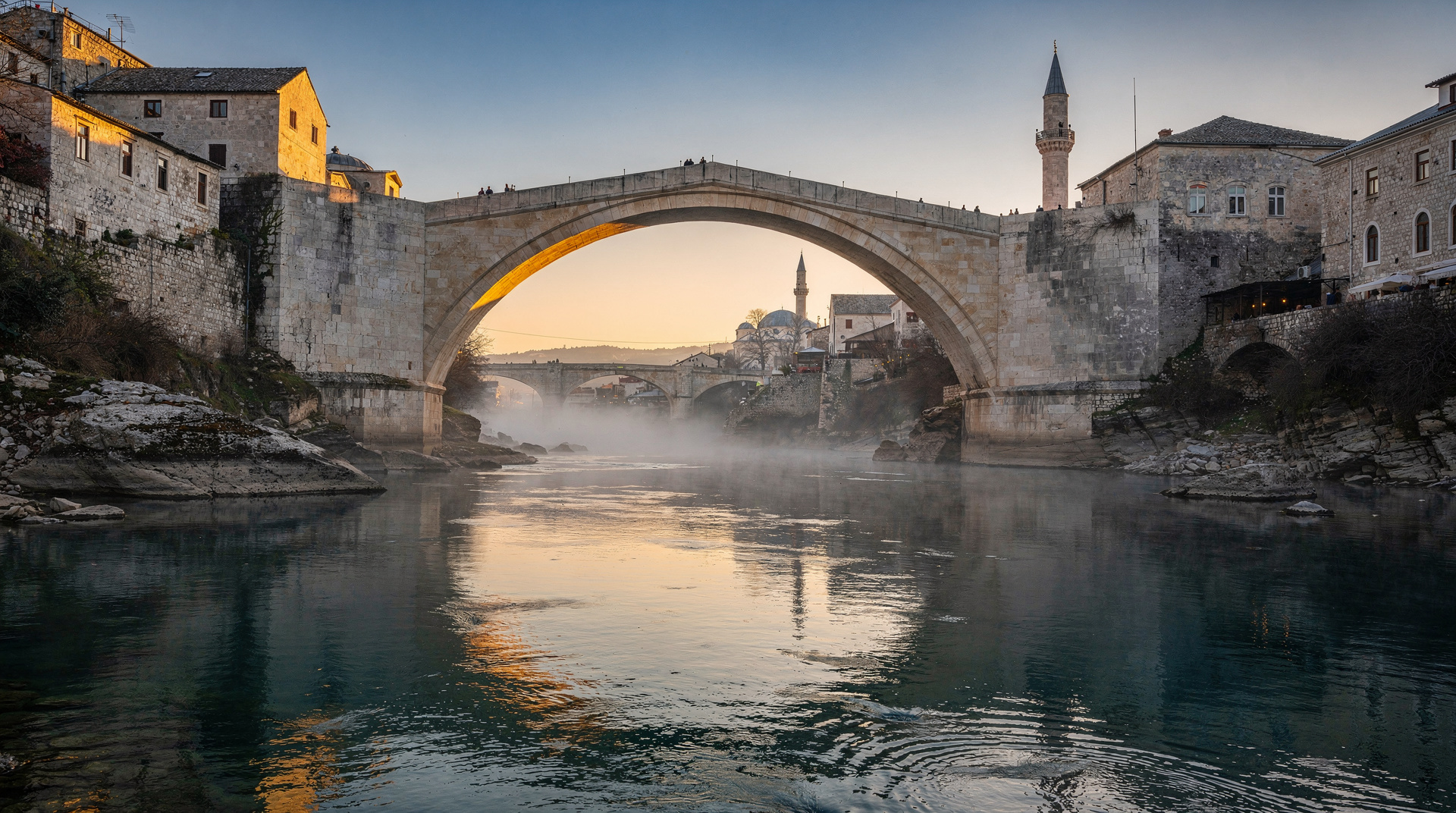
The guided wine tasting afternoon from Mostar combines a walk through Mostar’s Old Town with an afternoon visit to a local winery for Žilavka and Blatina tasting with local food pairings. It is the simplest way to access the wine culture without a rental car.
The route typically includes stops at one or two producers in the Čitluk area and returns to Mostar in the early evening — timing that works well if you want to watch the Stari Most divers at sunset afterwards.
Wine in Mostar restaurants
Most restaurants in Mostar’s Old Town carry at least one Žilavka and one Blatina on the menu. Restaurant Taurus and Restoran Labirint both have solid local wine lists. Expect to pay 25-45 BAM (13-23 EUR) for a bottle in a restaurant.
For a private walking tour of Mostar that can incorporate a wine stop, a local guide tour of Mostar can be tailored to include tasting.
Visiting Herzegovina wine country independently
Without a tour, the wine triangle between Mostar, Čitluk, and Ljubuški is accessible by rental car in a half-day. The roads are good, signage is limited (most wineries do not have roadside signs), and calling ahead is essential. Many producers speak basic English.
The best approach is to combine a winery visit with a stop at Kravice Waterfalls or Blagaj Tekke, both within 30 minutes of the main wine area.
When to go and how to build the day
Tastings are possible through the year, but the character of the visit changes with the seasons. Early autumn brings the energy of the harvest, while spring is green and gentler on the legs if you plan to walk between stops. Midsummer is hot, so schedule cellar visits for the morning or late afternoon and keep the middle of the day for shade and a long lunch. For a broader view of the calendar, see the best time to visit Bosnia and the Bosnia in autumn guide.
A simple shape for a wine day is one cellar in the morning, lunch somewhere with a view, a second short visit in the afternoon, and an easy evening back in town. Resist the temptation to add a third stop; the pleasure here comes from conversation, and tired palates miss the details.
If you are staying longer in the region, the Herzegovina weekend itinerary shows how to fit wine alongside the main sights, and the best day trips from Mostar lists other half-day options if you want to mix a cellar visit with something outdoors. Pilgrims heading to Medjugorje are also close to this wine country, and a tasting makes a gentler contrast to the intensity of that visit.
Herzegovina wine and food pairings
| Wine | Dish |
|---|---|
| Žilavka (young) | Grilled trout from the Neretva, Travnički sir |
| Žilavka (skin-contact) | Cured meats, sudžuka, smoked cheese |
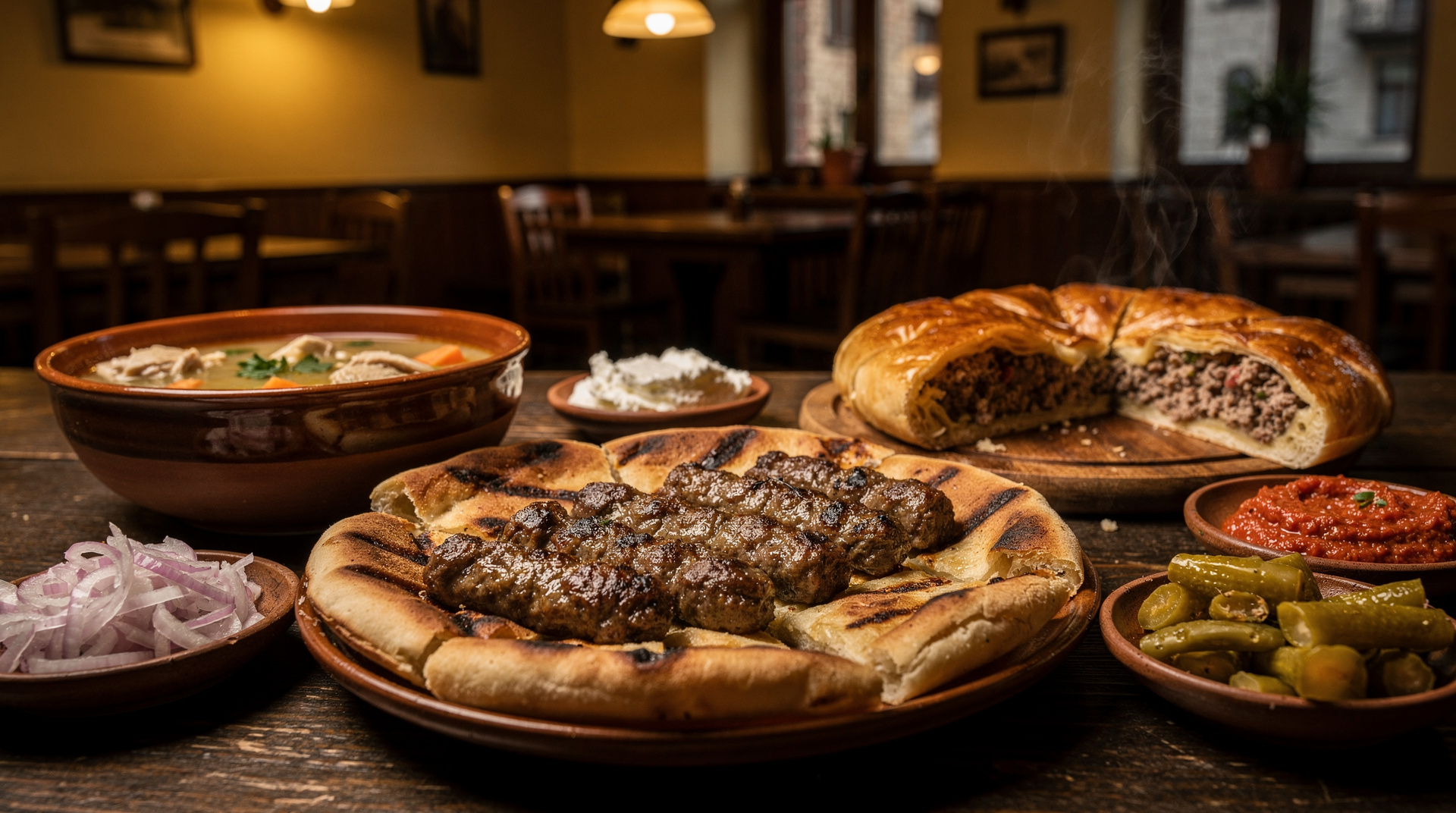
| Blatina (young) | Grilled lamb chops, ćevapi |
| Blatina (aged) | Jagnjetina ispod sača, game |
For more on the food side, see the Bosnian food guide and the best restaurants in Mostar.
The pairing logic is simple: let the acidity of Žilavka cut through oil and salt, and let the structure of Blatina stand up to smoke and fat. If a dish is rich, reach for the red; if it is fresh, briny or lightly cooked, reach for the white. Locals rarely overthink it, and a bottle shared at a long table with grilled meat and bread is the pairing most producers would recommend.
Remembering the region beyond the glass
Herzegovina’s wine tradition is tied to its history. Vines have long been part of village life here, and the Ottoman, Austro-Hungarian and Yugoslav eras each left marks on how wine was made and sold. To place the vineyards in context, our Ottoman heritage guide and Bosnia history for travellers offer useful background, and the blog piece on Trebinje, the other Herzegovina gives a personal look at the southern end of the wine country.
Rakija and the wider Herzegovinian drinks culture
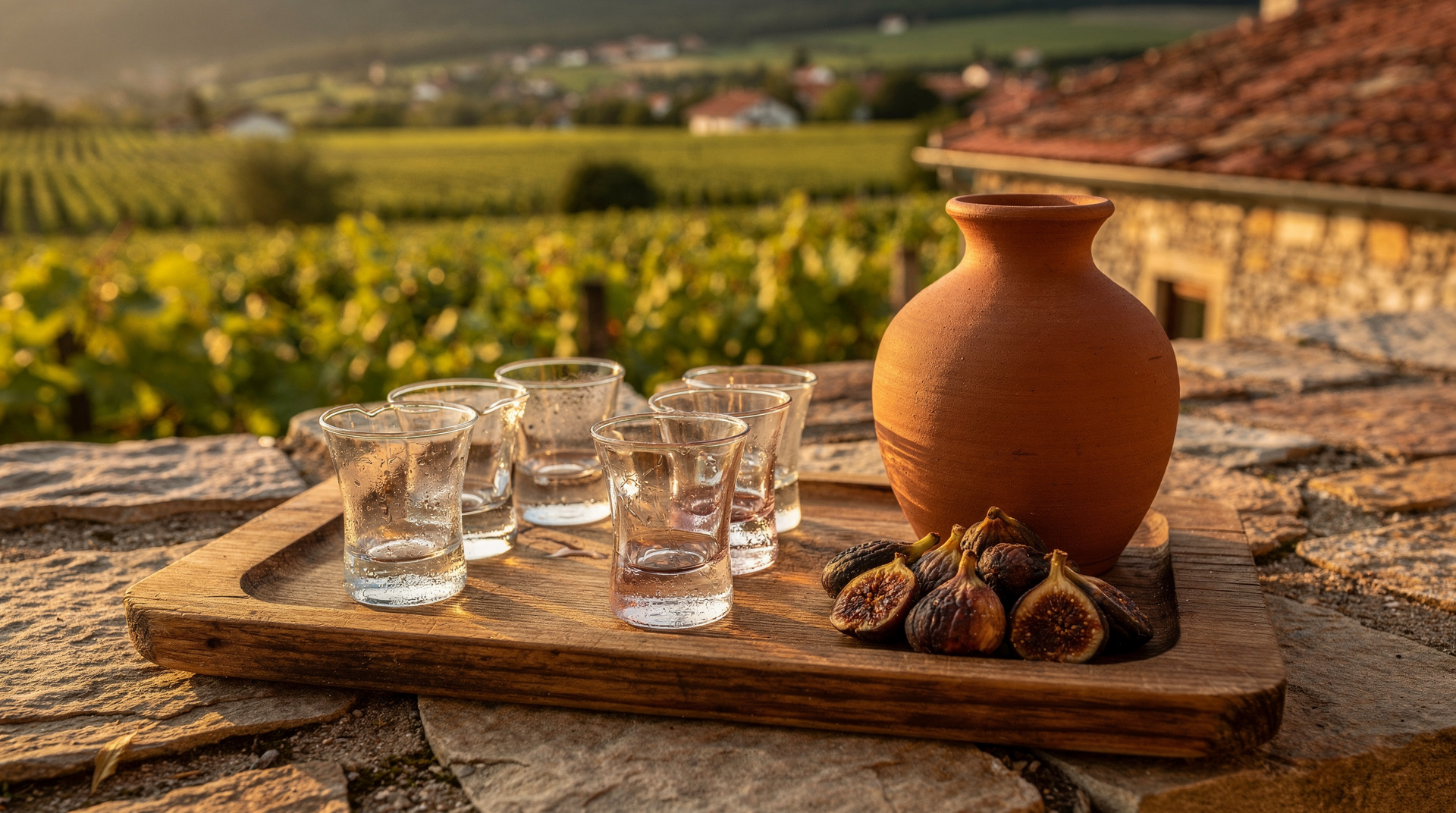
Wine is only part of the story — Herzegovina’s rakija (fruit brandy) tradition runs alongside it, with grape rakija (loza) often produced by the same small family cellars that make Žilavka and Blatina. Many wineries offer a shot of loza or travarica (herbal rakija) before or after a tasting as a matter of hospitality rather than a formal part of the menu. For more on the spirit side of the table, see the rakija guide to Bosnia.
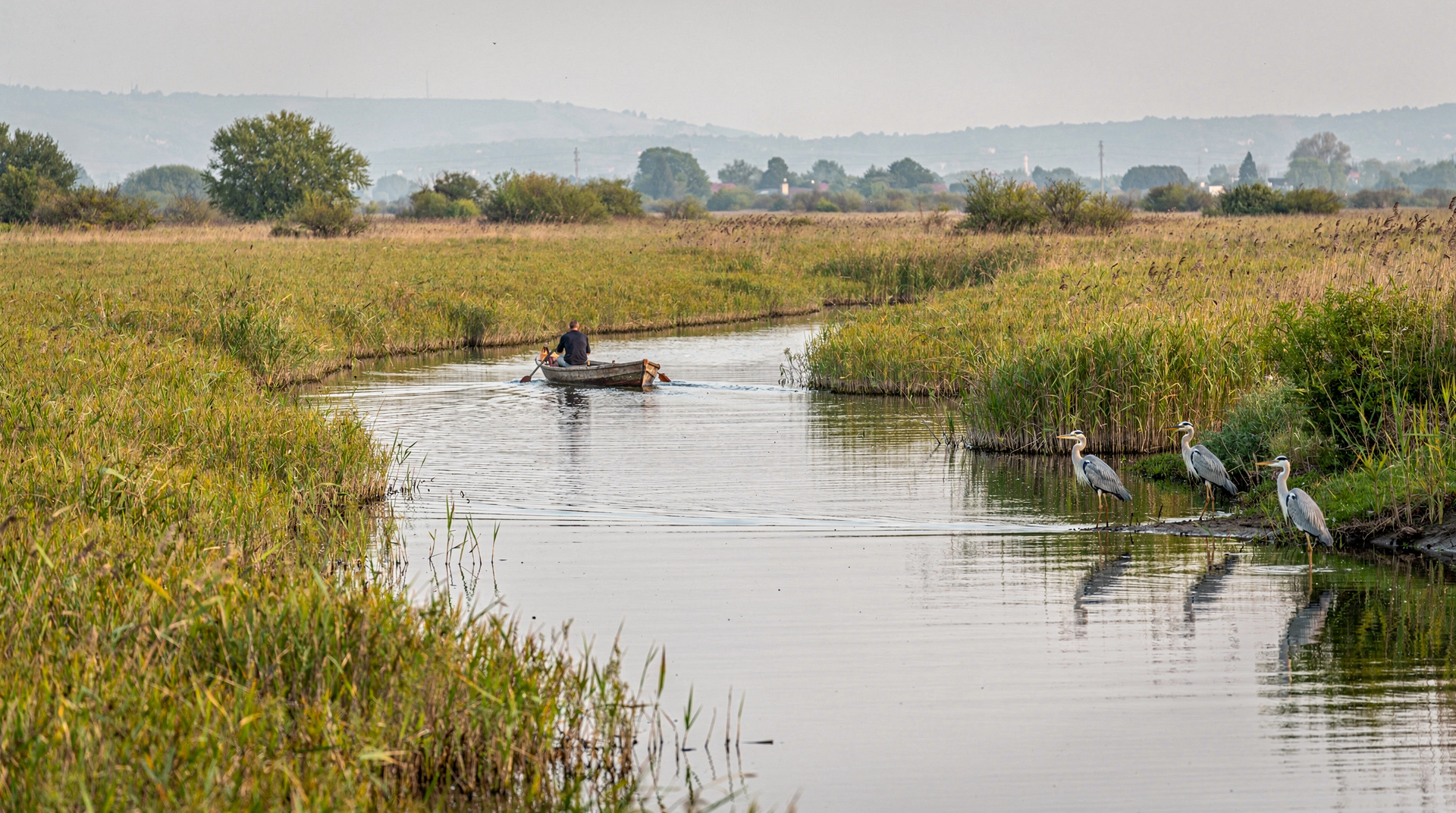
If you’re planning wine tasting around a wider Herzegovina day out, the natural pairing points are the wetland birdlife at Hutovo Blato nature park (close to several Čapljina-area wineries) or a stop in Trebinje for the Tvrdoš Monastery cellar.
Frequently asked questions about Herzegovina wine
Where can I do a wine tasting near Mostar?
What does Žilavka taste like?
What does Blatina taste like?
Is Herzegovina wine exported?
What is the wine region of Trebinje?
Top experiences
Bookable activities with verified prices and instant confirmation on GetYourGuide.