Rafting the Una river — a first-timer's diary
| Where | Bihać, northwest Bosnia |
| Cost | around 60–65 EUR/person for the full-day guided section run |
| Time needed | a full day (roughly 9am–3/4pm including lunch stop) |
| Getting there | around 4.5 hours’ drive from Sarajevo, or a 5–6 hour bus |
| Best time | May–June for peak water, through September |
My experience of rivers before the Una was mostly aesthetic. Rivers as things to look at from bridges or banks. Something about standing at the put-in at Bihać on a June morning — the water a luminous turquoise-green, the instructor explaining that we would be spending four hours inside this thing rather than admiring it from a safe distance — made me recalibrate my understanding.
This is a diary of that first rafting day. It is not meant to be a guide (the Una rafting guide covers the logistics properly), but a first-person account of what it was actually like.
Getting to Bihać
Bihać is in the northwestern corner of Bosnia, 350 kilometres from Sarajevo and roughly 100 kilometres from Plitvice Lakes in Croatia. It is not on the main tourist circuit, which is part of its appeal. The drive from Sarajevo takes around 4.5 hours on roads that wind through the Bosnian highlands.
There is also a bus service from Sarajevo (around 5–6 hours), but with a full day’s rafting planned, a car makes more sense for flexibility.
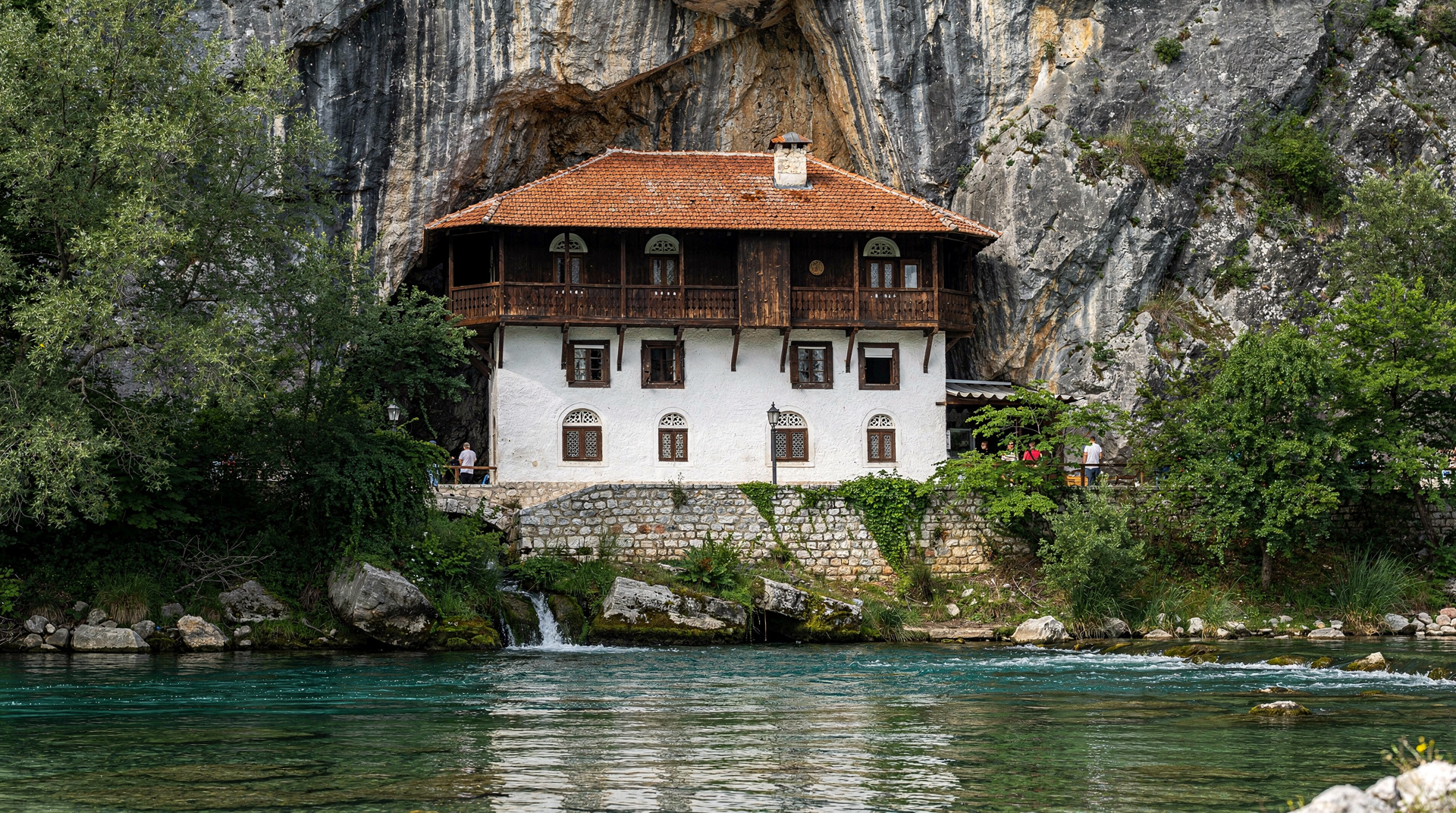
I arrived the evening before and stayed in a small pension near the old town. Bihać has a pleasant Ottoman old town on a bend in the Una, a fortress, and the Fethija Mosque — originally a Gothic church converted to a mosque in the sixteenth century, converted back to a church after the Austro-Hungarian annexation, and then converted to a mosque again in the 1990s. The building has a complicated relationship with its roof.
In June, Bihać is warm and green. The Una runs past the old town walls.
Choosing a section
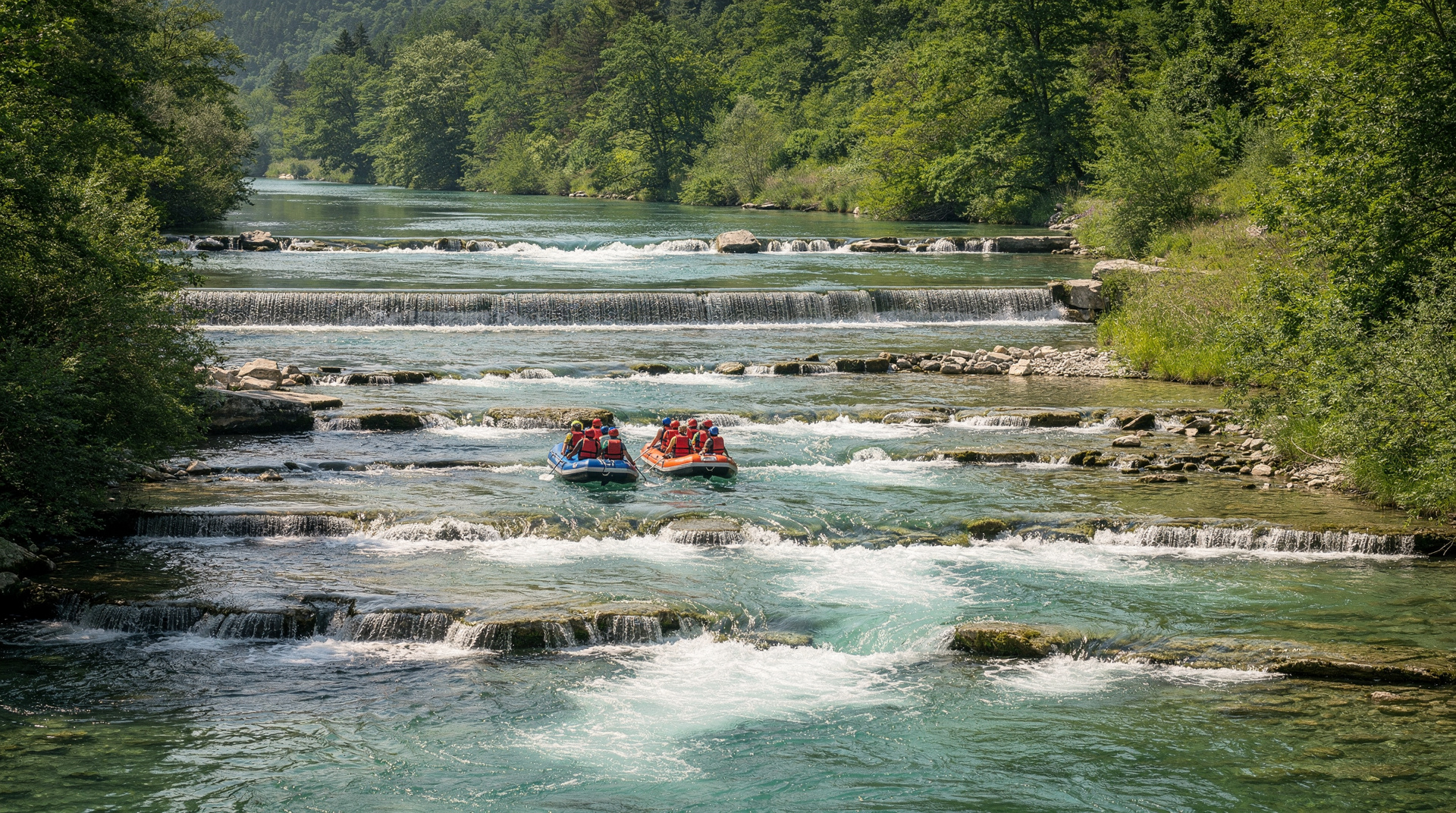
The Una has several different rafting sections at different grades of difficulty. The town section through Bihać itself is essentially flat water — suitable for children and complete beginners. The section from Kulen Vakuf to Bihać (approximately 18 kilometres) has sections of grade II–III and is the standard choice for visitors who want something more than floating.
For the most exciting water, the upper Una near the Štrbački Buk waterfall has grade IV sections that require experienced guides and previous rafting experience.
I went with the Kulen Vakuf section. First timer, wanted to feel something, didn’t want to drown.
If that sounds like too much, a gentler option exists: a relaxed float on the lower Una trades the adrenaline for scenery, and suits anyone who wants the river without the rapids.
The morning
The operator — Una National Park rafting tours — met us at a riverside camp at 9am. Our group was eight people: two couples, a family with teenagers, and me. The guide was a compact, efficient Bosnian man who had clearly done this several thousand times and still seemed to enjoy it.
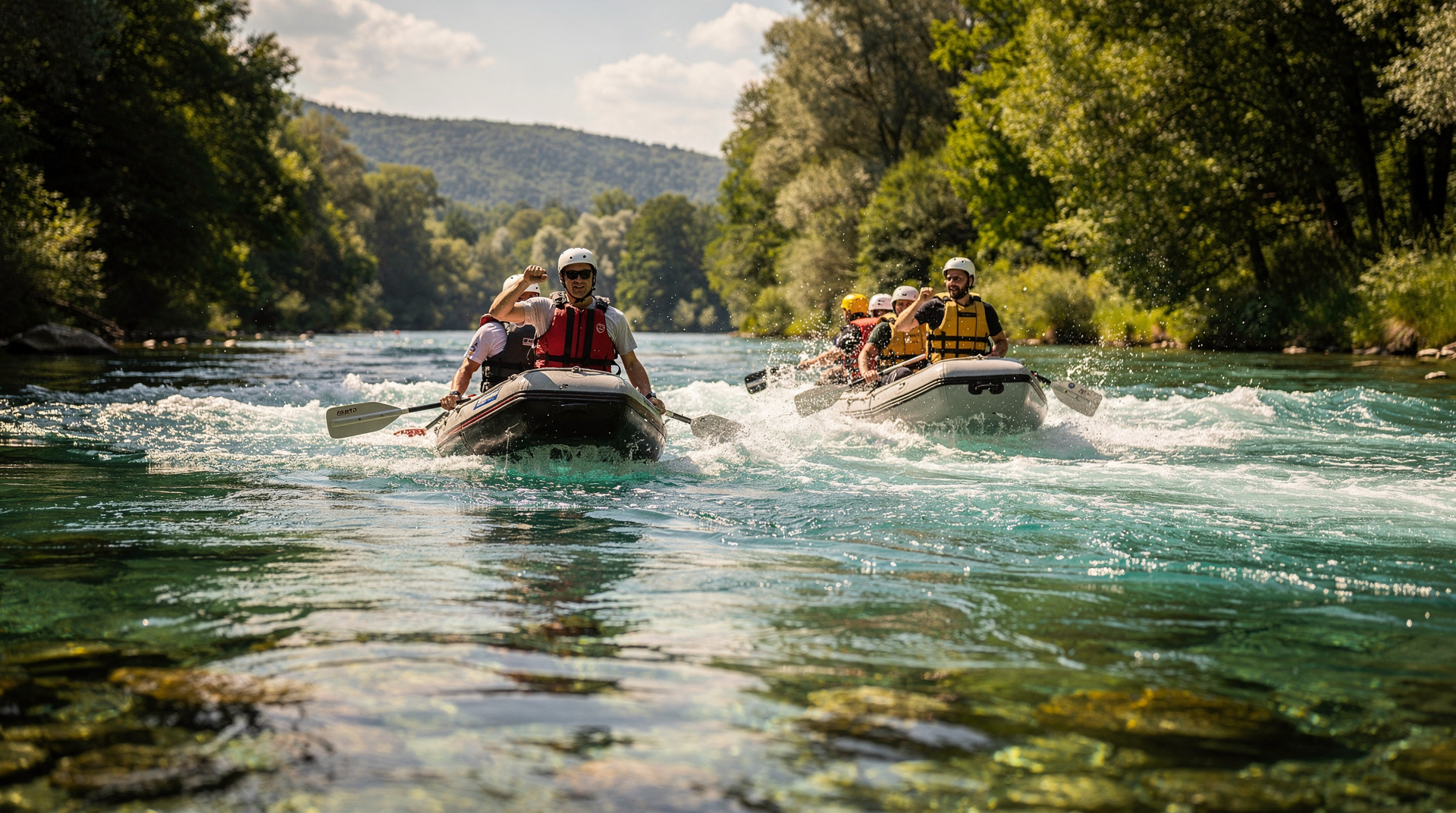
Equipment: wetsuit bottoms (the Una is cold even in June — around 12–14°C), splash jacket, helmet, life jacket, paddle. The guide demonstrated three commands: “forward paddle,” “back paddle,” “get down.” The get down command, he explained, meant everyone flattens to the floor of the raft on short notice. He said this was not usually necessary but it was important to know.
We launched from the camp and immediately entered the rhythm of the river.
On the water
What I had not anticipated was how much the raft moved. Not chaotically — but responsively, as if it was reading the river’s intentions and adjusting. In calm stretches, the current was enough to move us without paddling; the guide called occasional directions.
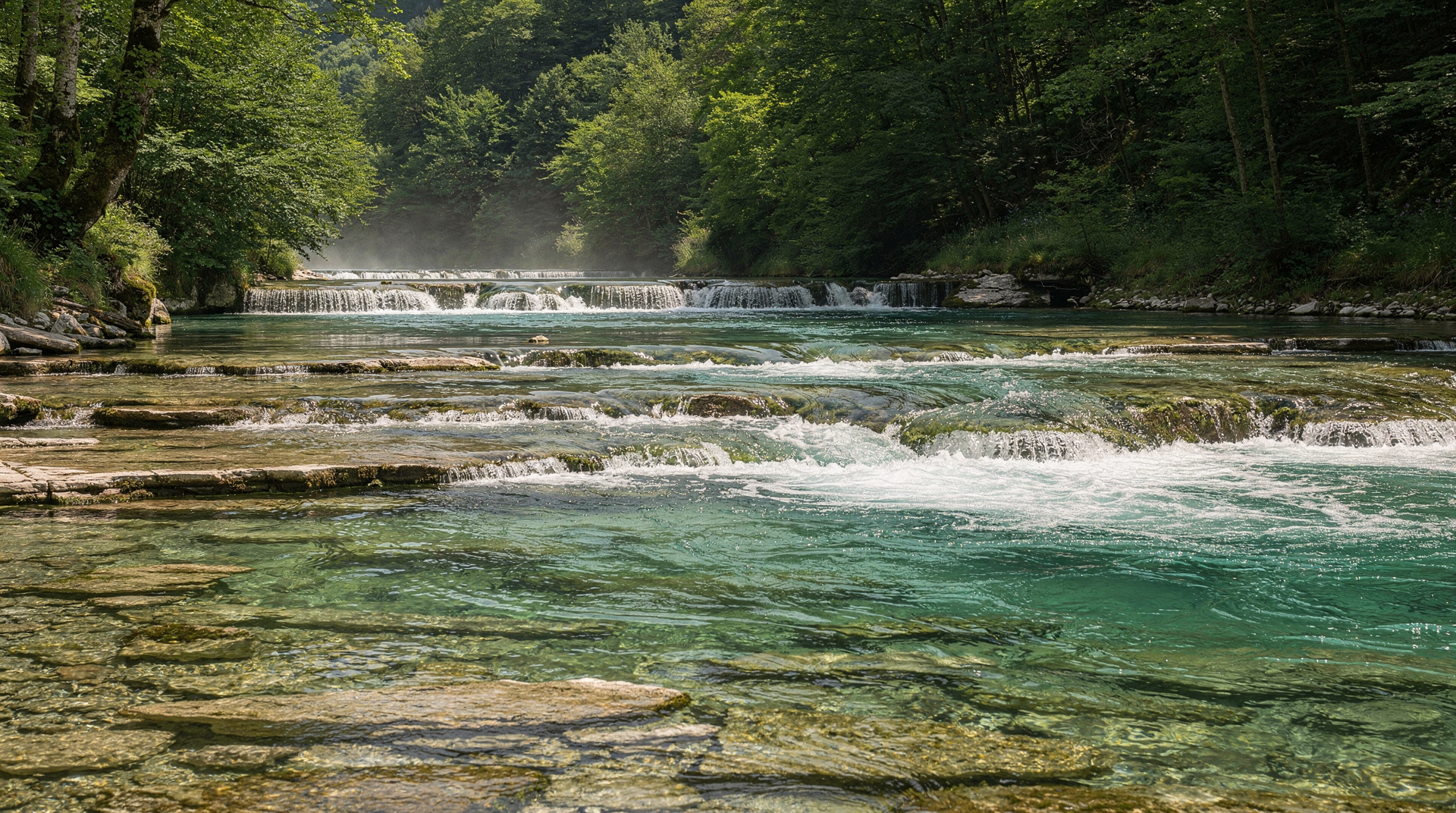
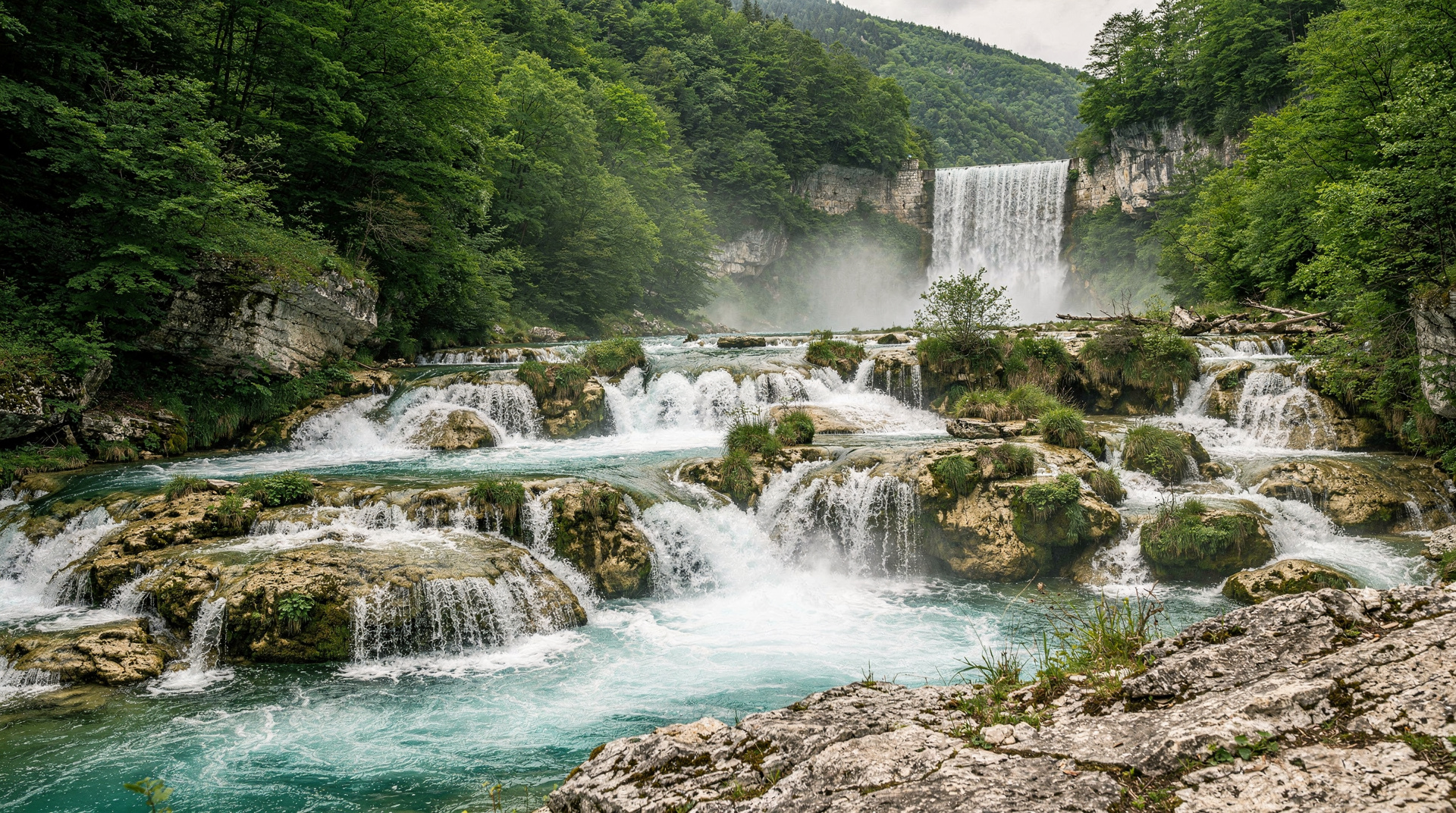
The Una through this section runs through a gorge of grey limestone, the banks covered in beech and oak. The water really is that colour in the photographs — an implausible blue-green from the high mineral content and the clarity of the source spring at Bihać town.
The first rapid was grade II — turbulent but manageable. I got wet immediately. The guide laughed. The teenagers at the back were already competitive about who had the better paddling technique.
The grade III sections were different. The river narrowed and dropped, and the noise changed from a background rush to something more insistent. The guide’s calls became sharper. The raft bucked. Water came in from three directions. One of the members of the family group nearly went over the side and was caught by the guide’s arm with a reflexive grab that suggested he had done this before.
Between rapids, silence. The gorge walls, the birds, the sound of water on rock.
Lunch stop
Around midday, the operator pulled to a riverside beach where fires had been prepared. Lunch was grilled meat (lamb and beef), bread, and rakija offered by a man who seemed both proud of it and amused by visitors’ reactions.
I accepted a small glass. The view of the Una from that particular rock, in June light, was one of the better river views I have found.
The afternoon and Štrbački Buk
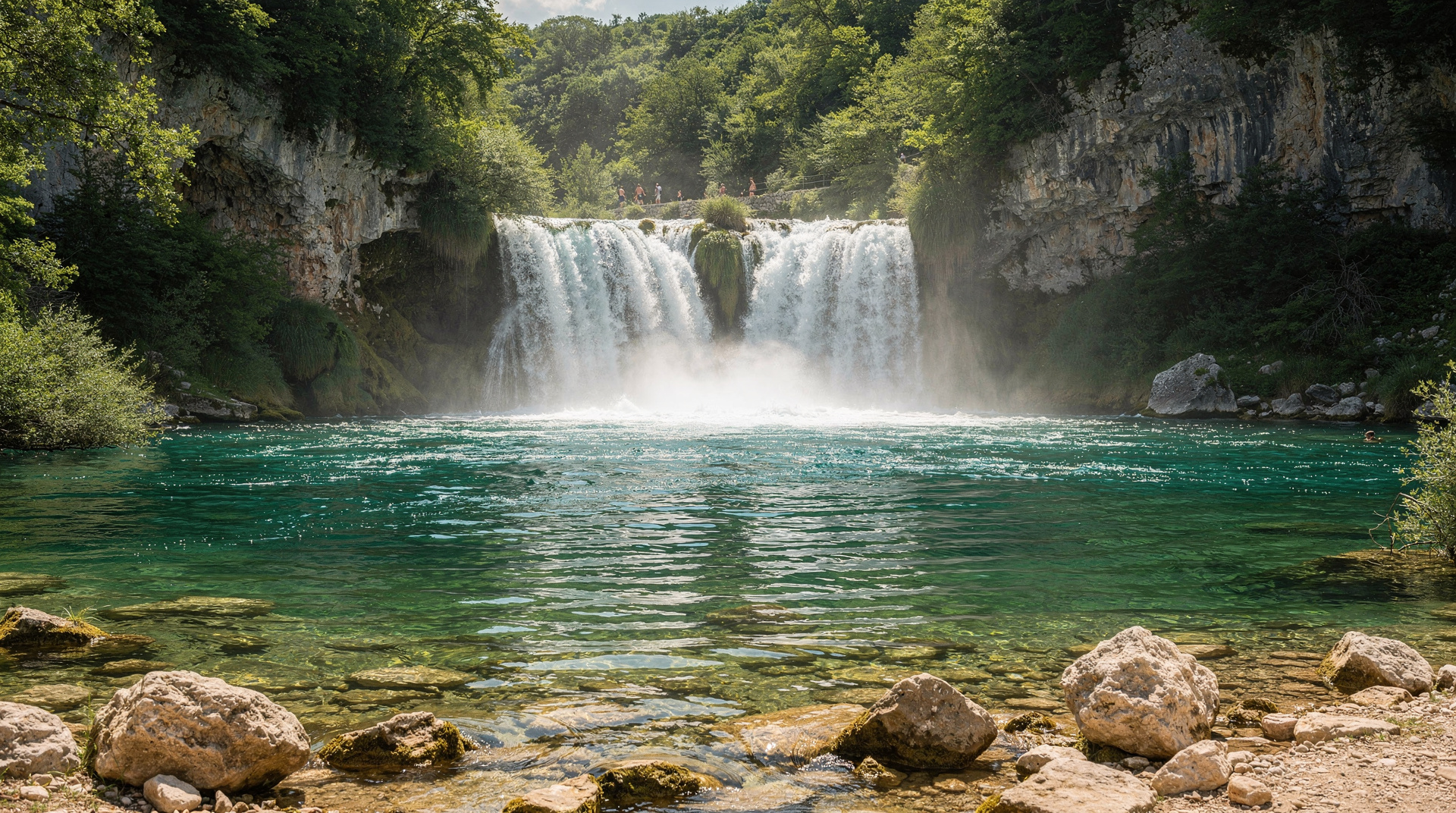
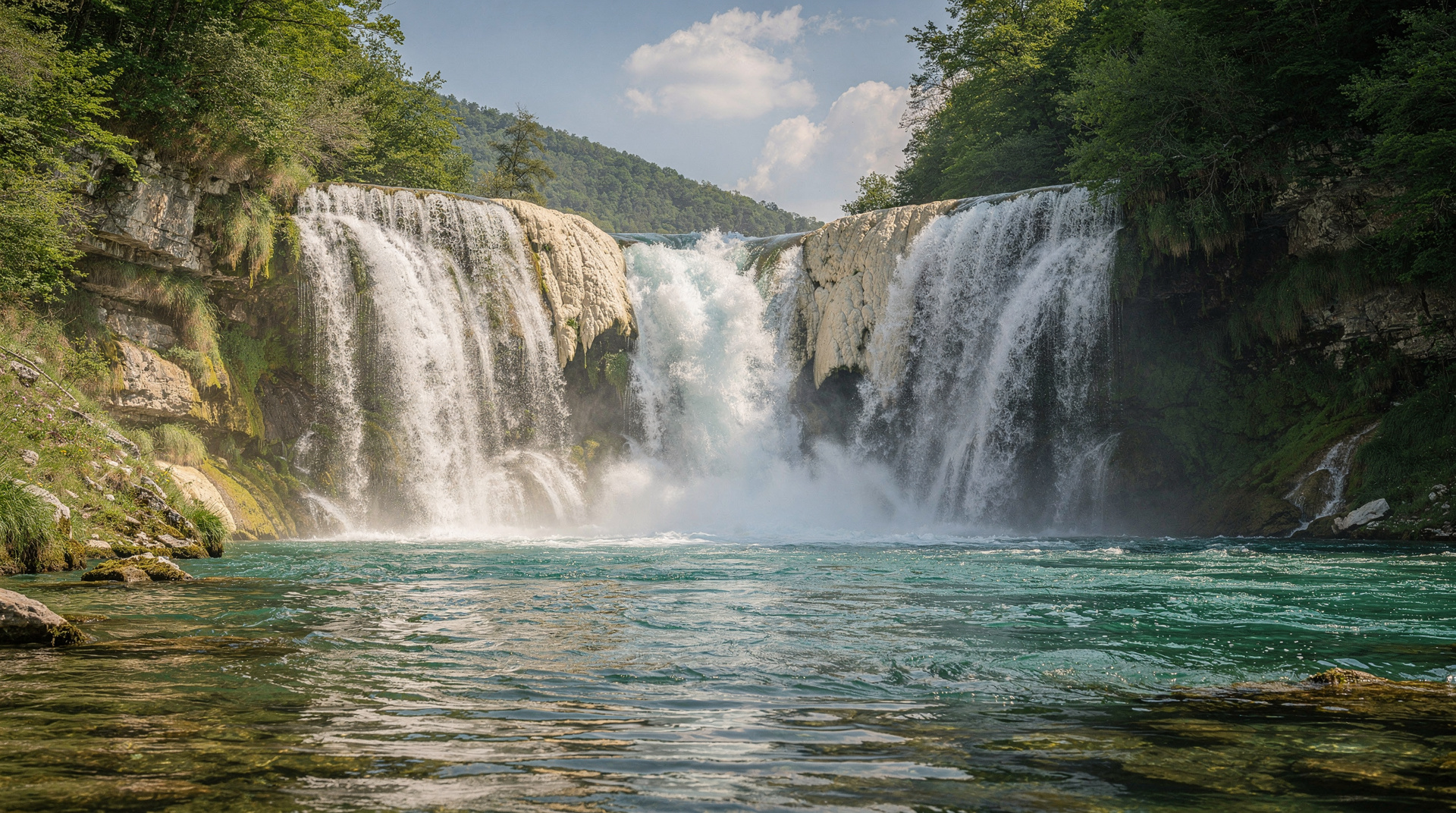
The afternoon section continued at grade II–III before we reached the pull-out point above the Štrbački Buk waterfall. The waterfall itself — a 25-metre horseshoe drop — is not run (it would be suicidal); you pull out upstream and walk to view it from the side.
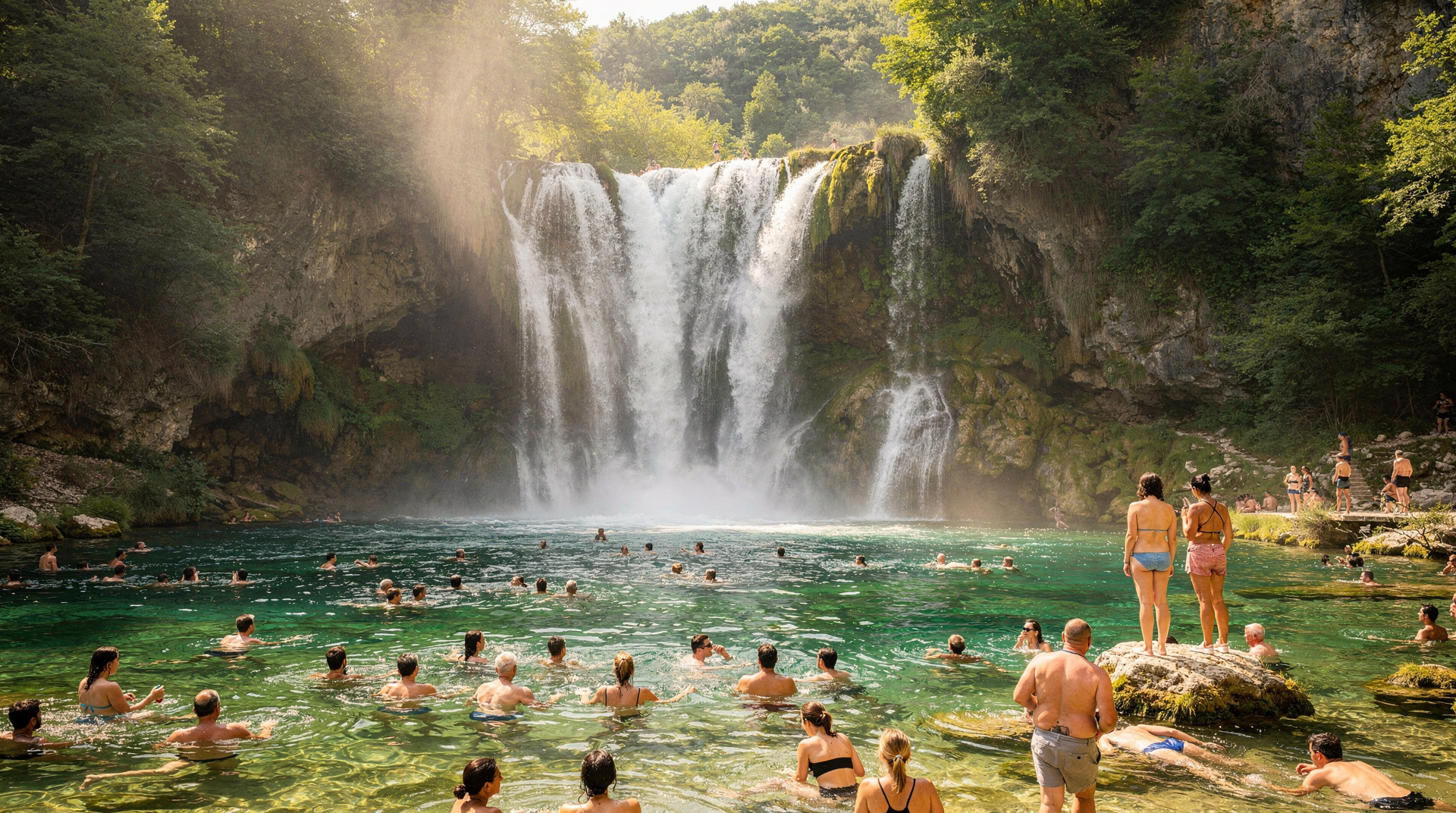
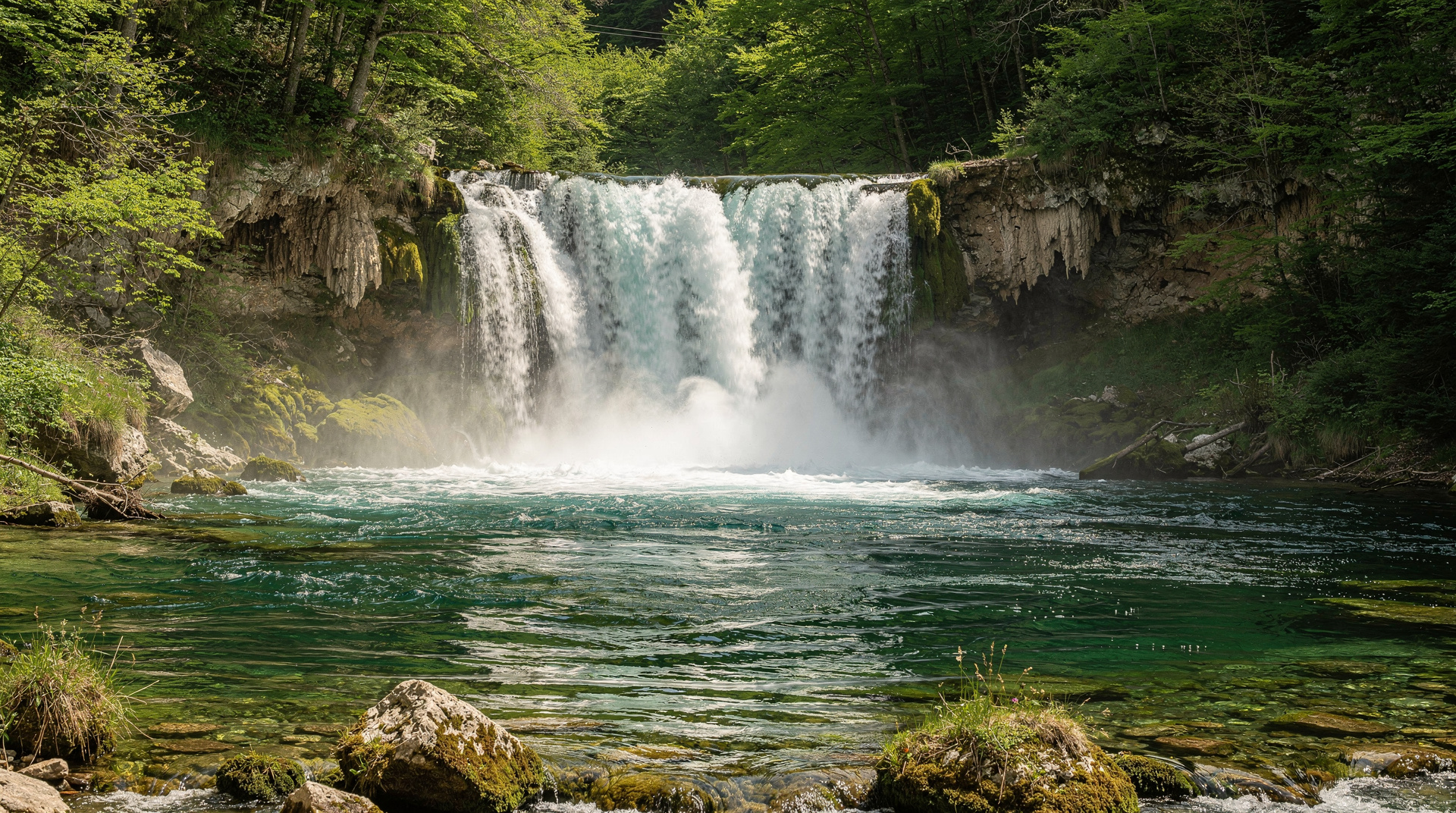
Štrbački Buk is genuinely dramatic: a wide curtain of water in a deep limestone gorge, the spray visible from a distance. In June, with spring melt still adding to the flow, it was at full power. The waterfall guide describes it in more detail.
Around the Una: what else fits the trip
Rafting fills a day, but the northwest rewards a slower pace. The Una National Park is the natural companion, and the Una National Park guide lays out the other waterfalls and viewpoints worth a morning on foot. If you would rather paddle than raft, the kayaking guide covers calmer ways onto Bosnian rivers.
Rafting is also a country-wide habit rather than a single-river affair. The rafting in Bosnia overview compares the main rivers, and two of them make good follow-ups: the Tara river rafting guide for a deeper canyon, and the Neretva rafting guide for something closer to Sarajevo and Mostar. I have not done either since this trip, so I will not rank them, but each has a different character from the Una’s clear, green water. If the Neretva appeals, there is a guided Neretva rafting day from Konjic that can be booked ahead.
Getting here is the real commitment. If you are driving, the driving in Bosnia guide and our backroads driving diary will help you plan the long mountain stretches. Without a car, the buses in Bosnia guide explains what to expect from the long-distance services. For the wider picture, the adventure itinerary strings rafting, hiking and canyons into one route, and the Neretva canyon adventure diary is another first-person account of a Bosnian river day.
What it cost
The full-day guided rafting tour including transport to the put-in, equipment, and the riverside lunch was around 60–65 EUR per person from Bihać. The Una National Park rafting adventure can also be booked in advance, which is worth doing in June when spaces fill up.
The pension in Bihać was 70 BAM (about 36 EUR) for a double. Food and drink added another 30–35 BAM per day.
The honest notes
Water temperature: Cold even in summer. The wetsuit bottoms are not optional if you value comfort. If you fall in (unlikely on the standard sections) you will notice the temperature.
June timing: Excellent. Water levels are still high from spring, the days are long, the canyon vegetation is at its greenest. July and August work too but the river drops slightly, reducing some of the rapids. September is the last good month; October rafting is possible but cold.
Children: The standard section is appropriate for families; the upper Una sections are not. Talk to the operator about age recommendations.
Solo travellers: You join a group. Groups typically form naturally at the operator’s office. In my experience this was fine — the shared experience of being confused and wet on a river is a reasonable social adhesive.
Best months to raft the Una
| Month | Water level | Water temp | Crowds |
|---|---|---|---|
| April | High (spring melt) | Very cold | Low |
| May–June | High, best rapids | Cold (12–14°C) | Moderate |
| July–August | Dropping | Milder | High, book ahead |
| September | Lower, calmer | Milder | Low-moderate |
| October | Low, some sections close | Cold | Very low |
What I’d tell a first-timer now
Choose the Kulen Vakuf section if you’re unsure of your nerve — it’s genuinely grade II–III, exciting without being frightening, and every operator running it is used to complete beginners. The upper Una near Štrbački Buk is a different proposition: grade IV water that wants previous experience, not a first trip. If you’re building a wider northwest Bosnia route around this, the western Bosnia Krajina itinerary pairs Una rafting with Bihać’s old town and the national park properly rather than as a rushed day add-on.
Pack for cold water regardless of air temperature — the Una’s spring-fed clarity comes with a price, and even in July the river stays noticeably colder than the air around it.
Frequently asked questions about Rafting the Una river — a first-timer’s diary
Do I need previous rafting experience for the Una? No, not for the standard Kulen Vakuf to Bihać section — it’s grade II–III and operators run it daily for complete beginners, including families with teenagers. The upper grade IV sections near Štrbački Buk are a different matter and do expect prior experience.
Is the Una colder than the Neretva for rafting? Generally yes — the Una’s spring-fed clarity keeps it cold (around 12–14°C) even in summer, noticeably colder than many stretches of the Neretva near Konjic. Wetsuit bottoms are worth it on either river, but especially the Una.
Would I go back?
Yes. And I would take the upper Una section next time. There is something about moving water at speed that recalibrates the usual proportions of things, and the Una is one of the better rivers for doing that in a place that does not involve a five-hour flight.
Bosnia’s northwest, anchored by Bihać and the Una, makes a compelling case for extending any Bosnia trip beyond the Sarajevo-Mostar axis. The western Bosnia itinerary builds this into a proper route.
Top experiences
Bookable activities with verified prices and instant confirmation on GetYourGuide.