Mostar tourist traps
Mostar: Private Walking Tour with Local Guide
What are the main tourist traps in Mostar?
The main traps are: bridge divers who demand large tips before jumping, souvenir shops along Kujundžiluk with heavily inflated prices, taxis without meters near the bus station, and restaurants right on the bridge that charge double for average food. None of these spoil the city — you just need to know they exist.
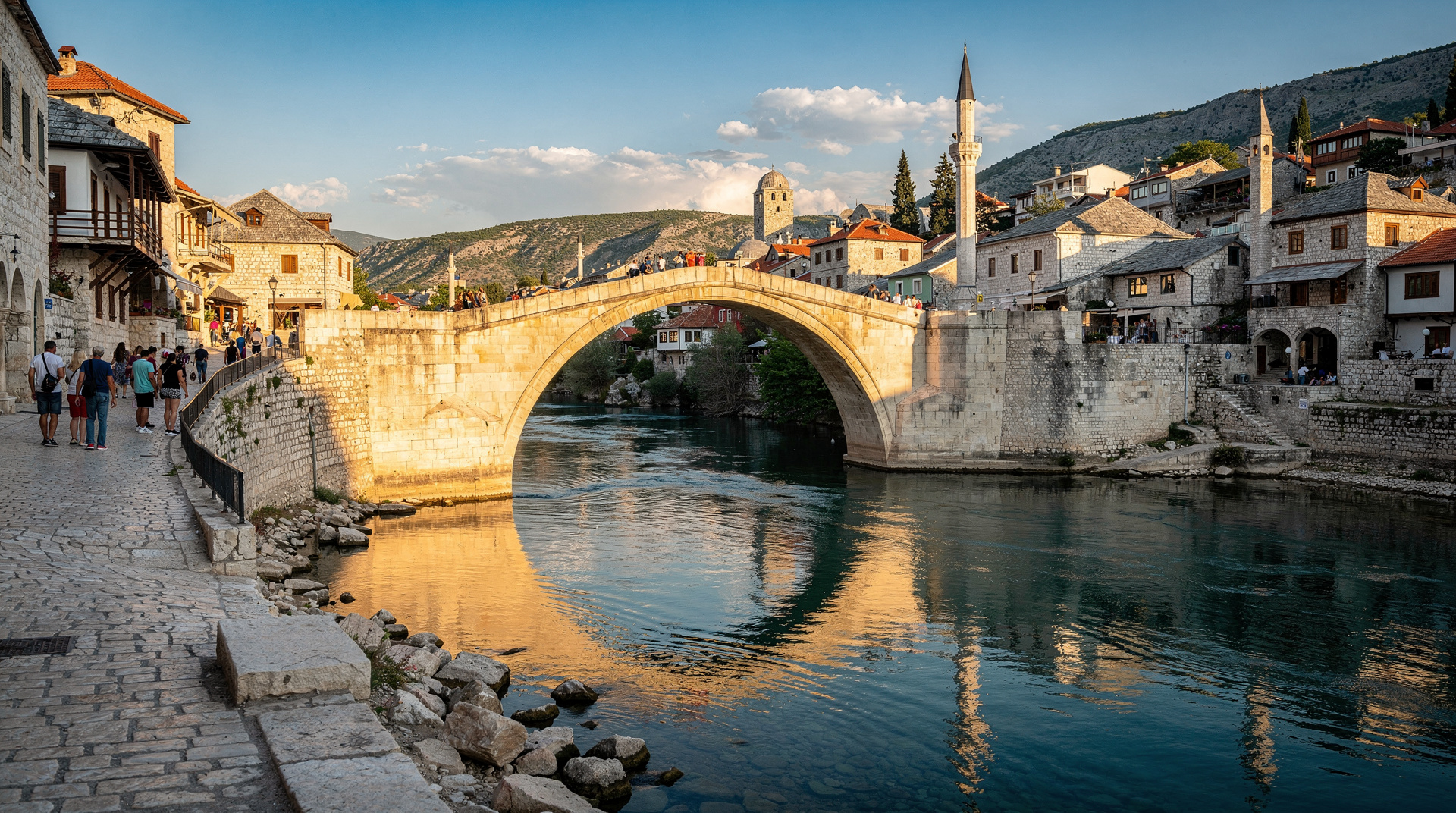
Mostar is one of the most visually stunning cities in the Balkans — and one of the most visited. With popularity comes a predictable ecosystem of tourist-oriented businesses that range from mildly overpriced to outright pushy. None of them should deter you from visiting. But knowing what to expect turns potential frustration into mild amusement, and keeps more money in your pocket for the things that actually matter.
| Where | Old town, within about 200 m of Stari Most — most traps concentrate here |
| Extra cost if unaware | Roughly 20–40 BAM (10–20 EUR) per day in inflated meals, souvenirs and taxi fares |
| Worst time | Midday to late afternoon (11:00–18:00) in July–August, when day-trip buses arrive |
| Best time to avoid crowds | Early morning (before 8:00) or evening (after 19:00) |
| Getting there | Walkable from anywhere in the old town; see where to stay in Mostar |
The bridge divers: spectacle, tradition and social pressure
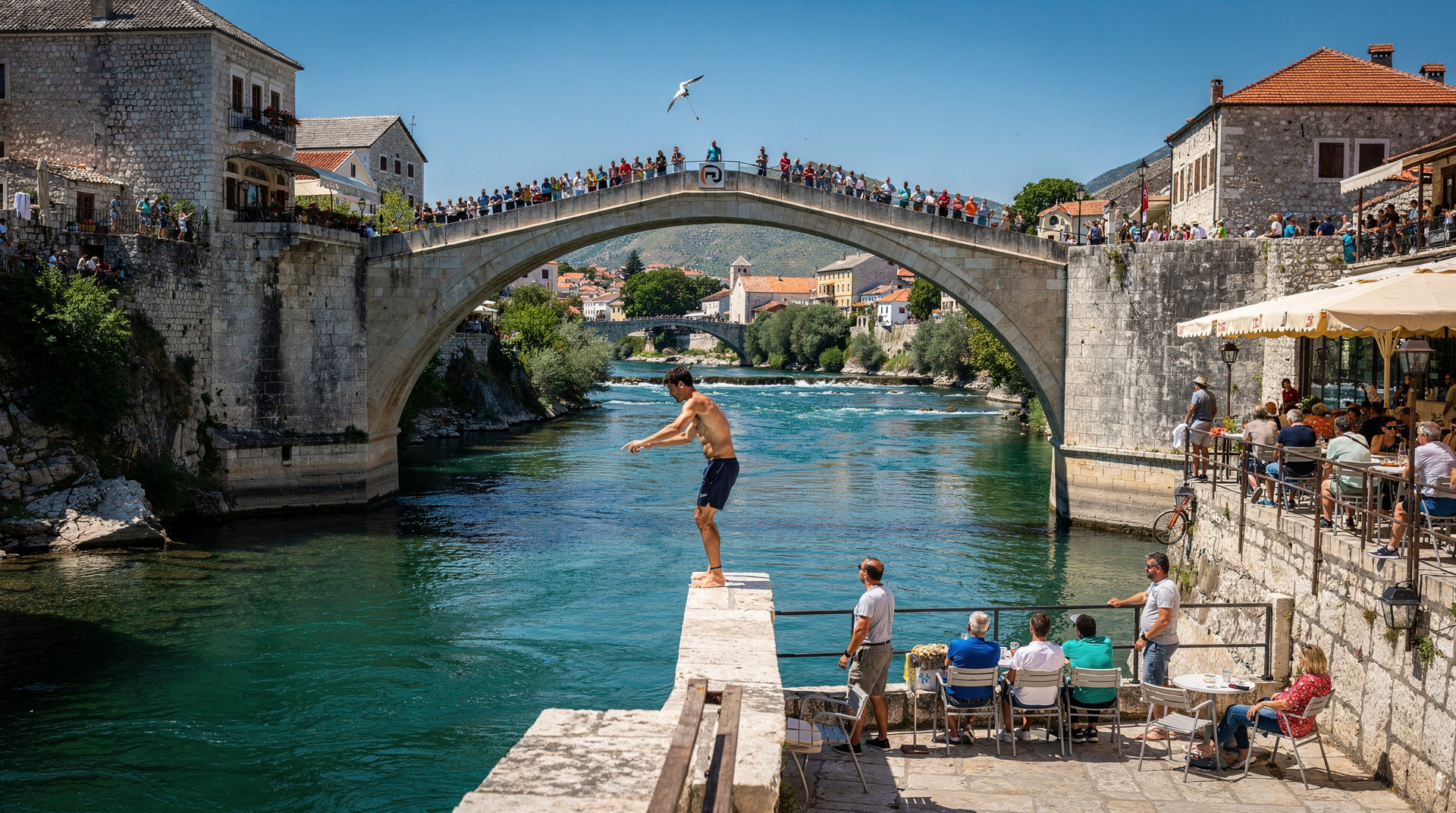
The young men who dive from Stari Most are part of a genuine local tradition, the Mostari diving club (Red Bull hosts a competition here every summer). The 21 m plunge into the cold Neretva is a real athletic achievement — it takes training and nerve.
The trap is not the diving itself. It is the collection system. A diver or an associate stands on the bridge and announces, loudly, that the dive will begin “when enough money has been raised” — typically 30-50 EUR. They then work the crowd, approaching each tourist individually and making eye contact until a contribution is made. The social pressure can be significant, especially for visitors who don’t realise the system is staged.
What to do: Watch if you want to — it is impressive. If a collector approaches you, a small contribution (1-2 EUR) is perfectly reasonable if you plan to watch the full dive. Shaking your head and walking away is also entirely fine. Never feel pressured into larger amounts. For the full context and history of the diving tradition, see the bridge divers honest guide.
Kujundžiluk souvenir street: buy smart
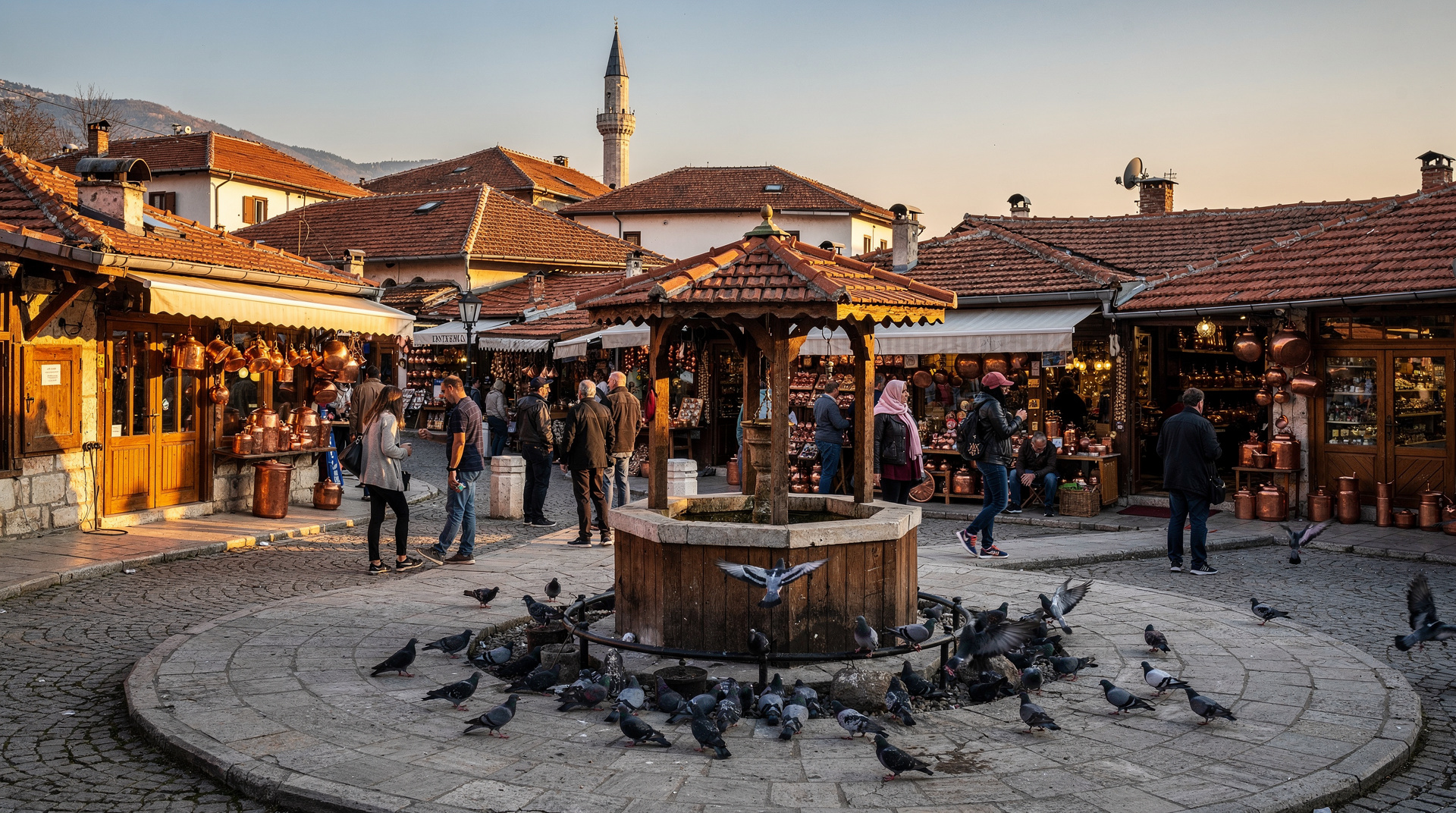
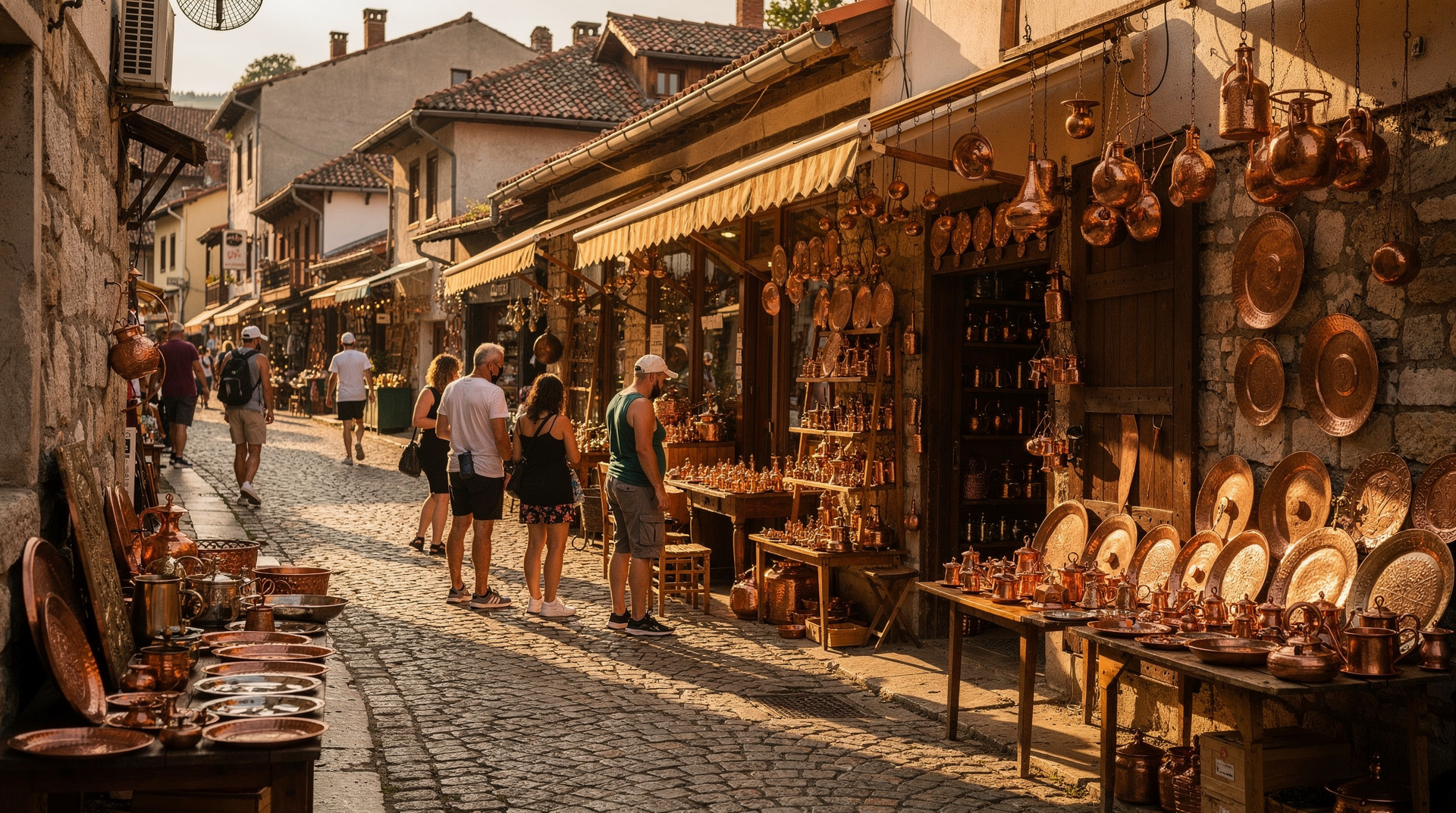
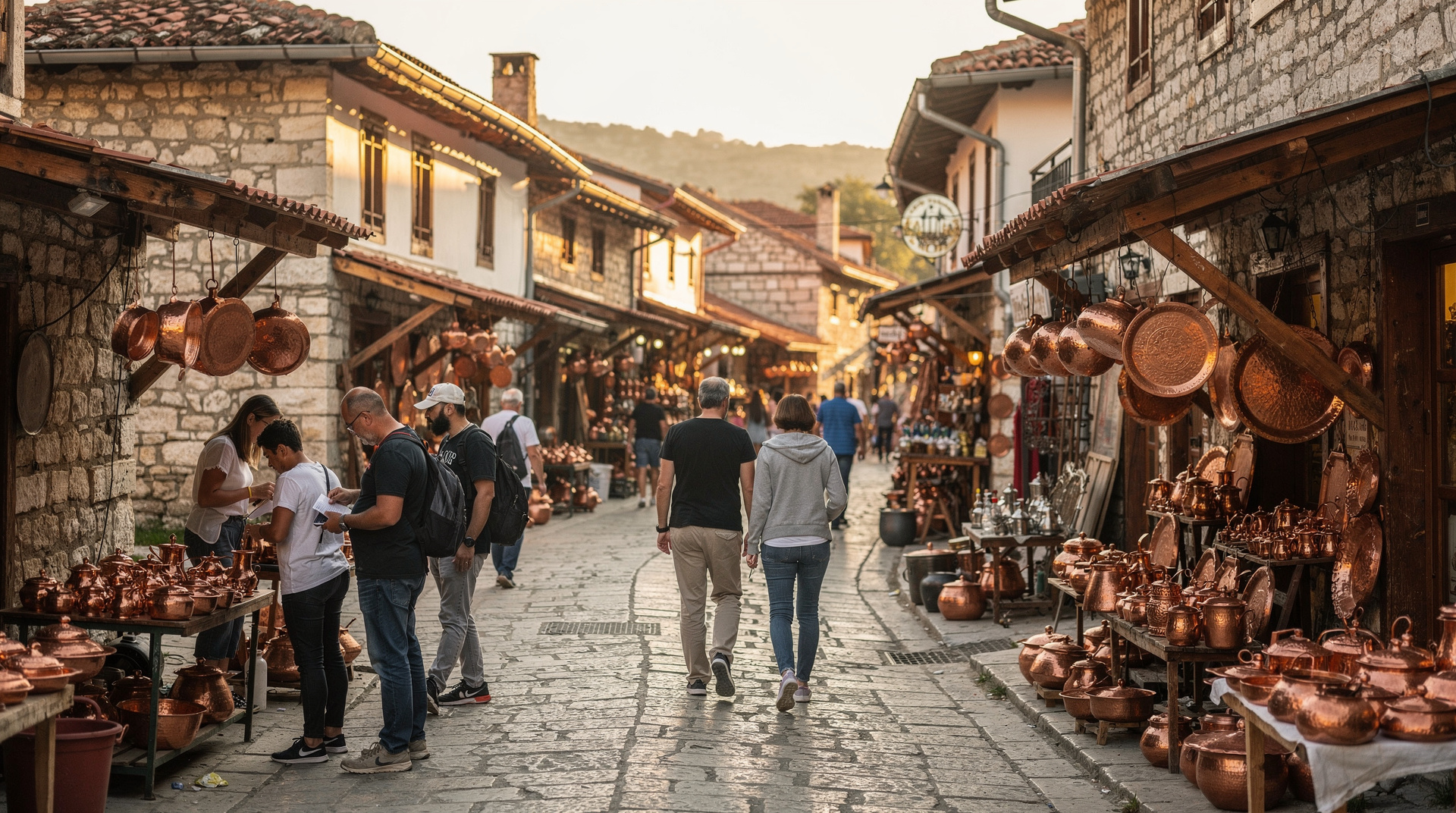
Kujundžiluk is Mostar’s main souvenir strip, running west from the bridge through the old bazaar. The copper bowls, embroidered tablecloths, hand-painted tiles and replica shell casings made into pens are all genuinely attractive. Some are even made locally. The prices are not.
Compared to Sarajevo’s Baščaršija (where most of the same goods are sold), Kujundžiluk runs 30-60% higher on comparable items. Competition is thin and tourist footfall is high — the economics work in the sellers’ favour.
What to do: Enjoy browsing, but compare prices before buying. If you are continuing to Sarajevo, most items are cheaper there. If Mostar is your only stop in Bosnia, walk 2-3 lanes back from the main drag to find quieter workshops where prices are more negotiable and quality is often higher. Always ask the price before picking something up; once you are holding an item, the social dynamics shift.
Restaurants with bridge views: the premium you pay
Restaurants and cafés with terraces overlooking Stari Most are beautiful. They are also, uniformly, significantly more expensive than restaurants a few minutes’ walk away. A plate of grilled fish on the bridge terrace might cost 35-40 BAM (18-20 EUR). The identical dish at a family restaurant in Lučki Most neighbourhood costs 18-22 BAM.
The food quality is often no better — sometimes worse. The kitchens are under pressure serving large tourist volumes with fast turnover.
What to do: One coffee or drink on a bridge terrace is a reasonable indulgence for the view. For meals, walk away from the bridge. The streets behind the mosque on the west bank, and the lanes north of the bridge toward the Muslim cemetery, have genuinely good local restaurants at honest prices. Ask your accommodation for their current recommendation.
Taxis and transport near the bus station
Mostar’s bus station sits on the east side of the city, a 15-20 minute walk from the old town. Unofficial taxis and private drivers cluster outside the station and quote flat rates to tourists — typically 10-15 BAM for a fare that should cost 5-7 BAM by meter.
What to do: If arriving by bus, walk to the main road and hail a passing taxi (yellow plates), or use your accommodation’s contact to pre-arrange a pick-up. If you must use a station taxi, agree the price firmly before getting in and clarify it is the full fare for one trip. Alternatively, the walk from the bus station to the old town is straightforward (follow signs for Stari Most) and manageable with a daypack.
Walking tours: choose well
Several individuals offer “local guide” walking tours near the bridge, sometimes aggressively marketed to tourists arriving at the old town. Quality varies enormously. Some are excellent — engaged, knowledgeable locals with real stories to tell. Others are cursory circuits lasting 45 minutes with minimal depth.
What to do: Pre-book a tour through a reputable provider before you arrive. A private walking tour with a vetted local guide costs somewhat more than a random street approach but delivers significantly more context and avoids awkward mid-tour upward price revisions.
Things that are absolutely fine in Mostar
Before this guide gives the impression of a city full of hustlers, it is worth being clear: Mostar is not Bangkok or Marrakech. The vast majority of interactions are entirely straightforward, friendly and honest. Most businesses operate fairly. Local people are genuinely warm and curious about visitors.
The above traps affect mainly the 200 metres surrounding Stari Most on busy summer days. Step slightly off the main tourist circuit and you encounter a real, working Herzegovinian city — with artisan workshops, old mosques, vine-draped courtyards, excellent restaurants and gracious people. That is the Mostar worth discovering.
For a deeper understanding of what to expect day-to-day, see the Mostar where to stay guide and the best restaurants in Mostar guide.
”Guides” at the bus station and unofficial tour touts
A less-discussed trap: individuals near the bus station or old-town entrance who claim to be official guides for Kravice Falls, Blagaj or Počitelj day trips, offering to arrange transport “right now” at a supposedly discounted rate. Some are legitimate freelancers; others oversell capacity, cram too many people into a car, or simply fail to show at the agreed pickup time. If you want a day trip, it is far more reliable to arrange one in advance — see best day trips from Mostar for vetted options, or check the Herzegovina day trip guide for a structured itinerary. If you are based in the capital, a pre-booked day tour from Sarajevo covering Mostar, Blagaj, Počitelj and the Kravice waterfalls removes the need to negotiate with anyone on the spot.
ATMs and currency exchange near the bridge
Currency exchange booths (menjačnica) clustered around Kujundžiluk sometimes post rates noticeably worse than banks a few streets away, and some independent ATMs near the tourist core charge steep withdrawal fees layered on top of “dynamic currency conversion” — always choose to be charged in BAM, never in your home currency, when an ATM offers the choice. For a fuller picture of costs and currency handling across the country, see the Bosnia money and currency guide.
How the traps work, and why they are easy to sidestep
Almost every irritation in Mostar comes from the same mechanism: a very small historic core, a very large number of visitors who arrive together, and very little time for those visitors to compare options. Day-trip groups step off the coach, walk straight to the bridge and make decisions in a hurry. A seller who knows that you will not walk back tomorrow has little reason to lower a price. Once you see the pattern, the traps stop feeling personal. They are simply the economics of a place that receives more people in an afternoon than it can comfortably absorb.
The practical consequence is that time is your best defence. Every extra few minutes you spend looking before you commit, whether at a menu, a price tag or a driver’s offer, works in your favour. Travellers who stay overnight have the largest advantage, because they can see the old town when the coaches have left and the whole place changes character. If you are still choosing where to base yourself, the Mostar destination page and the where to stay guide explain which areas make an overnight stay worthwhile.
Reading the old town like a local
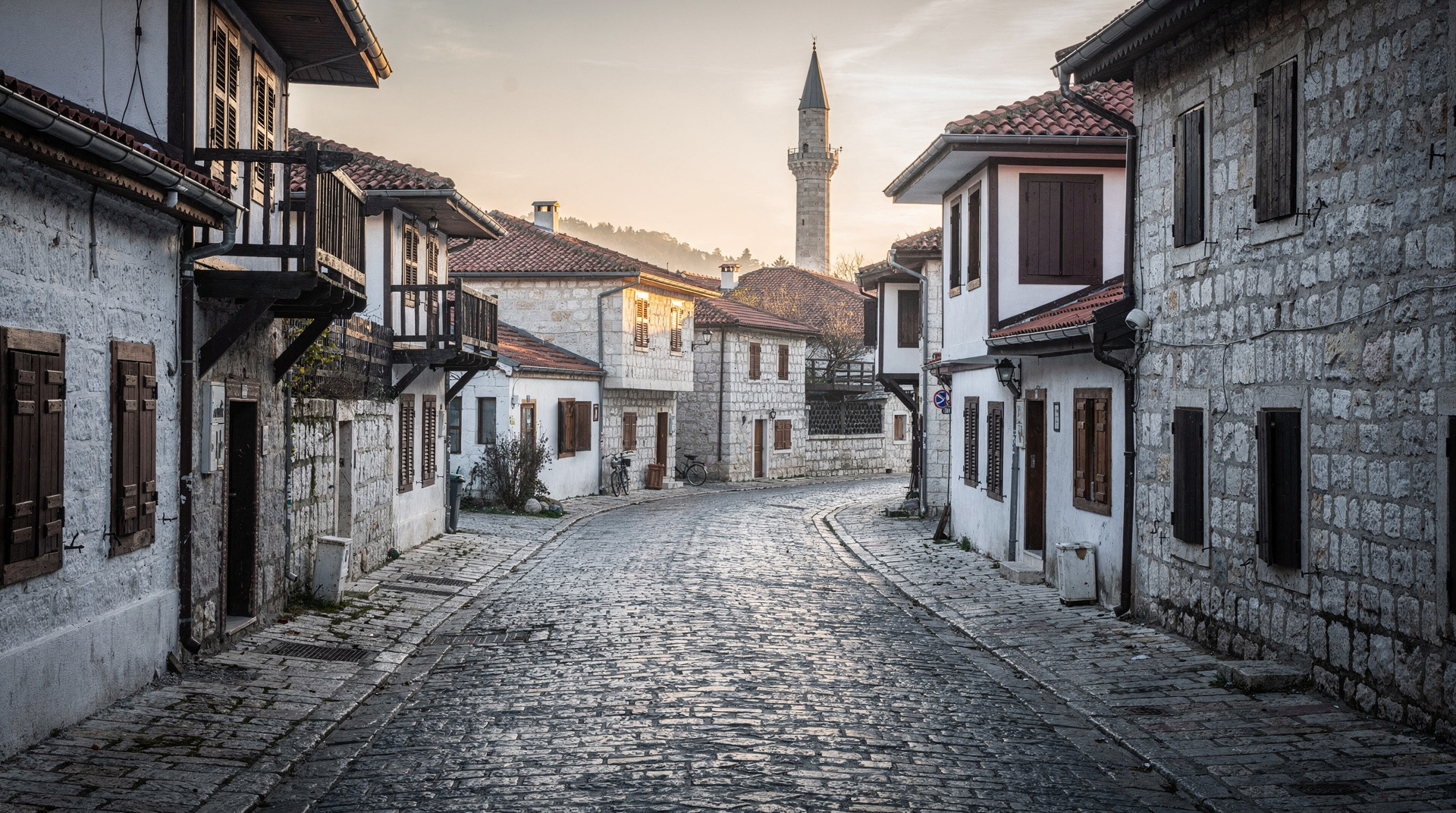
The old town looks like one continuous attraction, but it has distinct layers. The stretch closest to the bridge is built for passing visitors. A little further back, the lanes become quieter and the shops are less polished: tools, household goods, a baker, a barber. That is the real neighbourhood, and the contrast is the quickest way to calibrate what things should cost.
A simple habit helps: before you buy or order anything near the bridge, walk a short distance in a different direction and look at what is offered there. You do not need to haggle or be suspicious. You only need a reference point. The difference between the two will tell you most of what you need to know, and it will make the premium you pay for a view or a convenient location a conscious choice rather than an accident.
If you want the history that explains why the bridge and the bazaar matter so much, the Stari Most guide and the Mostar war history guide give the background, and the personal account in the Mostar old bridge story shows how locals see the place. Understanding what the bridge means to the town makes the commercial side easier to take in stride.
Eating well without paying for the view
The easiest saving in Mostar is also the most enjoyable: eat where residents eat. Grilled meats, fresh bread, soft cheese, stuffed vegetables and strong coffee are all available away from the bridge terraces, usually served with less hurry and more conversation. Ordering the same dishes you would find on the bridge, but a few streets away, is the single best way to feel that you have seen the city rather than just the postcard.
Our best restaurants in Mostar guide lists places worth the walk, and the Bosnian food guide helps you recognise what to order so that you are not pointing at a menu you cannot read. If you want something local to drink with dinner, the Herzegovina wine guide explains what the region produces, and it is usually better to ask for a local bottle than an imported one. A bridge-view coffee as a treat is fine; just do not let the view decide every meal.
Short stays and day trips: how to protect a tight schedule
Many visitors reach Mostar on a long day from the coast, and these are the people most exposed to the traps, because every hour counts. The Mostar from Dubrovnik guide and the Mostar from Split guide cover how those days usually unfold, and the Mostar day trip from Sarajevo guide does the same for travellers coming from the capital.
A few habits protect a short visit:
- Decide in advance what you most want to see, so that you are not led around by whoever approaches you first.
- Agree on a meeting time and place with your driver or group before you leave the car park, and write it down.
- Eat once, away from the bridge, rather than grazing on overpriced snacks all afternoon.
- Keep a little cash in small notes for tips and small purchases, so you are never stuck handing over a large note.
- Leave the bridge area for the last part of the visit if you can, when you have a clearer sense of prices.
- If time is very short, consider a guided visit focused on the old town and the bridge so the essentials are covered without improvising.
If you are travelling between the two cities by public transport, the Sarajevo to Mostar transport guide explains the options, and the wider getting around Bosnia guide helps you plan the onward leg without relying on whoever is waiting outside the station.
Beyond the old town: where the pressure disappears
One of the best answers to the traps is simply to leave the tourist core for a while. The countryside around Mostar is generally calmer and the atmosphere is very different. The Blagaj Tekke guide, the Počitelj village guide and the Kravice waterfalls guide all describe places where the experience is about scenery and history rather than sales. Planning these in advance means you are not dependent on a street-side offer.
If you are deciding how much time Mostar deserves compared with the capital, the Sarajevo vs Mostar comparison helps, and the Sarajevo and Mostar in three days itinerary shows how the two fit together. For the wider picture of how Ottoman-era towns like this one came to look the way they do, the Ottoman heritage guide is a good companion read.
Keeping perspective and staying polite
It helps to remember that the people selling things near the bridge are working in a seasonal economy. A firm, friendly refusal is almost always received in good spirit. A smile, a short “no, thank you” and a continued walk are enough. You do not need to be rude, and you do not need to explain yourself. Most sellers move on immediately, and many will be perfectly pleasant if you come back to buy something later at a price you consider fair.
Equally, spending money in the old town is not a mistake. A souvenir you love, a coffee you enjoy or a tip for a performance you actually watched all support the local community. The goal of this guide is not to make you stingy but to make sure you spend deliberately. For other situations beyond Mostar, the Bosnia scams to avoid guide and the advice on avoiding the crowds in Bosnia cover the same ideas across the country.
Frequently asked questions about Mostar tourist traps
Do the Mostar bridge divers deserve a tip?
Which shops in Mostar are actually good value?
Are Mostar taxis safe and reliable?
Are the restaurants on Stari Most overpriced?
Is Mostar still worth visiting despite the traps?
Should I avoid street-side offers for day trips from Mostar?
What currency exchange mistakes should I avoid in Mostar?
Top experiences
Bookable activities with verified prices and instant confirmation on GetYourGuide.