Mostar in the war — the siege, the bridge and what remains
Mostar City and Museum Tour
What happened to Mostar during the war?
Mostar was besieged by Bosnian Serb forces in 1992, then suffered a devastating Bosniak-Croat war in 1993–1994. On 9 November 1993, Croatian Defence Council forces demolished the Ottoman Stari Most (Old Bridge), which had stood since 1566. The city was divided along the Neretva river into Bosniak east and Croat west Mostar until the Washington Agreement of 1994.
| Where | Old town Mostar, both banks of the Neretva |
| Cost | Stari Most Museum (Tara tower) around 15 BAM; Museum of Herzegovina around 8–10 BAM; walking tours vary |
| Time needed | Half a day for the war-history sites alone; a full day combined with the bridge and old town |
| Getting there | Walkable within the old town; see Sarajevo to Mostar transport if arriving from the capital |
| Best approach | A guided walking tour first, for context, then self-guided exploration of the bridge towers and side streets |
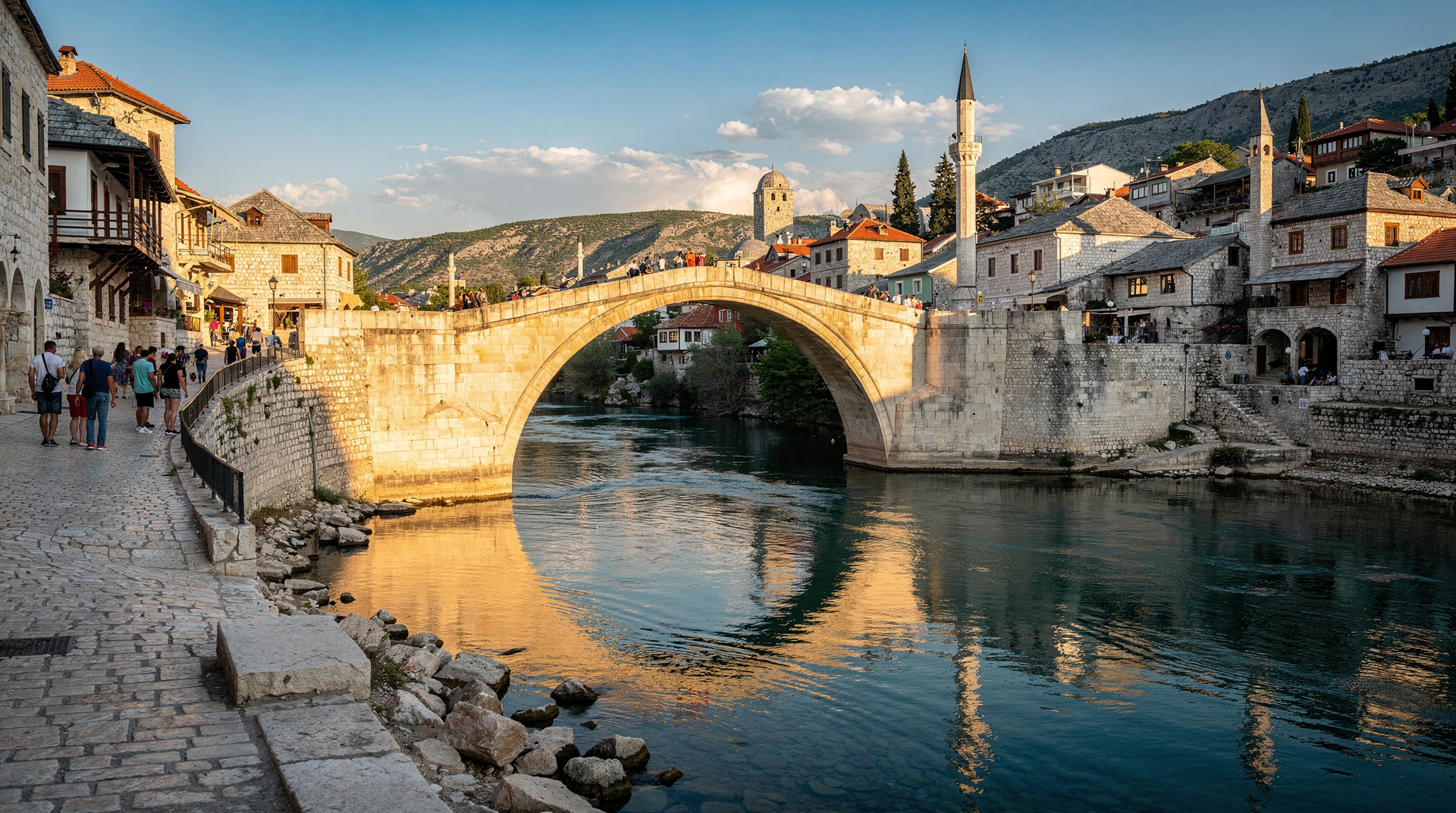
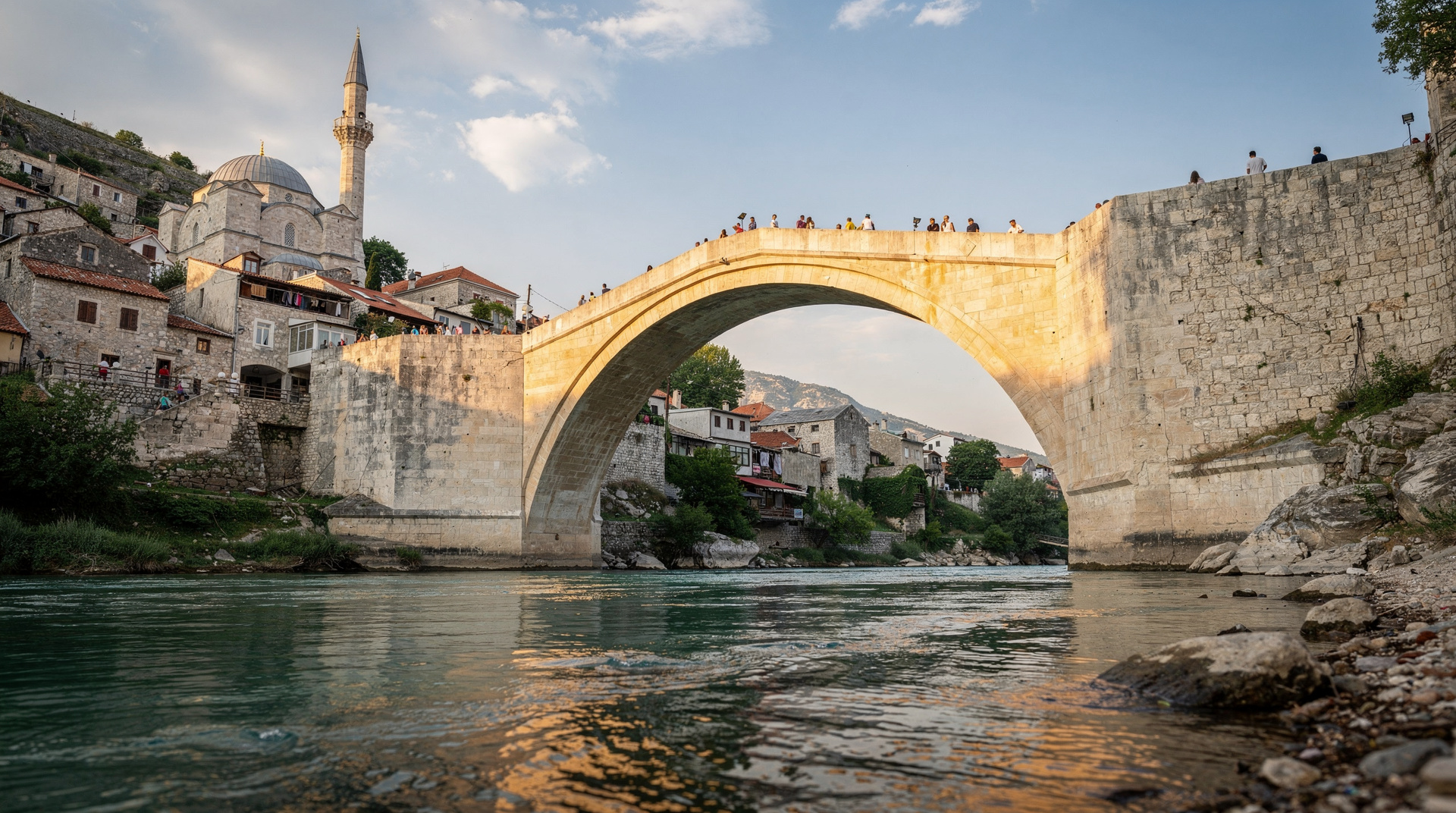
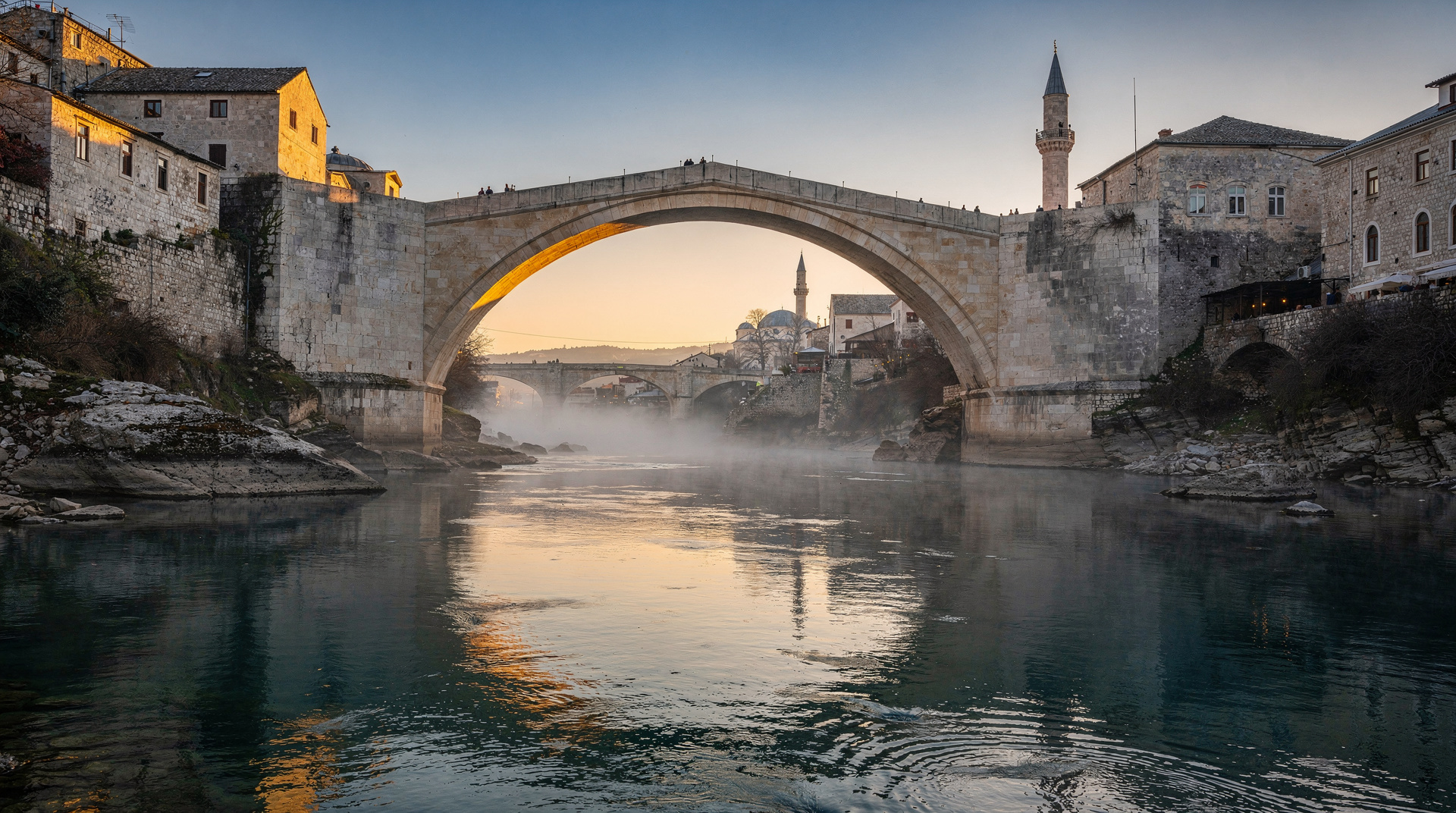
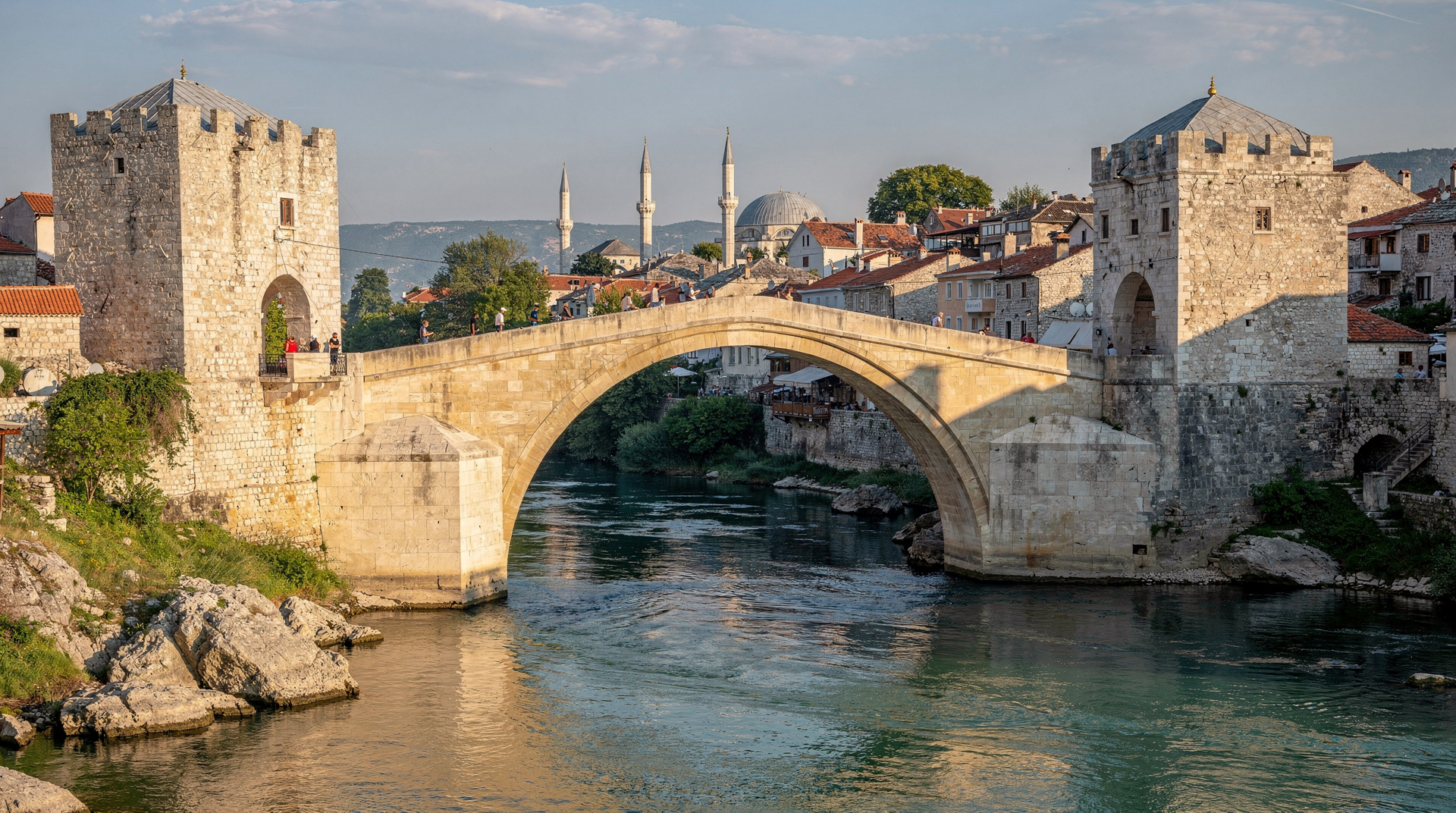
Mostar’s old town is among the most photographed places in the Balkans. The Ottoman Stari Most arching over the Neretva, the stone towers on either bank, the divers climbing the parapet on summer afternoons — it is a scene of considerable beauty and considerable tourist volume. What many visitors do not immediately realise is that the bridge they are photographing is not the original one. It is a reconstruction, opened in 2004, eleven years after the original was deliberately destroyed.
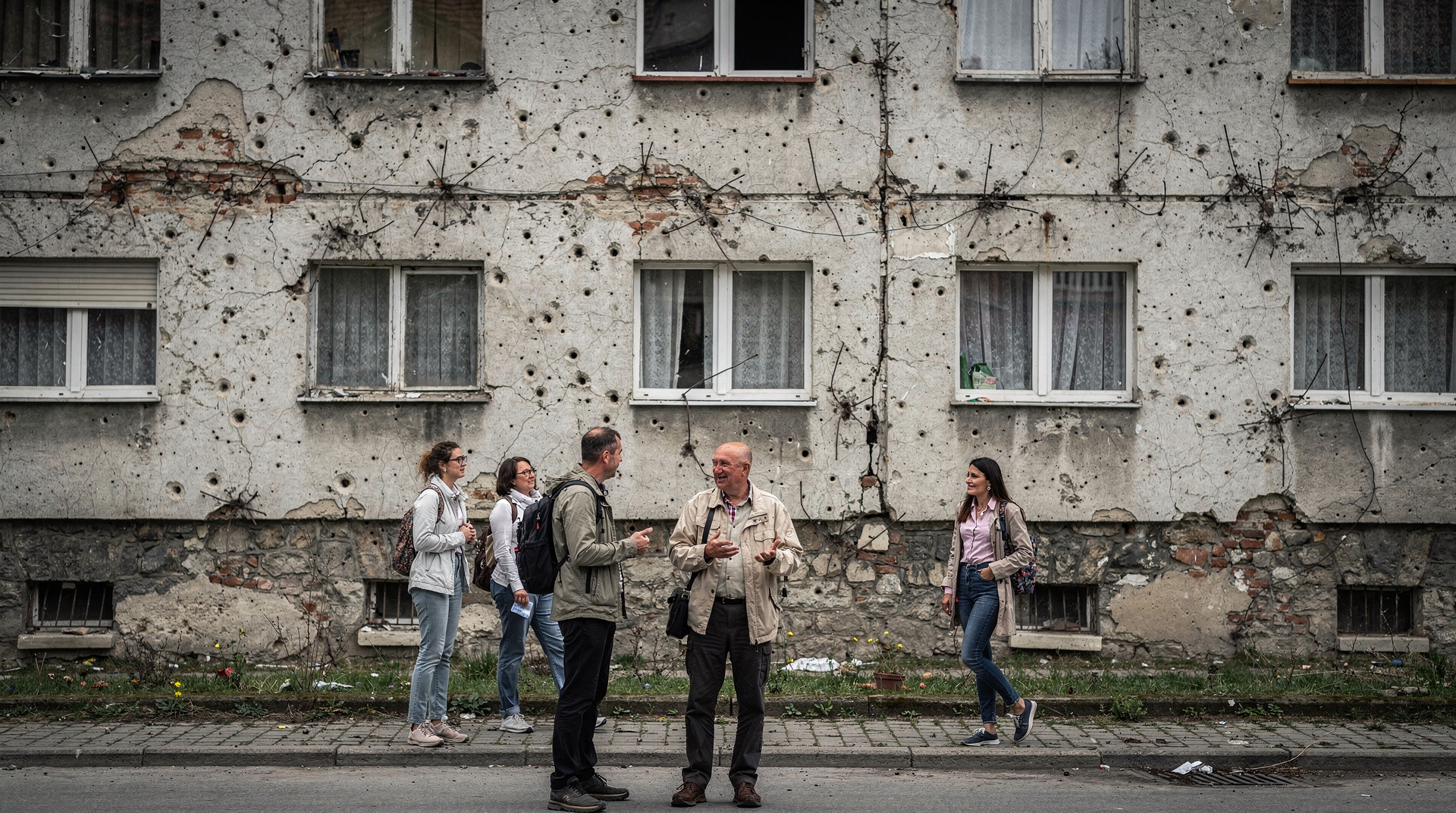
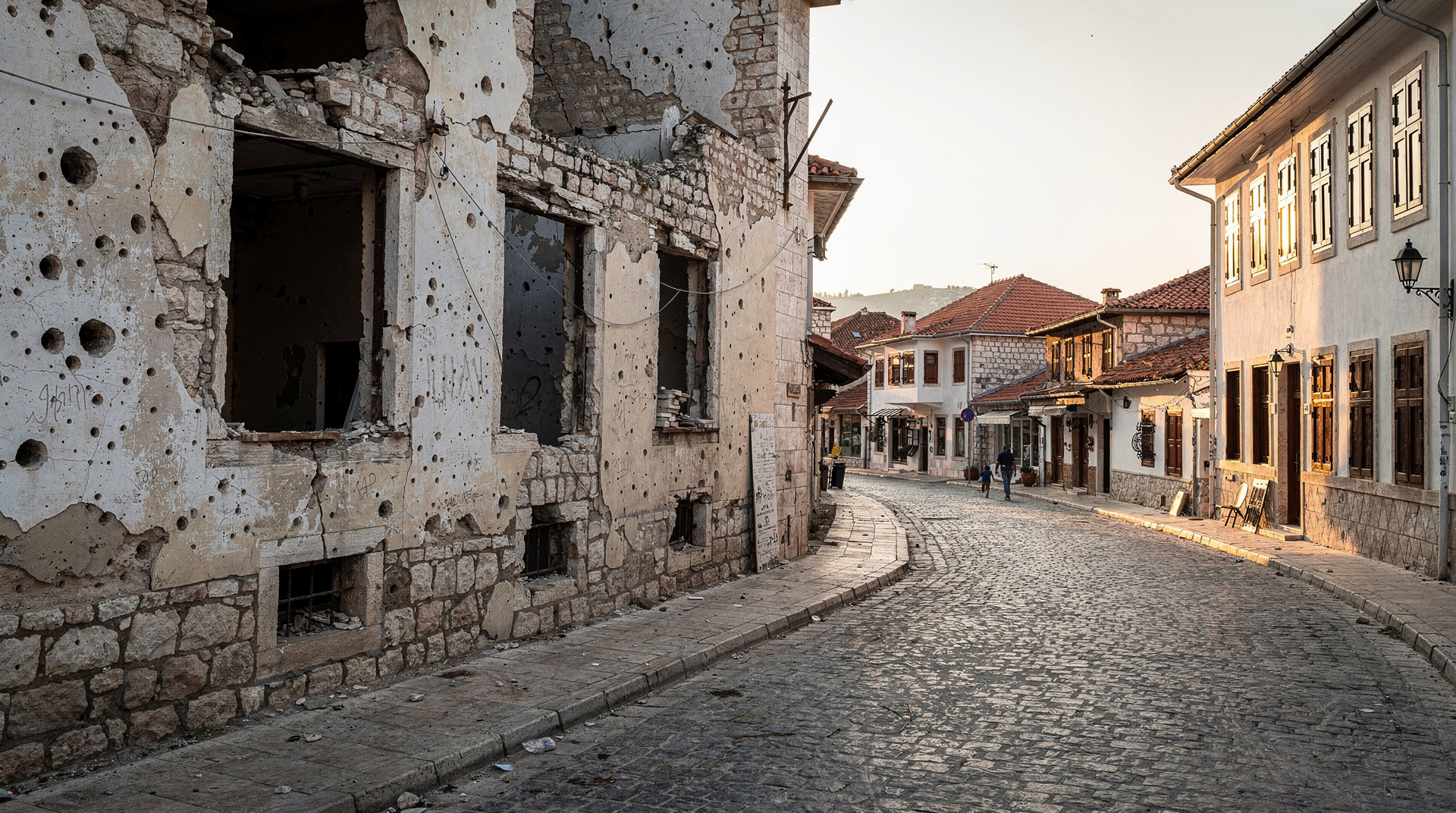
The history of what happened to Mostar between 1992 and 1994 is essential context for understanding the city you walk through today — the informal division, the different scripts on street signs, the bullet-pocked facades still visible if you look above the gift-shop frontages. This guide covers that history factually and helps you find the war-history dimension of a Mostar visit.
Mostar’s war: two distinct phases
Phase 1: Bosnian Serb siege (April–June 1992)
When the Bosnian War broke out in April 1992, Mostar was initially besieged by the Yugoslav People’s Army (JNA) and Bosnian Serb forces. During this phase, Bosniaks (Bosnian Muslims) and Bosnian Croats fought together in the Croatian Defence Council (HVO) against the Bosnian Serb forces. By June 1992, Bosnian Serb forces had largely withdrawn from Mostar and its immediate surroundings, though shelling continued intermittently.
Phase 2: Bosniak-Croat war (1993–1994)
In early 1993, the alliance between Bosniak forces and the HVO broke down. The reasons were complex: disputes over territory, pressure from Zagreb, the ambitions of HVO commanders and the HDZ political leadership regarding a “Herzeg-Bosnia” — a Croat entity that would eventually unite with Croatia.
In May 1993, HVO forces launched an offensive against Bosniak areas of Mostar. The city was effectively divided along the Neretva: Bosniak-held east Mostar and HVO-held west Mostar. East Mostar was subjected to siege conditions similar to those in Sarajevo — shelling, sniper fire, and blockade of supplies. The Bosniak population of east Mostar, including many who had fled Bosnian Serb operations elsewhere, were trapped.
On 9 November 1993, after weeks of shelling, HVO forces demolished Stari Most — the sixteenth-century Ottoman bridge that had connected the two banks since 1566 — with sustained tank and artillery fire. The bridge had been weakened by repeated shelling in the preceding months. Its destruction was later prosecuted at the ICTY as a crime against humanity targeting cultural heritage.
The Bosniak-Croat war in Mostar ended with the Washington Agreement of March 1994, which created the Federation of Bosnia and Herzegovina. The Dayton Agreement of 1995 placed Mostar as a special unified city within the Federation, governed under an internationally supervised statute. The city was officially unified under a single administration in 2004 — the same year the bridge was rebuilt.
The reconstruction of Stari Most
The decision to rebuild Stari Most was taken in the mid-1990s. The reconstruction was a major international project supported by the World Bank, UNESCO and dozens of national donors. The approach was to rebuild using the original Ottoman construction methods — Tenelija limestone from the same Dreznica quarry, traditional mortar, and the same arch geometry.
The reconstructed bridge was opened on 23 July 2004, in a ceremony attended by international leaders. In 2005, the Old Bridge area of Mostar was inscribed as a UNESCO World Heritage Site — recognised not only for its architecture but for what it represents as a symbol of reconciliation.
To stand on the bridge today is to stand on a careful, faithful reconstruction of a destroyed original — which is itself a form of statement about the relationship between culture, destruction and recovery.
Mostar City and Museum TourWar-history sites in Mostar today
Stari Most and its context: The bridge and both towers (Halebija on the east, Tara on the west) can be visited with a guide who explains the original construction, the destruction and the reconstruction. The Stari Most Museum in the Tara tower covers the bridge’s history, including the 1993 destruction.
Bullet-scarred facades: Walk away from the bridge area into the streets behind the old town — particularly on the east (Bosniak) side — and you will encounter residential and commercial buildings still bearing significant war damage: shrapnel scars on facades, damaged upper floors, occasional gaps in rows of buildings. These are not curated exhibits; they are the ordinary aftermath of the siege, still visible.
The divided city geography: The informal division between east and west Mostar remains readable in the city’s landscape. Street signs use different scripts (Latin in the Croatian-majority west, sometimes Cyrillic in parts of the Bosniak east). The Croatian side has a distinctly different atmosphere and commercial character. The confrontation line that separated the two communities ran roughly along the Bulevar, the broad road on the west side of the Neretva.
The Museum of Herzegovina (Muzej Hercegovine): This is one of the oldest cultural institutions in Mostar and holds both pre-war and war-period collections. The museum also occupies a building that was once the family home of Džemal Bijedić, a Yugoslav prime minister from Mostar who died in a plane crash in 1977.
Mostar: private walking tour with local guideMostar today: a city not yet fully reconciled
Mostar is a striking example of a city rebuilding after deep internal conflict. The old town — on the east (Bosniak) bank of the Neretva — is now heavily touristic: souvenir shops, restaurants, cafés. The restoration work on the historic buildings has been thorough. In summer, the streets around Stari Most are genuinely crowded.
Beneath this tourist surface, the political and cultural division of the city is still real. Mostar has two school systems — one for Bosniak and one for Croat children — that use different curricula and effectively segregate children along ethnic lines. This “two schools under one roof” system (dvije škole pod jednim krovom) has been repeatedly challenged by civil society and international bodies as a form of institutionalised division, without as yet being resolved.
For a visitor, this context does not affect the experience of the old town directly. But it is honest to know that the beautiful bridge over the Neretva leads into a city whose reconciliation is incomplete.
Combining war history with a Mostar day visit
A day in Mostar combines naturally:
- Morning: guided city tour including war-history context and the museum
- Midday: Stari Most bridge, the Tara tower museum, lunch in the old town
- Afternoon: walk to Blagaj Tekija or Kravice Falls (see day trips from Mostar)
For visitors coming from Sarajevo, the Sarajevo to Mostar transport guide covers the bus and train options. For visitors from Dubrovnik or Split, the Mostar from Dubrovnik and Mostar from Split guides cover the cross-border day-trip logistics.
The Stari Most guide covers the bridge in architectural and cultural detail. The Yugoslavia wars explained guide provides the broader political context for the Bosniak-Croat conflict.
Beyond Mostar: the wider war-history landscape
Mostar’s war history sits within a much larger picture. Sarajevo endured the longest siege in modern European history (1992–1996); the Sarajevo siege and Tunnel of Hope guide and the war tunnel tour cover it in depth. To the east, Srebrenica is the site of the 1995 genocide, and a visit there is a sober but important complement to Mostar’s history. Travellers assembling a dedicated history-focused trip should look at the Bosnia war history itinerary, which sequences Sarajevo, Srebrenica and Mostar sensibly across several days.
How to read the city on foot
The simplest way to make sense of Mostar’s war history is to treat the walk as a sequence rather than a checklist. Start at the bridge, where the story of the destruction and the rebuilding is told most directly, then move away from the crowds and let the streets do the talking. The contrast between the polished old town and the quieter residential blocks a few minutes away is the clearest lesson the city offers about how recovery has been uneven.
Take your time on the side streets. Look at rooflines, window frames and the lower walls of buildings, where repairs of different dates sit next to each other. Some buildings have been fully restored, others carefully patched, others left as they were. None of this is signposted, which is exactly why a few minutes of attention rewards you more than a rushed circuit.
If you are interested in how the city looked before the conflict, the Stari Most guide and the Ottoman heritage guide give the architectural background, and the Mostar old bridge story is a more personal account of the same place.
Understanding the two sides of the river
Visitors often ask which bank is “the right one” to spend time on. The honest answer is both. The east bank holds the Ottoman old town and most of the sites tied to the bridge; the west bank has a different rhythm, with wider streets, everyday shops and a more local feel. Crossing the river on foot, several times, is the quickest way to feel how two parts of one city can have such different characters.
When you eat or stay on either side, you are simply a guest in an ordinary Bosnian city, not a participant in the old divisions. For ideas on where to eat, see the best restaurants in Mostar, and for a base that suits a history-focused visit, the where to stay in Mostar guide compares the options. If you are wary of the usual pitfalls around the bridge, the Mostar tourist traps guide and the bridge divers truth article are worth reading before you arrive.
Questions worth asking a guide
A good guide turns a walk into a conversation. Rather than asking for dates, which you can read in any guide, ask about the things only a local can explain:
- How did people in east Mostar get through the months of blockade, and what do they remember of daily life during it?
- Why were so many cultural monuments, not just the bridge, targeted, and what has been rebuilt since?
- How do families on both banks talk about the war today, and how do younger generations see the divide?
- What does the bridge mean to residents, as distinct from what it means to visitors?
Listen more than you speak. Some guides have family stories tied to these events, and answers can differ depending on who is telling them. Hearing more than one voice, perhaps by combining a guided walk with time at the museums, gives you a fuller and fairer picture than any single account.
Pairing Mostar with other war-history sites
Mostar is one chapter of a longer story, and the other chapters are close enough to plan around. In Sarajevo, the Sarajevo war tour guide and the Sniper Alley guide cover the siege of the capital, while the War Childhood Museum offers a deeply human view of the same years. For the broader background, the Bosnia history for travelers guide is a good first read, and the Sarajevo and Mostar in three days itinerary shows how to link the two cities without rushing either.
Many travellers also add a stop at Počitelj or Blagaj on the same day, both of which offer a calmer counterpoint to the intensity of the old town. If you are travelling with a car, the renting a car in Bosnia guide explains what to expect on the road.
Practical tips for a thoughtful visit
- Go early or late in the day if you can. The old town is much easier to read when it is not packed, and the quieter light makes the details on the buildings easier to see.
- Wear comfortable shoes. The old town is paved with polished stone that can be slippery, and you will want to cross the bridge and the river more than once.
- Leave time between the museum visits and the walking. The material is heavy, and a pause for coffee, as described in the Bosnian coffee culture guide, helps it settle.
- Keep your questions open and respectful. Residents are generally happy to talk, but they decide how much they want to share.
- Do not wander off marked paths in rural areas outside the city; the landmine safety guide explains why.
Visiting respectfully
War-history sites in Mostar are not staged attractions — the bullet-scarred facades and divided city geography are the lived environment of people who experienced or inherited the conflict. A few points worth keeping in mind: avoid photographing residents or private homes without consent, keep voices down inside the Tara tower museum and the Museum of Herzegovina, and be aware that “Bosniak” and “Croat” framing of the war is still a sensitive subject locally — a good guide will explain nuance that a self-guided walk cannot.
Frequently asked questions about Mostar in the war — the siege, the bridge and what remains
Who destroyed the Old Bridge in Mostar?
What is the war-history museum in Mostar?
Is Mostar still divided today?
When was Stari Most (the Old Bridge) rebuilt?
How do I combine war history with the rest of a Mostar visit?
Should I visit Mostar's war history and Srebrenica on the same trip?
Top experiences
Bookable activities with verified prices and instant confirmation on GetYourGuide.