Avoiding crowds in Bosnia
From Mostar – Herzegovina day tour
How do you avoid crowds in Bosnia & Herzegovina?
Visit in May-June or September-October, arrive at Mostar and Kravice Falls before 10:00 or after 17:00, base in Trebinje or Blagaj instead of Mostar, and build in at least two off-the-tourist-trail destinations (Jajce, Banja Luka, Trebinje, Una valley) alongside the headline stops. Bosnia is rarely truly overcrowded by European standards — but the bottlenecks are real and predictable.
Bosnia & Herzegovina is not the Mediterranean coast in August. It does not have the visitor volumes of Dubrovnik or Santorini. But it does have bottlenecks — Mostar’s Stari Most at midday, Kravice Falls on a hot weekend, Baščaršija on a cruise-ship day — and knowing when and where to go makes an enormous difference to the quality of your experience.
This guide covers the patterns honestly, so you can plan around them.
| At a glance | |
|---|---|
| Worst bottleneck | Kravice Falls and Mostar Stari Most, 10:00-16:00 in July-August |
| Quietest months | October-November and March-April (outside ski season) |
| Best all-round window | May-June or September-October |
| Easiest fix | Shift Kravice and Mostar visits to before 10:00 or after 17:00 |
| Cost of avoiding crowds | Usually nothing — same tickets, just different timing |
The crowd calendar
Peak season: July-August
The worst concentration of tourist traffic in Bosnia occurs between mid-July and mid-August. This is when the bulk of European summer holidays overlap with ideal swimming conditions at Kravice and other river sites.
The specific bottlenecks:
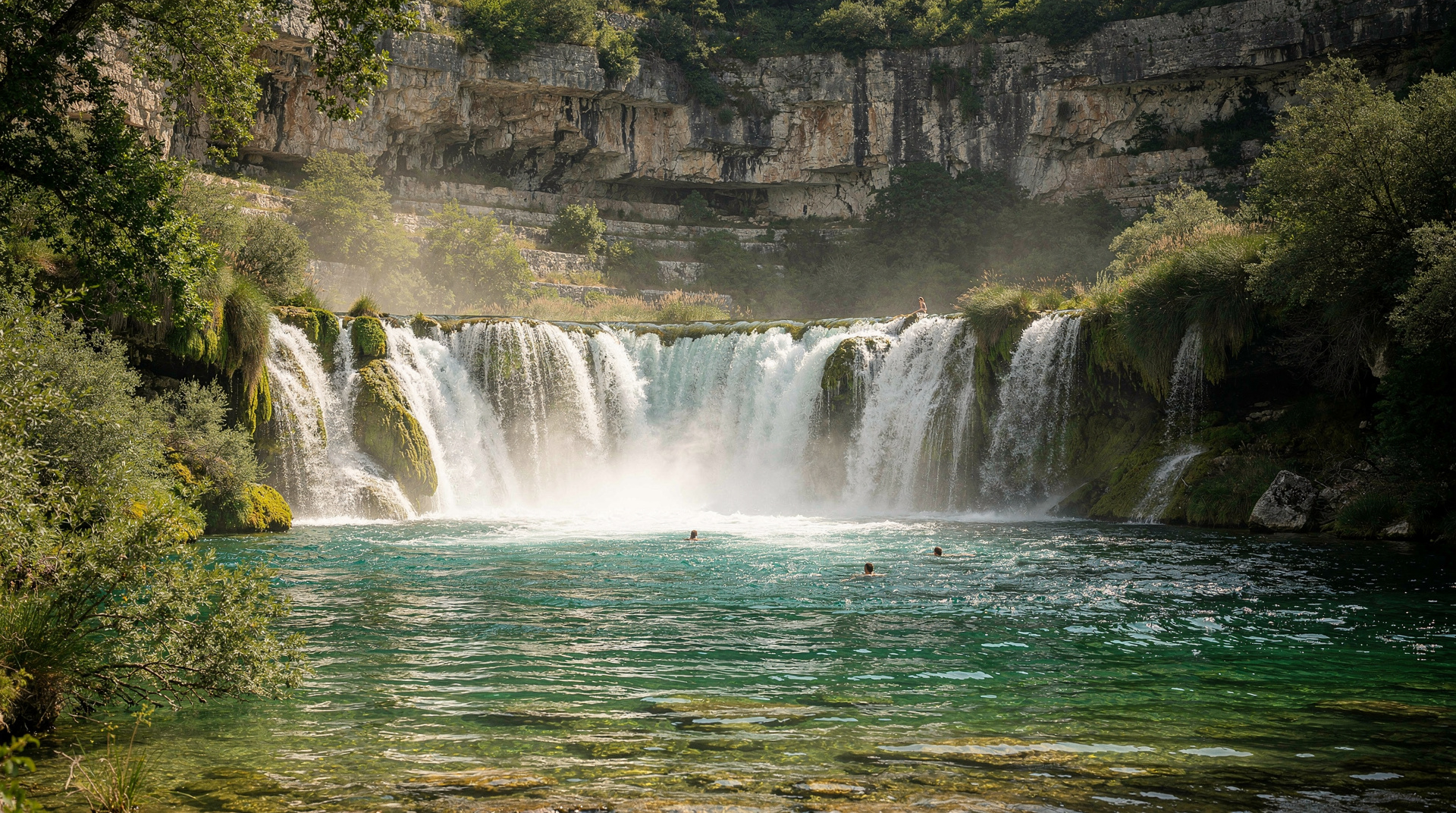
- Kravice Falls: 10:00-16:00 on weekdays, all day on weekends, is extremely crowded in peak season. Car parks fill, the single path down is jammed, the swimming area is packed.
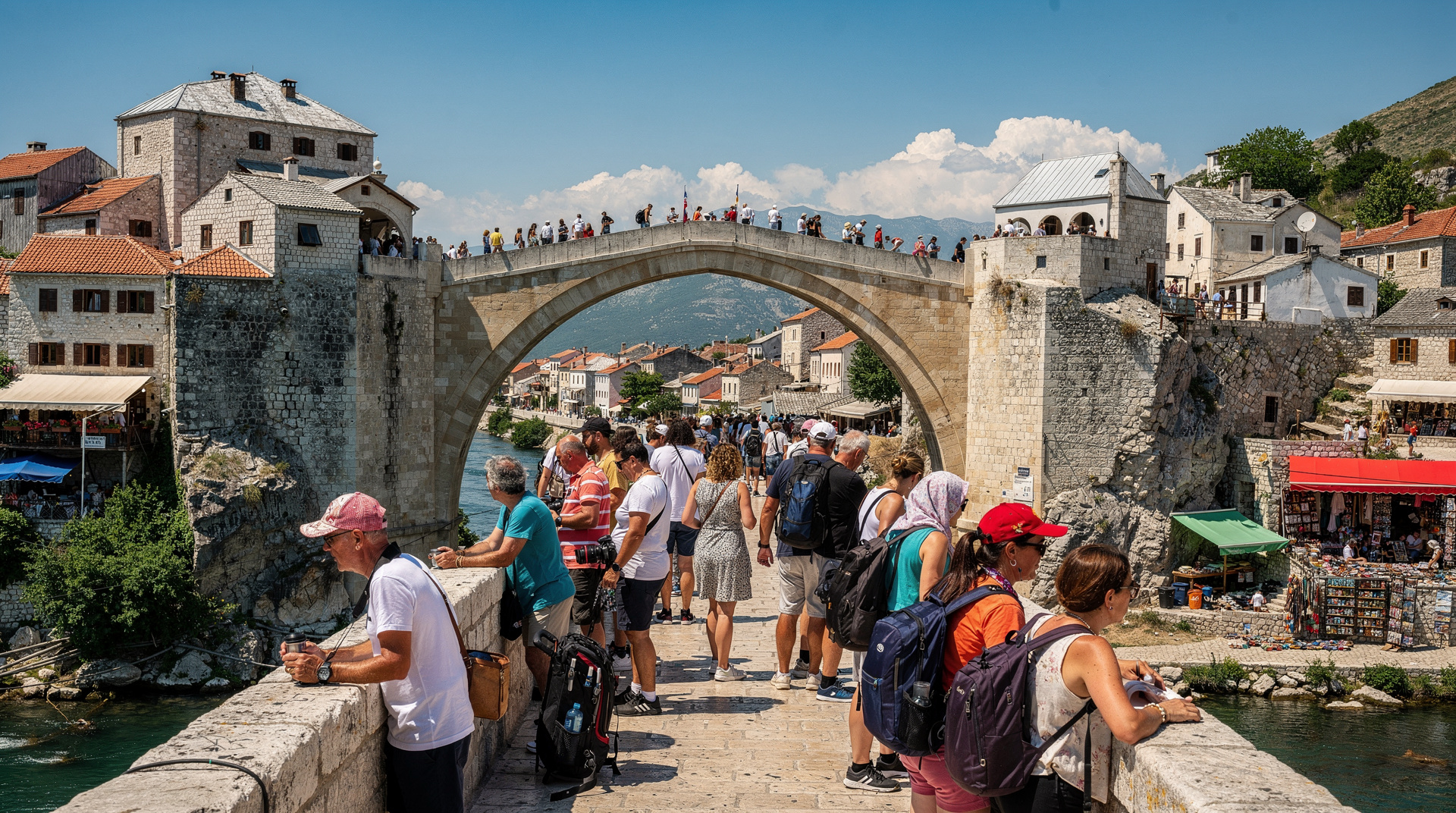
- Mostar Stari Most vicinity: large tour groups from Dubrovnik and Split arrive mid-morning and depart mid-afternoon, creating a dense tourist presence that peaks around 12:00-14:00.
- Sarajevo Baščaršija: busy but manageable — Sarajevo absorbs visitors well. The biggest pressure is accommodation pricing, not sightseeing congestion.
- Medjugorje: peak pilgrimage season. Major feast days (Assumption, Feast of the Apparitions) draw enormous crowds from across the world.
Shoulder season: May-June and September-October
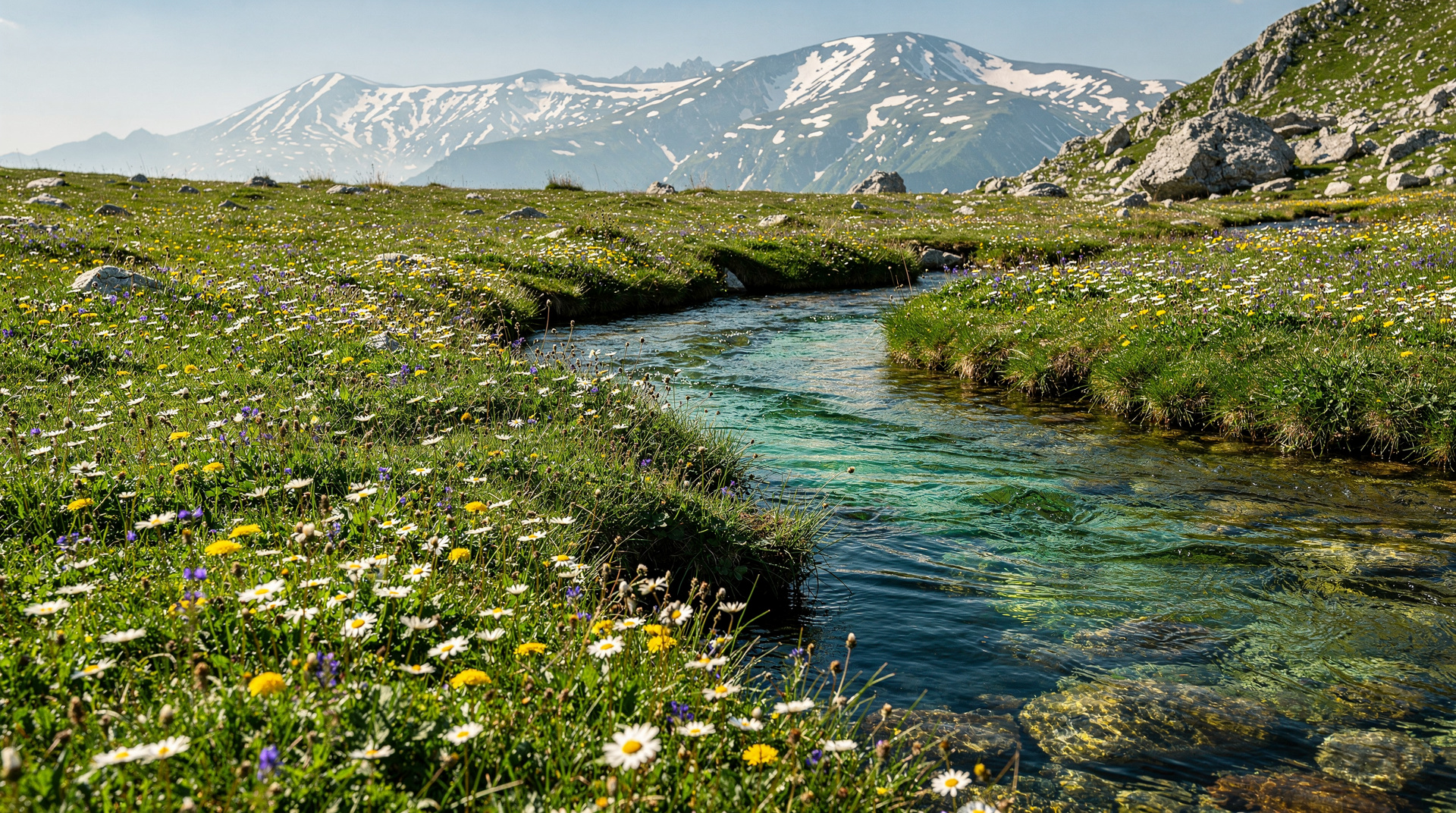
May and June are arguably the ideal time to visit Bosnia. Temperatures are comfortable (20-28°C in Herzegovina, slightly cooler at altitude), the landscape is lush and green from spring rains, rivers are full for rafting, wildflowers cover the mountain meadows and crowds are a fraction of peak summer.
September and October are equally good. September still offers warm temperatures (suitable for Kravice swimming until early October), autumn colours begin in the mountains from mid-October, and visitor numbers drop sharply after mid-August. October is excellent for hiking — the ochre-yellow forests of Sutjeska and Trebević are outstanding.
Low season: November-March
Outside ski resorts, Bosnia in winter is quiet — sometimes very quiet. Many day-trip operations from Dubrovnik and Split stop or reduce significantly. River activities (rafting, canoeing) are off-season. Mountain roads can close.
Sarajevo in winter is genuinely special — a snow-dusted city with working thermal baths at Ilidža, the Sarajevo Film Festival in late August (not winter), and a year-round cultural scene that doesn’t depend on tourism. Skiing at Jahorina and Bjelašnica is affordable and excellent December-March.
Time-of-day strategies
Kravice Falls: go early or go late
The single most effective crowd-avoidance strategy in Bosnia is timing your Kravice Falls visit. The waterfall’s access is a single narrow path down to a horseshoe basin. When the car park is full (which happens by 10:00-10:30 on peak days), visitors stack up on the path.
Solution: arrive at 08:00-09:00, when morning light hits the falls beautifully, the water is crystalline and you may have the basin largely to yourself. Alternatively, arrive after 17:00 — light is golden, most day-trip groups have departed, and the temperature has dropped to a more pleasant swimming level than the midday heat.
Mostar: own the evenings
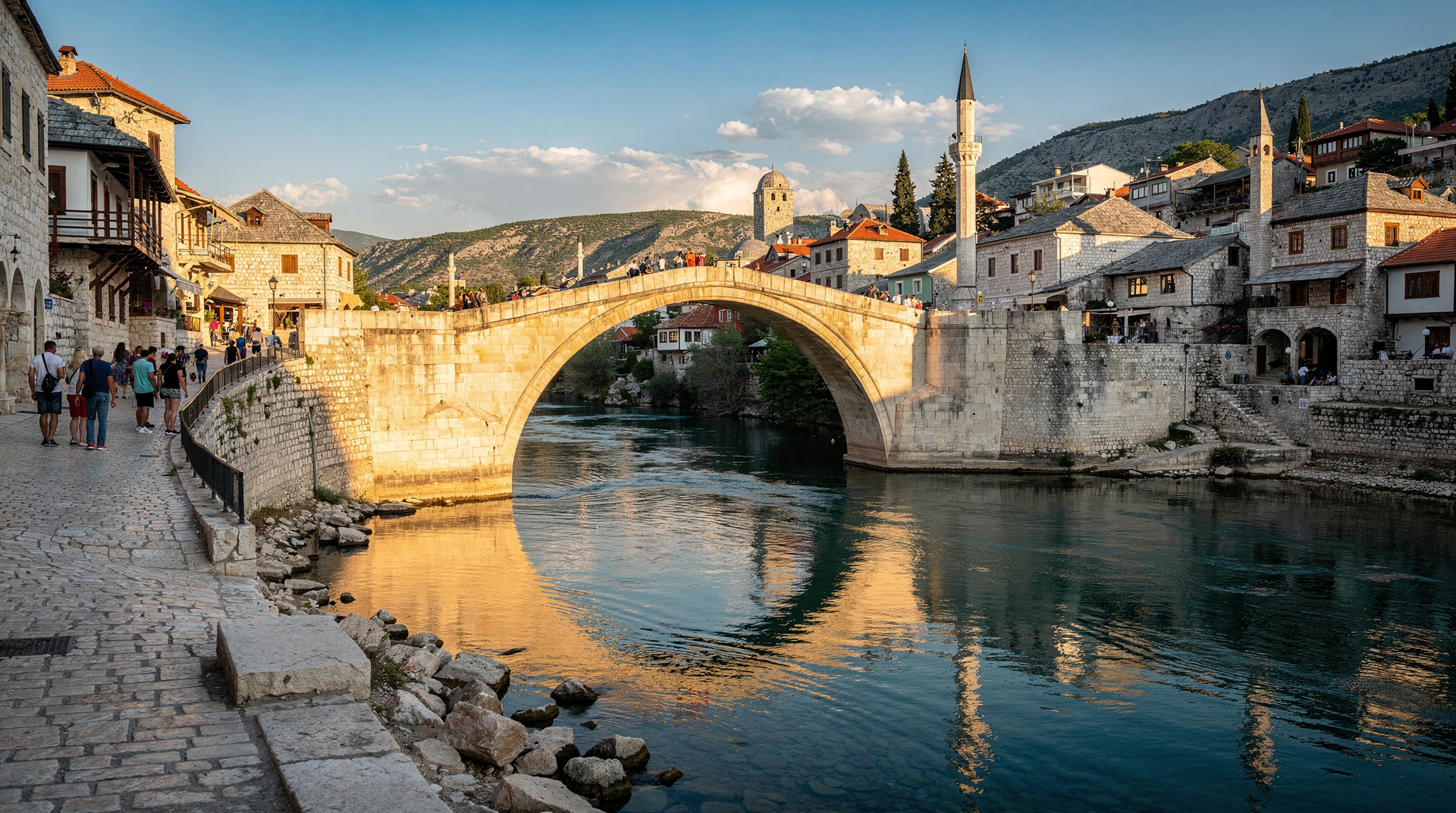
The transformation of Mostar from 18:00 onwards is dramatic. Day-trip groups from coastal Croatia return to their buses and depart. The locals re-emerge for evening walks (šetnja). The light turns warm and orange on Stari Most. Restaurants become quieter and more attentive. The bridge is no longer a photographic obstacle course.
If you are staying overnight in Mostar (strongly recommended over a day trip), you automatically access this quieter, more beautiful version of the city. The Herzegovina day tour from Mostar provides a structured way to see Blagaj, Počitelj and nearby sites without being locked into peak-hour Stari Most timing.
Baščaršija, Sarajevo: mornings and late evenings
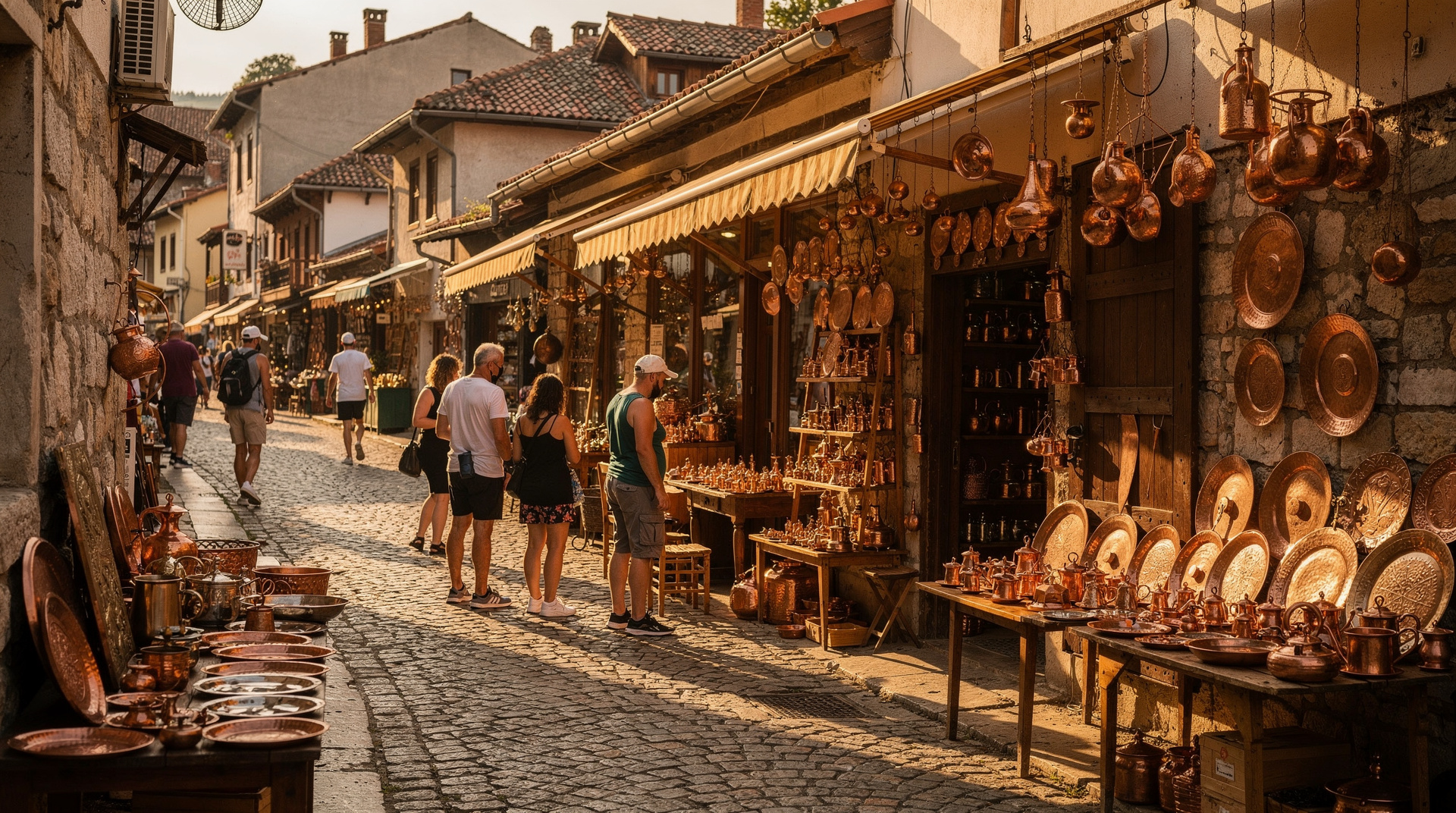
Sarajevo’s bazaar is at its best between 07:30-09:30 and after 19:00. Midday brings coach tour groups and a busier atmosphere, though it is never unmanageable. Early morning in Baščaršija means coppersmiths just opening their workshops, fresh burek coming out of pekara ovens, and the streets genuinely quiet.
Uncrowded alternatives
Trebinje: Herzegovina without the crowds
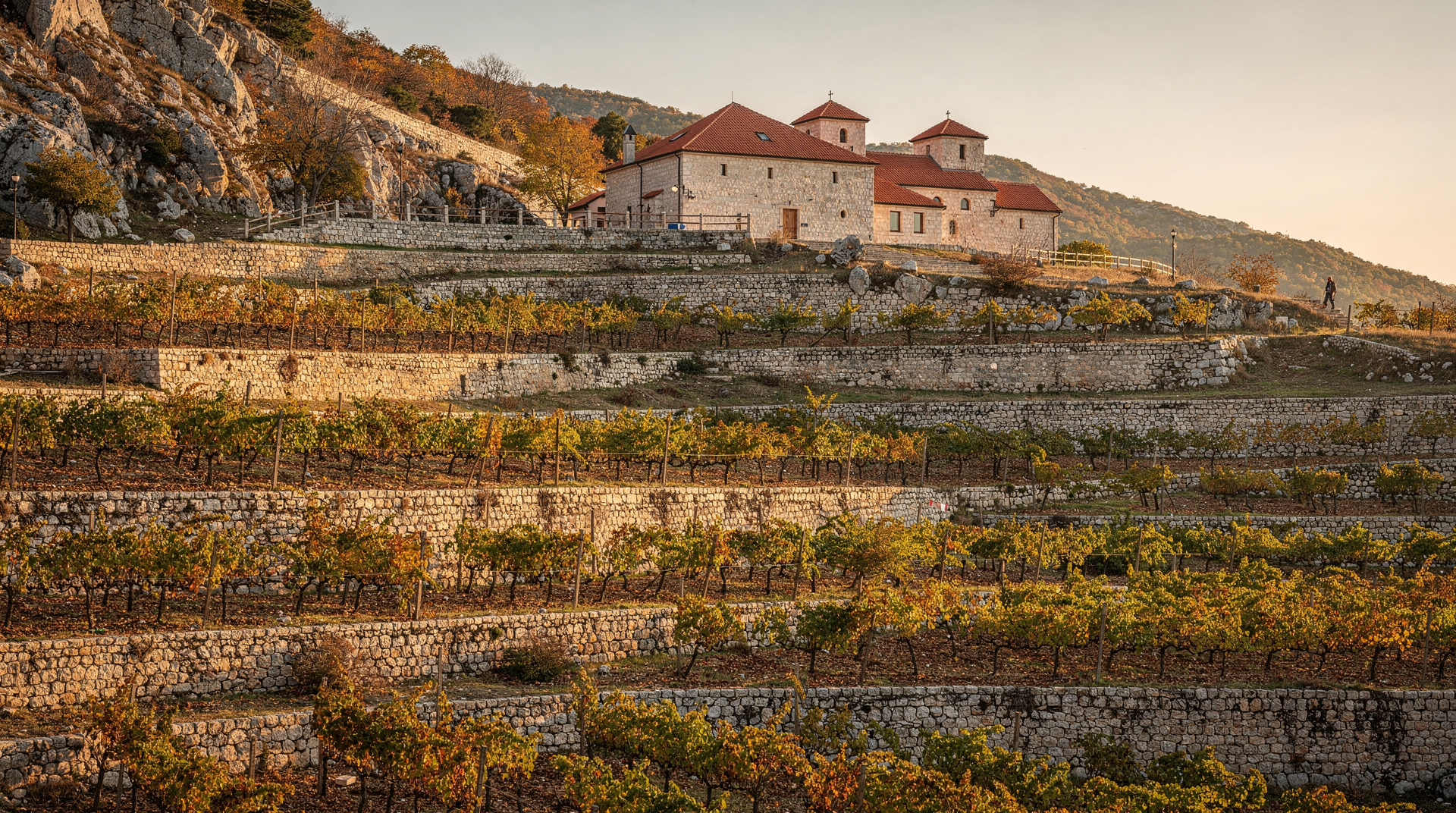
Trebinje, 28 km south-east of Dubrovnik across the border, is one of the most beautiful small cities in Bosnia and sees a fraction of the visitors who go to Mostar. It has a graceful Ottoman old town, a photogenic river (Trebišnjica), outstanding local wine (Vranac, the indigenous grape), and the hilltop Hercegovačka Gračanica monastery with panoramic views. The drive from Dubrovnik is 35-40 minutes.
For the full picture, see the Trebinje wine region guide.
Blagaj: the Tekija without the tour-bus schedule
The Blagaj Tekija (Dervish monastery at the source of the Buna River) is on virtually every Herzegovina day-trip itinerary — but it rarely feels overcrowded, because visit times are spread across the day and the site itself is large enough. Early morning (08:00-09:00) or late afternoon is when it is most peaceful. The spring pool turns an extraordinary turquoise as the light warms.
Jajce: drama with almost no queues
Jajce has a waterfall in the town centre (the Pliva River tumbles 20 m over a cascade at the bottom of the old town), a medieval fortress, Ottoman-era architecture and a remarkable history as the last capital of medieval Bosnia. Despite all of this, it sees relatively few foreign tourists. A self-guided exploration of Jajce can be done in half a day with minimal competition for views or restaurant tables.
Una National Park: world-class nature, minimal crowds
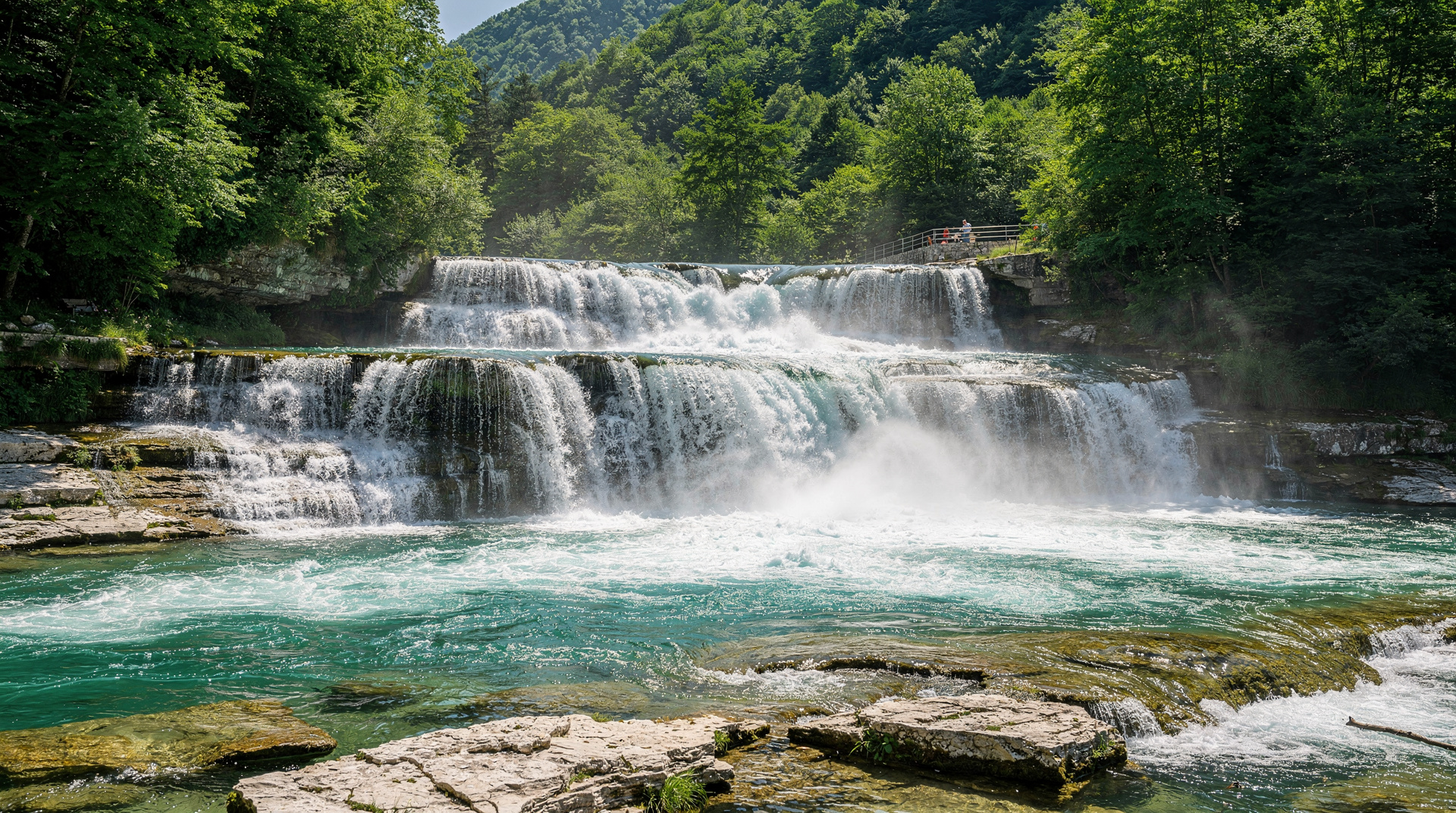
Una National Park near Bihać in north-western Bosnia is one of the most spectacular river landscapes in the Balkans — and largely unknown outside specialist travel circles. Štrbački Buk waterfall (25 m, the highest on the river) is remarkable. The town of Bihać has good accommodation. Rafting, kayaking and walking are available. On a mid-September day, you may have the riverbanks almost entirely to yourself.
Booking tours vs. free exploration
Guided day trips from Dubrovnik and Split contribute significantly to Mostar’s midday peaks — large groups arrive simultaneously because tours are structured around efficient travel times. If you join one of these tours, you are in the crowd by definition.
Alternatives:
- Stay overnight in Mostar and experience the city before and after the day-trip window.
- Drive independently and set your own timing for Kravice and the Mostar old town.
- Book smaller-group tours from Mostar rather than from coastal Croatia — they typically cover more ground with more flexibility.
If a guided trip suits you better than driving, choose the departure point with care. Travellers based in Sarajevo can join a guided day through Mostar and the wider Herzegovina region, which starts from the capital rather than the coast and so does not move in step with the Dubrovnik and Split coaches. Those staying on the Croatian coast who still prefer a guide can look at an organised day trip to Mostar from Dubrovnik, then use the timing advice above to spend any free time away from the bridge at its busiest.
Getting around without joining the rush
How you move between places shapes how crowded your trip feels. Public transport and your own car give you very different freedoms, and neither is wrong. Buses run on fixed timetables, which tends to push independent travellers into the same midday windows as everyone else; our buses in Bosnia guide explains how to read those schedules so you can pick the first departure rather than the convenient one. If you want full control over timing, a car lets you reach Kravice or Blagaj at the quiet edges of the day, and the renting a car in Bosnia guide and the driving in Bosnia guide cover what to expect on the road.
Travellers coming from the coast have a particular decision to make. The Mostar from Dubrovnik guide and the Mostar from Split guide both describe how the standard day trip is built, which is exactly why it arrives with everyone else. Reading them helps you decide whether to go with the flow or break away from it, for example by sleeping in Mostar or by starting the day in Trebinje and reaching Mostar later in the afternoon.
If you are already in Sarajevo, the Sarajevo to Mostar transport guide is useful for choosing an early departure so that you reach Mostar ahead of the coastal groups instead of in the middle of them.
Reading the day: a simple rhythm for busy sites
The same pattern repeats at almost every popular stop in Bosnia, and once you recognise it you can apply it anywhere.
- Early morning belongs to people who live nearby, photographers and the few travellers who slept close to the site. Light is soft, shop shutters are still going up and you can walk where you like.
- Mid-morning to mid-afternoon is when coach groups and day-trippers arrive from further away. Paths narrow, queues for photographs appear and cafés fill.
- Late afternoon and evening is the quiet return. Groups leave to make their onward journeys, residents come out and the atmosphere softens.
Build your day so that the sights most affected by this rhythm sit at the two quiet ends, and put flexible things such as lunch, a drive, a museum or a long walk through the middle. Museums and indoor attractions make good midday choices precisely because they are unaffected by the heat and the outdoor bottlenecks; the museums of Sarajevo guide is a good starting point in the capital.
Quieter ways to see the headline places
You do not need to give up Mostar, Sarajevo or the waterfalls to avoid the worst of the crowds. Often a small change of angle is enough.
In Mostar
Spend your time away from the immediate bridge area. The Stari Most guide covers the bridge itself, while the Mostar where to stay guide helps you pick a base that puts you on the right side of the evening calm. The Mostar tourist traps guide is also worth reading, because the busiest streets are exactly where the overpriced stops cluster, so steering away from the crowd usually improves the meal and the bill as well. For a longer, more reflective visit, the Mostar war history guide gives you a reason to wander the quieter districts with some context.
In Sarajevo
The city absorbs visitors well, and the quiet corners are easy to find. Many of the most affecting places, such as the memorials and the Sarajevo roses, are scattered through ordinary streets and are rarely busy. The Sarajevo where to stay guide can help you choose a neighbourhood that lets you walk to the old town early in the morning. If you want to go further out, the Vrelo Bosne guide describes a green escape that feels a world away from the bazaar.
At the waterfalls
Kravice is the famous one, but it is not the only option. The Kravice Falls guide lays out how the site works so you can plan your arrival. For a different feel altogether, the Pliva waterfall in Jajce and the Štrbački Buk guide show that you can have a memorable waterfall day without joining a crowd.
Choosing the right season for your kind of trip
Crowd avoidance is partly about what you want to do. Swimmers and rafters are tied to the warmer months, so for them the answer is to pick the edges of the season and the edges of the day. Hikers do better still in the shoulder months, when trails are pleasant and the mountains are nearly empty; see the hiking in Bosnia guide for ideas. Those who care most about food, coffee and city life can travel almost any time, because Sarajevo and the larger towns keep running regardless of the tourist calendar.
Each season has its own character and its own trade-offs, and we cover them separately in the Bosnia in spring, Bosnia in summer, Bosnia in autumn and Bosnia in winter guides. Read the one that matches your dates and you will know what is open, what is quiet and what to expect from the weather before you commit to anything.
Putting it together in an itinerary
A route that works with the crowd calendar rather than against it tends to be slower and more rewarding. Rather than racing between headline sights, give yourself time to stay overnight in the places that matter most. If you are deciding how long to spend, the how many days in Bosnia guide is a sensible starting point, and the Bosnia 7-day itinerary shows how a week can mix busy and quiet stops. For a more relaxed pace in the south, the Herzegovina weekend itinerary pairs well with the advice above, and the western Bosnia and Krajina itinerary is the natural choice if you want to head to the country’s least crowded corner.
Personal accounts can help set expectations too. Our Bosnia off the beaten path story shares how a traveller found the quieter side of the country, and the Kravice Falls in summer post gives an honest picture of what a busy day at the falls actually feels like.
A note on realistic expectations
Bosnia is not Santorini or Dubrovnik. Even in peak season, the vast majority of visitors experience it as a relaxed, uncrowded destination. The bottlenecks described above are real but manageable — they are not the type of experience that requires advance booking months ahead or arrival at dawn to beat queues. The strategies in this guide are for optimising an already pleasant experience, not rescuing a disaster.
For full timing guidance, see the best time to visit Bosnia guide.
Where the crowds don’t reach at all
A handful of destinations in Bosnia see so few tourists that “avoiding crowds” is not even a relevant question. Sutjeska National Park (Perućica primeval forest, Maglić peak) is vast, remote and quiet even in August — see the Sutjeska National Park guide. Višegrad, home to the UNESCO-listed Mehmed Paša Sokolović Bridge, is a straightforward day trip that rarely feels touristed even in peak season. And the highland village of Lukomir, reached by a half-day hike from the Bjelašnica plateau, has no crowd problem to speak of because so few visitors make the effort — full details in the Lukomir village hike guide.
If your priority is genuine solitude rather than simply thinner crowds, build one of these into your itinerary alongside the headline stops. The Bosnia travel itinerary planning guide has suggestions for balancing headline sights with quieter detours.
Frequently asked questions about Avoiding crowds in Bosnia
When is Bosnia least crowded?
Is Kravice Falls worth visiting in summer?
Is Mostar overcrowded?
What are the best uncrowded alternatives to Mostar and Sarajevo?
Are there times when Sarajevo is overcrowded?
Top experiences
Bookable activities with verified prices and instant confirmation on GetYourGuide.