Bosnian coffee culture guide
Sarajevo: Bosnian Coffee Workshop with Brewing Lesson
What is Bosnian coffee and how is it different from Turkish coffee?
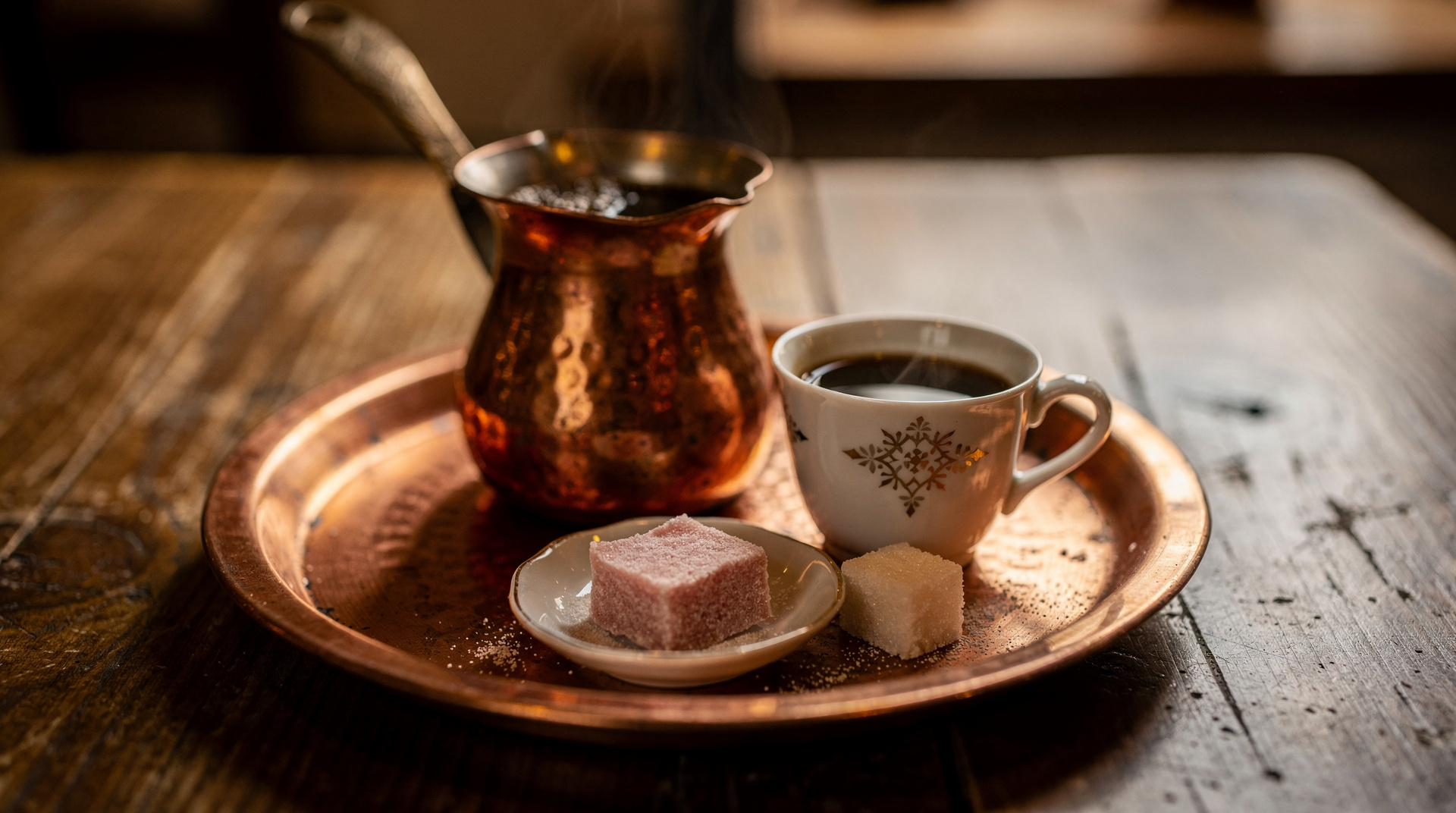
Bosnian coffee (bosanska kafa) is served unfiltered in a small copper džezva alongside a sugar cube, rahat lokum (Turkish delight), and a glass of water. Unlike Turkish coffee, the džezva comes to the table and you pour yourself — it is a ritual for sitting, not rushing.
In Bosnia & Herzegovina, coffee is not simply a drink — it is a social institution. The preparation, the serving, and the drinking of bosanska kafa (Bosnian coffee) follow a ritual that has changed little since the Ottoman era, and every aspect of it is deliberate. Visitors who sit down for a proper Bosnian coffee in a Sarajevo kafana and give it the time it demands usually describe it as one of the most memorable experiences of their trip.
| At a glance | |
|---|---|
| Where | Baščaršija (Sarajevo), Kujundžiluk (Mostar), Trebinje’s main square |
| Cost | around 2-3 BAM local kafana, 3.50-5 BAM tourist spots |
| Time needed | 30-45 minutes minimum per sitting — this is not a takeaway drink |
| Best time of day | Mid-morning through late afternoon; kafanas quiet down in the evening |
| Currency note | Prices are in convertible mark (BAM/KM), not euros |
What is Bosnian coffee?
Bosanska kafa is finely ground roasted coffee brewed directly in a small copper or brass pot called a džezva. Unlike Turkish coffee, which is often brewed and poured with the grounds already settled, Bosnian coffee is brought to the table in the džezva still hot, alongside an empty fildžan (small handleless cup), a piece of rahat lokum (rose-water Turkish delight), a sugar cube, and a small glass of water.
The drinker pours the coffee themselves, lets the grounds settle for a minute, and drinks slowly. The entire service is designed for sitting and conversation, not consumption on the move.
The ritual, step by step
The Bosnian coffee ritual has a fixed sequence that locals follow instinctively:
- Water first: drink a sip of the glass of water to cleanse the palate before tasting anything.
- Pour slowly: tilt the džezva carefully to pour into the fildžan, stopping before you reach the grounds at the bottom.
- Wait: let the cup rest for sixty seconds while any disturbed grounds settle.
- Lokum: eat a piece of rahat lokum. The sweetness primes the palate.
- Coffee: hold a sugar cube (if using) between your front teeth and draw the coffee through it — this is called na kockicu. Alternatively, drop the cube in the cup and let it dissolve. Purists drink without sugar at all.
- Refill: pour a second cup from what remains in the džezva. The second pour is often sweeter and more concentrated.
- No rush: a Bosnian coffee session typically lasts 30-45 minutes. Ordering a second džezva is normal.
Where to drink Bosnian coffee in Sarajevo
Kafana Morica Han
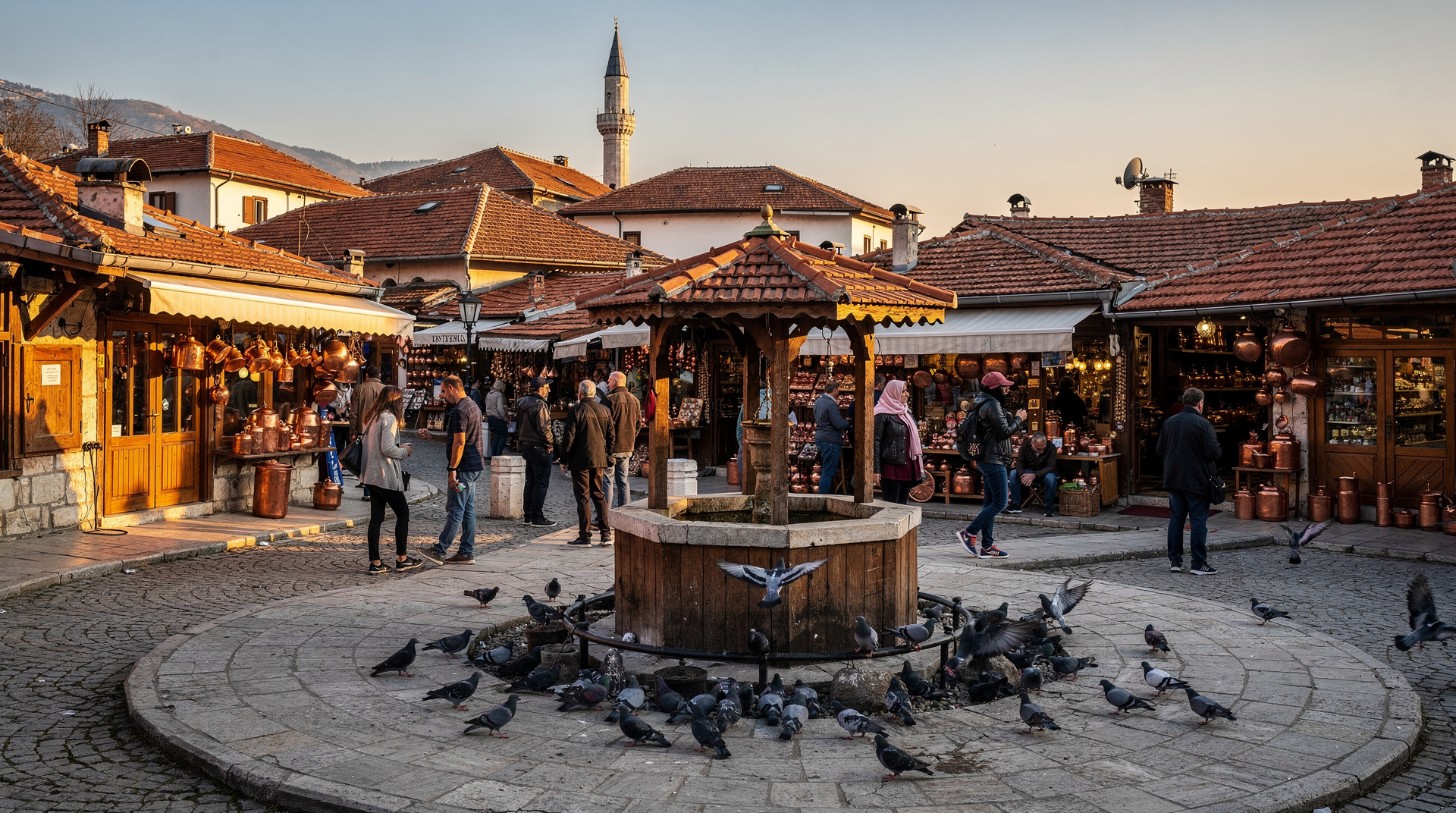
The Morica Han caravanserai in Baščaršija dates to the 17th century and still operates as a kafana in its courtyard. The atmosphere alone is worth sitting down for — stone arches, a cobbled courtyard, and the unhurried pace of old Sarajevo. Coffee is served traditionally with lokum and sugar.
Kafana Divan
On Kovači, just uphill from Baščaršija, Divan has been serving coffee in a traditional Bosnian setting for decades. Low ceilings, copper fittings, and a menu that extends to traditional sweets and light meals.
The small kafanas on Bravadžiluk
The street of Bravadžiluk, running parallel to the main tourist strip of Kundurdžiluk, has several small, unmarked kafanas where locals drink coffee at formica tables outside. There are no English menus and the coffee costs 2-3 BAM. This is Sarajevo coffee culture at its most authentic.
Kafana Inat Kuća
Directly across the Miljacka River from the old town, Inat Kuća (the House of Spite — named after a real dispute where a man had his house physically moved rather than demolish it) serves excellent traditional food and coffee in a restored historical building.
A Bosnian coffee workshop
The Sarajevo Bosnian Coffee Workshop is a hands-on class where you learn to prepare the džezva correctly — the right grind, the water temperature, the brewing time — and serve with the full traditional accompaniments. Classes run about 90 minutes and include a guided tasting. It is one of the best immersive food-culture experiences available in the city.
For a broader walk combining coffee with traditional food, the Ethnic Food and Coffee Walking Tour covers Baščaršija’s food culture including a coffee stop and traditional pastry tasting.
Coffee culture beyond Sarajevo
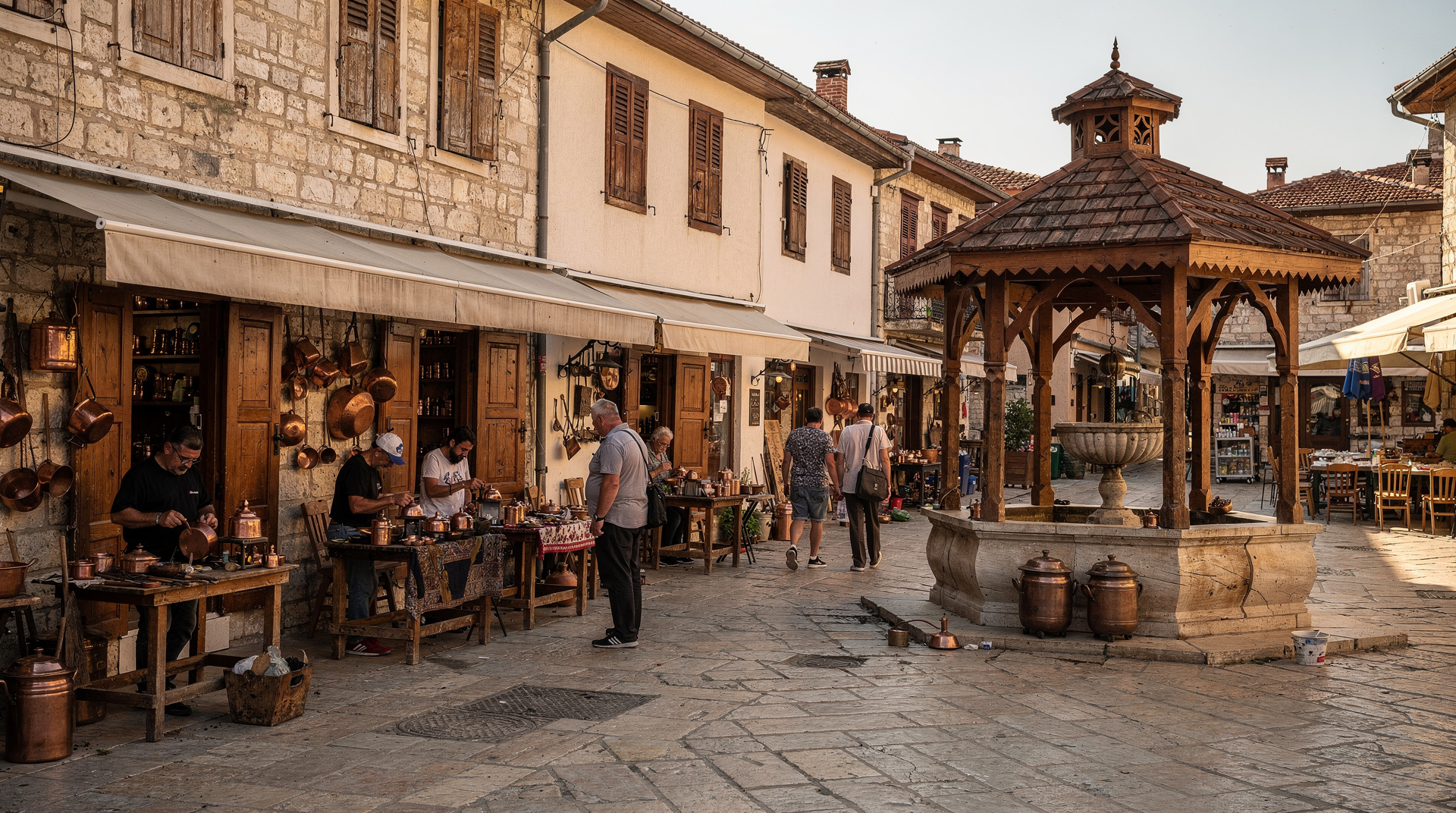
The coffee ritual is not limited to Sarajevo. In Mostar, kafanas around the old bazaar near Kujundžiluk serve coffee in the same manner. In Trebinje — Herzegovina’s most underrated town — the main square is lined with outdoor kafanas where coffee is an all-afternoon affair. In smaller towns and villages across the country, being invited into someone’s home for coffee is a genuine gesture of hospitality that should always be accepted.
Bosnian coffee vs. Turkish coffee
The difference is partly preparation, partly culture. Turkish coffee in its Istanbul form is often brewed with sugar already in the pot (you specify šećerna, az šećerna, or sade when ordering). Bosnian coffee is always served unsweetened, with sugar on the side. The džezva is brought to the table unfinished — you are an active participant in the ritual, not a passive recipient.
Bosnians will often take mild offence at the comparison. Bosanska kafa is considered a distinct tradition evolved locally over 500 years of Ottoman presence and subsequent independence.
What to eat with Bosnian coffee
Rahat lokum comes automatically. Beyond that, the traditional accompaniments depend on time of day. Morning coffee is often accompanied by a piece of baklava or a hurmašica (honey-syrup cake) from the pastry shops on Baščaršija. Afternoon coffee pairs well with the walnut sweets sold at the Šeherzada shop near the Sebilj fountain.
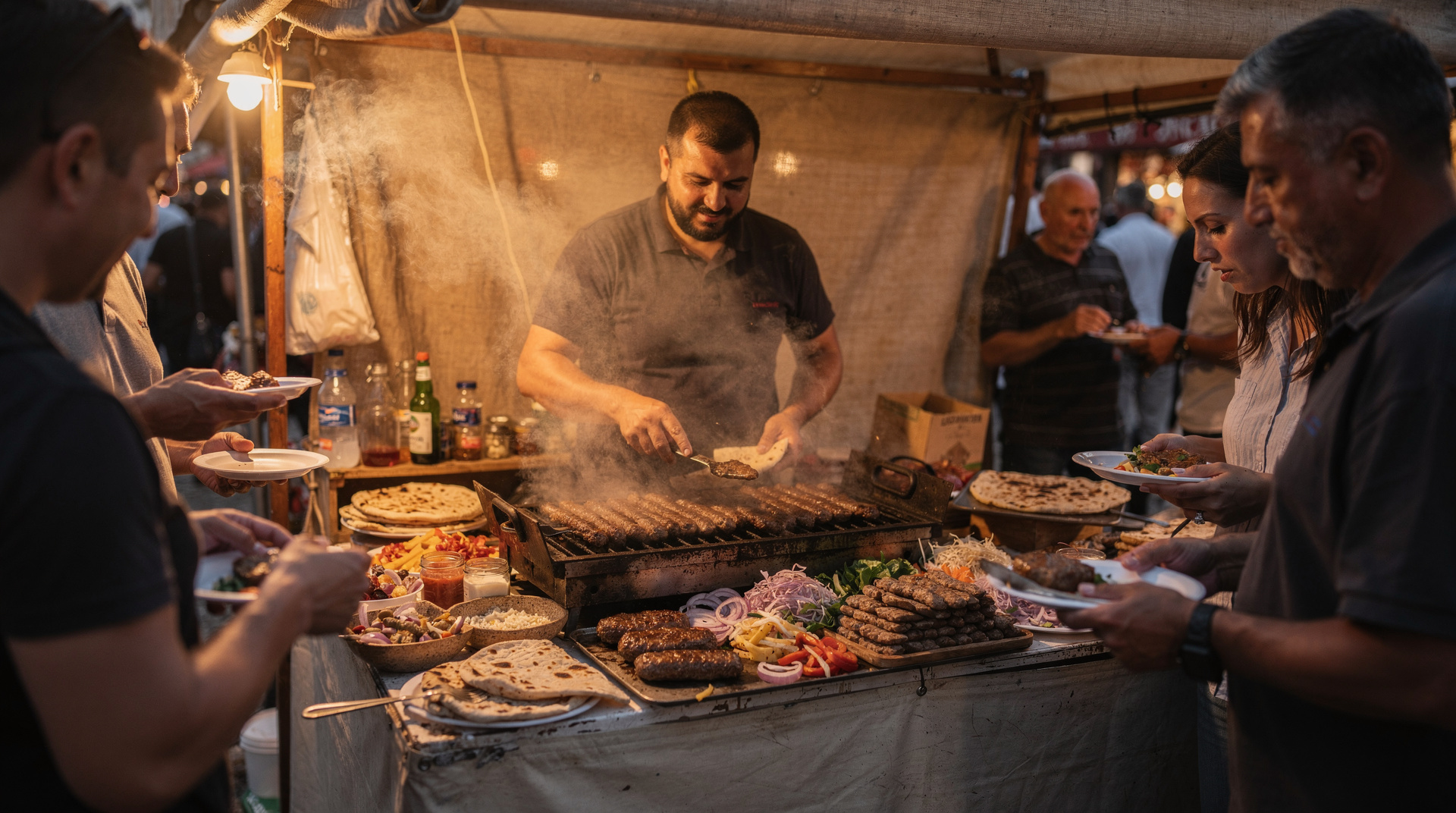
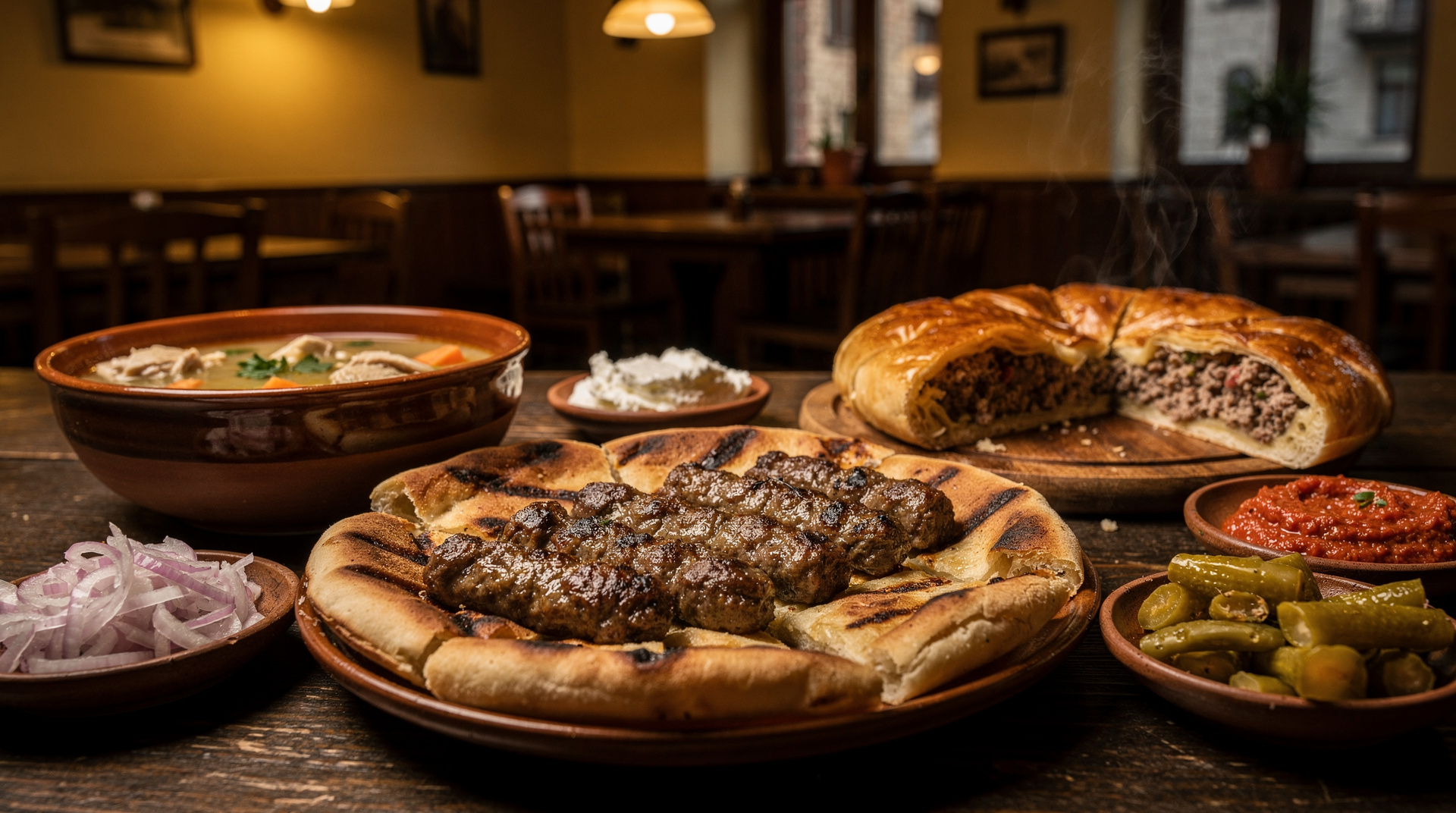
For the full picture of Bosnian food culture — from ćevapi to tufahija — the Bosnian food guide is the place to start. See also the Baščaršija guide for context on the old quarter where most of the best kafanas are found. For a sit-down meal to pair with your coffee, the best restaurants in Sarajevo guide and the ćevapi guide cover the essentials.
Reading the room in a kafana
A kafana is not a café in the modern sense, and it helps to know what you are walking into. Nobody hands you a laminated menu or hovers over the table. You sit, someone notices you, and the coffee arrives when it is ready. That unhurried rhythm is part of the offer. If you arrive expecting the speed of a chain coffee shop, you will be frustrated; if you arrive with nowhere to be, the same pace feels like a gift.
Look at how the locals sit. Groups of friends linger over a single džezva for a long time, conversation moves between politics, football and family, and the cups are refilled slowly. Solo travellers are entirely welcome too. A notebook, a book or simply the view of the street is a perfectly normal companion, and nobody will push you to order more or move on.
Outdoor tables are the best seats when the weather allows. Watching the old quarter go by while the grounds settle is half the experience, and it is the easiest way to understand why this ritual has lasted so long. The Baščaršija guide shows how the lanes of the old bazaar fit together, which makes it simple to plan a coffee stop between sights.
Building coffee into your day
Because a proper sitting takes time, the smartest approach is to treat it as an anchor rather than a filler. Place it after a morning of walking, when your feet want a rest, or in the quiet stretch between a late lunch and an early dinner. Many visitors find that a coffee stop turns into the most relaxed hour of the day.
If you are putting together a city plan, the Sarajevo 4-day deep dive leaves room for exactly this kind of slow pause, and the Sarajevo food tour guide explains how a guided tasting walk can fold a coffee stop in with other local specialities. Travellers heading on to Herzegovina can repeat the ritual in Mostar and Trebinje, where the pace is just as gentle.
Pairing coffee with sightseeing works well in the old town. After the mosques and the bazaar, a sit-down is a natural reward, and the Sarajevo mosques guide and the Ottoman heritage guide give useful background on the Ottoman world that shaped the coffee tradition in the first place.
Why the tradition matters
Coffee in Bosnia is about hospitality and time. The ritual gives people a reason to stop, to talk, and to host one another, and that is why a coffee invitation carries so much weight. Offering a džezva to a guest is a way of saying that you have time for them. Understanding this changes how a visitor experiences the country: a simple cup becomes a window onto how daily life is organised around conversation.
The same spirit runs through the rest of the table. If you enjoy the slow, social side of Bosnian eating, the Bosnian coffee ritual blog post offers a personal account of a sitting, and Sarajevo cafés we love collects places worth returning to. Those curious about other traditional drinks can read the rakija guide, which covers the stronger side of Bosnian hospitality.
Making the most of your first sitting
For a first visit, keep it simple. Choose a kafana that looks busy with locals, order the coffee without fuss, and let the table service guide you through the steps listed above. Do not worry about getting every detail right; hosts are generally pleased when a visitor shows interest, and a small mistake with the sugar cube or the pouring will usually prompt a friendly tip rather than a correction.
Pay attention to the grounds. Pouring too fast or tilting the džezva too far is the most common beginner error, and it is the reason the waiting minute exists. Take the second pour as a chance to try the coffee a little differently, perhaps with the sugar cube this time, and notice how the character of the cup changes.
If you want deeper context on the country that produced this tradition, the Bosnia travel guide gives the wider picture, and the Sarajevo destination page is the best starting point for planning where to sit and sip.
Practical notes
- Coffee price: 2-3 BAM in a local kafana, 3.50-5 BAM in tourist-facing spots
- Grind: Bosnian coffee is sold pre-ground in small packets at any supermarket — Aroma and Zlatna Džezva are the most widely available brands
- Timing: coffee culture runs from mid-morning through late afternoon; evenings are more focused on food
- No decaf: if you need decaf, the kafana is not the right choice — opt for a modern café
Taking the ritual home
Most supermarkets and the shops around Baščaršija sell pre-ground Bosnian coffee (Zlatna Džezva and Aroma are the two most common brands) alongside small copper džezvas and fildžan cup sets, which pack reasonably well as souvenirs. If you plan to actually use it rather than display it, buy the smallest džezva (roughly 2-3 cup size) — it heats faster and is easier to control on a home stovetop than the larger tourist versions. A packet of ground coffee bought locally is also one of the few genuinely useful, lightweight souvenirs available in the country, and pairs naturally with the Baščaršija guide for where to shop.
Coffee etiquette for visitors
A few habits mark the difference between a rushed tourist and someone who understands the ritual. Never ask for the bill within the first ten minutes of sitting down — it reads as impatience. If a local invites you for coffee, whether in a kafana or a private home, it is a genuine gesture of welcome, not a sales pitch, and accepting is the polite (and rewarding) response.
Splitting the bill is uncommon in Bosnian coffee culture: whoever extended the invitation typically pays, and reciprocating on a future round is the expected form of thanks rather than splitting each time. If you are short on time, it is better to skip the kafana entirely and get an espresso at a modern café than to rush a proper Bosnian coffee service — locals notice, and it undercuts the point of sitting down at all.
Frequently asked questions about Bosnian coffee culture
How do you drink Bosnian coffee properly?
Where is the best place to drink Bosnian coffee in Sarajevo?
Can I take a Bosnian coffee class?
What is a fildžan?
Is Bosnian coffee strong?
What is rahat lokum?
Top experiences
Bookable activities with verified prices and instant confirmation on GetYourGuide.