Baščaršija — Sarajevo's Ottoman heart
Sarajevo: Old Town to Modern City Walking Tour
What is Baščaršija?
Baščaršija is Sarajevo's historic Ottoman bazaar, founded in the 1460s by Isa-Beg Isakovic. It is the cultural and commercial heart of the old city, centred on the Sebilj wooden fountain and surrounded by mosques, caravanserais and copper-smiths' workshops.
Sarajevo’s Baščaršija is one of the best-preserved Ottoman bazaars in south-east Europe, and it is the first place most visitors want to see. Founded in the 1460s by the Ottoman governor Isa-Beg Isakovic as part of his new city project, it has functioned as the city’s marketplace and social hub for more than five centuries — through Ottoman rule, Habsburg occupation, two world wars and a brutal siege. It is still open for business today.
| At a glance | |
|---|---|
| Where | Eastern old town, Sarajevo, along the Miljacka river |
| Cost | Free to walk; budget around 30-60 BAM for coffee, a snack and souvenirs |
| Time needed | 2-3 hours for the highlights; half a day with a coffee stop and mosque visit |
| Getting there | 10-20 minute walk from most central hotels, or tram lines 1, 2, 3 |
| Best time | Before 09:00 or after 19:00; May, June, September and October for fewer groups |
A brief history of the bazaar
The name Baščaršija (pronounced bash-char-SHEE-ya) comes from the Turkish başçarşı, meaning “main marketplace.” When Isa-Beg Isakovic laid out his city plan around 1461, he built the bazaar alongside the Gazi Husrev-beg Mosque complex and a caravanserai — the three pillars of an Ottoman commercial centre. The layout he established, a grid of specialised craft streets each dedicated to a single trade, still exists.
By the 16th century, Sarajevo had become the largest city in the Balkans outside Istanbul, and Baščaršija was the engine of that growth. The Habsburg administration that arrived in 1878 cleaned up the lanes, introduced street lighting and added a few Austro-Hungarian facades at the western end, but left the core of the bazaar essentially Ottoman. Austrian planners even rebuilt the Sebilj fountain in 1891, keeping its Ottoman form.
The 1990s siege left the bazaar largely standing — it sits just east of the frontline and many buildings survived — though restoration work continued well into the 2000s. Today Baščaršija receives several hundred thousand visitors a year yet somehow retains the atmosphere of a working neighbourhood.
The Sebilj fountain
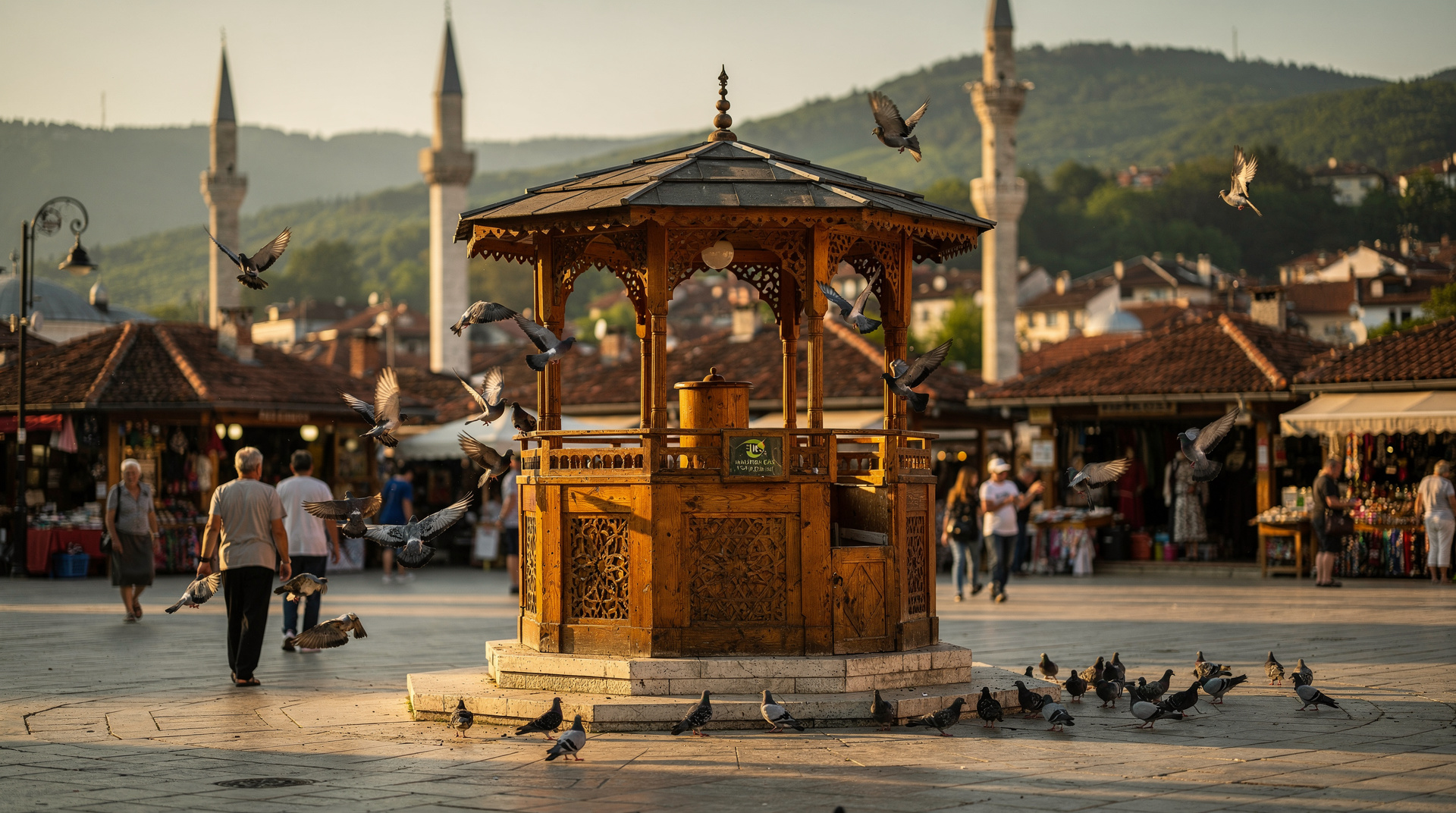
The Sebilj is the symbol of Sarajevo. The current structure, a delicate hexagonal kiosk of carved wood on a stone base with four cast-iron drinking spouts, stands in the middle of Baščaršija Square. It was commissioned by the Austrian administration and built in 1891, replacing an earlier Ottoman sebilj. The design mimics the Ottoman originals closely.
The pigeons that crowd the square are fed and photographed by everyone; the locals refer to the area casually as “Pigeon Square.” The legend of the water — “drink from the Sebilj and you will return to Sarajevo” — appears in nearly every guidebook and is cheerfully propagated by souvenir sellers. It appears to work: return visitor numbers to Sarajevo are high.
The best photograph of the Sebilj is taken from the north-west corner of the square before 8:00, with the mosque minaret visible behind it. In summer the light softens again after 17:00.
Kazandžiluk — the Coppersmiths’ Lane
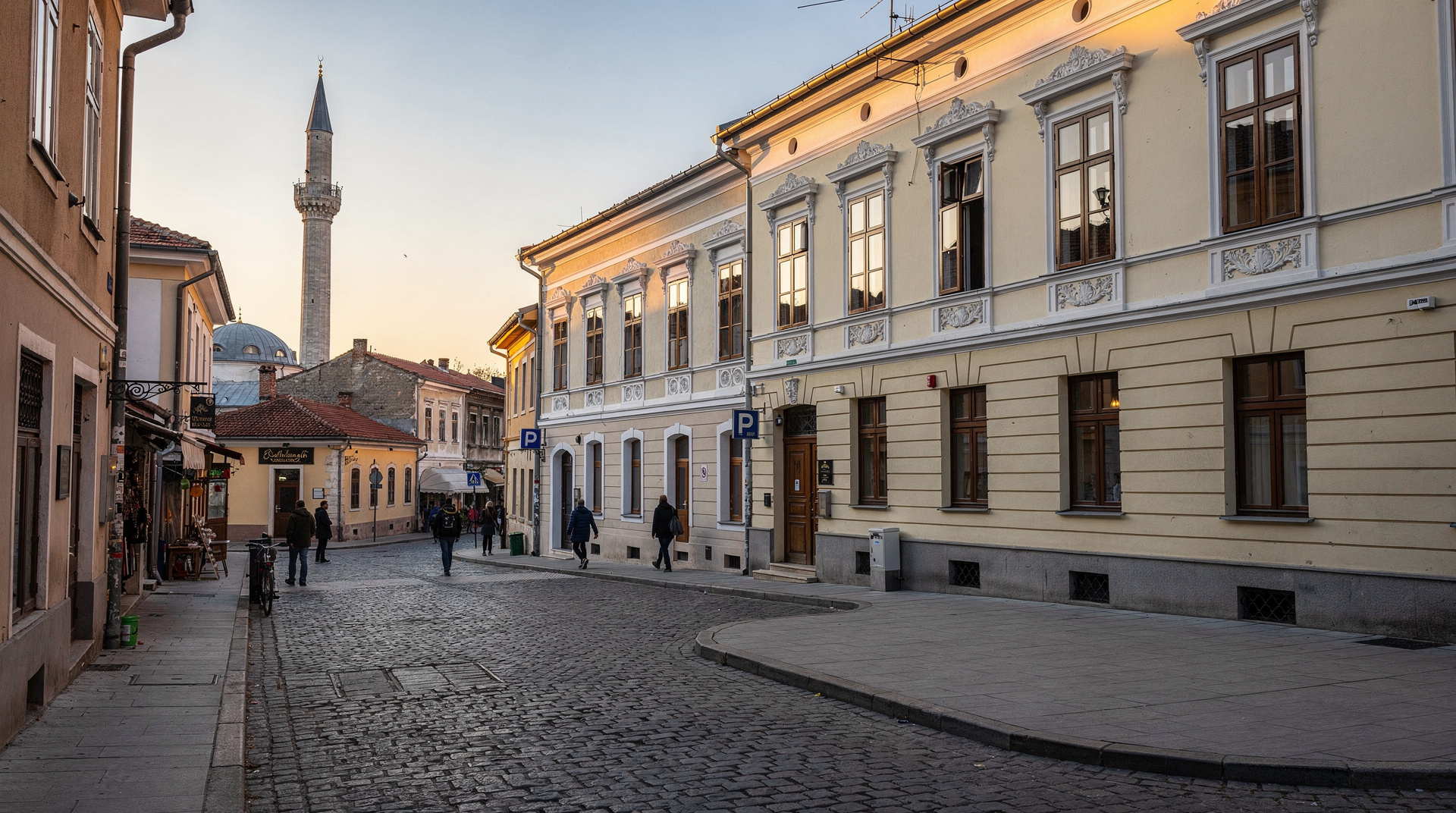
One lane east of Sebilj, Kazandžiluk (Kazandžiluk means “coppersmiths’ quarter”) is the most distinctive street in Baščaršija. A dozen workshops line both sides, and the sound of hammers on copper — džezve (coffee pots), trays, bowls and decorative plaques — echoes off the stone walls. Prices for a džezva start around 15-20 BAM (8-10 EUR) for a plain piece and rise to 60-80 BAM for elaborate hand-engraved work.
This is not a tourist simulation: these are family businesses that have operated here for generations, some for more than 150 years. If you buy a copper piece, you can watch it being made. The craft is recognised by UNESCO as part of Bosnia’s intangible cultural heritage.
Gazi Husrev-beg Mosque
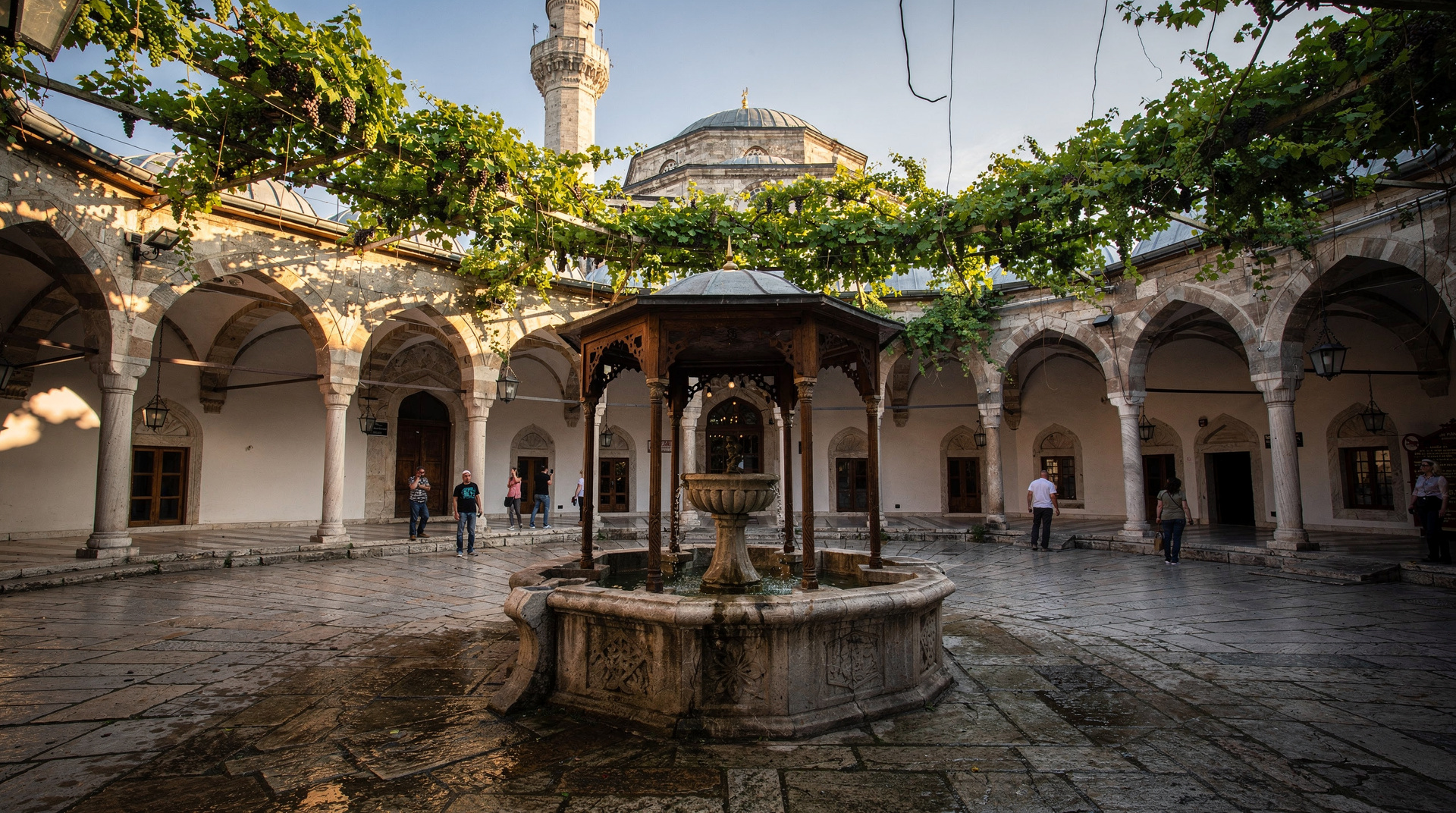
The mosque that anchors Baščaršija’s northern edge was built in 1531 by the then governor of Bosnia, Gazi Husrev-beg, and is the largest Ottoman mosque in the Balkans. It is a single-domed structure with an elegant portico and a tall minaret visible from much of the old city. The interior features intricate tile work, carved wooden galleries and a chandelier lowered close to the prayer hall floor in the traditional manner.
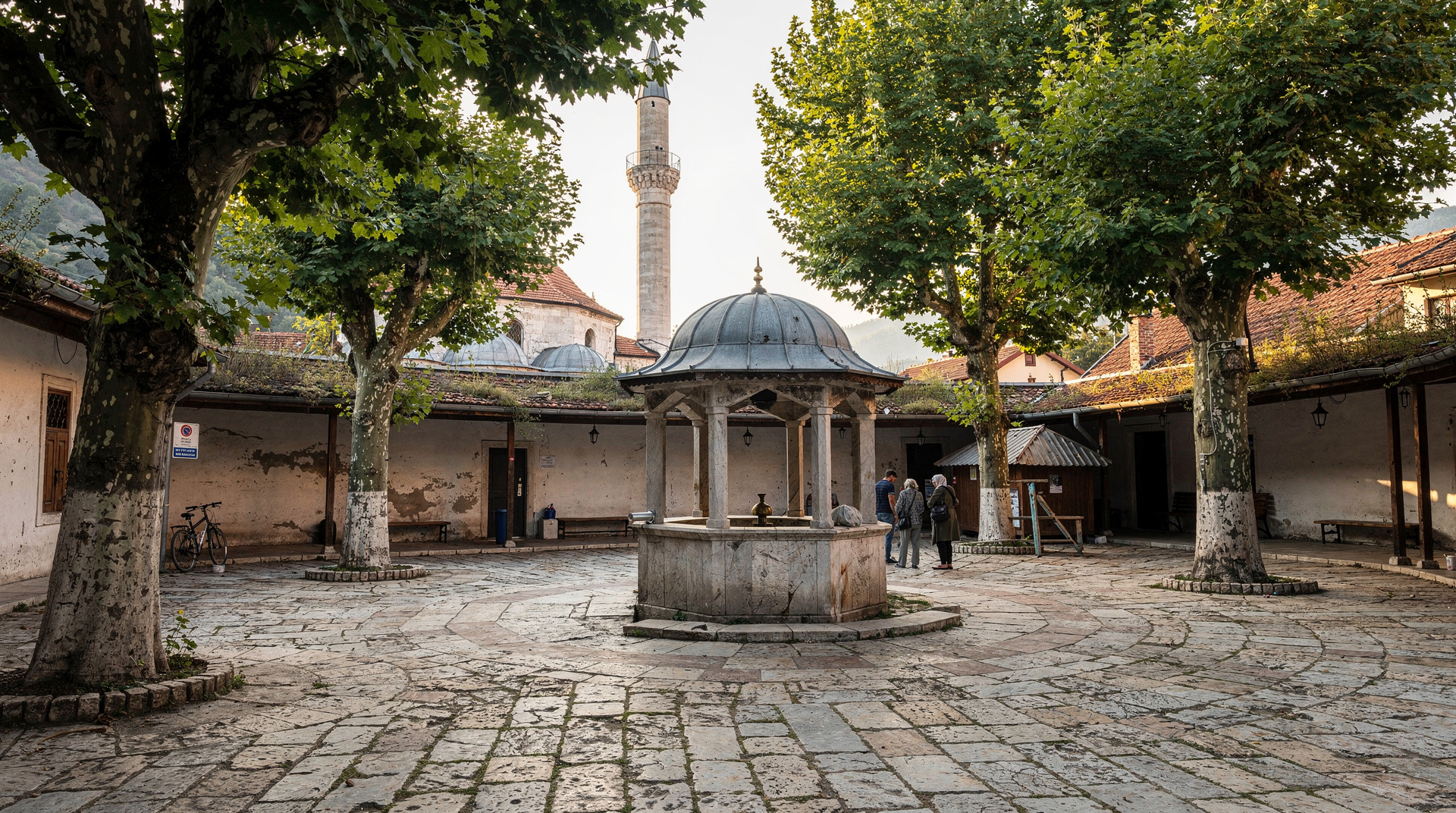
Non-Muslim visitors are welcome outside prayer times (five times daily; the mid-day prayer on Friday is the most restricted). Women should bring a scarf; both men and women must remove shoes at the entrance. Entry is free though a donation is welcomed. The mosque’s courtyard also contains the Gazi Husrev-beg Mausoleum and an attractive old fountain.
A guided walking tour of Sarajevo’s old town is the most efficient way to understand the layered history of the bazaar and the mosque together, with a local guide connecting the Ottoman, Austro-Hungarian and Bosnian War threads in a single walk.
Baščaršija is laid out by trade — the coppersmiths on one lane, the goldsmiths on another — a plan that survives from the Ottoman guilds and is invisible without someone pointing it out: an Old Town Sarajevo walking tour reads the quarter by that logic rather than by monuments.
The Bezistan and Morića Han
Two other historic structures survive from the 16th century. The Bezistan (covered bazaar hall) was built by Gazi Husrev-beg in the 1540s and is one of the few surviving examples of a covered Ottoman market hall outside Turkey. Today it houses jewellers and souvenir shops; the thick stone walls keep it cool in summer. The entrance fee is minimal (2-3 BAM).
Morića Han, a short walk north-east, is a restored caravanserai — a travellers’ inn — from the early 16th century. The central courtyard has been converted into a pleasant terrace café. Sitting in the courtyard with a Bosnian coffee and listening to the call to prayer is one of the best low-cost experiences in Sarajevo. Coffee (Bosnian style, served with lokum and a sugar cube) costs 3-4 BAM.
Bosnian coffee culture
Bosnian coffee (bosanska kafa) is not espresso and not Turkish coffee, though it shares DNA with both. The ground coffee is boiled in a small copper džezva and brought to the table with the džezva still full. You pour carefully, let the grounds settle, then sip slowly. The ritual is unhurried — a coffee in Baščaršija can take 30 minutes if you let it. The Bosnian coffee culture guide explains the ritual step by step, and the coffee ritual blog post is a more personal account of it.
Dozens of kafane (traditional coffee houses) line the lanes. Look for places without English-language signs for the most authentic experience. The street just south of the Gazi Husrev-beg Mosque courtyard has several good options. A coffee costs 2.50-4 BAM (1.30-2 EUR).
Baščaršija neighbourhood: beyond the tourist core
Most visitors stay within 200 metres of the Sebilj. Walk further and you enter Sarajevo’s everyday old-city life:
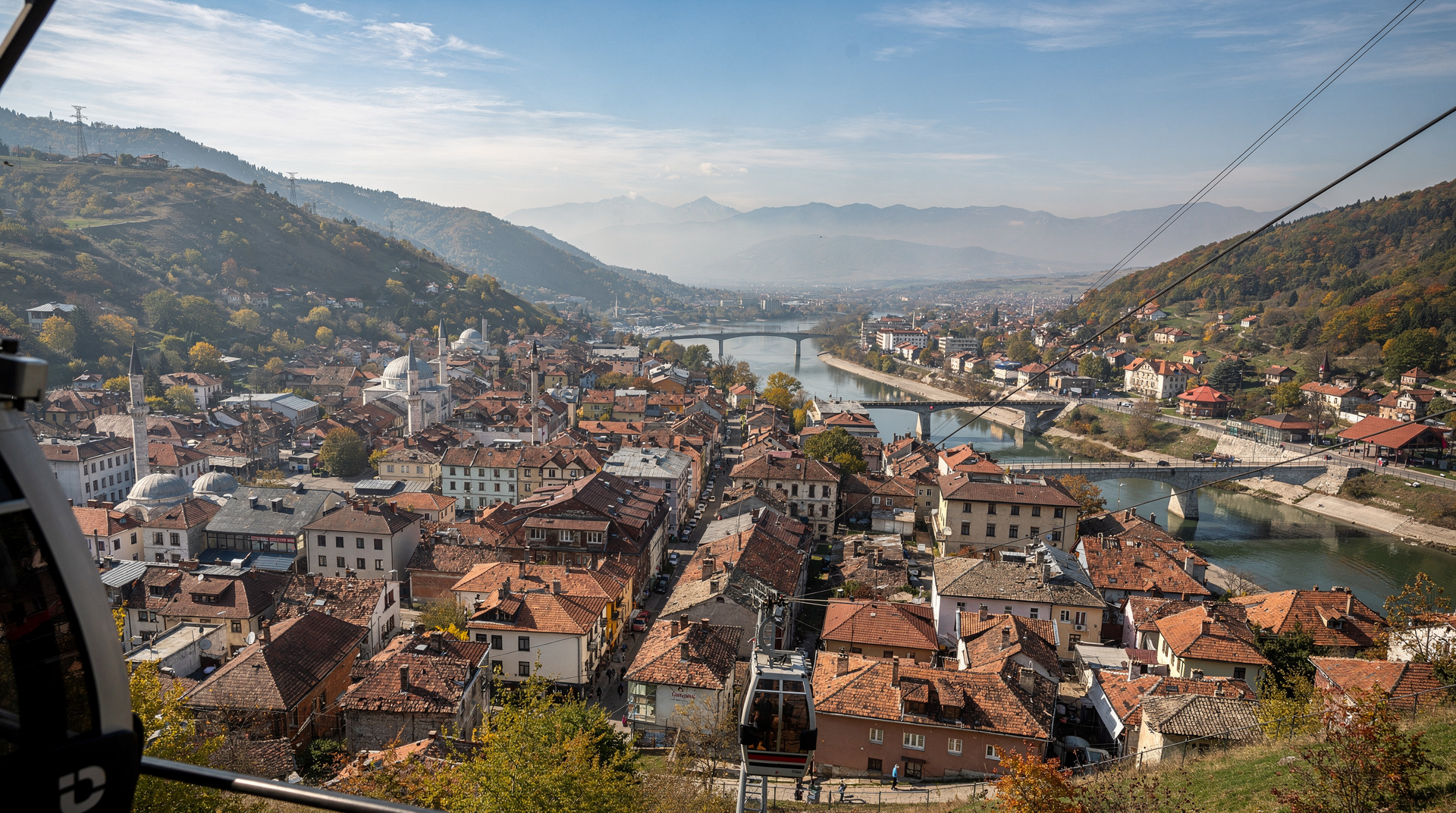
Kovači (north-east, 5 minutes from Sebilj): a steep residential lane with a famous cemetery visible above the rooftops. Alija Izetbegović, Bosnia’s wartime president, is buried here. Entry is free. The view over the old city from the upper gate is excellent.
Alifakovac (further north-east): a quiet Ottoman-era neighbourhood with wooden houses, narrow lanes and very few tourists. The cemetery at the top gives another strong viewpoint.
Baščaršijska džamija (the small mosque just west of Sebilj): often overlooked, the Baščaršija Mosque dates from the 16th century and is less visited than the Gazi Husrev-beg complex. Peaceful, cool and free to enter.
The Austro-Hungarian western edge
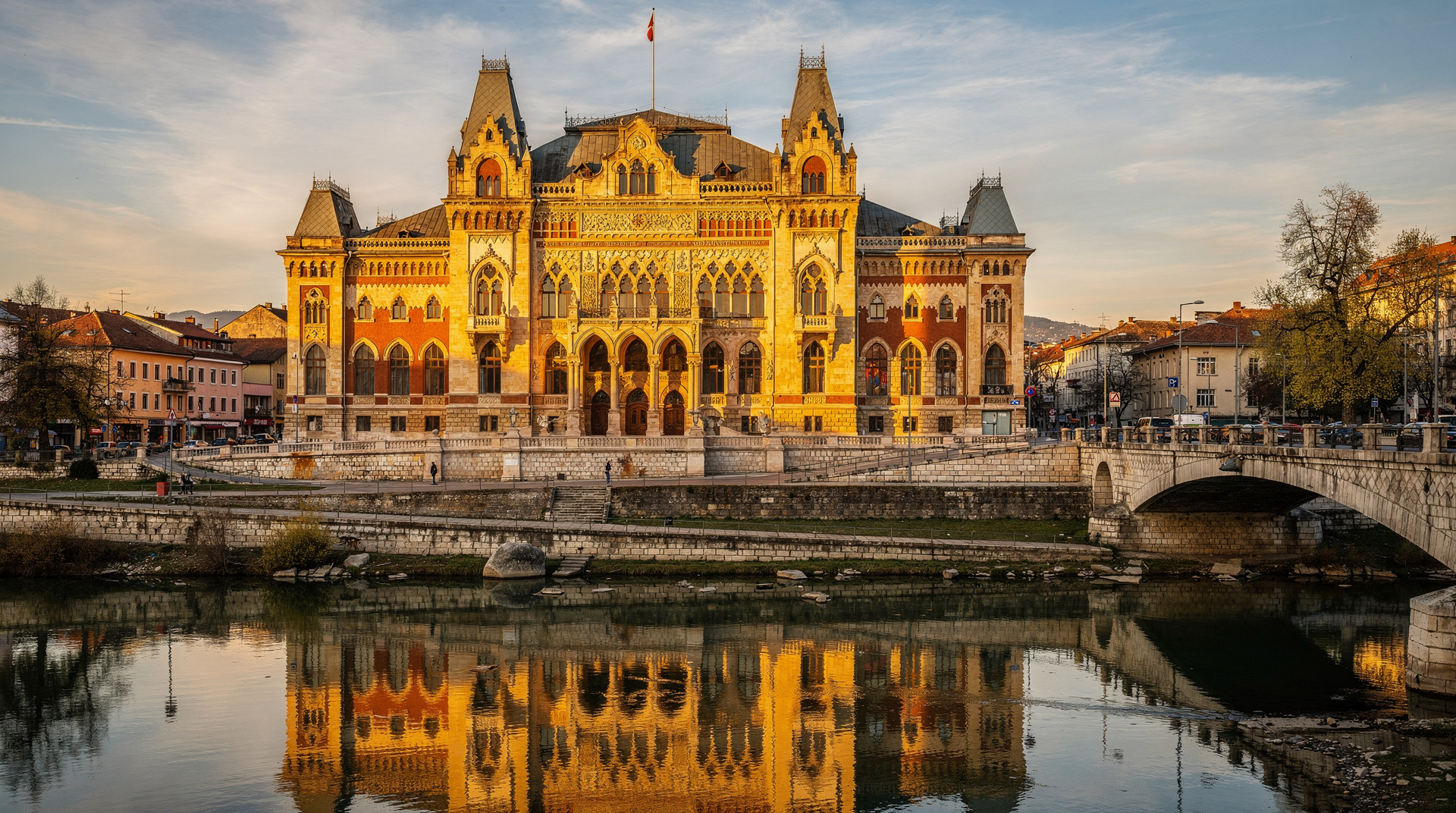
Where Baščaršija meets the Habsburg quarter, the architecture shifts abruptly. The Vijecnica (City Hall), rebuilt after wartime shelling and reopened in 2014, is the most dramatic Habsburg building — a faux-Moorish pile in red and yellow stripes that the Austrians constructed in 1896. It housed the National Library until 1992; during the siege a Serb incendiary shell started a fire that destroyed around 90% of the collection. The rebuilt interior is now visitable (admission around 5 BAM) and is worth 30 minutes.
The Grand Walking Tour through Sarajevo’s history covers both the Ottoman and Austro-Hungarian layers and is a good option for first-timers wanting context.
If the Ottoman layer of the city catches your interest, the Ottoman heritage in Bosnia guide follows the same story beyond Sarajevo, and the Austro-Hungarian Sarajevo guide picks up where the bazaar ends. Visitors who want to go indoors will find the museums of Sarajevo a natural next step, and the Sarajevo destination page gathers everything else in one place.
Because the bazaar draws crowds, it helps to know the usual pitfalls before you arrive: the Sarajevo tourist traps guide lists them, and staying close by makes early-morning and late-evening visits easy — see where to stay in Sarajevo. For a proper sit-down meal after the walk, the best restaurants in Sarajevo is a good starting point.
Practical information
Getting there: Baščaršija is walkable from most central Sarajevo accommodation in 10-20 minutes. Tram lines 1, 2 and 3 stop at Baščaršija. From the Old Town tram stop, walk east along Ferhadija then along Sarači.
Opening hours: The bazaar streets are accessible at all hours; individual shops open approximately 09:00-22:00 in summer, shorter hours in winter. The Gazi Husrev-beg Mosque is open outside prayer times, roughly 09:00-12:00 and 14:00-18:00 for tourists.
Prices: Budget 30-60 BAM (15-30 EUR) for souvenirs, coffee and a burek snack. A sit-down lunch in a Baščaršija restaurant runs 15-25 BAM per person.
Best season: May, June, September and October. July-August brings large groups from cruise ships and day-trip coaches from Dubrovnik and Split; early morning visits are best then.
Safety: Baščaršija is generally safe. Pickpocketing is rare but possible in crowded summer conditions. Watch bags near the Sebilj fountain and at the entrance to the Bezistan.
Frequently asked questions about Baščaršija
A few more common questions:
Can I bargain in Baščaršija? In the craft workshops, a polite negotiation on larger items is normal; in souvenir shops it is hit or miss. Coffee and food prices are fixed.
Are there ATMs near Baščaršija? Yes — several on the main Ferhadija pedestrian street and near the Baščaršija tram stop.
What souvenirs should I buy? Hand-beaten copper (džezva, trays), hand-embroidered textiles, carved wooden boxes and Bosnian coffee sets are the most distinctive. Avoid mass-produced items with no local origin.
How far is Baščaršija from the Tunnel of Hope Museum? About 8 km south-west — a 20-minute taxi ride (around 10-12 BAM). The Sarajevo war tour guide covers the tunnel and other war-history sites.
Is it walkable with a pushchair? Partly — the cobblestones make a smooth pushchair difficult. The main Sarači street is relatively flat; Kazandžiluk lane is rougher.
For a deeper dive into Sarajevo’s religious plurality, see the guide to Sarajevo’s mosques and the four faiths guide. To plan a full day, the Sarajevo day itinerary ties Baščaršija into a broader city circuit.
Combining Baščaršija with the rest of your day
Baščaršija works best as an anchor rather than the whole day. Most visitors pair a morning in the bazaar with an afternoon covering Sarajevo’s war history — the Sarajevo war tour guide and the Tunnel of Hope museum are both a short taxi ride away and give an essential counterpoint to the Ottoman-era atmosphere of the bazaar. If food is the priority, the Ćevapi in Sarajevo guide and the wider Sarajevo food tour guide both start from streets within Baščaršija itself.
Families travelling with children generally find the bazaar easy going — flat main streets, plenty of snack stops, pigeons to chase around the Sebilj — but the Sarajevo with family guide has more detail on pacing a day with kids in the old town.
Top experiences
Bookable activities with verified prices and instant confirmation on GetYourGuide.