Best restaurants in Sarajevo
Experience Sarajevo: Bosnian Cooking Class
Where should I eat in Sarajevo?
For traditional food: Aščinica Inat Kuća, Kibe Mahala, and Barhana. For a neighbourhood ćevapi fix: Ćevabdžinica Željo. For a modern take on Bosnian cooking: Restoran Pivnica HS. Budget travellers do well at any buregdžinica near Baščaršija from 2-8 BAM a dish.
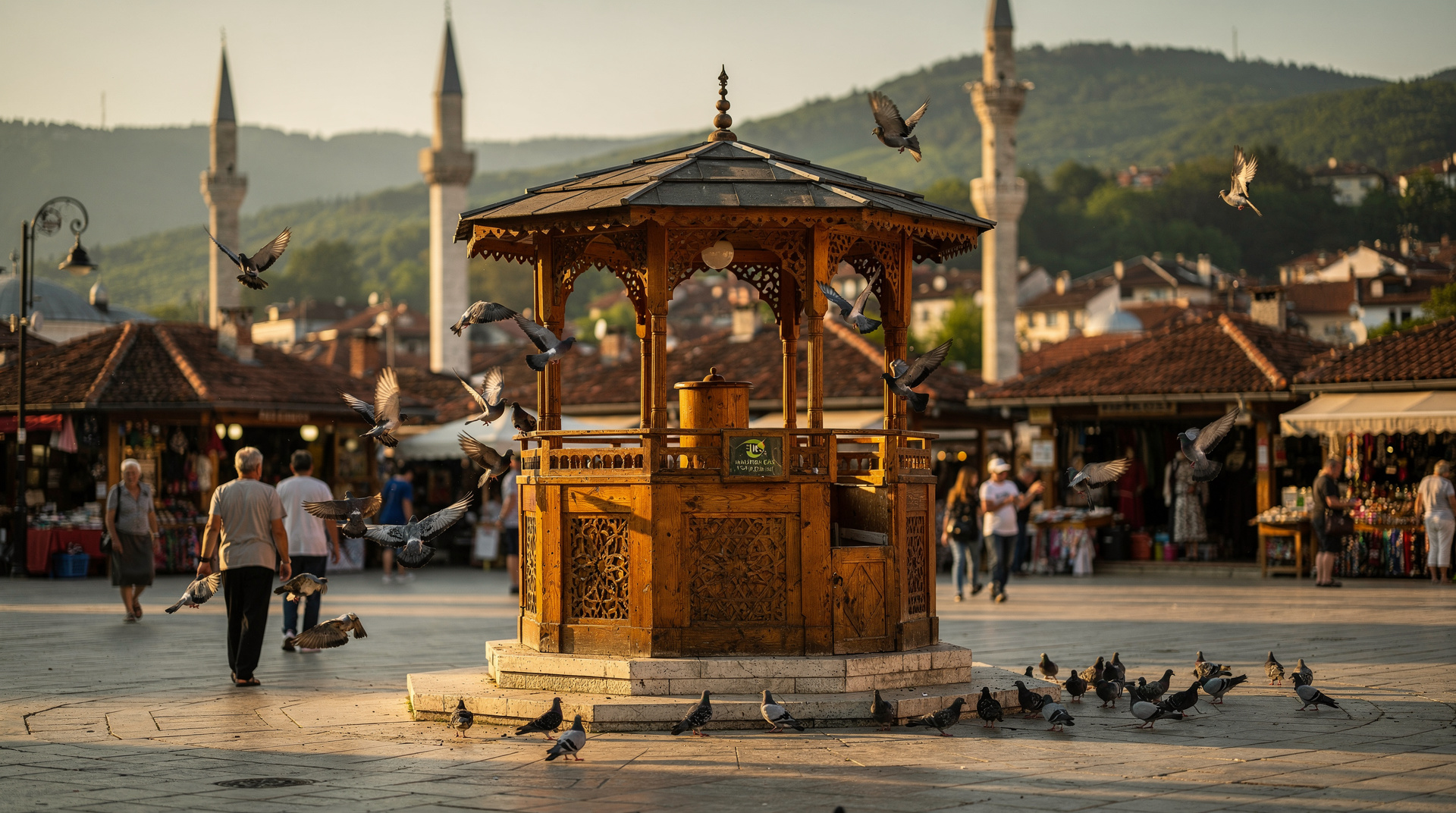
Sarajevo’s restaurant scene has two distinct personalities that coexist without too much friction. There is the traditional track — aščinicas, ćevabdžinicas, and kafanas where the food has changed little in a century — and a growing modern track of cafés and restaurants interpreting Bosnian ingredients with more contemporary technique. Both are worth exploring; the mistake is spending your entire trip on either one alone.
| At a glance | Details |
|---|---|
| Budget meal | 6-15 BAM (buregdžinica, ćevabdžinica) |
| Mid-range meal with wine | 30-50 BAM |
| Top-end restaurant | rarely above 80-100 BAM |
| Best area | Baščaršija, Kundurdžiluk, Kovači |
| Halal | Standard across traditional restaurants |
| Patio season | May-September |
How to use this guide
The listings below are grouped by style of eating rather than ranked, because the right choice depends on the hour, your appetite and how much time you have. A slow lunch in an aščinica and a quick ćevapi stop are not competing options; they answer different needs. Most travellers do best by picking one traditional spot, one mid-range dinner and one casual stop, then leaving room in the schedule for whatever they stumble on while walking the old quarter. If you are still deciding how many nights to book, the Sarajevo where to stay guide helps you choose a base close to the places listed here, and the Sarajevo destination page gives the wider picture of the city.
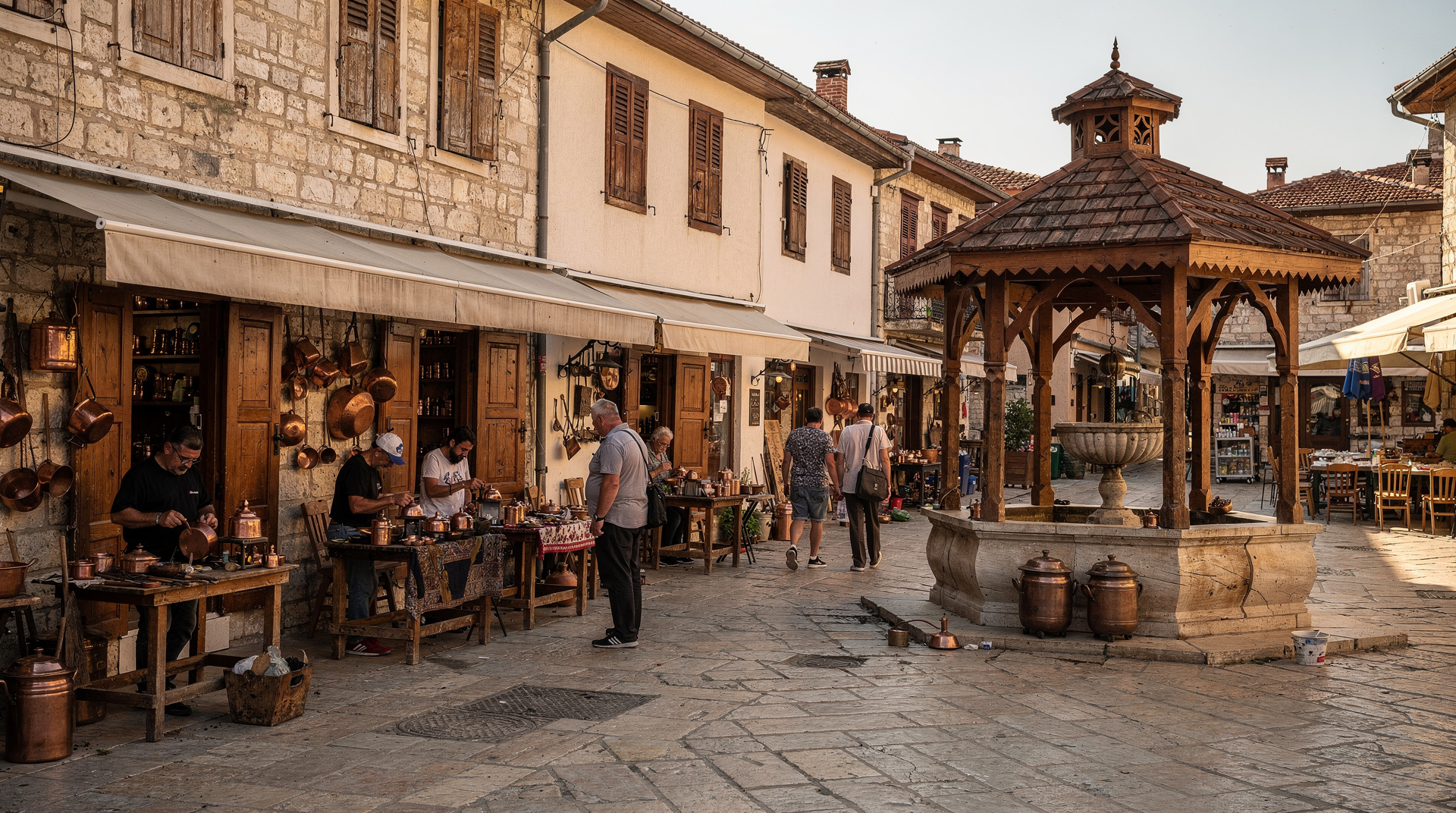
Eating in Sarajevo is also a way of understanding the city. The same layers that shape its architecture — Ottoman, Austro-Hungarian and Yugoslav — show up on the plate: slow-cooked stews and filled vegetables from the Ottoman kitchen, coffee and sweets that follow every meal, and a café habit that owes something to Central Europe. If that history interests you, the Ottoman heritage guide and the Austro-Hungarian Sarajevo guide make good reading before you sit down to eat.
Traditional aščinicas (ready-food restaurants)
Aščinicas are uniquely Bosnian institutions. Derived from the Ottoman word for cook (aşçı), they are working-class restaurants where a small daily menu of slow-cooked dishes is set out in large pots each morning and served at communal tables until it runs out. The food is cooked in the tradition of the komšiluk (neighbourhood community) — rich, slow, and seasonal.
Aščinica Inat Kuća
On the south bank of the Miljacka River facing Baščaršija, Inat Kuća occupies a beautifully restored 19th-century wooden house that was famously dismantled and moved stone by stone in the 1890s during an argument with city authorities. The menu runs to begova čorba, japrak, dolma, and slow-roasted meats. The view back across the river to the old quarter is one of the best in the city.
Prices: 10-20 BAM per main dish. Open daily 11:00-22:00.
Aščinica Dveri
A small, low-ceilinged aščinica in the old town with perhaps the most consistent begova čorba in Sarajevo. Daily specials depend on the season; arrive before 13:00 for the widest choice.
Aščinica Hasanaginica
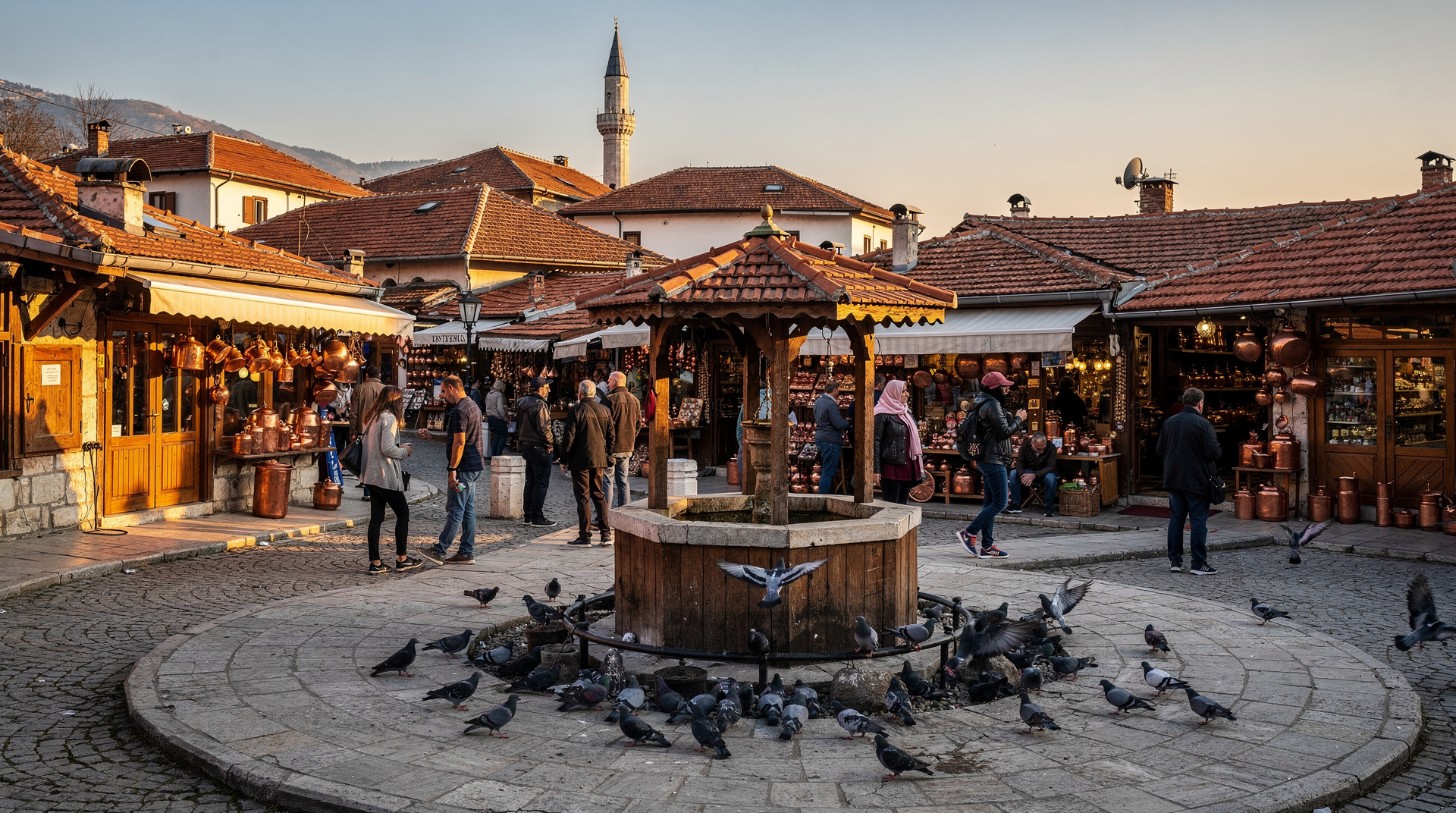
On Baščaršija’s covered market street, Hasanaginica serves traditional food at communal tables from early morning. Popular with market workers and local office staff — a reliable indicator of quality.
What to order in an aščinica
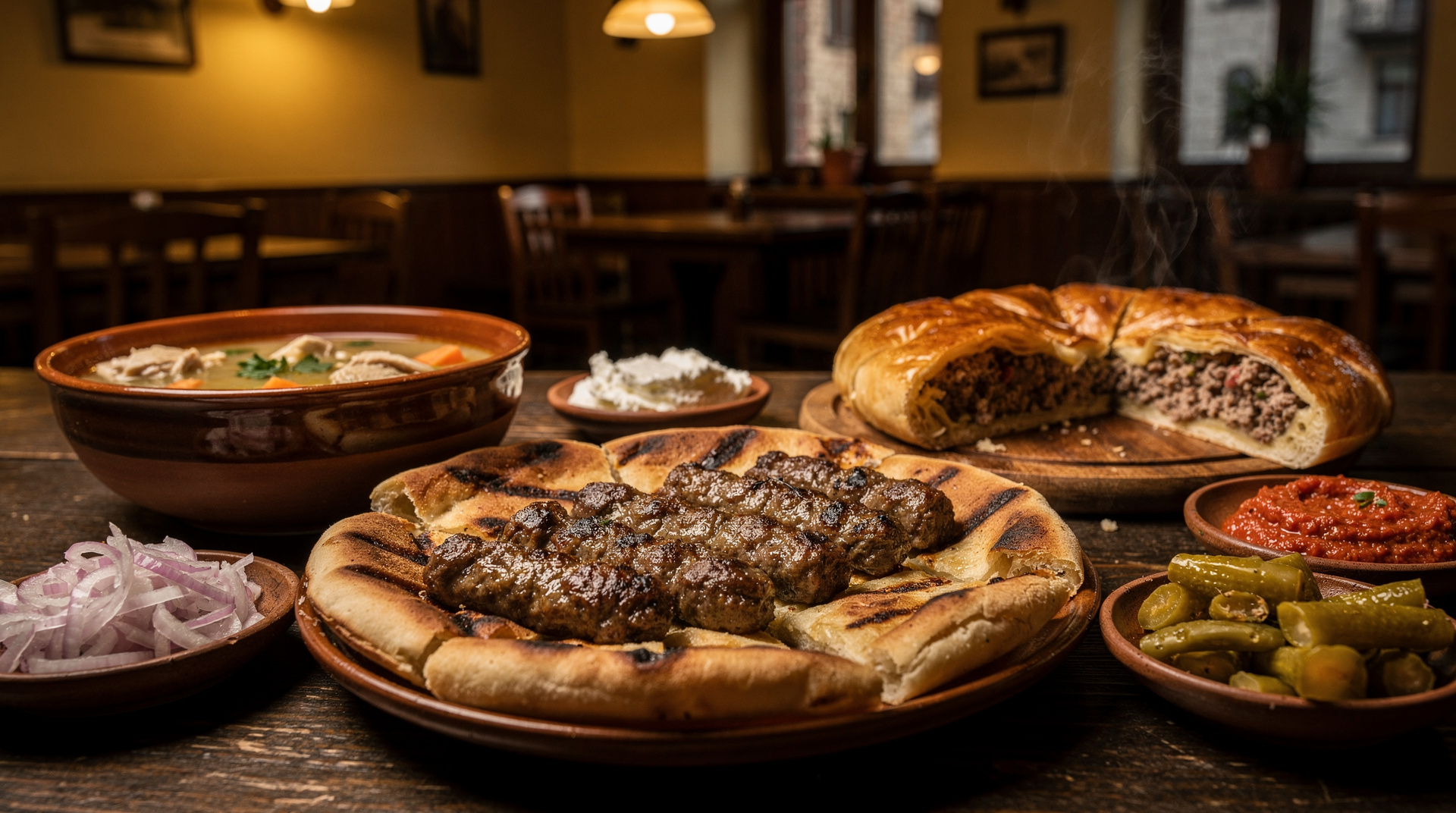
If the menu is not written down, and often it is not, simply look at the pots and ask. Staff are used to visitors pointing. A good first order is a bowl of begova čorba to start, followed by whichever filled vegetable or slow-cooked meat looks freshest that day. Dolma and japrak are the dishes most worth trying if you have never had them: the filling is seasoned simply, and the cooking does the work. Order a little at first; portions are generous and you can always go back to the counter.
Bread arrives with almost everything, and so does a side of something sour or creamy, which balances the richness of the meat. Do not rush. Aščinicas are not built for speed in the way a fast-food counter is, and the experience of sitting at a shared table, hearing local conversation around you, is part of what you are there for.
Choosing between the aščinicas
Inat Kuća is the one for the setting and the view back to the old quarter, so it suits a first evening or a visit with companions who care about atmosphere. Dveri is the one to pick when you want a quiet, no-fuss bowl of soup. Hasanaginica suits the early riser who wants to eat where the working city eats. None of them is a mistake; the difference is mood rather than quality.
Ćevabdžinicas (ćevapi specialists)
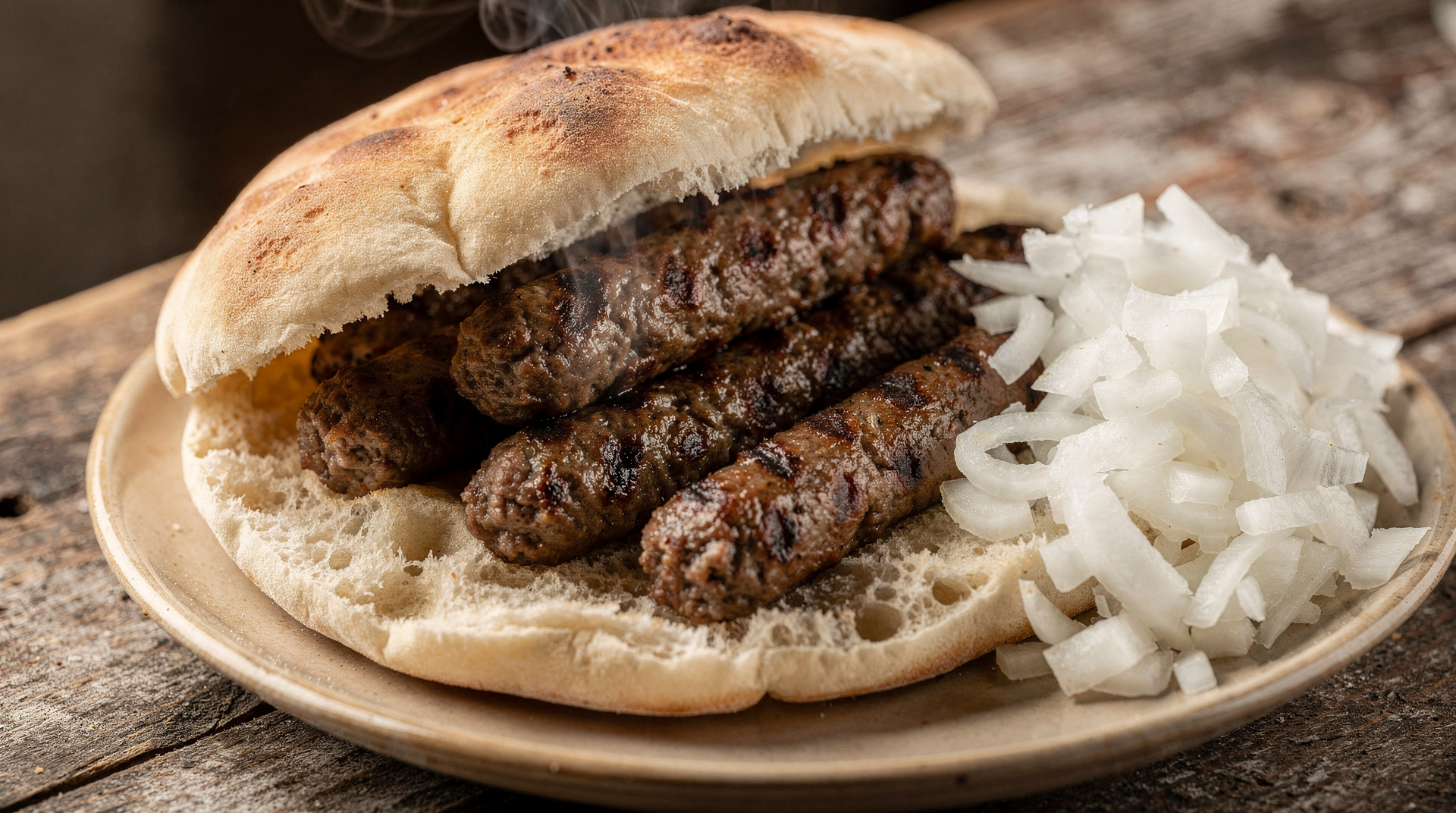
For ćevapi, Baščaršija is the natural destination. See the full Sarajevo ćevapi guide for a comprehensive breakdown. In brief:
- Ćevabdžinica Željo (Kundurdžiluk 19-21): the benchmark
- Ćevabdžinica Petica: slightly less crowded, consistently good
- Ćevabdžinica Hodžić (near Ferhadija): excellent kajmak
All run 9-12 BAM for a portion of ten.
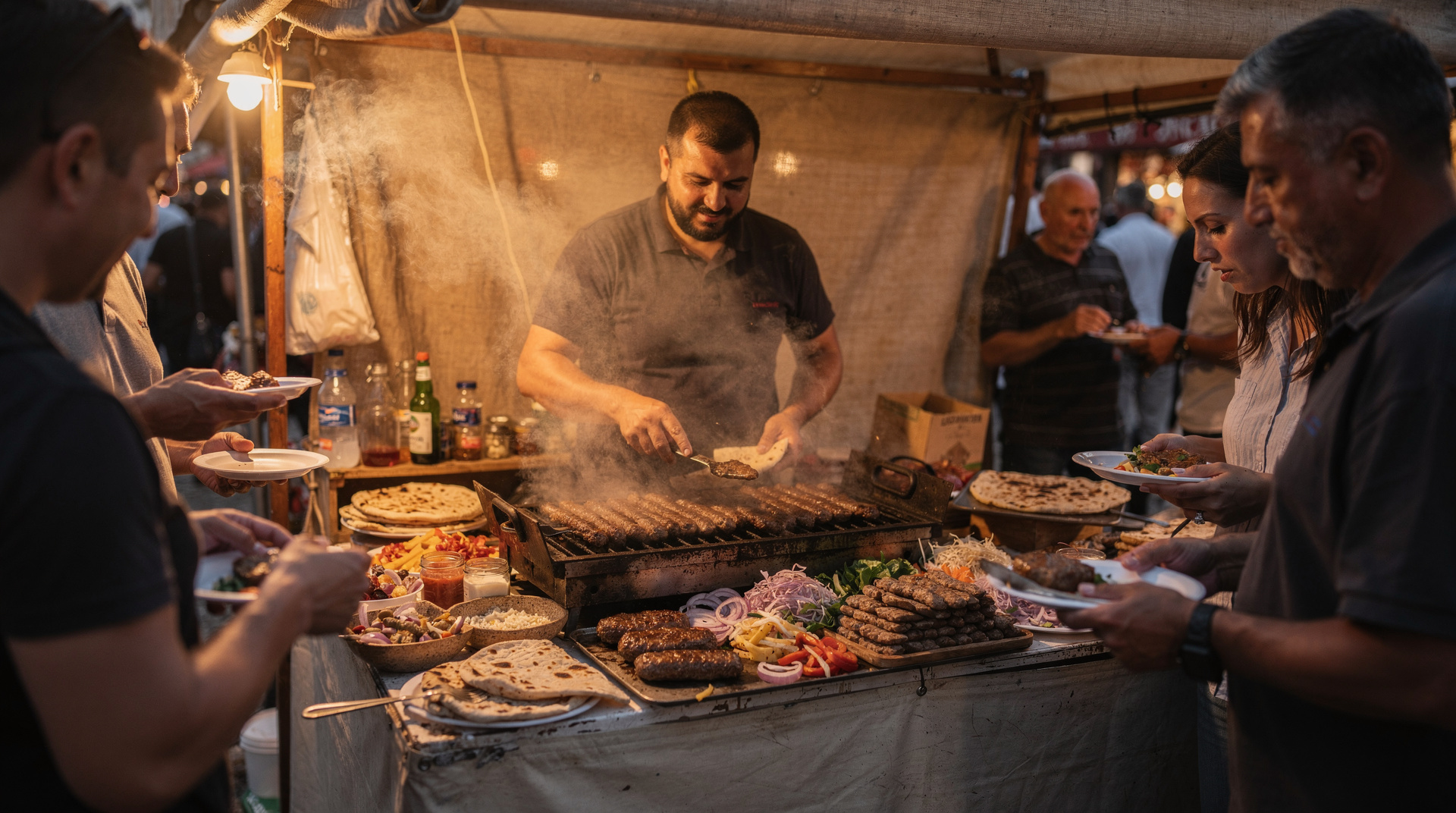
Ćevapi are served in flatbread with chopped raw onion and, if you ask, kajmak, the soft dairy spread that locals treat as non-negotiable. Eat them while hot, with your hands, and do not be shy about asking for more bread. A visit to a ćevabdžinica is quick by design, which makes it the easiest meal to fit between sights. If you want to understand why one grill is preferred over another, the ćevapi guide goes into the details, and the Bosnian food guide places ćevapi among the other dishes you will meet on the trip.
The buregdžinica alternative
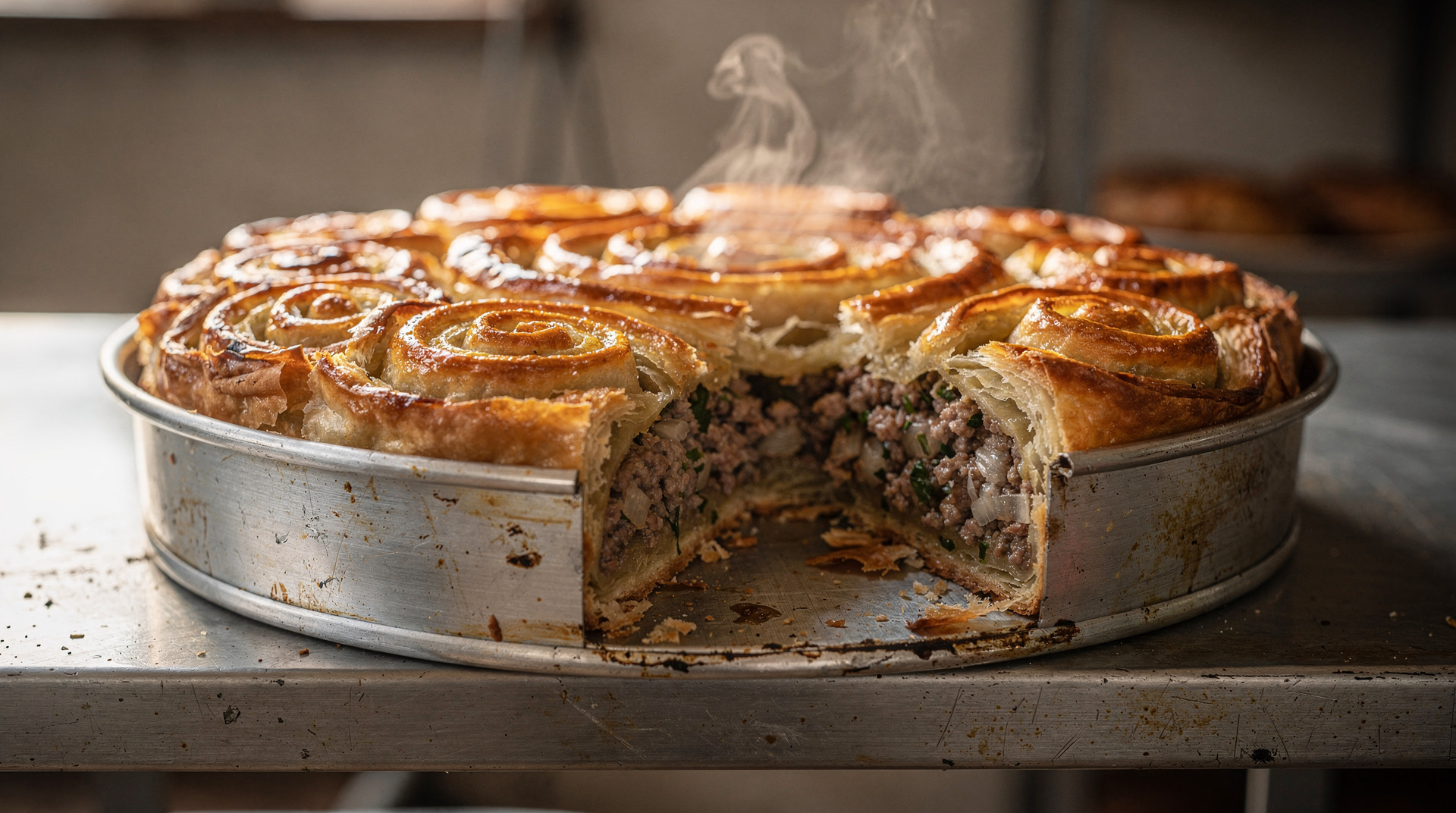
For the cheapest and fastest meal in the city, a buregdžinica is hard to beat. Burek, sirnica, zeljanica and krompiruša are all baked in round trays and sold by weight or by the portion, usually with a glass of drinking yoghurt. Many visitors eat one for breakfast and another for a late snack. The burek and pita guide explains how to tell the types apart so you order what you actually want.
Mid-range restaurants
Barhana
On Ćemaluša street, a short walk from Baščaršija, Barhana is the closest Sarajevo comes to a “modern Bosnian” restaurant — traditional dishes (japrak, lamb, burek) prepared with more care and presentation than the standard aščinica. The wine list is also thoughtful. Mains cost 18-28 BAM.
Kibe Mahala
One of the oldest continuously operating restaurants in Sarajevo, Kibe Mahala on Čizmedžiluk occupies a restored Ottoman-era building with a courtyard terrace. The menu is traditional: slow-cooked meats, soups, Bosnian stews. Strong on atmosphere; one of the better vegetable dolma in the city.
Restoran Pivnica HS
The brewery restaurant of Sarajevska Pivara (Sarajevo Brewery) on Franjevačka street is a city institution. Long wooden tables, unpretentious service, and a menu that goes from ćevapi to full Bosnian roasted dishes. Their house-brewed lager (Sarajevsko Pivo) is one of the best accompaniments to a meat-heavy lunch.
Mains: 12-20 BAM.
Choosing a mid-range dinner
Barhana is the better choice if you want traditional dishes with a calmer, more polished feel and a considered wine list. Kibe Mahala is the pick for a courtyard evening, particularly in warm weather when the terrace is the whole point. Pivnica HS suits groups, beer drinkers and anyone who wants a loud, friendly room and a big plate of meat. Dinner is the meal where booking in summer is most worth the effort, as noted in the practical section below.
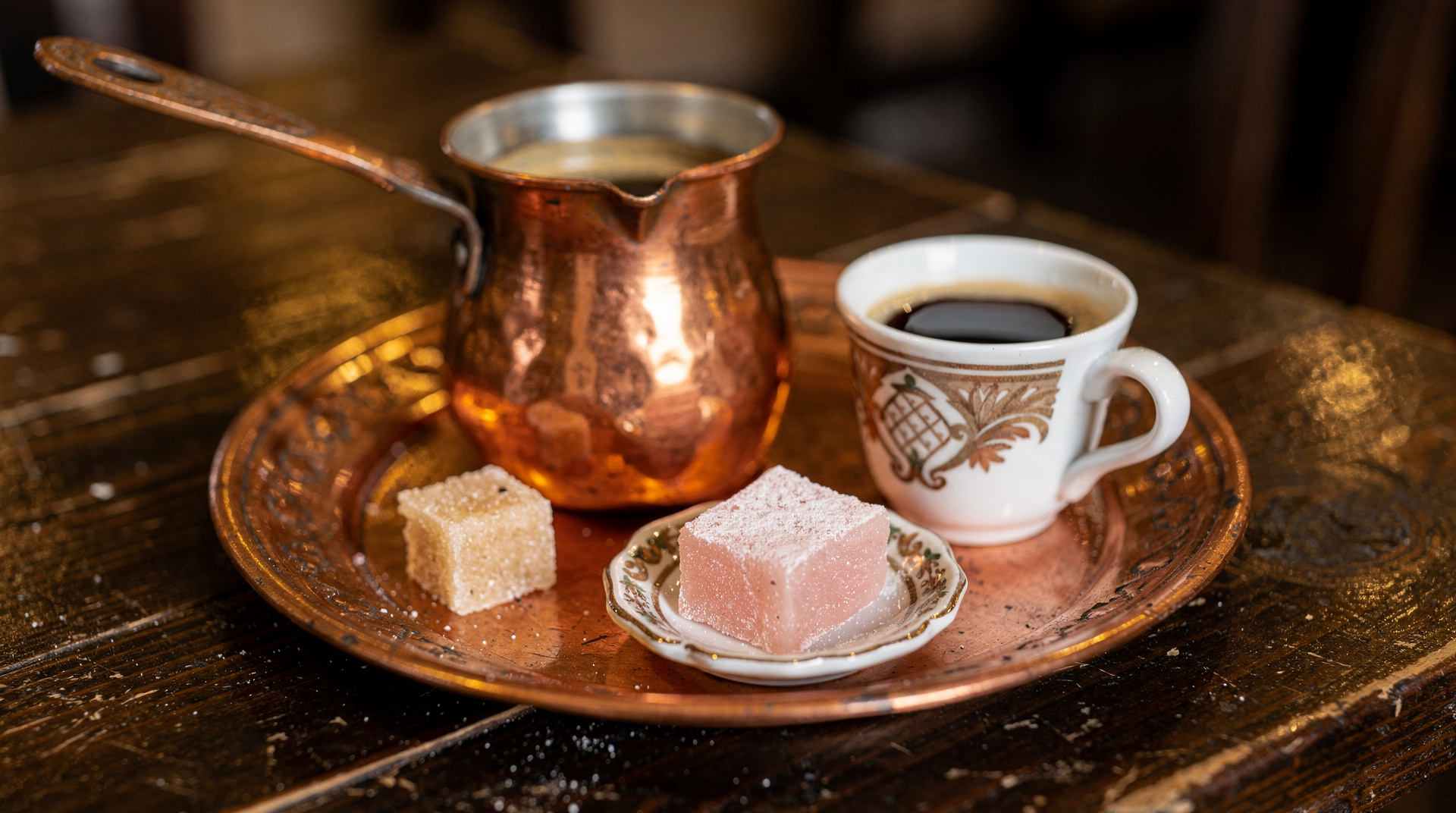
If you want to pair dinner with local wine, the Herzegovina wine guide explains what the region produces, so you can order with some confidence instead of guessing from the list. Those who prefer to finish a meal with coffee in the traditional way will find the ritual explained in the Bosnian coffee culture guide.
International and modern cafés
Sarajevo’s Ferhadija and Titova streets have a cluster of modern cafés with European menus — useful if you need a break from the traditional track. For a city break, the Raum café on Titova and the Cinemas complex café in the city centre are local favourites for coffee, pastries, and light lunches.
Cafés on this side of town are also where you will find the most flexible menus for vegetarians, for travellers who want a lighter meal, and for anyone who needs to sit down with a laptop. They are a useful counterweight to a diet of grilled meat. The Sarajevo cafés we love post is a more personal take on where to linger over a coffee.
Eating with a plan
A simple rhythm works well. Start the day with burek or a light café breakfast, take the main meal at lunch when the aščinicas are at their best, and keep dinner lighter or more social. Between meals, walk. The old quarter is compact, and the Baščaršija guide shows how the restaurant streets connect to the sights, so you can fit a meal into almost any route without doubling back.
Plan around your other days, too. If you are heading out on a long excursion, the best day trips from Sarajevo are easier to enjoy after a proper breakfast, and a meal back in the city is a good reward at the end. For a fuller schedule that places meals alongside sights and museums, the Sarajevo 4-day deep dive itinerary is a helpful template.
For first-time visitors who want a story of how it all feels on the ground, the first time in Sarajevo blog post is a good companion read.
Avoiding disappointment
Most bad meals in Sarajevo come from a few avoidable situations: arriving at an aščinica when the pots are empty, choosing a restaurant purely because it sits on the busiest street, or ordering far more than you can finish because everything looks appealing. Choose places where locals are eating, ask what is freshest, and keep your first order modest. The Sarajevo tourist traps guide covers the pitfalls around the busiest tourist streets, and it is worth a read before your first evening out.
Food tours for orientation
A Bosnian cooking class in Sarajevo is an excellent way to understand the food before eating it in restaurants — you learn how burek, čorba, and traditional sweets are made, which transforms subsequent meals from mere eating into informed appreciation.
For a guided market-to-restaurant experience, the city market food tasting tour gives context on Markale market and the main dishes before you navigate the restaurant scene alone.
If you prefer to read about the dishes first, the Sarajevo food tour guide explains what a guided tasting involves and who it suits. Either way, going with a little knowledge makes the restaurant listings above much easier to use.
Etiquette at the table
Meals in Bosnia are social and unhurried. Sharing is normal, hospitality is taken seriously, and nobody will hurry you out once you have finished eating. Greet staff when you come in, say thank you when plates are cleared, and expect coffee to be offered, or ordered, after the meal rather than with it. If you are invited to a local home, which does happen, bring a small gift and accept a second helping; refusing food politely but repeatedly can be read as a snub. In restaurants, the bill usually comes only when you ask for it, so there is no pressure to leave.
Practical notes for eating in Sarajevo
- Eating hours: lunch 12:00-15:00 (main meal in Bosnian culture), dinner 19:00-22:00. Aščinicas typically close between meals or run out of food.
- Reservations: rarely needed except for the most popular spots on weekends in summer
- Payment: most traditional restaurants take cash (BAM); newer establishments accept cards
- Tipping: rounding up or leaving 10% is appreciated
- Halal food: standard across all traditional Bosnian restaurants; pork appears mainly in café and international menus
- Patio season: May-September, outdoor terraces are universal
For drinking alongside dinner, see the Bosnian coffee guide and the Herzegovina wine guide. The Eat Where the Locals Eat food tour remains the best single introduction to the city’s eating culture for those with limited time. For more background on the dishes themselves, see the Bosnian food guide and the burek and pita guide; to plan a walk between meals, the Baščaršija guide covers the old quarter where most of these restaurants sit.
Frequently asked questions about Best restaurants in Sarajevo
What is an aščinica in Sarajevo?
How much does dinner cost in Sarajevo?
Where is the Baščaršija restaurant area?
Are there vegetarian restaurants in Sarajevo?
Is it safe to drink tap water in Sarajevo restaurants?
Top experiences
Bookable activities with verified prices and instant confirmation on GetYourGuide.