Ćevapi in Sarajevo guide
Sarajevo: City Market, Old Town Food Tasting Tour
Where can I find the best ćevapi in Sarajevo?
Ćevabdžinica Željo on Kundurdžiluk in Baščaršija is the long-standing local favourite. Ćevabdžinica Petica and Ćevabdžinica Hodžić are strong alternatives. Expect to pay 9-12 BAM for a portion of ten.
Every city in the Balkans has its version of ćevapi, but Sarajevo’s are widely regarded as the definitive form. They have been made here since the Ottoman era, refined over centuries into something precise and specific: thin, charcoal-grilled logs of hand-kneaded minced meat, served in soft somun bread with raw onion and creamy kajmak. Understanding the culture around them is part of understanding Sarajevo itself.
| Where | Baščaršija and central Sarajevo, walkable from most old-town accommodation |
| Cost | Around 9-12 BAM for a portion of ten |
| Time needed | 20-30 minutes for a sit-down or counter meal |
| Best time to go | Before 11:30 or after 14:00 to avoid weekend queues |
| Getting there | Trams 1, 2, 3 to Baščaršija; landmark is the Sebilj fountain |
What Sarajevo ćevapi actually are
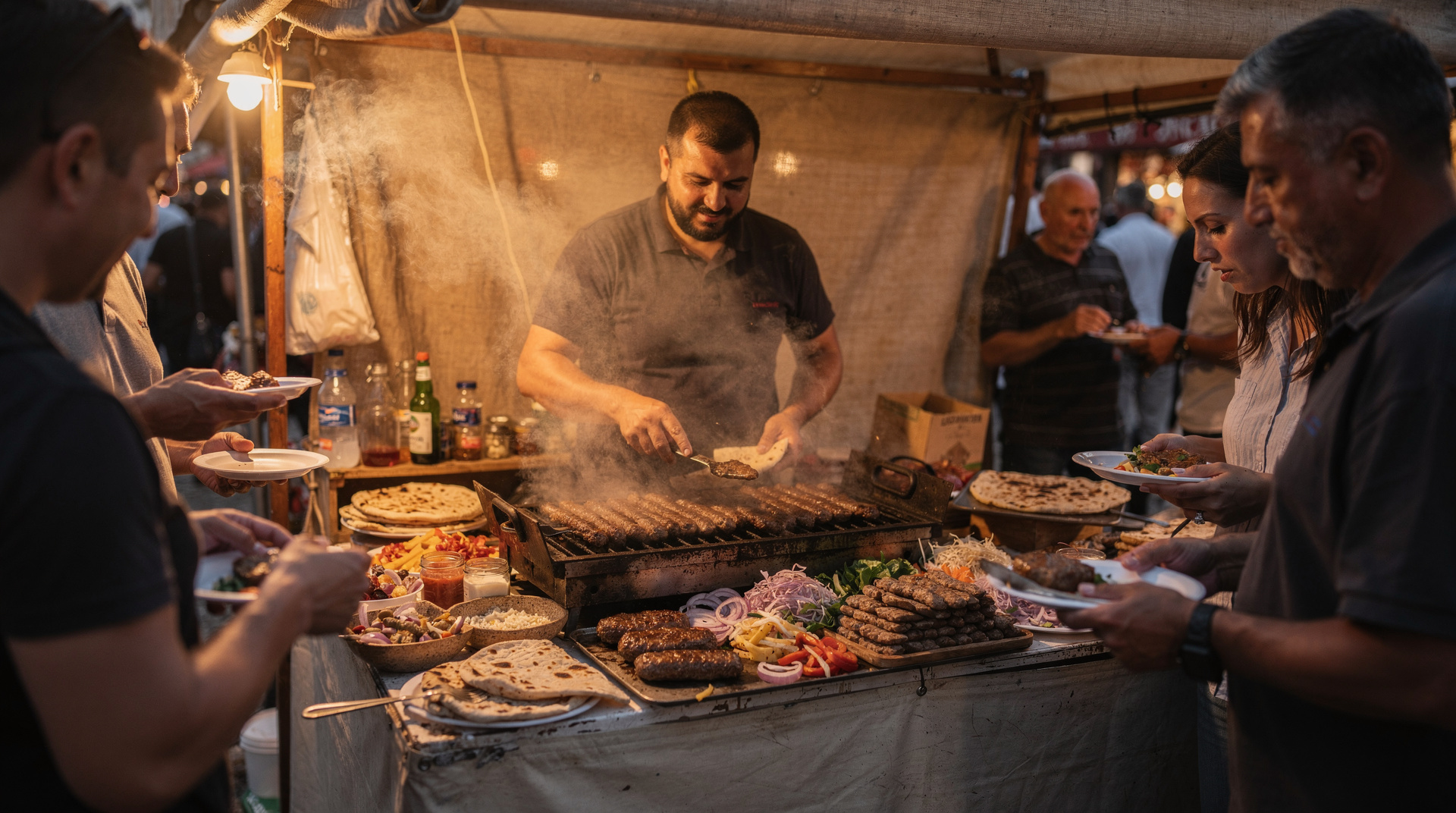
Sarajevo-style ćevapi are made from a combination of hand-minced beef (usually around 60-70%) and lamb (30-40%), seasoned with salt and a small amount of baking soda to improve texture, and formed into thin, uniform cylinders without any casing. They are grilled directly over charcoal on a mangala (low charcoal grill), turned frequently until they have a lightly charred exterior and a still-juicy interior.
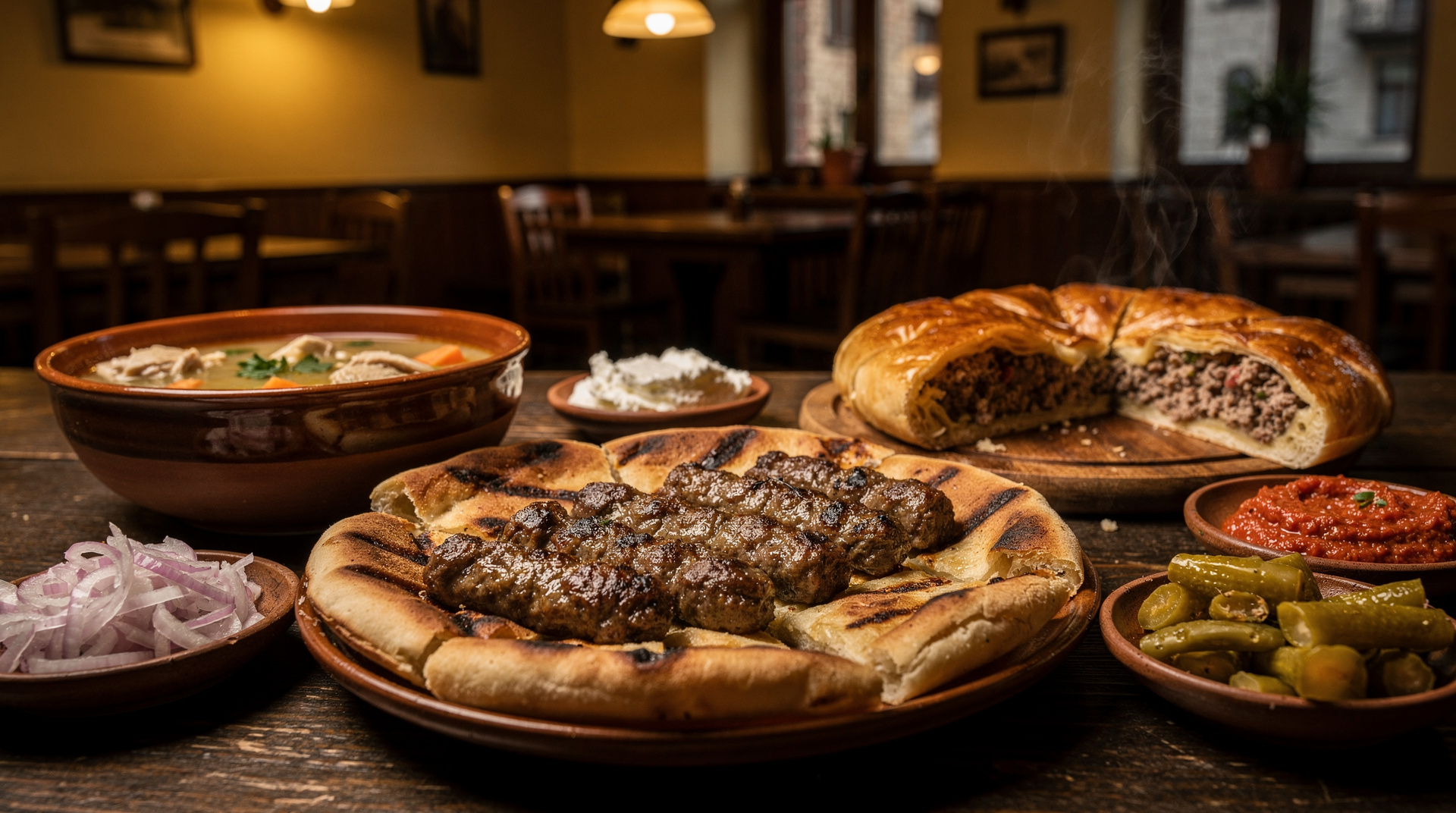
The standard serving is ten pieces (deset ćevapa) inside a halved somun, accompanied by a separate dish of raw white onion and a generous spoonful of kajmak. Some places also offer ajvar (roasted red pepper paste) on the side. The combination of smoky meat, sharp raw onion, and rich kajmak is the whole point — do not skip any element.
A portion of ten ćevapi with accompaniments costs 9-12 BAM (4.50-6 EUR) in most ćevabdžinicas. A half-portion (pet ćevapa) is available for smaller appetites.
The best ćevabdžinicas in Sarajevo
Ćevabdžinica Željo
The most celebrated spot in the city, open since the 1960s on Kundurdžiluk street just off Baščaršija. There are two branches side by side — both are good, both are often busy. The somun here is made fresh on site; the ćevapi are as thin and consistently grilled as anywhere in town.
Address: Kundurdžiluk 19-21, Baščaršija. Open roughly 09:00-22:00 daily.
Ćevabdžinica Petica
A local favourite a few minutes’ walk from Baščaršija proper, less crowded and arguably better for it. The kajmak is notably good. The name means “five” — a reference to the half-portion size that used to be their thing.
Ćevabdžinica Hodžić
On the western edge of the old town near Ferhadija, Hodžić draws a strong local crowd. Slightly larger portions, slightly crispier exterior.
Ćevabdžinica Inat
Quieter, off the main tourist drag, and reliable for a mid-morning ćevapi without a queue. A good option if the Baščaršija spots are packed.
How to order
Walk in, find a seat (or stand at the counter — it is normal), and tell the server how many you want: “Deset ćevapa, molim” (ten ćevapi, please). Add “s kajmakom” (with kajmak) if you want to confirm it is included, and “jogurt” if you want the traditional cold yogurt drink alongside.
Tap water is sometimes not brought automatically — ask for “voda” if you want it. Payment is almost always cash; bring BAM.
A Sarajevo food tour for context
The Sarajevo city market and food tasting tour takes in the Markale market, a burek stop, and ćevapi alongside other traditional dishes. It is a good way to frame Bosnian food culture before you start eating your way through the city independently.
The Eat Where the Locals Eat tour specifically targets neighbourhood spots in Grbavica and the residential city, far from the tourist areas. It covers ćevapi and more obscure dishes.
Why Sarajevo ćevapi are distinctive
The key difference from Serbian pljeskavica (flat, broader, often with cheese) or Croatian or Macedonian versions is the specific combination of thinness, the pure beef-lamb blend without pork, and the insistence on somun. Sarajevo ćevapi are also eaten quickly and without much ceremony — they are fast food in the best sense, consumed standing at a counter rather than in a sit-down setting.
The use of hand-kneading rather than a machine mincer is still standard in the better spots. This gives the meat a slightly coarser texture that holds together without becoming dense. The baking soda, used in small quantities, keeps them light.
Ćevapi culture: eating patterns
Ćevapi are appropriate at any time of day. Locals eat them for a late breakfast at 10:00, a quick lunch, or a mid-afternoon snack. They are not, traditionally, an evening restaurant dish — the best ćevabdžinicas close by late afternoon when the day’s meat runs out.
On weekends the queue at Željo forms by 11:00. The best strategy is to arrive early (before 11:30) or after the initial lunch rush (after 14:00).
What to drink alongside ćevapi
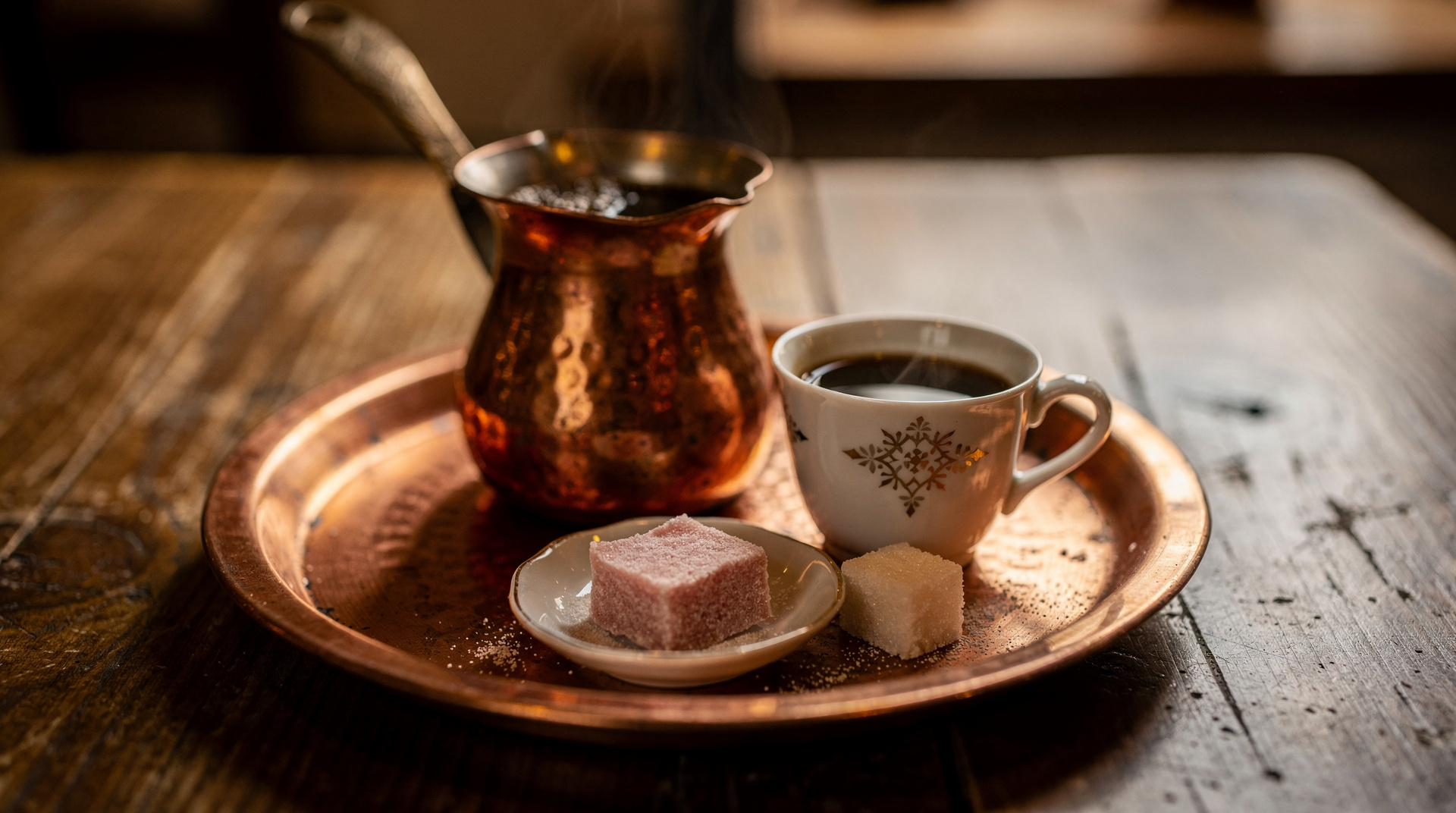
The classic pairing is cold jogurt — thick, plain, drunk from a half-litre bottle. Ayran (yogurt-water drink) is a close alternative. For something warmer, a šalša (small espresso) after finishing is the Sarajevo way. Beer (pivo) works too — Sarajevska Pivara lager is brewed locally.
Beyond ćevapi
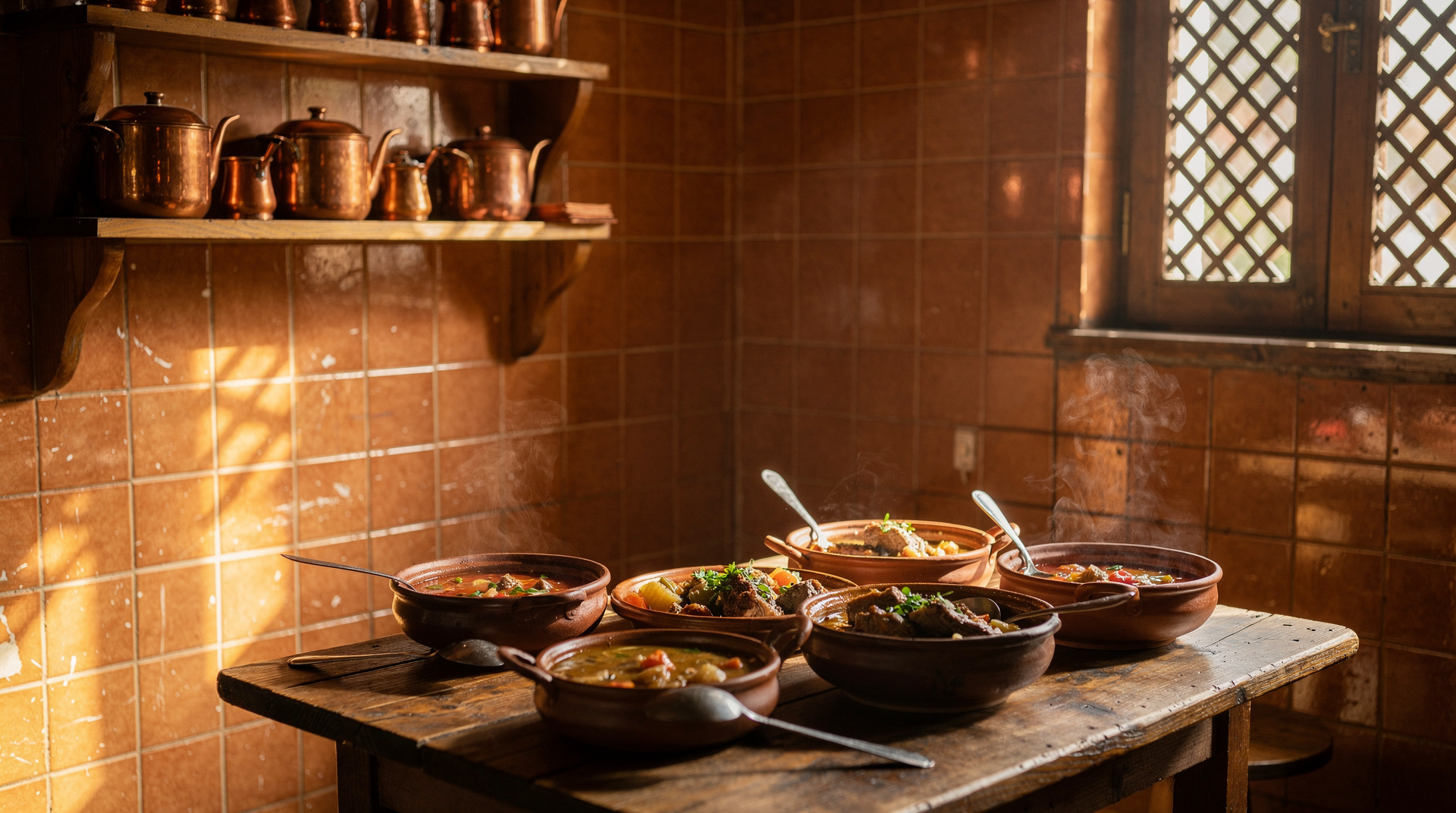
If you are spending more than a day in Sarajevo, branch out into the broader Bosnian kitchen. The Bosnian food guide covers begova čorba, japrak, slow-roasted lamb, and the sweet end of the menu. For the coffee ritual that follows, see the Bosnian coffee guide.
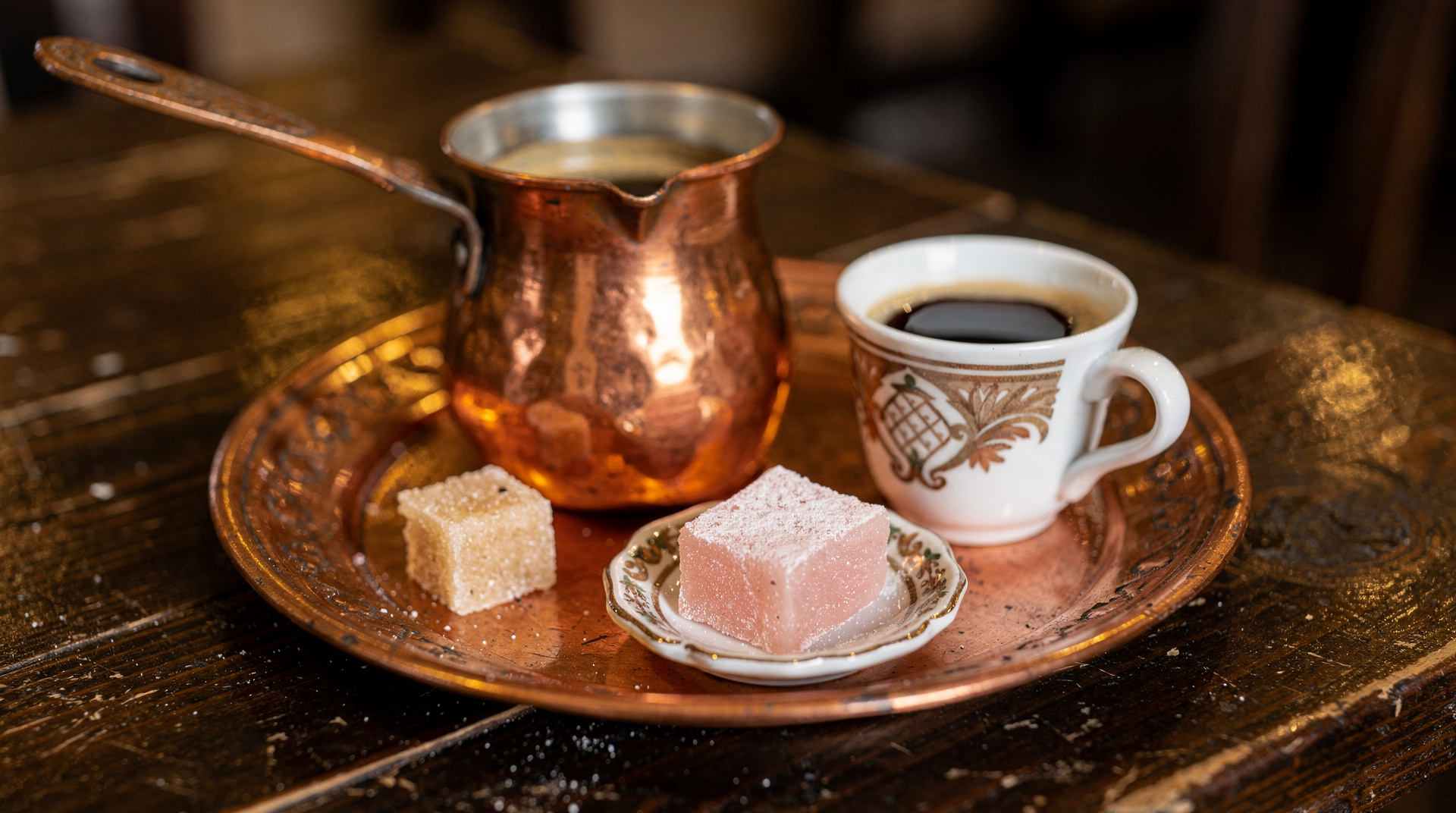
The Ethnic Food and Coffee Walking Tour pairs a food walk through the old town with the full Bosnian coffee ceremony, a useful combination for a half-day.
Getting to Baščaršija
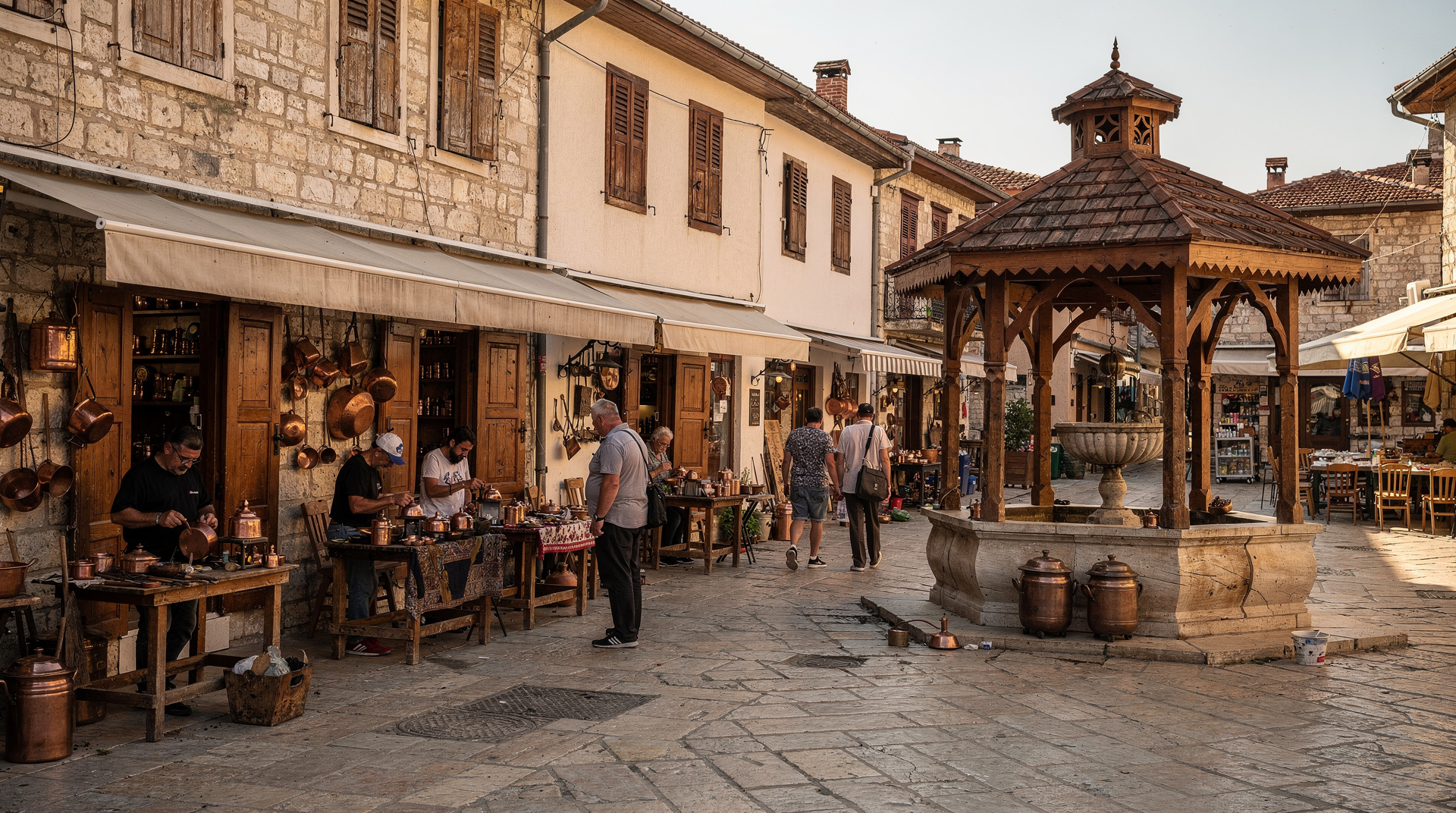
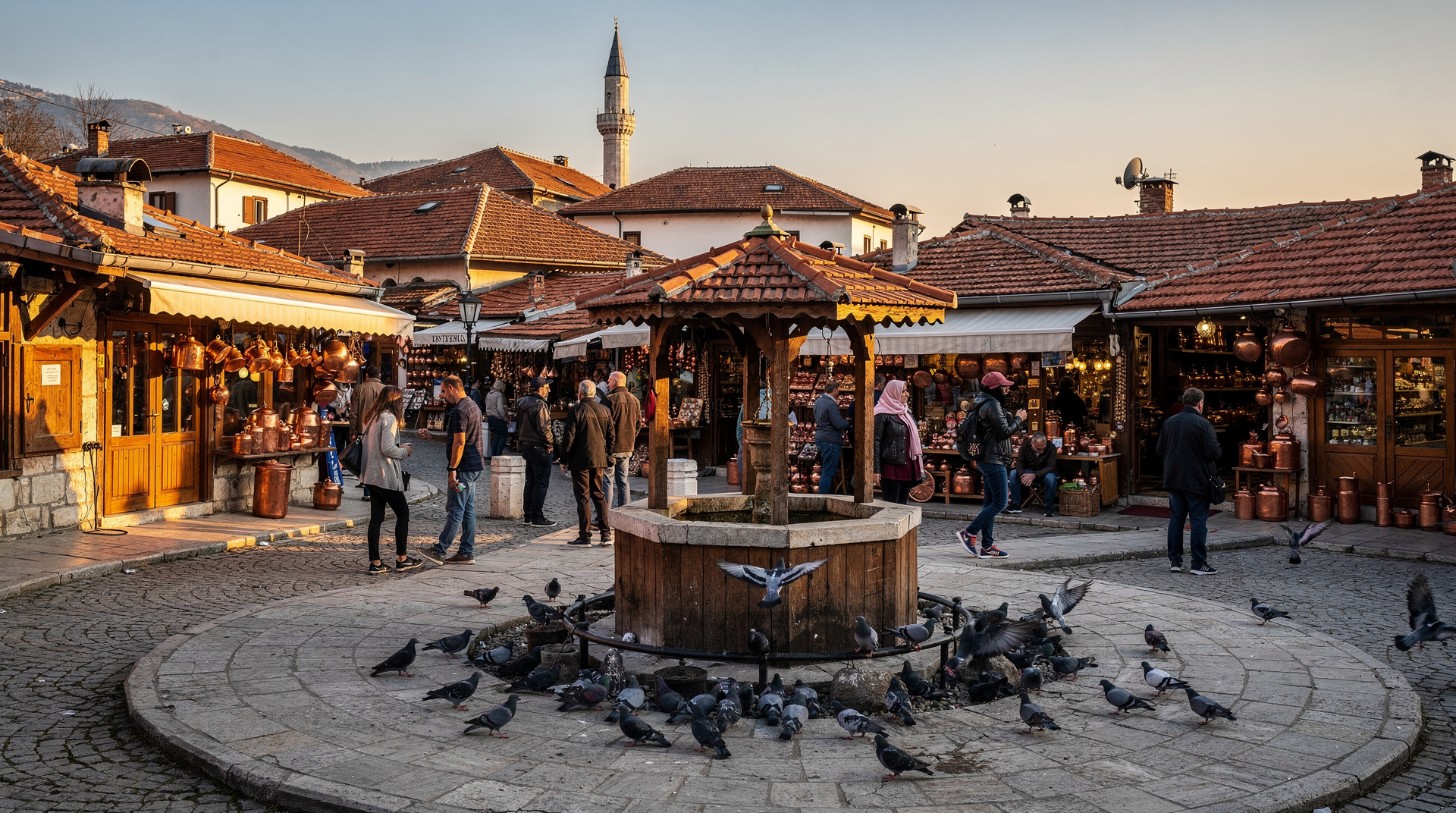
Baščaršija is the old Ottoman quarter in central Sarajevo, walkable from most accommodation in the city centre. Trams 1, 2, and 3 stop near Baščaršija from the main street (Titova/Maršala Tita). The square with the Sebilj (wooden fountain) is the landmark to aim for.
For a full orientation to the quarter, the Baščaršija guide covers the history, the craft workshops, and the main sights. Most ćevabdžinicas are within a five-minute walk of the Sebilj.
Ćevapi versus burek: which for which meal
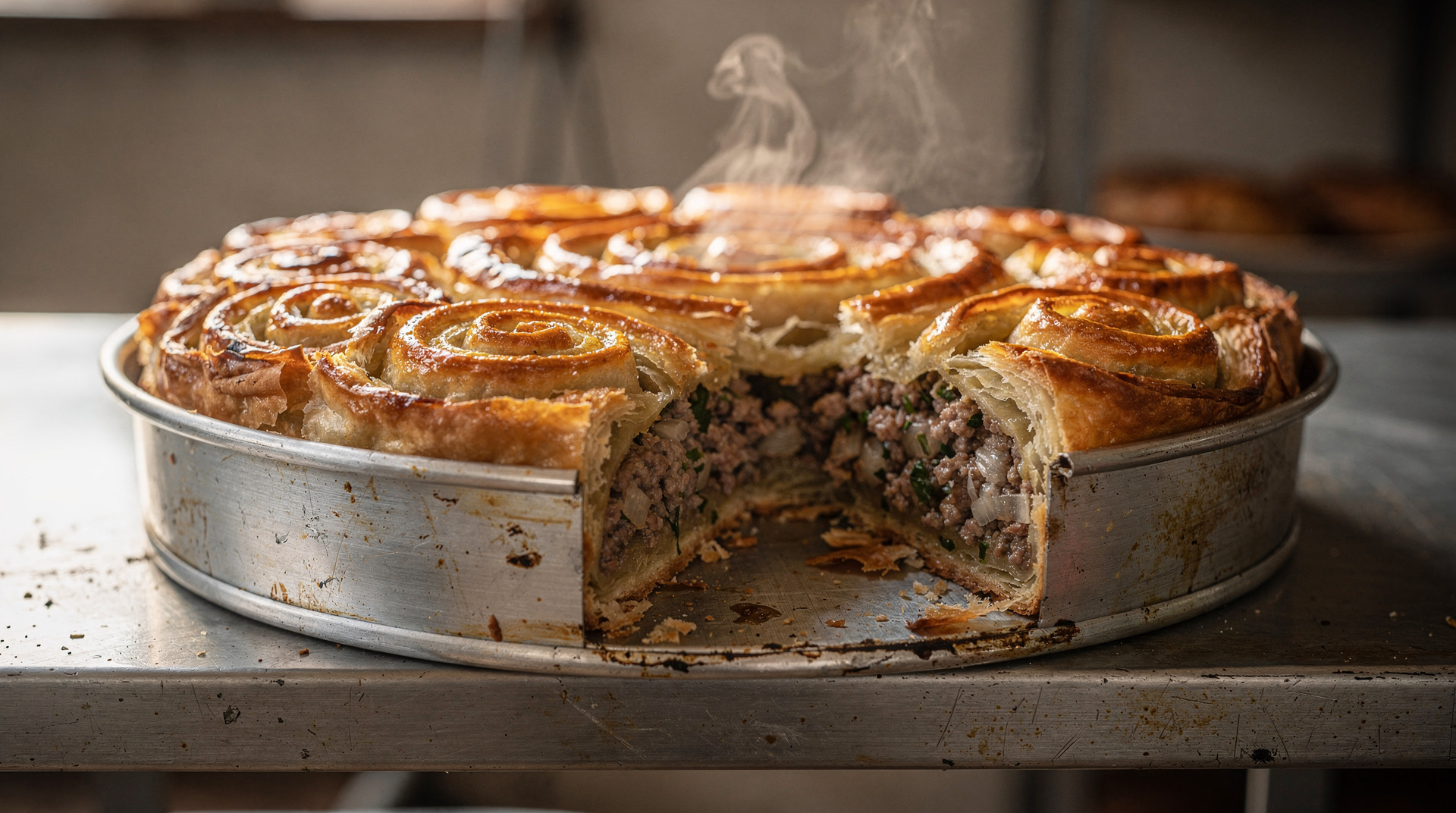
Visitors often assume ćevapi and burek are interchangeable Sarajevo street foods, but locals treat them as distinct meals with distinct timing. Burek is breakfast, eaten fresh from the oven before 10:00; ćevapi is a midday food, best from late morning through mid-afternoon before the best spots sell out. Planning a full day of Sarajevo eating around this rhythm — burek early, ćevapi at lunch, coffee throughout — makes for a more authentic experience than treating them as equivalent options.
Avoiding the tourist-menu trap
Restaurants directly on the main Baščaršija tourist strip sometimes offer “ćevapi” at inflated prices with smaller portions aimed at passing visitors. The genuine ćevabdžinicas listed above are a short walk from the busiest photo spots but charge local prices. If a menu is only in English with photos and no Bosnian text, it is worth walking on. See the Sarajevo tourist traps guide for more on this pattern.
Building a ćevapi stop into your day
The easiest way to fit ćevapi into a Sarajevo visit is to anchor it to whatever you are already doing in the old town. If your morning is spent on the craft lanes and mosques of the quarter, a late-morning ćevapi stop slots in naturally before the crowds arrive. The Sarajevo mosques guide and the Sarajevo faiths guide both describe walks that start and end close to the ćevabdžinicas, so you can finish a visit and eat without backtracking across the city.
If your day is built around museums, the logic is the same. The museums of Sarajevo guide and the War Childhood Museum guide cover places that are heavy going emotionally, and a simple, unhurried meal afterwards is a good way to reset. Ćevapi suit that role well: nothing about the meal demands a reservation, a long menu or a decision.
Travellers who are short on time can treat ćevapi as the fixed point of a Baščaršija morning and arrange everything else around it. Arrive, eat, then wander. Doing it in the opposite order, with a long walk first, tends to mean arriving in the middle of the lunch rush with a hungry group and a queue.
What to expect when you sit down
A ćevabdžinica is not a restaurant in the usual sense. The room is usually small, the menu is short and sometimes spoken rather than printed, and the focus is on turnover. Do not read this as rudeness. The staff are working through a steady stream of the same few orders, and the system works best when you know what you want. The ordering phrases earlier in this guide are enough to get by, and a little effort with the language is almost always met with warmth.
Food arrives quickly, often within minutes. The somun comes warm, the ćevapi are tucked inside or laid alongside, and the onion and kajmak appear without fuss. Eat with your hands if you like: tearing the bread, wrapping a piece of meat with onion and a smear of kajmak, and eating it in a few bites is exactly how locals do it. There is no need to use a knife and fork, and nobody will think less of you for skipping them.
Do not be surprised if a table is shared at busy times. Sharing a bench with strangers is normal in the old town, and it is a good way to overhear how locals talk about which spot is currently at its best. Ask politely if a seat is free and nobody will mind.
Reading the quality of a ćevabdžinica
A few simple signs tell you whether a place is doing things properly. First, look at the grill. A real ćevabdžinica cooks over charcoal, in plain sight, and the smoke is part of the atmosphere. If the meat is being cooked out of view on a flat electric plate, the result is usually flatter in flavour.
Second, look at the bread. Good somun is soft, slightly puffed and warm, with a lightly charred underside. Bread that is dry, cold or obviously reheated is a sign that the place is coasting on its location.
Third, look at the crowd. A mix of office workers, families and older regulars is a far better sign than a table of tourists photographing the plate. The places that keep locals coming back are those that deliver the same thing, the same way, day after day.
Finally, look at the ćevapi themselves. They should be uniform in size, glossy rather than greasy, and lightly marked by the grill. If they arrive pale and oversized, you are probably not eating the Sarajevo style described above.
Common mistakes with the onion and kajmak
Many first-timers treat the raw onion as a garnish to be pushed aside. Locals do the opposite: the sharp bite of the onion is what cuts through the richness of the kajmak and the meat, and the three elements are meant to be combined in each mouthful. If raw onion is genuinely not for you, eat a little less of it rather than none, and notice how the balance changes.
Kajmak, for its part, can be surprisingly filling. Start with what is served and ask for more only once you have tasted how the whole plate comes together. The Bosnian food guide places kajmak in the wider context of Bosnian dairy and explains why it appears so often across the menu.
Ćevapi beyond Sarajevo
Sarajevo has the strongest reputation, but ćevapi are eaten across the country, and the style shifts slightly from town to town. If your route takes you onwards, it is worth comparing. In Mostar, the best restaurants in Mostar guide points to places where you can try a Herzegovinian take on the same idea, and the Mostar day trip from Sarajevo is an easy way to fit one in without changing your base.
Comparing versions is half the fun. You may find one town leans towards a looser texture, another towards a smokier char, and each will insist theirs is the original. Treat this as friendly rivalry rather than a contest with a winner. The Sarajevo vs Mostar guide helps you decide how to split your time if you want to taste both.
Making ćevapi part of a longer food trip
Ćevapi make the most sense as one chapter in a wider tasting of the city. Pair them with a morning pita from the burek and pita guide, a slow coffee as described in the Bosnian coffee culture guide, and something sweet and local to finish. If you want a plan that covers more of the city, the best restaurants in Sarajevo guide is the natural next read, and the Sarajevo food tour guide compares the organised options.
For travellers building a whole itinerary around eating well, the Sarajevo 4-day deep dive leaves room for unhurried meals between the main sights, and the Sarajevo destination page gives a broader orientation to the city. If you are on a tight budget, the Bosnia on a budget guide explains why a simple ćevapi meal is one of the best-value things you can do here.
A note on respect and etiquette
Many of the traditional ćevabdžinicas are family businesses with decades of history, and the people behind the grill take pride in doing one thing well. A friendly greeting, a patient attitude in the queue and a simple thank-you when you leave go a long way. Do not ask for substitutions that change the dish, such as swapping in other meats or leaving out the bread, as the menu is deliberately narrow.
If you are eating during a period when many locals are fasting, expect a different rhythm: opening hours and queues can shift, and some places adjust their service. Check locally on the day, and treat any change with flexibility rather than frustration.
Frequently asked questions about Ćevapi in Sarajevo
What makes Sarajevo ćevapi different from other Balkan versions?
What is kajmak and do I have to order it?
What is a somun?
Is there a ćevapi food tour in Sarajevo?
What time do ćevabdžinicas open?
Is ćevapi halal in Sarajevo?
How do Sarajevo ćevapi compare to burek for a meal?
Top experiences
Bookable activities with verified prices and instant confirmation on GetYourGuide.