Bosnian food guide
Sarajevo Food Tour: Eat where the locals eat
What should I eat in Bosnia & Herzegovina?
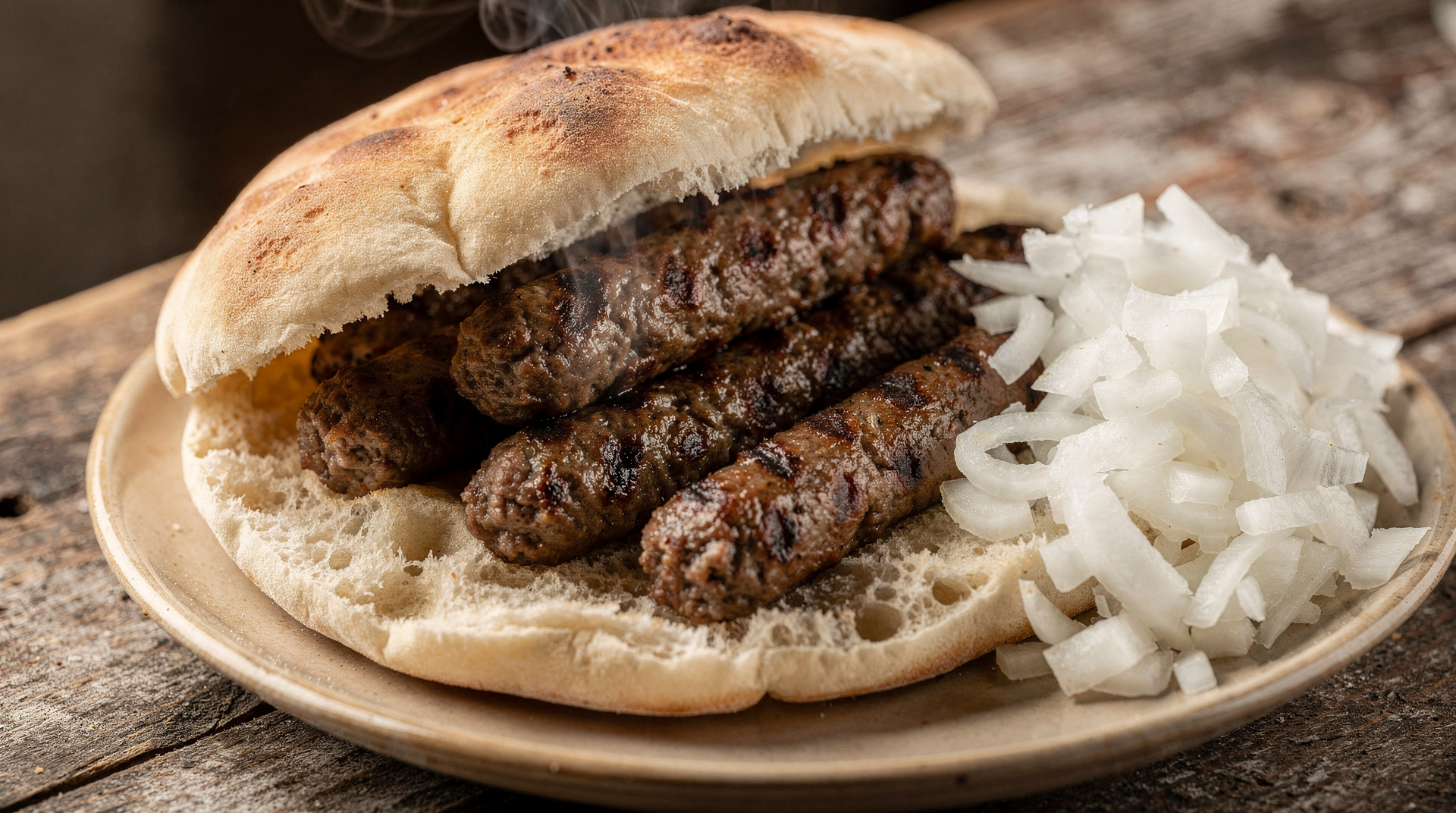
Start with ćevapi (grilled minced meat in flatbread), try burek or pita for breakfast, and finish with tufahija (poached apple with walnut cream). Wash it down with a traditional Bosnian coffee in a džezva.
Bosnia & Herzegovina sits at the crossroads of Ottoman, Austro-Hungarian, and South Slavic culinary traditions. The result is a cuisine that is deeply comforting, unapologetically meaty, and built around slow cooking, wood smoke, and seasonal produce. Whether you are eating in a Sarajevo buregdžinica at seven in the morning or sharing a slow-cooked lamb dish in a village konoba in Herzegovina, the food here tells the story of this land’s layered history.
| At a glance | |
|---|---|
| Where | Baščaršija (Sarajevo) and Mostar’s old town have the highest concentration of traditional kitchens |
| Cost | Around 6-9 BAM for ćevapi, 25-45 BAM for a full sit-down meal |
| Time needed | A half-day food walk covers the essentials; a full trip lets you try regional variations |
| Getting there | Everything below is walkable in central Sarajevo or Mostar |
| Best time | Year-round, though outdoor market stalls are best in warmer months |
The Bosnian table: a quick overview
Bosnian cooking divides roughly along regional lines. Sarajevo and central Bosnia are dominated by Ottoman influences — grilled meats, filo pastries, stuffed vegetables, and syrup-soaked sweets. Herzegovina, with its sunnier Mediterranean climate, adds lamb, fish from the Neretva River, and wine from its own vineyards. The mountainous north (Una valley, Bosanska Krajina) leans on dairy, smoked meats, and forest ingredients.
One constant across the whole country: quality is taken seriously at every price point. A 7 BAM ćevapi portion at a neighbourhood buregdžinica can be extraordinary.
Ćevapi — the national dish
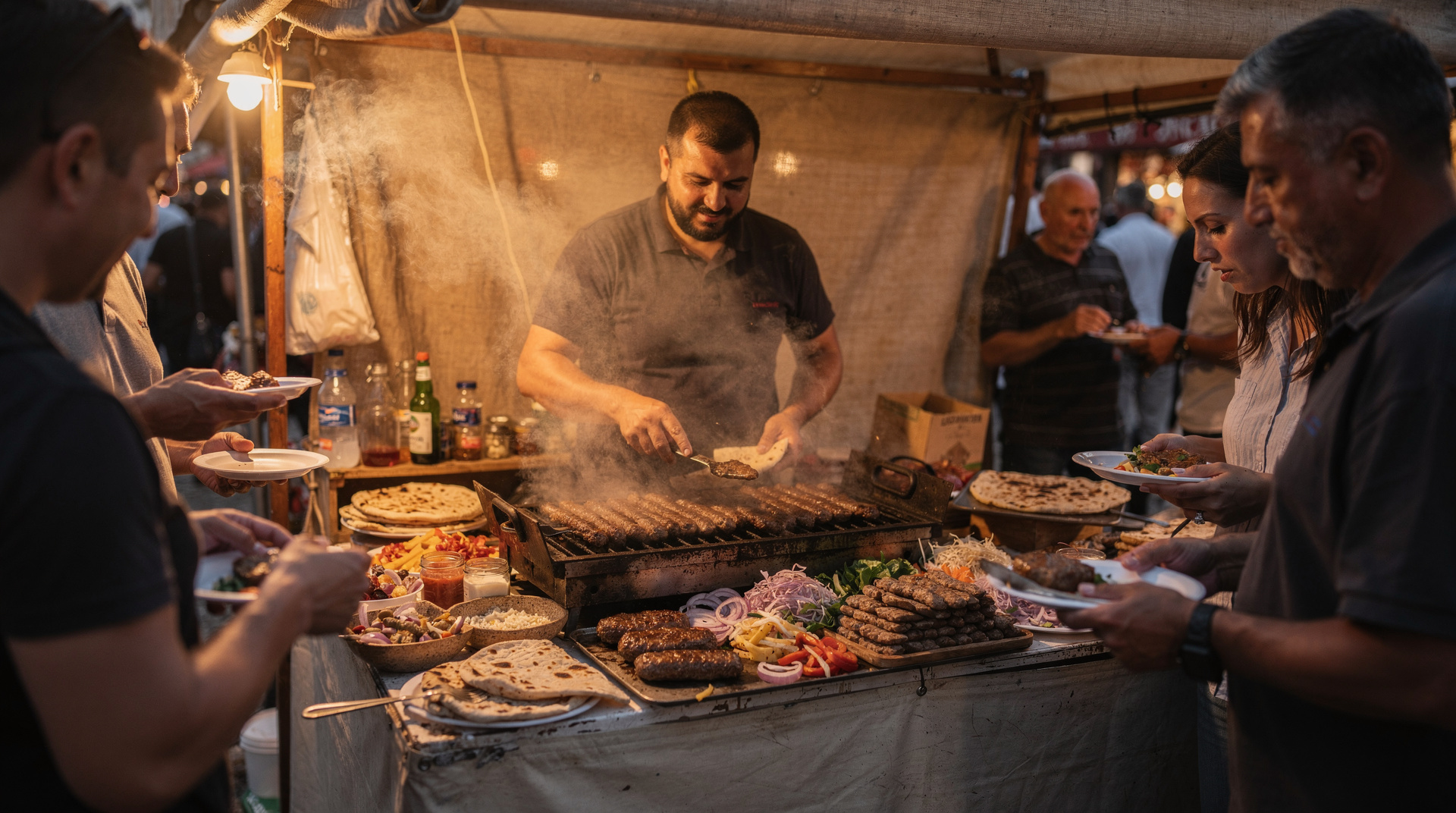
Ćevapi are small skinless sausages of mixed minced beef and lamb, grilled over charcoal and served in a soft somun flatbread with raw white onion, kajmak (clotted cream), and sometimes ajvar (roasted red pepper spread). They are eaten morning, noon, and night.
Sarajevo’s version — thin, tightly rolled, served in groups of ten in a pillowy somun — is the benchmark. Ćevabdžinica Željo on Kundurdžiluk street in Baščaršija has been a local institution since the 1960s; expect a queue at lunchtime. A portion of ten ćevapi with extras costs around 9-12 BAM (4.50-6 EUR).
Book a Sarajevo food tour to eat ćevapi where the locals eat, away from the tourist strip.
Burek and the pita family
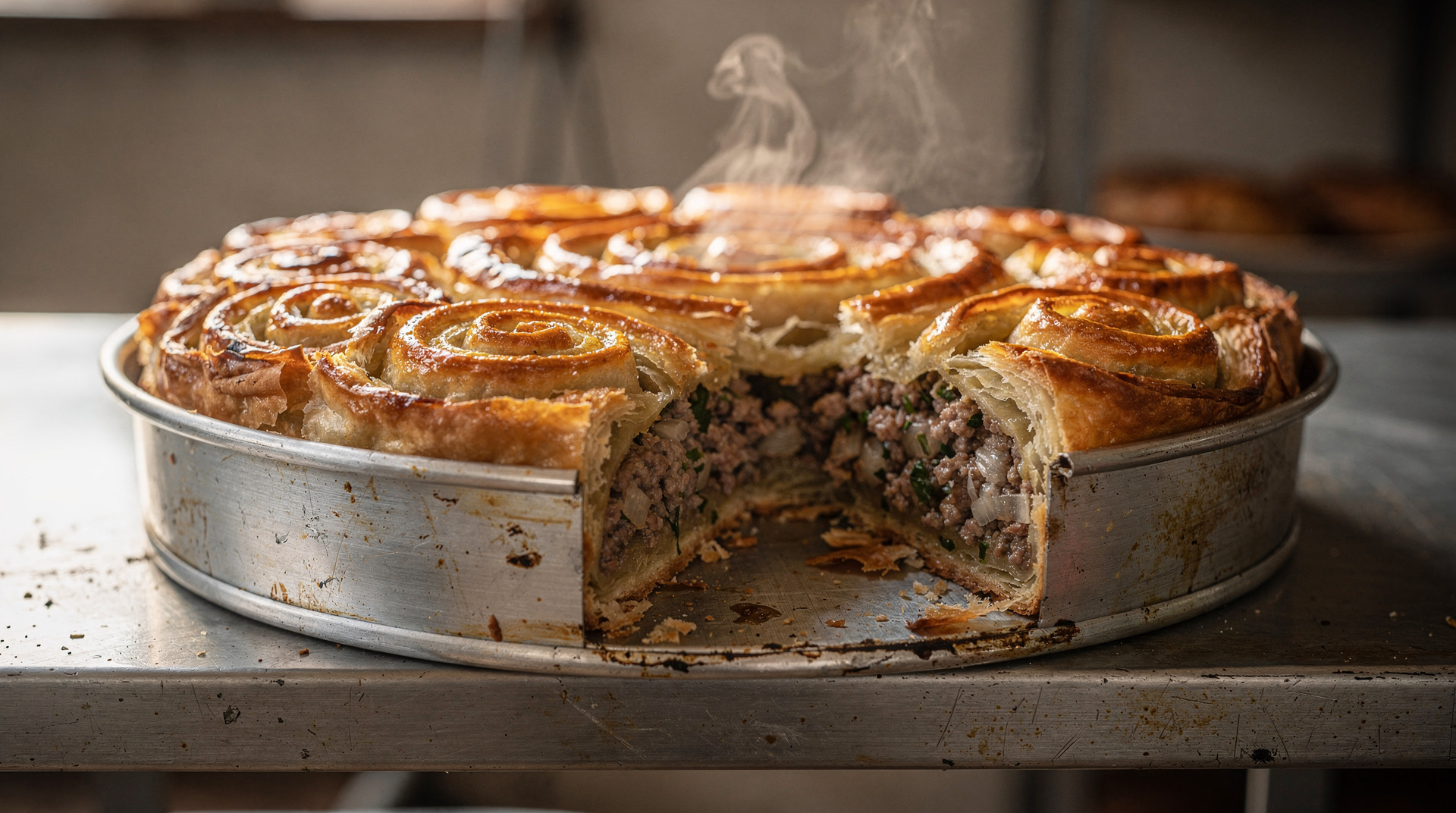
Burek in Bosnia is exclusively a meat pie — a spiral of paper-thin filo pastry wound around seasoned minced beef, baked in a round tray and cut into wedges. The rule is strict: ask for burek in Sarajevo and you will get meat. Cheese is sirnica, spinach is zeljanica, potato is krompiruša. The umbrella term for all these is pita.
Burek is a breakfast food, eaten standing at a buregdžinica counter with a glass of cold yogurt (jogurt). The best in Sarajevo can be found at Buregdžinica Sač near Baščaršija, where they bake in a traditional sač (covered iron dome buried in embers). A wedge costs 2-3 BAM (1-1.50 EUR).
Begova čorba (Bey’s soup)
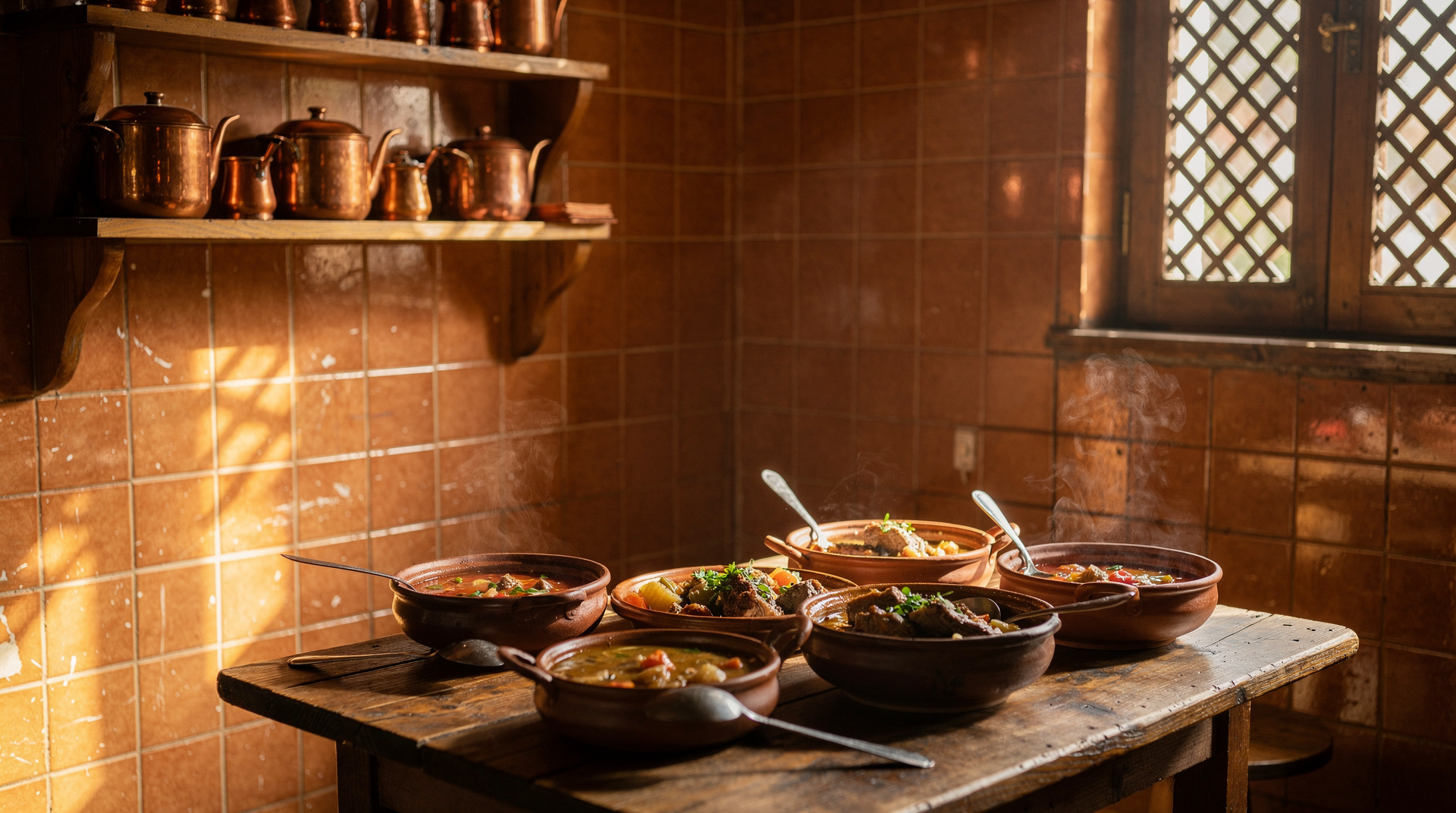
One of the most elegant dishes in the Bosnian canon, begova čorba is a velvety chicken and vegetable soup thickened with cream and featuring okra as a signature ingredient. The name refers to the Ottoman beys (governors) who supposedly ate it at lavish banquets. Today it appears on restaurant menus across the country at around 6-9 BAM (3-4.50 EUR) per bowl.
The quality varies widely. The best versions use a long-simmered chicken broth and include chunks of carrot, celery, and tender chicken alongside the okra.
Japrak and dolma
Japrak are vine leaves or cabbage leaves stuffed with a mixture of minced meat and rice, slow-simmered in a light tomato and cream broth. Dolma refers to the broader category of stuffed vegetables — peppers, tomatoes, and courgettes appear in summer. Both dishes reflect the Ottoman kitchen’s love of patient, low-heat cooking.
A bowl of japrak costs 8-12 BAM (4-6 EUR) in a traditional restaurant.
Lamb dishes: ispod sača and jagnjetina
Some of the finest Bosnian food never appears on a printed menu. Lamb slow-cooked ispod sača — under the heavy iron lid buried in wood embers — produces meat so tender it falls off the bone, with a smoky crust that is difficult to replicate any other way. This technique is especially common in the countryside around Konjic and in Herzegovina.
Jagnjetina (roast lamb) is a Sunday tradition in villages across the country. If you are driving through Herzegovina in the warmer months, roadside signs for jagnjetina mean freshly roasted whole lamb, sold by the kilogram at around 15-25 BAM (7.50-13 EUR).
Tufahija — the national dessert
Tufahija is Bosnia’s answer to the elaborate Ottoman dessert tradition: a whole apple gently poached in sugar syrup, cored and filled with a mixture of ground walnuts, sugar, and sometimes lemon, then topped with whipped cream or more syrup. The result is delicate, subtly perfumed, and nothing like what you might expect from the region.
Tufahija appears on almost every traditional restaurant menu at around 4-7 BAM (2-3.50 EUR). Meze restaurant in Sarajevo and Hindin Han in the Baščaršija area both do excellent versions.
Baklava and sweets from the čaršija
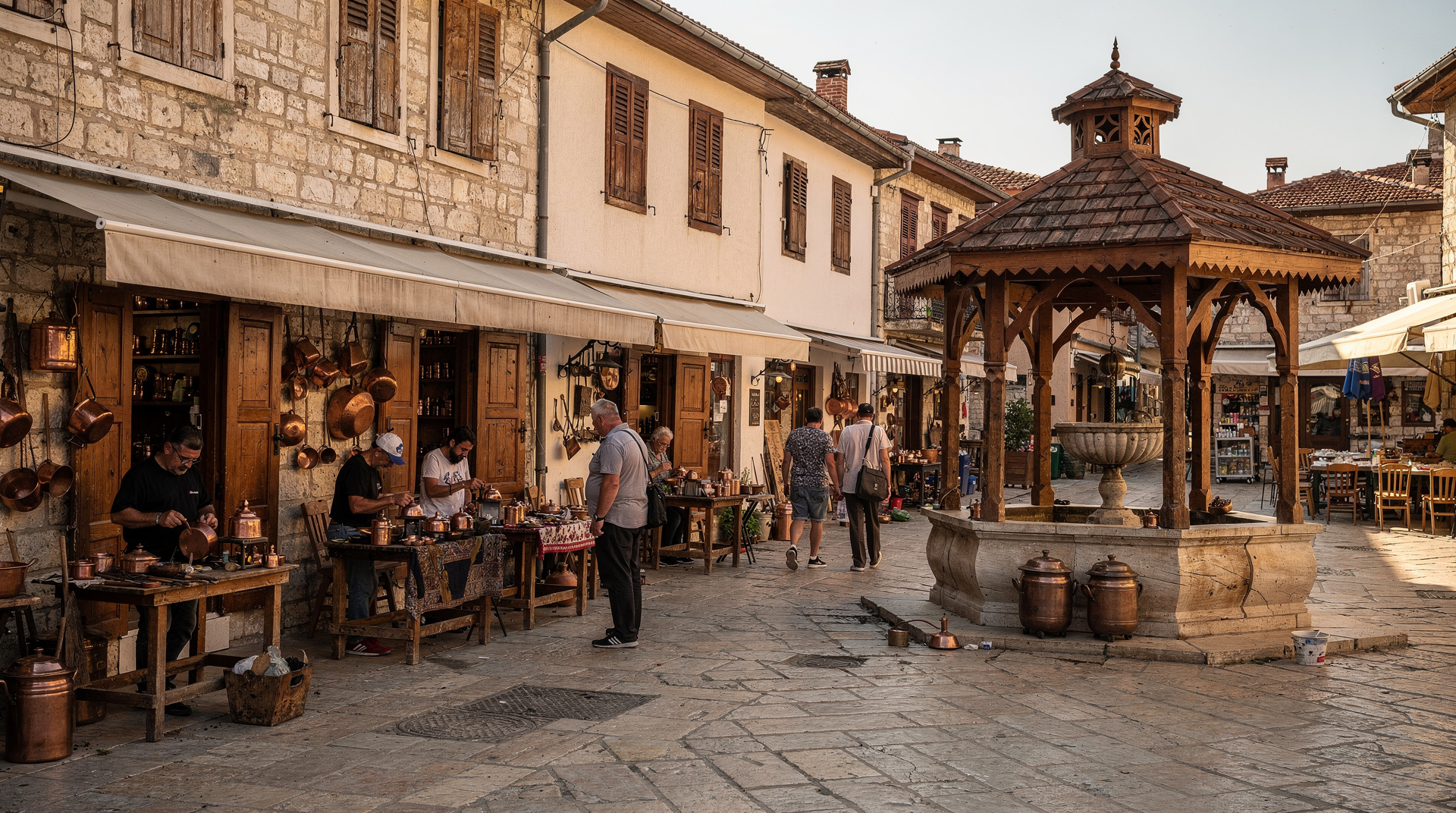
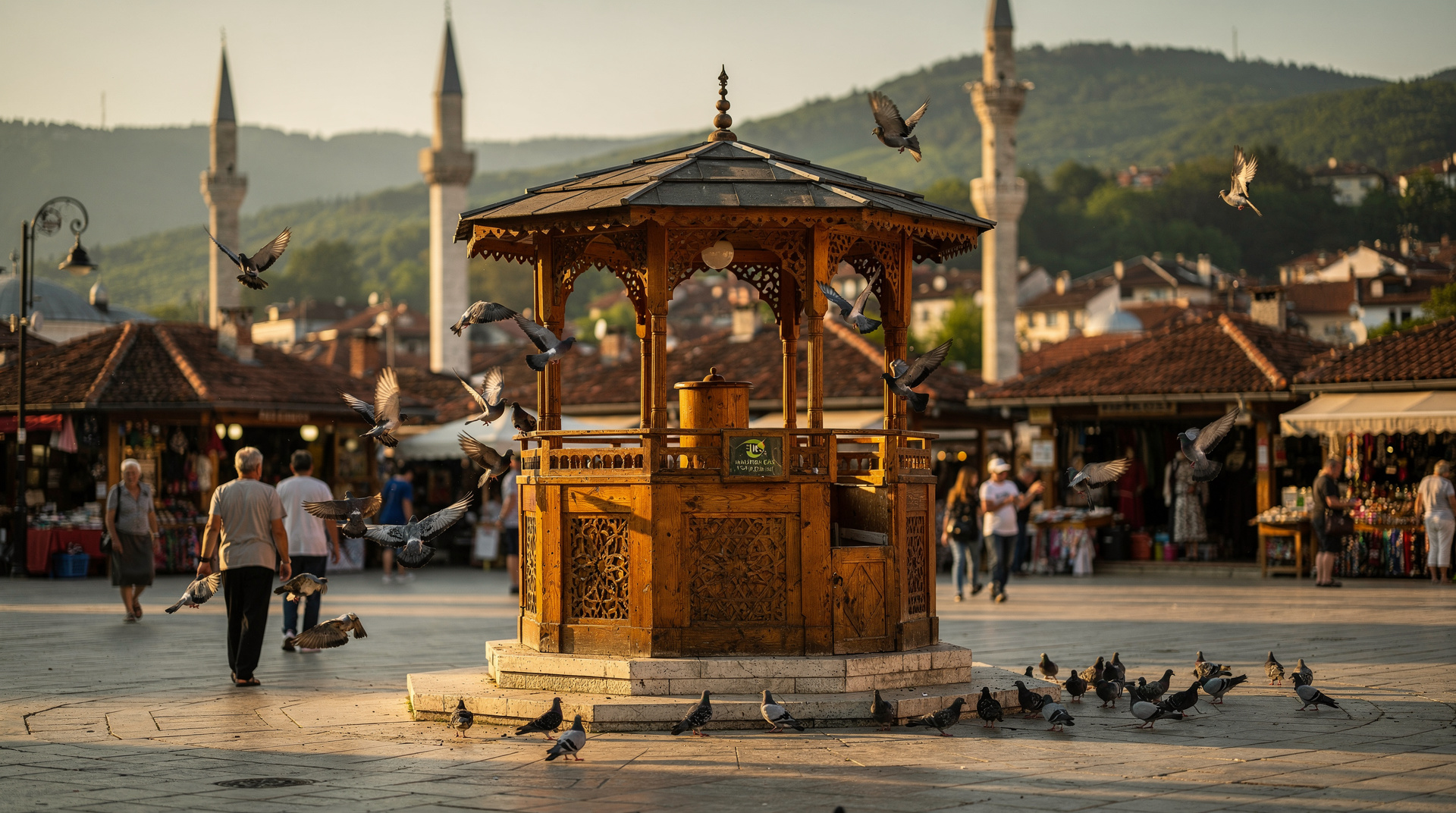
Sarajevo’s Baščaršija marketplace is lined with shops selling baklava, hurmašice, and lokum. Bosnian baklava differs slightly from Turkish or Greek versions — it tends to use walnuts rather than pistachios, and the syrup is lighter and less sweet. Šeherzada and Aščinica Hasanaginica in Baščaršija are reliable spots.
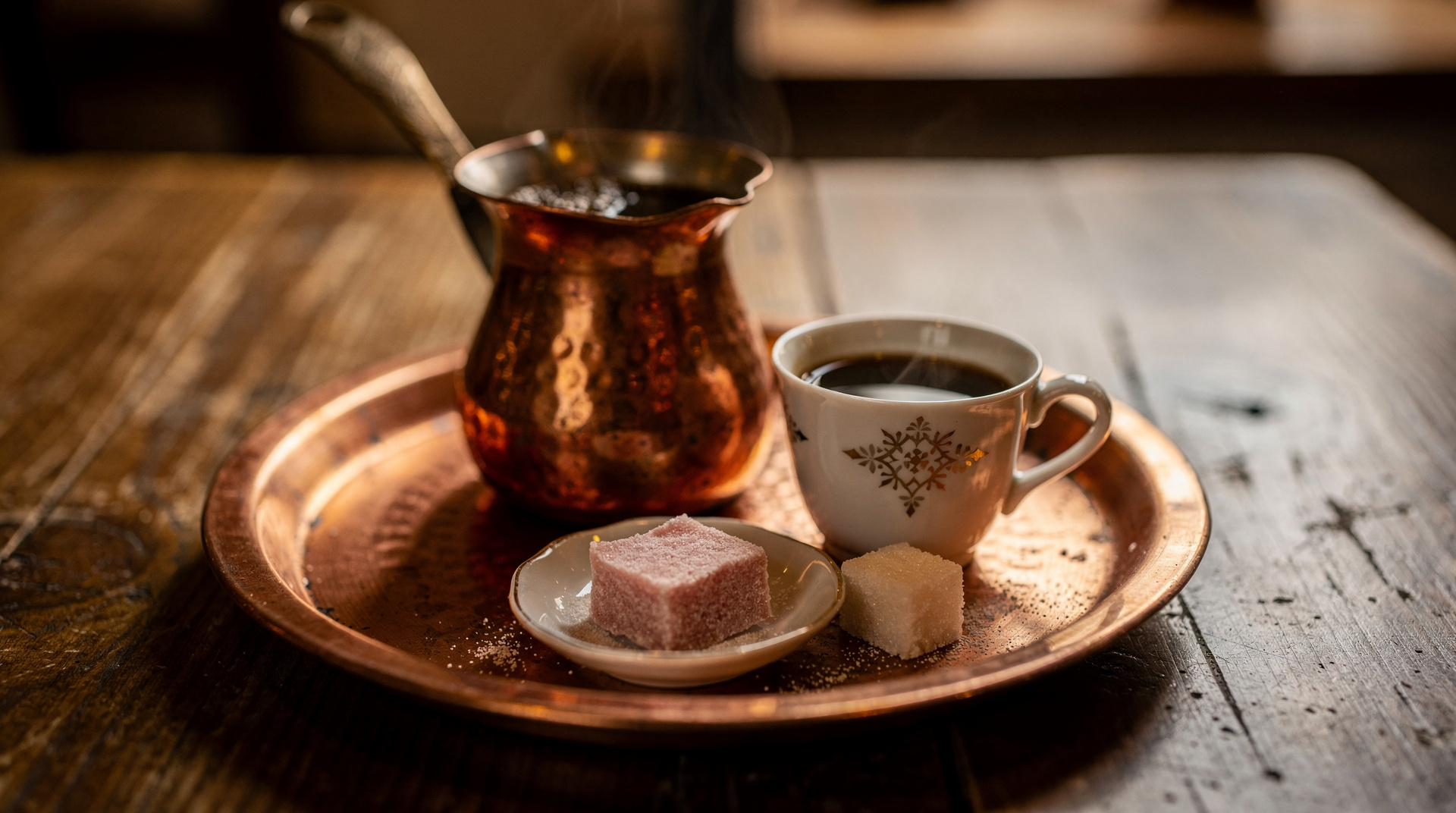
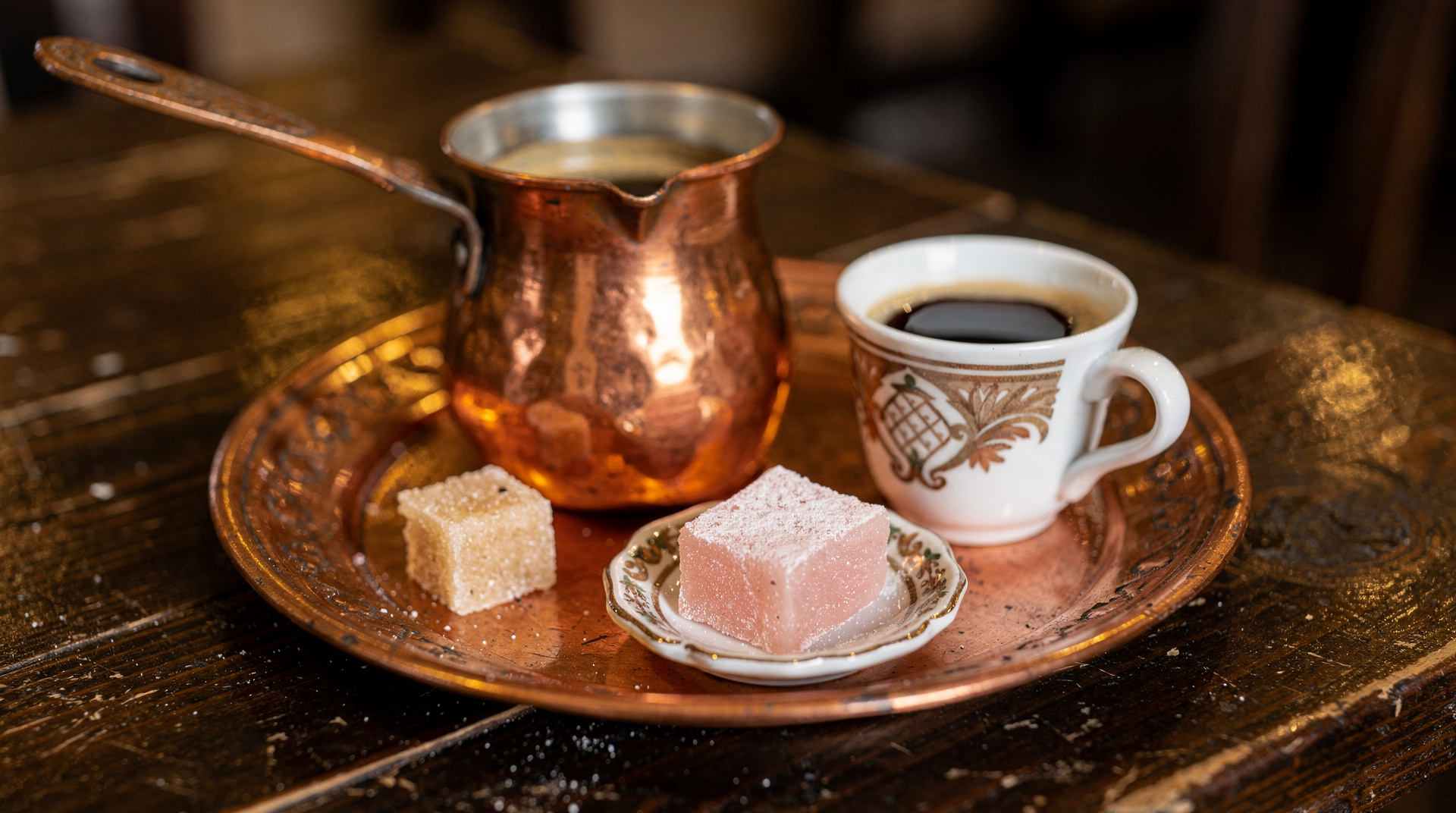
Hurmašice are small, date-shaped honey-syrup cakes that crumble gently as you eat them. Lokum (rose-water Turkish delight) is traditionally served alongside Bosnian coffee. A small box of mixed sweets from the čaršija costs 5-10 BAM.
Drinking alongside the food
Bosnian coffee walks and food tours pair the coffee ritual with tastings of traditional sweets. Bosnian coffee is served in a small copper džezva with fine grounds in the cup — pour carefully, let the grounds settle, and add a sugar cube. Alongside that, Herzegovina produces excellent wines: white Žilavka and red Blatina are the indigenous varieties. More on those in the Herzegovina wine guide.
For something stronger, rakija (fruit brandy distilled from plums, grapes, or quince) is the everyday spirit. See the rakija guide for the full story.
Where to eat in Sarajevo
A city market food tasting tour is the most efficient way to cover multiple traditional dishes in one go. On your own, the following are all worth seeking out:
- Ćevabdžinica Željo (Kundurdžiluk 19, Baščaršija) — the benchmark for ćevapi
- Aščinica Inat Kuća (Velikih Gazija 1) — traditional aščinica (ready-cooked dishes) with begova čorba and japrak
- Barhana (Ćemaluša) — slightly elevated Bosnian cooking in a smart setting
- Kibe Mahala (Čizmedžiluk 11) — one of the oldest operating restaurants in Sarajevo
Prices at all of these run 25-45 BAM (13-23 EUR) for a full meal.
Where to eat in Mostar
Mostar’s Old Town has several tourist-facing restaurants that charge 10-20% more than in Sarajevo, but quality is generally solid. Hindin Han, on the west bank near Stari Most, does excellent traditional cooking. Šadrvan in the old town courtyard is atmospheric and reliable.
For a farm-to-table experience combining Mostar, Medjugorje, and Kravice, there are dedicated food tours from Mostar that include local wineries.
Regional food beyond Sarajevo and Mostar
- Trebinje (Herzegovina): lamb, local wine, and the town’s organic market on Saturdays
- Jajce: trout from the Pliva River, prepared simply with lemon and olive oil
- Bihać / Una valley: freshwater fish, smoked meats, dairy from highland farms
- Travnik: Travnički sir, the local white cheese similar to feta — the best in the country
Cooking classes
For hands-on experience, Bosnian cooking classes in Sarajevo cover traditional recipes including burek, soup, and desserts with a local host. Classes typically run 3-4 hours and cost 60-90 BAM (30-45 EUR) per person, including ingredients and a shared meal.
Practical notes
- Markets: Markale covered market in Sarajevo sells fresh produce, cheese, and cured meats. Open daily from early morning.
- Eating hours: lunch is the main meal (12:00-15:00); dinner is lighter. Buregdžinicas open at 06:00.
- Dietary needs: vegetarian options exist in cities but are limited in rural areas. Halal food is standard across the country; pork appears mainly in RS-administered towns.
- Tipping: rounding up or leaving 10% is appreciated; not obligatory.
Bosnian food rewards curiosity. Move beyond ćevapi early in your trip — the slow-cooked stews, the delicate desserts, and the farm-table culture of Herzegovina are where this cuisine truly shines. The Sarajevo food tour guide lists the best organised tastings if you want expert guidance from the start.
Coffee culture and the ritual around it
Bosnian coffee is not just a drink — it is a social institution. Sitting down for coffee in Baščaršija can easily take an hour, and rushing it is considered a small social offence. The Bosnian coffee culture guide and the coffee ritual blog post both go deeper into the etiquette: how to pour, when to add the sugar cube, and why you should never gulp it like an espresso.
Eating in Herzegovina versus Sarajevo
Herzegovina’s cuisine leans more Mediterranean than Sarajevo’s Ottoman-influenced kitchen — lamb, Neretva river fish, and local Žilavka wine feature more heavily than in the capital. If you’re planning a day trip to Mostar or basing yourself there for longer, expect smokier grilled meats and more fish on menus, alongside the same ćevapi and burek staples found everywhere in the country.
Street food and market snacking
Beyond sit-down restaurants, Sarajevo’s Markale market and the stalls around Baščaršija are good for cheap, fast bites: grilled corn in season, fresh fruit, and simit-style bread rings. If you want a broader look at dishes beyond the obvious ćevapi-and-burek combo, the Bosnian cuisine beyond ćevapi blog post covers lesser-known regional dishes worth seeking out.
Building meals into your itinerary
The easiest way to eat well is to let the food shape your days rather than squeeze it in between sights. In Sarajevo, start with a pita at a buregdžinica, wander the čaršija, and keep lunch as the main event. The Baščaršija guide shows how compact the old bazaar is, so ćevapi, sweets and coffee sit within a few minutes’ walk of one another. If you are planning a longer route, the Sarajevo and Mostar in three days itinerary leaves room for long lunches in both cities, and the seven-day itinerary adds the countryside, where the best slow-cooked dishes are found.
Meals also work as a pause on the road. Many travellers driving between cities stop at a roadside grill or a village restaurant rather than waiting for the next big town. The driving in Bosnia guide covers the practicalities, and the Sarajevo to Mostar transport guide is useful if you would rather leave the driving to someone else and spend the journey looking forward to dinner.
How to order and what to expect
Ordering in a traditional restaurant is relaxed. Portions are generous, so sharing a starter and a main between two people is a perfectly normal way to try more dishes. Soup usually arrives first, bread is nearly always on the table, and salads are ordered alongside grilled meat rather than instead of it. Staff in tourist areas are used to visitors who point at the menu, but a few words of the local names, such as pita, čorba and somun, go a long way and are often met with a smile.
Do not feel pressured to hurry. A meal is a social occasion, and the bill is brought when you ask for it. If you are worried about overpaying in busy areas, the Sarajevo tourist traps guide and the Mostar tourist traps guide explain which habits to watch for, while the scams to avoid guide covers the rest.
Eating on a budget
Bosnian food is one of the best arguments for a low-cost trip. The cheapest meals, a pita at the counter or ćevapi at a neighbourhood grill, are also among the most memorable, so there is rarely a reason to trade quality for price. Eat your main meal at lunch, keep breakfast simple, and save the more formal restaurants for one or two special evenings. The Bosnia on a budget guide shows how food fits into a wider spending plan.
Going deeper on single dishes and drinks
If one dish catches your imagination, there are dedicated pages for it. The ćevapi in Sarajevo guide compares the best-known grills, and the burek and pita guide explains the fillings and the right way to order them. Restaurant choices in the two main cities are covered in the best restaurants in Sarajevo and best restaurants in Mostar guides. For a guided approach, the Sarajevo food tour guide compares the organised tastings, and the Sarajevo destination page and the Mostar destination page place the food in the context of each city. Wine drinkers will also enjoy the Trebinje wine region guide, and the Trebinje destination page is a good base for lamb and local bottles together.
Eating with the seasons
Bosnian cooking follows the calendar more closely than many visitors expect. Summer brings stuffed vegetables, fresh salads and fruit from the markets, while colder months favour soups, stews and anything slow-cooked. Autumn is a good time for food-minded travel, and the Bosnia in autumn guide explains why. In winter, hearty dishes feel especially welcome after a day outdoors, and the Sarajevo in winter guide shows how the city’s cafés and restaurants become a refuge from the cold.
Frequently asked questions about Bosnian food
What is the most famous Bosnian dish?
What is burek in Bosnia?
What is begova čorba?
How much does a meal cost in Bosnia?
Is Bosnian food vegetarian-friendly?
What sweets should I try in Bosnia?
Top experiences
Bookable activities with verified prices and instant confirmation on GetYourGuide.