Burek and pita guide
Sarajevo Old Town: Bosnian Ethnic Food & Coffee Walking Tour
What is burek in Bosnia and how does it differ from pita?
In Bosnia, burek means exclusively a filo-pastry spiral filled with minced meat. Versions with other fillings have different names: sirnica (cheese), zeljanica (spinach), krompiruša (potato). All four types are collectively known as pita. Calling a cheese version 'burek' will mark you as a foreigner immediately.
Few foods in the Balkans generate as much regional disagreement as burek. In Serbia and Croatia, any filo-pastry pie — regardless of filling — is called burek. In Bosnia, this is considered an error at best and an insult at worst. In Bosnia, burek is meat. Always. No exceptions. The distinction matters to locals in the way that the difference between Champagne and sparkling wine matters to a Frenchman.
| Where | Buregdžinicas and pekare across Sarajevo, best concentrated around Baščaršija |
| Cost | Around 2.50-4 BAM per wedge, 5-8 BAM for a half-pie |
| Time needed | 20-30 minutes for a sit-down breakfast |
| Best time to go | Early morning, ideally 06:00-09:00, fresh from the oven |
| Getting there | Walkable in central Sarajevo; trams 1, 2 and 3 serve Baščaršija |
The Bosnian pita taxonomy
Pita is the umbrella word for all Bosnian spiral filo-pastry dishes. Within that category:
- Burek: minced meat (beef, or beef and lamb) — the original, the prestige item, the one that gives the category its regional identity
- Sirnica: white cheese (usually mixed sheep’s and cow’s cheese, mildly salty)
- Zeljanica: spinach and white cheese
- Krompiruša: potato and onion, often with dried herbs
- Tikvenica: pumpkin, sweet-spiced — seasonal, rarer
- Masnica: oil-enriched plain dough, no filling — eaten with jam or honey
All are baked in round trays and cut into wedges (like a tart) or into spirals that are then sliced.
How burek is made
Good burek starts with handmade filo dough — stretched by hand on a large oiled surface until paper-thin, a skill that takes years to perfect. The dough is filled with seasoned minced meat, rolled into a thick log, and coiled into the round baking tray. A generous coating of oil goes over the top; the tray goes into the oven or under the sač.
The best burek has a deeply golden, flaky exterior that shatters when you cut it, a moist and well-seasoned meat filling that is neither dry nor greasy, and a slight crispiness on the underside from direct contact with the tray.
Frozen or industrial filo dough is now common in cheaper buregdžinicas. The difference is immediately apparent in the texture — cardboard-like rather than shattery. When you find a place using handmade dough, note it and return.
Where to eat burek in Sarajevo
Buregdžinica Sač
On a small alley near the Gazi Husrev-beg Mosque in Baščaršija, Sač is named for the iron dome cooking method and uses it. The burek here has a distinctive smoky edge from the embers and a crust that is slightly thicker and more robust than the oven-baked versions. There is no sign in English; look for the queue at 07:00.
Open: 06:00-14:00 approximately.
Buregdžinica Bosna
On Mula Mustafe Bašeskije, a few steps from Baščaršija, Bosna serves all four main pita types including an excellent sirnica and a seasonal tikvenica (pumpkin) that appears in autumn. The kroasan (croissant) and kifla (horn-shaped roll) sold alongside are reliable too.
Neighbourhood pekara (bakeries)
Every Sarajevo neighbourhood has at least one pekara (bakery) that bakes all four pita types from early morning. If you are staying outside the old town, eating burek from a local pekara at 07:00 before any tourist shows up is one of the best travel experiences in Bosnia.
How to eat it
Order at the counter (“Dajte mi jedan burek, molim” — give me one burek, please). You will receive a wedge wrapped in paper. Take it to a table or eat standing. Ask for jogurt — a chilled half-litre bottle of plain drinking yogurt, sold at the counter, is the standard accompaniment. The cold acidity cuts through the richness of the pastry.
Burek should be eaten hot. If you can see steam rising from the cut edge, the timing is right. Lukewarm burek is a lesser experience; cold burek is sad.
Reading a buregdžinica counter
A traditional buregdžinica is a simple room: a counter, a glass case or a stack of round trays, a few tables, and a person who cuts wedges with a long knife. There is rarely a menu. The trays are labelled by habit rather than by sign, and the quickest way to understand what is on offer is to look at the shape. Coiled spirals are burek, sirnica and zeljanica; the differences show in the colour of the cut edge, where meat looks darker and cheese or spinach looks paler or greener.
If you are unsure, point and say the name of the pita you want. Nobody minds a hesitant order, and staff in the busiest places in the old town are used to visitors. Asking “Šta je ovo?” (what is this?) while pointing is a perfectly good way to start a conversation, and it often earns a recommendation for the tray that came out of the oven most recently.
Pay at the counter or at the till, depending on the place. Some buregdžinicas are fully self-service, others bring the plate to your table. Watching what the person ahead of you does is the simplest guide.
Choosing between the pita types
If this is your first morning in Bosnia, start with the burek itself. It is the dish that gives the whole category its reputation, and it is the one you will be asked about when you get home. On a second visit, try sirnica: the mild, salty cheese filling shows off the dough more clearly than the meat does, so it is the best way to judge whether a place makes its own filo.
Zeljanica sits between the two. The spinach is earthy and the cheese keeps it from tasting too green, which makes it a good middle path for anyone who finds a full meat breakfast heavy. Krompiruša is the quietest of the four, soft and peppery, and suits a slower morning with coffee. Tikvenica, the pumpkin pita, is the one to ask about in autumn; if a bakery has it, it is worth taking a wedge to eat while you walk.
Masnica is the curiosity. With no filling at all, it is closer to a breakfast bread, and locals tend to eat it with something sweet. It is worth one try if you see it, particularly if you are travelling with children who are wary of savoury fillings. See Bosnia with kids for more on eating with a family.
Seeing the dough made
One of the pleasures of a good buregdžinica is that the work is often visible. In the best places the dough is stretched, filled and coiled in view of the customers, and a few minutes of watching explains why the price of a wedge is so modest for the effort behind it. If you see a tray being prepared, you are almost certainly in a place that makes its pastry by hand.
Take that as a signal to order. A freshly baked tray is the best possible version of the dish, and the contrast with a reheated wedge is large. It is also a good moment to ask a question; people who stretch dough for a living are often happy to talk about their craft.
Burek in the rhythm of a Bosnian day
Burek is a breakfast and early-morning food, but it also belongs to the rhythm of the working day. Locals pick up a wedge on the way to work, send someone to fetch a tray for the office, or eat it after a night out. That is why the early hours are the busiest, and why the counters are at their most lively before the city’s cafés are fully awake.
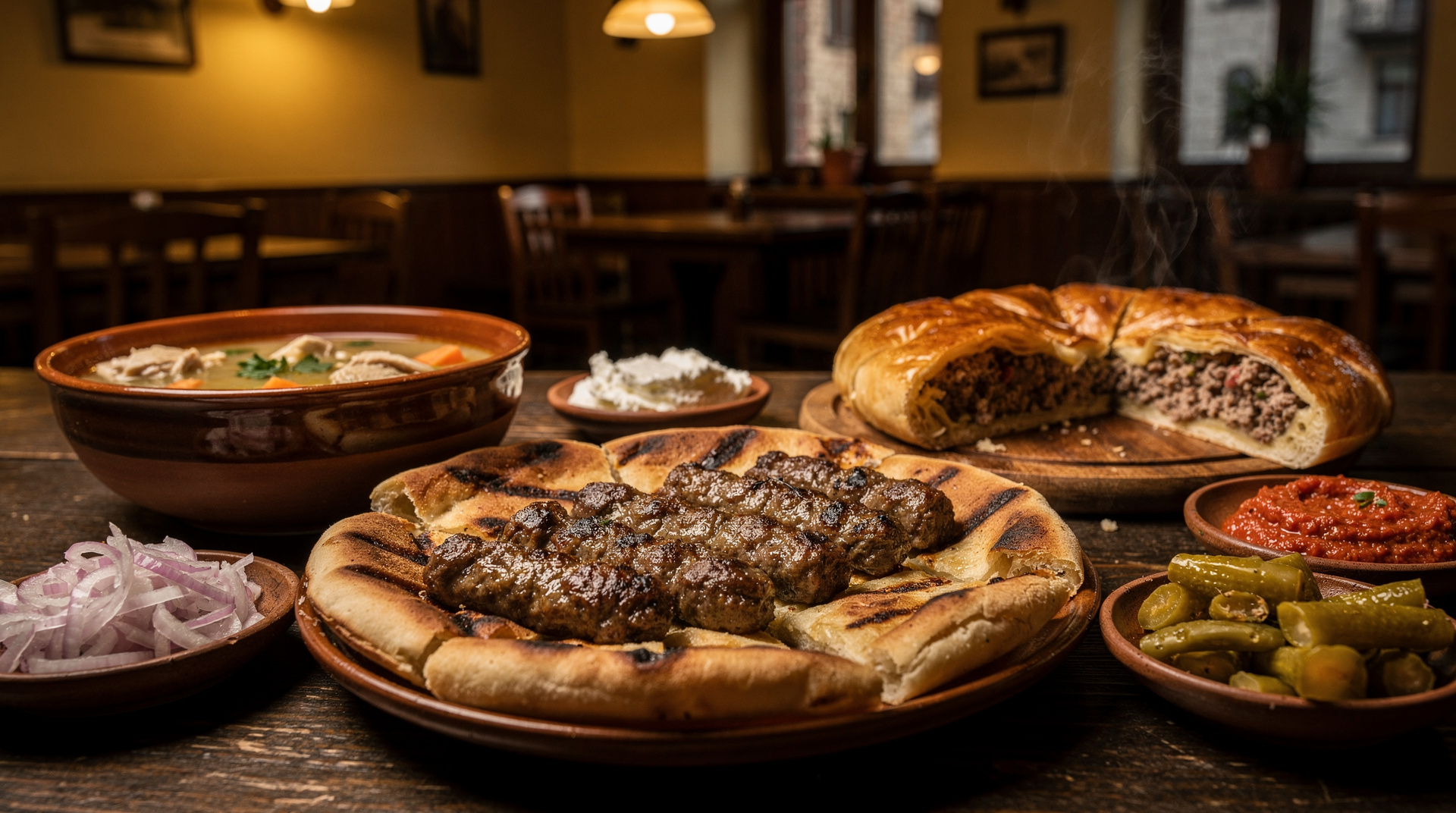
Treat it as the start of a longer food day. A burek breakfast, a Bosnian coffee, and later a plate of ćevapi make a classic Sarajevo sequence. If you want to build that sequence deliberately, the Sarajevo food tour guide and the Bosnian coffee culture guide show how the pieces fit together, and Baščaršija is the natural base for all of it.
If you are visiting during Ramadan, expect daytime opening hours and crowds to look different from the usual pattern, and be considerate about eating in the open in front of people who are fasting. Our Sarajevo faiths guide explains more about how the city’s religious calendar shapes everyday life.
Practical tips for a smooth burek breakfast
- Arrive early. The best trays go first, and a second batch is never quite the same as the first.
- Carry small change. Bakery counters prefer small payments, and a note that is too large can slow things down for everyone behind you. For more on money, see the Bosnia money and currency guide.
- Take a napkin or two. Flaky pastry sheds crumbs and oil; a couple of napkins will save your clothes.
- Do not rush the jogurt. It is meant to be drunk between bites, not afterwards.
- Ask for a fresh wedge. If the tray on display has been sitting for a while, there is no shame in asking whether something fresher is coming out.
Visitors on a tight budget will find that burek is one of the best-value meals in the country, which makes it a staple of any budget trip to Bosnia. It is filling, quick, and eaten standing up, so it fits easily into a busy sightseeing day.
Burek culture and history
Burek arrived in Bosnia with the Ottoman Empire in the 15th century, adapted from the Turkish börek tradition. Over five centuries, the Bosnian version diverged — the spiral shape, the emphasis on hand-stretched dough, and above all the strict association with meat filling became distinctively local. The dish spread across the former Yugoslavia but nowhere else was the naming convention as firmly enforced as in Bosnia.
During the 1992-95 siege of Sarajevo, buregdžinicas continued operating even under shelling, using whatever meat and flour could be found. For many Sarajevans, burek carries associations with ordinary life maintained against extraordinary circumstances — one reason why the quality and tradition around it are taken so seriously.
Food tours that include burek
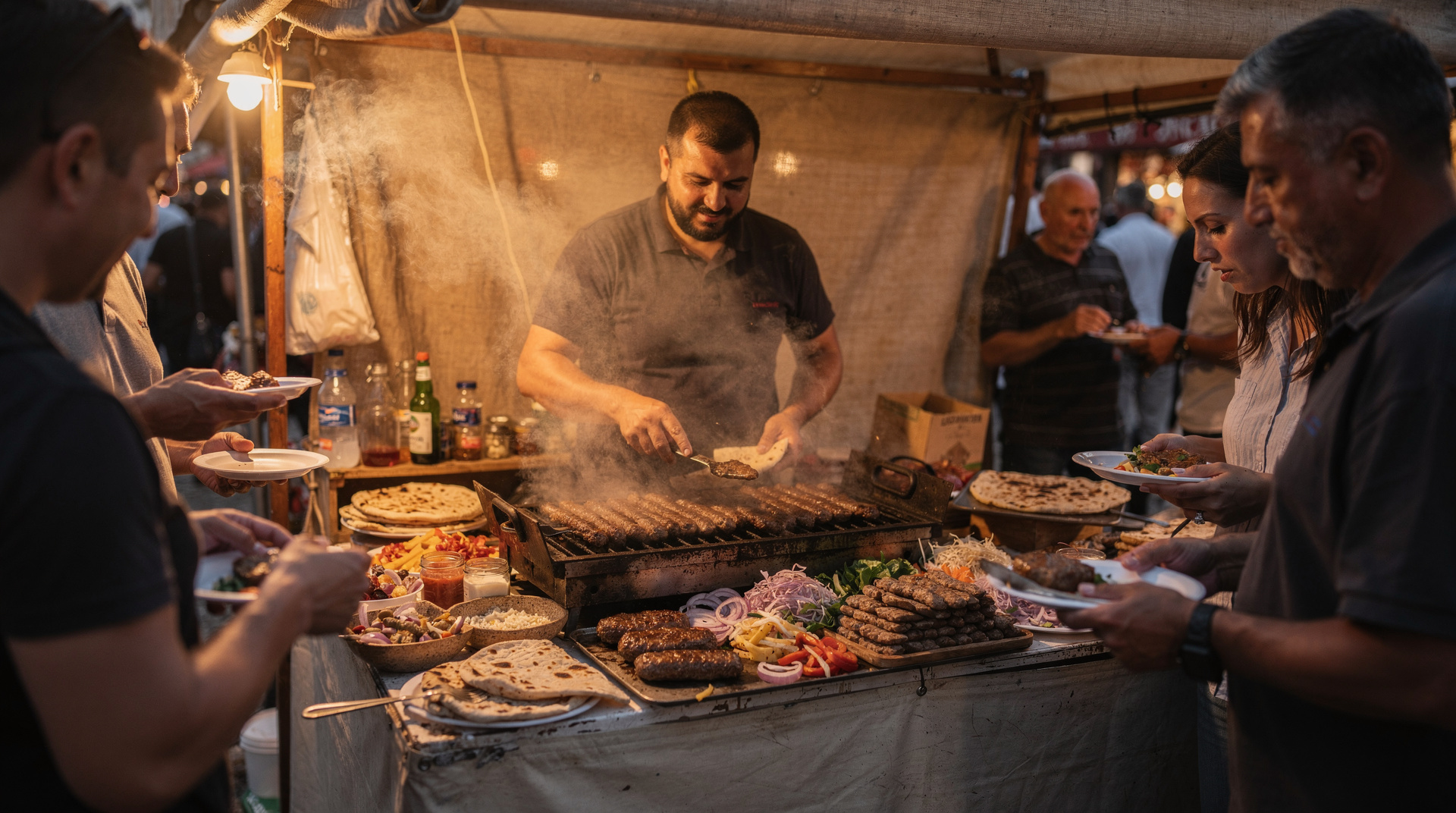
The Ethnic Food and Coffee Walking Tour includes a burek stop at a traditional buregdžinica as part of a broader tasting of Sarajevo’s multi-ethnic food culture. It is a good way to taste burek alongside other traditional foods without having to navigate the buregdžinica alone.
The Eat Where the Locals Eat food tour specifically targets neighbourhood buregdžinicas and pekara outside the tourist areas — the real morning-rush experience.
Beyond Sarajevo
Burek is available across Bosnia, though quality varies. Mostar, Travnik, and Banja Luka all have reliable buregdžinicas. The Travnički burek — made in Travnik, the old Ottoman capital of central Bosnia — has a slightly different filling (more onion, coarser grind) and is worth trying if you pass through. See the Bosnian food guide for the broader food context.
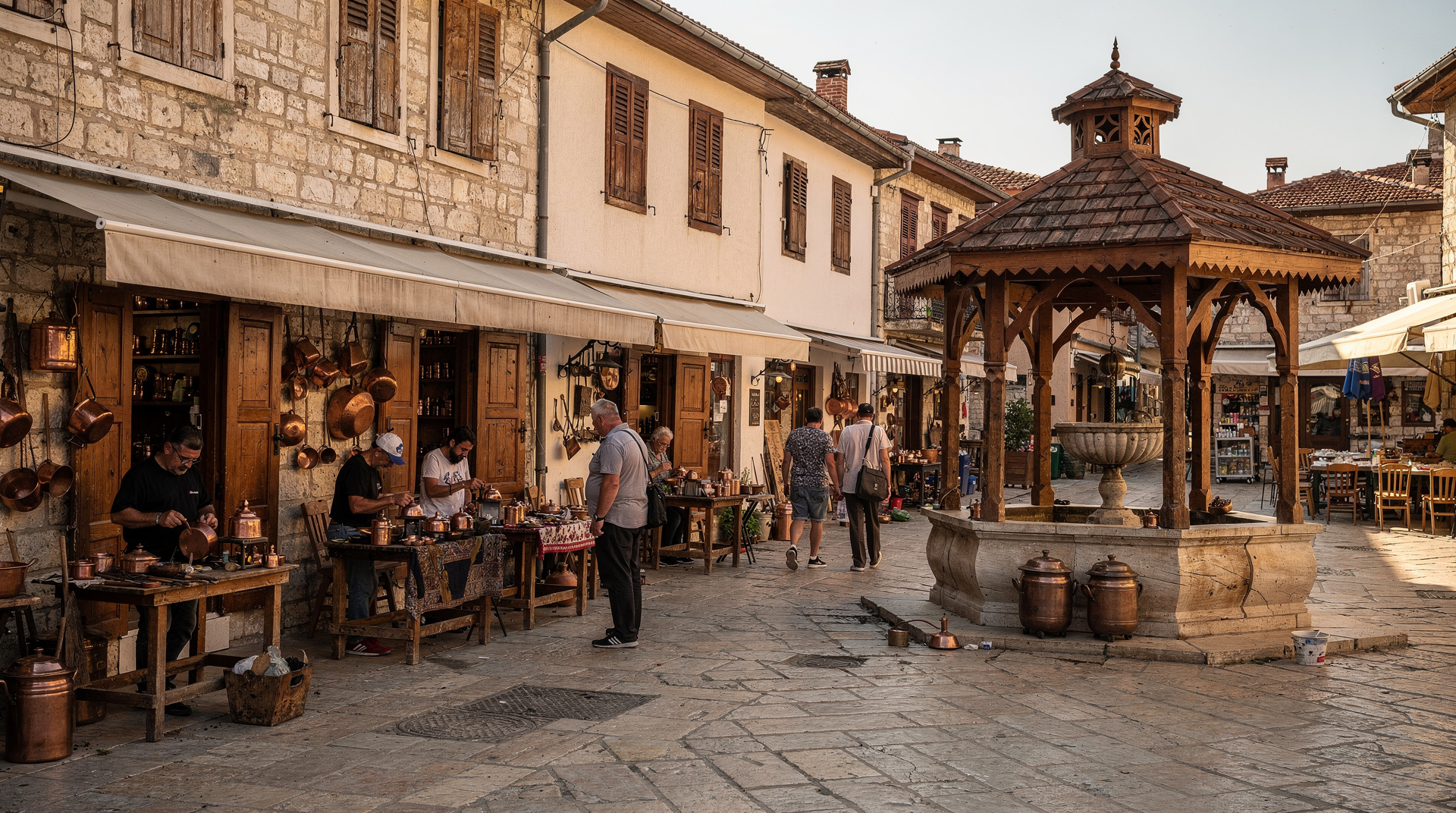
The Ottoman layer of this story runs through the whole city, from the old market streets to the mosques and caravanserai. The Ottoman heritage guide shows where the food, architecture and daily habits of that era still overlap, and the Bosnian food guide places burek among the other dishes that came with it.
Taking the habit home
Many visitors leave wanting to recreate burek at home, and it is worth being realistic about it. The dish depends on dough that is stretched by hand until it is nearly transparent, and that is a skill learned by repetition rather than from a recipe. If you want to try, start with a simpler pita such as sirnica or zeljanica, where a forgiving filling hides small flaws in the dough.
A more reliable souvenir is the memory of the morning itself: the steam, the paper wrapping, the cold jogurt. If you want to carry something tangible back, look at the Bosnian coffee culture guide and the rakija guide for other edible and drinkable traditions worth bringing into your own kitchen.
Pairing burek with the rest of your Sarajevo morning
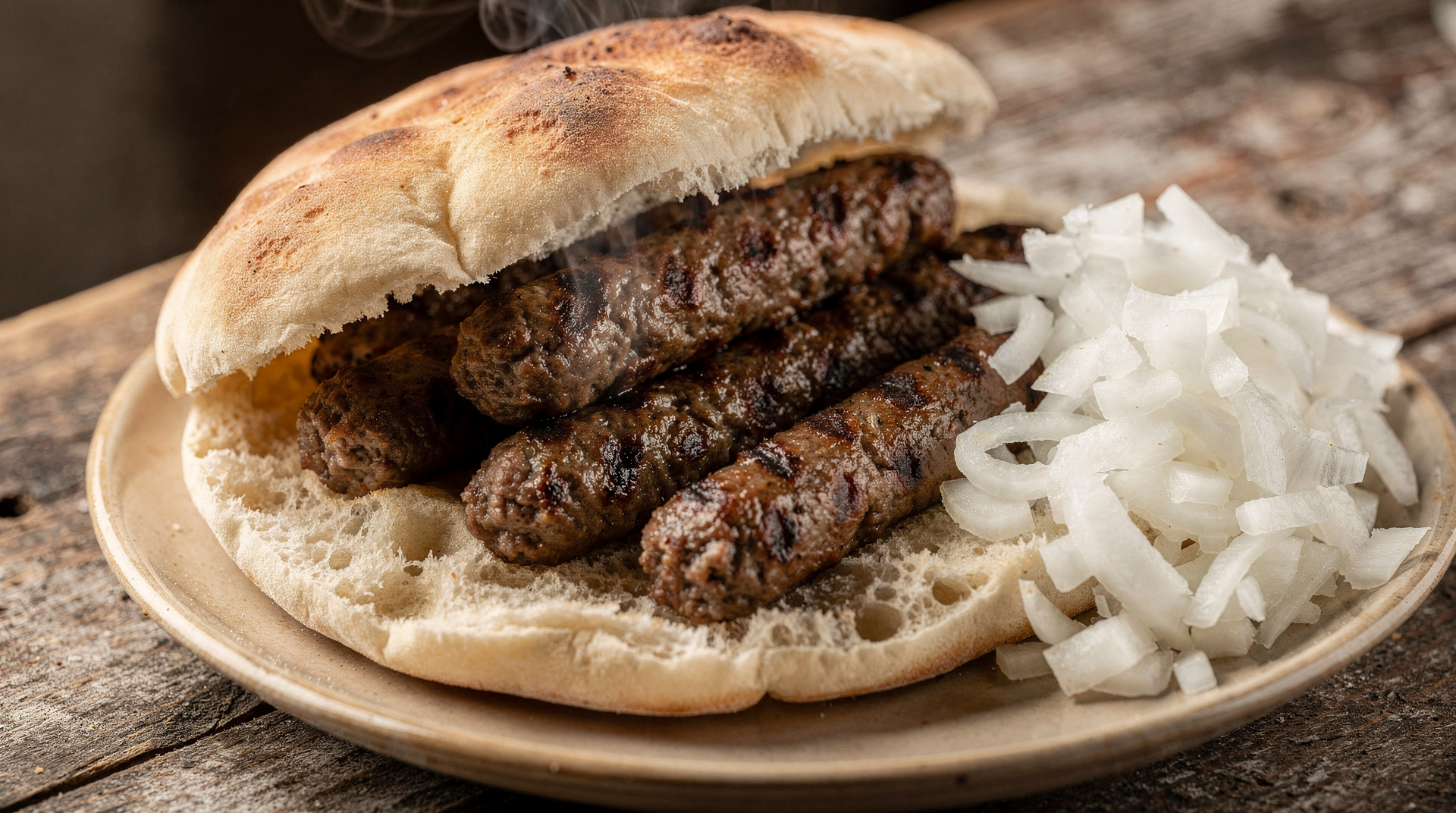
A burek breakfast slots naturally into an early start in Sarajevo. Eat at 07:00 before the Baščaršija crowds arrive, then follow with a Bosnian coffee at one of the Sarajevo cafés nearby before the old town fills up. If you’re staying longer, comparing burek to ćevapi — Sarajevo’s other iconic street food — is a natural next step; ćevapi is a lunch food, burek is breakfast, and locals rarely confuse the two.
Travellers researching the wider food scene often ask how burek fits into a food tour of Sarajevo itinerary — most tours schedule the burek stop first, early in the morning, precisely because quality drops once the pastry cools.
If you are planning a longer stay, a burek breakfast fits into almost any Sarajevo plan. It pairs well with the early-morning walks in the Sarajevo 4-day deep dive, and it is an easy first stop before a day trip. Visitors heading on to Herzegovina can look at the Sarajevo to Mostar 3-day itinerary, and anyone who wants to place all of this in a wider route can start from the Bosnia travel guide.
Frequently asked questions about Burek and pita
Where is the best burek in Sarajevo?
What does burek cost in Bosnia?
Can I eat burek for lunch or dinner?
What is sač cooking?
Is there gluten-free burek?
Is burek the same as Turkish borek?
Can vegetarians eat pita in Bosnia?
Top experiences
Bookable activities with verified prices and instant confirmation on GetYourGuide.