Cycling the Ćiro Trail guide
Self-Guided Cycling on Ćiro Trail: Mostar to Čapljina
What is the Ćiro Trail and how do I cycle it?
The Ćiro Trail follows a former railway line (the Ćiro railway) from Mostar southeast through Herzegovina wine country to Čapljina — about 60 km of mostly flat, paved cycling. Suitable for recreational cyclists. Rent a bike in Mostar, start at the old town, finish near Čapljina and return by taxi or return bike transfer. Full day trip.
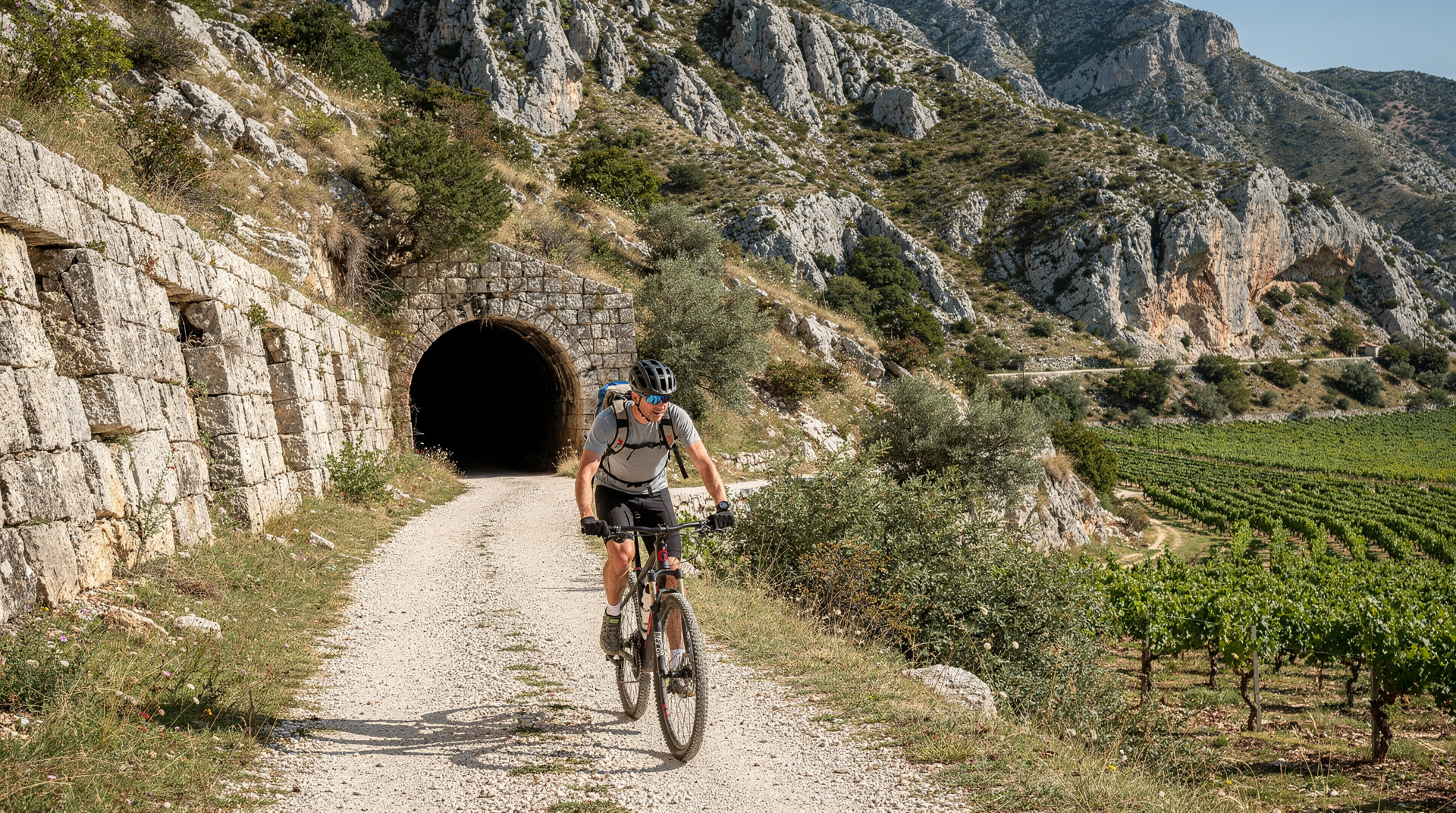
The Ćiro Trail is Herzegovina’s finest cycling experience — a 60-kilometre former railway line converted into a dedicated cycling path that winds through the limestone karst, vineyard terraces and Ottoman villages of the Neretva valley. For anyone who wants to explore Herzegovina beyond the Mostar-Kravice day-trip circuit, this is the gateway.
| Where | Mostar to Čapljina, Herzegovina (short detour to Blagaj) |
| Distance | Around 60 km one-way (30 km for the Mostar-Blagaj half-day option) |
| Cost | Bike rental roughly 20-35 BAM/day; guided tours cost more but include support |
| Time needed | Half-day (30 km) to full day (60 km one-way) |
| Getting there | Trail starts in Mostar old town, reachable by bus from Sarajevo |
| Best time | Spring (April-June) or autumn (September-October); avoid midday heat in July-August |
What is the Ćiro railway?
The name “Ćiro” is Herzegovina slang for the narrow-gauge railway built by the Austro-Hungarian Empire in the early 1900s to connect Sarajevo with the Adriatic coast via the Herzegovina interior. The line was later converted to standard gauge and eventually closed, leaving behind a trackbed with near-perfect gradients — never exceeding 3% — through some of the most dramatic limestone landscape in the western Balkans.
Today the trackbed has been repurposed as the Ćiro Trail (officially the Via Dinarica Cycling Route through this section), running from Mostar southeast toward Čapljina and ultimately connecting to the Dalmatian coast. The surface varies from tarmac to hard-packed gravel, generally suitable for hybrid bikes throughout.
The route: Mostar to Čapljina
Starting in Mostar
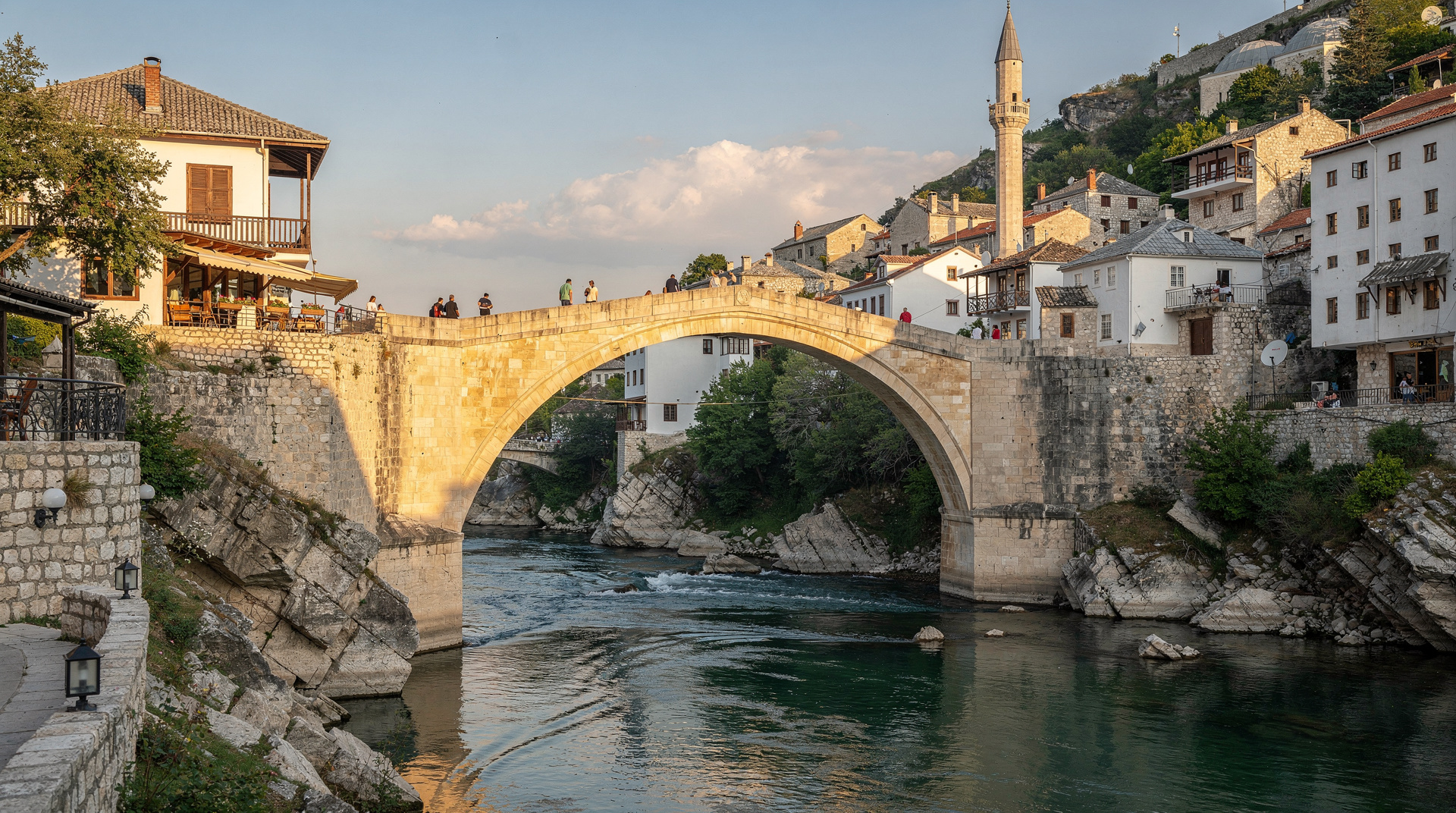
The trail begins in Mostar — a natural starting point given the city’s transport connections and accommodation options. Most cyclists start from the old town area, picking up the trail along the Neretva riverbank before heading southeast.
The first 15 km passes through the southern suburbs and the industrial outskirts of Mostar before the landscape opens into the agricultural plain. This initial urban section is the least visually spectacular but passes quickly.
Self-guided cycling on the Ćiro Trail from Mostar to Čapljina provides bike rental, route maps and support for independent cyclists who prefer to go at their own pace.
Mostar is compact enough to cross in fifteen minutes by bike and steep only on its eastern edge, so the two modes divide naturally between the flat quarters and the old town lanes: a Mostar city biking and walking tour uses each where it belongs.
The middle section: vineyards and villages
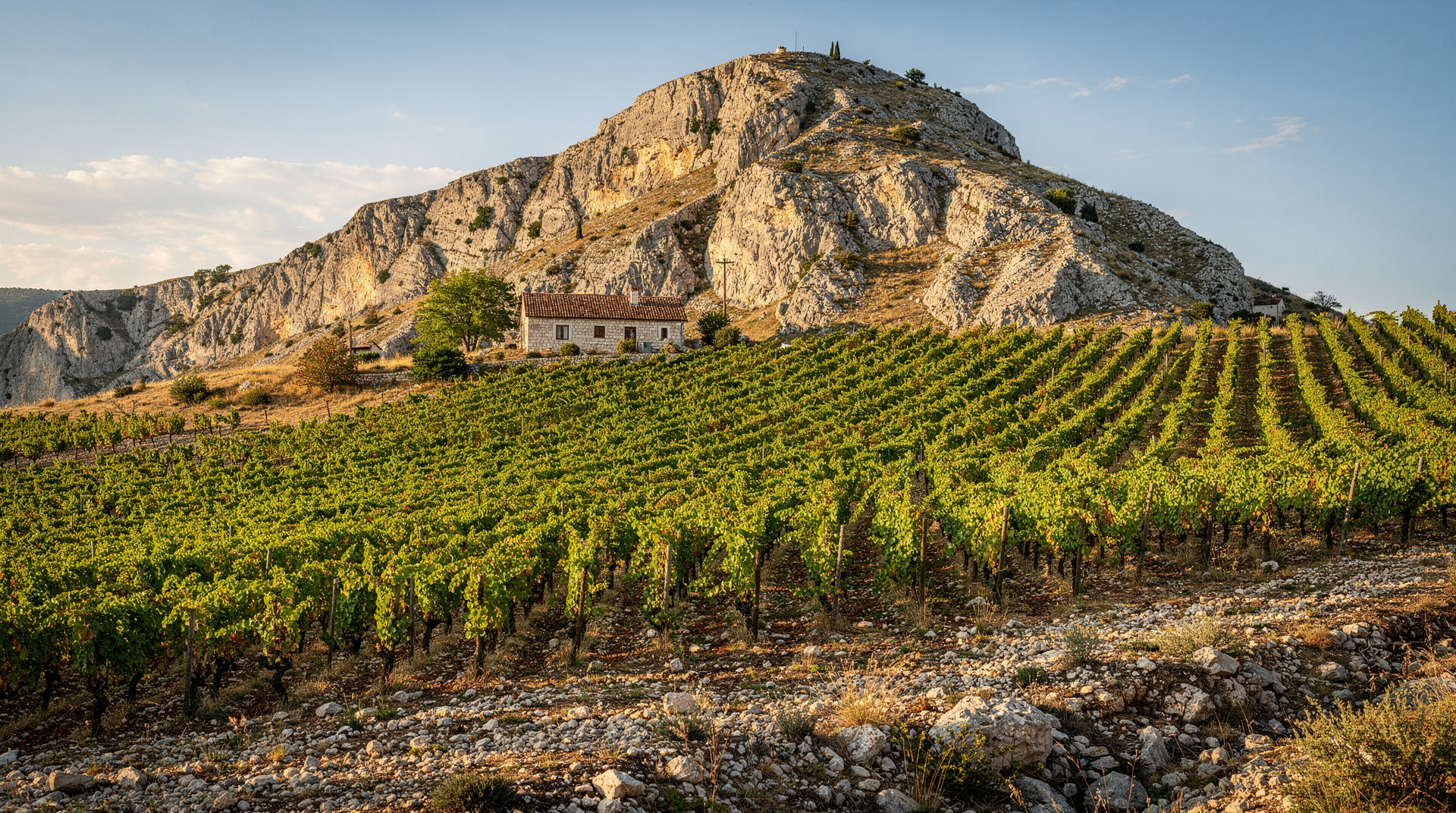
Between Mostar and Čapljina, the trail crosses through the heart of Herzegovina’s wine country. Žilavka (white) and Blatina (red) vines grow on the limestone terraces on both sides of the valley. Several villages along the route have small wine cellars that welcome trail cyclists — a very different experience from organised wine tours.
The Herzegovinian landscape here is austere and beautiful: white limestone, sparse vegetation, fig trees growing from rock cracks, and on clear days views toward the Dinaric ridgelines to the north.
Blagaj detour
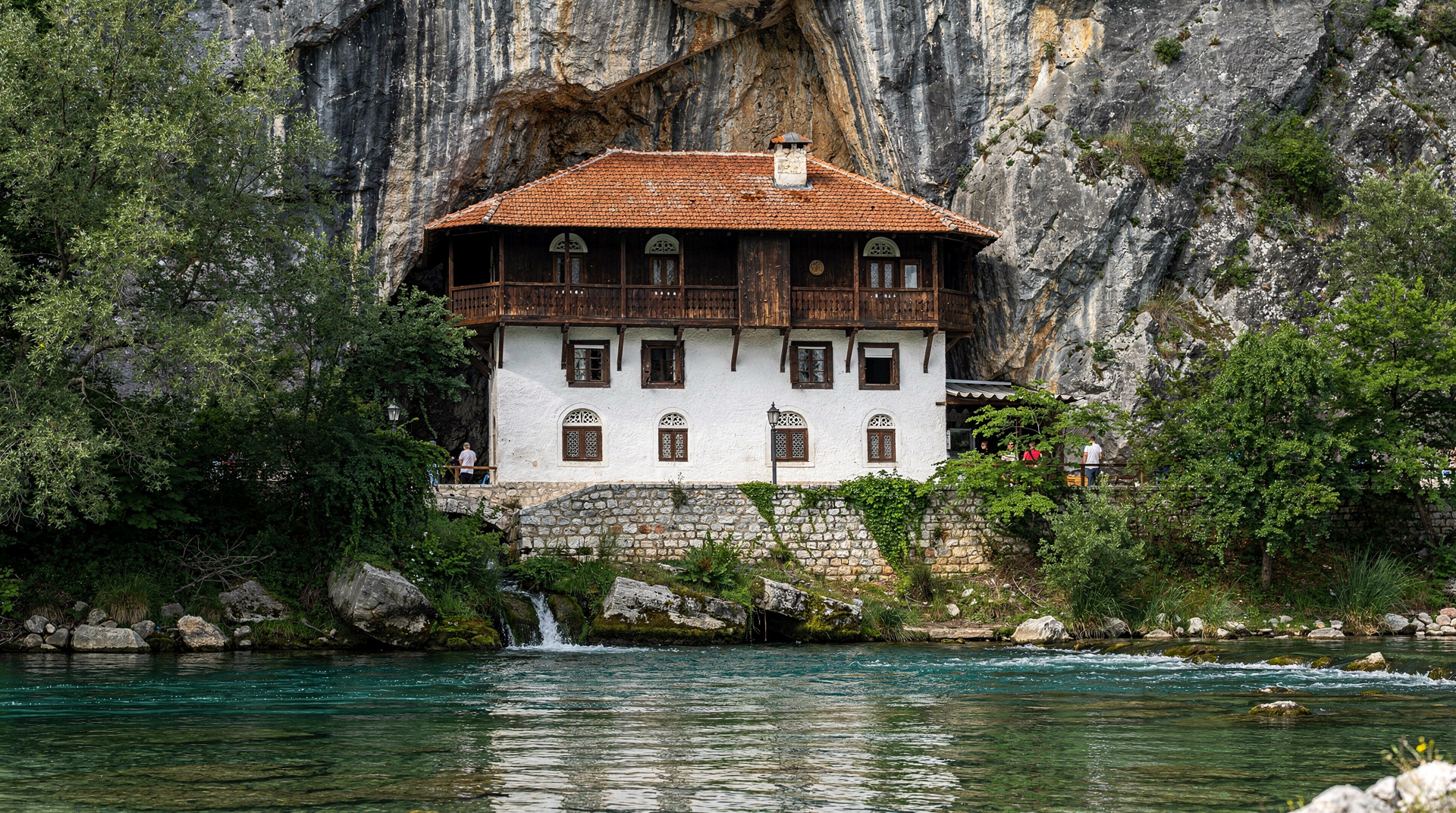
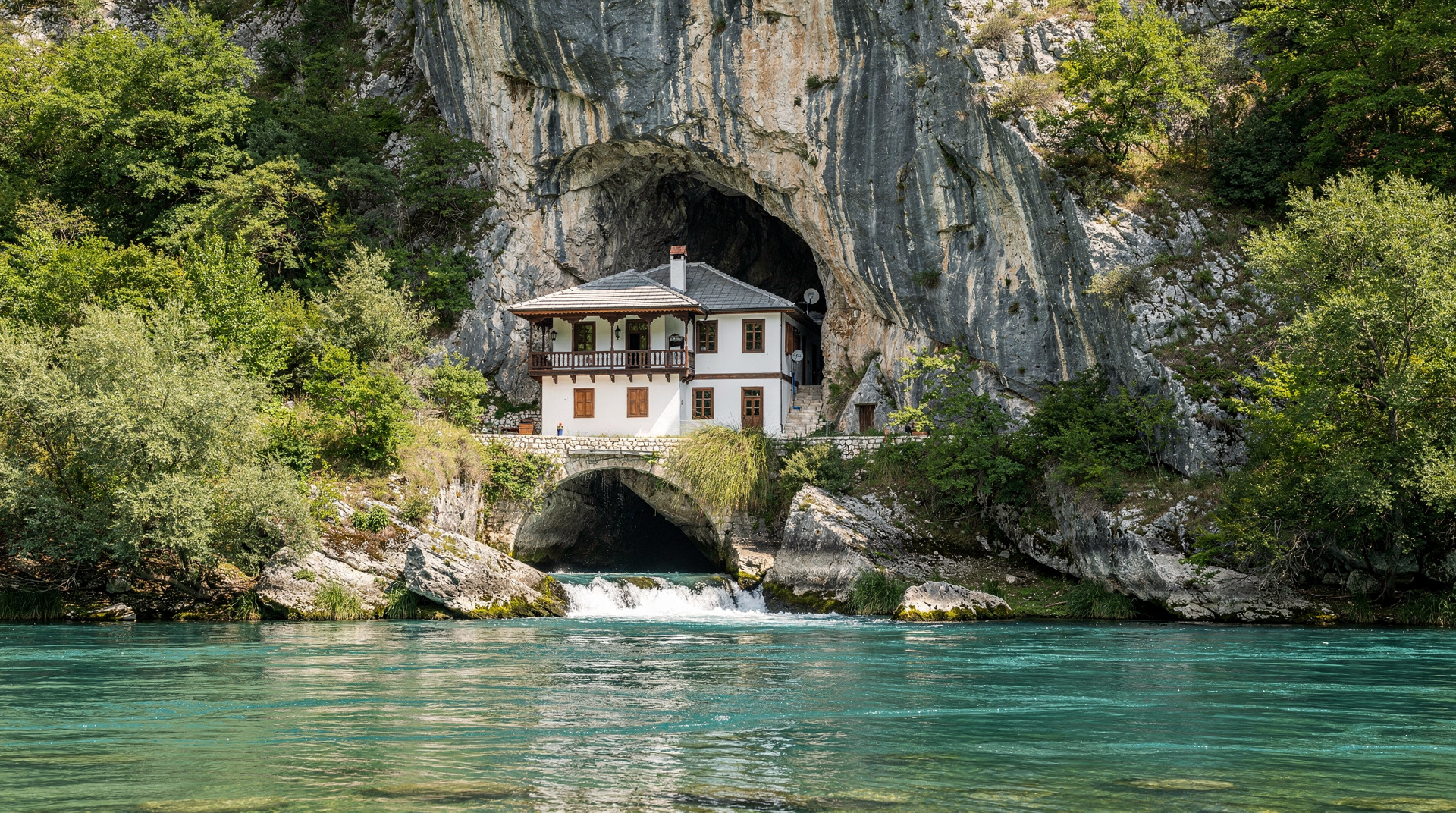
A short detour off the main trail leads to Blagaj Tekija — the extraordinary 16th-century dervish monastery built directly above the Buna River spring, with 200m cliff walls rising behind it. This adds approximately 10 km (5 km each way) to the main route but is strongly recommended.
Guided cycling tour from Mostar including Blagaj combines the Ćiro Trail with a guide who knows the back roads and the detour to the Tekija.
Čapljina and beyond
Čapljina (approximately 60 km from Mostar) is a small town with basic facilities — café, market, ATM — where most day cyclists turn back or arrange a return transfer. Some tour operators include a vehicle-supported return from Čapljina to Mostar.
Beyond Čapljina, the trail continues south toward the Croatian border and ultimately the Dalmatian coast, but this multi-day extension requires advance planning and overnight accommodation.
Self-guided versus guided cycling
Self-guided
The Ćiro Trail is well-marked for most of its length and a detailed GPS track is freely available (download before departing — mobile signal is intermittent in parts of the valley). Self-guided gives complete freedom of pace and stops.
Best for: Experienced recreational cyclists, small groups, those who want flexibility, cyclists with some navigation confidence.
Requirements: Hybrid or mountain bike, downloaded route map, water (limited facilities on parts of the trail), basic repair kit.
Guided tour
Guided tours from Mostar operators include bike rental, guide, safety support, and often include a lunch stop and the Blagaj detour. The guide provides context on the landscape, history and local wine culture.
Best for: First-timers, groups of mixed experience, those who want local knowledge and narrative, families with children.
Practical cycling information
Distance options:
- Mostar old town to Blagaj and back: 30 km (easy half-day)
- Mostar to Čapljina one-way: 60 km (full day)
- Mostar to Čapljina return: 120 km (for fit cyclists only)
Terrain and fitness: The trail follows former railway gradients — very gentle. A recreational cyclist who rides occasionally will be comfortable on the 30-km half-day option. The full 60-km route requires reasonable baseline fitness but no specialist skills.
E-bikes: Available from Mostar operators. These remove the fitness barrier entirely and are recommended in July-August when temperatures make physical effort more demanding.
Water: Bring at least 1.5-2 litres per person in summer. Some cafés along the route but no guaranteed water points in rural sections.
Planning your day on the trail
A good day on the Ćiro Trail is mostly a matter of pacing. The gradient asks very little of your legs, so the real variables are heat, how often you stop and how you get back. Decide the return before you leave Mostar: ask your rental operator whether a vehicle transfer from Čapljina is possible, or settle on a turnaround point where you are happy to ride back the way you came.
Build in time for the things that make the ride worth doing. A long coffee in a village café, a pause under a fig tree, a look at the vines from the edge of the trackbed — these are the reasons to choose the trail over a faster road. Cyclists who treat it as a race tend to remember little more than tarmac, while those who ride at a conversational pace come away with a clear picture of the valley.
If you are unsure which month suits you, the best time to visit Bosnia guide sets out the seasons across the country. For this particular ride, Bosnia in spring and Bosnia in autumn describe the conditions that cyclists like most, while Bosnia in summer explains why an early start matters so much when the valley heats up.
Reading the landscape
The trackbed rewards attention. Because the line was built to carry trains, it keeps a steady, almost mechanical line through terrain that is otherwise broken and rocky. Cuttings and embankments show you where engineers chose to level the ground rather than climb it, and the limestone on either side changes colour with the light through the day. Early in the morning it looks pale and cool; by late afternoon it turns warm and golden.
Look for the contrast between the green strips of irrigated land close to the river and the dry, stony slopes just above them. That contrast is the whole logic of Herzegovinian agriculture: vines, vegetables and orchards where water can reach, bare karst where it cannot. If you want the longer story of how this region fits into the country’s past, the Bosnia history for travelers guide and the Ottoman heritage in Bosnia guide give useful background before you ride.
Stay on the marked route
Bosnia still carries the legacy of the 1990s conflict, and cyclists should respect the usual rule: keep to the trail, to paved roads and to places where other people clearly go. Do not wander into overgrown fields or abandoned buildings to take a photograph or find a shady spot. The trail itself is a well-used route, but the landmine safety guide for Bosnia is worth reading once before you head out on any rural ride.
Turning the ride into a Herzegovina stay
The trail works best as one part of a few days around Mostar rather than a stand-alone excursion. Base yourself in town, ride on a day when the weather is kind and keep the other days for the sights that the trail does not reach. The where to stay in Mostar guide helps you choose a neighbourhood, and the best restaurants in Mostar guide is a sensible place to look for dinner after a day in the saddle.
On a rest day, walk to the Stari Most and read the Mostar old bridge story beforehand, or follow the Mostar war history guide through the city. To avoid the usual pitfalls in the old town, the Mostar tourist traps guide is short and practical.
Other places combine naturally with a cycling day. Počitelj is an Ottoman hill village that suits a slow afternoon, and the Pocitelj Ottoman village guide explains what to look for. Birdwatchers and walkers may prefer the Hutovo Blato nature park guide, which covers a wetland landscape in the same part of the country. Anyone planning a longer trip can fit the ride into the Herzegovina weekend itinerary, the Bosnia 7-day itinerary or the Bosnia adventure itinerary.
Getting between the trail and your next stop
Cyclists often ask how to reach Mostar and leave again without a car. The Sarajevo to Mostar transport guide compares the options, and the buses in Bosnia guide explains how the bus network behaves in practice. If you would rather drive and combine the ride with other stops, the renting a car in Bosnia guide covers what to expect, and the best day trips from Mostar list suggests how to fill the days around the ride.
Riding with children
Families should treat the trail as a flexible outing rather than a target. A shorter out-and-back section, with a café stop at the far end, is far more enjoyable for a young cyclist than a long push towards a distant town. Carry snacks, more water than you think you need and a hat for everyone. The Bosnia with kids guide and the family activities in Bosnia guide have further ideas for days when the children want something different.
Wine after the ride
A cyclist’s appetite for local food and wine is rarely in doubt, and the valley provides plenty to satisfy it. Ask your host or rental operator which cellars welcome visitors, and keep the tasting modest if you still have riding to do — a bike and a second glass do not mix. For a broader look at the grape varieties of the region, the Herzegovina wine guide and the Trebinje wine region guide are the natural next reads, and the Bosnian food guide will help you order well when you sit down to eat.
Season and timing
| Month | Temperature | Notes |
|---|---|---|
| April-May | 18-24°C | Flowers, green landscape. Excellent. |
| June | 25-28°C | Hot but manageable with early start |
| July-August | 30-38°C | Very hot. Start by 07:00, finish by 13:00. |
| September-October | 22-26°C | Harvest season. Vineyards at their finest. |
| November-March | 8-16°C | Possible but quieter; some operators closed |
Combining with wine tasting
The Ćiro Trail passes through the production zone of Žilavka — Herzegovina’s flagship white grape, producing mineral, crisp wines with distinctive stone-fruit character. Several small family wineries along or near the trail welcome cyclists.
For a more formal wine introduction, the Herzegovina wine guide covers the main producers and recommended tastings.
Bike rental in Mostar
Several operators near the old town offer bike rental:
- Standard hybrid: 20-30 BAM (10-15 EUR) per day
- E-bike: 40-60 BAM (20-30 EUR) per day
- Child bike: 15-20 BAM (8-10 EUR) per day
- Helmet: Included or 5-8 BAM rental
Advance booking is recommended in peak season (June-September).
Getting to Mostar
Mostar is 2.5 hours by bus from Sarajevo (regular connections) and approximately 2.5 hours by organised tour from Dubrovnik. The Mostar from Split guide covers the coast-to-interior approach, which can logically include a cycling day in Mostar. The Mostar from Dubrovnik guide is the other main access route.
Safety and what to pack
The trail is largely traffic-free on the converted railway sections, but a handful of road crossings require caution — treat these as standard give-way points, not marked crossings. Recommended kit: sunscreen and a hat (limited shade for long stretches), a basic puncture repair kit if self-guided, a phone with the offline GPS track downloaded, and small BAM notes for village cafés that do not take cards. Cycling helmets are strongly recommended even though not legally mandatory for adults in Bosnia and Herzegovina.
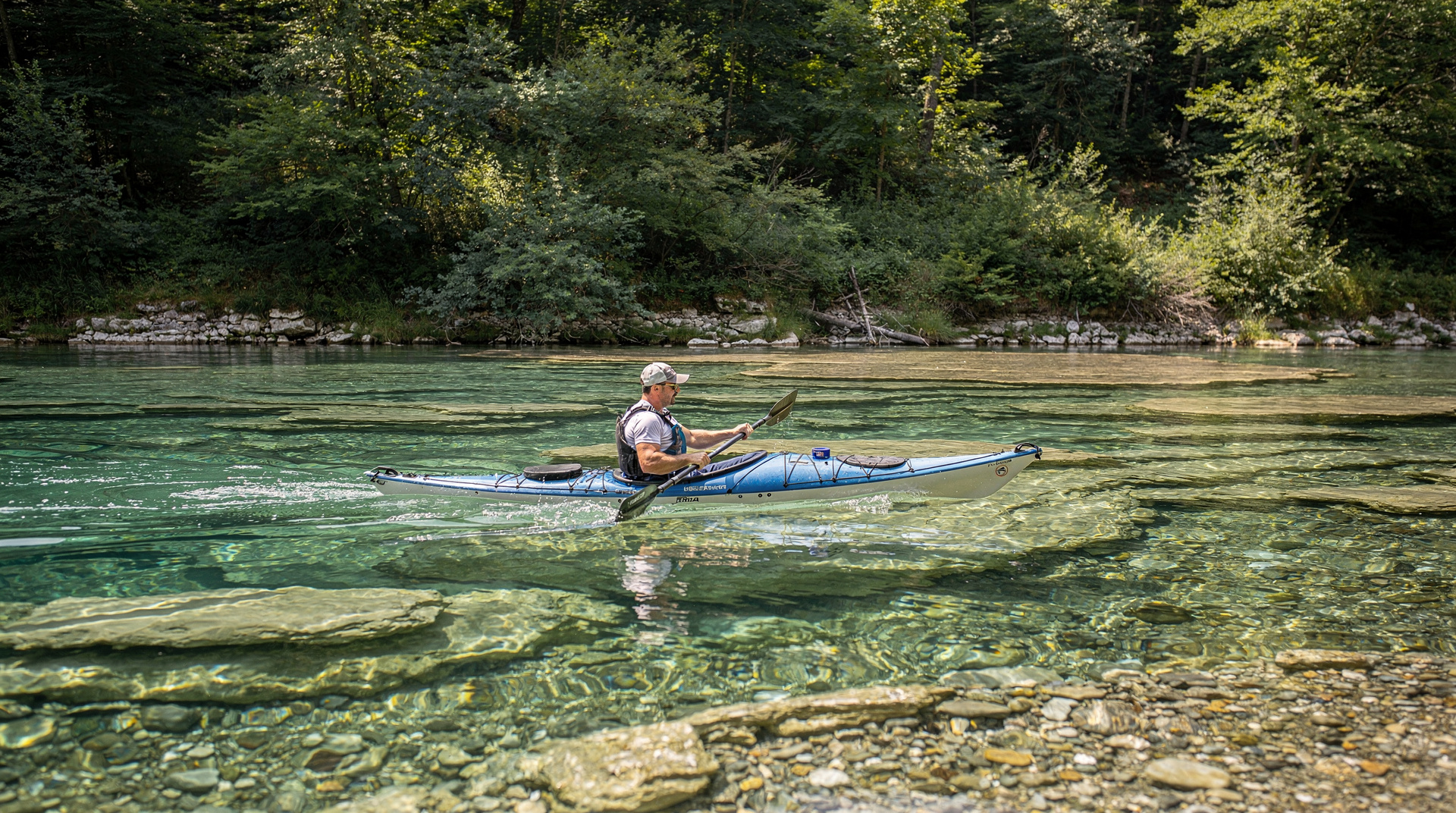
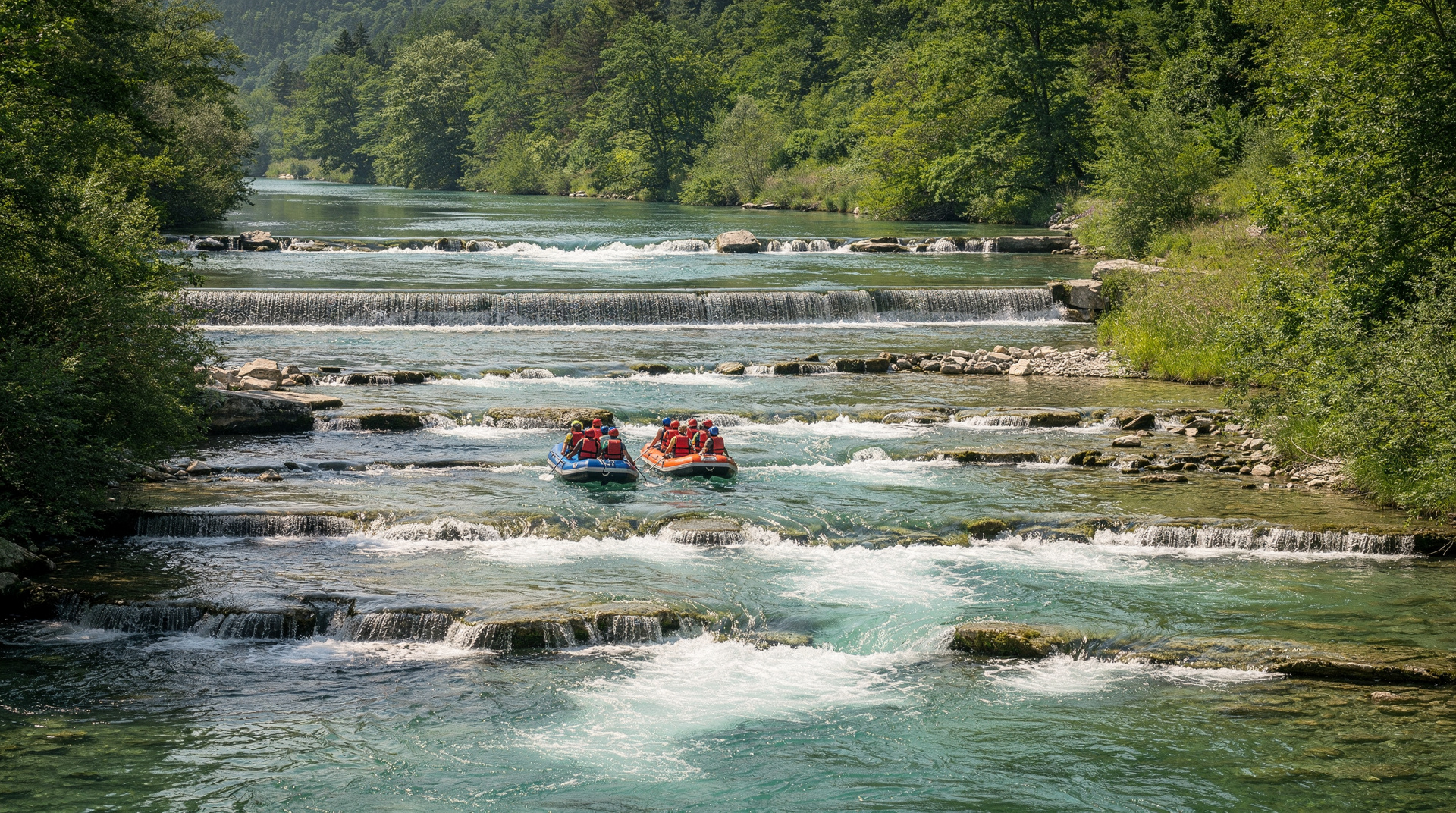
For cyclists combining the trail with wider adventure activities in the region, the rafting in Bosnia guide and kayaking Bosnia guide cover the Neretva and Buna rivers that the Ćiro Trail runs alongside.
The Ćiro Trail offers something most of Herzegovina’s tourist activity does not: an unhurried, self-paced journey through a landscape that reveals itself gradually rather than in the rush of a tour-bus window. For cyclists, it is Bosnia’s finest ribbon of tarmac.
Frequently asked questions about Cycling the Ćiro Trail
Is the Ćiro Trail difficult to cycle?
How long is the Ćiro Trail?
Can I cycle from Mostar to Blagaj on the Ćiro Trail?
What is the Ćiro railway?
When is the best time to cycle the Ćiro Trail?
Can I rent a bike in Mostar for the Ćiro Trail?
Is the Ćiro Trail suitable for a family with children?
Top experiences
Bookable activities with verified prices and instant confirmation on GetYourGuide.