Počitelj — Bosnia's best-preserved Ottoman village
From Mostar: Herzegovina Full-Day Tour
What is Počitelj and why should I visit?
Počitelj is a small Ottoman settlement on a rocky hillside above the Neretva river, about 30 km south of Mostar. It is one of the best-preserved examples of a fortified Ottoman town in south-east Europe, with a 15th-century fortress, the 1664 Sisman Ibrahim Pasha Mosque, a hexagonal mausoleum, a clock tower, a madrasa and stone houses cascading down the hillside. It is an easy stop between Mostar and Medjugorje or on the way to Dubrovnik.
At a glance
| Where | West bank of the Neretva, around 30 km south of Mostar on the M17 |
| Cost | Site and mosque free (donations welcome); parking around 2-3 BAM; coffee 2.50-4 BAM |
| Time needed | 1-2 hours for a thorough visit, including the climb |
| Getting there | Self-drive, taxi, or as a stop on a Mostar/Dubrovnik day tour |
| Best time | Before 09:30 or after 16:00 in July-August; spring and autumn are quiet all day |
Počitelj rewards careful attention. Most visitors see it from the road — the conical clock tower and fortress walls visible on the hillside — stop for 45 minutes between Mostar and the Kravice waterfalls and leave satisfied. Visitors who walk all the way to the top of the fortress, take their time with the mosque and sit for coffee in one of the restored courtyard cafes experience something quite different: one of the most atmospherically intact Ottoman settlements in south-east Europe.
History
The name Počitelj appears in records from the 15th century as a fortified point on the lower Neretva, controlling the river route between the Adriatic hinterland and the interior of Bosnia. The fortress was built initially by the Bosnian kingdom, expanded by the Hungarians after the fall of the Bosnian state (1463), and captured by the Ottomans in 1471. Under Ottoman administration the settlement grew into a proper town: a mosque, a madrasa, a clock tower, a hamam, a caravanserai and houses for a community of several hundred people were added over the following two centuries.
The settlement’s strategic importance diminished after the Habsburg takeover of Bosnia in 1878, and the population declined through the 19th and early 20th centuries. By the Yugoslav period Počitelj was a preserved historic settlement used as an artists’ colony — the dramatic setting attracted painters and writers throughout the 1960s and 1970s.
The 1992-1995 war ended this period. In 1993, Croatian forces expelled the Bosniak Muslim population and damaged the mosque and other Islamic structures. Post-war reconstruction was slow. The international community, including the Aga Khan Trust for Culture, funded restoration of the Sisman Ibrahim Pasha Mosque and the clock tower in the late 1990s and 2000s. The population has partially returned but the settlement has fewer permanent residents than before the war.
The Sisman Ibrahim Pasha Mosque
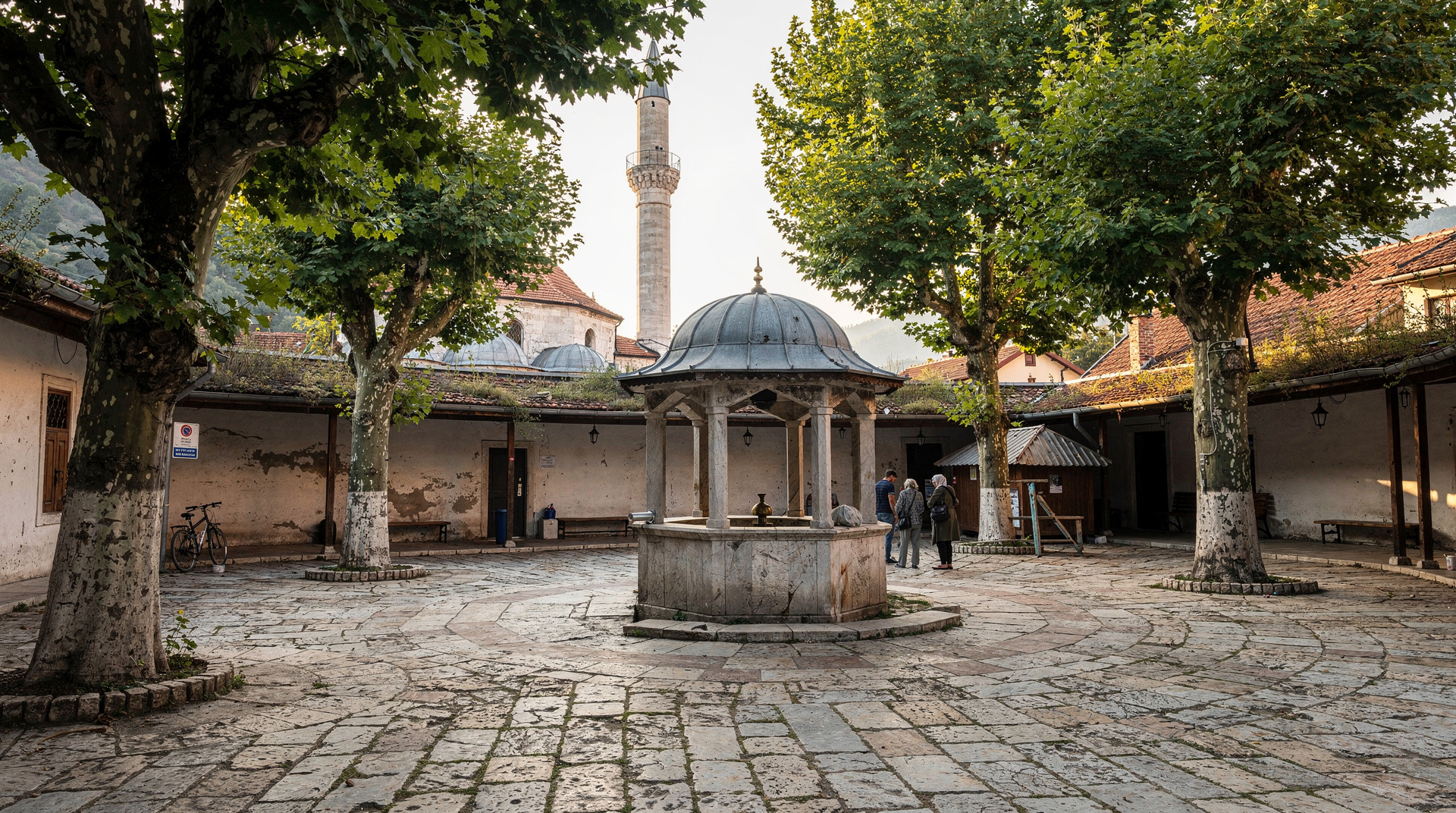
The mosque at the base of the fortress climb is the centrepiece of the settlement. Built in 1664 under the governor Sisman Ibrahim Pasha, it is a late Ottoman structure in the provincial style: a single dome over the prayer hall, a covered portico with three arches, and a single slender minaret. The exterior stonework is in the warm local limestone that characterises the Neretva valley’s architecture.
The interior was restored after war damage and is simple and pleasant — wooden floors, a painted ceiling with floral motifs, and a small gallery. Non-Muslim visitors are welcome outside prayer times; women should bring a scarf. Entry is free though a donation is appreciated.
A full-day Herzegovina tour from Mostar includes Počitelj along with Blagaj and other highlights, with a guide to provide the historical context that makes the site more meaningful.
The clock tower and hexagonal turbe
The Sahat kula (clock tower) was built in the 17th century and is the most distinctive silhouette of Počitelj when seen from the road. The tower is square in plan and approximately 12 metres tall, with the clock face visible on the upper section. The restored mechanism keeps approximate time.
The hexagonal turbe (mausoleum), near the mosque, is the tomb of a prominent Ottoman official. The hexagonal form is unusual — most Ottoman mausolea are octagonal or circular — and gives the building a distinctive profile. The turbe is generally locked but visible from outside.
The climb to the fortress
From the mosque, a cobblestone path and then stone steps wind up the hillside to the fortress gate. The gradient is steep; the surface uneven. Allow 20-25 minutes for the ascent at a comfortable pace. Along the way, several restored stone houses (some now used as galleries selling local artwork and prints) line the path.
The fortress itself consists of outer walls, a gate tower and an inner citadel with a circular tower at the highest point. The interior of the citadel is partly ruinous. The view from the circular tower over the Neretva valley — the river glinting emerald-green between limestone cliffs — is genuinely beautiful and worth the climb entirely.
Pacing the climb and choosing your photo stops
The climb is easiest if you treat it as a series of short pauses rather than a single effort. Each bend in the path opens a slightly different angle on the roofs below, the minaret and the river, and the pauses are the best moments to take photographs without blocking the steps for people behind you. The stone is smooth in places, so keep one hand free, and take it slowly on the way down, where the steps feel steeper than they did going up.
Light matters here. In the early morning the limestone looks pale and the valley is softer; late in the afternoon the walls turn warmer and the shadows give the houses more depth. If photography is the reason for your visit, plan for one of those two windows, which also happen to be the quieter ones. Midday sun flattens the settlement and, in summer, makes the exposed hillside uncomfortable.
It also helps to look up from time to time. The clock tower, the fortress walls and the minaret all sit at different heights, and seeing how they relate to one another explains why this was a fortified town and not just a village. A defender on the upper walls could watch the river route in both directions, which was the whole point of the place.
The Neretva viewpoint and lower area
The lower part of Počitelj, between the main road and the mosque, has been developed with a small car park, souvenir stalls and cafes. The view from the cafe terraces over the Neretva is excellent — the river is wide and very green at this point, backed by arid limestone hills. A coffee (2.50-4 BAM) at one of the waterside tables is a pleasant way to conclude the visit.
Beyond the mosque: the artisan houses
Several of the restored stone houses along the climb now function as small galleries and workshops, selling prints, watercolours and pottery inspired by the settlement’s Ottoman-era architecture. Many of the artists working here are part of a small community that has kept Počitelj’s identity as an “artists’ colony” alive since the Yugoslav period, when painters and writers first began using the settlement as a retreat. Prices are generally reasonable and buying directly supports the ongoing restoration of the houses themselves, several of which remain privately owned but only partly habitable since the war.
What the war left behind
Walking the settlement today, the restoration is convincing enough that casual visitors can miss how recent the damage was. Roofless shells and pockmarked stonework are still visible on a handful of houses away from the main path — a quieter reminder, alongside Sarajevo’s own siege history and the wider Bosnia history for travellers guide, of how recently the country’s heritage sites were themselves battlegrounds.
How Počitelj fits into the wider Ottoman story
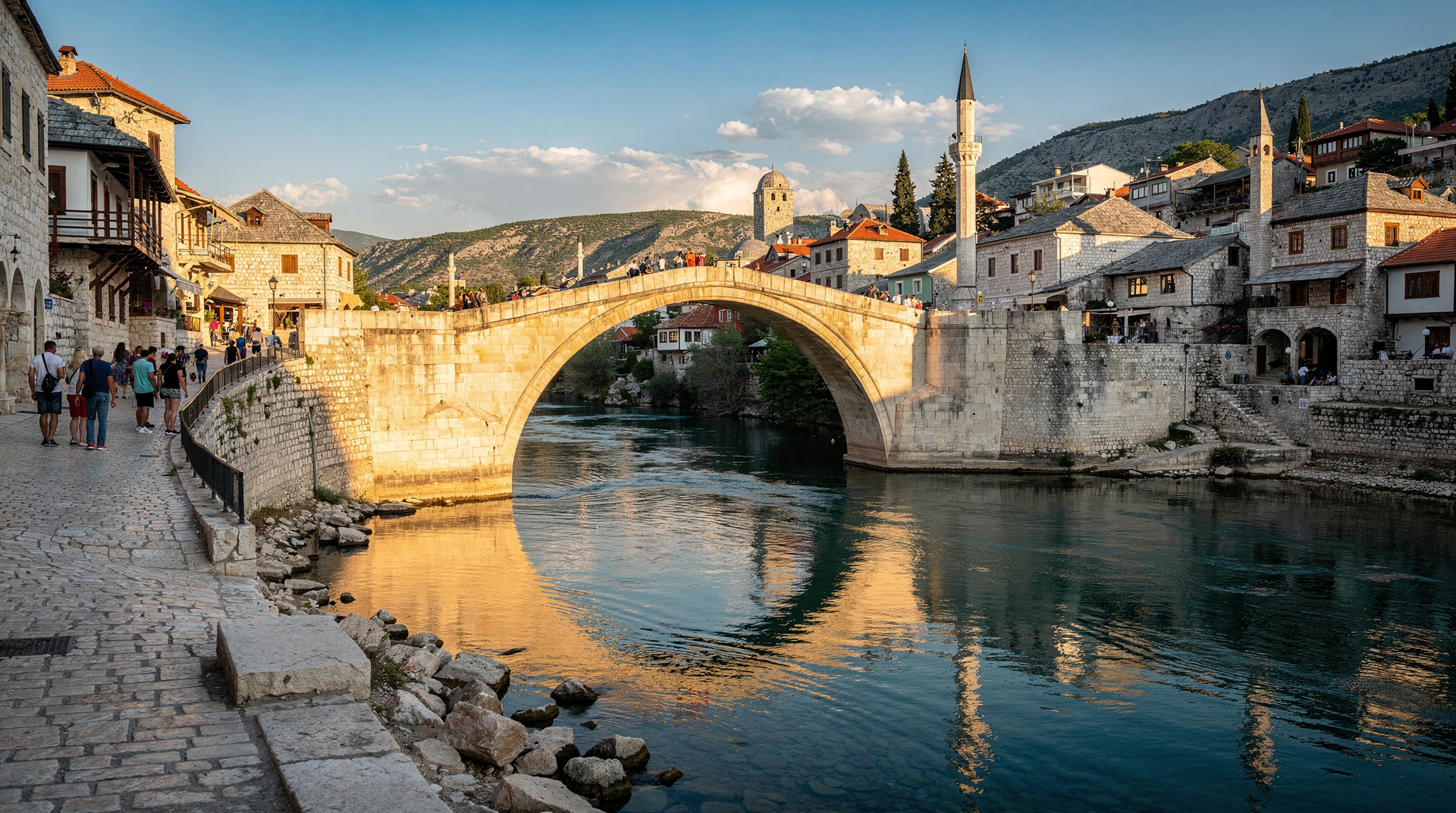
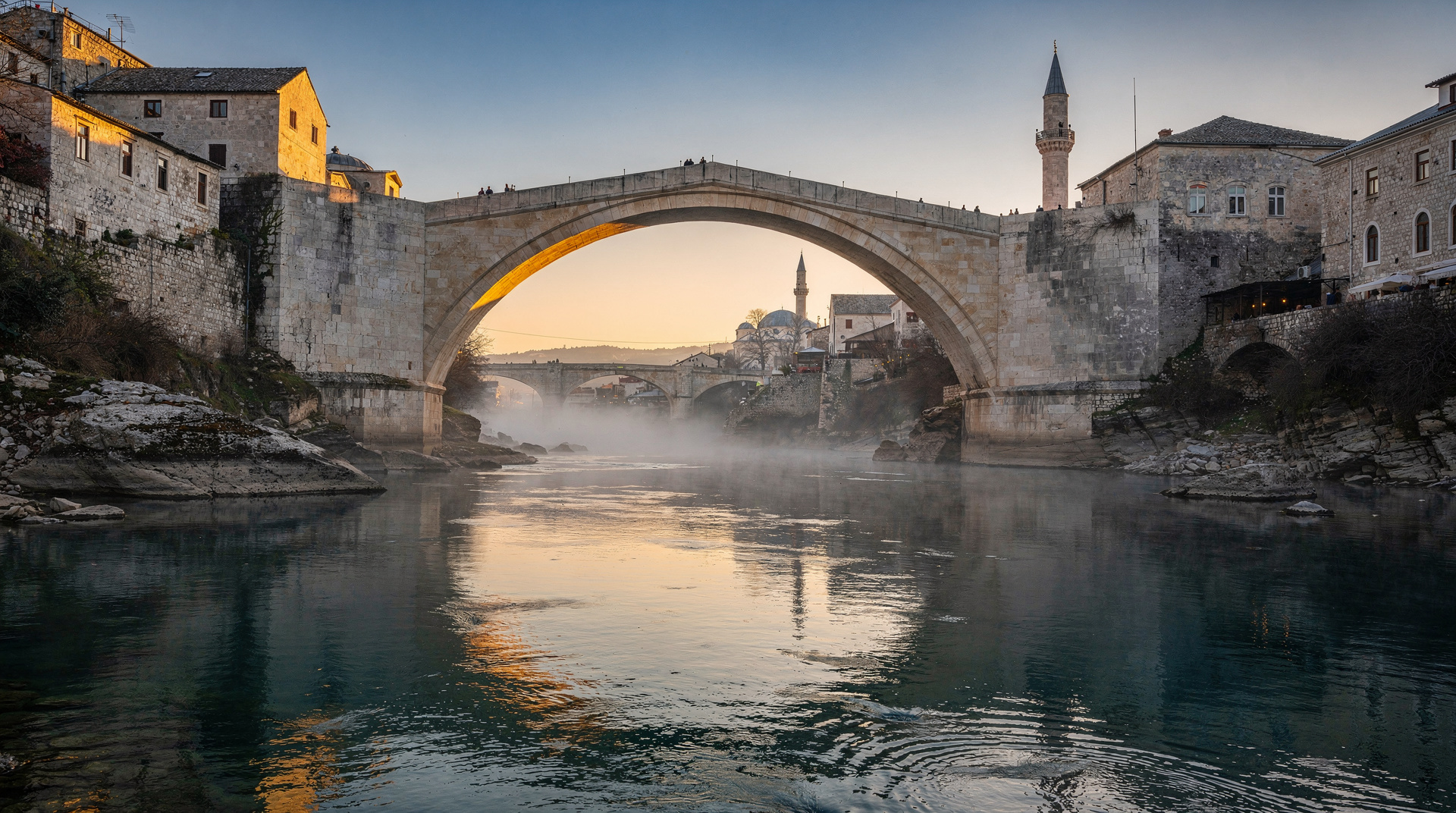
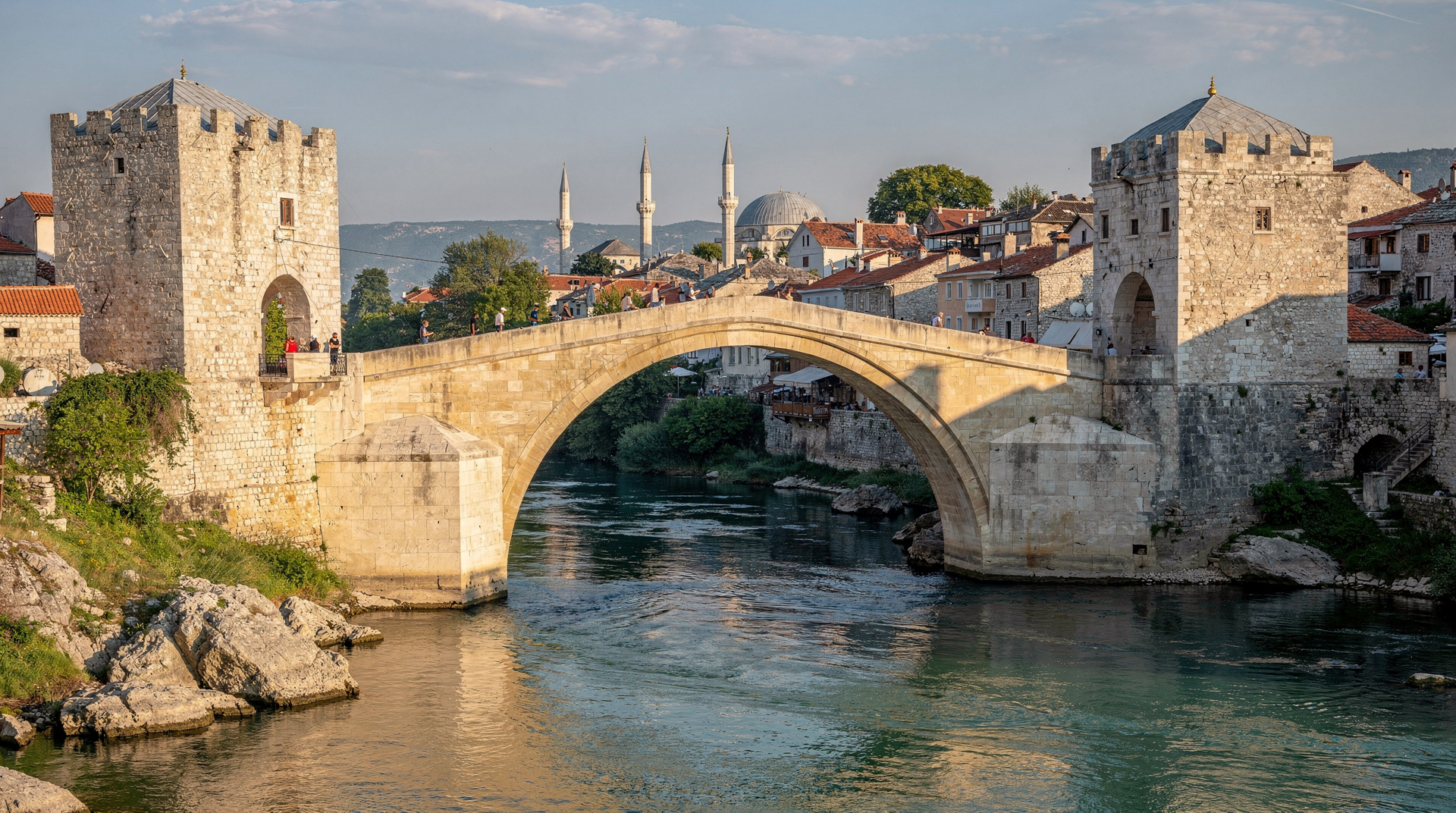
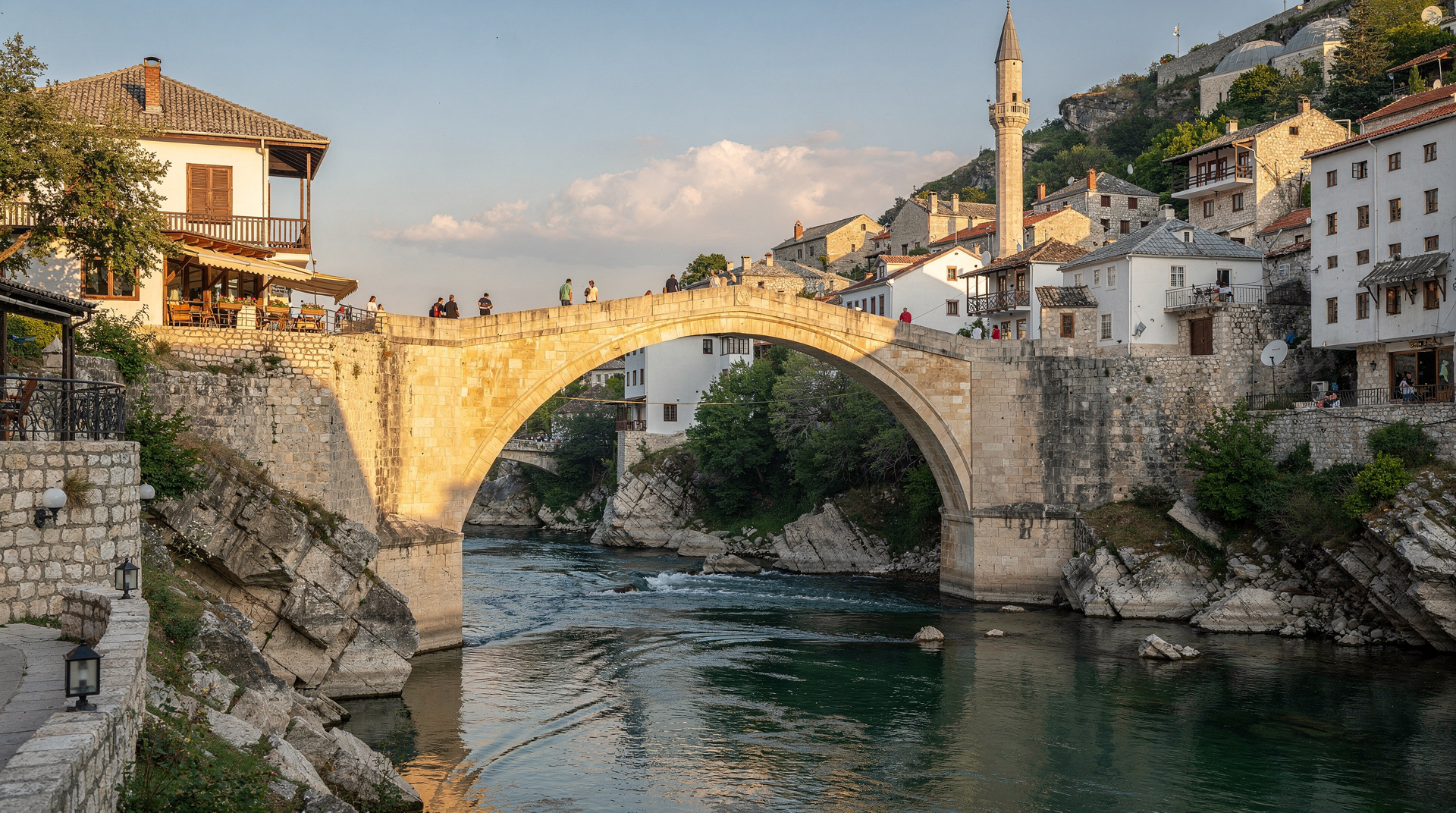
Počitelj makes more sense once you have seen how the Ottomans shaped other towns in the country. In Mostar, the Old Bridge shows the same stone-building tradition at urban scale, and the story of its destruction and rebuilding runs parallel to what happened here; the Mostar war history guide fills in that wider context. Počitelj is quieter and smaller, which lets you read the layout of an Ottoman settlement — mosque, madrasa, clock tower, fortress — without a city crowding around it.
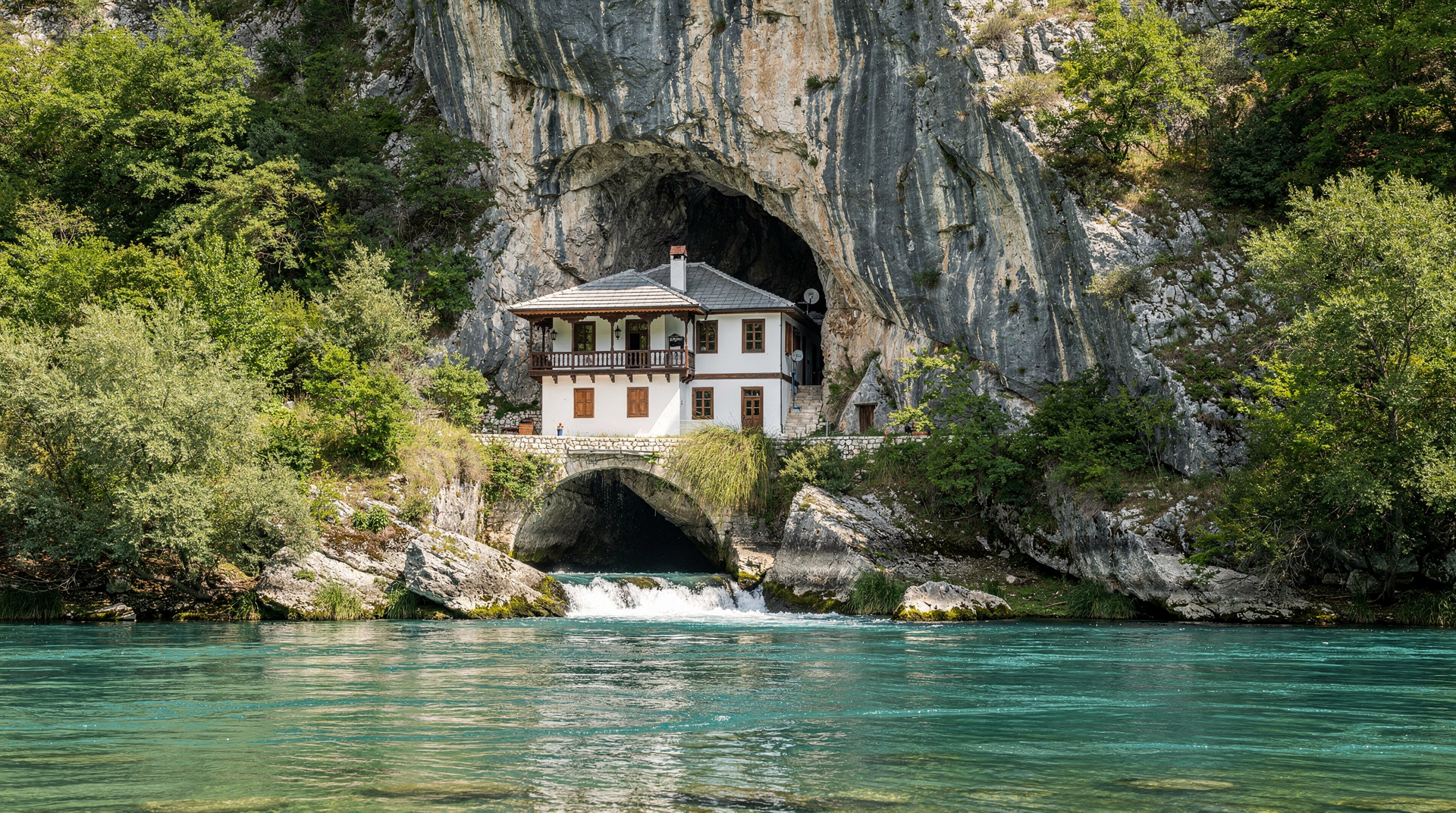
Travellers who enjoy this kind of place may also like Travnik, a very different Ottoman town in central Bosnia, or Blagaj, where the river and the cliff create a dramatic setting for the dervish house. Seeing two or three of these in a single trip gives a much better feel for how varied Ottoman Bosnia was than any single stop can.
Who will enjoy Počitelj most
Počitelj suits travellers who like architecture, photography and slow walking more than ticketed attractions. There are no turnstiles and no audio guides; the experience is the setting itself. Families with older children usually enjoy the fortress climb, as it feels like a small adventure, but the steps are not suitable for pushchairs, and anyone with limited mobility should plan on the lower area, the mosque and the cafe terraces. If you are travelling with younger children, the Bosnia with kids guide has ideas for pacing a Herzegovina day.
Visitors who prefer big, famous sights may find it modest next to the Old Bridge or the waterfalls, and that is fair. Počitelj is best appreciated as part of a day that mixes it with something more dramatic, which is how most of the routes below are built.
Combining Počitelj with other sites
Počitelj’s position on the main road between Mostar and the Croatian border makes it a natural stop on several circuits:
Mostar — Blagaj — Počitelj: A half-day loop from Mostar. Take the Blagaj Tekija in the morning, Počitelj in the early afternoon. Total driving about 60 km.
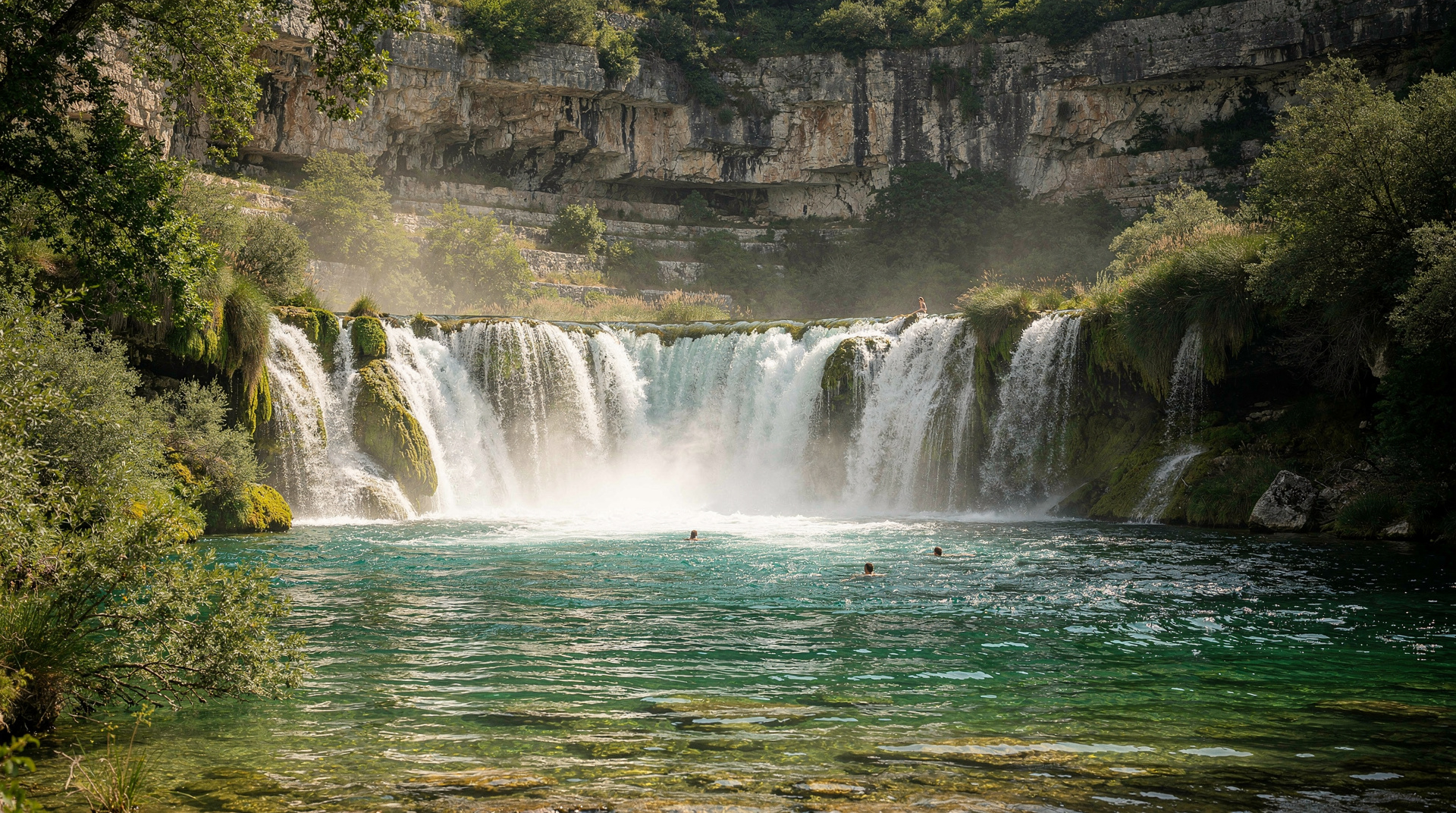
Mostar — Počitelj — Kravice — Medjugorje: The full Herzegovina circuit. Počitelj is about 30 km south of Mostar; Kravice waterfalls are 12 km further south (slightly inland). Full day from Mostar or from Dubrovnik. See the Kravice guide and the Medjugorje guide for details.
Day trip from Dubrovnik: The round trip from Dubrovnik via the Neum corridor to Mostar, Počitelj and Kravice is the most popular GYG tour route in the region — see the Mostar from Dubrovnik guide for options.
Travellers without a car who want the waterfalls and the dervish house in the same day can look at a Mostar-based day tour that strings Kravice, Blagaj and Počitelj together, which removes the parking and navigation questions entirely.
If you are building a longer trip around the region, the Herzegovina weekend itinerary and the Herzegovina day trip guide both show where a Počitelj stop slots in. Drivers coming from the coast should read the Croatia to Bosnia driving guide for the border and road side of the journey, and the Počitelj destination page gathers the essentials in one place.
Respectful visiting
Počitelj is not an open-air museum; it is a place where people live and work and where a community is still rebuilding. Ask before photographing residents or the inside of private courtyards, keep voices low near the mosque, and dress modestly when you go in. Do not climb over ruined walls or step into roofless houses, which may be unstable. Buying a print or a coffee from a local business is a simple way to give something back, and leaving no litter on the hillside is the least any visitor can do.
Practical information
Location: On the west bank of the Neretva, approximately 30 km south of Mostar on the M17 road. Turn off at the Počitelj sign; car park is at the base.
Entry: The site itself is free. The mosque is free (donations appreciated). Some galleries charge small fees.
Parking: Small paid car park at the base (about 2-3 BAM for a few hours).
Best time: Before 09:30 or after 16:00 in July-August to avoid the coach groups. April-June and September-October are the least crowded seasons.
What to wear: Sturdy footwear for the climb — the cobblestones are uneven and can be slippery in wet weather. Sun protection in summer (the hillside has little shade).
Food and drink: Small cafes at the base; there is nothing substantial in the settlement itself. Have lunch in Mostar or at one of the roadside restaurants en route to Kravice.
For the full context of Ottoman heritage across the region, the Ottoman heritage guide places Počitelj within the broader picture from Sarajevo south to Blagaj.
Frequently asked questions about Počitelj — Bosnia's best-preserved Ottoman village
How old is Počitelj?
Was Počitelj damaged in the 1990s war?
What is the walk up to the fortress like?
Is Počitelj always crowded?
How long does Počitelj take?
Do I need a guide to visit Počitelj?
Can I visit Počitelj without a car?
Top experiences
Bookable activities with verified prices and instant confirmation on GetYourGuide.