Hutovo Blato nature park guide
Mostar: Počitelj & Hutovo Blato Day Tour with Local Cuisine
What is Hutovo Blato and why visit?
Hutovo Blato is a Mediterranean wetland nature park in southern Herzegovina, about 35km south of Mostar. It is internationally recognised (Ramsar Convention) as a critical migratory bird habitat, home to over 240 recorded species. Visit for birdwatching, boat tours through the reed beds, and wild carp fishing in karst springs.
| At a glance | |
|---|---|
| Where | Lower Neretva valley, about 35km south of Mostar near Čapljina |
| Cost | Around 5 BAM park entry, plus around 20-30 BAM for a boat tour |
| Time needed | 2-3 hours for a boat tour and walk; half a day combined with Počitelj |
| Getting there | Self-drive (30-40 min from Mostar) or a guided day tour — no reliable public bus |
| Best time | November-March for peak birdwatching; year-round for boat tours and the restaurant |
Hutovo Blato sits at the paradox common to many important wetlands: it is internationally recognised, ecologically exceptional, and almost entirely unknown to tourists. Most visitors to Herzegovina spend their time at Mostar and Kravice; a fraction make it to Počitelj; fewer still find themselves on a flat-bottomed boat drifting through reed beds above a carpet of water lilies, watching a purple heron stand motionless for minutes in perfect reflection.
This guide is written for travellers who are already basing themselves in Mostar or somewhere along the lower Neretva and wondering whether a wetland is worth a slot in a crowded itinerary. It walks through what you actually see, how the visit unfolds on the water and on foot, when the park is at its best, and how to fit it around the better-known stops nearby. Read it alongside the Herzegovina day trip guide if you are still deciding how to shape the day.
What Hutovo Blato is
Hutovo Blato (the name means roughly “muddy swamp” in Slavic, though the water is often remarkably clear) is a Mediterranean wetland nature park of about 7,411 hectares in the lower Neretva valley, about 35km south of Mostar. It was protected as a nature park in 1995 and listed under the Ramsar Convention (international treaty for wetland protection) as a site of international importance.
The park consists of two main lake systems — Svitavsko Jezero in the north and Deransko Jezero in the south — connected by channels and karst springs, surrounded by reed beds, willow woodland, and open water. The wetland is fed primarily by underground springs emerging from the limestone karst, which means it maintains relatively stable water levels even in summer when surface rainfall is minimal.
Birdlife: why it matters
Hutovo Blato sits on a major migratory route between northern Europe and Africa, making it a critical stopover for birds crossing the Adriatic. The park’s combination of open water, reed beds, and Mediterranean woodland creates habitats for an exceptional range of species.
Regular breeding or wintering species include:
- Herons: grey heron, purple heron, night heron, squacco heron, little egret
- Ducks: mallard, pochard, tufted duck, teal, pintail in winter
- Rails and crakes: moorhen, coot, little crake, Baillon’s crake
- Raptors: marsh harrier, white-tailed eagle (winter), osprey (migration)
- Passerines: kingfisher (resident), reed warbler, great reed warbler, bearded reedling
Over 240 species have been recorded in the park across all seasons. Peak birdwatching season is November-March when migratory waterfowl — sometimes tens of thousands of ducks on the main lakes — make Hutovo Blato one of the most rewarding birding sites in the western Balkans.
How to watch birds here without being an expert
You do not need a field guide full of Latin names to enjoy the park. The simplest approach is to slow down and pick one spot. Herons are the easiest reward: they stand at the edge of the reeds for long stretches, and a patient observer will usually see one strike at a fish. Kingfishers are quicker and rarer to catch, a flash of colour low over the water, so keep your eyes on the channel edges rather than the open lake.
A few habits make a real difference:
- Move quietly on the hides and walking paths. Voices carry far over still water, and the birds notice.
- Scan the reed margins first, then the open water, then the sky. Each layer has different species.
- Let your eyes adjust. In the first ten minutes you will see little; after that the reeds seem to fill with movement.
- Go early. Morning light is soft, the birds are most active, and the wind is usually lower, so the surface stays calm enough for reflections.
In winter the open lake is the main spectacle, with rafts of ducks resting on the water and raptors working the edges. In spring and autumn the interest shifts to the reeds and the willows, where smaller migrants pause on their journey. If you only have one visit, a cold clear winter morning is the strongest choice; if you are travelling in the shoulder seasons, you will still find plenty to watch, just spread across more habitats.
The karst springs
The most unusual feature of Hutovo Blato for non-birders is the network of karst springs (vrela) that feed the wetland. Underground water flows through the limestone from the surrounding hills and emerges at the lake bottom or along the shore as clear, cold, spring-fed channels.
Krekovo Vrelo, the main spring complex, is accessible by boat. The water is transparent to several metres depth; aquatic vegetation is visible in detail below the surface. The contrast between the murky reed beds and the crystal-clear spring channels is striking.
Boat tours and activities
The standard way to explore Hutovo Blato is by flat-bottomed electric boat through the main channels. Boats depart from the park centre near Čapljina and cover the main lake and spring areas. Tours last 1-2 hours.
Fishing is permitted in designated areas; wild carp (šaran) fishing is a traditional activity here and the park accommodates day permits for visiting fishers.
Walking trails of 2-5km follow the lake shores and lead to elevated hides (čeke) for observing wildlife.
What a boat tour feels like
The electric boats are quiet, and that is the point. There is no engine roar to scatter the wildlife, so the boatman can drift close to the reed edges and cut the motor altogether when a bird is nearby. The ride is slow and mostly about looking: water lilies spreading across the surface, narrow channels opening between walls of reeds, and the sudden shift to clear water where a spring feeds the lake. Sit towards the front if you want the best view and keep your camera ready before the boat turns into a new channel, since the best moments arrive without warning.
Dress for the water rather than the weather. A light layer is welcome on a cool morning even in shoulder months, a hat helps on bright summer days, and a dry bag is sensible for a phone or camera. Children usually enjoy the boat more than the walking trails, which makes it a good stop for families already travelling through the region; see the Bosnia with kids guide for how it fits among other child-friendly stops.
Walking the shore and the hides
The trails are modest and flat, and they suit anyone comfortable with an easy stroll. Their value is the elevated hides, where you can sit and let the wetland come to you. Bring patience more than fitness. If the boat gives you the movement and the close views, the hides give you stillness and the wide picture, so doing both gives the fullest sense of the place. Stay on marked paths: it protects the reeds and nesting areas, and in a country where landmine safety matters away from established routes, sticking to signposted trails is a good habit everywhere.
Combining Hutovo Blato with Počitelj
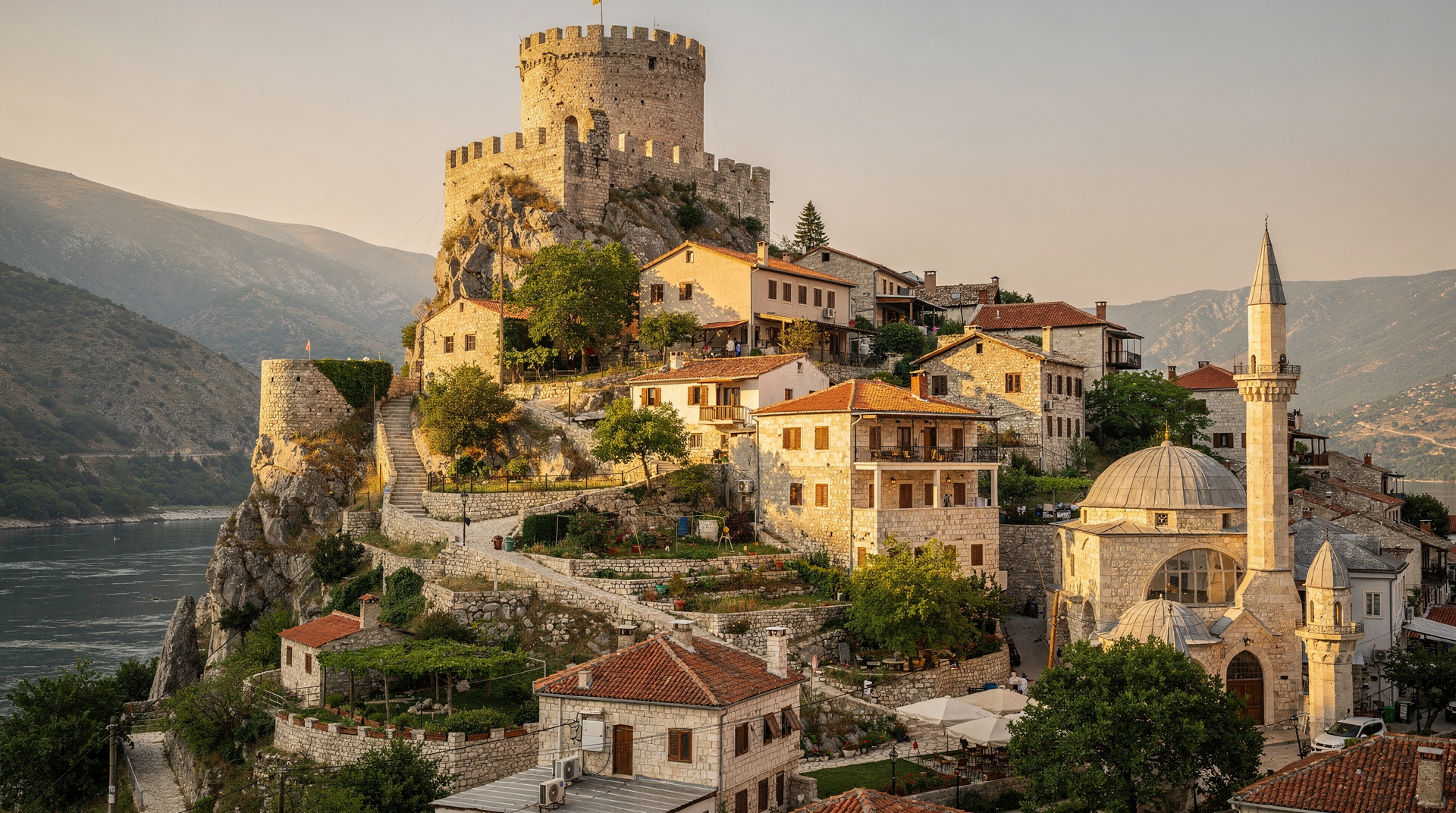
The Mostar to Počitelj and Hutovo Blato day tour with local cuisine is the most efficient way to combine two of Herzegovina’s most distinctive sites. The tour covers the Ottoman village of Počitelj (hilltop fortress, mosque, merchant houses) in the morning and Hutovo Blato in the afternoon, with a traditional meal in between. The meal typically features eel (jegulja) and carp from the park’s own waters — a rare treat.
The restaurant and local food
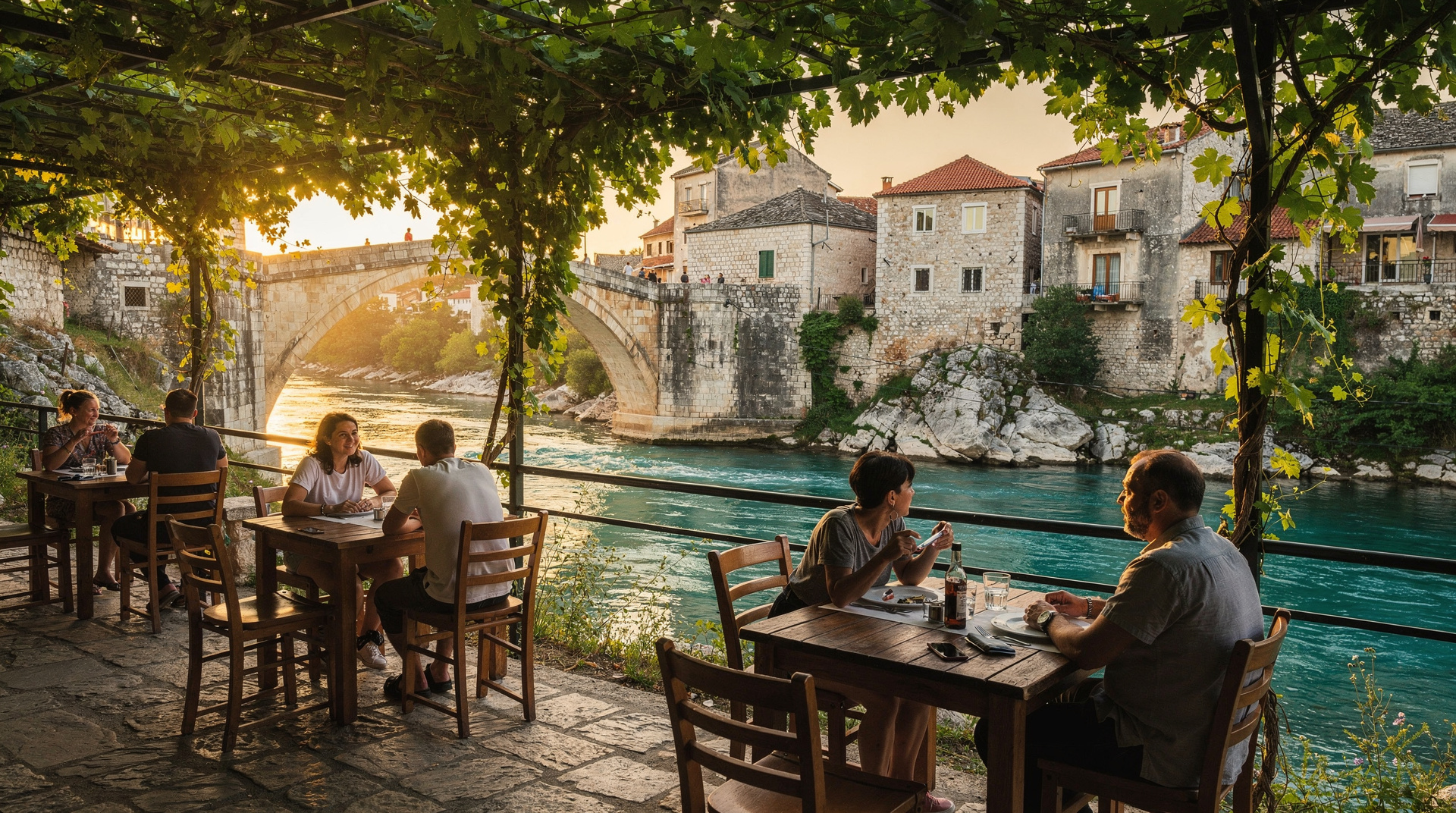
The park restaurant at the main entrance serves eel (jegulja) and wild carp (šaran) prepared simply with local olive oil, garlic, and herbs — among the best freshwater fish dishes in Herzegovina. A full meal with local wine costs 30-50 BAM. The restaurant overlooks the lake; heron sightings from the terrace table are common.
Getting there independently
By car from Mostar: take the M17 south toward Čapljina (30km), then follow signs to Hutovo Blato. The park entrance is near the village of Hutovo. Park entry fee: approximately 5 BAM per person; boat tours cost an additional 20-30 BAM.
Practical notes
- Opening hours: approximately 07:00-19:00 in season; call ahead in winter
- Bring binoculars — essential for serious birdwatching; the park does not hire them
- Insect repellent in summer: reed-bed wetlands have mosquitoes in July-August
- Boats accommodate 6-10 people; private hire possible for birding groups
- Photography: good light in early morning and late afternoon; midday is harsh
For more of Herzegovina’s nature, the Kravice waterfalls guide covers the Trebižat tufa falls 40km west, and the Vrelo Bosne guide covers the Sarajevo valley’s spring park. For the broader Herzegovina outdoors picture, a local Mostar guide can help plan a day that connects these sites.
Building a day around the park
Hutovo Blato works best as the quiet, slow half of a busier day. A typical rhythm is to start with a cultural stop and finish by the water, or the reverse if you want the early light for birds. Pairing it with Počitelj gives you stone alleys and a hilltop view in the same outing as the reed beds, and the Blagaj destination page offers another contrast, with its spring and riverside setting. If you want to widen the circuit, the best day trips from Mostar lists the other options that share this part of the country.
Travellers heading to or from the coast can also use the park as a break. The route between Mostar and the Adriatic passes through this valley, so a visit can sit naturally on the way. Our Mostar from Dubrovnik guide and Neum corridor crossing guide explain the border and road side of that journey, which is worth understanding before you plan a stop that depends on timing.
If you are driving
A car gives you the most freedom here, especially in winter when you may want to arrive at first light. Read the driving in Bosnia guide before you set out, and if you do not have a vehicle yet, the car rental guide covers the practical points. Fill your plans with some slack: wetland visits tend to run longer than expected because there is always one more bird to wait for.
A relaxed rhythm for the visit
Arrive, take the boat first while the water is calm, walk a short stretch of shore afterwards, and finish with a meal at the restaurant. This order keeps the active part of the visit in the best light and leaves the slowest part, lunch with a view of the lake, for when you are ready to sit. If you are combining it with another stop, treat the wetland as the place to unwind rather than to rush through; the experience loses much of its charm when it is squeezed between two other attractions.
Best time by season
| Season | Weather | Birdlife | Crowds |
|---|---|---|---|
| Winter (Nov-Mar) | Cool, often misty mornings | Peak — tens of thousands of migratory ducks and geese | Very quiet, mostly birders |
| Spring (Apr-May) | Mild, wildflowers around the lakes | Strong migratory songbird passage | Light |
| Summer (Jun-Aug) | Hot, mosquitoes near the reed beds | Quieter, mainly resident species | Moderate, mostly combined with Počitelj tours |
| Autumn (Sep-Oct) | Mild, comfortable for walking | Good return migration | Light |
Choosing your season and your trip length
The seasonal table above gives the headline, but a few extra considerations help you decide. If birds are your main reason for coming, go in the colder months and treat the visit as a morning of its own, perhaps combined with the guidance in the Bosnia in winter guide. If you simply want a pleasant, green outing, spring and autumn are comfortable, and the Bosnia in spring and Bosnia in autumn guides help you place the park among other seasonal highlights. Summer visits are perfectly workable if you plan around the heat and the insects, as the Bosnia in summer guide explains for the region more broadly.
For a longer stay in the region, the Herzegovina weekend itinerary shows how a wetland morning can slot between Mostar, the villages and the wine country, and the Herzegovina wine guide is a natural follow-up for an evening after a day on the water. A shorter visit still pays off: even a brief boat ride gives a clear sense of how different this landscape is from the mountains most visitors expect from Bosnia.
How Hutovo Blato compares to Bosnia’s other nature parks
Hutovo Blato is unlike anywhere else covered in this guide — it is Mediterranean wetland rather than mountain or river landscape, and its appeal is largely to birders and anyone curious about a genuinely different side of Herzegovina. Compared with the crowds at Kravice Waterfalls in summer, Hutovo Blato stays calm even in peak season because most visitors have never heard of it. For travellers who prefer river landscapes and hiking to wetland birding, the Una National Park guide or Sutjeska National Park guide will likely be more rewarding.
Frequently asked questions about Hutovo Blato nature park
What birds can I see at Hutovo Blato?
How do I get to Hutovo Blato from Mostar?
What is the best season to visit Hutovo Blato?
Is Hutovo Blato only for birdwatchers?
What are the karst springs of Hutovo Blato?
How much time should I budget for Hutovo Blato?
Can I combine Hutovo Blato with Medjugorje?
Top experiences
Bookable activities with verified prices and instant confirmation on GetYourGuide.