Best restaurants in Mostar
Mostar, Medjugorje, Kravice – Farm To Table Tour
Where should I eat in Mostar?
Hindin Han near the Old Bridge for traditional Bosnian cooking, Šadrvan in the old town courtyard for atmosphere, and Restoran Taurus for good local wine. Budget travellers can eat well at any buregdžinica or ćevabdžinica on Kujundžiluk for under 12 BAM.
Eating in Mostar is a pleasure that comes with a caveat: the most picturesque restaurants — the terraces perched over the Neretva River, directly below Stari Most — are also the most expensive and most crowded. The local secret is to eat a street away from the Old Bridge, where the same Herzegovinian lamb and the same Žilavka wine cost 20-30% less and the atmosphere is more relaxed.
| At a glance | Details |
|---|---|
| Budget meal | 6-15 BAM (ćevapi, burek, street food) |
| Mid-range meal with wine | 35-60 BAM |
| Best area for atmosphere | Kujundžiluk / east bank near Stari Most |
| Best area for value | Streets one block back from the bridge |
| Reservations | Recommended for Hindin Han and Labirint in summer |
| Local wines to try | Žilavka (white), Blatina (red) |
The best restaurants in Mostar
Hindin Han
Set in a restored Ottoman house on the east bank of the Neretva, a few minutes’ walk upstream from Stari Most, Hindin Han is widely considered the most reliable traditional restaurant in the city. The menu focuses on classic Herzegovinian dishes — grilled lamb, jagnjetina ispod sača, begova čorba, and seasonal vegetable dishes — with a wine list that prioritises local producers.
The terrace overlooks the river; arrive before 12:30 or after 14:30 to avoid the peak lunch crowd. A full meal with local wine: 45-70 BAM (23-35 EUR) per person.
Restoran Šadrvan
One of the oldest restaurants in Mostar, Šadrvan sits in a small courtyard immediately north of Stari Most, shaded by vine-covered trellises. The atmosphere is the main draw — the setting is genuinely beautiful. Food is traditional (ćevapi, lamb chops, grilled fish) and reliably good without being exceptional. Tourist pricing applies; expect 40-65 BAM for a full meal.
Restoran Taurus
On the street running parallel to the Old Bazaar (Kujundžiluk), Taurus has one of Mostar’s better local wine lists and serves Herzegovinian dishes with slightly more care than the tourist-strip competition. Worth seeking out if the local wine matters to you.
Labirint Restaurant
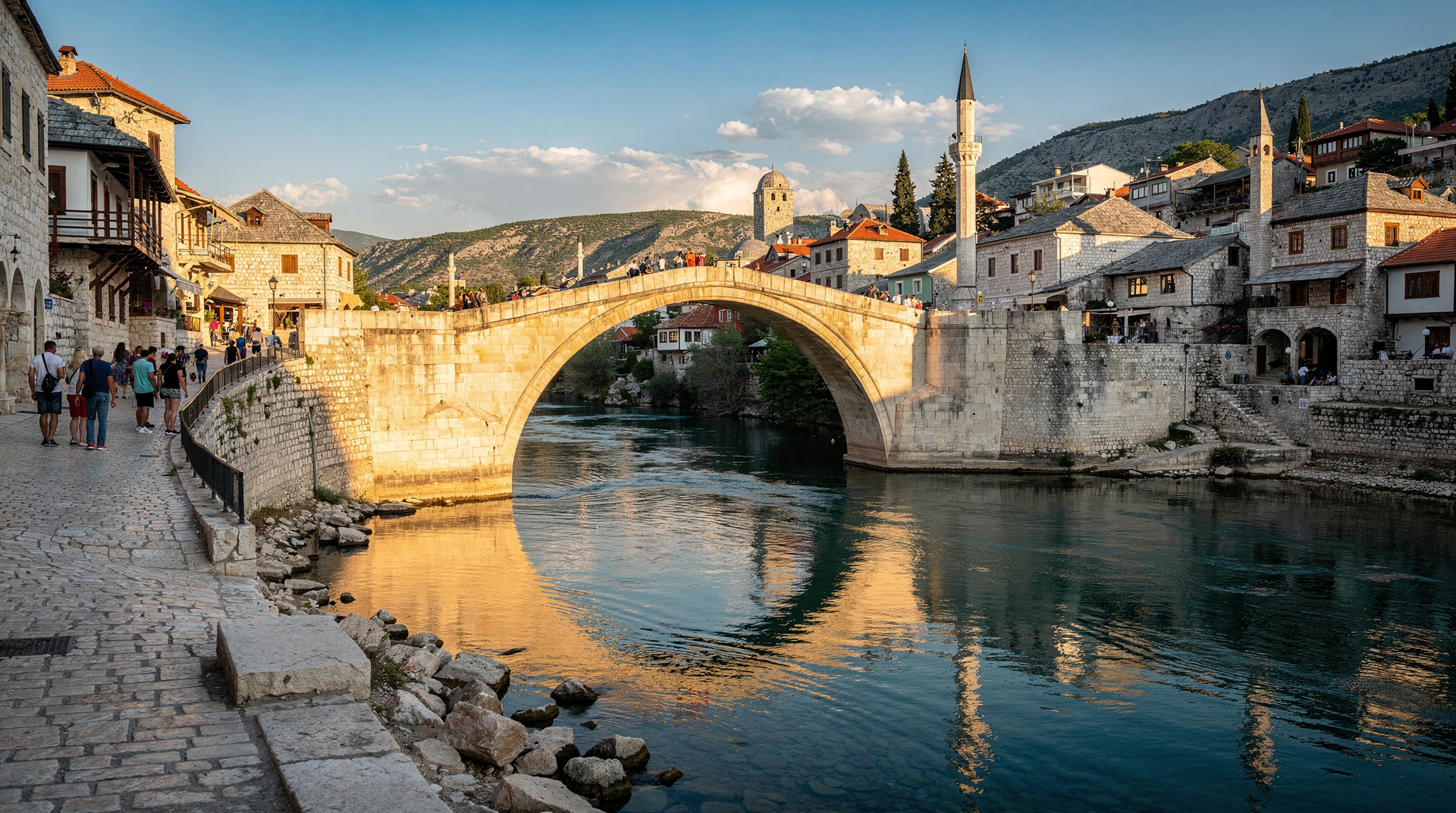
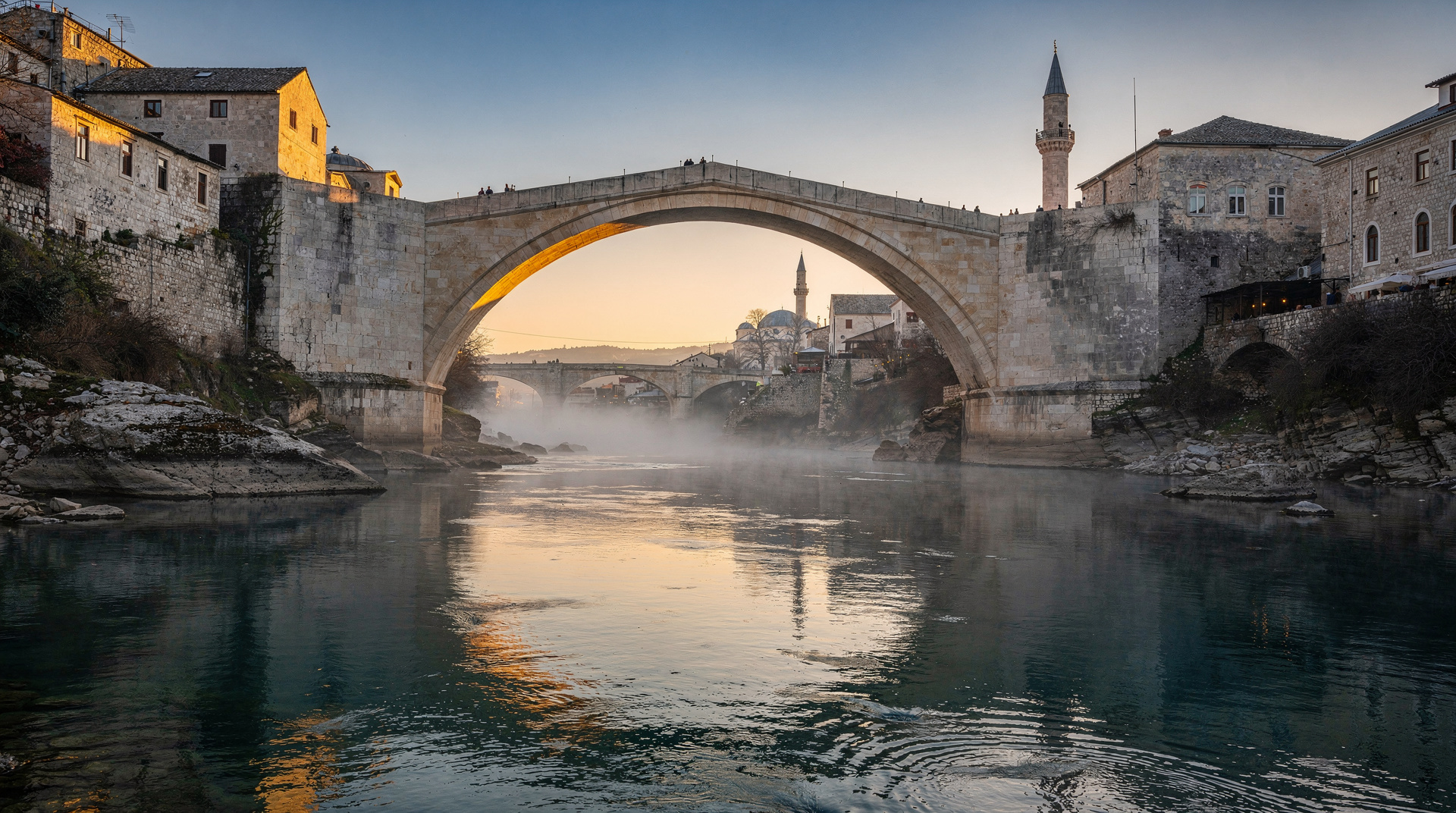
Perched on the hillside above the east bank, Labirint offers arguably the best view of Stari Most of any restaurant in the city. The food is good; the view justifies the slightly elevated prices. Reservations recommended in summer.
How to choose between the four
The four restaurants above answer slightly different questions. If you want one meal that tells you what Herzegovinian cooking is about, Hindin Han is the safest pick. If the setting matters more than the plate, Šadrvan and Labirint are the ones to book, and the choice between them comes down to whether you prefer a shaded courtyard or a view from above. If you care about the wine in your glass, Taurus is the quieter, more careful option. Many visitors do best by combining two of them: a long dinner at one, a lighter lunch or a late-afternoon drink at another.
Whichever you choose, order a few dishes to share rather than one main each. Herzegovinian food is built around grilled meat, cheese, bread and vegetables, and a shared table lets you taste more of it. Ask the waiter what is seasonal; the answer is often better than the printed menu.
What to order in Mostar
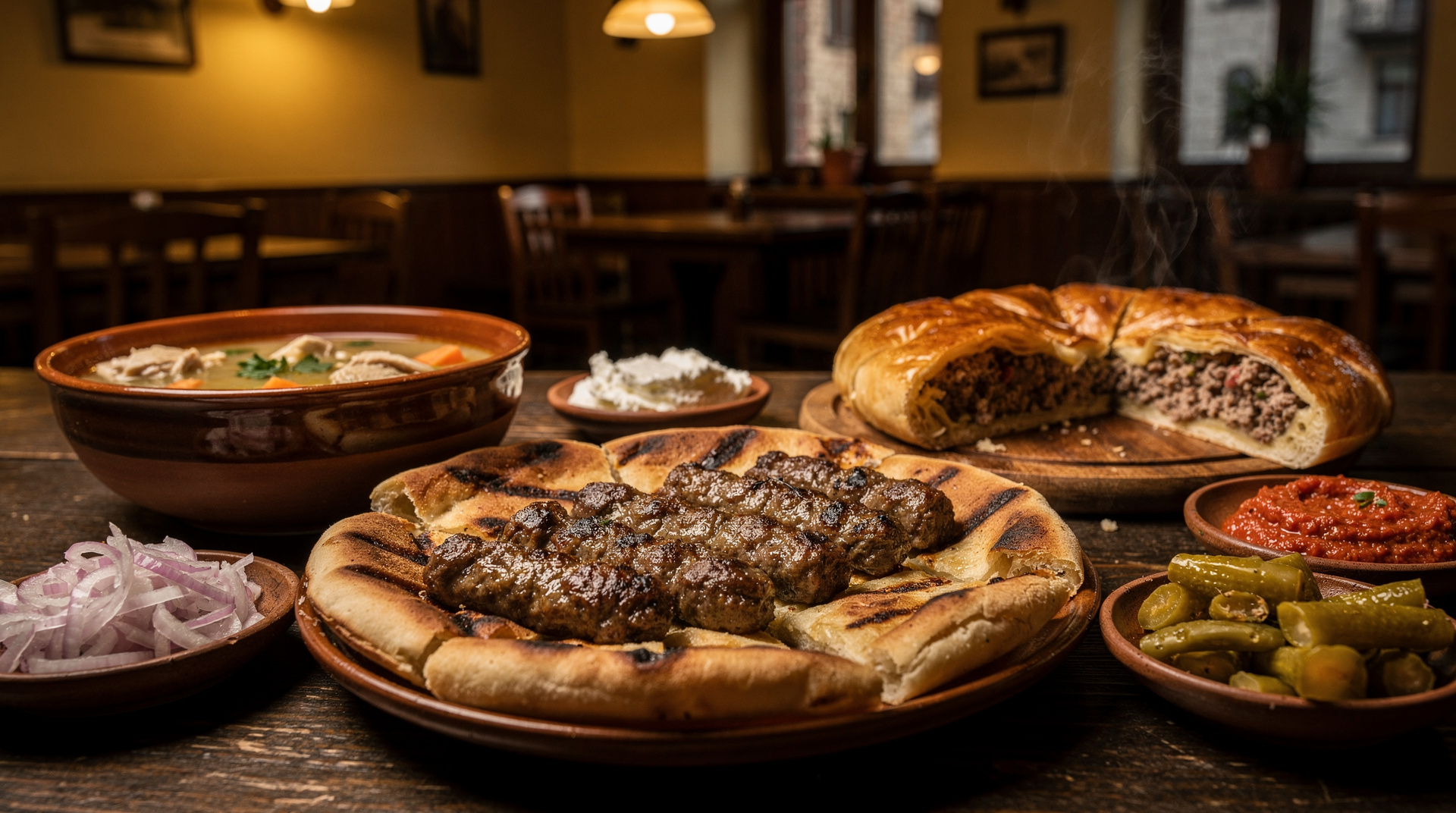
Menus in the old town repeat a handful of dishes, and knowing them helps you order with confidence. Ćevapi are small grilled minced-meat sausages served in flatbread with raw onion; they are the default cheap meal, and the ćevapi guide for Sarajevo explains how the style differs between cities. Burek and its relatives are covered in the burek and pita guide, and any bakery near the western edge of the old town will give you a good example for breakfast.
Further up the menu, look for lamb cooked under a metal bell (ispod sača), slow stews, begova čorba soup, stuffed vegetables such as dolma, and fresh local cheese. Herzegovina is lamb country, and the meat here is usually the strongest option on any traditional menu. Finish with a Bosnian coffee, served in a small copper pot with a sugar cube and a piece of lokum on the side; the Bosnian coffee culture guide explains the ritual so you do not stir it too early.
A sample day of eating in Mostar
A good Mostar food day starts with burek and coffee on the west side of the old town, before the tour groups arrive. Walk across the bridge afterwards while the light is soft and the stone is quiet; the Stari Most guide gives the background that makes the crossing more interesting. Mid-morning is for wandering the bazaar lanes and, if you want, a first sip of rakija with a small plate of cheese and cured meat.
Lunch is best taken either early or late, away from the peak rush. This is when a cheap ćevabdžinica on a side street makes sense, leaving your budget free for dinner. In the afternoon, rest in the shade, because Mostar in summer is hot enough to slow everyone down. Dinner is where you spend: book Hindin Han or Labirint, ask for a table outside as the light drops, and order local Žilavka or Blatina with the lamb.
Eating well on a tight budget
Mostar is not a hard city for budget travellers. The cheap end of the market is genuinely good, and a plate of ćevapi or a slice of cheese pita eaten at a counter is often better than a mediocre mid-range meal. If you are watching your spending across the whole trip, the Bosnia on a budget guide shows where else the savings come from, and the money and currency guide explains how to handle cash and cards so you are not caught short at a small counter.
A simple way to save without losing quality is to make lunch your main meal and keep dinner light. Many places charge the same or less at midday for similar food, and you avoid the evening crowds on the terraces. Another is to drink local: house wine and local rakija are both cheaper and more interesting than imported drinks.
Budget eating in Mostar
The side streets of the Old Town — particularly behind the main tourist strip of Kujundžiluk — have ćevabdžinicas and buregdžinicas serving full portions for 6-12 BAM. The morning burek run from a neighbourhood bakery (pekara) near the western edge of the old city is the best cheap breakfast in town.
Grilled corn (kukuruz) sold from street vendors near the bridge in summer is 2 BAM — one of the Balkans’ great simple snacks.
Farm-to-table near Mostar
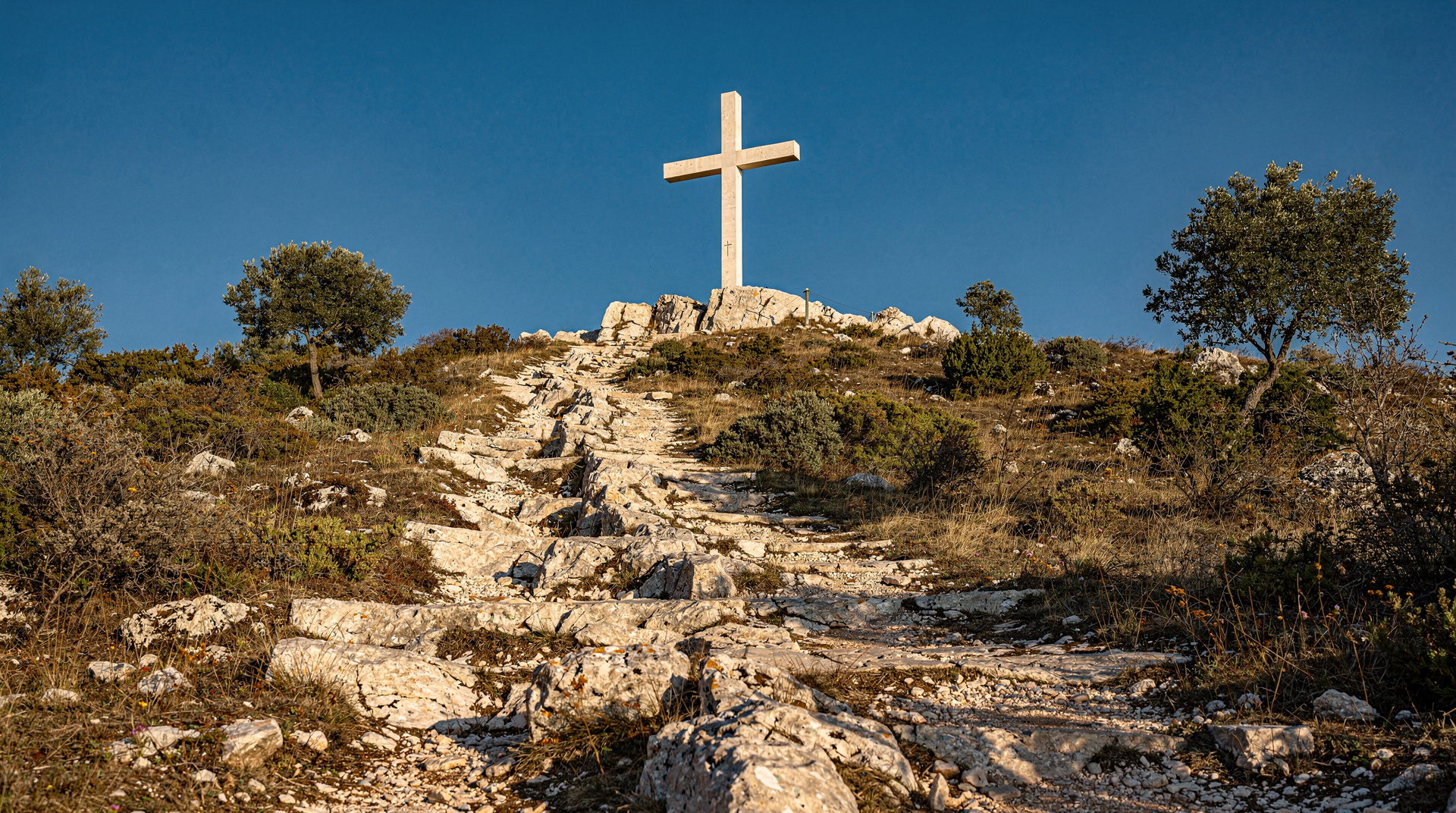
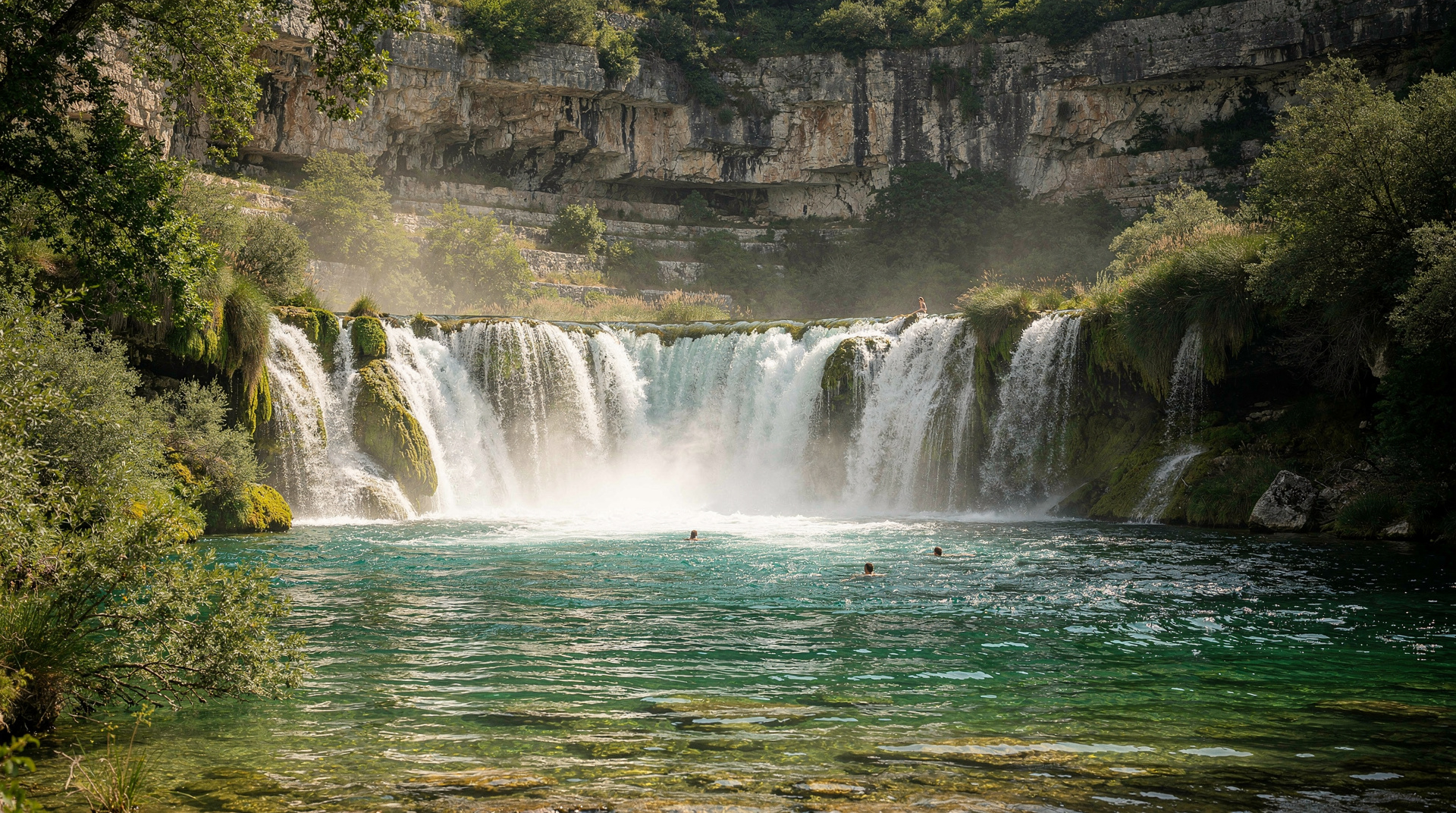
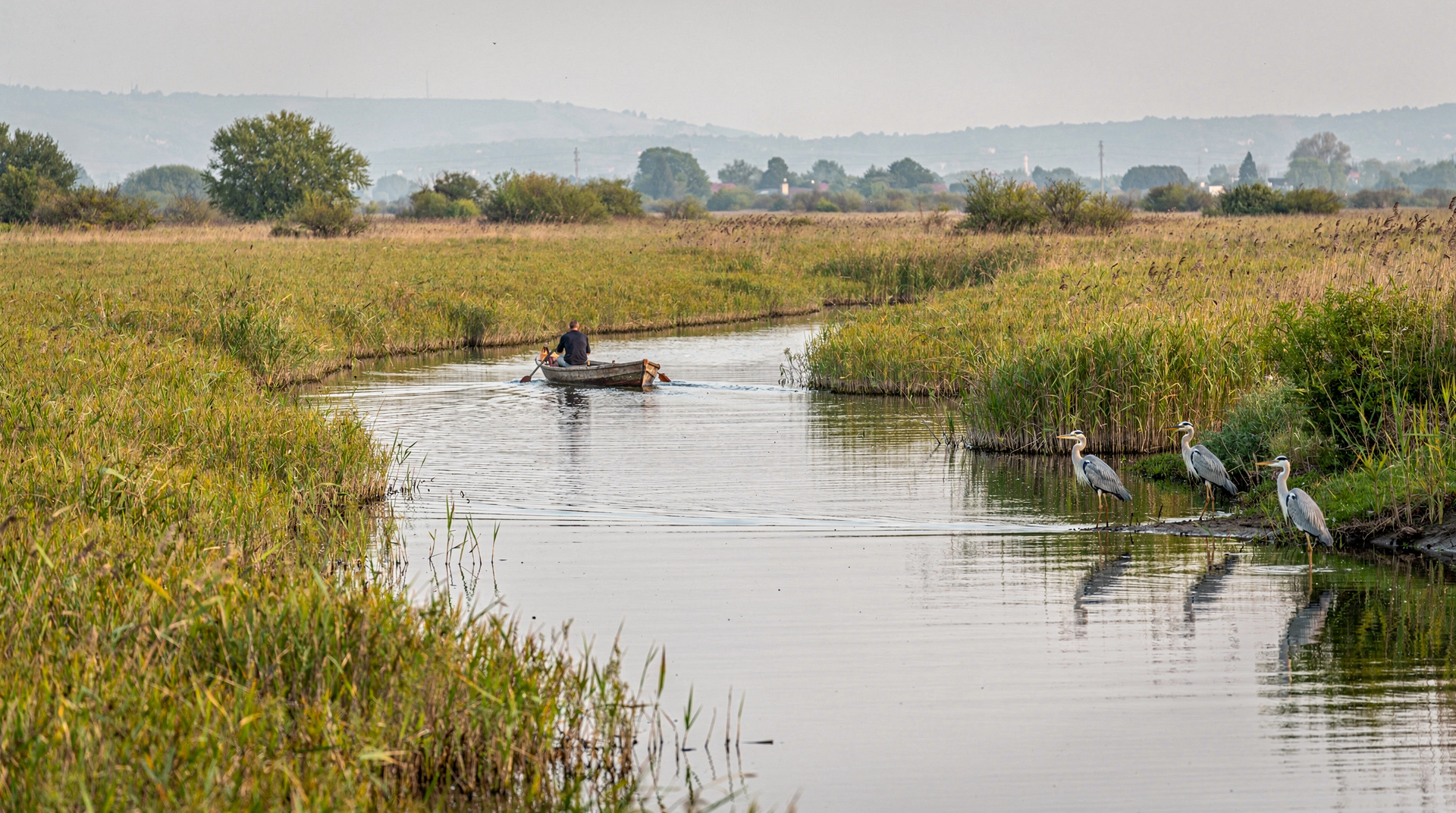
The Mostar, Medjugorje, and Kravice farm-to-table tour combines sightseeing with a working farm visit where a local family prepares a meal from their own land: lamb, garden vegetables, cheese, and local wine or rakija. It is one of the most memorable eating experiences available in the region and gives a genuinely different perspective on Herzegovinian food culture compared to any restaurant.
The tour runs full day and includes transport.
Drinking in Mostar
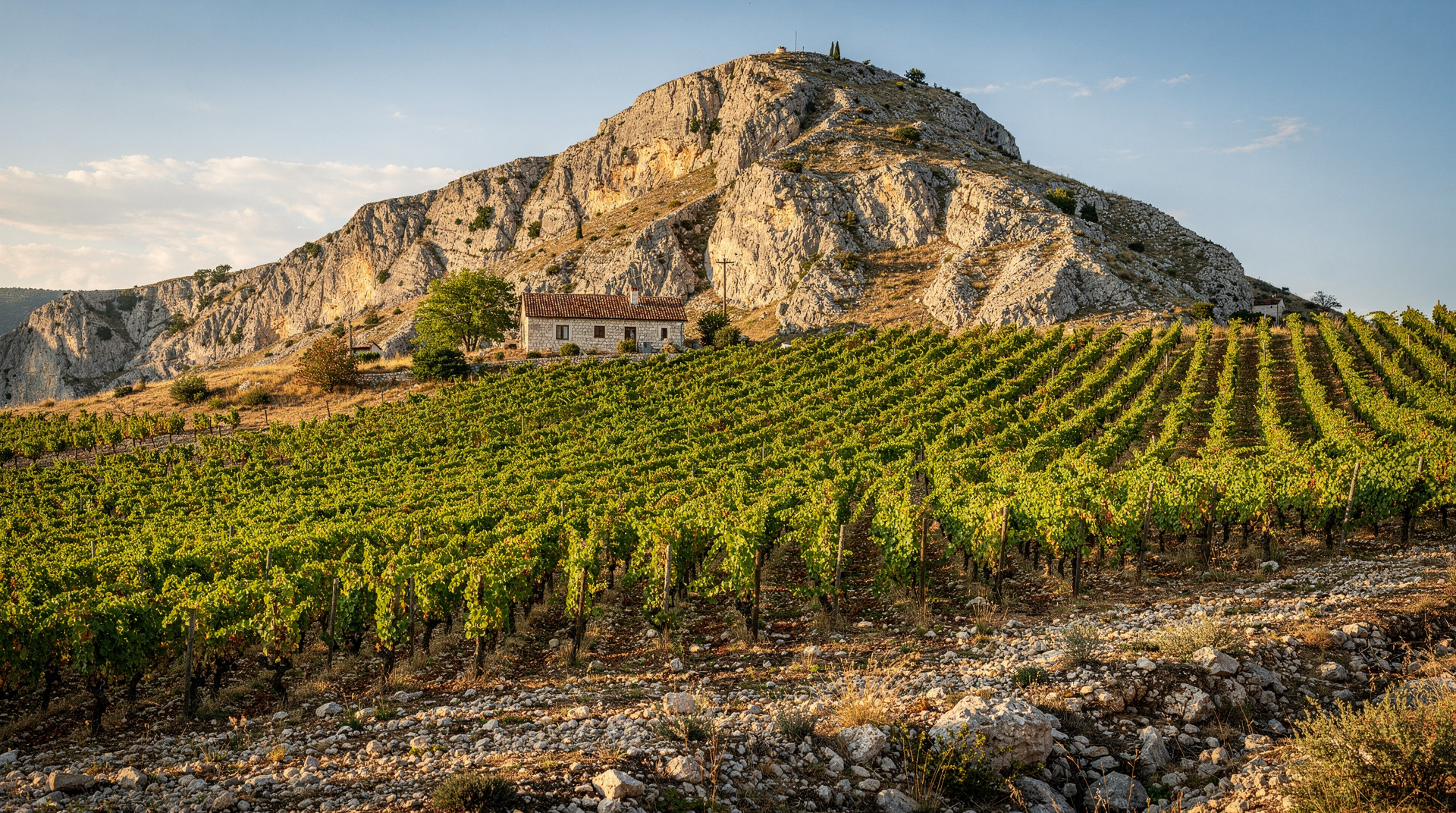
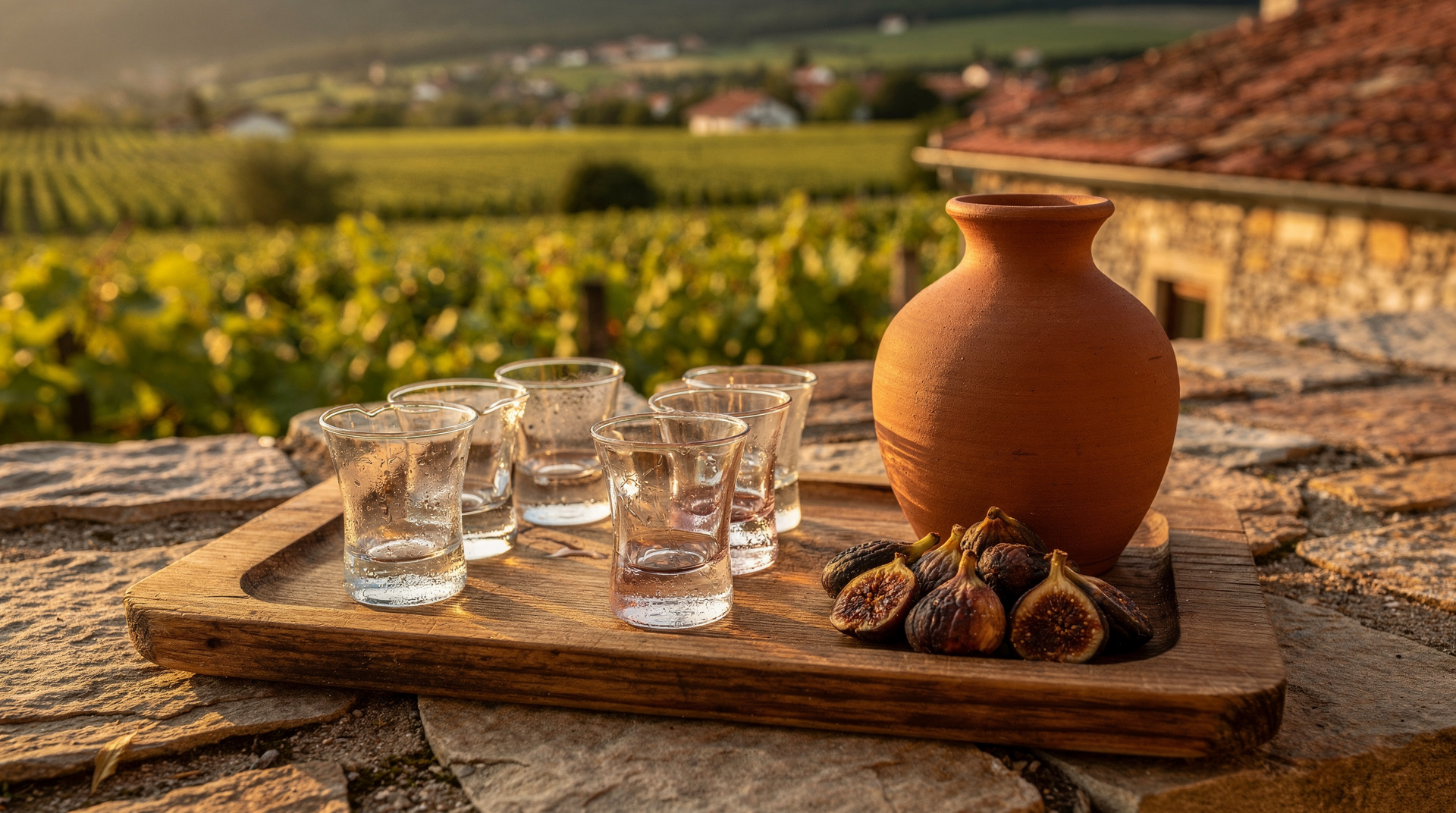
For wine, any restaurant with a serious local wine list will have Žilavka and Blatina. For a structured tasting, the Herzegovina wine guide lists the best options from Mostar. Rakija — particularly lozovača (grape pomace spirit) from Herzegovina — is available by the glass or as a tasting flight at the dedicated tasting venues in the Old Town. See the rakija guide for detail.
For a guided walk that combines the food culture with the city’s main sights, a private walking tour with a local Mostar guide can be tailored to include a restaurant stop.
Eating across the division
Mostar’s cultural divide between the Bosniak east bank and the Croat west bank is visible in the food too. East bank restaurants focus on Ottoman-influenced Bosnian cooking — ćevapi, burek, traditional stews. West bank cafés and restaurants are more European in style, with cappuccino, pasta, and pizza alongside local dishes. Both sides of the city are worth eating in; staying only on the tourist-facing Old Bridge side misses half the story.
Dietary needs and special requests
Vegetarians will find the choice narrower than in a big western European city, but it is workable. Cheese pita, grilled vegetables, salads, stuffed peppers and bean dishes appear on most menus, and the cafés on the west bank tend to be more flexible. Say clearly that you do not eat meat, because a vegetable soup or a side dish may be made with meat stock without being described that way. Travellers with allergies should explain them in simple words and, if possible, in writing on a phone; smaller kitchens do not always have much English.
Families will find that most restaurants welcome children, and simple grilled dishes are easy for younger eaters. The Bosnia with kids guide has more general advice for travelling with children.
Eating out as part of a longer trip
Mostar rarely stands alone in an itinerary. Many travellers arrive from Sarajevo, Split or Dubrovnik and leave the same day, which is exactly why the restaurants near the bridge feel so crowded. If you can stay a night, the evening is far calmer: the day-trippers leave, the light changes, and the terraces become pleasant places to sit. The Mostar where to stay guide helps you pick a base, and the Sarajevo to Mostar itinerary shows how a relaxed pace lets you eat well in both cities.
If you are comparing the two main food cities, the best restaurants in Sarajevo guide is the natural companion to this page, and the Sarajevo vs Mostar comparison helps you decide where to spend your evenings. For the wider destination picture, see the Mostar destination page.
Practical notes
- Best season for terraces: May-September; rooftop and riverside seating is the main draw in summer
- Crowds: Mostar is extremely busy in July-August; arrive for lunch at 11:30 or wait until 14:30
- Reservations: essential for Hindin Han and Labirint in peak season
- Cash: essential in smaller spots; most established restaurants accept cards
Before you go, read the Mostar tourist traps guide so that overpriced terraces and pushy touts do not surprise you, and keep the general Bosnia scams to avoid guide in mind when you check a bill. A calm look at the receipt, and a polite question if a line is unclear, is normal and not rude.
For the full food context, the Bosnian food guide covers the dishes you will encounter across the country. For exploring Mostar’s Old Town beyond the restaurants, the Stari Most guide is the starting point. If you’re planning day trips out of the city, the Kravice Waterfalls guide and the best day trips from Mostar guide pair well with an evening back in town for dinner.
Frequently asked questions about Best restaurants in Mostar
Are restaurants in Mostar expensive?
What is the best area to eat in Mostar?
Does Mostar have good vegetarian food?
Is there a farm-to-table food experience near Mostar?
What local wines should I order in Mostar restaurants?
Top experiences
Bookable activities with verified prices and instant confirmation on GetYourGuide.