Vrelo Bosne guide
Sarajevo: Vrelo Bosne Nature Park Private Tour
What is Vrelo Bosne and why visit?
Vrelo Bosne (the Springs of the Bosna) is a nature park in Ilidža, 12km southwest of central Sarajevo, where the Bosna River emerges from multiple karst springs in a beautiful wooded setting. A Habsburg-era promenade, swan lake, historic mills, and the backdrop of Mount Igman make it the best urban nature escape near Sarajevo.
Every city of any size deserves a natural escape within easy reach, and Sarajevo has one of the best in the Balkans. Vrelo Bosne — the Springs of the Bosna River — sits in the suburb of Ilidža, 12km southwest of the city centre, where dozens of karst springs emerge from the base of Mount Igman and combine to form the Bosna River at the outset of its journey north to the Sava. The setting is serene: clear, cold water over white gravel, weeping willows, old-growth chestnut and poplar, and the kind of birdsong that is the opposite of a city.
At a glance
| Where | Ilidža, 12km southwest of central Sarajevo |
| Cost | Park entry free (small fee possible on peak summer days); fiaker carriage around 15-20 BAM per carriage |
| Time needed | 45-60 minutes for the springs walk; 2-3 hours for a relaxed visit including the avenue |
| Getting there | Tram line 3 to Ilidža, then a 25-minute walk or 15-minute fiaker ride |
| Best time | April-June or September-October; early mornings in July-August to avoid weekend crowds |
The springs and the river
The Bosna River begins here, at a cluster of springs emerging from the limestone at the base of the mountain. Unlike a typical river source — a trickle from a hillside — Vrelo Bosne produces significant water immediately: the combined spring flow is strong enough to see as a current within metres of the source, and the water temperature is a constant 9-12°C year-round (cool in summer, relatively warm in winter by Bosnian standards).
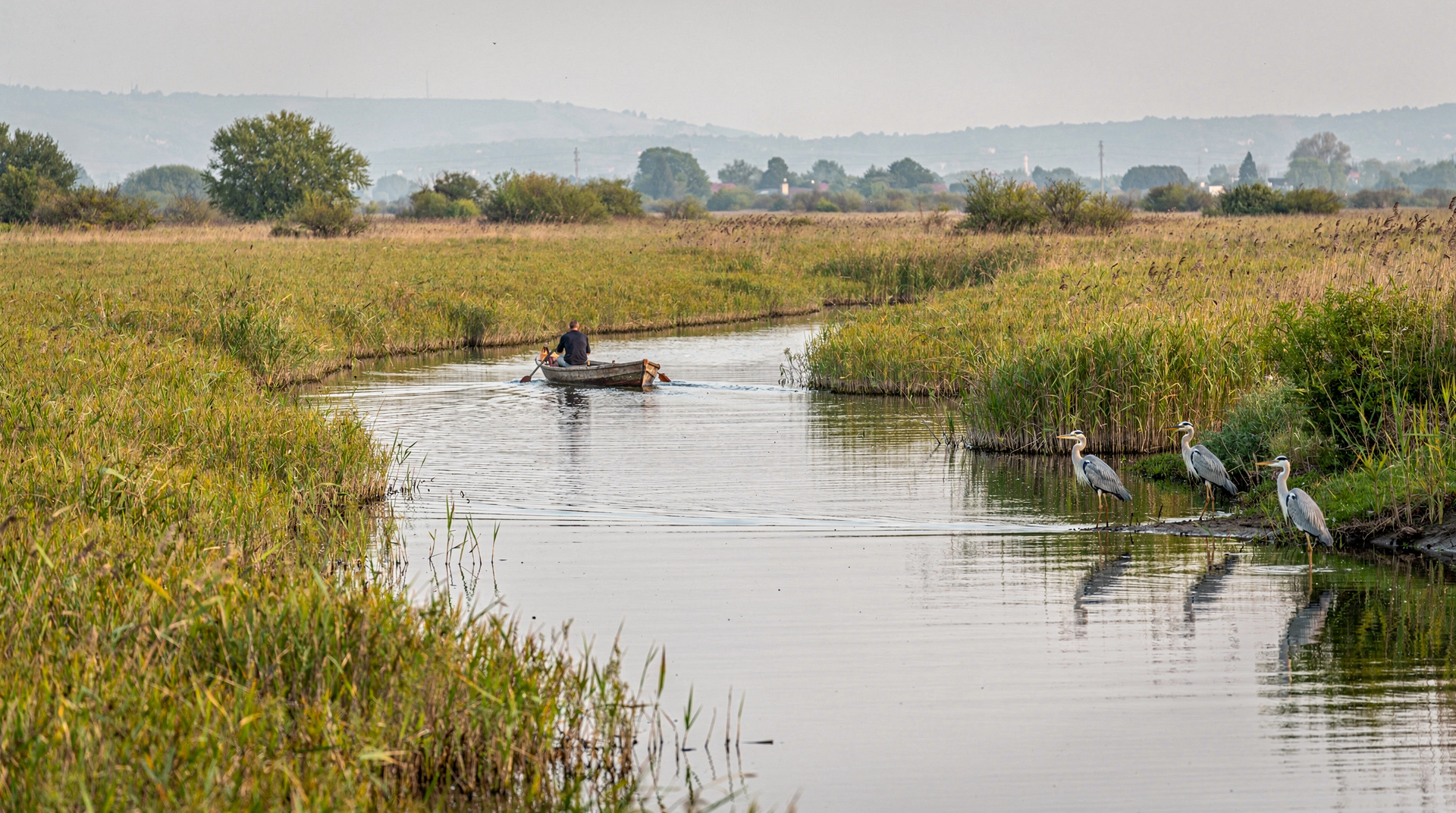
The springs create a shallow lake-like area of exceptional clarity before narrowing into the river channel proper. The gravel bed is visible in detail through 2-3 metres of water. Swans (both mute and occasionally whooper swans in winter) use the lake area; mallards, coots, and kingfishers are resident.
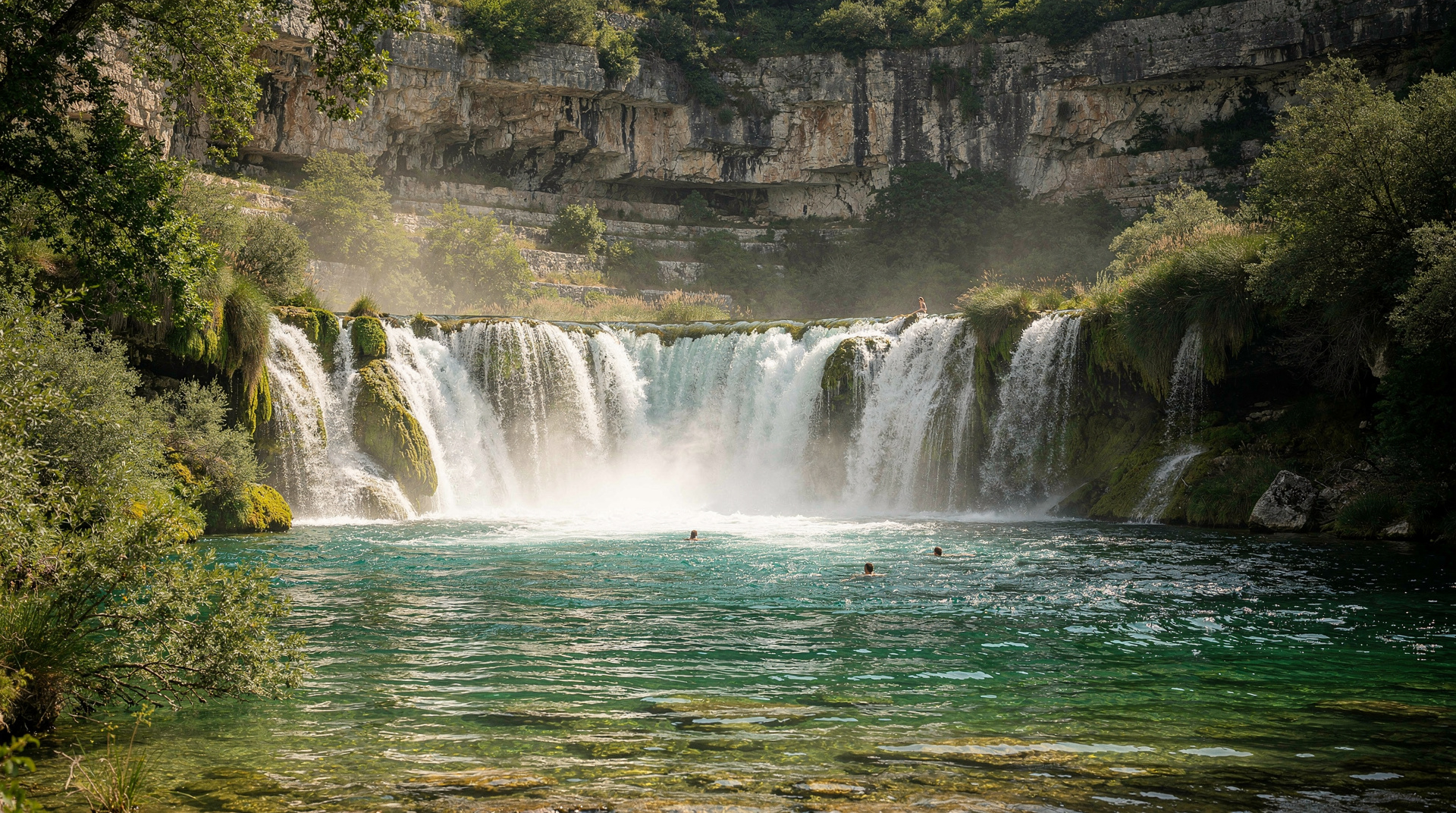
The colour shifts between crystal clear at the springs and a pale turquoise in the deeper sections — the same karst-chemistry effect seen at Kravice, Plitvice, and the Una.
The Austro-Hungarian landscape park
Vrelo Bosne was developed as a formal park during the Austro-Hungarian occupation of Bosnia (1878-1918). A 2km allee (tree-lined avenue) of horse chestnuts and limes leads from the Ilidža tram terminus to the park entrance — a typical Habsburg gesture of urban elegance applied to a provincial outpost.
Within the park, paths are laid out in the English landscape style: informal, curving, designed to reveal the springs and river from multiple angles. Old mill buildings (now converted to restaurants or left as photogenic ruins) punctuate the river bank. The Habsburg-era character is well preserved; Vrelo Bosne retains a 19th-century atmosphere that few Sarajevo suburbs share.
The fiaker carriage
The traditional way to travel the avenue between Ilidža and the park is by fiaker — a horse-drawn open carriage of the type that once served as taxis in Vienna, Budapest, and Sarajevo. Several fiaker operators line up near the Ilidža tram stop, offering the 2km journey each way for around 15-20 BAM per carriage (typically holds 4-5 people).
The ride takes 15 minutes and arrives at the park entrance alongside the Habsburg fountain. It is not the fastest way to travel — you can walk it in 25 minutes — but it is significantly more enjoyable, particularly on a warm afternoon in spring or autumn.
A guided tour from central Sarajevo
The Vrelo Bosne private tour from Sarajevo includes transport from the city centre, a guided walk through the park, and time at the springs. It is the most convenient option for those without interest in navigating the tram system, and the guide provides context on the springs’ geology, the Habsburg history, and the local ecology.
Duration: approximately 3 hours including transport. Suitable for all ages.
What to do at Vrelo Bosne
Walking the spring area (45-60 minutes)
The main path circles the spring lake and follows the river bank downstream for about 1km. Side paths reach quieter areas with good birdwatching and better views of the mountain backdrop. The entire circuit is flat and easy.
Picnic by the river
The grass banks of the Bosna immediately downstream from the springs are a popular picnic spot for Sarajevo families, particularly on weekends. In May-June the meadows are full of wildflowers. Bring food from Ilidža’s market or from Sarajevo; there is a café at the park entrance.
Visit the old mills
Two surviving watermill buildings near the springs — the Rimski Most (Roman Bridge) area has the most intact — are pleasant heritage stops. The Roman-era bridge itself is a small arched structure over a mill channel, probably rebuilt in the medieval period.
Birdwatching
Resident species: kingfisher, grey wagtail, dipper (on the fast-flowing mill channels), mallard, coot, moorhen. In winter, the lake and lower river sections attract additional ducks and occasional diving birds. Binoculars are useful but not essential.
Combining with Ilidža and surroundings
Ilidža has its own mild spa history — thermal springs (at a different temperature from Vrelo Bosne’s cold springs) were used by Romans and later by the Austro-Hungarian army. The Hotel Austria (1895, now a modern hotel) marks the main spa area. A thermal spa and wellness centre operates nearby.
The mountain above Ilidža — Igman — hosted the 1984 Olympic cross-country skiing and biathlon events. In summer, a drive up Igman road passes through forest to high meadows with views back over Sarajevo. See the Bjelašnica hiking guide for the trails.
Reading the landscape as you walk
Vrelo Bosne rewards a slow pace. The first thing most visitors notice is the sound: moving water on every side, wind in the willows, and birds that have no reason to hurry. Stop at the first bridge or viewing point and simply watch the water. You can see the gravel bed, the green weed streaming in the current, and the places where fresh water wells up from below. These are the springs themselves, and they are the reason the park exists.
Because the water comes out of the mountain already clear and cold, the area looks different with the light. On an overcast morning the lake is a soft grey-green and the swans stand out sharply. On a bright afternoon the surface turns turquoise and the reflections of the trees double the sense of depth. Photographers tend to prefer the early hours, when the park is quiet and the mist can still hang over the water.
The geology explains much of what you see. Igman is a karst massif, which means rain and snowmelt disappear underground and travel through the limestone before returning to daylight as springs. That is why Vrelo Bosne feels so abundant compared with an ordinary stream. If you enjoy this kind of landscape, the same processes shape the Kravice waterfalls, the Una National Park and the Pliva lakes, each of which is a very different expression of the same limestone country.
Suggested pacing for a relaxed visit
A good visit has a simple shape. Start at the Ilidža tram terminus, decide whether the avenue is for walking or for the carriage, and arrive at the entrance without rushing. Take the main circuit of the spring lake first, while you are fresh, and leave the side paths for later. Those quieter trails are where birdwatchers and families with small children tend to linger.
After the circuit, a coffee at the café or a meal at a riverside restaurant is the natural pause. This is a good moment to try local trout or a plate of grilled meat, and the Bosnian food guide explains what to expect from a traditional menu. If you prefer to bring your own food, the picnic meadows downstream are the better choice. Travellers who like to understand the ritual behind a coffee break should read the Bosnian coffee culture guide before they sit down.
On the way back, walk the avenue in the opposite direction from the one you chose on arrival. If you took the carriage in, walk out, or the other way round. The two experiences are quite different, and the second one is usually the more peaceful because the day’s crowd has thinned.
Who will enjoy it most
Families. The paths are flat and the water is easy to watch, so children stay entertained without much effort. The family activities guide and the broader Bosnia with kids guide list other outings of a similar gentle kind.
Slow travellers and photographers. The park suits anyone who wants a day with no fixed agenda. The old mills, the avenue and the lake each give a different kind of picture.
Visitors who need a pause from heavy history. Sarajevo is intense. After the Sarajevo siege and Tunnel of Hope or the Sarajevo war tour, a few hours among trees and water can be a welcome counterweight. It is a different Sarajevo, one shaped by the Habsburg era rather than by conflict. The Austro-Hungarian Sarajevo guide places the park in that wider story.
Hikers. The park itself is an easy stroll, but it sits at the foot of a mountain with real trails. Those who want more effort can look at the best day hikes from Sarajevo and the Bjelašnica and Igman destination page.
Seasons at the springs
In spring the park is green and full of birds, and the meadows start to fill with flowers. In early summer it is the most inviting, with shade under the old trees and cool air coming off the water. Late summer can be crowded at weekends, so a weekday visit is kinder. In autumn the chestnuts and poplars change colour, and the light is low and gold, which many people consider the best time of all. The Bosnia in autumn guide and the Bosnia in spring guide say more about what the season brings elsewhere in the country.
Winter is quiet. The springs keep flowing at a steady temperature, so the park does not freeze over in the way that a pond would, and the water often looks warmer than the air. Visitors who come in the cold months should dress for damp ground. The Sarajevo in winter guide is a good companion if your trip falls then.
Getting around Sarajevo on the way
The tram to Ilidža is part of the experience, since it crosses the city and gives a view of the changing neighbourhoods from the old centre to the suburbs. For the full picture of fares, lines and habits, read the Sarajevo public transport guide. If you arrive by air, the Sarajevo airport guide is useful because Ilidža lies on the side of the city closest to the airport, which makes the park a convenient first or last stop of a trip. For wider journeys, the getting around Bosnia guide covers buses, trains and cars.
Respecting the park
Vrelo Bosne is a protected, much-loved place, and a few habits keep it that way. Stay on the marked paths, keep a polite distance from the swans and their young, and do not feed the birds with bread, which is bad for them. Take your rubbish with you or use the bins near the entrance. Keep noise low near the lake, since the quiet is a large part of the appeal for the Sarajevo families who come here every week.
If you are travelling through the wider region, a visit here fits naturally into a longer plan. The Sarajevo 4-day deep dive and the Bosnia 7-day itinerary both leave room for a gentle half-day like this one, and the how many days in Bosnia guide helps you decide how much slack to build in. For a broader look at Sarajevo’s surroundings, see the best day trips from Sarajevo and the Sarajevo destination page.
Practical notes
- Tram: Line 3 from Maršala Tita (city centre) to Ilidža terminus — approximately 30 minutes, 2.20 BAM per journey
- Walk or fiaker from terminus: 25 minutes on foot or 15 minutes by carriage along the avenue
- Park entry: free (donations welcome during peak season)
- Best season: April-June (wildflowers, cygnets, gentle temperatures) and September-October (autumn colour). July-August is busy on weekends; arrive early.
- Restaurants: several riverside restaurants in the park serve traditional Bosnian food and local trout. Prices: 20-40 BAM for a full meal.
- Parking: available at the Ilidža end of the avenue for visitors arriving by car
For more of the Sarajevo region’s natural scenery, the Bosnia travel guide has the overview. For the mountains above the city, the Bjelašnica hiking guide covers the Olympic-era trails.
Why the park matters to Sarajevans
For people who live in the city, Vrelo Bosne is less a tourist sight than a shared backyard. Weekend walks, school outings, wedding photographs and long family lunches all happen here. Visiting on a quiet weekday gives you the park as a traveller; visiting on a pleasant weekend shows you how locals use it, with blankets on the grass, children by the water and older couples walking the avenue at an unhurried pace. Either way, you are seeing a living part of Sarajevo rather than a museum, which is exactly the kind of authentic detail this guide aims to point you toward. The Sarajevo meeting of cultures guide offers more of that everyday context.
Fitting Vrelo Bosne into a Sarajevo stay
Vrelo Bosne works best as a half-day break from the denser sightseeing in the old town. Pair a morning in Baščaršija, perhaps on a guided walk through the old town with a local, with an afternoon at the springs. If you would rather stay in nature for longer, a day out to a cave and nature park outside the city is a natural next step. Or add it to a longer stay alongside the Sarajevo museums and a ride up the Trebević cable car. Families weighing up a full itinerary should also see the dedicated Sarajevo with family guide for other outings that suit children. Travellers deciding where to base themselves in the city can check the Sarajevo where to stay guide — central old-town locations keep the tram to Ilidža within easy reach.
Frequently asked questions about Vrelo Bosne
How do I get to Vrelo Bosne from Sarajevo?
What is the fiaker carriage at Vrelo Bosne?
Is Vrelo Bosne free to enter?
How long does a visit to Vrelo Bosne take?
Is Vrelo Bosne suitable for families with children?
Can I combine Vrelo Bosne with other Sarajevo sights in one day?
Is Vrelo Bosne worth visiting if I'm short on time in Sarajevo?
Top experiences
Bookable activities with verified prices and instant confirmation on GetYourGuide.