Jahorina vs Bjelašnica — which ski resort near Sarajevo?
Sarajevo: 4 Olympic Mountains 4x4 Tour with Cable Car Ride
Which is better — Jahorina or Bjelašnica?
Jahorina for more variety, better infrastructure and livelier atmosphere. Bjelašnica for quieter slopes, lower prices, a more authentic mountain feel and excellent beginner terrain. Both are under an hour from Sarajevo and dramatically cheaper than Alpine resorts.
Both Jahorina and Bjelašnica hosted the 1984 Sarajevo Winter Olympics. Both are genuinely good ski resorts. And both are dramatically cheaper than their Western European counterparts. But they have meaningfully different characters, and choosing between them (or deciding how to split time between them) can make a difference to your ski trip.
| At a glance | |
|---|---|
| Where | Jahorina 25 km east of Sarajevo (Republika Srpska); Bjelašnica 30 km southwest (Federation) |
| Cost | Day pass around 35-55 BAM (Jahorina) / 25-45 BAM (Bjelašnica); currency is the convertible mark (BAM/KM), not euros |
| Time needed | A full ski day (around 6-7 hours on the slopes) per resort |
| Getting there | Car, ski bus from Sarajevo centre, or taxi (around 30-60 BAM each way) |
| Best time | January-February for reliable snow; avoid Bosnian school holiday weeks if you want quieter slopes |
The 1984 Olympics context
When Sarajevo won the bid for the 1984 Winter Olympics, neither resort had the infrastructure to host international competition. The games triggered a wave of investment: new cable cars, improved access roads, international-standard facilities and global attention.
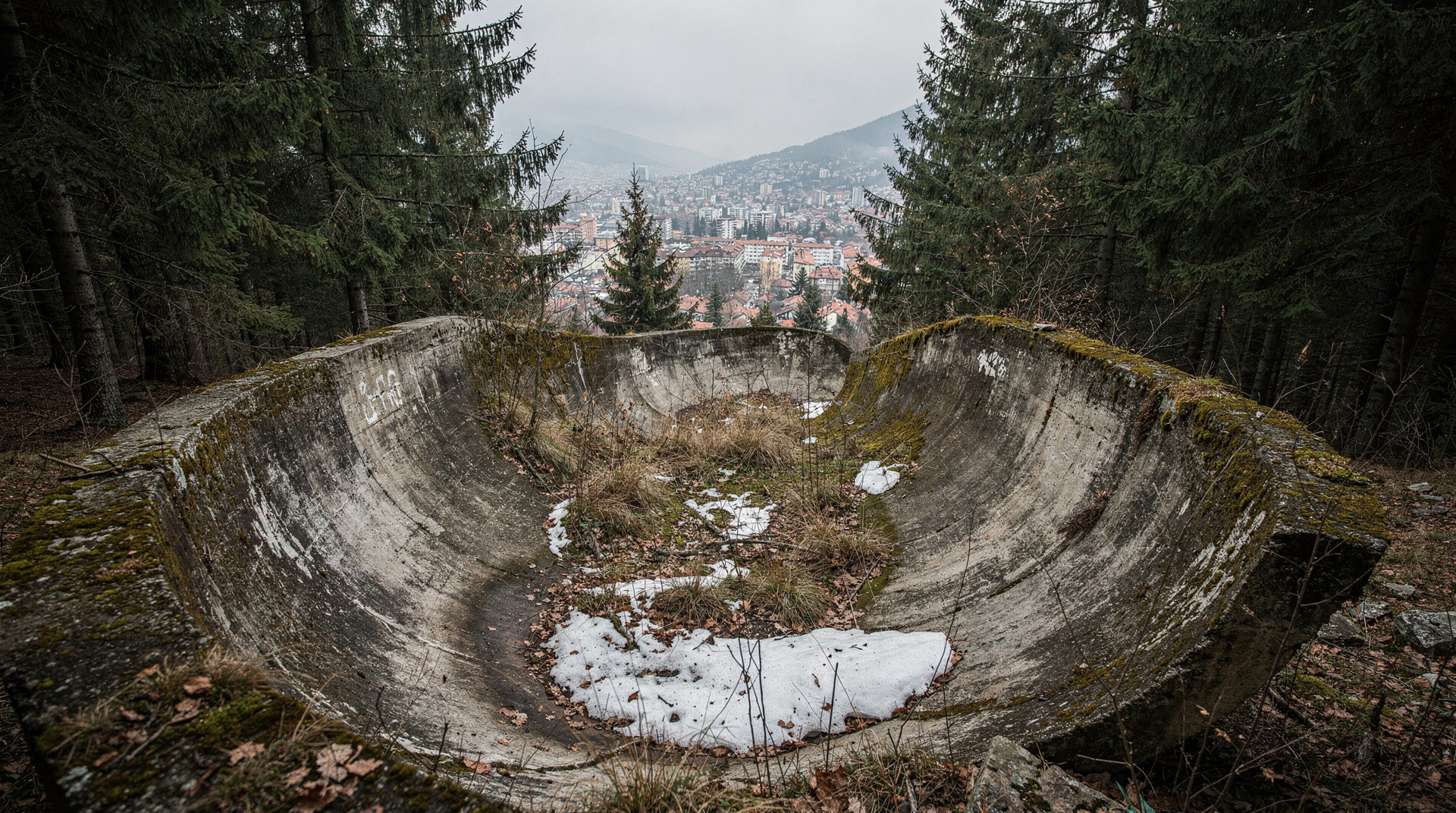
The tragic war that followed (1992-1995) left marks on both mountains. Bjelašnica was on the front line; the plateau shows traces of military fortifications if you know where to look. Jahorina, in what became Republika Srpska, also saw heavy fighting. Both resorts were substantially rebuilt in the post-war decades.
Today, the Olympics connection is a source of genuine civic pride. The 1984 Winter Olympics guide tells the full story.
Sarajevo: 4 Olympic Mountains 4x4 tour with cable carJahorina in detail
Location: Republika Srpska entity, 25 km east of Sarajevo
Base altitude: ~1,400 m
Peak altitude: ~1,916 m (Milišići peak)
Vertical drop: ~500 m on main runs
Piste distance: approximately 40 km
Lifts: 10+ (combination of chair lifts and surface lifts)
Season: December–March (best January–February)
What Jahorina does well
Terrain variety: With roughly twice the piste distance of Bjelašnica, Jahorina has more to offer on longer stays. There are good beginner runs at the base, long intermediate cruisers and some steeper advanced terrain (notably around the Olympic runs).
Lift infrastructure: More modern lifts than Bjelašnica, including proper chair lifts on the main runs. Reduced queuing time on most days compared to the older surface lifts at Bjelašnica.
Atmosphere and après-ski: Jahorina has a more developed mountain village atmosphere with multiple restaurants, bars and hotels at the base. Weekend evenings are lively.
Accommodation range: Multiple hotels and guesthouses at the base and nearby. Better choice than Bjelašnica for staying on the mountain.
Jahorina’s limitations
- More crowded at weekends than Bjelašnica
- Slightly higher prices (lift passes, food, accommodation)
- Being in Republika Srpska, the administrative entity can feel different for visitors familiar with Sarajevo’s Federation-side culture
Ski pass prices at Jahorina
Approximately 35-55 BAM per day (€18-28). Multi-day passes available with savings of 10-15%. Prices increase during school holiday periods.
Bjelašnica in detail
Location: Federation of Bosnia and Herzegovina, 30 km southwest of Sarajevo
Base altitude: ~1,500 m
Peak altitude: ~2,067 m (Bjelašnica summit)
Vertical drop: ~450 m on main runs
Piste distance: approximately 20 km
Lifts: 6-8 (combination of chair lifts and surface lifts)
Season: December–March
What Bjelašnica does well
Altitude and snow reliability: At 2,067 m, Bjelašnica’s summit is higher than Jahorina. Upper runs tend to hold snow well even in lower-snowfall winters.
Beginner terrain: The base area has excellent gentle runs for beginners. The smaller scale of the resort makes it less intimidating for novices.
Price: Lift passes are generally 5-15 BAM cheaper than Jahorina. Mountain restaurants are also slightly cheaper.
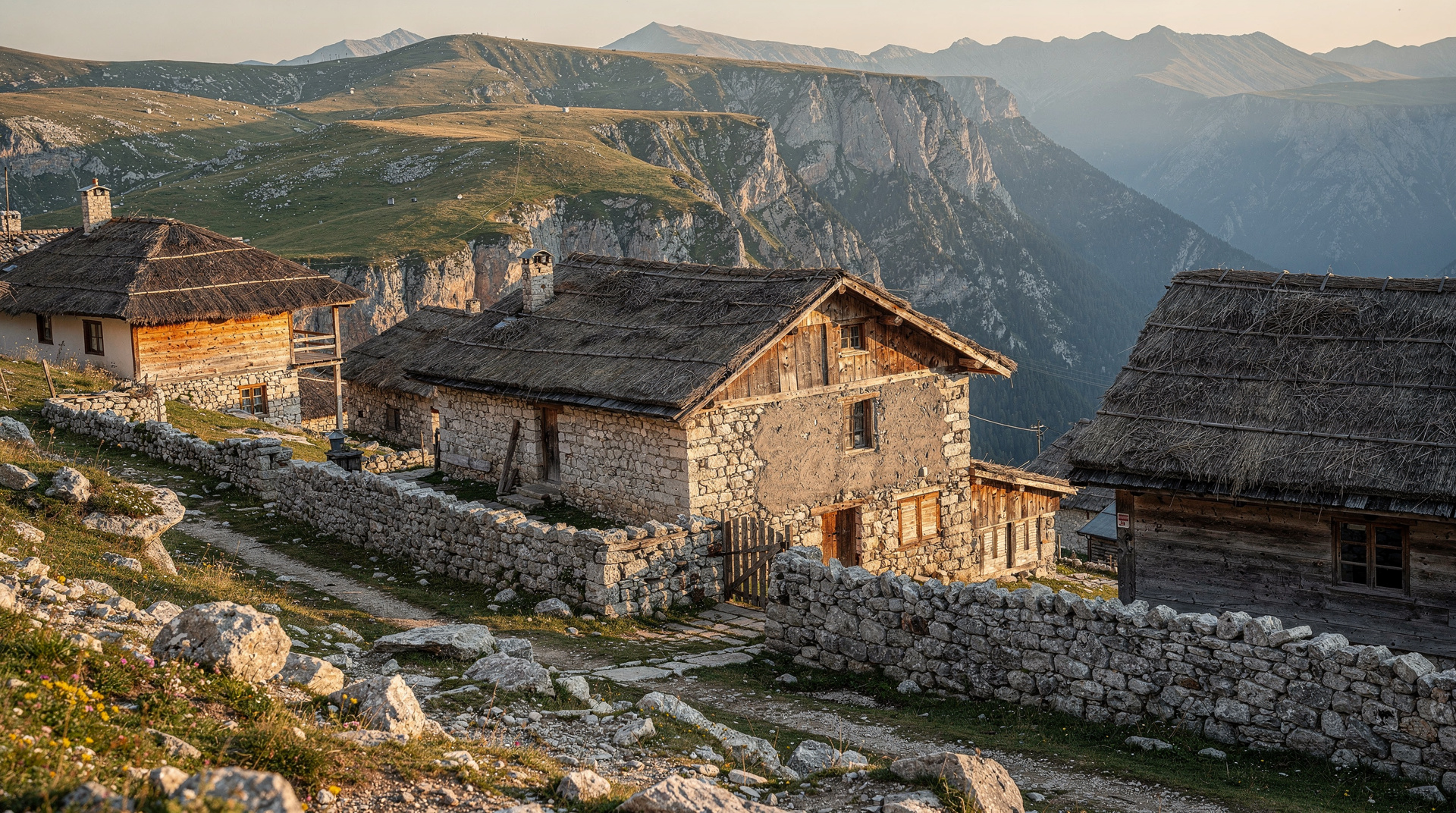
Atmosphere: Quieter and more authentic. Bjelašnica attracts more serious mountain enthusiasts and fewer weekend-party skiers. The surrounding landscape — the high Bjelašnica plateau, the village of Umoljani, the Lukomir medieval village nearby — is extraordinary.
Cross-country skiing: The Bjelašnica-Igman area has a Nordic skiing tradition from the 1984 Olympics. Cross-country trails across the plateau are maintained in winter.
Mountain scenery: Many visitors rate the views from Bjelašnica’s upper lifts as more dramatic than Jahorina’s. The plateau’s open character and the view to Prenj and Treskavica mountains are impressive.
Bjelašnica’s limitations
- Fewer runs than Jahorina — intermediate and advanced skiers may tire after 2-3 days
- Older lift infrastructure at some runs (surface lifts on parts of the mountain)
- Less après-ski choice
- Access road can be icy in early season — ensure you have winter tyres
Ski pass prices at Bjelašnica
Approximately 25-45 BAM per day (€13-23). Generally 10-15 BAM cheaper than Jahorina for equivalent passes.
Side-by-side comparison
| Feature | Jahorina | Bjelašnica |
|---|---|---|
| Piste distance | ~40 km | ~20 km |
| Summit altitude | 1,916 m | 2,067 m |
| Vertical drop | ~500 m | ~450 m |
| Lift count | 10+ | 6-8 |
| Lift modernity | Better | Improving |
| Day pass price | 35-55 BAM | 25-45 BAM |
| Beginner terrain | Good | Better |
| Advanced terrain | More | Less |
| Après-ski | Better | Limited |
| Weekend crowds | More | Fewer |
| Cross-country skiing | Limited | Good |
| Distance from Sarajevo | 25 km / 35-45 min | 30 km / 40-50 min |
Getting to each resort from Sarajevo
By car: The most flexible option. Roads to both resorts are paved (mountain access roads, treated in winter). Winter tyres mandatory and essential. Parking available at both resort bases, typically free.
Ski bus: Both resorts run ski buses from Sarajevo city centre in winter. Schedules and prices vary by season — check with the resort or Sarajevo tourist information before arrival. Buses typically depart early morning and return evening.
Taxi: From central Sarajevo approximately 30-60 BAM each way, depending on traffic. Arrange return pickup if going by taxi.
Guided tour: Several Sarajevo-based operators run ski day tours that include transport, lift pass and sometimes instruction. More expensive than going independently but convenient.
Who should choose which resort
Choose Jahorina if you:
- Ski 3+ days and want terrain variety
- Are an intermediate or advanced skier
- Want a lively après-ski scene
- Are skiing with a mixed group (some better, some beginner) — the base areas suit beginners while expert terrain is available higher
Choose Bjelašnica if you:
- Are a beginner or early-intermediate skier
- Want a quieter, more authentic mountain atmosphere
- Are interested in cross-country skiing or snowshoeing
- Want to combine skiing with a visit to nearby mountain villages (Umoljani, Lukomir area)
- Are on a tighter budget
Choose both if you:
- Have 4+ nights based in Sarajevo
- Want to compare the two resorts
- Are combining skiing with Sarajevo city exploration
Non-skiing winter activities at each resort
Jahorina: Snowshoeing, snowmobile tours, horse-drawn carriage rides, sledging area. The resort has developed its summer activities (hiking, mountain biking) so infrastructure exists year-round.
Bjelašnica: Cross-country skiing on marked plateau trails, snowshoeing, winter photography (extraordinary plateau landscapes). The Bjelašnica hiking guide covers summer options that give context for the mountain character.
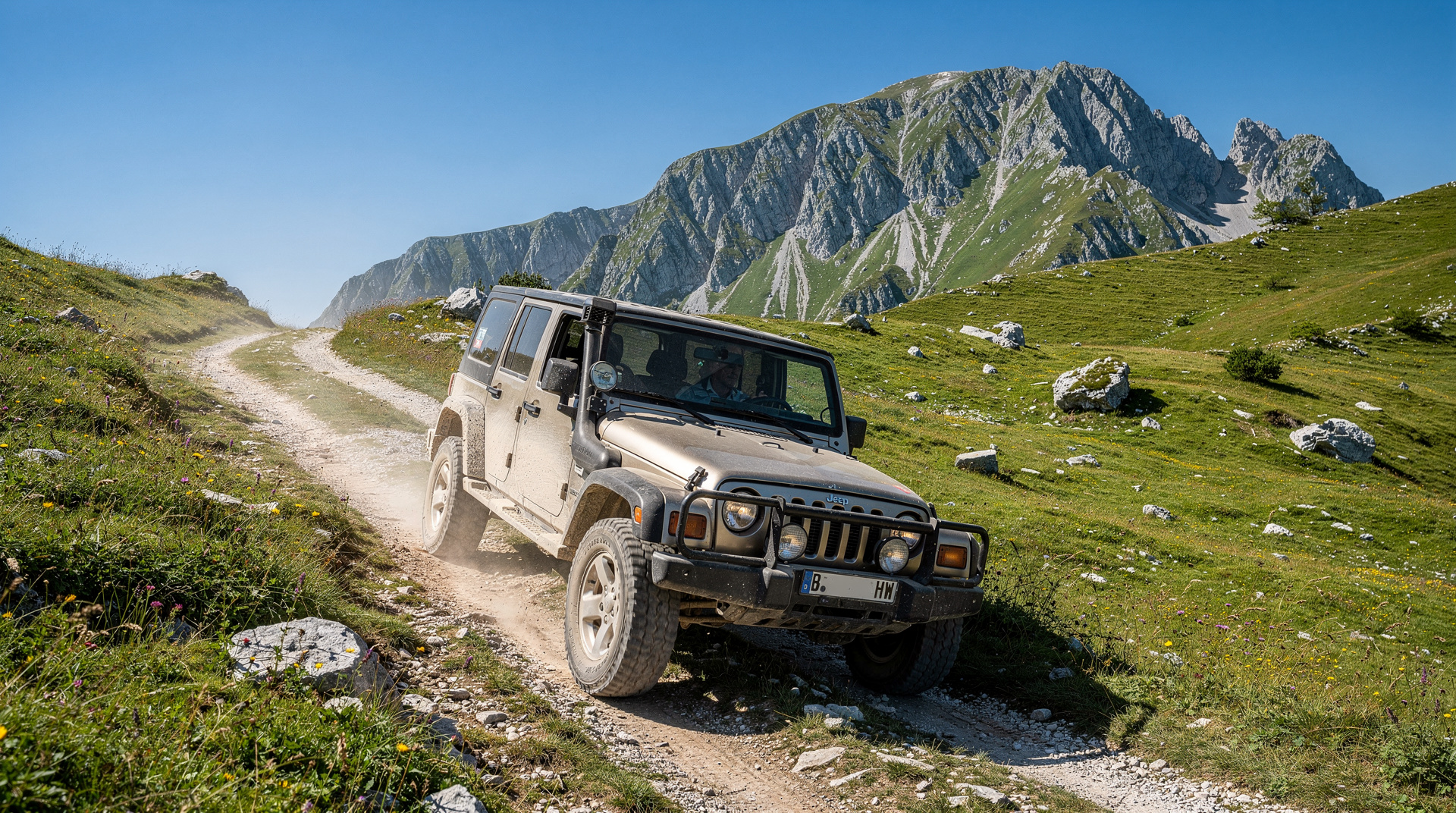
If you would rather see the plateau and the highland villages without skis, a guided outing such as a quad ride across the Bjelašnica plateau to Lukomir village is a good way to experience the same landscape. Our 4x4 and quad tours guide explains how these outings work and what to expect from the conditions.
Frequently asked questions about Jahorina vs Bjelašnica
Is there a combined lift pass for both resorts?
No. As of 2026, the two resorts are managed separately and there is no combined pass. You pay for each resort individually.
Can I walk between the two resorts?
Not in winter — they are on different mountains with different approach roads. In summer, the Via Dinarica trail connects the Bjelašnica plateau with other highland areas, but direct summer trekking from Bjelašnica to Jahorina requires knowledge of the route.
Which resort has better ski school for children?
Bjelašnica is often recommended for children due to gentler beginner terrain. Jahorina has a larger ski school with more English-speaking instructors. Both have designated children’s areas.
What is the snow quality like?
Both resorts receive predominantly dry, cold continental snow rather than wet Atlantic snow. Powder days are possible after snowfall. Neither resort is in a “guaranteed powder” zone — prepare for a mix of groomed piste and occasional fresh conditions.
Do I need to book lift passes in advance?
Not for standard season (outside school holidays). During February and March school holidays (Bosnian, Serbian, and regional schools) the resorts get very busy — buy passes online if available, or arrive early to avoid queues.
How to plan your days on the snow
The simplest way to choose is to start from how many days you have and who is travelling with you. On a single day, the decision matters less than the weather and the crowds: pick the resort whose access road looks clearer that morning, start early, and aim to be on the first lifts. On two or three days, Jahorina gives you enough variety that you will not repeat the same runs, while Bjelašnica rewards a slower pace, with long lunches and time spent simply looking at the plateau.
If your group has mixed abilities, think about where everyone will meet for lunch rather than where everyone will ski. A base area with a good terrace and a short walk from the rental shop makes the day easier for beginners and for anyone who prefers to take a break. Jahorina’s larger village makes this easy; at Bjelašnica the smaller scale means you will rarely lose each other.
Start each ski day with a plan for the return as well. Mountain roads are slower at the end of the afternoon, particularly at weekends when day-trippers head back to the city together, so leaving a little earlier than you think you need to is a cheap way to avoid a long drive in fading light. If you are relying on a ski bus or a taxi, confirm the return arrangement before you start skiing rather than after.
Combining skiing with Sarajevo
One of the real advantages of both resorts is that you can sleep in the city and still ski. That means you can spend your mornings on the mountain and your evenings in the old town, eating and wandering at an easy pace. The Baščaršija guide is a good starting point for an evening after a ski day, and the Sarajevo food tour guide will help you find a proper meal once your legs have had enough. If you want somewhere to base yourself, the Sarajevo where to stay guide covers the neighbourhoods that work best for early departures.
Travelling in winter also changes how you get around. The Sarajevo public transport guide is useful for reaching the departure point of a ski bus, and the driving in Bosnia guide covers what to expect if you rent a car for the mountain roads. For a wider picture of the area around the capital, the Bjelašnica and Igman destination page gives the mountain context, and the Sarajevo destination page pulls the city side together. On a rest day between ski days, a full-day guided tour of the city’s highlights lets you see the main sights without planning every stop yourself, and the museums of Sarajevo guide offers indoor options if the weather is poor.
If you are building a longer trip around a ski stay, the Sarajevo 4-day deep dive shows how to fit city sights around a day or two on the mountain, and the Bosnia best time to visit guide helps you decide whether winter is really the right season for the rest of your route.
What the two mountains feel like
Beyond the numbers, the two resorts leave a different impression. Jahorina feels like a resort in the traditional sense: a village, a choice of places to eat, music in the evening, and a steady flow of people moving between lifts. It suits travellers who want to be part of a scene and who like having options when the weather turns.
Bjelašnica feels more like a mountain that happens to have lifts. The open plateau, the long views and the quiet between runs are what people remember. It suits travellers who care more about the landscape than the nightlife, and who like the idea of pairing a ski day with a walk in the snow or a look at the traditional villages nearby.
Neither choice is wrong. The honest answer is that the best resort is the one that matches your pace, and that a second visit on another day often tells you more than any comparison table can.
Equipment rental and lessons
Both resorts have rental shops at the base offering skis, boots, poles and snowboards, typically 20-30 BAM per day for a full ski set. Bring your own gloves, goggles and thermal layers — rental shops rarely stock these. Ski school lessons (group or private) can usually be booked on the day at the base, though weekends and school holidays get busy and pre-booking through your accommodation or a Sarajevo-based operator is safer. If you would rather not rent twice, pick the resort you will spend most days at and stick with the same rental shop for a loyalty discount, common at both.
Outside the ski season, both mountains switch to hiking and mountain biking terrain — the Bjelašnica hiking guide covers the summer routes, and the wider skiing in Bosnia guide compares Jahorina and Bjelašnica with Bosnia’s smaller ski areas.
Top experiences
Bookable activities with verified prices and instant confirmation on GetYourGuide.