Jajce watermills and Pliva lakes guide
From Sarajevo: Travnik, Jajce, Pliva Lakes & Watermills Trip
What are the Pliva watermills near Jajce?
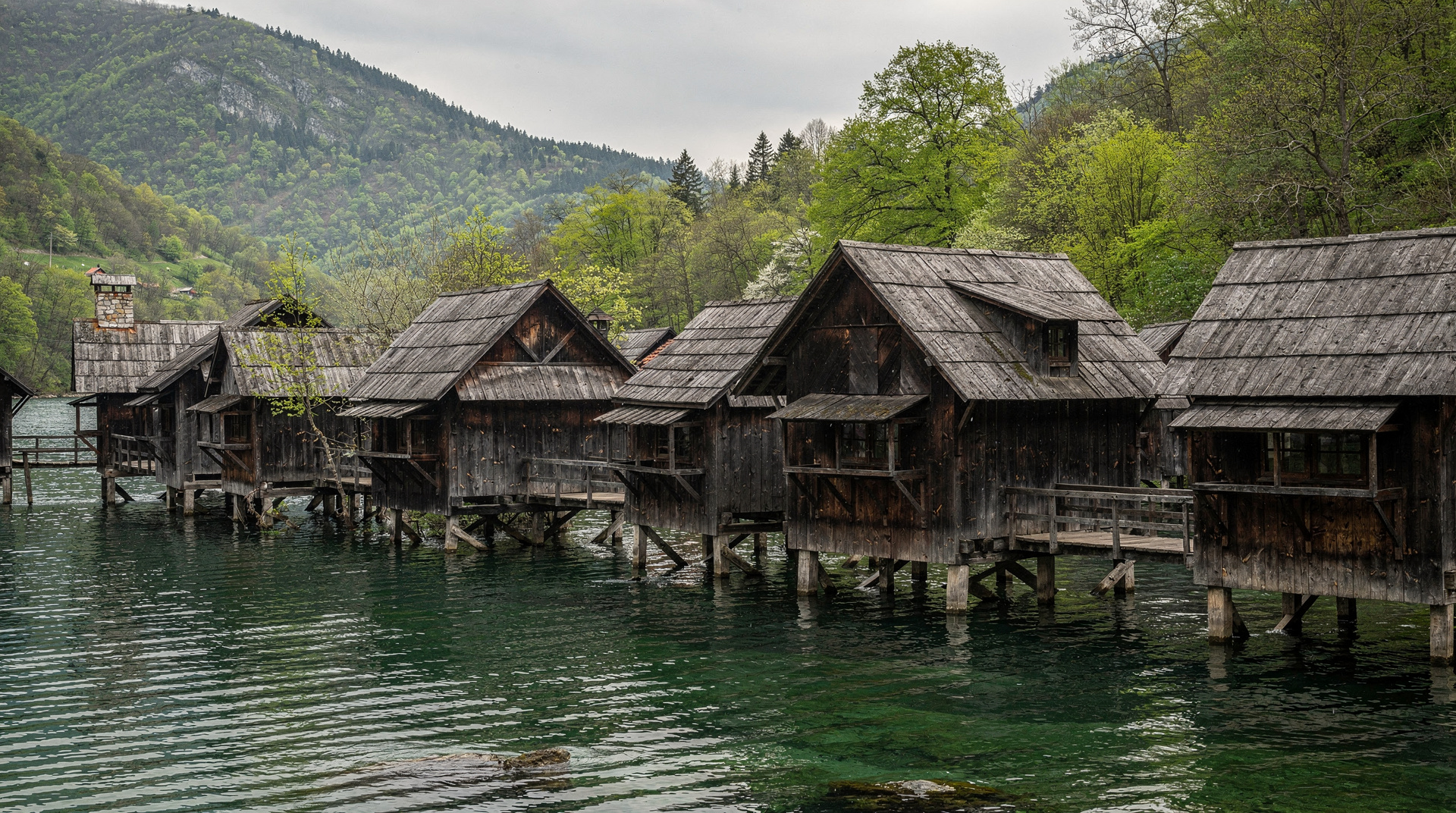
The Pliva watermills are a cluster of approximately 17 traditional wooden watermills built on a narrow channel between the two Pliva lakes (Gornje and Donje Plivsko jezero) near Jajce in central Bosnia. Dating from the Ottoman period and in use until the 20th century, the mills are one of Bosnia's most photographed scenes — wooden buildings on stilts over clear water, reflected in the lake.
The cluster of wooden watermills at the Pliva lakes near Jajce has appeared on more postcards of Bosnia than almost anything except Stari Most. They are genuinely photogenic — small wooden buildings on stilts over clear, still water, their reflections doubled in the lake surface, the surrounding hillsides green in spring and gold in autumn. They are also historically significant: a surviving ensemble of Ottoman-era milling technology maintained in its original setting.
| At a glance | |
|---|---|
| Where | 3-4 km north of Jajce town centre, off the road towards Banja Luka |
| Cost | Generally free access; small parking charge possible (around 2 BAM) |
| Time needed | About an hour, more with photography or a lakeside lunch |
| Getting there | Car (5 min) or taxi (5-8 BAM) from Jajce; a riverside walk takes 45-60 minutes |
| Best time | April-June for green scenery and high water; September-October for autumn colour |
What are the Pliva watermills?
The Pliva watermills (Plivska mliništa in Bosnian) are a group of approximately 17 small wooden structures built on the Pliva river at the point where the upper Pliva lake (Gornje Plivsko jezero) drains into the lower lake (Donje Plivsko jezero) through a narrow channel. The mills were built to grind grain — wheat, rye and corn — using the water pressure from the channel drop between the two lakes.
The style of construction is traditional for the Ottoman-period Balkans: wooden frame buildings on stone or wooden piles, with a wheel beneath the floor driven by the current. Inside, the mechanism was simple: a horizontal water wheel drove a millstone directly, without a complex gear system. The buildings are low and compact; some have a small window in the wooden walls, others are entirely enclosed.
Most mills were built in the Ottoman period (16th-18th centuries) and were in regular use until electrification and industrial milling replaced them in the 20th century. A few continued seasonal operation into the 1980s.
Photography and the best views
The classic view of the Pliva watermills is taken from the southern bank of the channel between the two lakes, looking north-east with the mills arranged in a row against the water. Early morning light is best — the reflection in the still water is most vivid before wind picks up. Late afternoon gives warm light on the western-facing mill walls.
The mills are most photogenic in spring (April-May) when the surrounding hills are intensely green and the water level is high, and in autumn (September-October) when the foliage turns. Summer brings haze and midday light that flattens the image; the site is also busier with day-trippers from Sarajevo and tour groups.
A day tour from Sarajevo covering Travnik, Jajce, Pliva Lakes and the watermills is the most efficient way to cover the complete central Bosnia circuit in one day with a guide.
The Pliva lakes
The two lakes — Gornje (upper, about 2.7 km long) and Donje (lower, about 0.8 km) — are artificial reservoirs formed by glacial and karst processes over millennia, dammed by natural travertine barriers. The water is extraordinarily clear, a bright turquoise-green fed by springs from the surrounding limestone hills.
The upper lake is ringed by a dirt road and accessible by car or bicycle (bikes can be hired locally). Fishing is a major local activity; pike, perch and carp are taken from both lakes. The road around the upper lake passes several small cafes and holiday houses. In summer, local families use the banks as informal beaches.
The lower lake is smaller and more immediately adjacent to the mills. The short connecting channel between the two lakes is where the water pressure that drove the mills is greatest.
The Pliva waterfall in Jajce town
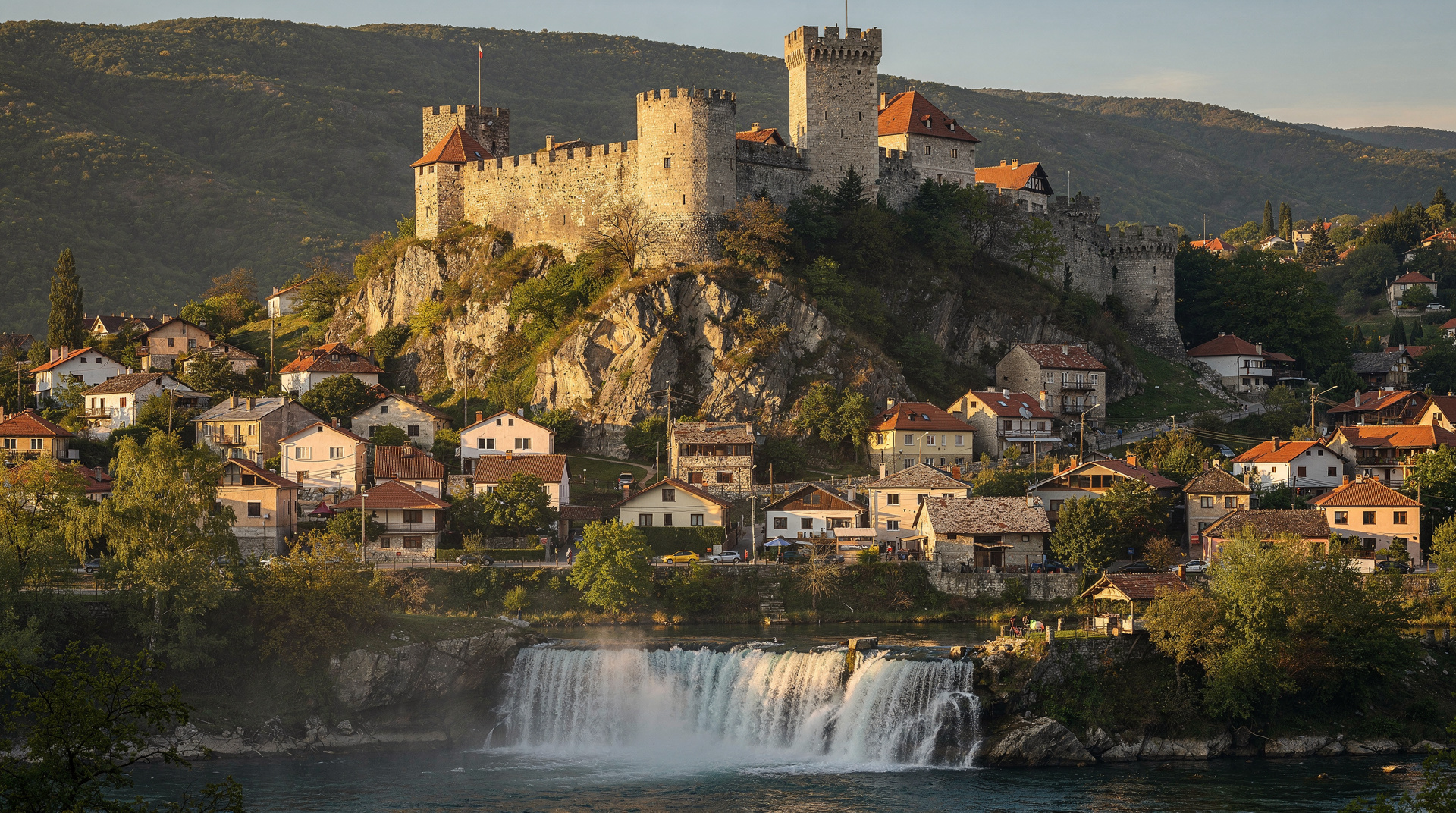
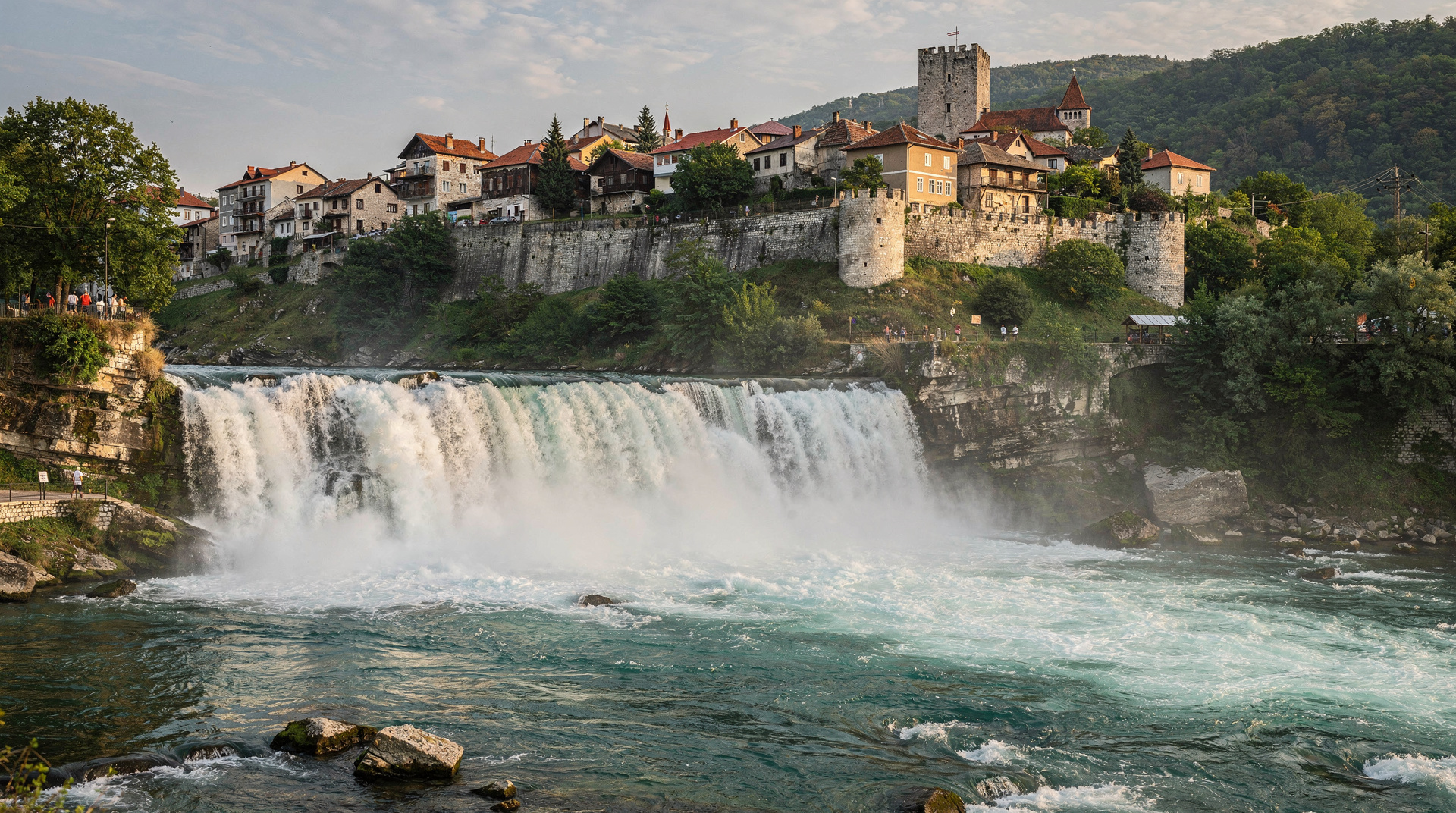
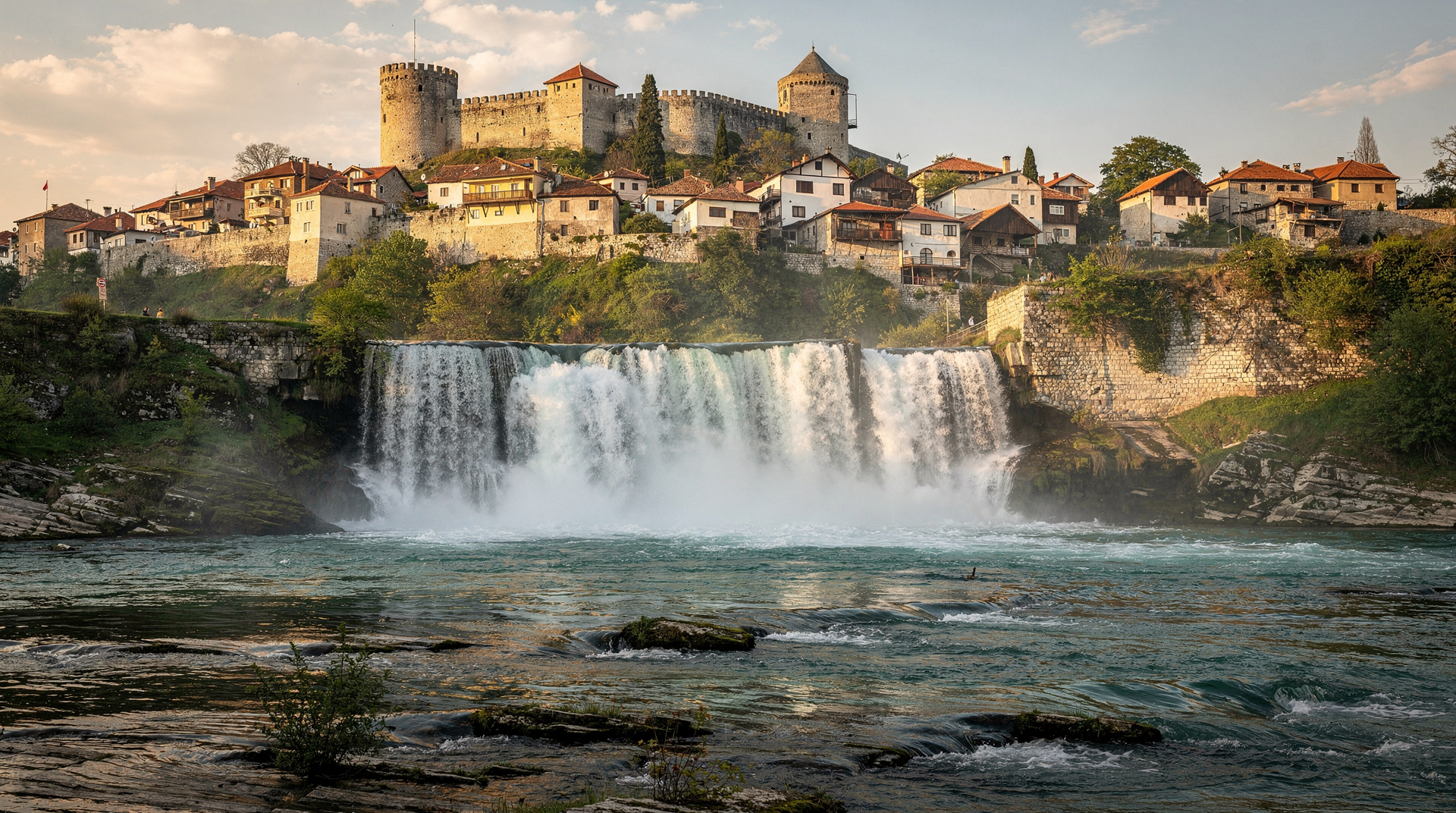
Three to four kilometres downstream from the lakes, the Pliva river enters the town of Jajce and drops approximately 17-20 metres in the Pliva waterfall (Plivski vodopad) before joining the Vrbas. The mills, the lakes and the waterfall form a single hydrological system and can be visited as a circuit.
The Jajce fortress guide covers the fortress and the town waterfall together; the Pliva waterfall guide focuses on the falls in detail.
How the mills worked, and why they matter
It helps to picture the place as a working landscape rather than a backdrop. Farmers brought grain here, waited while the stone turned, and left with flour. The channel between the two lakes was the engine of the whole operation: the faster water at the drop turned the wheel beneath each little building, and the miller only had to manage the flow. Standing on the bank today, you can still read that logic in the layout, with the mills strung along the moving water rather than scattered around the shore.
That is also why the ensemble feels coherent. Nothing was built for visitors; everything was built for the river. If you have already walked the old quarters of Travnik or seen the layers of history in Jajce, the mills add a humbler chapter to the same story, the everyday economy that fed the towns. The Ottoman heritage guide places these buildings in that wider picture.
Choosing the right season
The mills change character through the year, and the choice shapes the whole visit. Spring is the classic: green hills, high water and a lively sound from the channel. Autumn is quieter and warmer in tone, with colour on the slopes and softer crowds. Our guides to Bosnia in spring and Bosnia in autumn explain what else is at its best in those months, and the best time to visit Bosnia guide helps if your dates are fixed and you are weighing the trade-offs.
Summer is perfectly workable if you plan around the light and the crowds: arrive early, take your photographs, then spend the hot hours by the water or under a café awning. Winter visits are possible too, but expect a stark, quiet scene and check conditions before you set out, since the weather in the hills can turn. The Bosnia in summer guide covers how to handle the heat elsewhere on your route.
A slow walk around the lakes
If you have time, resist the urge to leave after the first photograph. A slow circuit rewards patience. Start at the channel, take in the mills from the bank, then follow the water’s edge and let the view change. The reflections shift with every few steps, and you will notice details that the postcard angle hides: the weathered timber, the moss at the waterline, the way the stilts meet the lake bed.
Bring a layer even in warm months, since the air near the water can feel cooler than the road. Sturdy shoes are sensible on the dirt tracks, which can be muddy after rain. Keep to the paths, respect private property around the holiday houses, and take your rubbish with you; the place stays beautiful because visitors treat it gently. For the bigger picture of the lakes as a destination in their own right, see the Pliva lakes destination page.
Travelling with children or less mobile companions
The site suits mixed groups better than many Bosnian attractions. The main viewpoint is short and easy to reach, there is space to wander, and children usually enjoy watching the water move under the buildings. Keep an eye on young ones near the channel and on any wooden platforms, as you would at any stretch of open water. The Bosnia with kids guide and the family activities guide have more ideas for building a day around younger travellers.
Those who prefer not to walk far can enjoy the main scene with very little effort, then pick a lakeside table for a long, unhurried meal. That is a perfectly good way to experience the place.
Reaching Jajce without stress
Most visitors arrive with a rental car or on a guided day trip, and both work well. If you are driving, the renting a car in Bosnia guide and the driving in Bosnia guide cover the practical side, and the getting around Bosnia guide compares the alternatives. If you would rather not drive mountain roads yourself, a private day trip with a guide covering Jajce and Travnik takes care of the logistics and leaves you free to enjoy the scenery. Whatever you choose, build in a little slack: mountain roads are slower than a map suggests, and the mills deserve unhurried light rather than a rushed stop at the end of the day.
Where this fits in a longer trip
Jajce works as a satisfying pause between the big-name cities and the quieter west. It slots naturally into the 7-day Bosnia itinerary and into the western Bosnia and Krajina itinerary, and a first-hand impression of the town is in our blog piece on Jajce, the royal town. If scenery is what you are collecting, the best viewpoints in Bosnia post puts the mills alongside other memorable vistas.
Combining the mills with other sites
The standard central Bosnia day trip from Sarajevo combines:
- Travnik (old town, Šarena džamija, fortress, Plava Voda spring): 2 hours
- Jajce (fortress, catacombs, AVNOJ museum, Pliva waterfall): 2-3 hours
- Pliva lakes and watermills (photography, walk, coffee): 1 hour
This requires about 8-9 hours including driving. A rental car gives maximum flexibility; organised tours from Sarajevo cover the same route with transport and a guide. The Jajce and Travnik day trip guide gives the full itinerary. Travellers who want the waterfalls built into the same day can look at a day trip that pairs the Jajce waterfall with the Štrbački Buk falls.
Practical information
Location: 3-4 km north of Jajce town centre, off the road towards Banja Luka. Turn left at the sign for “Pliva jezera” / “Mlinčići.”
Getting there: By car from Jajce (5 minutes), taxi (5-8 BAM), or walk along the Pliva path (45-60 minutes, pleasant).
From Sarajevo: 130 km north-west, about 2h by car. Most visitors combine with Travnik; total day trip from Sarajevo is approximately 8-9 hours.
Entry fee: Generally free access to the mill area. Small parking charge possible (about 2 BAM). Individual mill demonstrations (if available) may charge a nominal fee.
Best time: April-June for green surroundings and high water. September-October for autumn colour and fewer people. Avoid July-August midday when tour groups are heaviest.
Food nearby: Several small konobe (traditional restaurants) along the upper lake road serve grilled meats and fresh fish. A lunch here costs approximately 15-25 BAM per person.
For the broader picture of Ottoman heritage in central Bosnia, see the Ottoman heritage guide and the Travnik guide.
Cycling and slower ways to see the mills
Renting a bicycle in Jajce and riding the dirt road around the upper lake is a quieter alternative to the standard car-and-photo stop. The flat terrain around Gornje Plivsko jezero suits casual riders, and stopping at the small cafes along the way turns the visit into a half-day rather than a one-hour box to tick. For travellers without their own transport who still want the slower version, the riverside walking path from Jajce (45-60 minutes each way) follows the Pliva and passes several good photo points before reaching the mills.
If central Bosnia’s rural pace appeals to you, the avoiding crowds in Bosnia guide has more suggestions for this kind of unhurried, low-key sightseeing away from Mostar and Sarajevo.
Frequently asked questions about Jajce watermills and Pliva lakes
Are the Pliva watermills still working?
How do I get to the watermills from Jajce?
Can I kayak or swim in the Pliva lakes?
How do the Pliva watermills relate to the Pliva waterfall in Jajce town?
Is there an entry fee for the watermills?
Top experiences
Bookable activities with verified prices and instant confirmation on GetYourGuide.