Travnik — Bosnia's Ottoman vizier capital
Discover Travnik & Jajce: Culture, Nature & History Await
What are the highlights of Travnik?
Travnik's main highlights are the Šarena džamija (Colourful Mosque), the 15th-century fortress (Travnik Fortress), the old Ottoman bazaar quarter, the Ivo Andric birth house museum, and the natural spring of Plava Voda (Blue Water) on the edge of town. The town was the seat of Ottoman Bosnia's governors from 1699 to 1851.
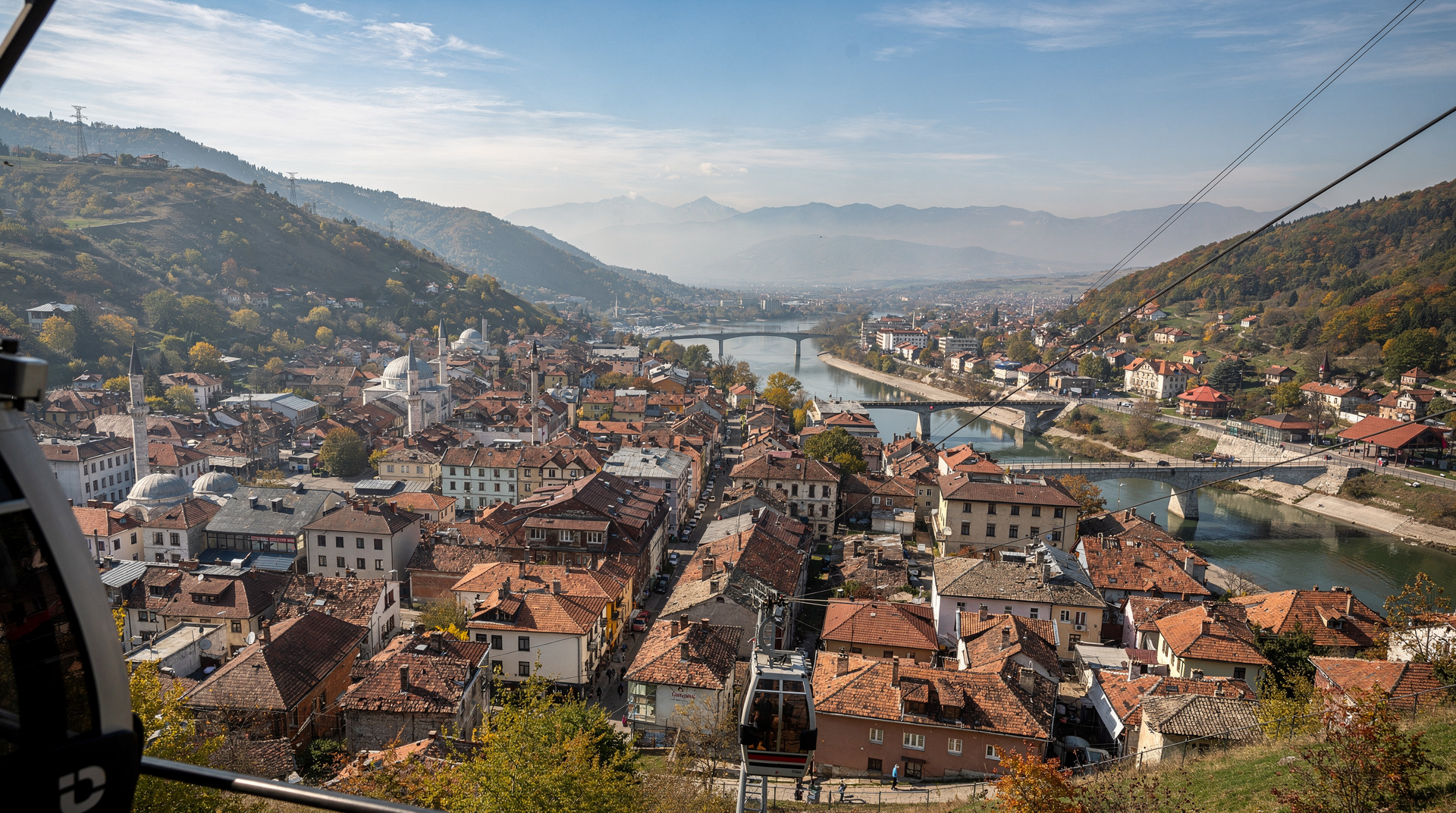
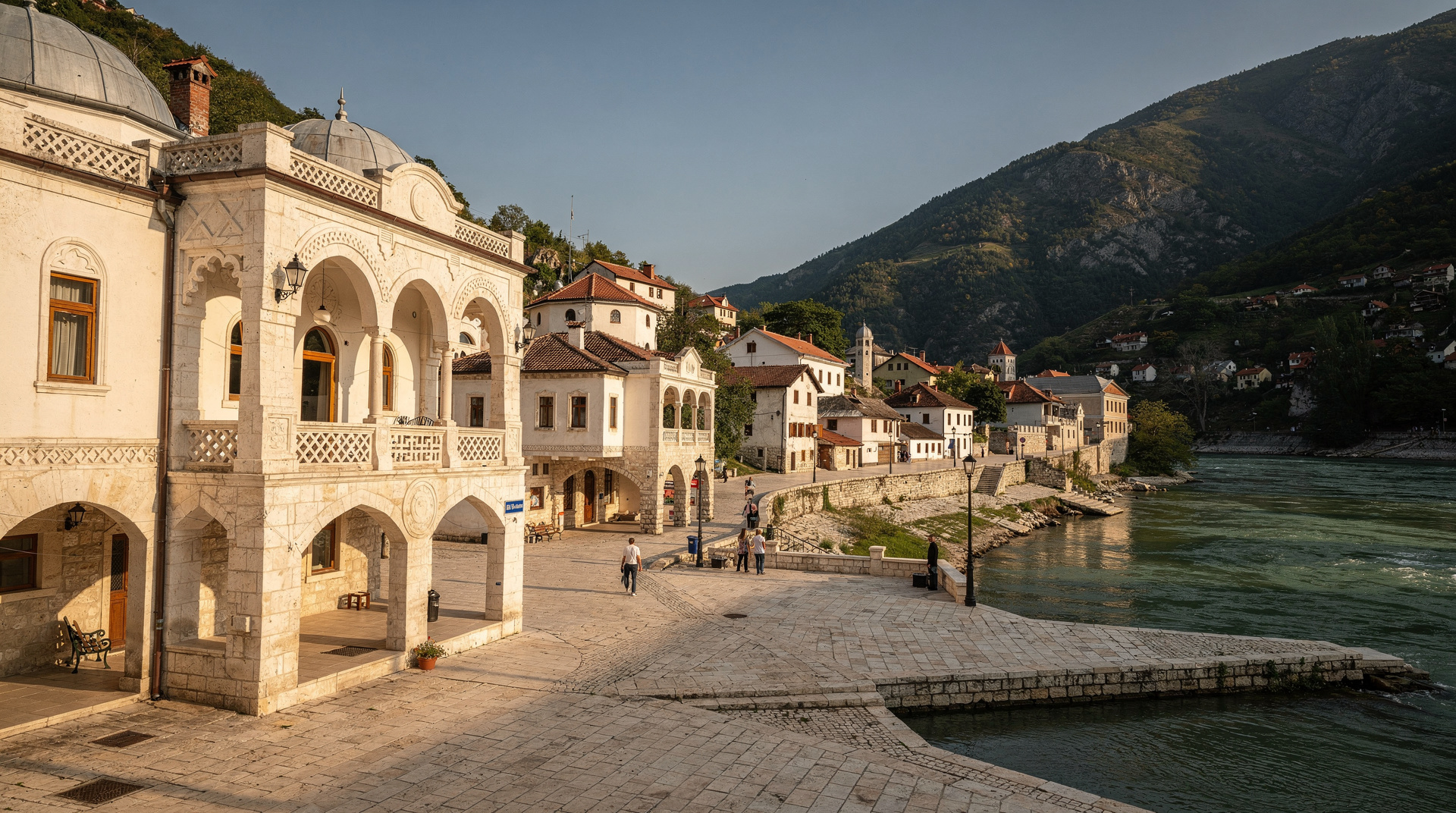
Travnik is the most Ottoman town in central Bosnia and one of the most underrated towns in the country. In the 17th and 18th centuries it was the seat of Bosnia’s Ottoman governor — the most powerful man in the province — and the residence of foreign consuls from France and Austria. Today it is a quiet town of 25,000 people with a remarkable concentration of historical sites within a walkable compact centre.
| At a glance | |
|---|---|
| Where | Central Bosnia, about 90 km north-west of Sarajevo |
| Cost | Mostly free or under 5 BAM per site; a full lunch at Plava Voda around 20–30 BAM per person |
| Time needed | 2–3 hours for the main sites, half a day with a meal |
| Getting there | Car via the M17 (around 1h15–1h30 from Sarajevo) or regular buses from Sarajevo’s main station |
| Best time | Spring and autumn for mild weather; summer is warm but the Plava Voda spring keeps the town cool |
Historical overview
Travnik entered Ottoman records after the conquest of 1463. It was initially a secondary town — Sarajevo, founded in the 1460s, outpaced it in size and importance through the 16th and 17th centuries. This changed in 1697. An Austrian military expedition under Prince Eugene of Savoy sacked Sarajevo in October of that year, burning the city and retreating before the Ottomans could counterattack. The disaster was not total — the Gazi Husrev-beg Mosque and parts of the bazaar survived — but it was severe enough to make Sarajevo temporarily unsuitable as a seat of government.
The Ottoman governor (valiye, later vizier) moved to Travnik, which offered better natural defences in a valley of the Lašva river. Between 1699 and 1851, 77 consecutive Ottoman governors ruled Bosnia from Travnik. The town’s fortunes rose: mosques were built, caravanserais established, an active diplomatic community developed. The presence of French and Austrian consulates during the Napoleonic period made Travnik briefly a cosmopolitan place — an anomaly in the mountains of central Bosnia.
Ivo Andric captured this period in his novel Bosnian Chronicle (also published as The Days of the Consuls), set in Travnik between 1806 and 1814. The novel depicts the tensions and absurdities of the consular competition in a provincial Ottoman town.
The Šarena džamija (Colourful Mosque)
The Šarena džamija (or Sulejmanija džamija, from its formal dedication to Sultan Suleiman) is Travnik’s most photographed building. Built in 1757 and renovated in the early 19th century, its exterior walls carry painted floral and geometric ornament in layered ochre, red, green and blue patterns. The style is unusual: most mosques reserve elaborate decoration for interiors, keeping exteriors relatively plain. The Šarena džamija breaks this convention in a style that blends Ottoman baroque with regional folk ornament.
The mosque is active and can be visited outside prayer times. The interior is plainer than the exterior — a single prayer hall with wooden galleries and a painted ceiling. Entry is free; women should bring a scarf.
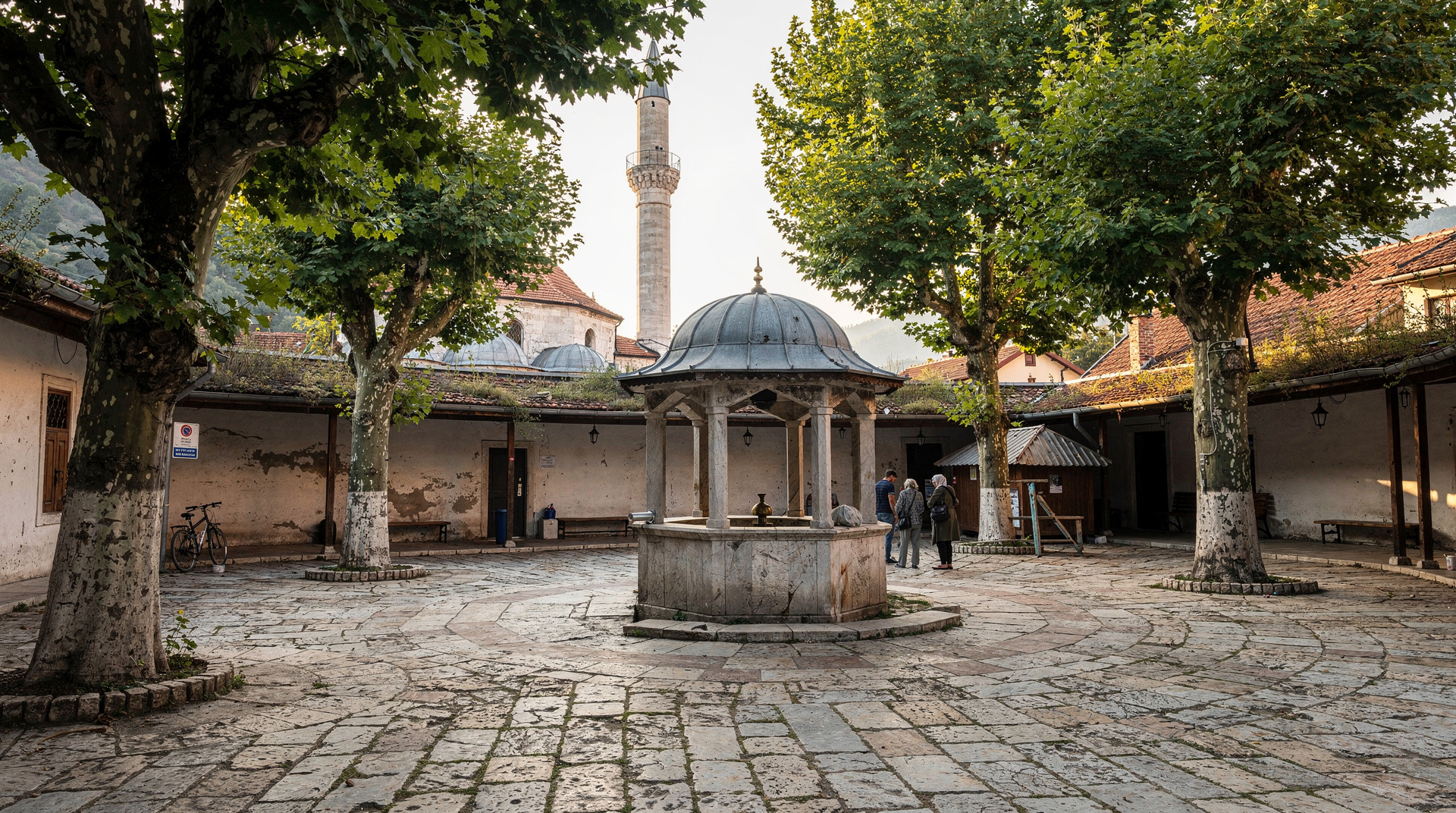
The setting enhances the visual effect: the mosque stands in a small courtyard with a fountain (šadrvan), with green hillsides behind and the Lašva river audible nearby. Morning light catches the painted exterior at its best.
The fortress
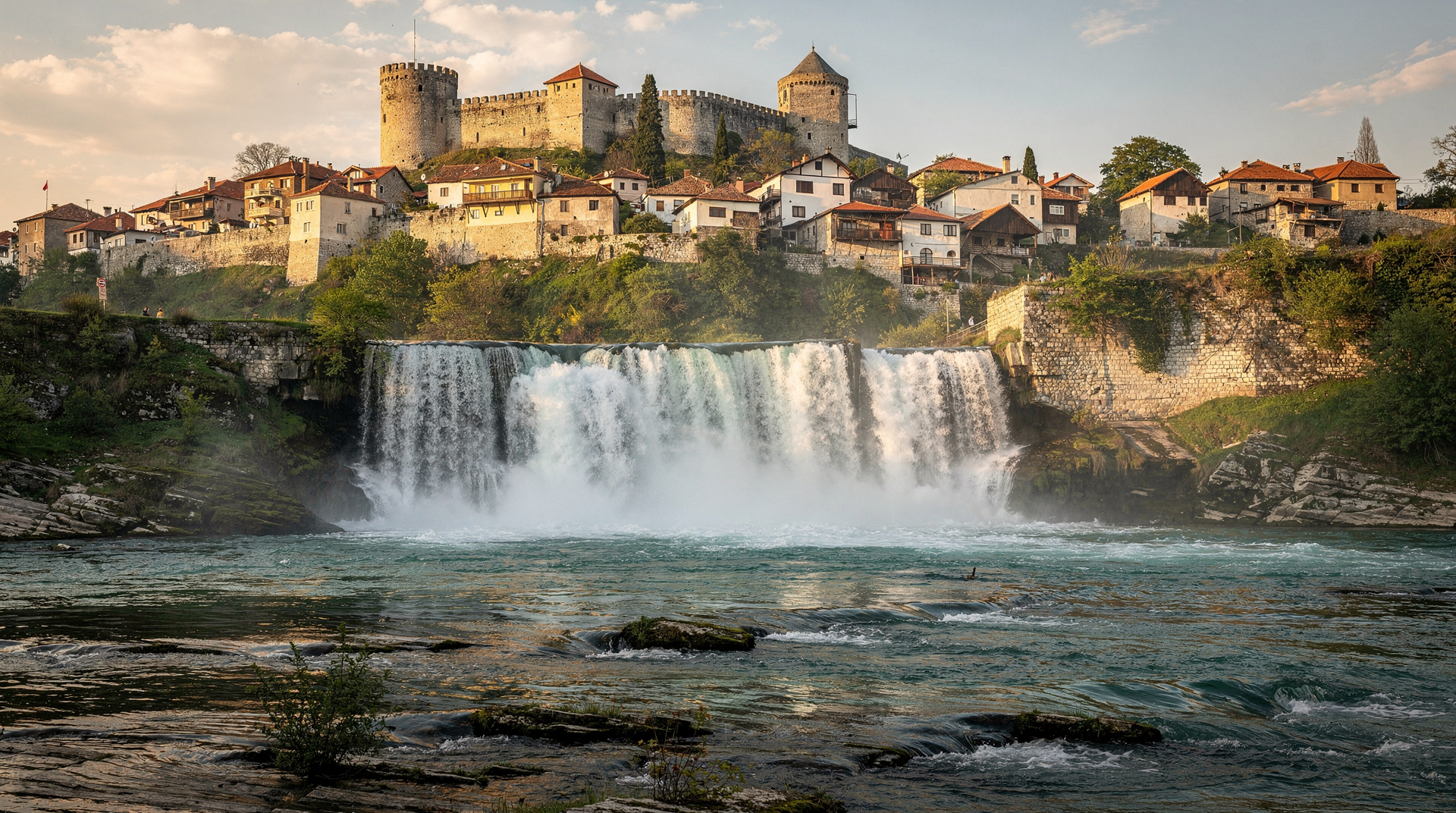
Travnik’s fortress, perched on a rocky promontory above the old town, dates from the 15th century and was extended and reinforced throughout the Ottoman period. The outer walls are partly ruinous; the inner citadel is better preserved. A small museum within the fortress covers local history.
The climb to the fortress entrance takes about 10-15 minutes from the town centre, following a path through the old quarter. The view from the ramparts over the town and valley is excellent. Entry is modest (about 3-4 BAM).
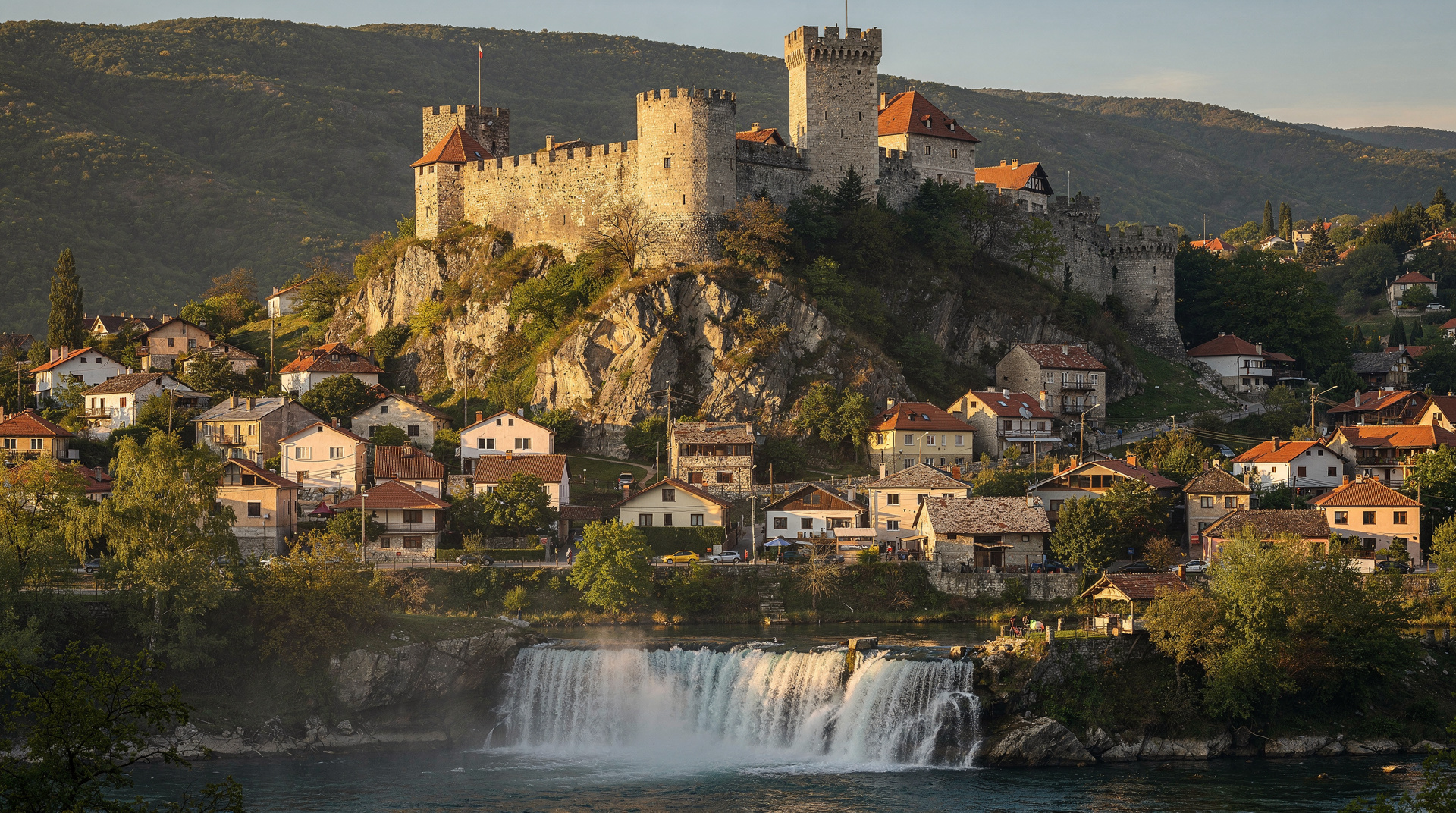
A guided tour covering Travnik and Jajce: culture, nature and history combines the main sites of both towns in a single well-paced excursion from Sarajevo, allowing you to see both the mosque and fortress at Travnik and the waterfall and fortress at Jajce.
The Ivo Andric birth house
Ivo Andric was born at 13 October Street (then a different address) in Travnik in 1892. The building has been converted into a small museum with exhibits on his life, the Travnik years and his later literary career. There are photographs, manuscripts and personal objects. The house itself is modest — Andric’s family was not wealthy — but it is authentically preserved.
Andric was a complicated figure: a Bosnian Catholic who identified with Yugoslav unity and who wrote in Serbian. His novels on Bosnia were widely admired internationally but read by some Bosniak scholars as presenting Muslims in a negative light. The museum does not engage with this controversy; it presents Andric as a great writer, which he undeniably was. Entry is approximately 3 BAM.
Plava Voda (Blue Water)
On the western edge of Travnik, the Plava Voda is a karst spring — a small river emerging from the hillside in a series of cascades over a distance of about 200 metres before joining the Lašva. The water is very clear and very cold (around 10°C year-round). Several restaurants and kafana are built directly on the water’s edge, with tables extending over the stream.
A meal here — grilled trout, roasted lamb or the local speciality of Travnik cheese (Travnički sir, a soft fresh cheese similar to feta) — is one of the better food experiences in central Bosnia. A full lunch runs about 20-30 BAM per person. The setting is cool and green; on hot days it is noticeably cooler than the town centre.
Practical information
Distance from Sarajevo: About 90 km, 1h15-1h30 by car. Take the main M17 road north-west; the road is good and mostly dual-carriageway near Sarajevo.
By bus: Buses from Sarajevo’s main bus station to Travnik run approximately every 1-2 hours. Journey time about 1h30. The bus station in Travnik is central.
From Mostar: Travnik is about 90 km from Mostar — approximately 1h30 by car via Jablanica and the M17.
Time needed: Two to three hours covers the main sites. Add a meal at Plava Voda and allow half a day.
Combining with Jajce: Jajce is 30 km east of Travnik (40 minutes by car). The combination is a natural full day from Sarajevo. See the Jajce and Travnik day trip guide for the optimum sequence and tour options.
Currency and costs: Travnik is inexpensive even by Bosnian standards. The Šarena džamija is free; the fortress costs about 3-4 BAM; the Andric museum about 3 BAM. A full lunch at Plava Voda costs 20-30 BAM per person.
For the full context of Ottoman heritage across Bosnia, see the Ottoman heritage guide, which places Travnik alongside Sarajevo, Mostar and Višegrad.
Travnik in context: Ottoman and Austro-Hungarian Bosnia
Travnik’s Ottoman-era prominence ended when the Austro-Hungarian Empire took over administration of Bosnia in 1878. Sarajevo, not Travnik, became the showpiece of the new Austro-Hungarian period, gaining grand civic buildings and a European veneer largely absent from Travnik — see the Austro-Hungarian Sarajevo guide for that later chapter. Travnik, by contrast, kept its Ottoman-era streetscape largely intact precisely because it was bypassed by the big infrastructural investments of the following decades — one reason it feels so much more like an 18th-century Ottoman town today than Sarajevo’s old quarter does.
For readers comparing Travnik’s bazaar quarter with Sarajevo’s much larger Baščaršija, the Baščaršija Sarajevo guide is a useful companion — Travnik’s version is a fraction of the size but far less crowded, and arguably gives a better sense of what an undisturbed Ottoman provincial town actually felt like.
Where to eat beyond Plava Voda
Travnik cheese (Travnički sir) is the town’s signature product — a soft, slightly sour white cheese traditionally made from unpasteurised sheep and cow’s milk and matured in sheepskin bags. It is sold at the town market and in small shops around the old quarter; a good wedge costs only a few BAM and travels well if you are heading onward. For a broader introduction to the dishes you will meet across the country, including cheese, bread and grilled meats, see the Bosnian food guide.
A suggested walking order
Travnik rewards a loose, unhurried route rather than a strict checklist. A sensible sequence starts in the old quarter while the light is soft, so that the painted walls of the Šarena džamija are the first thing you see. From the courtyard, wander through the bazaar streets towards the foot of the hill, then make the climb to the fortress while you still have energy. After the ramparts, come back down for the Andrić house, which is small enough to see in a short visit, and finish with a long lunch at the water’s edge on Plava Voda. Ending the visit at the spring means you leave the town relaxed and cool rather than rushed.
If you are travelling by car, leave the vehicle near the centre and do everything on foot; the sights are close together and the pleasure of the town is in the lanes between them. Pay attention to the small details that make an Ottoman provincial town readable: the fountains, the stone paving, the way houses press against the street, the mosque courtyards that open unexpectedly between shops. None of this needs a guide, but a little background from the Ottoman heritage guide makes the streetscape far easier to decode.
Reading Travnik through Andrić
Travnik is one of the few towns in the region where a novel genuinely changes how you see the place. Andrić’s Bosnian Chronicle turns the consular rivalry of the Napoleonic years into a story of misunderstanding between worlds, and it is worth knowing before you arrive even if you never open the book. Standing in the old quarter, it is easy to picture the French and Austrian envoys trying to make sense of a vizier’s court in a valley town, and the sense of a provincial capital that mattered far more in its own time than it does now.
You do not need to be a literature enthusiast to enjoy this angle. Treat the museum as an introduction, then let the town do the rest. For the wider story behind the empire, the consuls and the later upheavals, the Bosnia history for travelers guide and the Yugoslav wars explained page give the long view, while the Andrićgrad guide shows how the writer’s legacy is presented in a very different, purpose-built setting in eastern Bosnia.
Choosing Travnik over other Ottoman stops
Bosnia has several towns where Ottoman history is still visible, and each offers a different mood. Sarajevo is the grand, layered capital; Mostar is the dramatic bridge town that draws the crowds; Počitelj is a compact fortified village; and Višegrad is built around its famous bridge. Travnik’s strength is different: it was a seat of government, and it feels like a working town that happens to keep its historic core. That makes it a good choice if you prefer atmosphere to spectacle, or if you have already seen the better-known sights and want something quieter.
It also works well as one stop in a longer loop. Travellers building a route through the middle of the country can slot it between the capital and the northwest, and the Bosnia 7-day itinerary shows how a stop like this fits into a wider trip. If you are still deciding how to organise your time, the Travnik destination page and the Jajce destination page give a quick overview of what each town offers.
Getting the most from a short visit
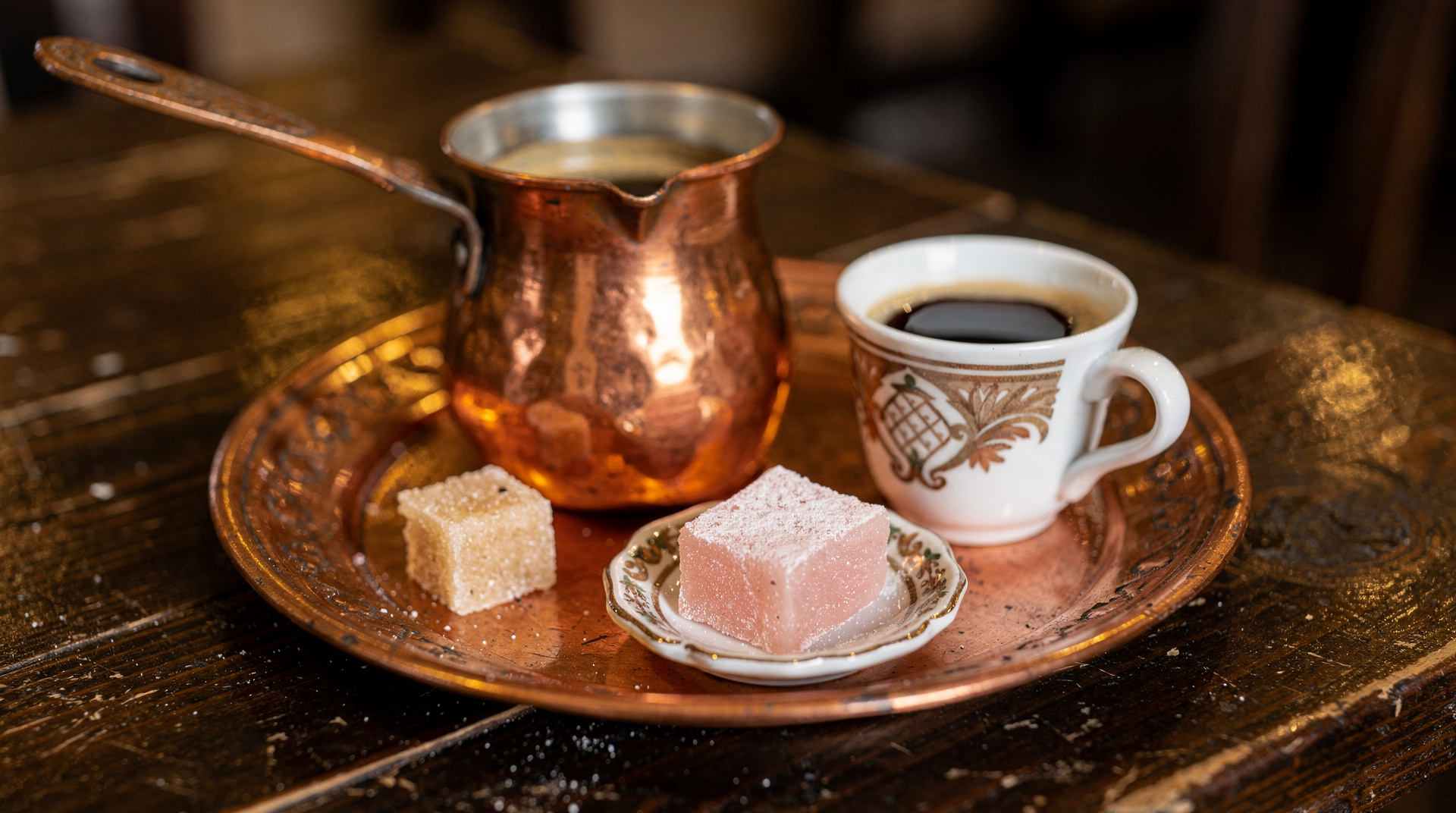
A few small habits make the visit smoother. Dress modestly if you plan to step inside the mosque, and keep your voice low in the courtyard. Carry a little cash, since small entry fees and market purchases are easiest to settle that way. Wear shoes with grip, because the paths up to the fortress and the old paving stones can be uneven, especially after rain. And give yourself permission to sit down: a coffee in the old quarter, in the style described in the Bosnian coffee culture guide, is part of the experience rather than a delay.
If you are travelling without a car, check the options in the getting around Bosnia guide before you set out, so that your return journey is settled before you start exploring. Planning the return in advance leaves you free to enjoy the afternoon instead of watching the clock.
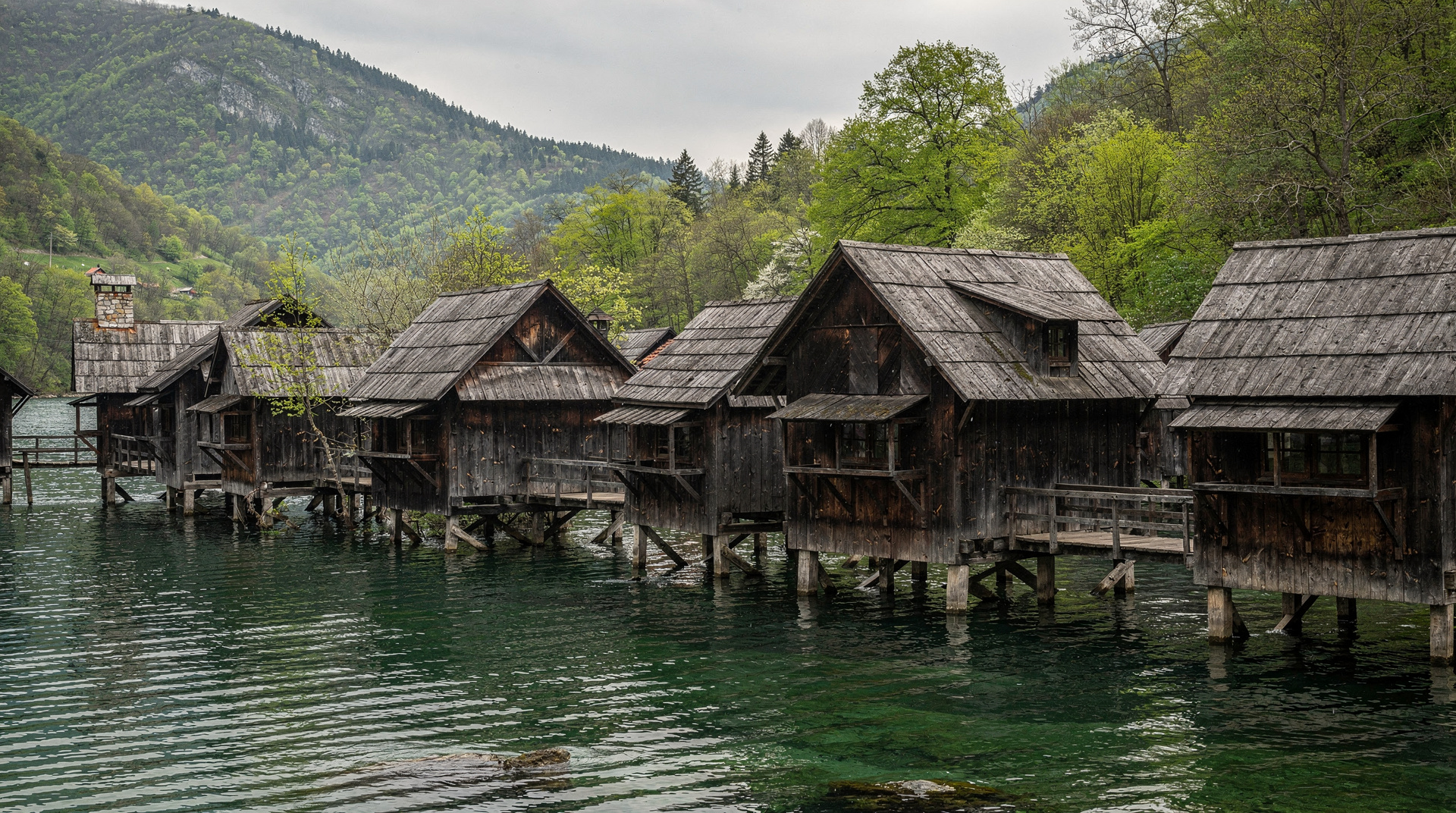
Travellers who would rather not handle the logistics at all can book a day trip from Sarajevo that links Travnik, Jajce and the Pliva lakes and watermills, which takes care of the driving and the timing between stops. If you want a slower pace and more room for questions about the history, a private day trip with a guide to Jajce and Travnik lets you spend longer where you are most interested.
Frequently asked questions about Travnik — Bosnia's Ottoman vizier capital
Why was Travnik the capital of Ottoman Bosnia?
What is the Šarena džamija?
Was Ivo Andric born in Travnik?
How far is Travnik from Sarajevo?
Can I combine Travnik and Jajce in one day?
Top experiences
Bookable activities with verified prices and instant confirmation on GetYourGuide.