Jajce fortress and catacombs guide
Sarajevo: Jajce Waterfall, Travnik & Pliva Lake Tour
What is Jajce famous for?
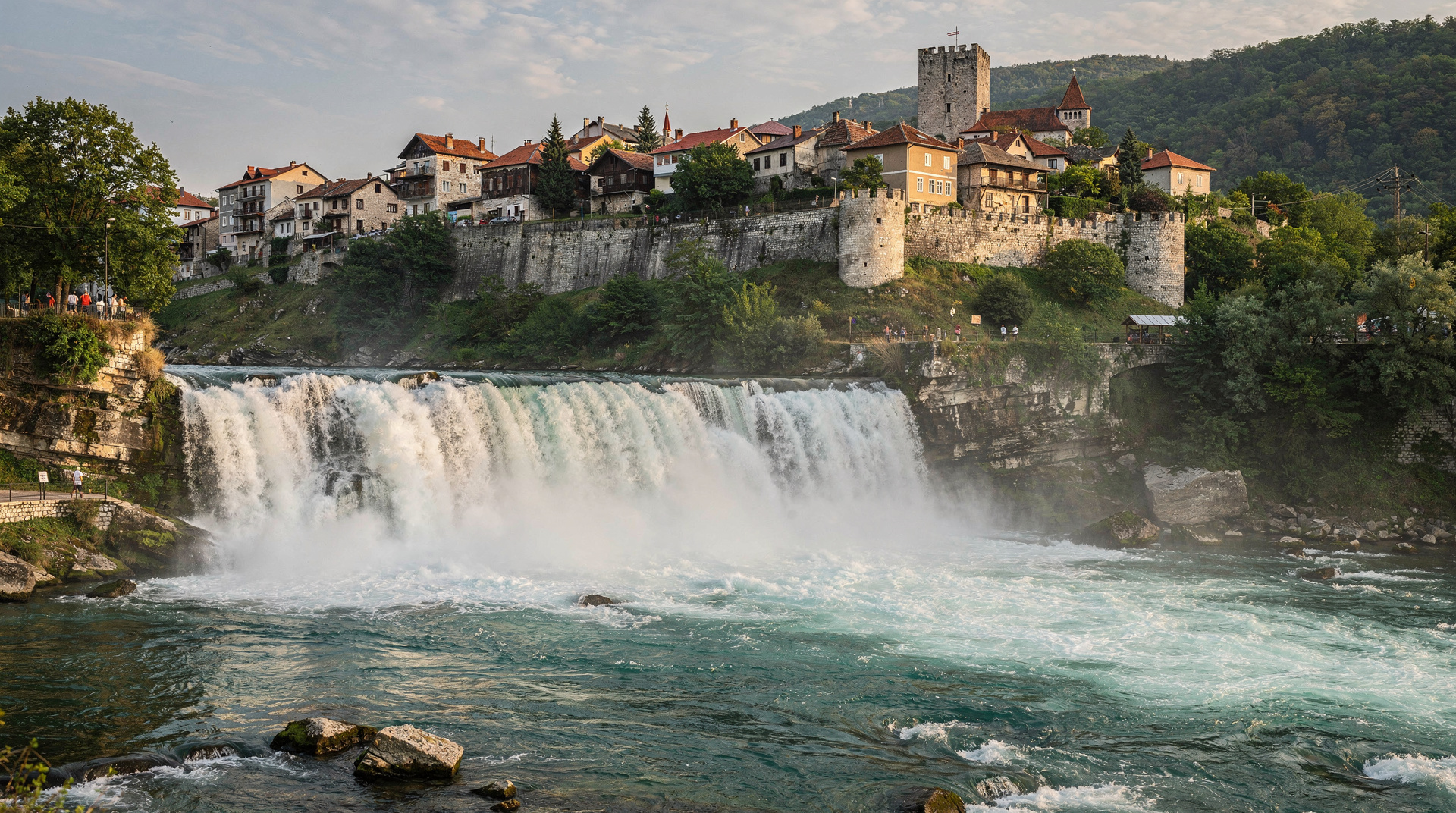
Jajce is famous for three things: its medieval fortress (the last seat of the Bosnian kings before the Ottoman conquest in 1463), the underground catacombs of Saint Luke dating from the same period, and the spectacular Pliva waterfall that drops 17 metres into the Vrbas river in the middle of the town.
Jajce is one of those Bosnian towns that consistently surprises visitors. It has a waterfall in its centre — a proper 17-metre cascade, not a trickle — a medieval fortress that was the last seat of Bosnian kings, underground catacombs carved from living rock, and an unexpected Cold War footnote as the birthplace of Tito’s Yugoslavia. It is also conveniently close to Travnik, making the two a natural full-day circuit from Sarajevo.
| At a glance | |
|---|---|
| Where | Central Bosnia, about 130 km / around 2h by car from Sarajevo |
| Cost | Fortress and catacombs combined around 3-5 BAM; AVNOJ Museum around 3-4 BAM |
| Time needed | Two to three hours for the town centre sites |
| Getting there | Bus from Sarajevo’s main bus station (roughly every 2 hours, around 2h30) or self-drive on the M17 |
| Best time | May-October for the waterfall at good flow; spring for the most dramatic cascade |
The medieval kingdom of Bosnia
Jajce rose to prominence in the 15th century as the seat of the Bosnian royal court, replacing earlier capitals at Mili and Bobovac. The town occupies a dramatic position on a high rocky plateau above the confluence of the Pliva and Vrbas rivers — a defensible location that appealed to medieval kings under increasing Ottoman pressure.
The fortress, which crowns the highest point of the plateau, was extended and strengthened by successive Bosnian rulers. King Stjepan Tomasevic, the last independent king of Bosnia, made it his seat. When the Ottomans moved on Bosnia in 1463, Tomasevic surrendered to Sultan Mehmed II and was executed despite being promised safe conduct — an event that ended the medieval Bosnian kingdom. The fortress fell to the Ottomans, then to the Hungarians in 1464, back to the Ottomans several more times, before being permanently incorporated into the Ottoman Empire in 1527.
The fortress
The fortress complex is extensive — a series of towers, gates and curtain walls that occupy most of the hilltop plateau. The approach from the lower town follows a steep cobblestone path through two outer gate towers. The main keep, the Jajce Tower, is the most intact structure — a tall rectangular stone tower with a restored wooden lookout gallery at the top. The view from the tower over the waterfall, the valleys and the surrounding hills is one of the best in central Bosnia.
Entry to the fortress complex costs approximately 3-5 BAM and includes access to the catacombs (see below). Opening hours are approximately 09:00-17:00 in the main season; shorter in winter.
A guided day tour from Sarajevo covering Jajce’s waterfall, Travnik and the Pliva lakes covers all the main sites with transport and a guide included — useful if you want the history explained in context.
The catacombs of Saint Luke
Beneath the fortress, reached by a separate entrance near the lower gate, the catacombs are one of the most unusual medieval sites in Bosnia. The chambers were cut from the limestone bedrock in the 14th and 15th centuries and served as mausolea for Bosnian nobles and members of the royal family. The main chamber is a rectangular crypt with carved niches and a small apse. Stone carvings include Christian crosses and symbols from the period of the Bosnian Church, the pre-Ottoman Christian denomination that has puzzled scholars for generations.
The temperature in the catacombs is a constant cool regardless of outside temperature — bring a light layer in summer. The guided explanation (included in the entry fee, usually a short group talk at the entrance) provides the basic historical context.
The Pliva waterfall
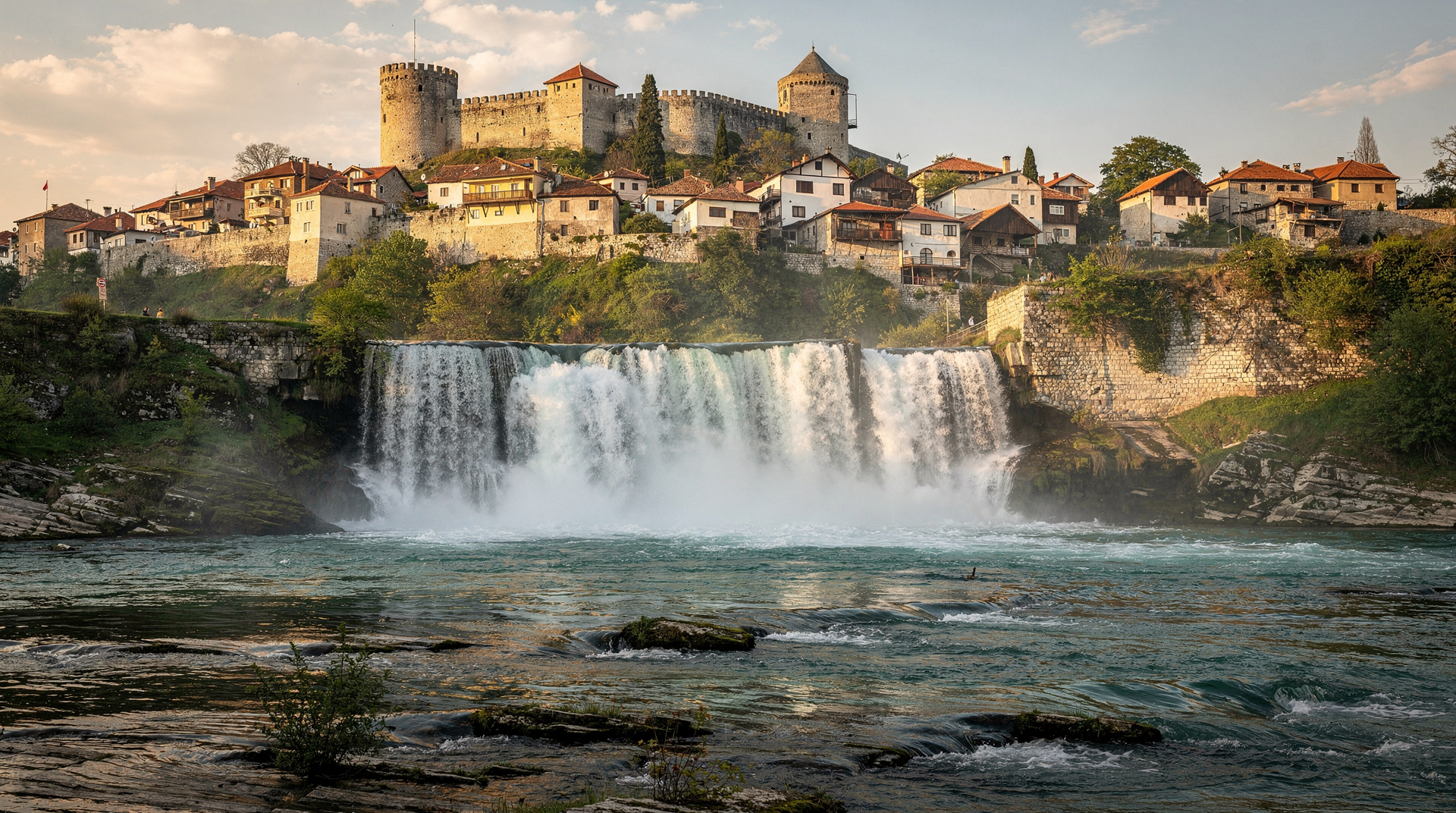
The Pliva waterfall is, by any European standard, anomalous. Most historic town centres have been gradually separated from their natural environment by development. Jajce’s waterfall — where the Pliva river drops 17-20 metres in a broad curtain before joining the Vrbas — is visible from the town’s main street, audible throughout the old quarter and surrounded by a small park and viewing terrace.
The best view is from the platform at the base of the falls, reached by a short path from the town centre (5 minutes). At full flow in spring and after heavy rain, the falls generate considerable spray. In summer the water level drops and the falls are less dramatic but still impressive. Entry to the viewing area is usually free or charged a nominal amount.
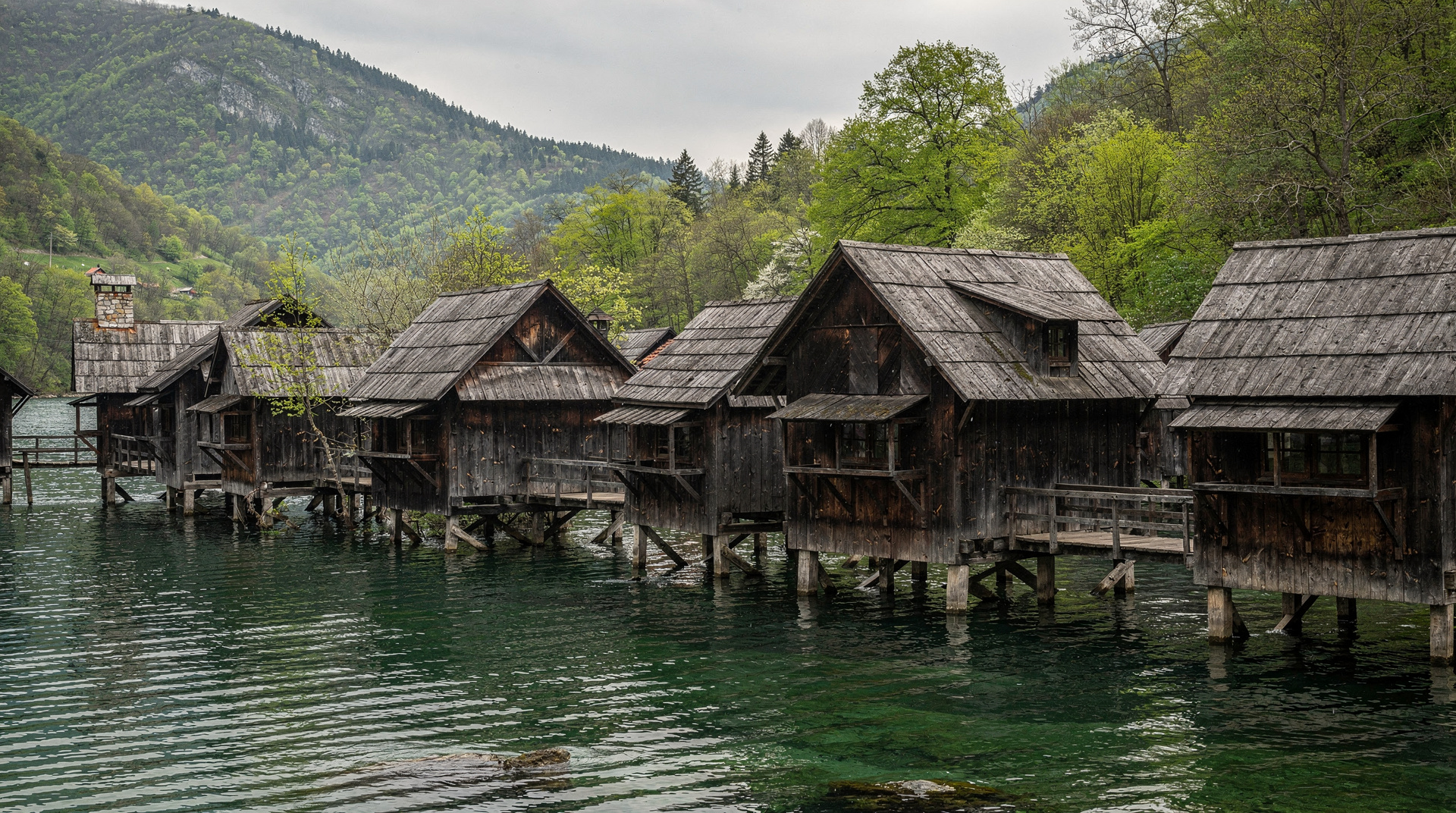
The waterfall is not the Pliva’s only attraction: upstream, the two Pliva lakes (Gornje and Donje Plivsko jezero) are flanked by a series of traditional wooden watermills — one of the most photographed scenes in Bosnia. See the Pliva watermills guide for details.
The House of AVNOJ
On 29 November 1943, the town’s National House hosted the second session of AVNOJ (Antifašističko vijeće narodnog oslobođenja Jugoslavije — Anti-Fascist Council of the People’s Liberation of Yugoslavia). The session, attended by around 270 delegates from all parts of German-occupied Yugoslavia, formally constituted the post-war Yugoslav state, declared Tito’s provisional government and set out the federal structure that would survive until 1991.
The building has been preserved as a museum and contains the original furniture and exhibits from the session. Entry is approximately 3-4 BAM. For travellers interested in Yugoslav history and the Communist period, the Tito’s Bunker guide and the Sarajevo 1984 Olympics guide provide further context.
The old town
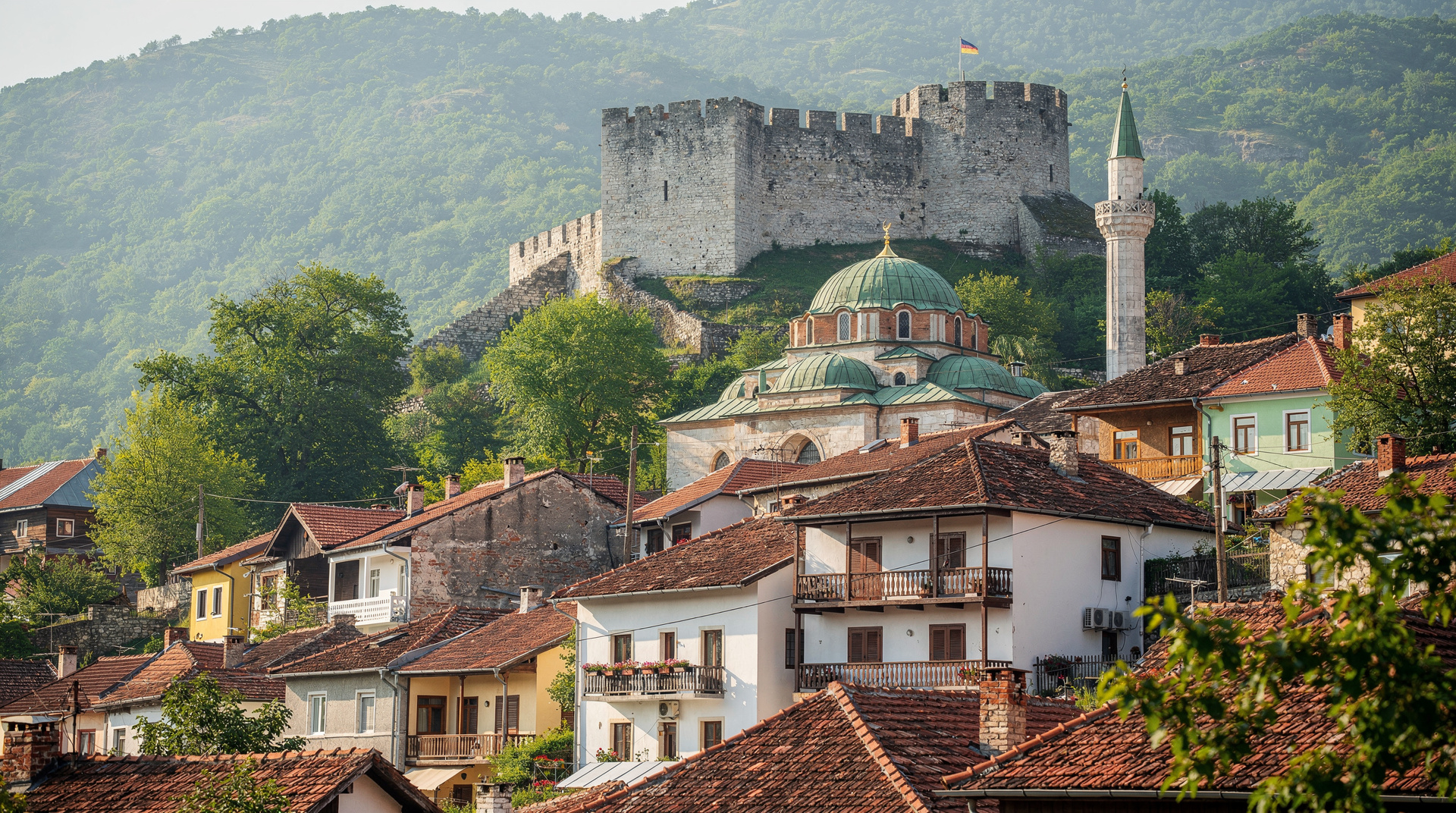
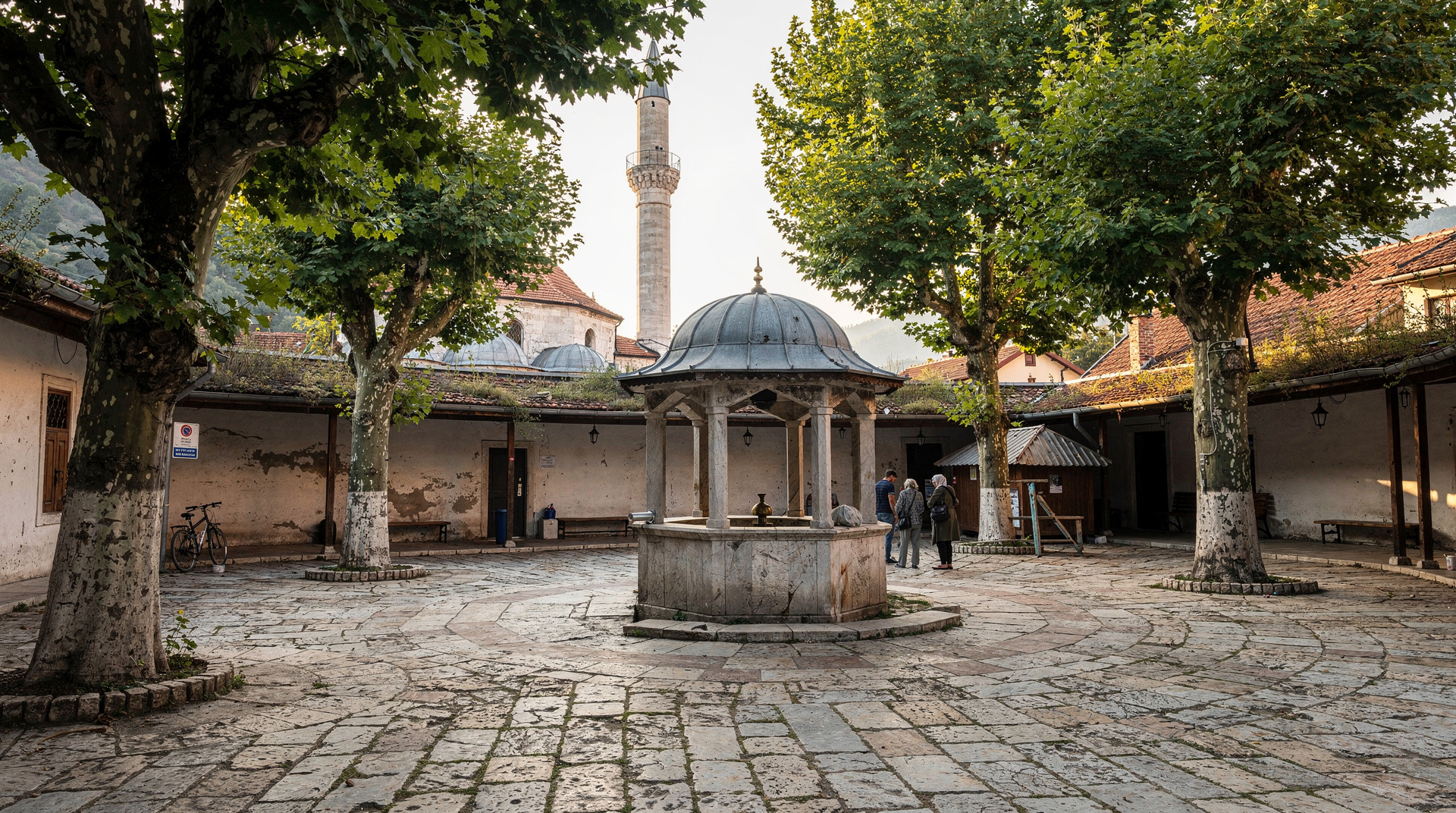
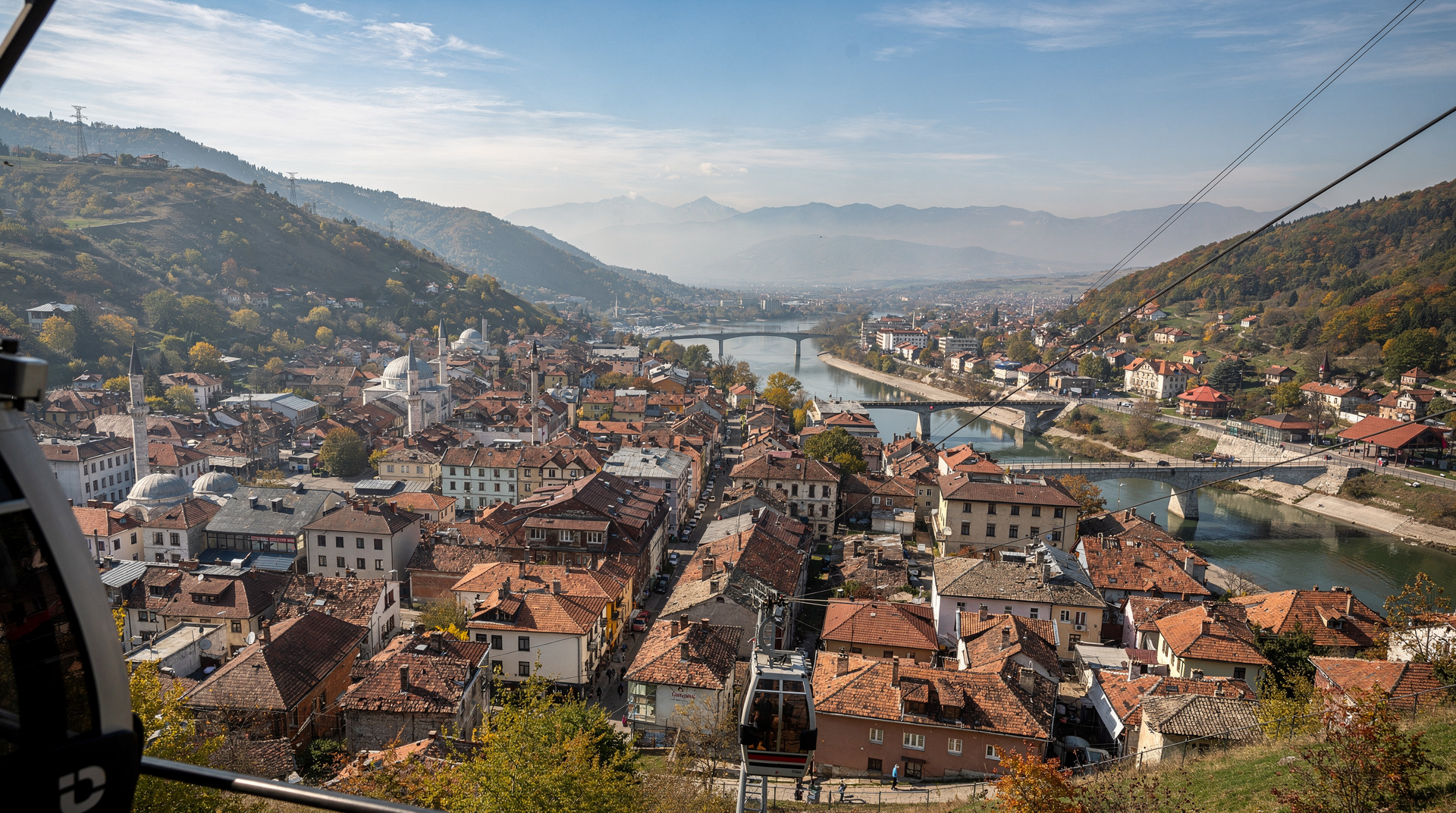
The old town of Jajce, between the fortress and the waterfall, preserves a concentration of late Ottoman and early 20th-century architecture. The Esma Sultana Mosque (1752) is Bosnia’s only surviving example of the Turkish baroque style — a single-domed mosque with an unusual fluted minaret and interior decoration that combines Ottoman and European baroque elements. Entry is free outside prayer times.
Several old towers and gate structures survive in the town walls below the fortress. The old bazaar street has been partially restored and has a few small cafes and a souvenir shop.
How to pace your visit
Jajce rewards a slow approach. The sites sit close together, but they ask for different moods: the fortress is about climbing and looking, the catacombs about stillness, the waterfall about noise and movement, and the AVNOJ museum about reading and imagining a room full of delegates. Trying to tick them all off in a rush flattens the experience.
A sensible order is to start with the waterfall viewpoint while the light is soft, walk up through the old town to the fortress, descend to the catacombs, and finish at the House of AVNOJ or at a table in the old town. If you arrive by bus, keep your return time in mind from the start, because the walk between sites is short but the stops tend to run long. The Jajce destination page gives a wider overview of the town and what surrounds it.
If you only have a morning, prioritise the fortress tower and the waterfall. If you have an afternoon as well, add the catacombs and the museum, and leave time simply to sit near the falls. Those who enjoy photography will find that the town works best early or late, when the stone and the spray catch the light and the day-trip groups are elsewhere. The guide to avoiding the crowds in Bosnia has more general advice on timing popular stops.
Jajce in the story of Bosnia
Jajce makes more sense when you place it inside the longer story of the country. The medieval kingdom, the Ottoman centuries, the Austro-Hungarian period and the Yugoslav era all left something here, and few Bosnian towns show so many layers within a few minutes’ walk. The Bosnia history guide for travellers is a good companion read before you go, especially if the names of kings and sultans are new to you.
The twentieth-century layer is the one that surprises people most. The AVNOJ session belongs to the wartime struggle that shaped the Yugoslav federation, and the later breakup of that federation is covered in the explainer on the Yugoslav wars. Reading the two together helps you see why a modest building in a small town carries so much weight for people of the older generations.
The Ottoman layer is easiest to appreciate by comparison. Travnik, the old seat of the Ottoman viziers, offers a different picture of the same era, and the Travnik Ottoman town guide shows how the two towns complement each other. For the wider pattern across the country, the Ottoman heritage guide is the place to start.
Seeing the waterfall and the lakes together
The town waterfall and the upstream lakes are best understood as one landscape. The river that tumbles through the centre of Jajce first spends time winding through quiet water and past old mills, and seeing both gives you the full picture of why this place was settled and defended. The Pliva waterfall guide goes deeper into the falls themselves, while the Pliva lakes destination page covers the upstream area.
If your schedule allows only one, choose according to temperament. The town waterfall suits those who like drama and history in the same frame; the lakes and mills suit those who want calm and long views. Combining them is easy by car, and a day trip that includes both is one of the more satisfying outings in central Bosnia.
Combining Jajce with other stops
Jajce sits in a part of the country that many itineraries skip, which is a good reason to build a route around it rather than treating it as an afterthought. Travnik is the obvious pairing, and the Travnik destination page will help you decide how long to give it. From Sarajevo, the town fits naturally among the best day trips from Sarajevo, although an overnight stay changes the feel of the visit considerably.
Travellers heading further north-west can fold Jajce into a longer route. The western Bosnia and Krajina itinerary shows how it links with the Una region, and Banja Luka is the main city in that direction. If you are still deciding how much time the whole country deserves, the guide on how many days to spend in Bosnia and the walkthrough on how to plan a Bosnia itinerary will help you place Jajce in the bigger plan.
If you would rather not handle the logistics yourself, a private day trip with a guide to Jajce and Travnik from Sarajevo lets you set the pace at the fortress and spend longer where the history interests you.
Getting there and moving around
Public transport and driving both work for Jajce, and the choice mostly depends on how much you want to stop along the way. Buses are straightforward and cheap, though timetables change, so check them locally before you commit; the buses in Bosnia guide explains how the system works and how to buy tickets. Driving gives you freedom to detour to viewpoints and villages, and the car rental guide covers the practical points of hiring a vehicle.
For a broader picture of transport options across the country, see the getting around Bosnia guide. If you enjoy the idea of a slower road, the blog post on driving Bosnia’s backroads captures what the journey can feel like when you leave the main routes.
Eating well in Jajce
For a day that also takes in the falls near Jajce, a day trip from Sarajevo combining the Strbacki Buk and Jajce waterfalls is another way to see the region’s water at its best.
Food is part of the pleasure of a stop like this. Trout from the local river, grilled meats and good coffee are the staples, and a long lunch after the fortress climb is a fine reward. If you want to know what to order and what the dishes are, the Bosnian food guide is a useful primer, and travellers who like to understand the ritual of the cup will enjoy the guide to Bosnian coffee culture.
Seasons and conditions
The character of Jajce changes with the calendar. Spring brings high water and green hills, summer brings long days and a quieter waterfall, and autumn brings softer light and cooler walking; the Bosnia in autumn guide describes that season well. Winter is quieter still, and some opening hours may be shorter, so it is wise to confirm locally before you travel.
As for safety, Jajce is an easy, walkable town, and the general advice in the Bosnia safety guide applies here as elsewhere: use ordinary city sense, keep valuables out of sight, and stay on marked paths if you wander into the surrounding countryside.
Practical information
Distance from Sarajevo: About 130 km, approximately 2h by car. The M17 north-west is well-surfaced; the last section on secondary roads is slower.
By bus: From Sarajevo’s main bus station (Aluminium Pivo terminal), buses to Jajce run approximately every 2 hours, journey time around 2h30. Bus to Travnik first (1h30) then change, or direct buses to Jajce.
Entry costs: Fortress and catacombs approximately 3-5 BAM combined. AVNOJ Museum approximately 3-4 BAM. Pliva waterfall viewpoint free or minimal charge.
Time needed: Two to three hours for Jajce. Combine with Travnik (30 km east, 40 minutes by car) for a full day. The Jajce and Travnik day trip guide gives a full suggested itinerary.
When to visit: May-October for the waterfall at reasonable flow. July-August brings some local tourism but the town is not overrun. Spring (April-May) gives the most dramatic waterfall flow.
For the broader central Bosnia picture, see the Ottoman heritage guide, and for Jajce’s natural attraction upstream, the Pliva watermills guide.
Where to stay and eat
Jajce has a modest but adequate range of small hotels and guesthouses, mostly a short walk from the fortress and waterfall. Staying overnight lets you see the waterfall lit up in the evening and beat the day-trip crowds to the fortress the following morning — worth considering if you are not in a rush to reach Travnik or back to Sarajevo. For meals, look for konobas around the old town serving grilled meats, trout from the Pliva, and Bosnian coffee; a main course typically costs around 10-18 BAM. Money matters: Bosnia uses the convertible mark (BAM/KM), not the euro — the Bosnia money and currency guide explains cards versus cash in smaller towns like Jajce.
For a personal account of Jajce beyond the checklist sites, see the blog post on Jajce, the royal town.
Frequently asked questions about Jajce fortress and catacombs
What is the history of Jajce fortress?
What are the catacombs of Saint Luke?
How high is the Pliva waterfall?
Where was AVNOJ held in Jajce?
How do I get to Jajce from Sarajevo?
Top experiences
Bookable activities with verified prices and instant confirmation on GetYourGuide.