Jajce and Travnik day trip guide from Sarajevo
Sarajevo: Jajce Waterfall, Travnik & Pliva Lake Tour
Is the Jajce and Travnik day trip from Sarajevo worth it?
Absolutely. Jajce has a waterfall flowing through the town centre, a medieval royal fortress, underground catacombs and the beautiful Pliva lakes. Travnik adds a fine Ottoman bazaar, a well-preserved fortress and the birthplace of Nobel laureate Ivo Andrić. The drive from Sarajevo takes 2h15 to Jajce and passes stunning mountain scenery. A full day covers both comfortably.
Central Bosnia gets fewer visitors than Herzegovina, and that is precisely why it is worth the drive. The towns of Jajce and Travnik represent Bosnia’s deepest layers — medieval Bosnian kingdoms, Ottoman centuries, the Yugoslav era — and both have a lived-in, unhurried quality that contrasts sharply with touristy Mostar. Jajce alone is worth the journey: a waterfall flows through the town centre, a medieval fortress commands the hill, and an extraordinary underground burial chamber lies beneath the streets. Add Travnik’s Ottoman bazaar and you have a day that reveals a Bosnia most visitors never see.
| At a glance | |
|---|---|
| Where | Central Bosnia — Travnik 90 km / 1h20 and Jajce 150 km / 2h15 from Sarajevo |
| Cost | Entry fees around 3-5 BAM per site; lunch for two roughly 30-50 BAM |
| Time needed | A full day, around 08:00-19:15 departing and returning to Sarajevo |
| Getting there | Self-drive on the M5, bus from Sarajevo’s main station, or an organised day tour |
| Best time | May-October; winter mountain roads can be icy |
Getting from Sarajevo to Travnik and Jajce
By car
The main road north from Sarajevo (M5, signposted for Zenica and Travnik) climbs from the Miljacka valley through mountain terrain before descending to the Lašva valley. Travnik appears after about 1h20 (90 km). Continue northwest for another 60 km (50 min) to reach Jajce — total driving time from Sarajevo is 2h15.
The road is good quality and the mountain scenery between Sarajevo and Travnik is spectacular — this is Bosnia’s green heartland, a landscape of beech forests, river valleys and scattered farms that looks nothing like the limestone Herzegovina you may have seen on postcards.
By organised tour
An organised tour from Sarajevo typically visits both towns in a single day with transport, a guide, and structured time at the main sites. Tours depart around 08:00 and return to Sarajevo by 20:00.
From Sarajevo: Travnik, Jajce, Pliva Lakes and watermills trip Sarajevo: Jajce Waterfall, Travnik and Pliva Lake tourJajce has a waterfall inside the town itself, where the Pliva drops twenty metres into the Vrbas, and the cluster of wooden watermills sits on the lakes just upstream: a Jajce, Travnik, Pliva lake and watermills day trip from Sarajevo takes the sequence in the order the river runs.
Travnik — the Ottoman governor’s city
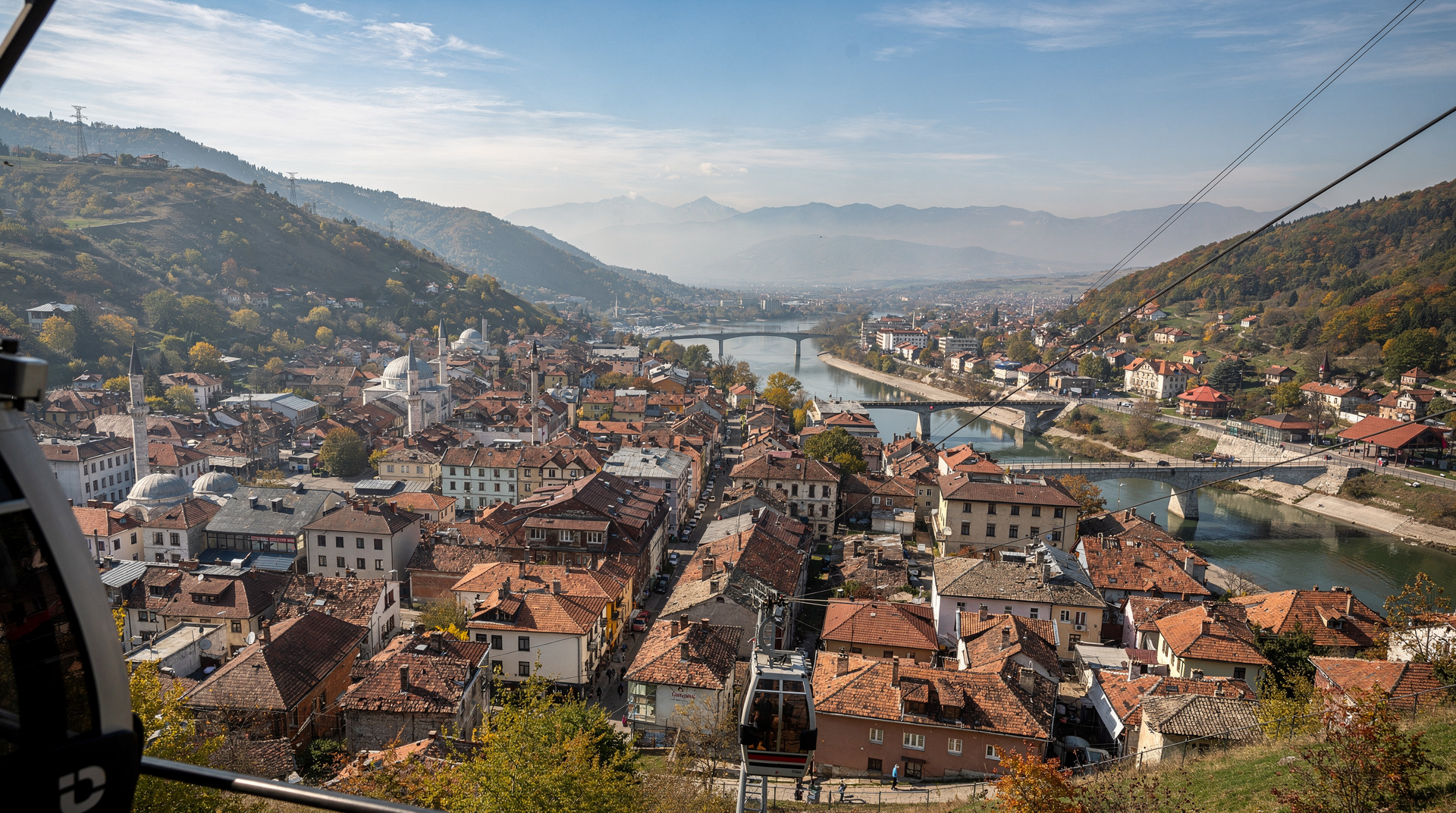
Travnik was the seat of the Ottoman viziers (governors) of Bosnia from 1699 to 1851, a period of 150 years during which it was in effect the capital of the province. The French writer Stendhal even visited as part of his diplomatic career (though he found it unremarkable — a judgement posterity has overturned). Ivo Andrić, who later won the Nobel Prize for “The Bridge on the Drina,” was born here in 1892 and set his early novel “Bosnian Chronicle” in Travnik’s consulate-era world.
What to see in Travnik
The old bazaar (čaršija): Travnik’s market street has a 17th-century character that feels genuinely authentic rather than reconstructed. Metalworkers, cobblers and small shops operate alongside cafes and restaurants. The smell of coffee and burek drifts from konobas open from early morning. Allow an hour to wander.
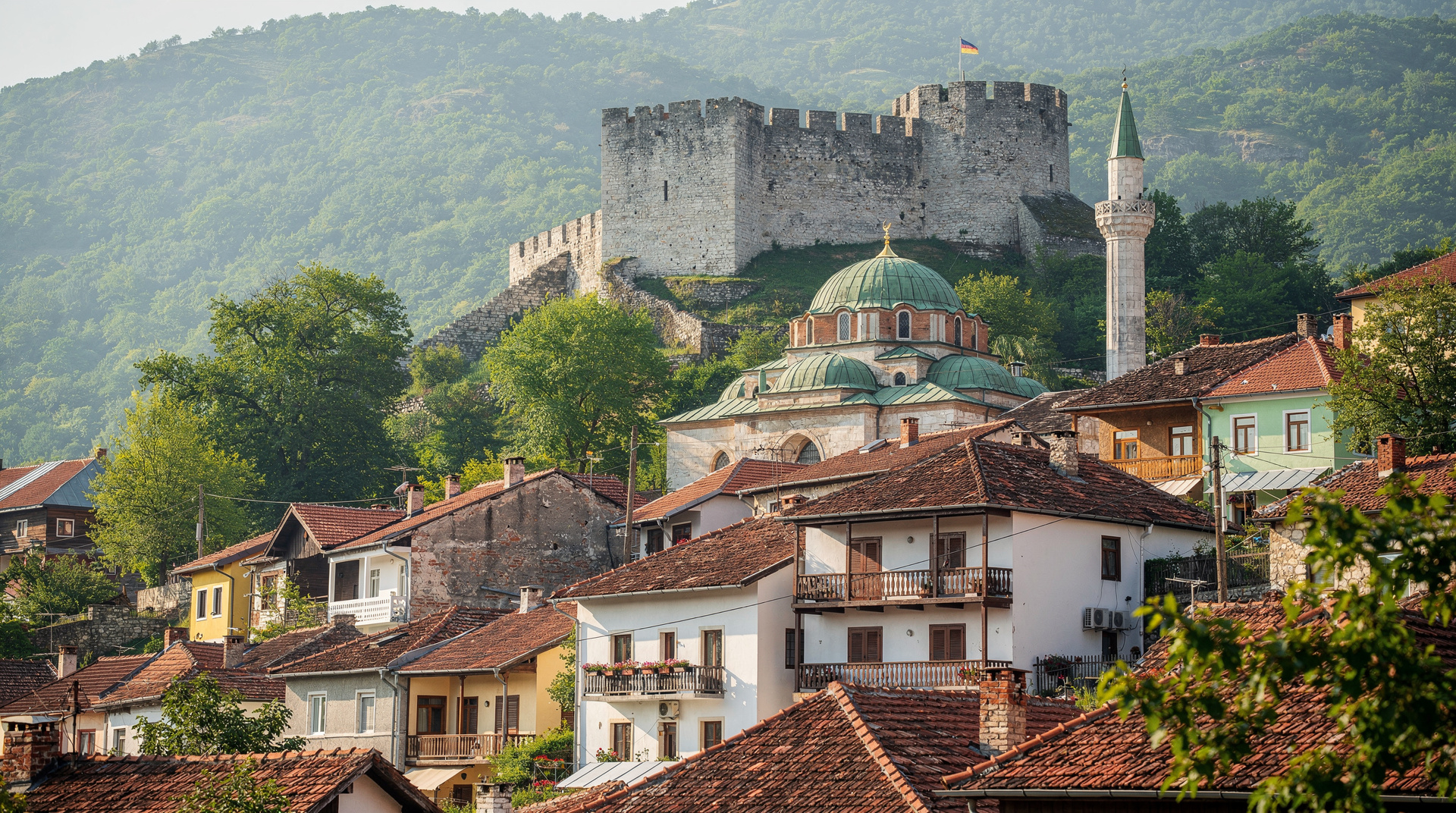
The fortress (Stari Grad): The hilltop fortress above Travnik is partly restored and open to visitors. The walls date from the medieval period but were heavily modified by the Ottomans. Climb to the top tower for views over the Lašva valley and the minarets below. Entry is approximately 5 BAM.
Šarena džamija (Many-Coloured Mosque): Built in 1757 and covered in elaborate painted ornament — flowers, geometric patterns, calligraphy — on the interior surfaces. One of the most beautiful Ottoman mosque interiors in Bosnia. Enter respectfully; remove shoes; dress modestly.
Andrić birthplace: A small museum in the house where Ivo Andrić was born. For literary travellers, this is a meaningful stop; for general visitors, the exterior and neighbourhood are worth a look even without going inside.
Allow 2-2.5 hours in Travnik.
Reading Travnik’s layers
Travnik rewards a slow pace more than a checklist. The town sits in a narrow valley, so the minarets, the fortress walls and the old shopfronts are all close together, and you can see how the Ottoman governors’ city grew around its market. If the history interests you, the Travnik Ottoman town guide goes deeper into the viziers’ era, the mosques and the streets worth a detour. For the wider picture of how these centuries shaped the country, the Ottoman heritage in Bosnia guide places Travnik alongside Sarajevo, Mostar and Blagaj.
Eating is part of the visit. Travnik is a good place for a first taste of central Bosnian cooking, and the burek and pita guide explains what to order and how the different pies differ, which helps when you are standing in front of a counter on a tight schedule.
Jajce — waterfall city of the Bosnian kings
The waterfall
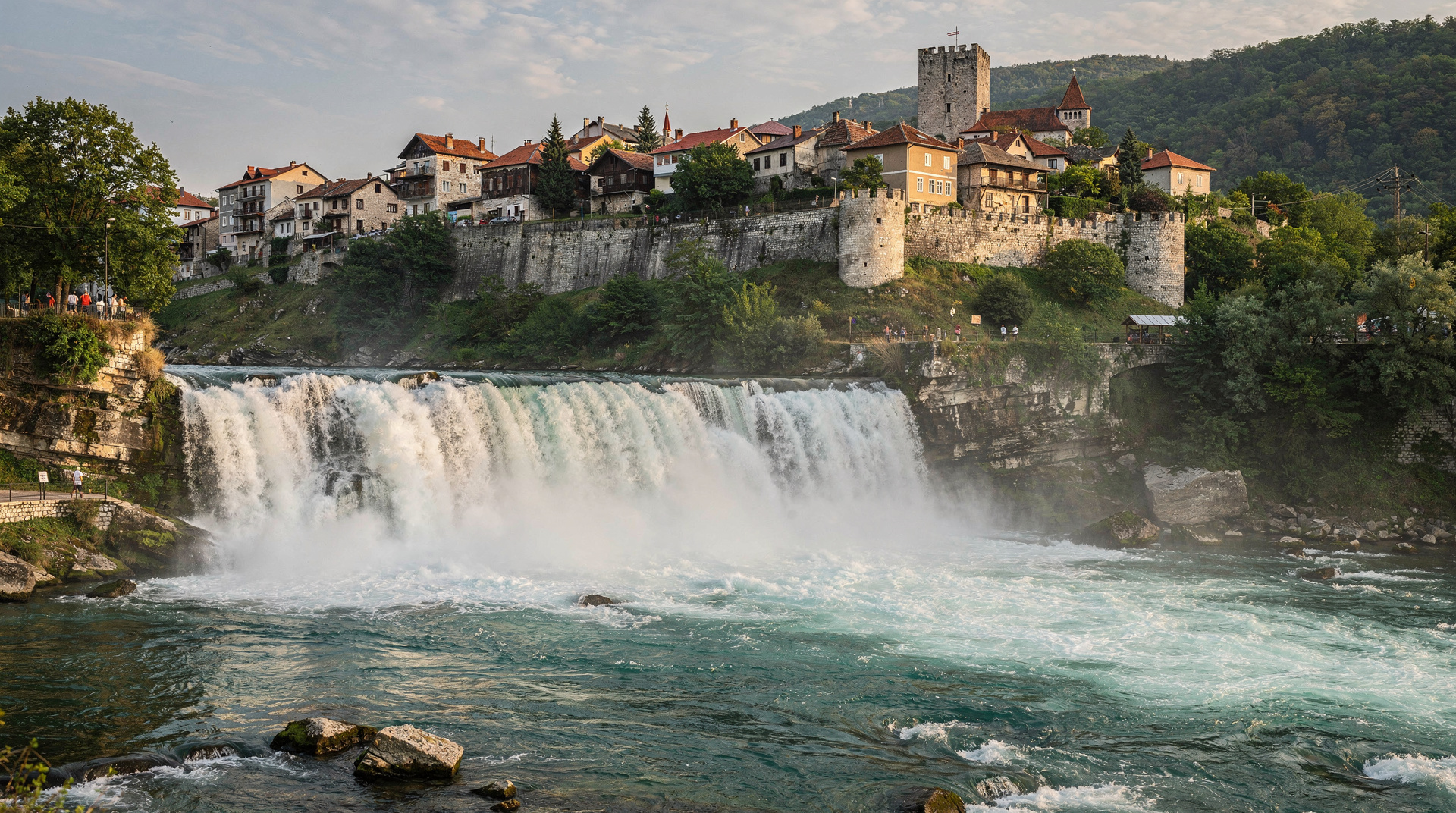
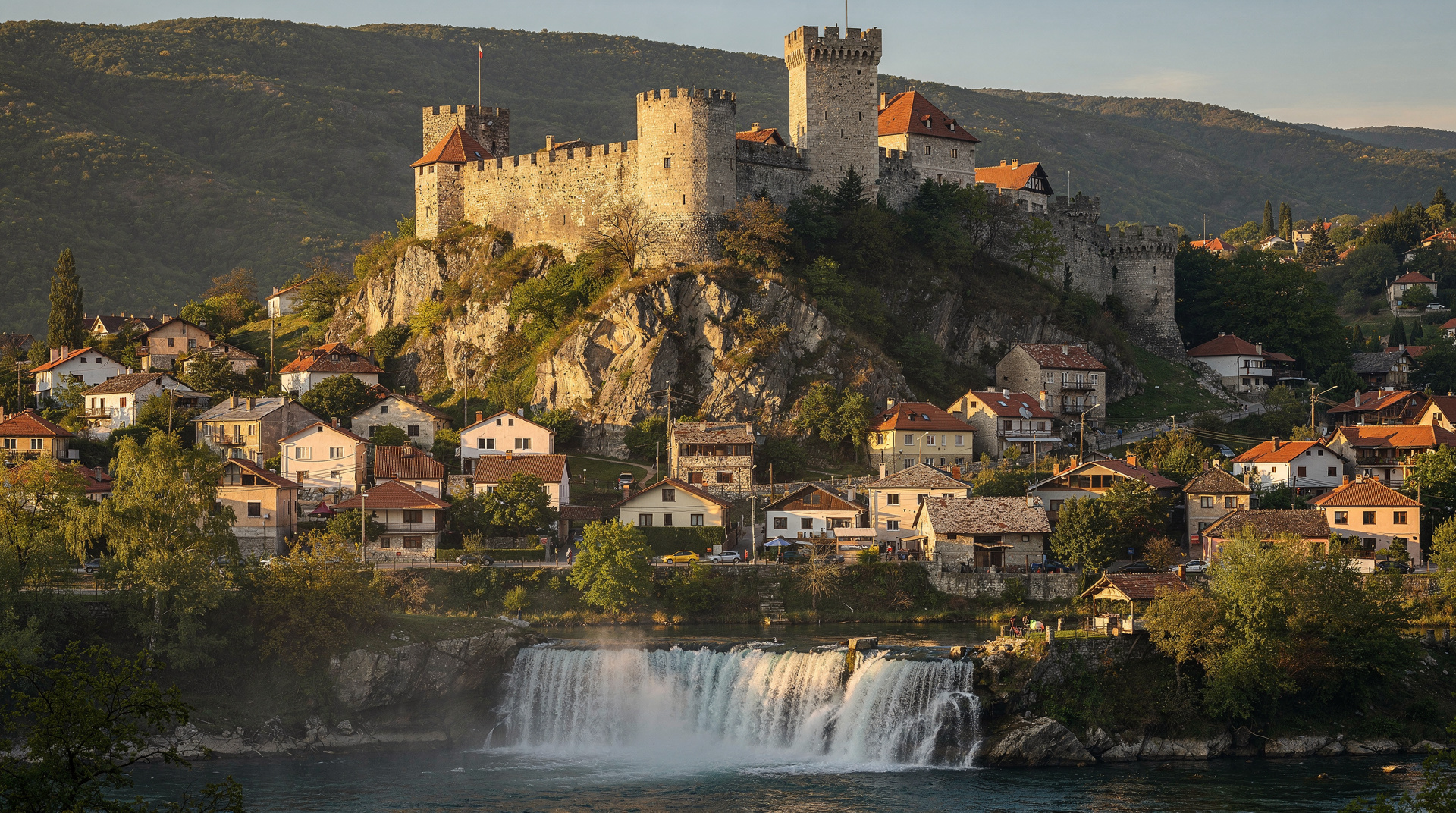
Jajce’s defining feature is the Pliva Waterfall — a 22-metre cascade at the confluence of the Pliva and Vrbas rivers, in the middle of town. There are very few places in the world where a waterfall of this scale sits within metres of a town centre, and the combination of the medieval fortress above and the waterfall below gives Jajce a drama that photographs only partially capture. Entry to the waterfall viewing area is 3 BAM.
The best view is from the bridge over the Pliva, looking upstream to the fall. At certain times of day, with the right light, the spray creates a rainbow above the gorge.
The fortress and the royal history
The hilltop Jajce Fortress was the seat of the last independent Bosnian king, Stjepan Tomašević, who was executed by the Ottomans in 1463. The fortress walls are substantial and well-preserved; climb to the top for panoramic views over the Pliva and Vrbas valleys. Inside the fortress, the massive Belfry (constructed by the medieval Bosnian Church and later converted to a minaret by the Ottomans) is the dominant structure. Entry is approximately 5 BAM.
The catacombs
Beneath the town lies one of Bosnia’s most extraordinary medieval structures: the Catacombs of St Luke, a vaulted underground burial chamber from the 14th-15th century, connected to the medieval Bosnian Church and its distinctive cult of saints. The catacombs are open for guided visits (ask at the fortress entrance); entry is approximately 3 BAM.
The Pliva lakes and watermills
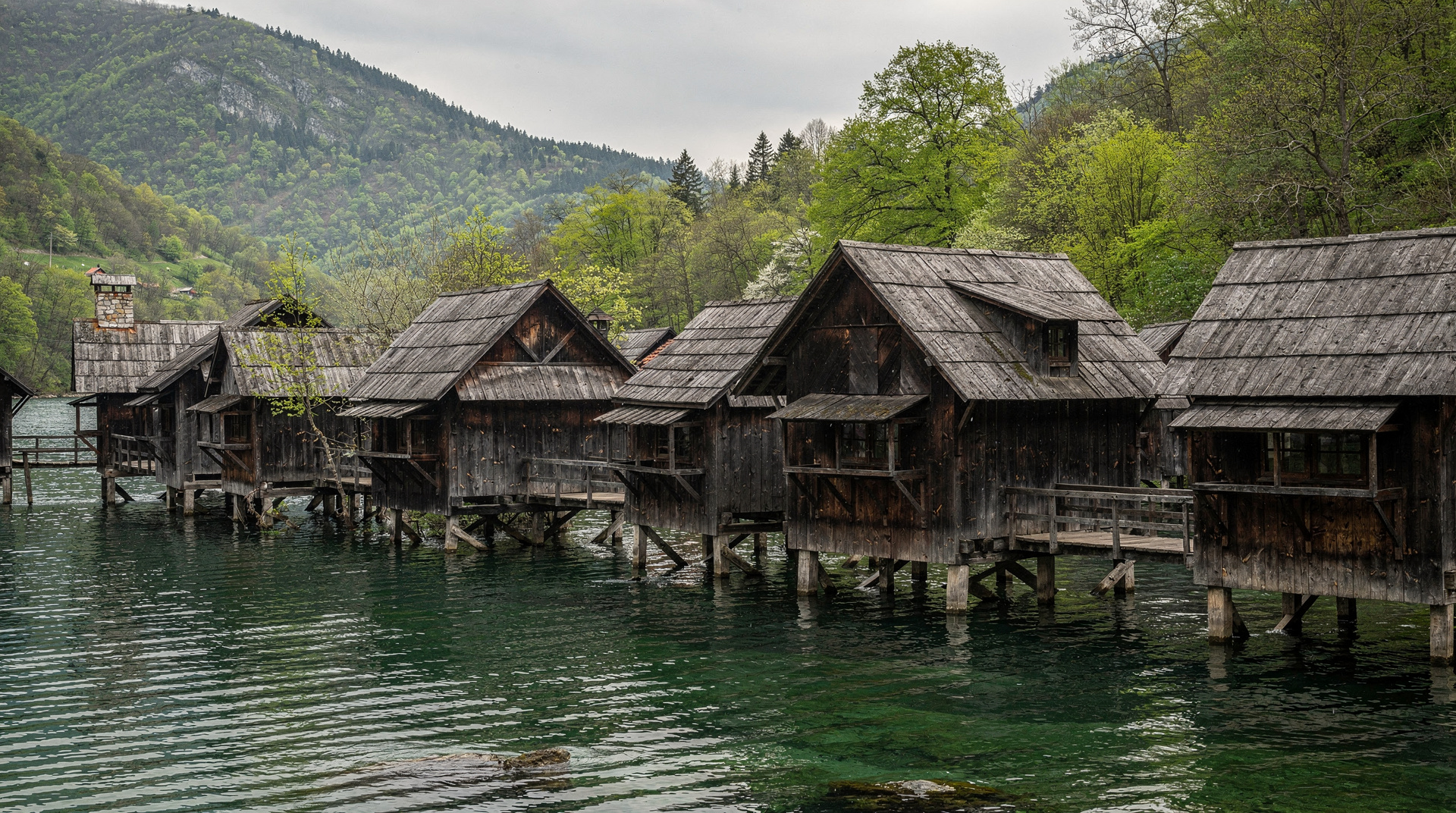
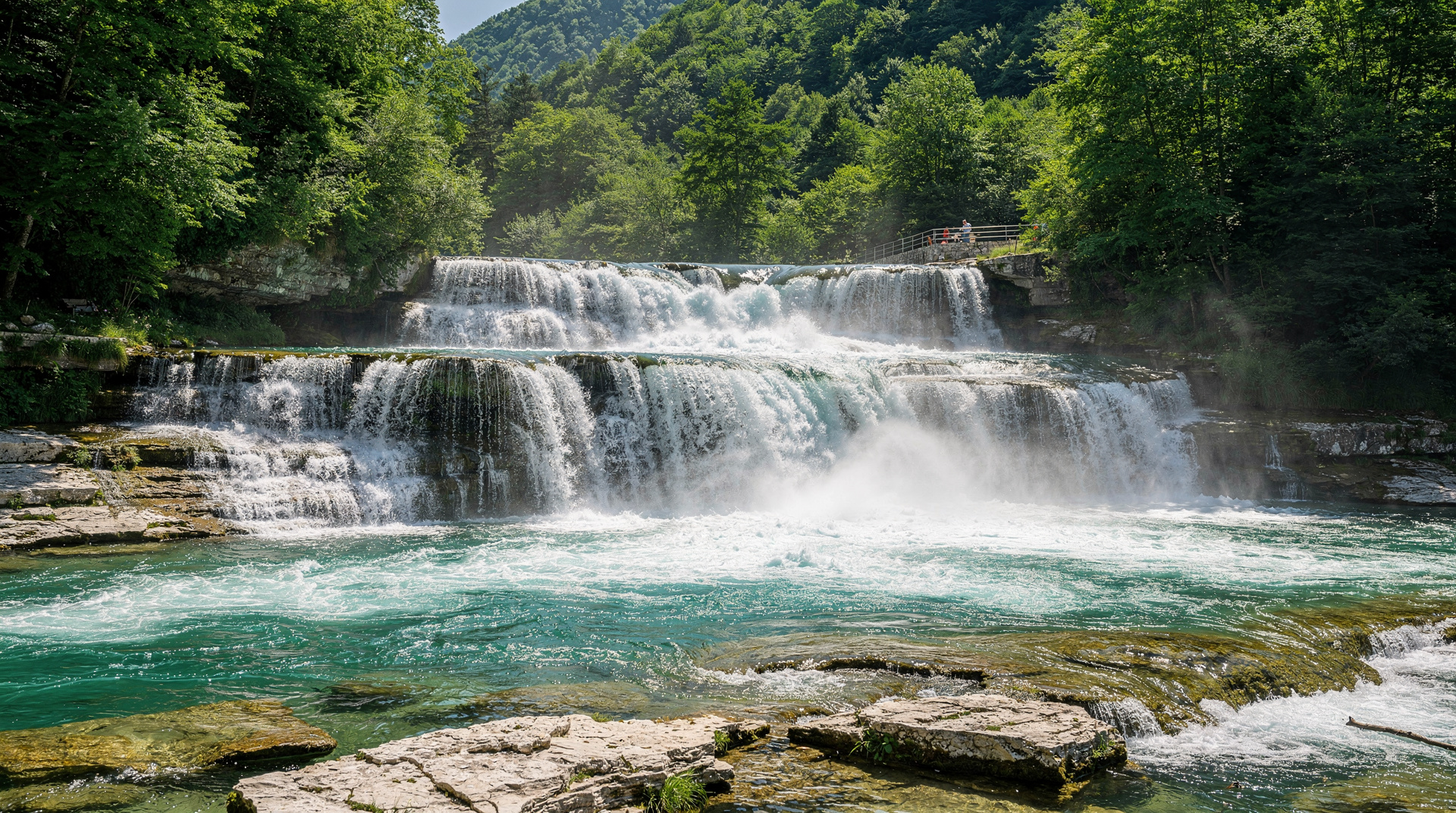
Two kilometres northwest of the town centre, the Pliva lakes offer a peaceful contrast to the historical intensity of the fortress and catacombs. Malo jezero (Small Lake) and Veliko jezero (Big Lake) are connected by the Pliva river, and the stretch between them is lined with historic watermills — small wooden structures perched on the riverbank, driven by the current. The best-preserved cluster is at the Malo jezero outlet; several mills are still operational and can be visited.
The walk between the lakes and back through the mill village takes about 60-90 minutes on a flat path through poplar woodland. Swimming is possible in Malo jezero in summer.
Going deeper in Jajce
Each of Jajce’s main sights has its own dedicated page if you want more than this overview. The Pliva waterfall guide covers the best viewpoints and the light at different times of day, and the Jajce watermills and Pliva guide describes the lakeside walk in more detail. The Jajce destination page gathers everything in one place, and the Pliva lakes page is useful if you would rather spend more of the day by the water than in the old town.
Travellers who like the story behind a place will enjoy the personal account in Jajce, the royal town, which captures how the town feels once the day-trippers have left.
How to pace the stops
The fortress, the catacombs and the waterfall are close enough that you can move between them on foot, so there is no need to shuffle the car around. Save the lakes for the afternoon, when the walk is a gentle way to come down after the climb to the fortress. If you are running late, the lakes are the stop to shorten, because the waterfall and the fortress are what make Jajce unlike anywhere else in Bosnia. Wear shoes with decent grip: the fortress paths and the stone steps near the falls can be slippery when wet.
Sample day itinerary from Sarajevo
| Time | Activity |
|---|---|
| 07:30 | Leave Sarajevo by car or tour |
| 09:00 | Arrive Travnik; fortress, bazaar, Šarena mosque |
| 11:30 | Coffee and burek at a Travnik konoba |
| 12:00 | Drive to Jajce (50 min) |
| 13:00 | Jajce waterfall and fortress |
| 14:30 | Lunch in Jajce (15-25 BAM for a main) |
| 15:30 | Pliva lakes and watermills walk |
| 17:00 | Drive back to Sarajevo |
| 19:15 | Back in Sarajevo |
This is comfortable with a car or private tour. Guided group tours typically follow a similar schedule.
Planning around the weather and the season
Central Bosnia has a more changeable climate than the coast, and it shapes how this day feels. Late spring brings green hillsides and full rivers, which makes the waterfall at its most dramatic. Summer is pleasant for the lakes but can be warm in the valleys, while autumn colours the beech forests along the road. The best time to visit Bosnia guide helps you choose the month, and the seasonal pages for Bosnia in spring and Bosnia in autumn describe what to expect on the ground. In winter, the day becomes a different trip, so read Bosnia in winter before committing.
Pack for variable conditions even in good months: a light layer for the fortress, comfortable walking shoes, and some cash in the local currency for small entry fees and a coffee.
Where this day fits in a longer trip
This excursion works best as one chapter of a wider route rather than a stand-alone outing. If Sarajevo is your base, compare it with the other options in best day trips from Sarajevo to decide whether central Bosnia or Herzegovina suits you better this time. Travellers heading west afterwards can fold Jajce into the western Bosnia and Krajina itinerary, and those building a full trip will find Jajce and Travnik slotted into the 7-day Bosnia itinerary. The Travnik destination page and the Sarajevo destination page are good starting points for planning the base and the stops either side of this day.
Practical information
- Entry fees: Travnik fortress ~5 BAM; Jajce waterfall ~3 BAM; Jajce fortress ~5 BAM; catacombs ~3 BAM
- Parking: Available at both towns; approximately 2 BAM/hour in Jajce centre
- Food: Good options in both towns — look for traditional pita, lamb dishes and Bosnian coffee
- Season: Best May-October; winter roads can be icy in the mountains
The Bosnia travel guide has full practical advice on car rental, road conditions and budgeting for a trip to central Bosnia.
Is a rental car worth it for this trip?
A rental car is the single biggest factor in how comfortable this day feels. Bus connections between Sarajevo, Travnik and Jajce exist but are not designed around this specific route, so you end up building the day around bus timetables rather than the sites. Self-driving lets you leave earlier, linger longer at the waterfall or the Pliva lakes, and adjust on the fly if Travnik’s bazaar turns out to be more interesting than planned. The renting a car in Bosnia guide covers costs, insurance and what to expect on mountain roads; the driving in Bosnia guide has road-condition specifics for the M5 corridor.
If you would rather not drive at all, an organised tour solves the timing problem without the hassle of the bus, at the cost of a fixed schedule and less flexibility at each stop.
Frequently asked questions about Jajce and Travnik day trip guide from Sarajevo
How far is Jajce from Sarajevo?
What is special about Jajce?
What should I see in Travnik?
Can I visit Jajce and Travnik without a car?
What are the Pliva lakes near Jajce?
Top experiences
Bookable activities with verified prices and instant confirmation on GetYourGuide.