Neretva rafting at Konjic guide
Konjic: Neretva River Rafting Adventure
Is Neretva rafting at Konjic worth it?
Absolutely. The Konjic canyon is one of Bosnia's finest rafting runs — 10 km of class III-IV rapids between 200m limestone walls, only 55 km from Sarajevo. Season runs April to October; spring gives highest water and most dramatic rapids.
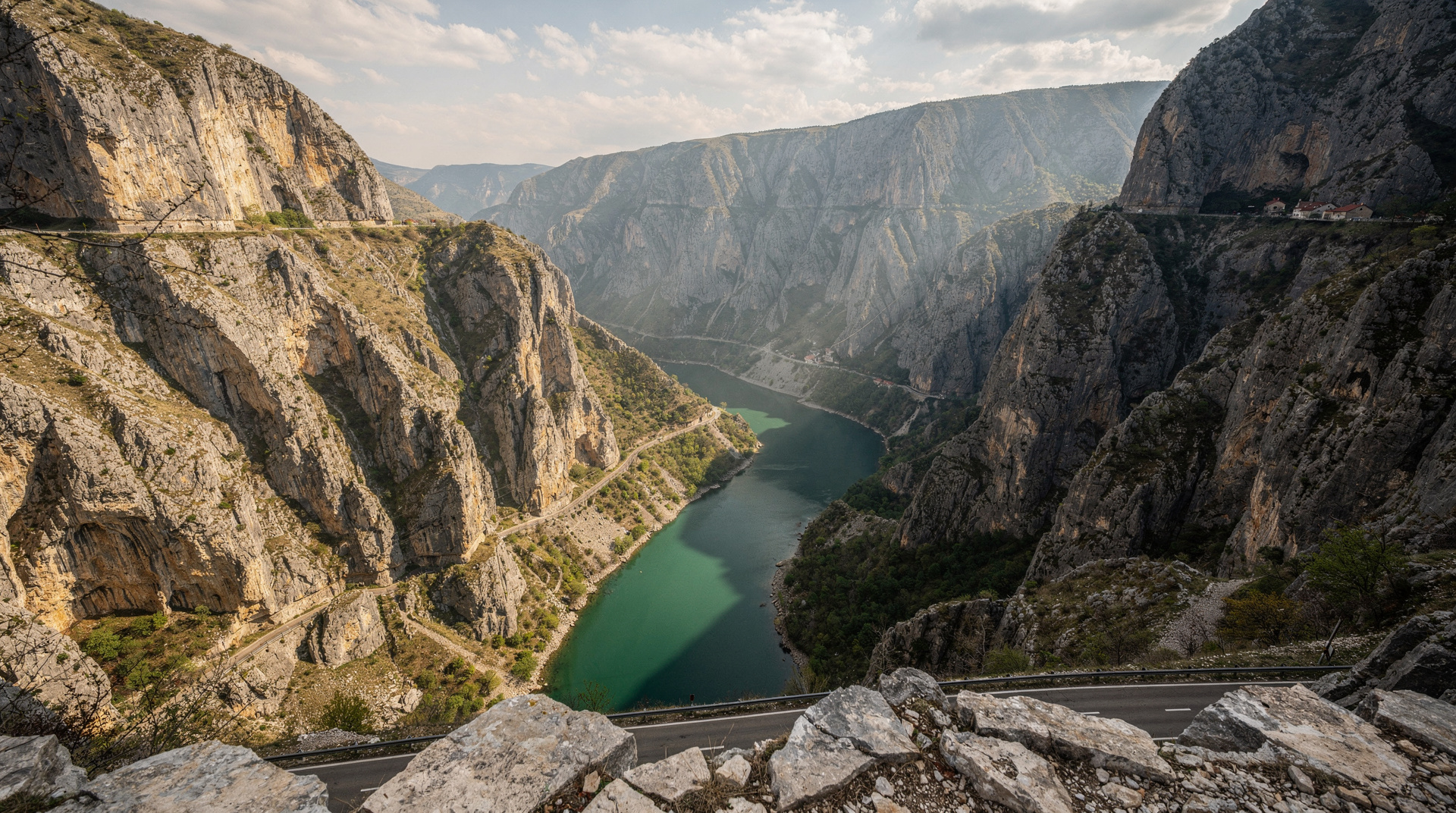
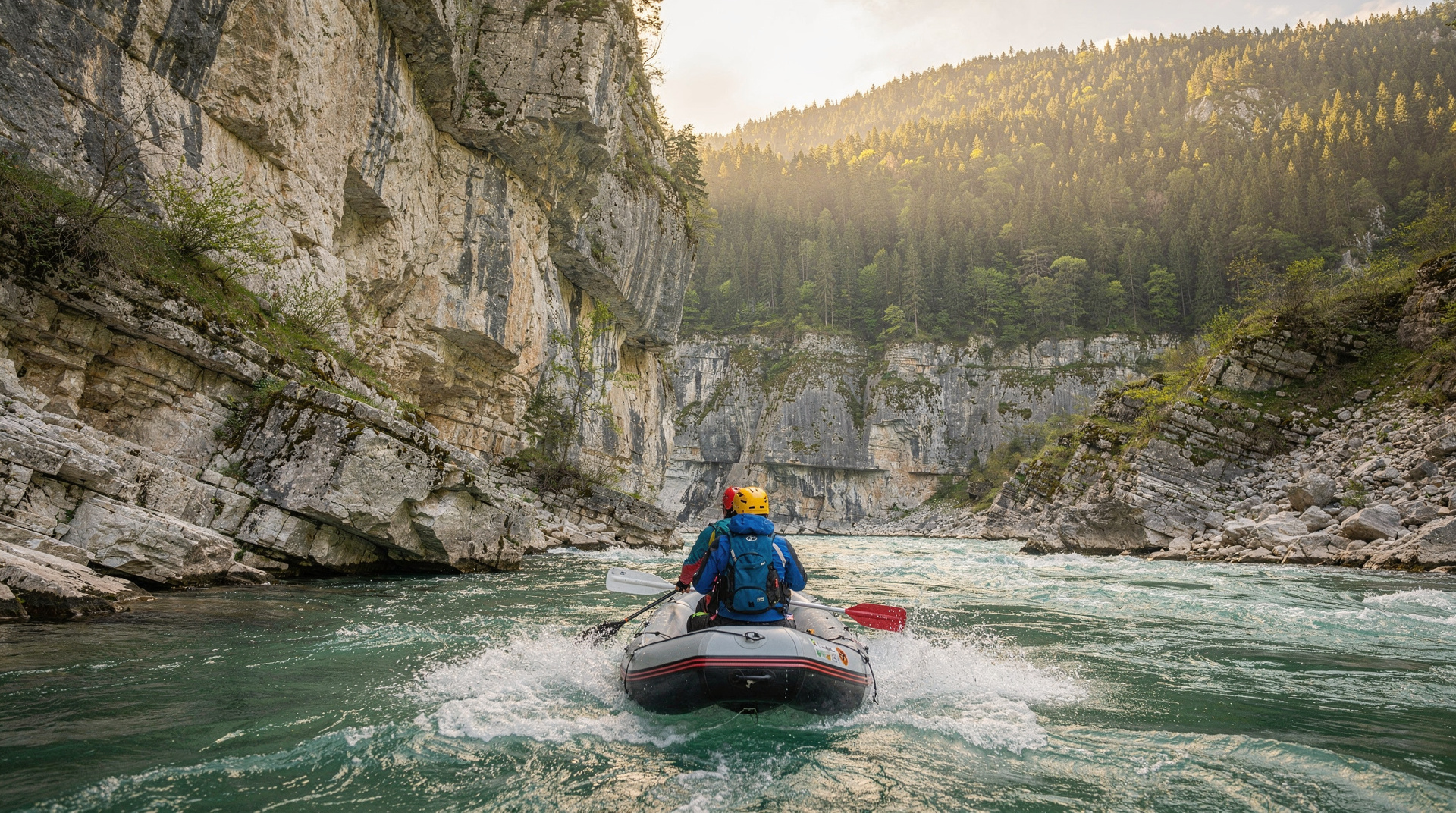
The Neretva River at Konjic is Bosnia’s most accessible whitewater rafting experience — a full-throttle canyon run just one hour from Sarajevo. Between vertical limestone walls rising 200 metres above the water, the river squeezes through a sequence of class III-IV rapids that will leave even experienced paddlers impressed.
| Where | Neretva canyon south of Konjic, 55 km from Sarajevo |
| Cost | Around 50-80 BAM rafting-only; 100-180 BAM with lunch and/or Sarajevo transfer |
| Time needed | 3-4 hours on the water; a full day with transfers and lunch |
| Getting there | Bus from Sarajevo (~1 hour, under 10 BAM) or guided transfer included with day trips |
| Best time | April-May for the biggest rapids; June-July for the best balance of water and comfort |
Why Konjic is Bosnia’s top rafting spot
Three factors make the Konjic canyon special. First, the scenery: this is a limestone gorge of Dolomite proportions, with overhanging cliffs, caves and emerald pools that you simply cannot see from the road above. Second, the accessibility: no other major rafting destination in Bosnia is this close to a capital city. Third, the combination options: Konjic town also holds Tito’s wartime nuclear bunker, making it uniquely easy to spend an entire day here without a car.
The canyon: what to expect on the water
Put-in and take-out
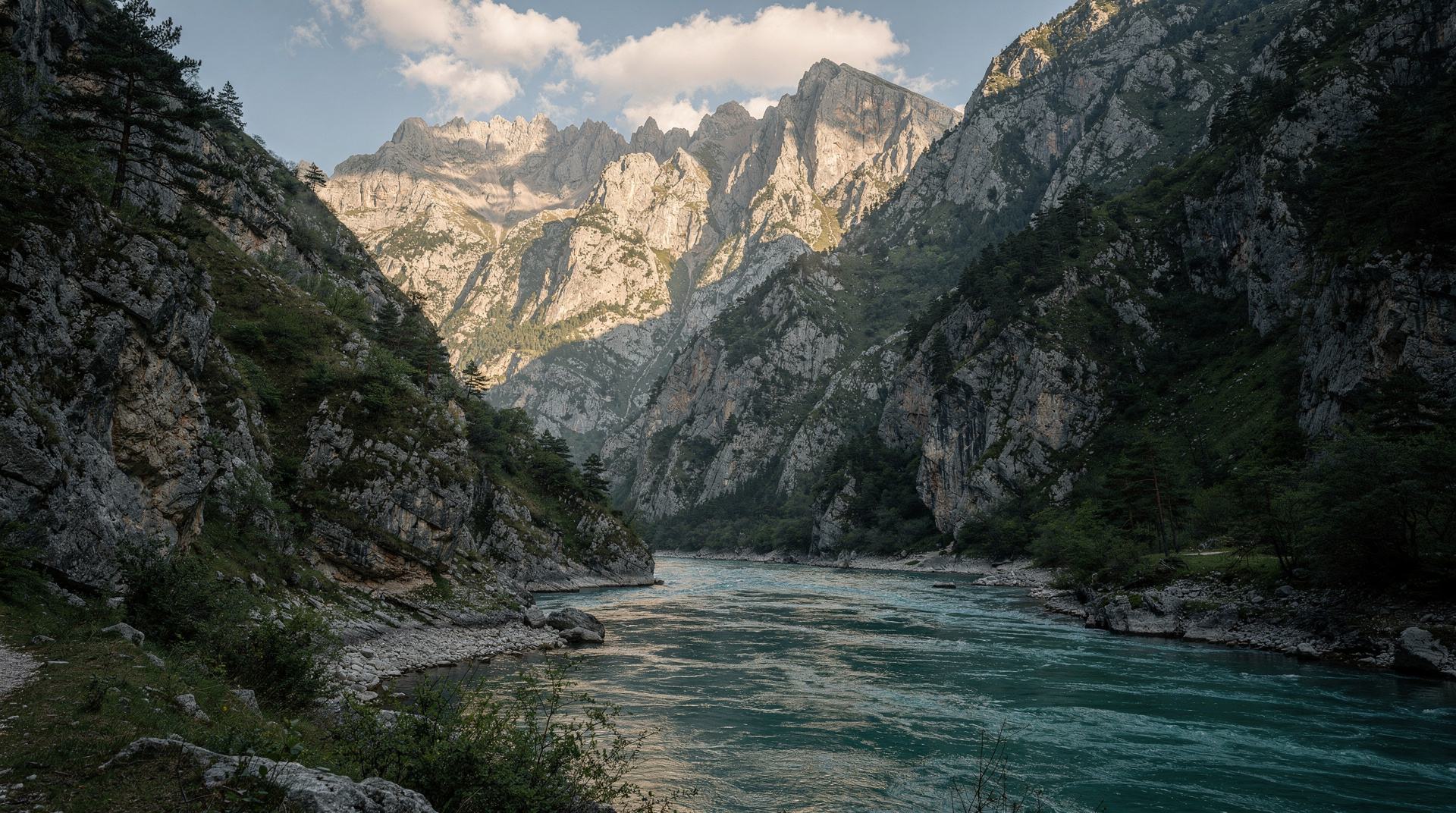
Most guided tours put in at one of the canyon access points south of Konjic town and take out roughly 10 km downstream where the gorge opens into a wider valley. From the road the canyon is invisible — only from the river do you understand its scale.
Rapids and highlights
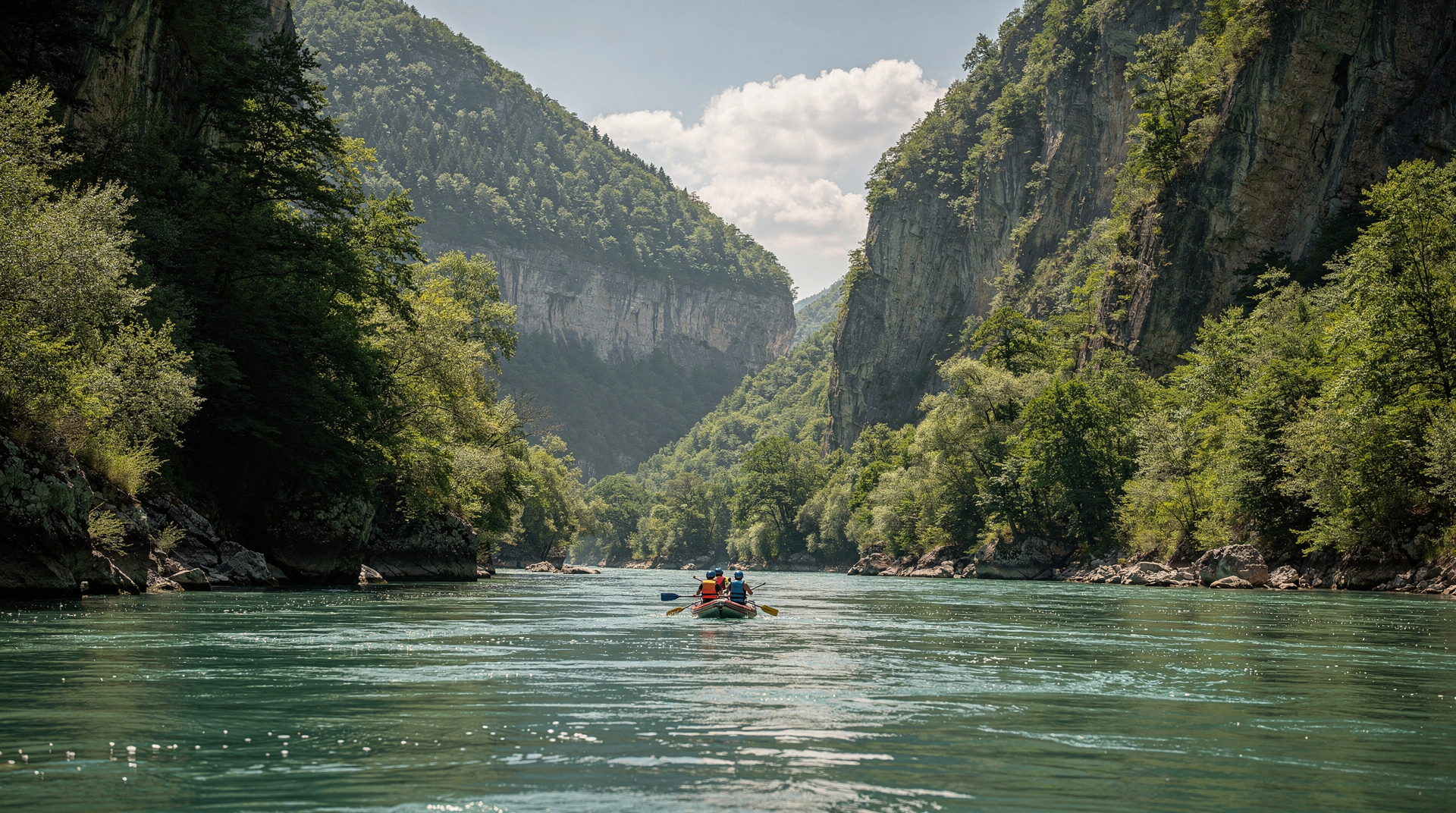
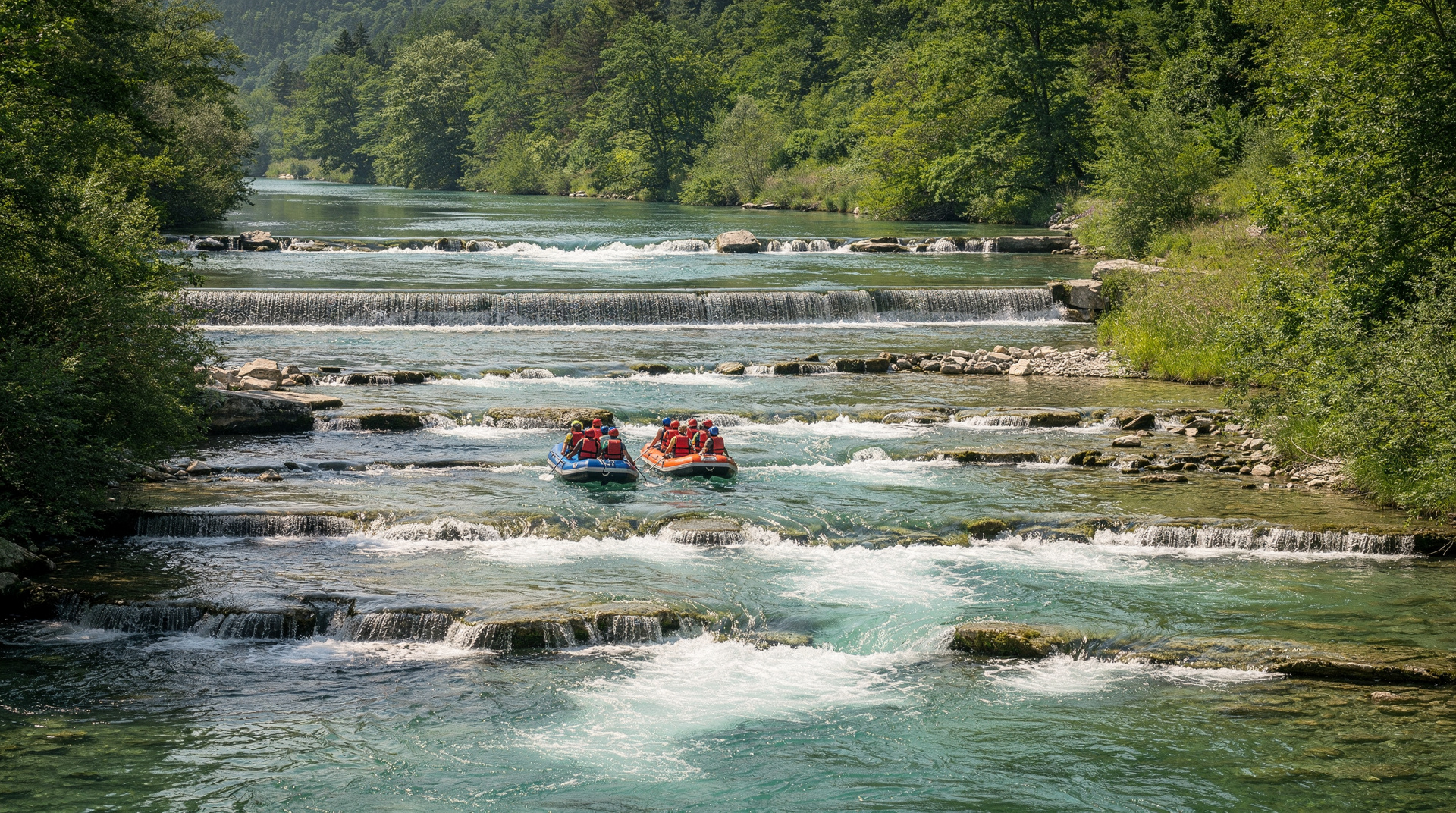
The run typically includes 8-12 named rapids depending on water level. Spring floods bring extra volume and push some sections into solid class IV; by August the flow is lower but the scenery is unchanged. The most memorable passages come in the middle of the run where the canyon narrows to barely 20 metres across and the limestone walls block all direct sunlight.
Guides pause at suitable eddies for swimming, cliff jumping (optional, roughly 3-5 metre ledges) and photography. Photographers who want to capture the canyon walls from inside them should bring a waterproof camera or phone case — operators often have them available to rent.
After the rapids
The run ends where the canyon walls retreat and the Neretva broadens into the wide valley that eventually reaches Mostar and the Adriatic watershed. A riverside lunch follows for most full-day tours — expect grilled lamb or trout, local bread, salad and a glass of Herzegovina red wine.
Booking your Neretva rafting trip
Neretva River rafting from Konjic is the most direct option if you are already based in Konjic or travelling independently.
If you are based in Sarajevo and want everything handled — pick-up, transfer south, rafting, lunch, return — a full Neretva rafting day trip from Sarajevo including meals simplifies logistics considerably.
The Neretva runs green and cold through Mostar itself, released from the dams upstream rather than fed by rain, so its level holds through the summer: a city rafting tour in Mostar uses the stretch below the old bridge, which needs no transfer at all.
Practical details
Season and water levels
- April–May: Highest water from snowmelt. Most powerful rapids, coldest water (8-12°C). Wetsuits essential.
- June–July: Water drops slightly, temperature rises. Excellent balance of rapids and comfort.
- August–September: Lower water, warmer (18-22°C). Some smaller rapids become wave trains. Still very enjoyable.
- October: Possible but river companies often wind down. Check availability in advance.
Prices
Guided Neretva rafting from Konjic typically costs:
- Rafting only (half-day): 50-80 BAM (25-40 EUR) per person
- Full day with lunch: 100-140 BAM (50-70 EUR)
- Day trip from Sarajevo including transfer and meals: 140-180 BAM (70-90 EUR)
Equipment
All reputable operators provide: wetsuit (3-5mm), neoprene boots, helmet, buoyancy aid, paddle and guide support kayak. Bring a change of dry clothes and shoes for afterwards; you will be thoroughly wet even if you never fall in.
Getting to Konjic
By bus: Regular buses run from Sarajevo’s main station to Mostar and stop in Konjic (approximately 1 hour, under 10 BAM one-way). This is the most economical option.
By car: Konjic is on the main M-17 road south of Sarajevo. Parking is easy at most operators’ put-in points.
Guided transfer: Several Sarajevo-based operators include pick-up and drop-off in their day-trip pricing.
Combining rafting with Tito’s bunker (ARK D-0)
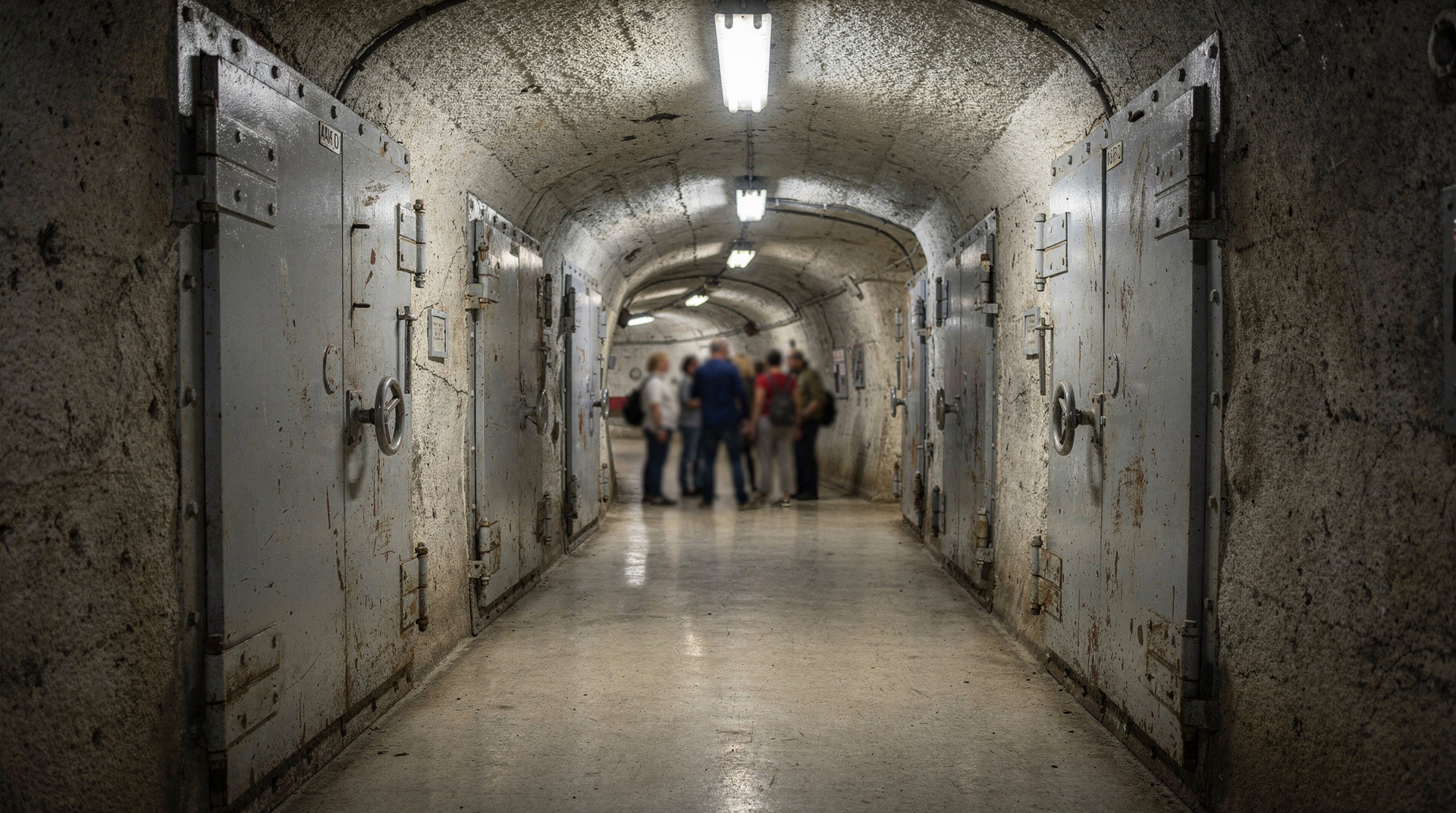
Konjic is doubly famous: for the Neretva canyon and for hiding Tito’s Cold War nuclear bunker, the ARK D-0, inside a mountain outside town. The bunker was built in absolute secrecy between 1953 and 1979, remained classified until 1992 and today operates as both a museum and contemporary art space.
A natural day structure: morning rafting (typically 9:00-13:00), lunch at a riverside restaurant, afternoon bunker tour (1.5-2 hours). This combination turns a simple activity day into one of the most memorable 24-hour experiences in the western Balkans. See our Konjic day trip guide for the full logistics.
Rafting safety and landmine awareness
The Neretva canyon itself is safe and regularly patrolled by licensed operators. However, Bosnia’s war history means that remote rural and forested areas adjacent to river put-in and take-out points can contain unexploded ordnance. Always stay on marked paths and access roads. Do not explore off-trail near rural riverbanks. This applies to the whole country outside of cities and designated hiking trails. Your guides will brief you on safe zones.
Konjic and the Neretva beyond rafting
The Neretva valley above Konjic extends toward the Prenj massif, often called the “Bosnian Himalaya” for its dramatic limestone ridgelines. For hikers, the Prenj mountain guide covers multi-day trekking routes in this area. Experienced alpinists combine a canyon trip with ridge walking on Prenj.
Downstream from Konjic, the Neretva eventually reaches Mostar — a journey of about 60 km. The river’s character changes entirely below the canyon: slower, broader, flanked by orchards and tobacco fields. The Mostar day trip from Sarajevo can logically include a Konjic rafting stop on the outward leg if you have a car or a private transfer.
What to bring
- Swimwear under your wetsuit
- Old trainers or sandals (you will be wading at the put-in)
- Sunscreen (apply before the wetsuit — operators ask you to for environmental reasons)
- Small dry bag for phone, camera and valuables (often provided; confirm in advance)
- Cash in BAM for tips and any extras
The Neretva at Konjic represents Bosnia adventure travel at its best: a world-class natural experience without the queues, prices or infrastructure crowds of Western European equivalents.
Before you get in the raft
A good rafting day starts the evening before. Eat a proper dinner, drink water, and avoid a heavy night out: the cold of the canyon is easier to handle when you are rested and fed. If you are staying in the capital, our Sarajevo where to stay guide helps you pick a base close to the station or a pick-up point, which matters if your operator collects guests early in the morning.
On the day itself, arrive at the meeting point a little ahead of time. The briefing is not a formality. Guides explain how to sit, how to hold the paddle, what to do if someone ends up in the water and which commands they will shout. Listen to it even if you have rafted elsewhere, because every river has its own habits and the canyon at Konjic is narrow enough that a command heard late is a command wasted.
Tell your guide about anything that could affect you in the water: a recent injury, a bad shoulder, a fear of deep pools, contact lenses, or a medical condition. Guides would rather adjust the seating in the raft than discover a problem in the middle of a rapid. Keep valuables in the car or the operator’s locker rather than carrying them onto the river.
What the day feels like
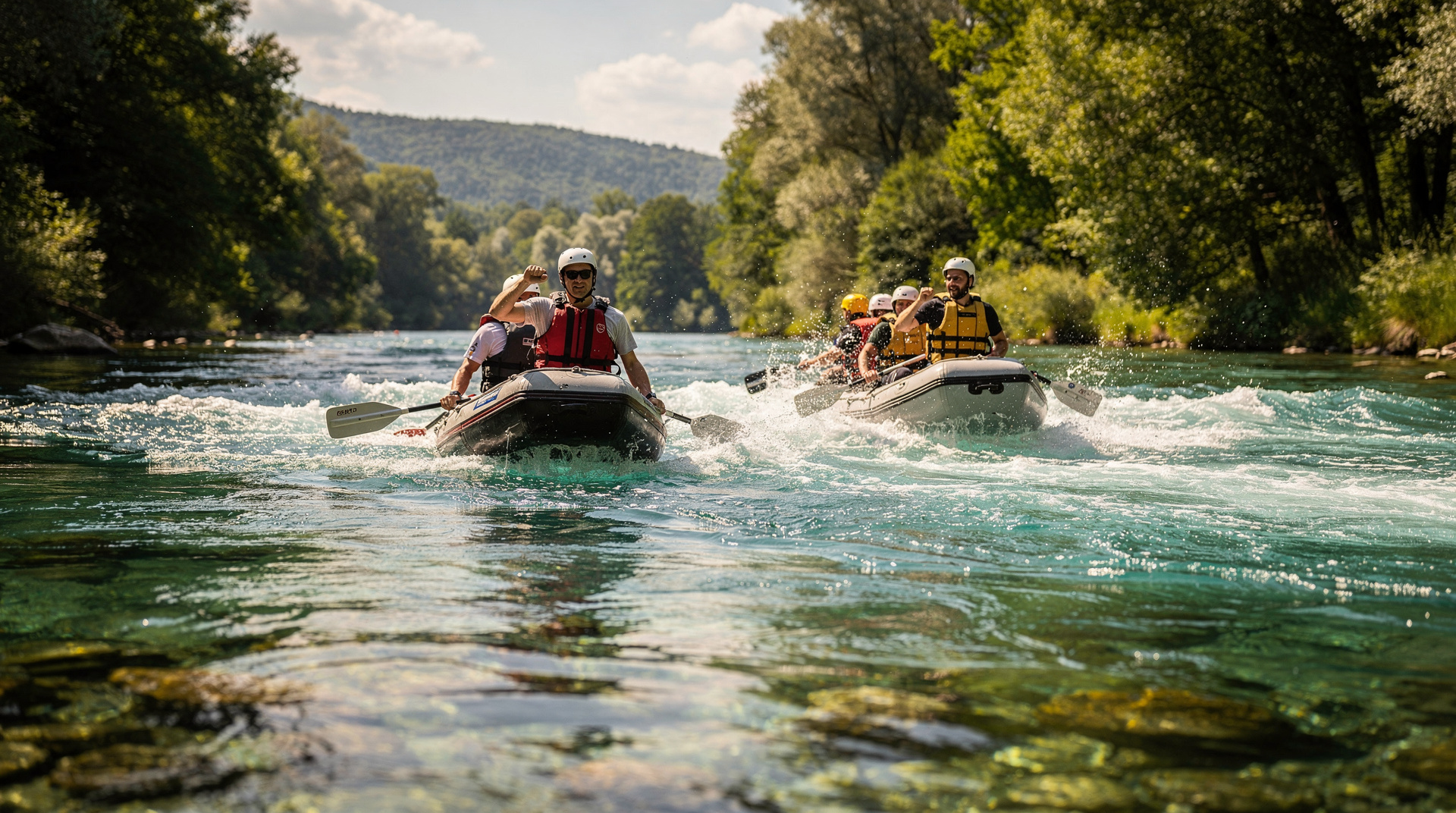
The first minutes are the calmest. The raft drifts, the group finds its rhythm, and the guide uses the easy water to practise the paddling commands. Then the canyon closes in, the sound of the river grows, and the first real rapid arrives. Most people describe the same sequence: nervous laughter, a lot of shouting, a burst of cold spray, and a sudden, slightly surprised sense of having done it.
Between rapids the pace drops again. These are the moments when the scenery takes over: pale walls, hanging vegetation, small caves at water level and the green of the pools. Take a moment to look up, because the sky is a narrow strip and the light changes the colour of the stone by the minute. Photographers who want to keep the day on film should read the equipment notes above and agree with the guide in advance on when the camera can come out.
Teamwork matters more than strength. A raft moves well when everyone paddles together on the call, and badly when a few people paddle hard and the rest watch. Smaller or less athletic participants are not a handicap if they follow the rhythm. Sit where the guide puts you, keep your feet tucked in the way you were shown, and hold the paddle grip when you are not using the blade.
Choosing your operator
Operators around Konjic broadly fall into two kinds: local outfits based in the town who run the river every day, and Sarajevo or Mostar agencies who bundle the rafting with transport and lunch. Neither is better in absolute terms. Locals often know the water best and tend to be flexible about timing. Bundled trips remove the logistics, which is a real advantage if you have no car and little time.
When comparing offers, look at what is actually included rather than the headline price. Check whether the wetsuit, boots, helmet and buoyancy aid are provided, whether lunch is part of the price, whether photos are an extra, and what the cancellation terms say if the water level or the weather changes the plan. Read recent reviews for comments on guides, safety briefings and the condition of the equipment, and be wary of any trip that skips the briefing or squeezes too many people into one raft.
If you are building a longer route through the country, rafting fits naturally into an adventure-focused plan. Our Bosnia adventure itinerary places the Neretva alongside other outdoor stops, while the Sarajevo to Mostar in three days route passes right through Konjic and leaves room for a rafting morning.
Fitting Konjic into a wider trip
Konjic sits on the natural corridor between the capital and Herzegovina, which is why it pairs so easily with other plans. Travellers heading south can read the Sarajevo to Mostar transport guide to see how the bus, train and car options line up, then decide whether to break the journey in Konjic for a night. Those driving should also look at the driving in Bosnia guide for road conditions and habits, and the car rental guide if they have not yet booked a vehicle.
If you plan to continue to the coast, the Dubrovnik to Sarajevo route describes the journey in the other direction and shows how Konjic fits along the way. For a wider overview of how long to spend in the country, the how many days in Bosnia guide gives a realistic sense of what a rafting day costs you in time, and the 7-day Bosnia itinerary shows one way to slot it into a week.
Travellers who like their adventure outdoors can also browse the hiking in Bosnia guide and the kayaking in Bosnia guide, both of which suit a day after the river when your arms need a rest and your legs do not. The best time to visit Bosnia page helps you weigh the seasons against the rest of your plans, and the Neretva canyon adventure blog post gives a traveller’s account of the river that is worth reading before you commit.
After the river
Once you are out of the wetsuit, resist the urge to rush. A warm drink, dry clothes and a proper meal turn the tiredness into a pleasant glow. Most people feel the effort in their shoulders and forearms the next morning, so keep the following day lighter if you can. A slow walk through a town or a gentle drive is a better follow-up than a long hike.
Konjic rewards a little curiosity. The mix of Ottoman-era streets, a quiet river and mountain views is a good counterpoint to the adrenaline of the canyon, and it is the kind of place where an unplanned coffee turns into the best part of the afternoon. If you enjoy the local drinking culture, the Bosnian coffee culture guide explains how to order and what to expect, and the Bosnian food guide helps you choose what to eat after a day on the water.
How Konjic compares to other Bosnian rafting
Konjic is not the only rafting river in the country, and it is worth knowing how it stacks up before booking.
| River | Difficulty | Distance from Sarajevo | Best for |
|---|---|---|---|
| Neretva (Konjic) | Class III-IV | ~55 km / 1 hr | Scenery + accessible day trip |
| Una (Bihać) | Class II-III | ~300 km / 4-5 hrs | Gentler water, family groups |
| Tara (via Montenegro border) | Class III-V | Multi-day trip | Europe’s deepest canyon, bigger commitment |
The full rafting in Bosnia guide covers all three rivers side by side, and the Tara River rafting guide and Una River rafting guide each go into detail on the alternatives if Konjic’s canyon feels too intense — or not intense enough.
If you have more time in the area
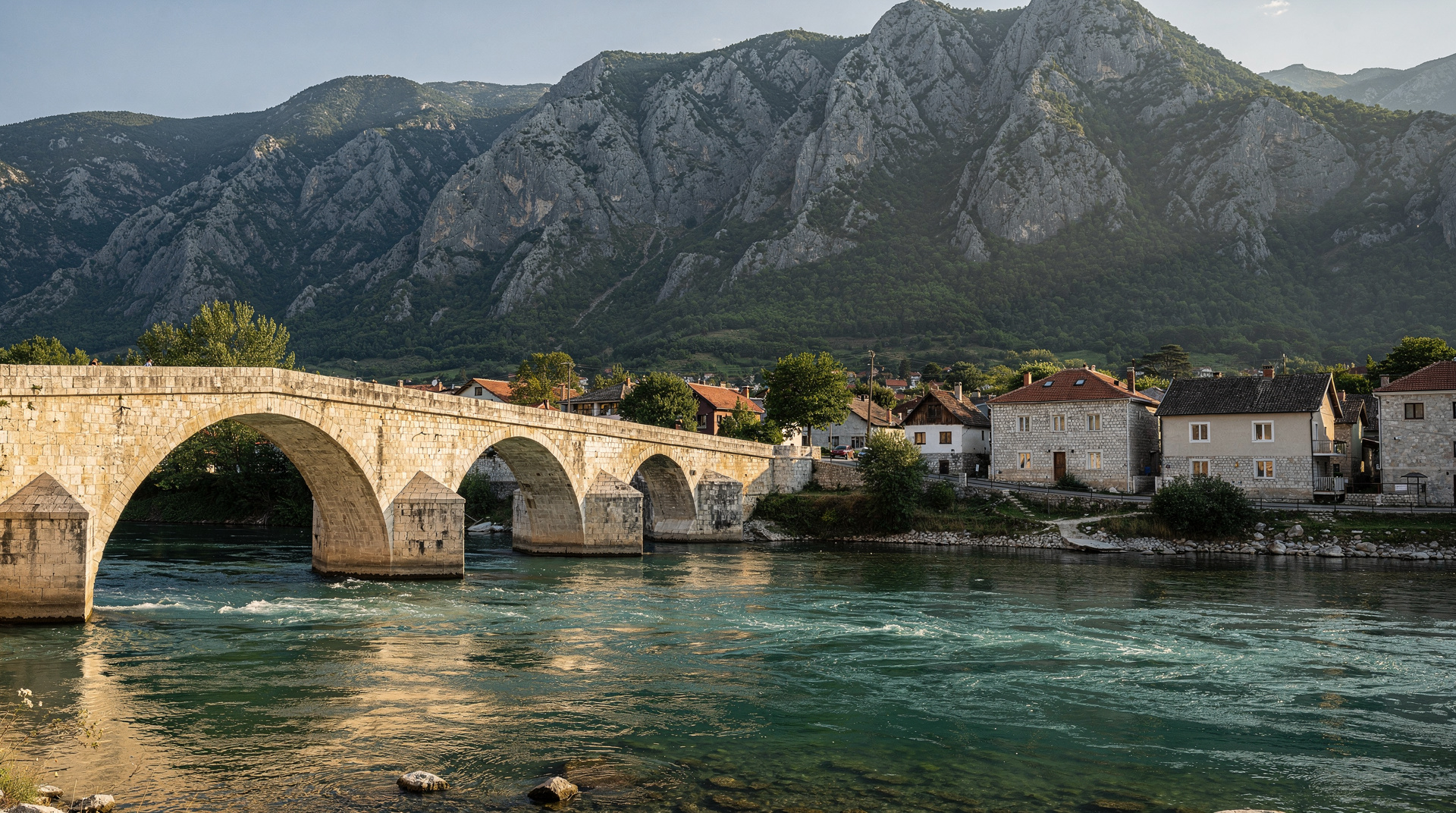
Konjic sits close enough to several other worthwhile stops that a rafting day can easily extend into a longer visit. The town itself has a historic old bridge and a laid-back riverside centre worth an hour’s wander before or after the water. Hikers based here for a few days often combine a rafting morning with an ascent attempt on Prenj, while those without a car generally organise everything through a Sarajevo food tour-style operator that also runs the Neretva transfer.
Who this trip suits
The run suits couples, friends and small groups who want a shared adventure without a long expedition. It also works well for solo travellers, since you are placed in a raft with other guests and the guide’s commands give everyone a common task. Families with teenagers who are confident in water can enjoy it too, but check the operator’s age policy first, and read our Bosnia with kids guide and family activities in Bosnia for gentler options with younger children. Anyone worried about general safety on a trip will find useful context in the is Bosnia safe guide.
Frequently asked questions about Neretva rafting at Konjic
How far is Konjic from Sarajevo?
What class are the Neretva rapids at Konjic?
How long does Neretva rafting take?
What temperature is the Neretva at Konjic?
Can I combine Neretva rafting with Tito's bunker?
Are there gentler rafting options near Konjic?
Do I need to know how to swim to go rafting at Konjic?
Is Neretva rafting at Konjic suitable for beginners?
Top experiences
Bookable activities with verified prices and instant confirmation on GetYourGuide.