Srebrenica day trip guide from Sarajevo
From Sarajevo: Day Trip to Srebrenica
How do I do a day trip to Srebrenica from Sarajevo?
Srebrenica is 120 km from Sarajevo — about 2h30 by car on mountain roads through eastern Bosnia. Join a guided tour from Sarajevo for the best experience: guides provide essential historical context and the logistics of reaching Potočari. Allow a full day. The visit is emotionally demanding but profoundly important.
| At a glance | |
|---|---|
| Where | Potočari, 6 km north of Srebrenica town, ~120 km east of Sarajevo |
| Cost | memorial entry is free; guided day tours typically around 40-70 EUR |
| Time needed | full day from Sarajevo (around 2h30 each way, 2-3 hours at the memorial) |
| Getting there | guided tour (recommended) or rental car; limited public transport |
| Best time | any weekday; 11 July commemoration is powerful but very crowded |
No day trip from Sarajevo carries as much weight as the journey to Srebrenica. This is not a comfortable excursion — and it should not be. But it is arguably the most important thing you can do in Bosnia & Herzegovina: to stand at Potočari and witness for yourself the place where 8,372 human beings were murdered in July 1995, while a UN peacekeeping force watched helplessly from inside their base 200 metres away. The visit to Srebrenica is an act of bearing witness, and the memorial has been created to make that act as clear, as human, and as lasting as possible.
Getting to Srebrenica from Sarajevo
Distance and journey time
Srebrenica is approximately 120 km from Sarajevo by road — but the mountain roads of eastern Bosnia mean the journey takes about 2h30 by car. The route heads east from Sarajevo, crossing a landscape of forests, small rivers and scattered villages that shows a side of Bosnia rarely visited by tourists. The road through the Drina valley region is quiet and strikingly beautiful.
By organised tour
A guided tour from Sarajevo is strongly recommended for first-time visitors to Srebrenica. The historical and political context of the genocide is complex, and having a knowledgeable guide — ideally one who has personal or professional connections to the events — transforms the visit from a sombre logistics exercise into a genuinely educational and moving experience.
From Sarajevo: day trip to SrebrenicaFor a deeper engagement with the history, the study tours led by researchers and survivors are the most profound option:
From Sarajevo: Srebrenica genocide memorial study tourPotočari is two and a half hours east of Sarajevo and the memorial has no scheduled guiding, so what a visitor takes from it depends entirely on who accompanies them: a Srebrenica memorial tour with a testimonial includes a first-hand account, which is the part no display case supplies.
By car
Driving from Sarajevo, follow the E761 east towards Han Pijesak, then south to Srebrenica. The road is good quality but mountainous. The Potočari memorial is 6 km north of Srebrenica town on the main road — it is clearly signposted. There is free parking at the memorial.
The Srebrenica-Potočari Memorial
The site itself
The memorial stands on the site of the former DUTCHBAT (Dutch UN battalion) base at Potočari. In July 1995, as Ratko Mladić’s Bosnian Serb forces closed in on the Srebrenica enclave, approximately 25,000 Bosniak refugees crowded into and around the UN base seeking protection. The UN soldiers were unable to prevent what followed. Men and boys were separated from women and children, loaded onto buses, and transported to execution sites across eastern Bosnia. The killings took place over several days.
The memorial hall occupies the former factory building adjacent to the UN base. Inside, the exhibition is carefully constructed: photographs of the missing, survivor testimonies on video screens, personal effects found at mass graves, and the process by which victims are identified and returned to their families for burial — a process that continues to this day, as forensic teams work through mass graves to identify the remaining victims.
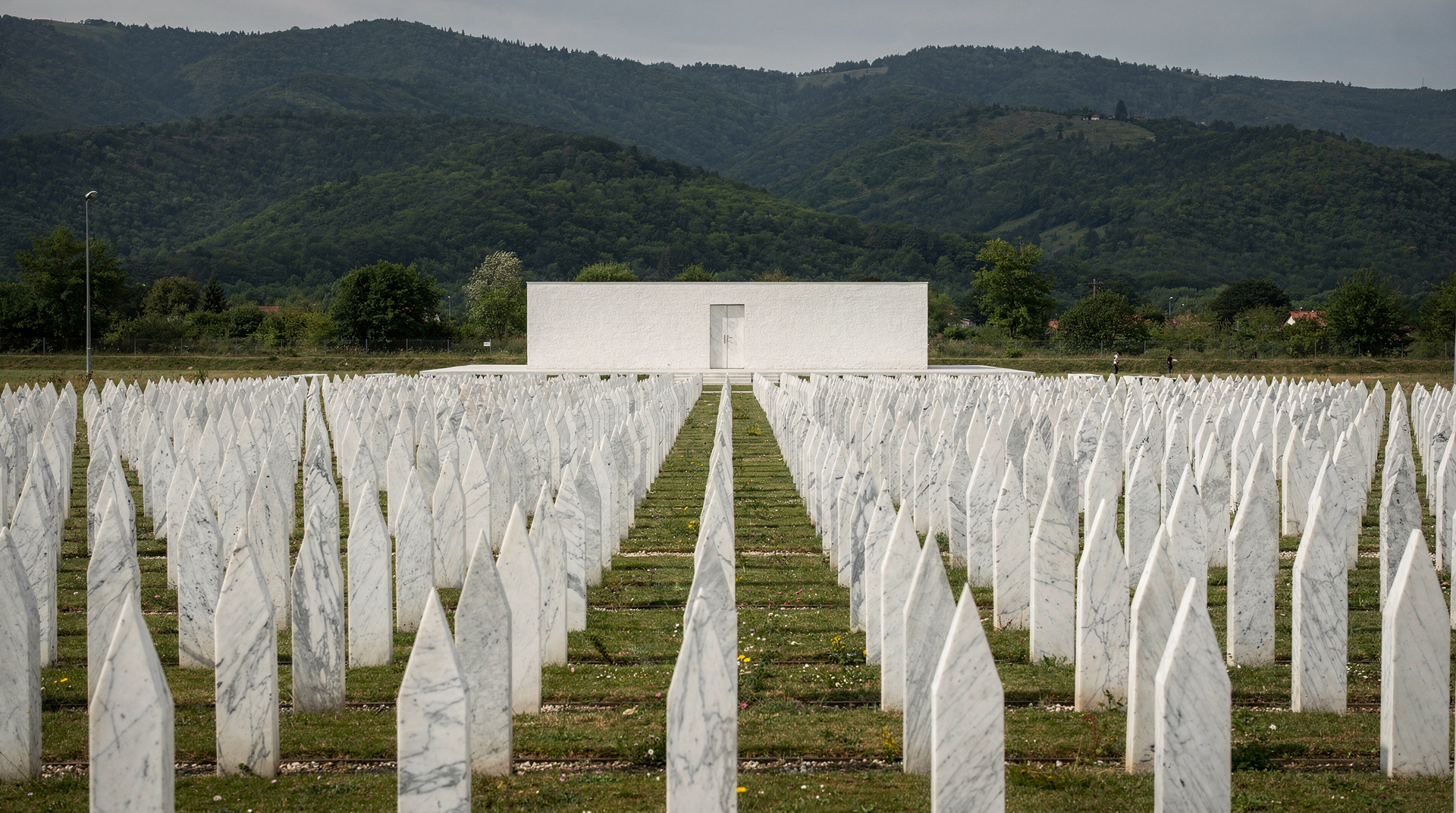
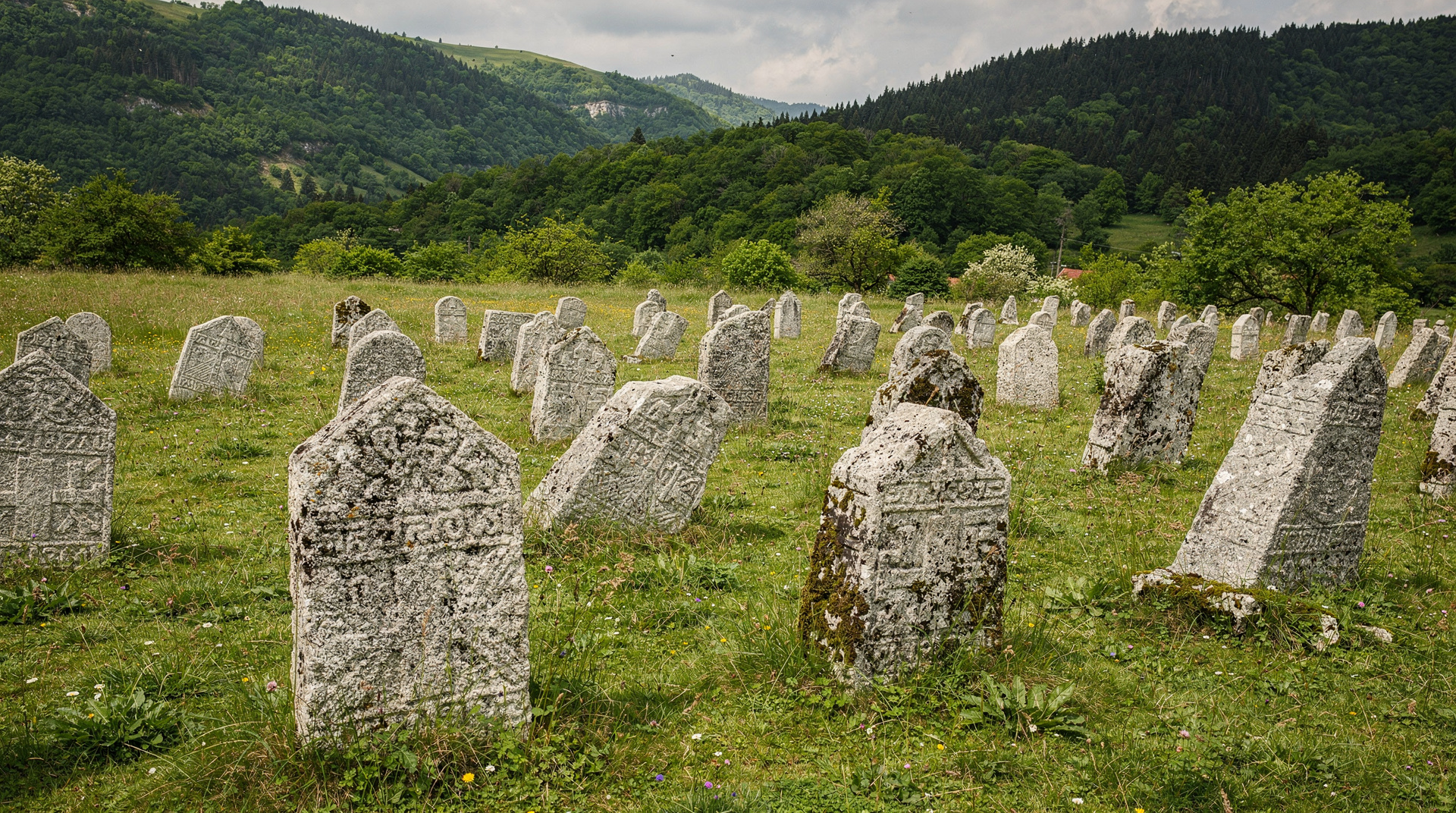
The cemetery extends across the hillside behind the memorial hall in a sea of white headstones. Each grave bears the name of the victim, their date of birth, and the date of death — July 1995 for virtually every headstone. The scale is overwhelming. Visiting the cemetery at your own pace, reading individual names, is one of the most powerful things you can do at the memorial.
The annual commemoration
On 11 July each year, the anniversary of the fall of Srebrenica, the memorial hosts the burial of newly identified victims — those whose DNA has been matched to family members in the previous year. Thousands of people attend: survivors and their families, the foreign diplomats and dignitaries who arrive in increasing numbers each year, and visitors from around the world. The ceremony is public and visitors are welcome, but they should attend with the utmost respect and follow the guidance of memorial staff.
Emotional preparation for the visit
The Srebrenica memorial is not a place to visit on a whim. The exhibition includes detailed accounts of the massacres, survivor testimonies, photographs of the dead, and the long process of identification and burial that continues 30 years later. Some visitors find it difficult to stay for the full exhibition. Take the time you need. The memorial staff are experienced with international visitors and will answer questions gently and clearly.
Recommended preparation: read a basic account of the siege and fall of Srebrenica before your visit. David Rohde’s “Endgame” and Janine di Giovanni’s reporting from Bosnia are among the clearest accounts. The Yugoslav wars guide provides the broader context.
Srebrenica town
The town of Srebrenica, 6 km south of the memorial, has a small museum and some cafes and restaurants. The town suffered greatly during and after the war and is still recovering economically. Visiting the town and spending some money there — lunch, coffee, a souvenir — is a small but meaningful contribution to the local economy.
Combining the trip with Višegrad
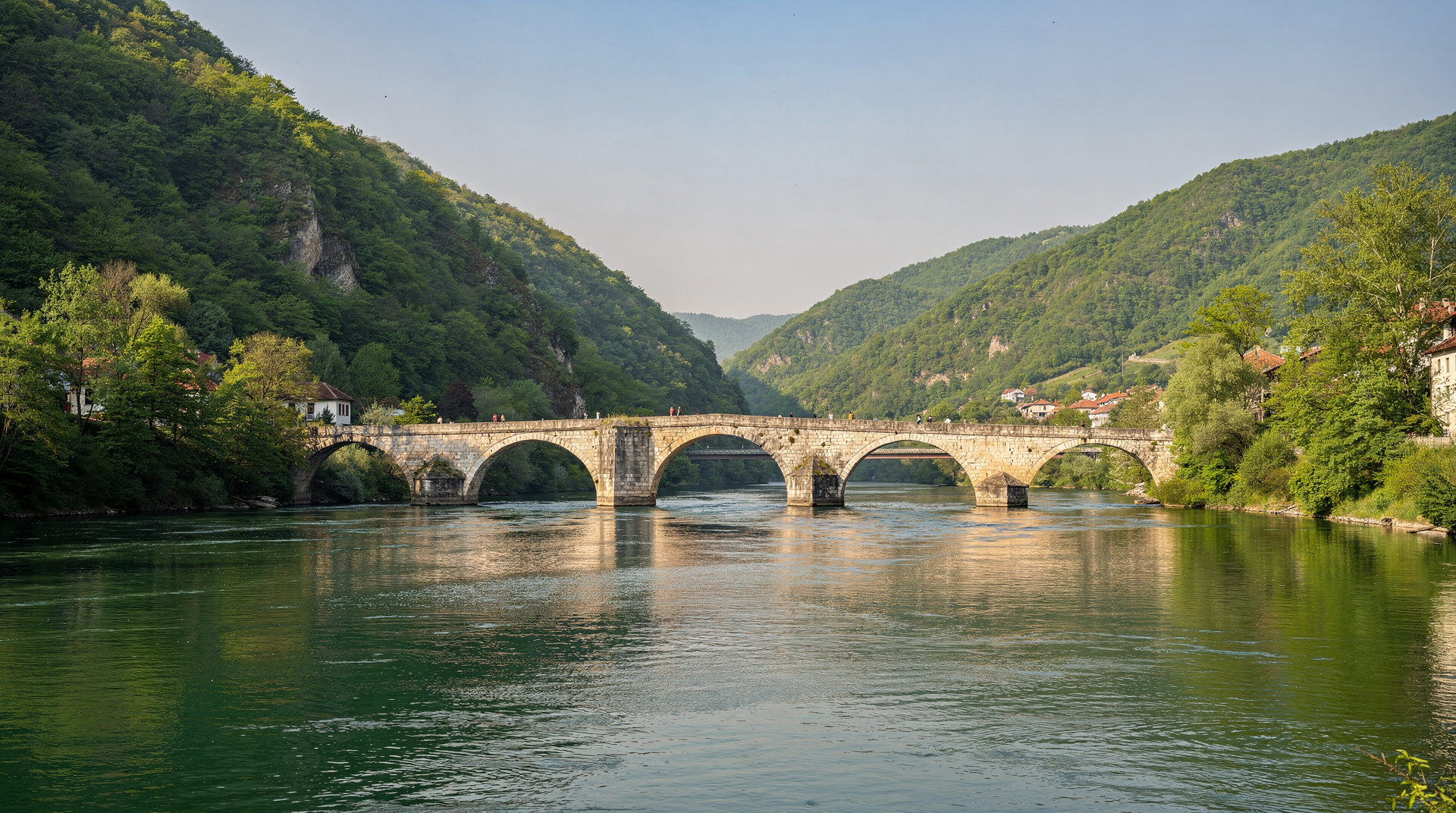
Višegrad is approximately 55 km northwest of Srebrenica and can be combined in the same day if you are driving. The contrast is instructive: Višegrad has its own painful war history (mass atrocities were committed there too) alongside the Ottoman grandeur of the Mehmed Paša Sokolović Bridge. It makes for a long day of difficult history, but one that gives a fuller picture of eastern Bosnia’s twentieth-century experience.
See the Višegrad day trip guide for details.
Practical information
- Memorial hours: Daily 08:00-16:00 (winter), 08:00-18:00 (summer). Closed Christmas Day.
- Entry fee: Free
- Photography: Permitted throughout; be respectful in the cemetery
- Dress code: No formal requirement, but modest dress is appropriate
- Tours from Sarajevo: Depart 07:30-08:00; return 19:00-20:00
- Languages: Exhibition available in English and Bosnian
- Emotional support: Memorial staff are available if visitors become distressed
The Sarajevo war tour guide covers the comparable sites in Sarajevo itself. Together, the two form the essential historical itinerary of Bosnia & Herzegovina.
Preparing children and teenagers for the visit
If you are travelling with older teenagers, a brief conversation before the visit helps enormously — explain in outline what happened and what they will see (a cemetery, an exhibition with photographs and testimony), so nothing arrives as a shock. Most guides handle this well if you mention ahead of time that younger visitors are in the group. The Bosnia with kids guide has broader notes on which of Bosnia’s war-history sites suit which ages; Srebrenica is generally the most demanding of them and is not recommended for younger children.
Why this visit belongs in a Bosnia itinerary
Many travellers arrive in Bosnia for the old bridge in Mostar or the Ottoman lanes of Sarajevo, and leave with a picture that is beautiful but incomplete. Srebrenica fills in the rest. If you have already walked the sites in the Sarajevo siege and tunnel guide or read the Bosnia history guide for travellers, Potočari is where those threads come together. Travellers who plan around history can slot the day into the Bosnia war history itinerary, which sequences the heavier sites so they are not crammed into a single stretch.
For a shorter stay, the Srebrenica destination page gives a quick orientation, and the Srebrenica genocide memorial guide goes deeper into the memorial itself, the exhibition and how the identification process works. Read that one if you want to know what to expect room by room.
Choosing between a tour and driving yourself
The right choice depends on what you want from the day. A tour removes every practical worry: someone else handles the mountain roads, the timing and the parking, and you can spend the long drive listening to context instead of watching the clock. It also means you arrive at Potočari already briefed, which matters because the memorial itself offers little guiding.
Driving yourself gives you freedom to stay as long as you need at the cemetery, which some visitors find essential. If you go this way, read up in advance, tell yourself there is no deadline at the memorial, and keep the afternoon free. The renting a car in Bosnia guide and the driving in Bosnia guide cover insurance, road conditions and habits of local drivers that are worth knowing before a long day on eastern roads. If you would rather not drive at all, the getting around Bosnia guide explains why buses make this particular trip awkward.
How to carry yourself at the memorial
The cemetery is a place where families still come to grieve, so behave as you would at any burial ground. Speak quietly, keep phones silent, and step aside when relatives are at a grave. Do not step between headstones in a way that treats them as a photo backdrop; take pictures sparingly and never of mourners without their clear consent.
Inside the memorial hall, move at the pace the exhibition sets. There is no prize for seeing everything quickly. Some people spend most of their time with the survivor testimonies; others find the cemetery easier than the indoor rooms. Both are fine. Sit on a bench if you need to, drink some water, and give yourself a few minutes before the drive back. Silence in the minibus on the way home is normal, and a good guide will let it be.
After the memorial: processing the day
Plan something gentle for the evening. Back in Sarajevo, a quiet meal and an early night suit most people better than a loud bar. The Sarajevo roses and memorials guide offers a calm way to continue thinking about what you saw, through the small traces of the war that remain in the city streets. If you want something that lifts the mood without feeling disrespectful, a slow coffee in Baščaršija is a natural choice; see the Bosnian coffee culture guide for how to do it properly.
Many visitors find that the day changes how they read the rest of the country. Conversations with locals, the presence of memorials in small towns and the sheer age of the landscape all take on more meaning. If you are building a longer trip, the Sarajevo day trips overview helps you balance this day with lighter ones, so that the itinerary as a whole keeps its rhythm.
Understanding the wider context before you go
Srebrenica makes far more sense in the context of the broader Bosnian War and the international response to it. The Yugoslav wars explained guide covers the political background — the breakup of Yugoslavia, the siege dynamics across Bosnia, and how the international community’s slow response contributed to the scale of the tragedy at Srebrenica. Reading even a short summary before the visit makes the memorial’s exhibits land with far more clarity than arriving with no context at all.
Frequently asked questions about Srebrenica day trip guide from Sarajevo
What is the Srebrenica-Potočari Memorial?
Is there public transport to Srebrenica from Sarajevo?
How long should I spend at the Srebrenica Memorial?
Is the Srebrenica day trip appropriate for all travellers?
When is the annual Srebrenica commemoration?
Top experiences
Bookable activities with verified prices and instant confirmation on GetYourGuide.