Bosnia history for travellers — the essential timeline
Sarajevo: Old Town to Modern City Walking Tour
What is the essential history of Bosnia and Herzegovina for travellers?
Bosnia has been shaped by five major historical periods: medieval kingdom (with unique stećci tombstones), Ottoman rule from 1463 (mosques, bazaars, Baščaršija), Austro-Hungarian administration 1878–1918 (European-style buildings, Franz Ferdinand assassination), Yugoslav period 1918–1992 (Tito, Cold War, 1984 Olympics), and the 1992–1995 Bosnian War followed by reconstruction under the Dayton Agreement.
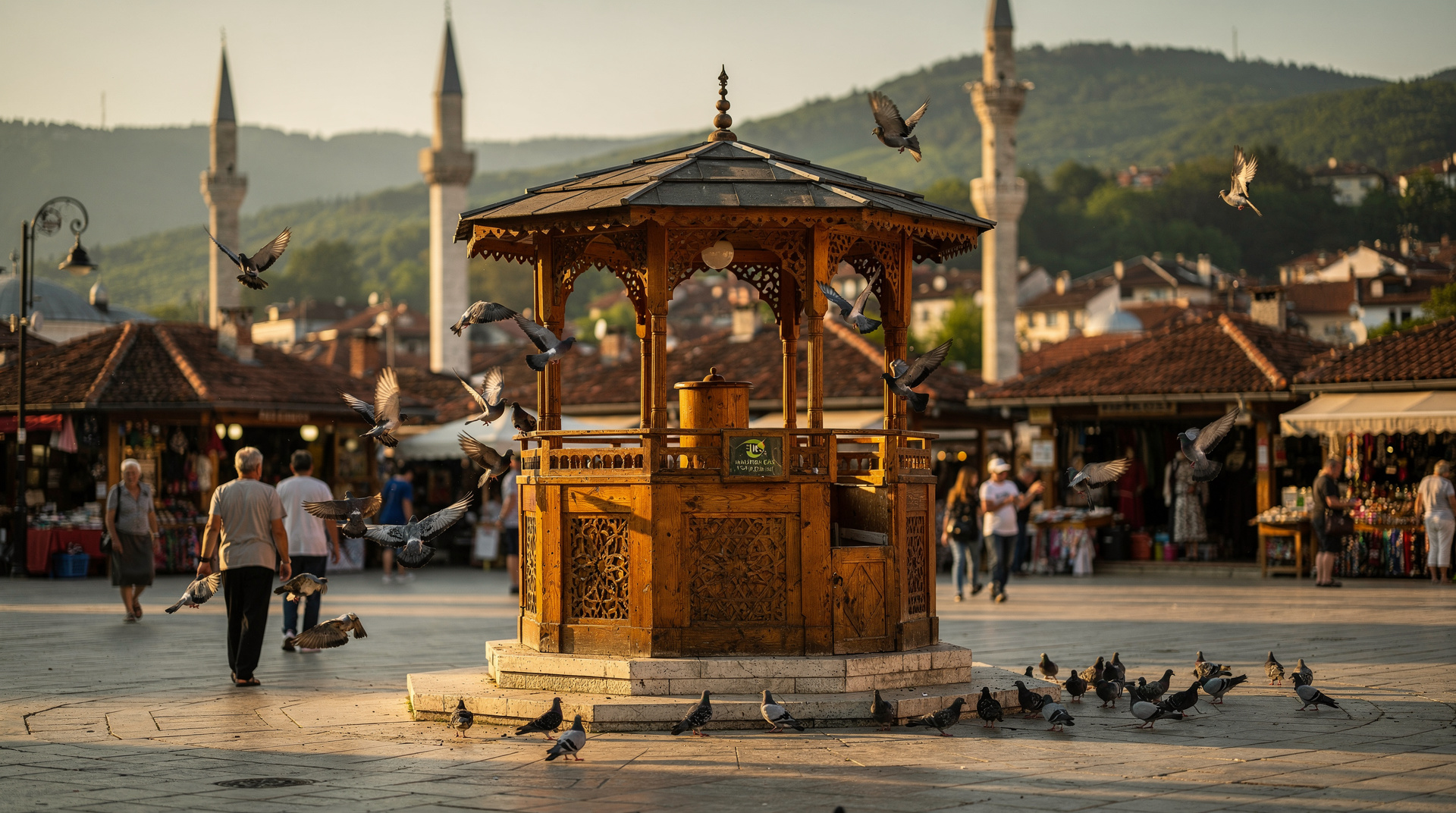
Bosnia and Herzegovina is a small country with an unusually dense history. In Sarajevo’s old town, you can stand in a single square and look at an Ottoman mosque, a Sephardic synagogue, a Catholic cathedral and an Orthodox church — all within a few hundred metres. The city that began the First World War also hosted the 1984 Winter Olympics. The bridge at Mostar stood for 427 years before being deliberately demolished in 1993 and rebuilt eleven years later. This is a place where history is not background; it is the immediate environment.
This guide provides a chronological framework for travellers — enough to understand what you are looking at and why it matters.
| At a glance | |
|---|---|
| Best single stop | Sarajevo’s old town — Ottoman, Austro-Hungarian and war-history layers within walking distance |
| Time to grasp the basics | About 15–20 minutes reading, or a 2-3 hour guided walk on the ground |
| Cost | Most historic sites charge a modest entrance fee (a few BAM/EUR); walking the layers of the old town itself is free |
| Best time to visit sites | Year-round; outdoor memorials and bridges are best seen without a crowd — early morning |
Bosnia’s historical periods at a glance
| Period | Dates | What you’ll see today |
|---|---|---|
| Medieval kingdom | 12th century – 1463 | Stećci tombstones (Radimlja, National Museum) |
| Ottoman rule | 1463–1878 | Mosques, bazaars (Baščaršija), Stari Most, Blagaj Tekija |
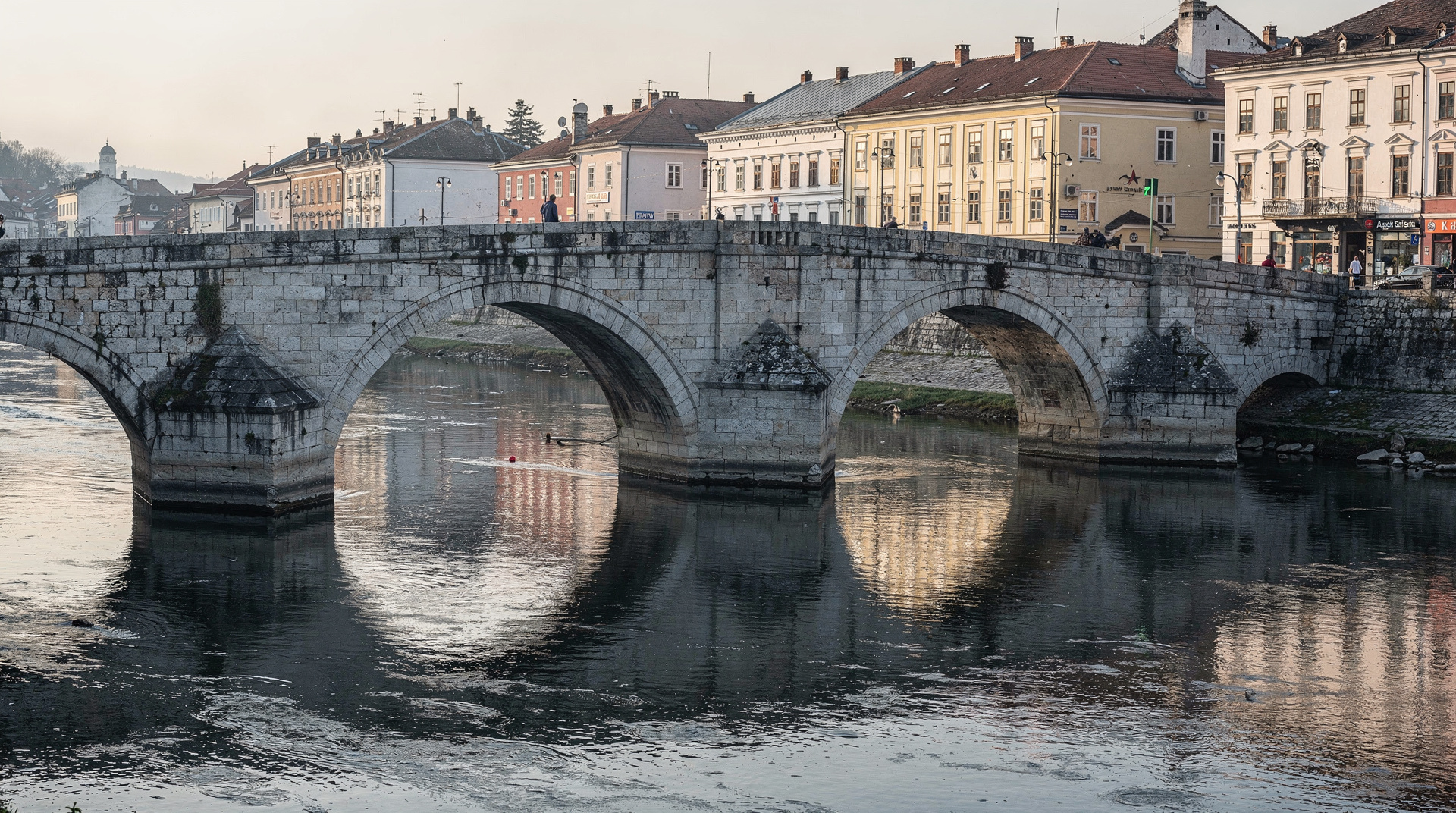
| Austro-Hungarian administration | 1878–1918 | European institutional buildings, Latin Bridge assassination site |
| Kingdom of Yugoslavia & WWII | 1918–1945 | Partisan history, wartime sites |
| Socialist Yugoslavia | 1945–1992 | Tito’s bunker (Konjic), 1984 Winter Olympics venues |
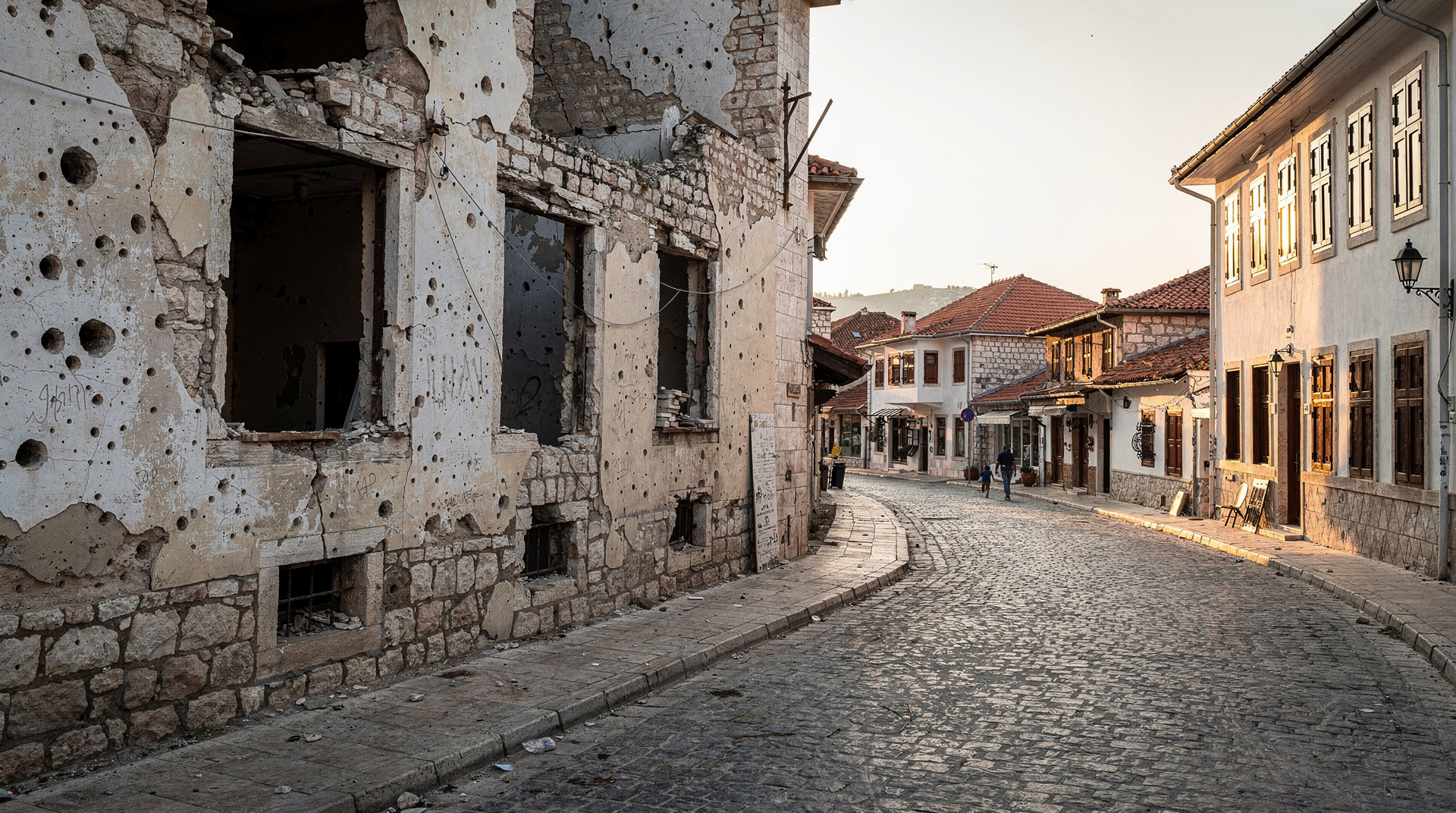
| Bosnian War | 1992–1995 | Tunnel of Hope, Sniper Alley, Srebrenica memorial, Sarajevo Roses |
| Post-war Bosnia | 1995–present | Rebuilt Stari Most, Dayton-era political structure |
Prehistory and Roman period
Bosnia’s earliest inhabitants included Illyrian tribes, whose settlements are documented archaeologically across the western Balkans. The Romans incorporated the region into the province of Dalmatia in the first century BCE, and later into the province of Illyricum. Roman roads, fortifications and towns left traces across Bosnia — the archaeological collections at the National Museum in Sarajevo include significant Roman-period material.
The medieval Bosnian kingdom
A distinct Bosnian polity emerged in the 12th century under the title of Ban (a local ruler). By the 14th century, Bosnia had become a kingdom under the Kotromanić dynasty. The medieval Bosnian church — a distinctive ecclesiastical tradition not fully affiliated with either Rome or Constantinople — produced one of Bosnia’s most enigmatic legacies: the stećci, monumental medieval tombstones distributed across the landscape.
Stećci: Bosnia’s stone legacy
Over 60,000 stećci survive across Bosnia, Herzegovina, Montenegro and Croatia, carved between roughly the 12th and 16th centuries. They range from simple slabs to elaborately carved sarcophagi with hunting scenes, spirals, human figures and heraldic devices whose meanings are still debated. The UNESCO World Heritage listing of 2016 covers the most significant concentrations.
The best sites accessible to visitors include:
- Radimlja (near Stolac in eastern Herzegovina): the largest and most impressive concentration
- The National Museum in Sarajevo: significant indoor collection with context
- Several roadside clusters visible throughout the country
Ottoman Bosnia (1463–1878)
Ottoman forces under Mehmed II conquered the medieval Bosnian kingdom in 1463. Herzegovina followed in 1482. The Ottoman period — over four centuries — fundamentally shaped Bosnia’s physical and demographic character.
Under Ottoman rule, many Bosnians converted to Islam, becoming a community that would eventually be recognised as a distinct South Slav Muslim people (later called Bosniaks). The conversion was partly driven by economic and administrative advantages for Muslims, partly by religious conviction, and partly by the particular character of the Bosnian church, which had weak institutional ties to established Christian hierarchies.
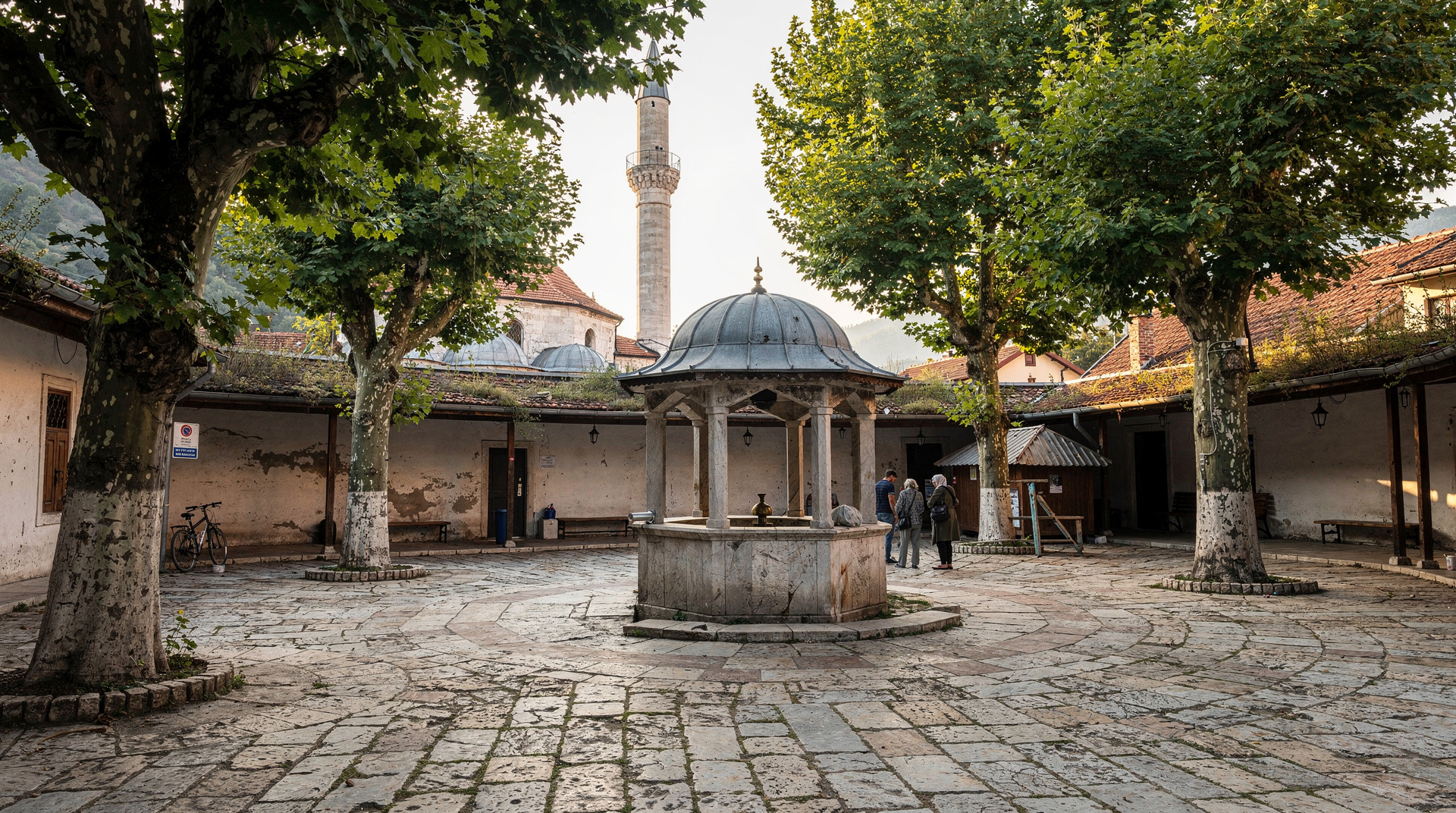
The Ottomans built the infrastructure that defines Bosnia’s historic architecture: mosques, bazaars, hans (caravanserais), bridges, kulas (fortified towers) and hamams (bathhouses). Sarajevo was founded as an Ottoman city in the 1460s by Isa-Beg Ishaković and grew rapidly. The Baščaršija bazaar — still the heart of Sarajevo’s old town — is an Ottoman-era commercial district dating from the 1460s. The Baščaršija guide covers it in detail.
Mostar’s Stari Most was built in 1566 under the Ottoman architect Mimar Hayruddin, a student of the great Ottoman architect Sinan. The bridge, destroyed in 1993 and rebuilt in 2004, is the most famous single monument of Bosnian Ottoman heritage.
Other significant Ottoman sites include Blagaj Tekija (the dervish monastery at the source of the Buna), Počitelj (a hillside fortified town), and the mosques of central Sarajevo.
Sarajevo: Old Town walking tour with local guideAustro-Hungarian Bosnia (1878–1918)
The Congress of Berlin (1878) assigned Bosnia and Herzegovina to Austro-Hungarian administration, following Austro-Hungary’s military occupation during the Russo-Turkish War. Austria-Hungary formally annexed Bosnia in 1908, triggering an international crisis (the Bosnian Crisis) and deepening tensions with Serbia.
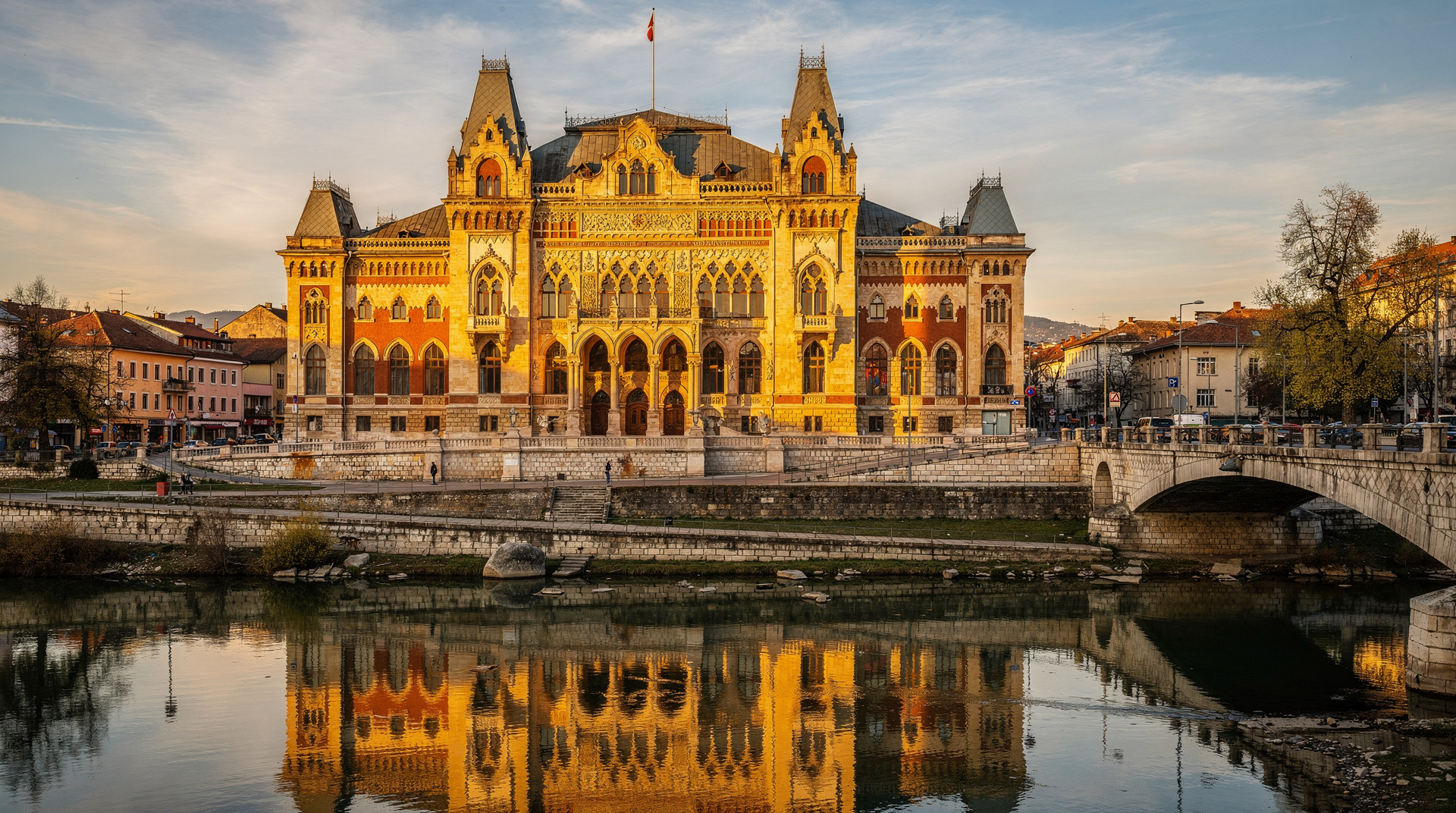
The Austro-Hungarian period lasted only forty years but transformed Sarajevo’s physical character. The administration built European-style institutional architecture — the National Museum, the City Hall (Vijećnica), the Cathedral of the Sacred Heart, the railway station, schools and banks. These buildings sit immediately adjacent to the Ottoman bazaar in Sarajevo’s old town, creating the distinctive visual mix that defines the city.
On 28 June 1914, Archduke Franz Ferdinand of Austria-Este was assassinated in Sarajevo by Gavrilo Princip, a Bosnian Serb nationalist affiliated with the Black Hand. The assassination triggered the July Crisis and the start of the First World War. The Franz Ferdinand assassination guide covers this in detail.
Yugoslav Bosnia (1918–1992)
After the First World War, Bosnia became part of the Kingdom of Serbs, Croats and Slovenes (renamed Yugoslavia in 1929). During the Second World War, the Ustaše regime (Croatian fascists allied with Nazi Germany) established the Independent State of Croatia, which included Bosnia and carried out mass killings of Serbs, Jews and Roma. The communist Partisan resistance, led by Josip Broz Tito, operated extensively in Bosnia; Tito’s birthplace and wartime headquarters were both in the region.
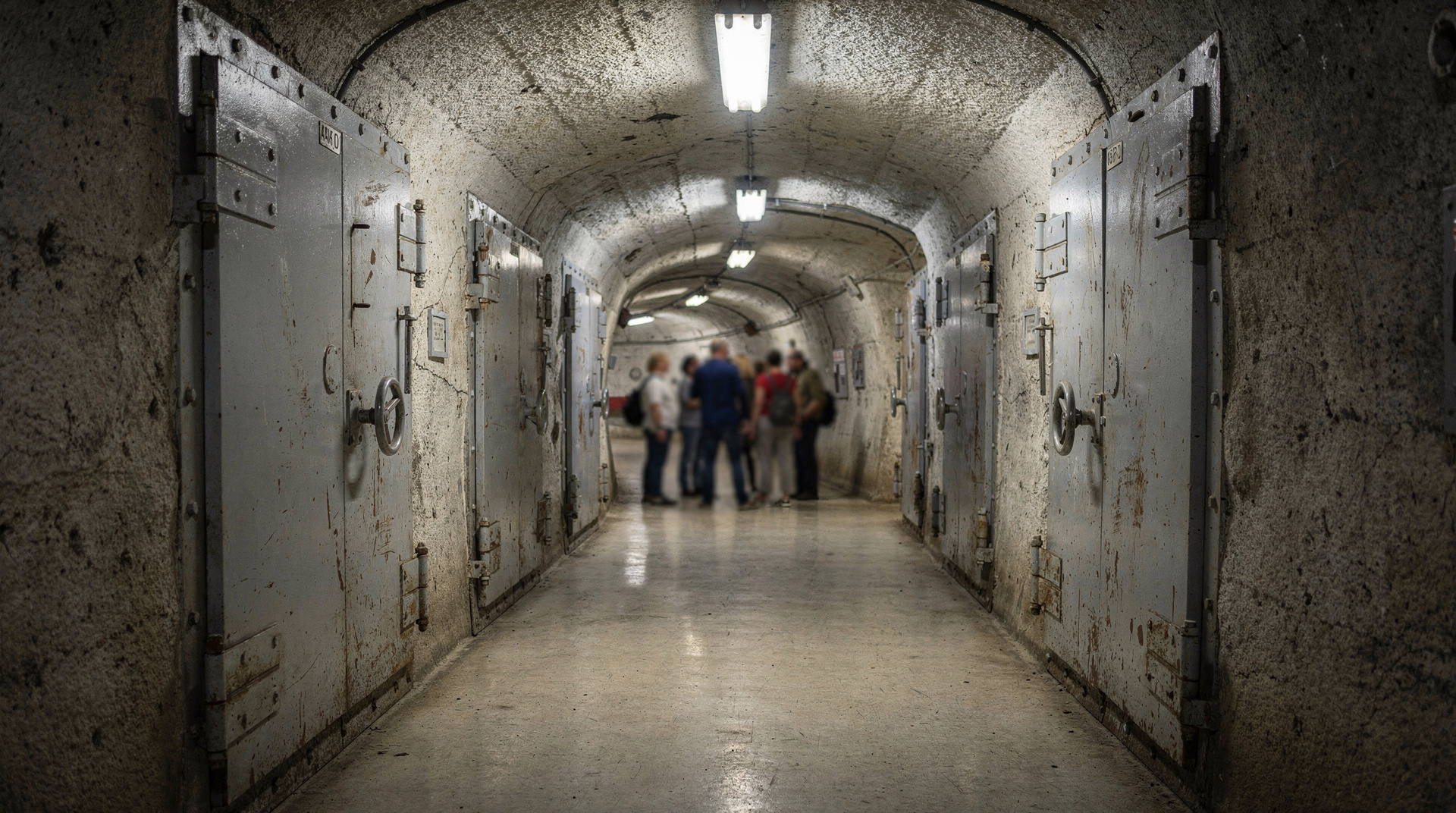
After the war, Bosnia became one of the six constituent republics of the Socialist Federal Republic of Yugoslavia under Tito. The Cold War context prompted the construction of ARK D-0 — Tito’s secret nuclear bunker near Konjic, built between 1953 and 1979 — one of the most remarkable Cold War relics in Europe. See the Tito’s Bunker guide for a full account.
In February 1984, Sarajevo hosted the XIV Winter Olympics — the first Winter Games in a socialist country. The venues on Bjelašnica, Jahorina, Igman and Trebević represented a high point of Yugoslavian international prestige. See the 1984 Olympics guide.
The Bosnian War and its aftermath (1992–present)
Bosnia declared independence following a referendum in 1992. The subsequent war — involving the Bosnian Serb Army (VRS), the Bosnian Government Army (ARBiH), and the Croatian Defence Council (HVO) — lasted from April 1992 to November 1995, causing approximately 100,000 deaths and displacing two million people. The Yugoslav wars explained guide covers the military and political history of the conflict.
Key sites of memory include:
- The Tunnel of Hope and Sniper Alley in Sarajevo
- The Srebrenica genocide memorial at Potočari
- The Sarajevo Roses — shell-crater memorials in the old town
- The War Childhood Museum in Sarajevo
- Mostar’s war history and the rebuilt Stari Most
The Dayton Agreement of 1995 ended the war and established the current political framework. Bosnia in 2026 is a country rebuilding — physically, institutionally, and in terms of how it relates to its own recent history. The Bosnia travel guide covers practical planning for a first visit.
A note on reading the landscape
Bosnia’s history is visible in its architecture in an unusually direct way. The layering of Ottoman, Austro-Hungarian, communist and post-war reconstruction materials is readable in almost every town of any size. A guided walk in Sarajevo’s old town covers five centuries of this layering in a single morning.
Understanding even the basics of the timeline above transforms a Bosnia visit from a series of attractive scenes into a coherent narrative. The Sarajevo meeting of cultures guide explores the religious and cultural coexistence dimension; the Ottoman heritage guide maps the major Ottoman sites across the country.
Beyond Sarajevo and Mostar: history elsewhere in the country
The layered history above isn’t confined to the two big-name cities. Višegrad, on the Drina in eastern Bosnia, has the 16th-century Mehmed Paša Sokolović Bridge — a UNESCO-listed Ottoman masterpiece and the subject of Ivo Andrić’s Nobel Prize-winning novel — alongside the modern recreation of Andrićgrad. See the Višegrad bridge guide.
Jajce, Bosnia’s medieval royal capital, has a hilltop fortress where the last Bosnian king was crowned, plus a waterfall in the town centre itself — see the Jajce fortress guide. Travnik, the seat of Ottoman viziers for over a century, preserves a well-known fortress and Ottoman-era townscape; see the Travnik Ottoman town guide.
For the war-history period specifically, Srebrenica carries the heaviest weight of any site in the country — the 1995 genocide memorial at Potočari is a sober, essential visit for anyone seeking to understand the war’s full consequences, not a casual add-on to a day trip. See the Srebrenica day trip guide for logistics and context before you go.
How to sequence a history-focused visit
Travellers with a specific interest in Bosnia’s history typically get the most out of a loosely chronological approach: start in Sarajevo’s old town for the Ottoman and Austro-Hungarian layers, move to the war-history sites (Tunnel of Hope, Sniper Alley, War Childhood Museum) with a guide who can supply context a plaque cannot, then head to Mostar for Stari Most and its own war-history layer. Travellers with more time add Višegrad or Jajce for the medieval and Ottoman story away from the capital, and Srebrenica for the fullest understanding of the war. A dedicated Bosnia war history itinerary lays this out day by day.
Reading the timeline on the ground
A timeline is easier to hold in your head when you attach each period to a place you will actually stand in. The medieval kingdom is the quietest layer: it lives in stone, in the stećci that stand in fields and museum rooms rather than in grand buildings. The Ottoman layer is the most visible, and it is best felt in places like Mostar, where the Stari Most guide explains what the bridge meant before and after its destruction, and in Blagaj and Počitelj, where the Ottoman townscape survives without the bustle of the capital.
The Austro-Hungarian layer is easiest to read in Sarajevo, where the Austro-Hungarian Sarajevo guide walks through the buildings that sit beside the bazaar. The Yugoslav layer is spread out: a bunker in the hills, Olympic venues on the mountains above the city, and the memory of a country that no longer exists. The Sarajevo 1984 Olympics guide and the Trebević mountain page show how the same slopes carry both celebration and war.
Why the war layer needs more time
Of all the periods, the 1992–1995 war is the one that most rewards unhurried visits. Sites like the Tunnel of Hope, the Sarajevo war tour and the museums of Sarajevo are not places to tick off between a coffee and lunch. Give each one room, and plan quieter hours around them. If you would rather have the context supplied on the ground, a guided tour of the siege-era sites that includes the tunnel museum keeps the story in order and leaves the logistics to someone else. Many travellers find it helpful to pair a heavy site with something gentler afterwards, such as a slow walk through Baščaršija or a meal from the Sarajevo food guide.
It also helps to understand that the memory of the war is not uniform. Communities in different towns remember it differently, and the political structure that came out of Dayton still shapes daily life. Listening matters more than commenting: guides and hosts will often share their own context if you ask open questions and let them set the pace. For the wider conflict, the Yugoslav wars explained guide is the best companion to this primer, and the landmine safety guide is essential reading before you leave marked paths in the countryside.
Combining history with the rest of your trip
History does not have to fill every day. Bosnia’s historic towns sit close to rivers, waterfalls and mountains, so a trip can move between the two moods comfortably. If you are based in Sarajevo and short on time, a guided day out to Mostar and the Herzegovina countryside lets you see the Ottoman layer without arranging transport yourself. A day among the stones of Jajce ends at a waterfall; a visit to Konjic can lead to the Neretva. If you are deciding how long to stay, the how many days in Bosnia guide helps you balance the layers above against landscape time, and the Sarajevo 4-day deep dive gives a slower route through the capital. Travellers arriving from the coast will find the Mostar from Dubrovnik guide a useful way into the Ottoman and war layers in one day, while those with more time can follow the Sarajevo–Mostar 3 days route.
Frequently asked questions about Bosnia history for travellers — the essential timeline
When was Bosnia part of the Ottoman Empire?
What are the stećci and why are they important?
Who was Tito and why does he matter for understanding Bosnia?
What is the significance of the 1914 assassination for Bosnia?
How many religions coexist in Bosnia?
How much history do I need to know before visiting Bosnia?
Where can I see this history in one place?
Top experiences
Bookable activities with verified prices and instant confirmation on GetYourGuide.