Sarajevo's four faiths — mosques, churches, synagogue and cathedral
Discover Sarajevo Walking Tour with Local Guide
What are the four faiths of Sarajevo?
Sarajevo's four faith communities are Muslim (Bosniak), Orthodox Christian (Serb), Catholic Christian (Croat and others), and Sephardic Jewish. Their principal places of worship — the Gazi Husrev-beg Mosque, the Old Orthodox Church, the Sacred Heart Cathedral and the Ashkenazi Synagogue — stand within 500 metres of each other in the old city.
There is a junction in the Sarajevo old town where you can stand and hear, in sequence or sometimes simultaneously, the Muslim call to prayer, the peal of a church bell, and the memory of a culture that produced some of the finest Sephardic choral music in the Ottoman world. No other European city offers this particular layering of the sacred. Understanding how it came to be — and how fragile it has sometimes been — is what makes exploring Sarajevo’s four religious communities one of the most rewarding experiences in the Balkans.
| At a glance | |
|---|---|
| Where | Baščaršija and the Ferhadija corridor, old town Sarajevo |
| Cost | Around 11 BAM total in entrance fees for all four sites |
| Time needed | 2.5-3.5 hours for the full walking route |
| Getting there | Tram 1, 3 or 4 to Baščaršija, or 20 minutes on foot from most old-town hotels |
| Best time | Weekday mornings; avoid the mosque around Friday Jumu’ah prayer (~13:00) |
How Sarajevo became a multi-faith city
Sarajevo was founded as an Ottoman city in the 15th century, laid out around a mosque-bazaar-bridge axis that remains the DNA of Baščaršija today. The Ottomans practised a form of structured tolerance (the millet system) that allowed non-Muslim communities to maintain their own religious institutions, courts and schools in exchange for loyalty and taxes. This is why Orthodox Christians, Catholics and Jews could all build places of worship within a city whose skyline was defined by minarets.
The Austro-Hungarian administration (1878–1918) added a new layer. Vienna brought Catholic institutions, neo-Gothic architecture, street tramways, and the curious decision to build a Catholic cathedral directly across from the Ottoman bazaar. The Ashkenazi Jewish community grew under Habsburg rule as more European Jews arrived from the north.
By the early 20th century Sarajevo had earned its reputation as a city of coexistence — not without tensions, not without occasional conflicts, but genuinely multi-confessional in a way that most of Europe was not. The 1990s siege (1992–1995) attacked precisely this identity: a predominantly Bosniak city defended by a multiethnic population against a nationalist project that sought to erase the idea that Sarajevo’s plurality was real.
Join a guided walking tour of Sarajevo’s old town and its religious heritage for local context that no self-guided stroll can replicate.
The Gazi Husrev-beg Mosque (Begova Džamija)
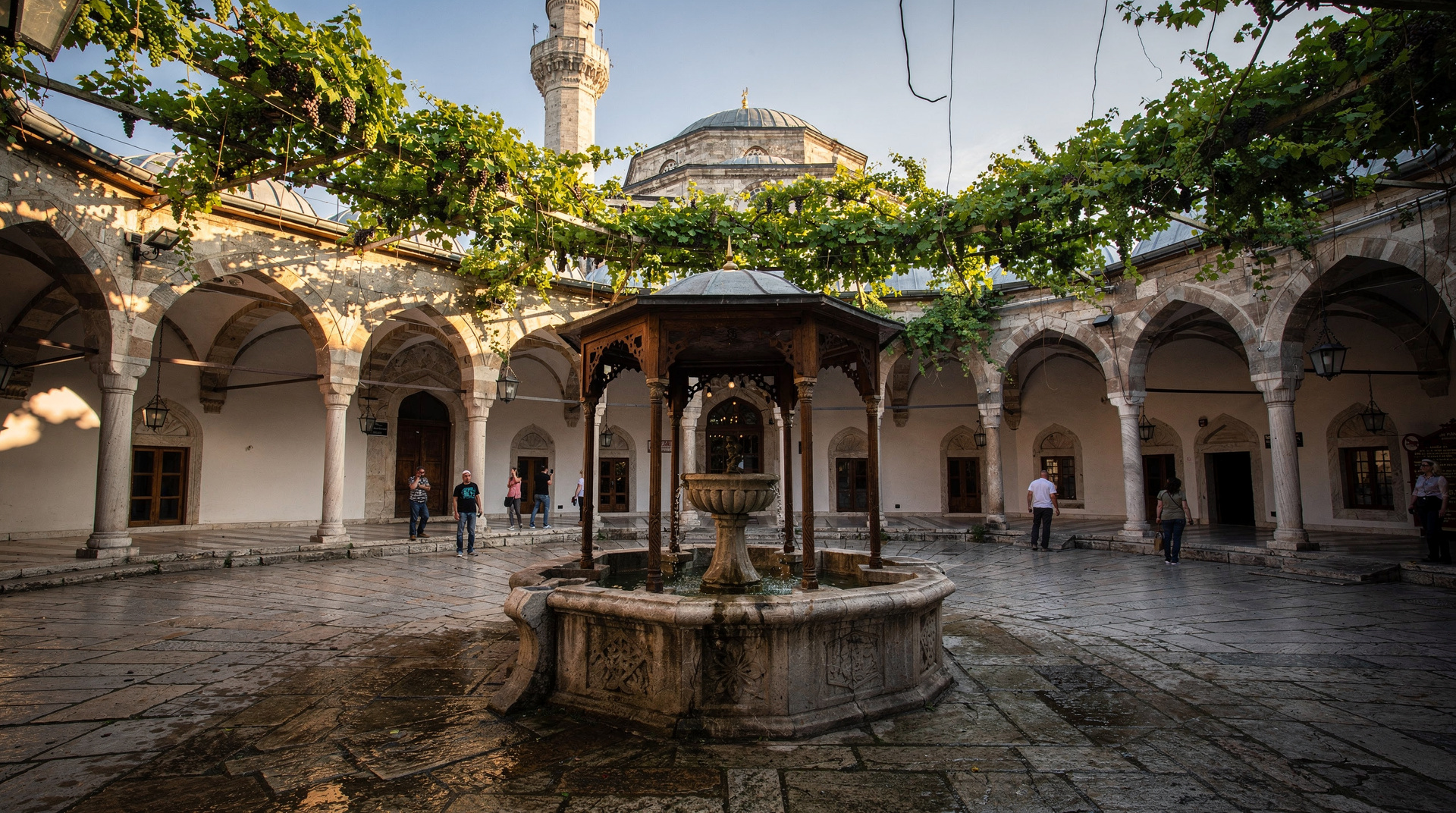
The largest mosque in Bosnia was commissioned in 1532 by Gazi Husrev-beg, the Ottoman governor (sanjak-bey) who also built the city’s first covered bazaar, its first caravanserai and its first school for Islamic law. The architect was Koca Mimar Sinan’s predecessor or student — accounts differ — and the result is a fine example of classical Ottoman religious architecture: a central dome flanked by two semi-domes, an elegant minaret, and a courtyard with an ablution fountain shaded by plane trees.
Inside, the prayer hall is decorated with calligraphic Quranic inscriptions, İznik-style tiles, and carpets donated by generations of Sarajevo families. The mihrab (prayer niche indicating the direction of Mecca) and the minbar (pulpit) are both carved in white marble.
In the mosque courtyard, a 1549 clock tower (sahat-kula) shows lunar time — that is, the time calculated from sunrise, so that prayers are correctly timed throughout the year. It is the only such public clock in Bosnia and one of the few remaining in the Balkans.
Non-Muslims may visit outside the five daily prayer times (approximately dawn, midday, afternoon, sunset and night — check locally for exact schedules). Remove shoes at the entrance, cover bare arms and legs, and women should cover their hair. A modest entrance donation is appreciated. Photography inside is generally permitted, though it is courteous to ask.
The Old Orthodox Church (Crkva Sv. Arhangela)
The Church of the Holy Archangels Michael and Gabriel is the oldest building in Sarajevo still used for its original purpose. Its exact founding date is disputed — estimates range from the late 15th century to the early 16th — but it was certainly standing by the 1530s, when Gazi Husrev-beg formally acknowledged the Orthodox community’s rights to maintain it.
The church sits in a walled compound near the heart of Baščaršija. Its low, dark interior is packed with icons, many of them gifts from Sarajevo’s Serbian merchant families during the 18th and 19th centuries. The oldest icons in the collection date to the 16th century and are among the finest examples of Balkan icon painting outside Athens or Mount Athos.
Entrance costs 3 BAM (1.50 EUR). The church is typically open from 8:00 to 18:00, but hours are reduced on major feast days when services run long. The collection warrants at least 30 minutes.
The Ashkenazi Synagogue and the Jewish Museum
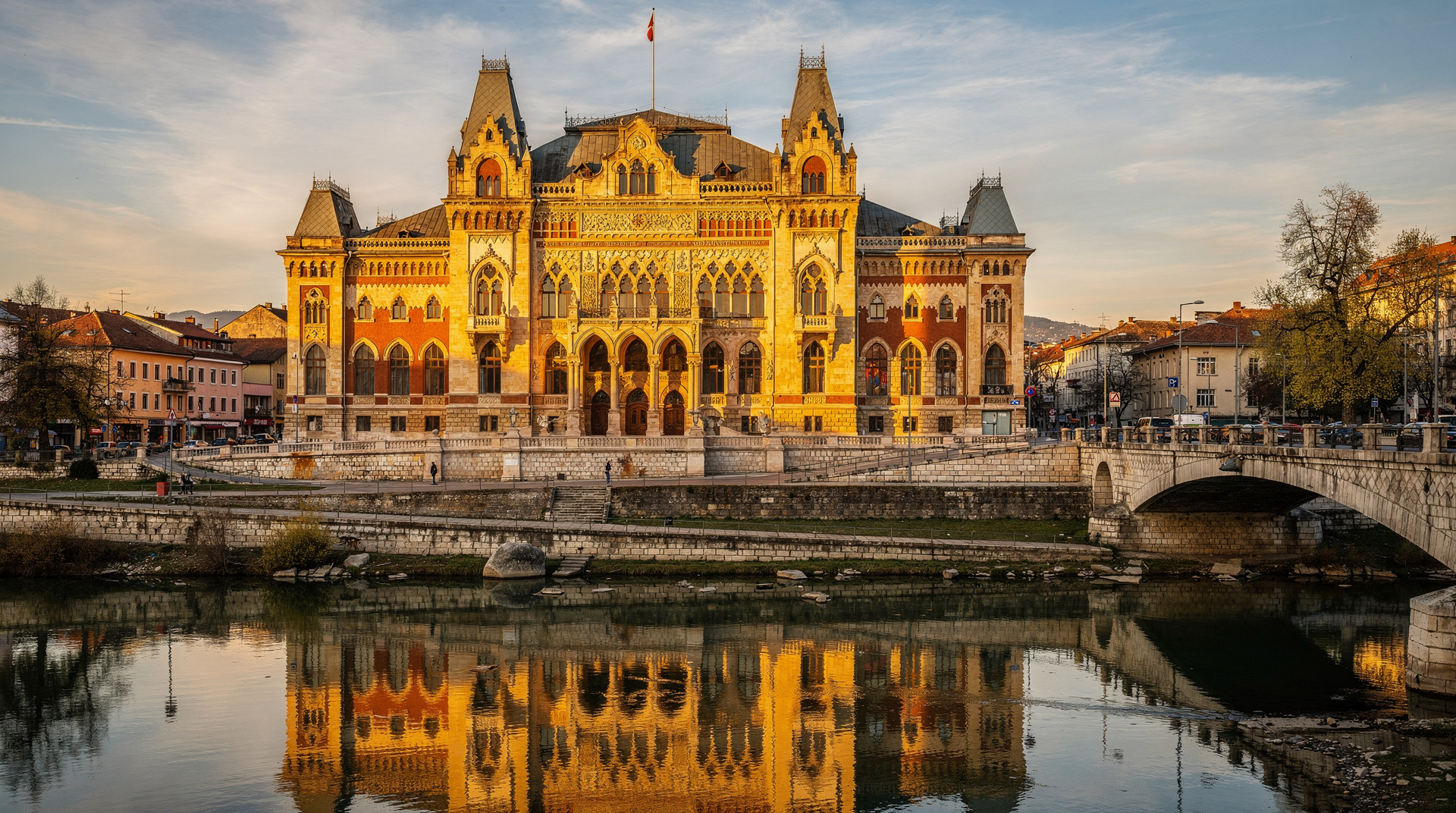
Sarajevo’s main synagogue (Sinagoga, Mula Mustafe Bašeskije 38) is an Ashkenazi building from 1902, built for the wave of Central and Eastern European Jews who arrived under Austro-Hungarian administration. It is now used mainly for cultural events and concerts.
The more historically significant site for visitors is the Old Synagogue (Stara Sinagoga), located in Baščaršija near the old bazaar. The building dates from the 16th century and now houses a permanent museum of the history of Sephardic Jews in Bosnia, from their arrival after 1492 through to the Holocaust and the small community that remains today. The museum holds the Sarajevo Haggadah — or rather a facsimile of it; the original, a 14th-century illuminated manuscript brought from Spain by refugees, is kept in the National Museum and occasionally displayed. Entry to the synagogue museum costs approximately 5 BAM (2.50 EUR).
The story told in the museum is not comfortable. Of Sarajevo’s roughly 14,000 Jews in 1941, about 12,000 were killed by the Ustasha regime and the Nazis. The few hundred who survived are the ancestors of today’s tiny community.
The Sacred Heart Cathedral (Katedrala Srca Isusova)
Completed in 1889 under Austro-Hungarian administration, the Sacred Heart Cathedral is the largest Catholic church in Bosnia and one of the finest pieces of neo-Gothic architecture in the Western Balkans. Its twin towers are a Sarajevo landmark visible from the cable car on Trebević.
The interior is bright and high-ceilinged, with stained glass depicting biblical scenes and side chapels dedicated to Bosnian Catholic patrons. The cathedral is the seat of the Archbishop of Sarajevo and is used for major civic and religious events. It is open to visitors throughout the day; a short prayer-book and history leaflet is available in English.
In front of the cathedral, a small square opens onto Ferhadija, the main pedestrian street of the Austro-Hungarian new town — a visual marker of the transition from Ottoman Baščaršija to Habsburg city planning.
The walking route
The four sites are close enough to walk in sequence, and the path connects them through the heart of historic Sarajevo.
Start: Gazi Husrev-beg Mosque, Baščaršija. Arrive by 9:00 if possible to beat tour groups. Spend 30–40 minutes.
Then: Walk east through the old bazaar (10 minutes) to the Old Orthodox Church compound. Allow 30 minutes for the icon collection.
Then: Continue a few minutes south-east to the Old Synagogue/Jewish Museum. Allow 30–45 minutes.
Then: Walk west along Sarači and then up Ferhadija (15 minutes, pleasant pedestrian street) to the Sacred Heart Cathedral. Allow 20–30 minutes.
Total walking distance: About 1.5 km. Total time: 2.5–3.5 hours depending on pace.
For additional depth — the 1984 Olympics legacy, the siege history, the food markets — see our Sarajevo old town guide and our sarajevo meeting of cultures guide.
Reading the walk alongside the city’s wider story
The four sites make more sense when you know what surrounds them. The mosque and the bazaar belong to the Ottoman layer described in our mosques of Sarajevo guide, while the cathedral and the pedestrian street leading to it belong to the Habsburg layer, explored in the Austro-Hungarian Sarajevo guide. If the siege-era part of the story is what draws you, the Sarajevo siege remembered piece and the Sarajevo roses and memorials guide show how the war left its marks on the same streets you have just walked.
Many visitors fold this half-day into a longer stay. The Sarajevo 4-day deep dive places the faiths walk early, when your energy is highest, and leaves the heavier war-history sites for later days. For the city as a whole, the Sarajevo destination page is the best starting point.
Beyond the four faiths
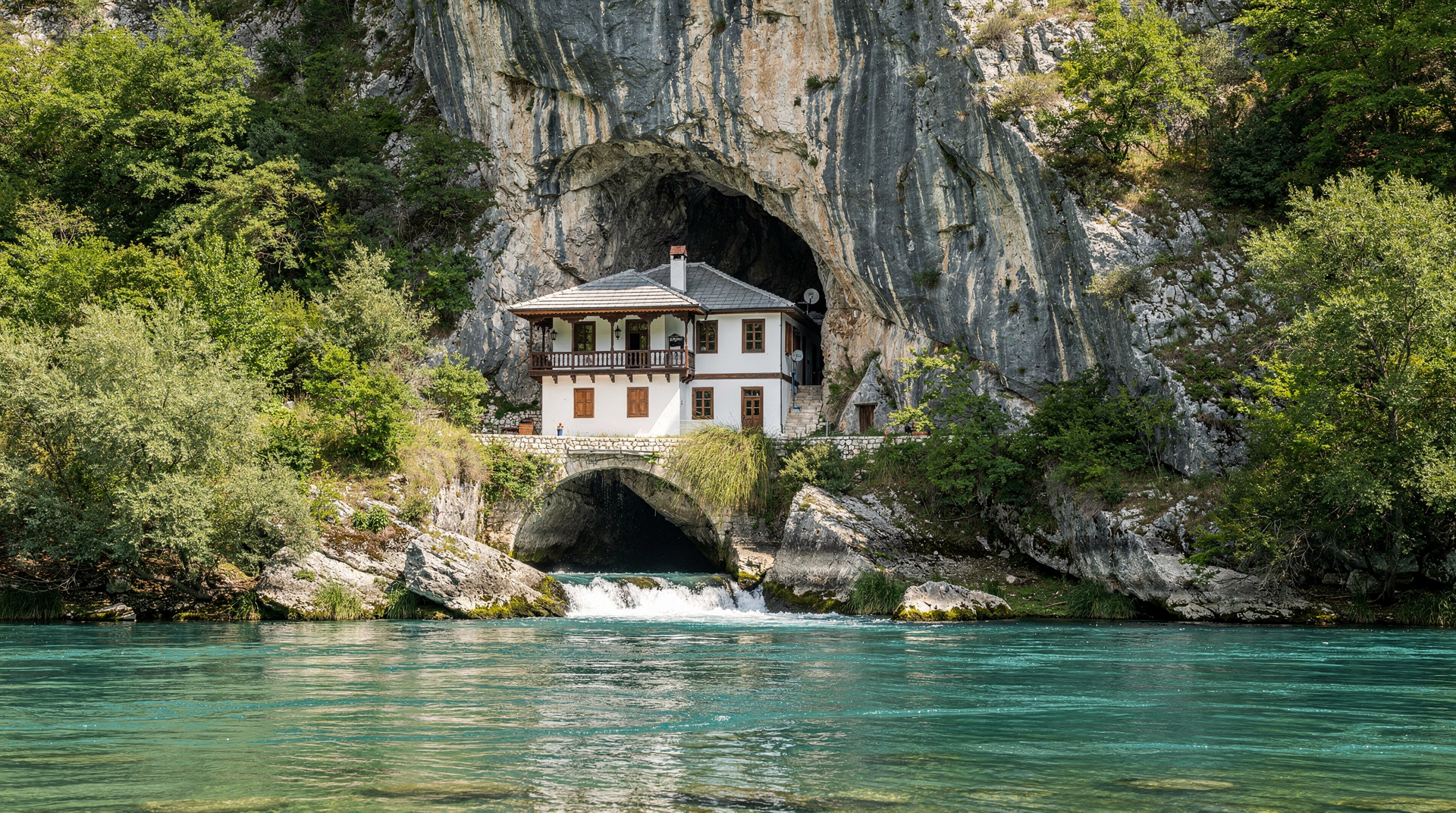
Sarajevo has a fifth religious tradition worth noting: the dervish orders. Tekke (dervish lodges) once dotted the city; one functioning tekke remains in Sarajevo today, the Kekeva tekke near Baščaršija. It is not routinely open to tourists but the tradition of Sufism — the same tradition behind the Blagaj Tekija — is deeply woven into Bosnian Muslim identity.
Practical information
Getting to Baščaršija: Tram line 1, 3 or 4 from the centre; or 20 minutes on foot from most hotels near Ferhadija. See the Sarajevo public transport guide for details.
Best time to visit: Weekday mornings are quietest. Friday is the Muslim day of congregational prayer (Jumu’ah, around 13:00) — avoid visiting the mosque at this time. Orthodox churches are busiest on Sunday mornings.
Guided tours: A guided religious heritage walk adds context that signs and guidebooks cannot provide. Local guides in Sarajevo are uniformly excellent on the interfaith history. If you would rather have someone else handle the route, a walking tour built around the crossroads of cultures covers much of the same ground, and travellers who want a deeper one-to-one conversation about the city’s communities can look at a private tour with a local guide.
Budget: The four sites together cost approximately 11 BAM (5.60 EUR) in entrance fees — very modest for a half-day of heritage.
Frequently asked questions about Sarajevo’s faiths
Can you pray at the Gazi Husrev-beg Mosque?
Yes. Non-Muslims may visit respectfully, but actual participation in Muslim prayer is not appropriate unless you are Muslim. Observe quietly and step aside when worshippers arrive for prayer times.
Is Sarajevo a Muslim city?
The majority of Sarajevo’s population identifies as Bosniak Muslim, though religiosity varies widely. The city is secular in public life — alcohol is widely available, women dress as they choose, and the pace of life is that of a European city, not a religious enclave. The call to prayer is part of the soundscape but not dominating.
What language is used in the synagogue services?
The remaining Jewish community in Sarajevo uses Hebrew and Bosnian. The museum’s exhibits are labelled in Bosnian and English.
What happened to the Sarajevo Haggadah?
The 14th-century illuminated manuscript was saved multiple times from destruction — hidden from the Nazis by the museum’s Muslim curator during WWII, then hidden again during the 1990s siege. It is now kept in a controlled environment at the National Museum of Bosnia and Herzegovina (Zemaljski muzej) in Sarajevo, occasionally on display. Entry to the museum is about 10 BAM (5 EUR).
Dress and etiquette by site
Each of the four sites has slightly different expectations, and getting them wrong is the fastest way to feel (or be) unwelcome:
- Gazi Husrev-beg Mosque: shoes off at the entrance, shoulders and knees covered, women cover their hair with a scarf (often available to borrow at the door). Avoid visiting during any of the five daily prayer times.
- Old Orthodox Church: no strict dress code, but modest clothing is appreciated; photography of the icon screen is sometimes restricted — check with the caretaker.
- Old Synagogue / Jewish Museum: functions as a museum, so ordinary museum etiquette applies; no head covering required for visitors.
- Sacred Heart Cathedral: open and relaxed, but keep voices low if a service is in progress.
Making time for a fifth stop
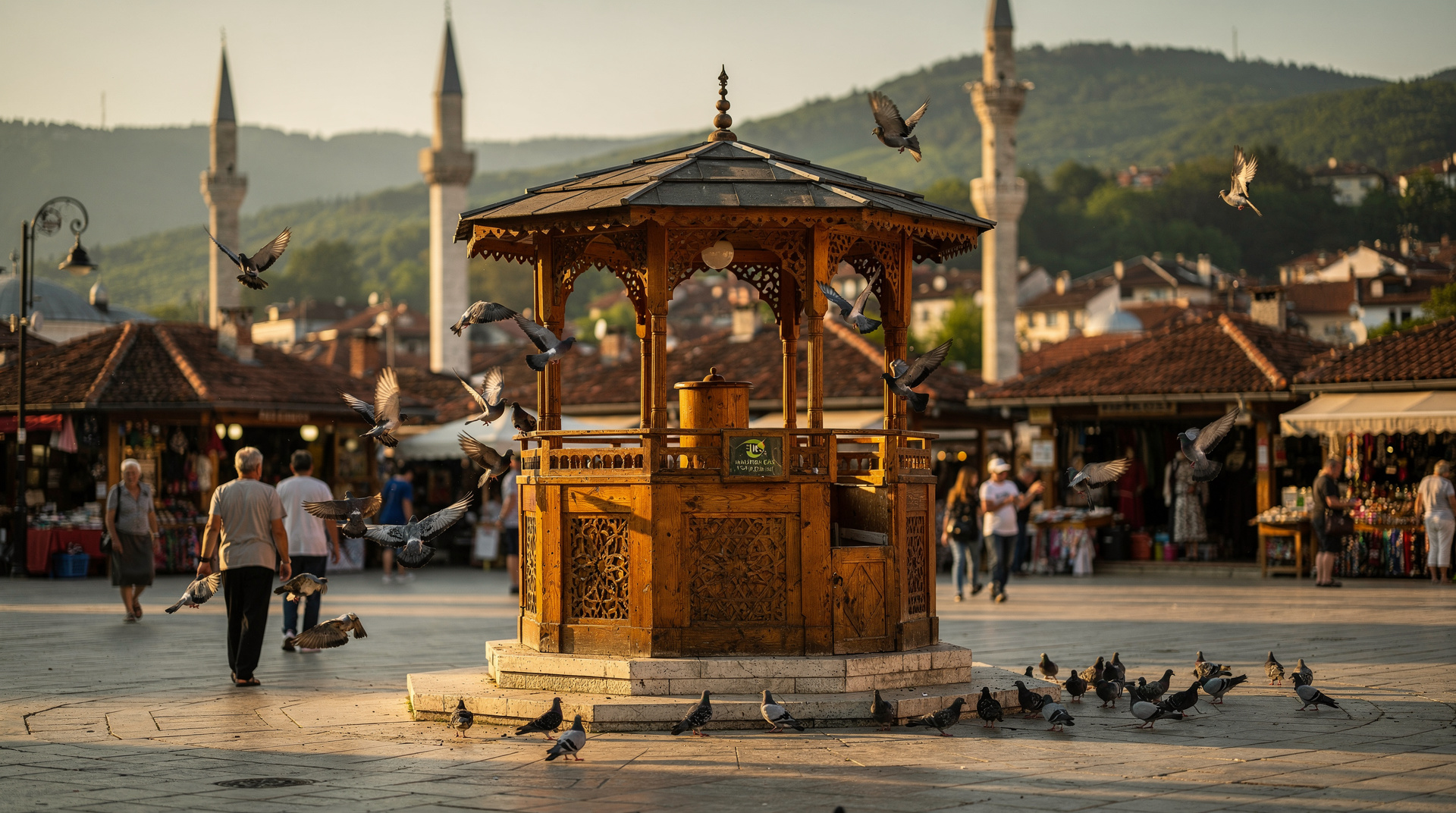
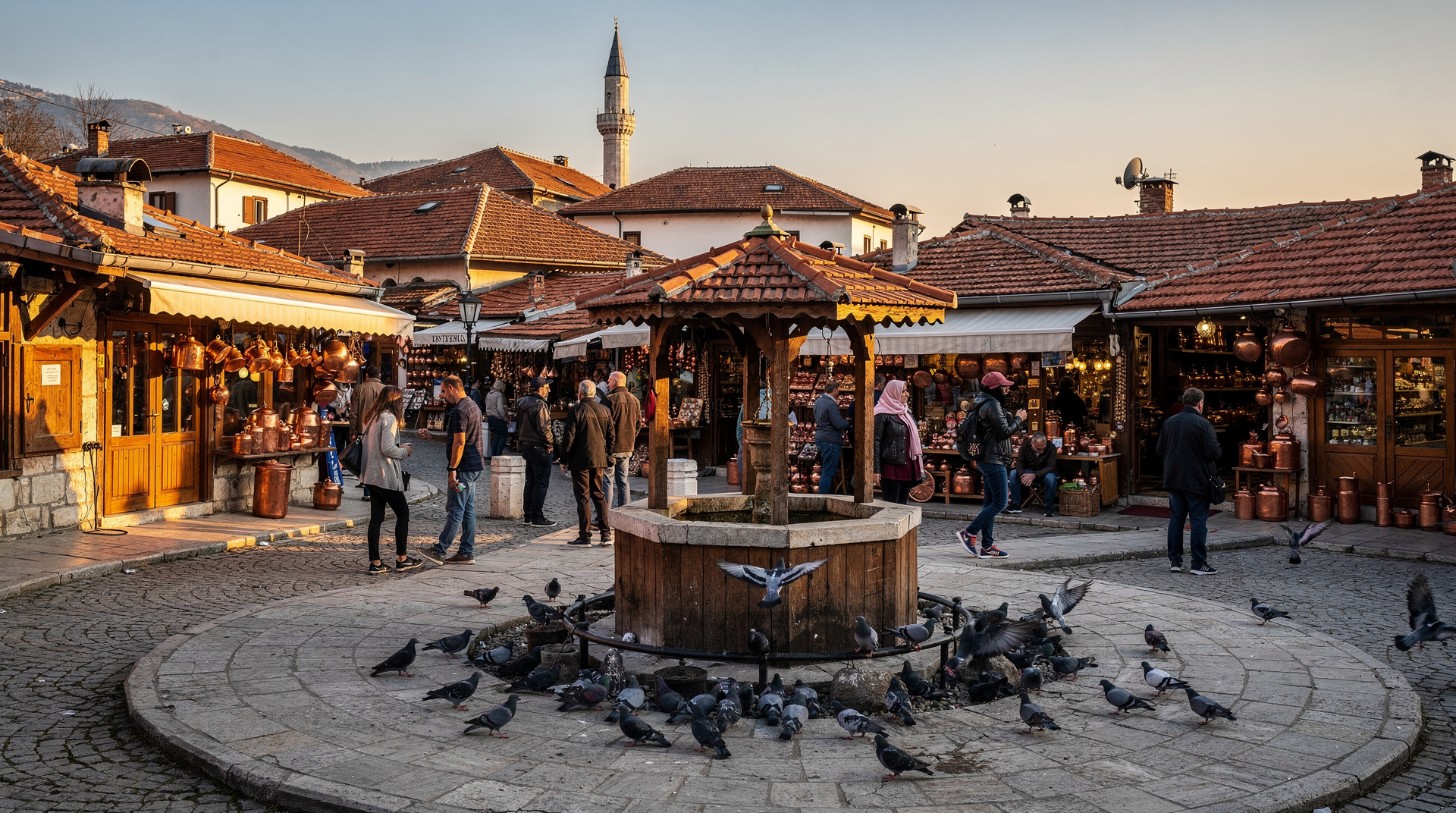
If your schedule allows an extra 20-30 minutes, the Baščaršija guide covers the Sebilj fountain and the copper bazaar immediately surrounding the mosque — a natural bookend to the religious walk since it explains the commercial and civic life that grew up around Gazi Husrev-beg’s original endowment. Travellers interested in the Ottoman period more broadly should also see the Ottoman heritage in Bosnia guide.
Top experiences
Bookable activities with verified prices and instant confirmation on GetYourGuide.