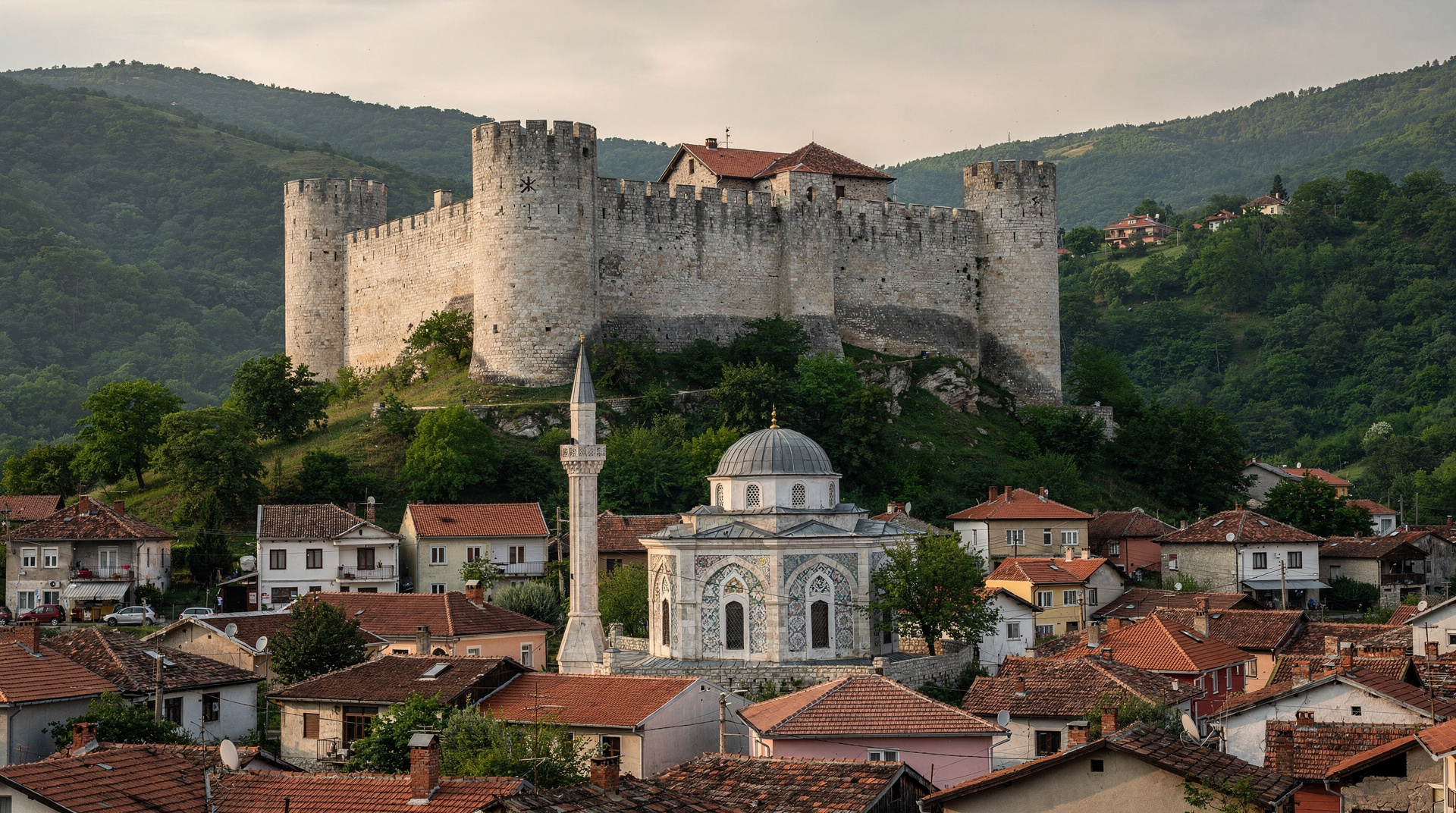
Jajce — the royal town with a waterfall in its centre
There are cities where a single remarkable feature — a famous bridge, a landmark building — becomes so associated with the place that everything else is overshadowed. Jajce is a city with several remarkable features, and somehow none of them quite overshadows the others.
| At a glance | |
|---|---|
| Where | Central Bosnia, about 160km northwest of Sarajevo |
| Cost | Modest entry fees for fortress, catacombs, and AVNOJ museum — a few BAM each |
| Time needed | Half a day for the town centre; a full day with the Pliva watermills |
| Getting there | Car (2.5–3 hours from Sarajevo) or bus; pairs with Travnik |
| Best time | Late spring for waterfall volume, autumn for the Pliva Lakes colours |
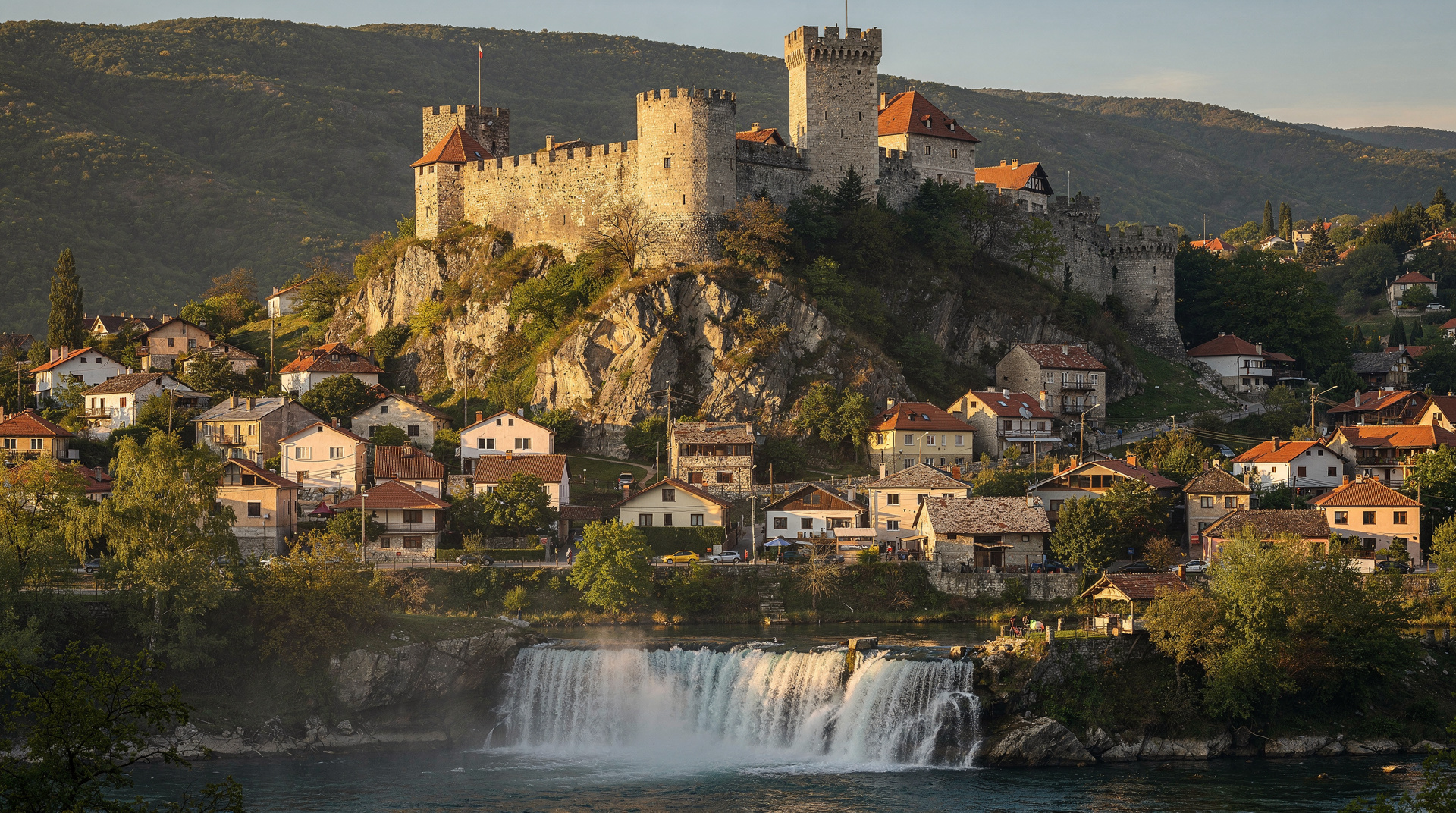
The Pliva waterfall in the literal centre of town. The medieval fortress on the hill above. The Mithraic temple in the catacombs below. The Pliva Lakes and the watermills, 3 kilometres out. And the fact that this was the royal capital of medieval Bosnia for nearly a century before the Ottoman conquest — which, in a region of ancient cities, is a particular kind of historical weight.
The waterfall
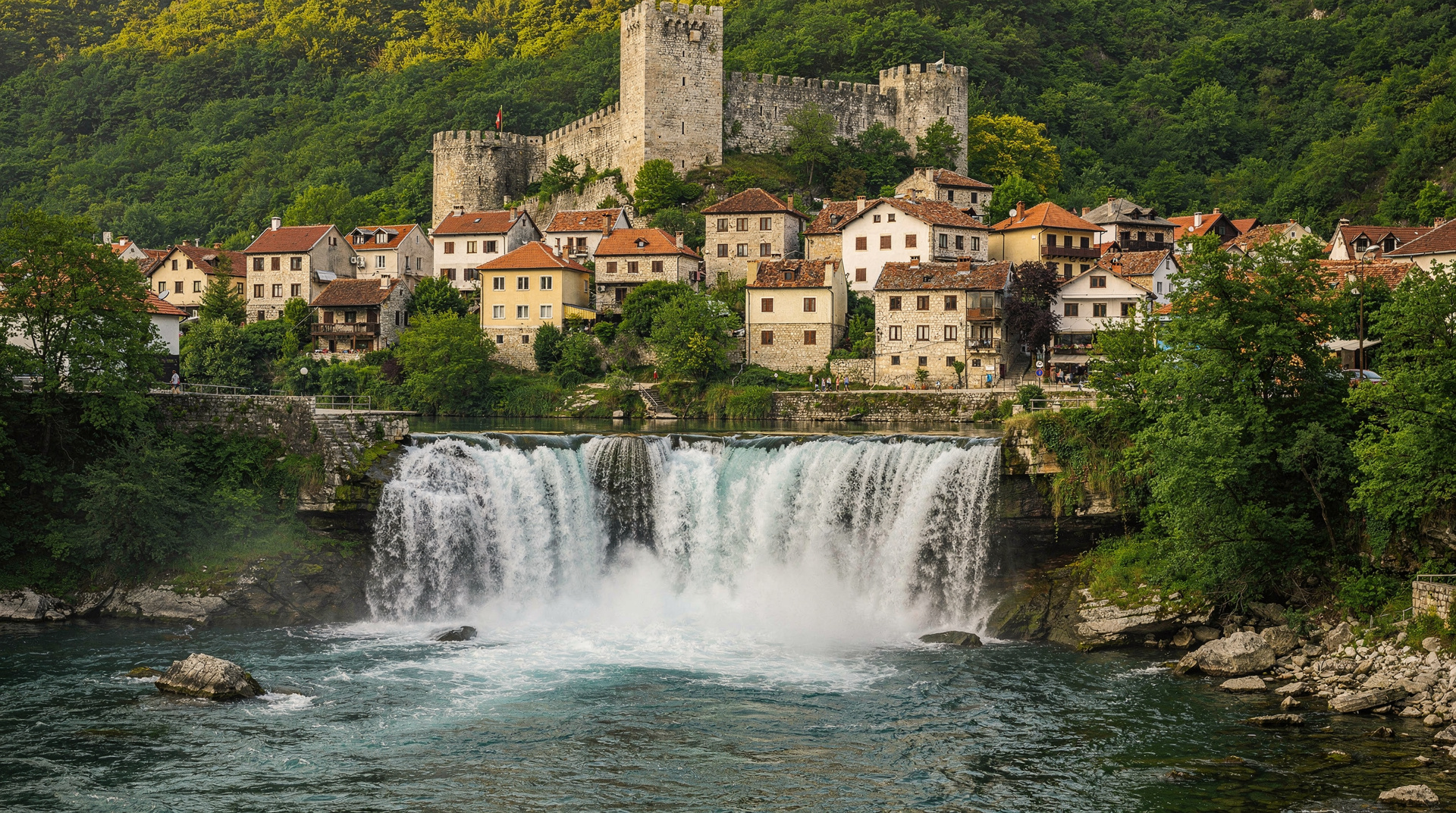
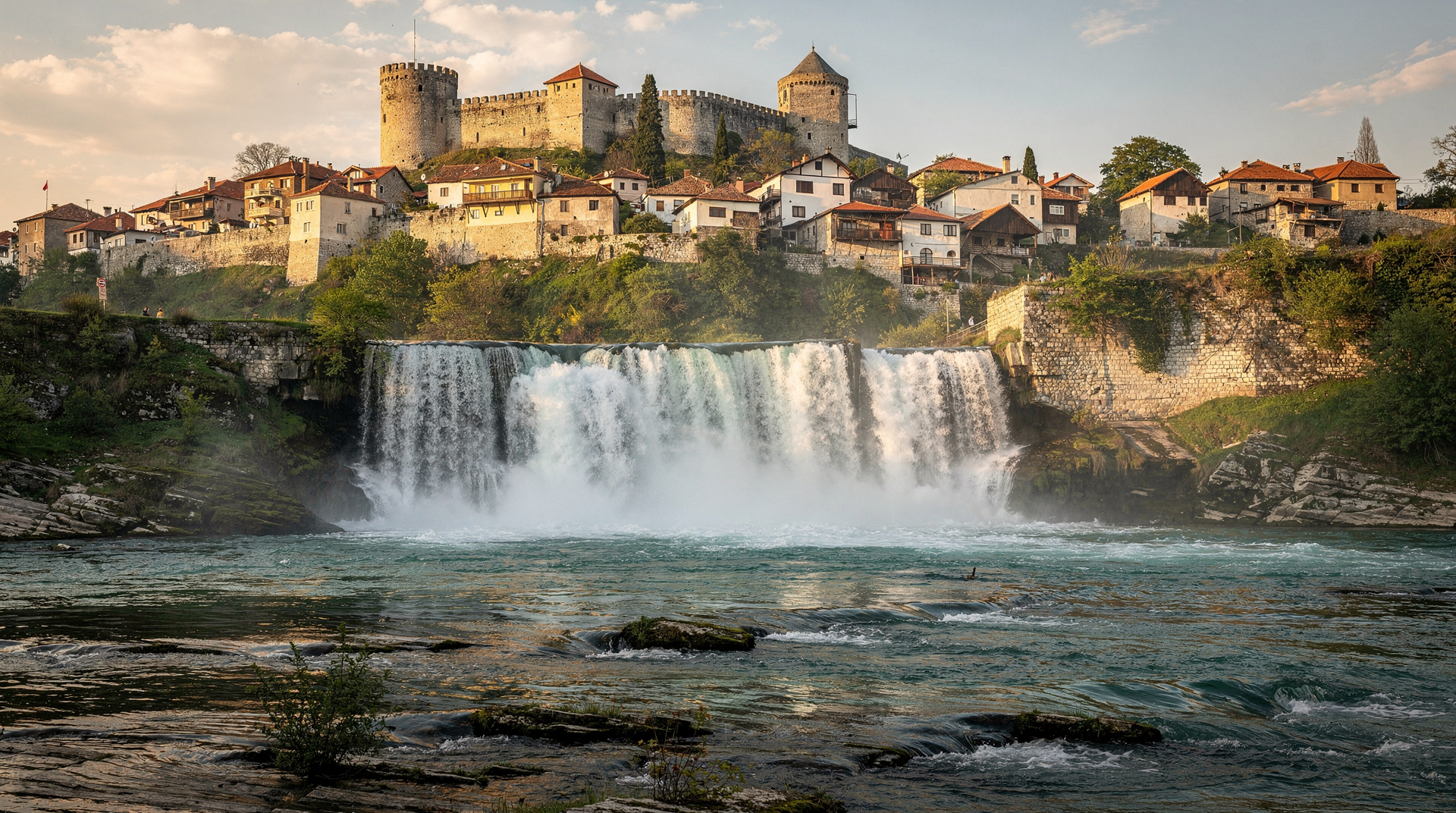
The Pliva River joins the Vrbas at Jajce in a 22-metre waterfall that drops directly into the Vrbas canyon below. The waterfall is in the town — not outside it, not accessible only by trail, but visible from the main road that enters Jajce from the south.
It is stunning in a context that makes you keep doing a double take: a medieval town with a castle on the hill and a waterfall at the bottom. The combination looks implausible until you have seen it several times.
The best viewpoint is from the bridge over the Vrbas just below the confluence. From here you look up at the waterfall with the town above it and, on clear days, the fortress against the sky. The waterfall guide covers the viewpoints and the surrounding walk.
If you enjoy waterfalls as a theme of the trip, Jajce sits well alongside the other cascades of the country: the travertine curtains at Kravice, the water-rich landscapes of Una National Park, and the lakes and streams of the wider Pliva Lakes area. Each has a different character, and Jajce is the only one where the water drops beside streets and houses rather than in open countryside.
The fortress
The fortress of Jajce was built and expanded by the Bosnian kings and nobles during the fourteenth and fifteenth centuries. It sits on the hill above the town, its walls integrating the natural rock outcrops. The entrance is through a well-preserved medieval gate.
Inside, the fortress is partly ruined but substantially intact. The views over the town and the Pliva canyon from the battlements are excellent. The climb from the town centre takes about 15–20 minutes.
Below the fortress walls, the Church of Saint Luke — now a museum — has a distinctive square bell tower that dates from the Bosnian medieval period. The church was converted to a mosque after the Ottoman conquest and used as both over subsequent centuries; the bell tower remained.
The Jajce fortress guide covers the full site with entry details and historical context.
Take your time on the walls. The fortress is the best place to understand why a royal court chose this spot: the rock, the two rivers and the narrow approaches made the town easy to defend, and from the battlements you can read the whole layout of the old settlement at a glance. The same story of hilltop strongholds and river-bound towns repeats elsewhere in the country, for instance at Travnik, and comparing the two gives a good feel for how medieval and Ottoman Bosnia was organised. For the broader background, the Bosnia history guide for travelers is a good companion read before you go.
The catacombs
Below the Church of Saint Luke, excavated from the rock, are the Jajce catacombs: a burial complex that dates to the fifteenth century and contains, among other features, a chamber identified as a Mithraic temple — the only such confirmed temple in Bosnia. Mithraism was a mystery religion that spread through the Roman Empire and persisted in pockets long after official Christianisation.
The catacombs are accessed through a small entrance near the church. They are dark, cool, and remarkable for their completeness — several chambers, carved altars, and the Mithraic reliefs in surprisingly good condition given their age.
Entry is modest; the space requires a torch (usually available from the site) and a willingness to stoop through low passages.
The Pliva watermills
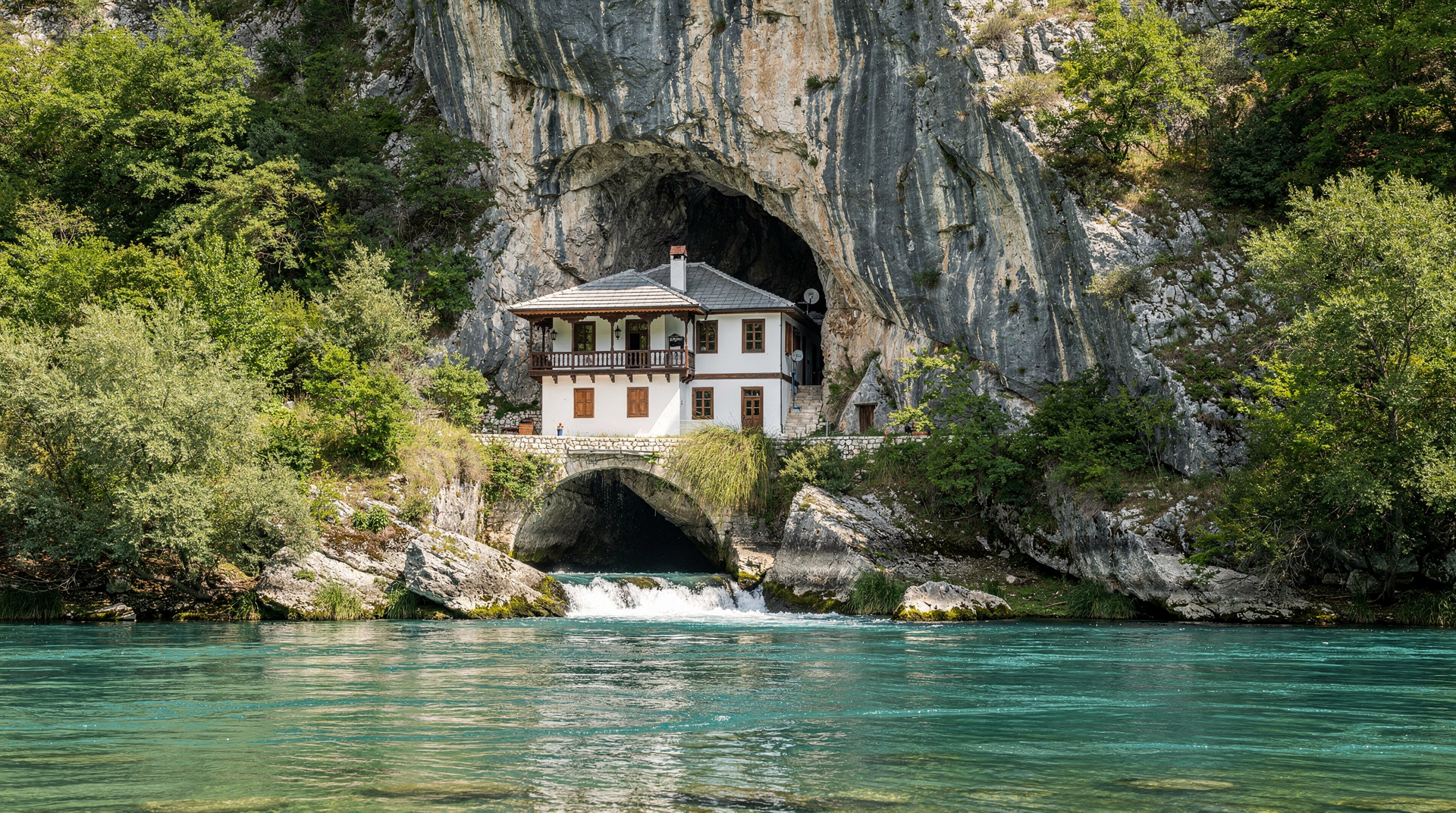
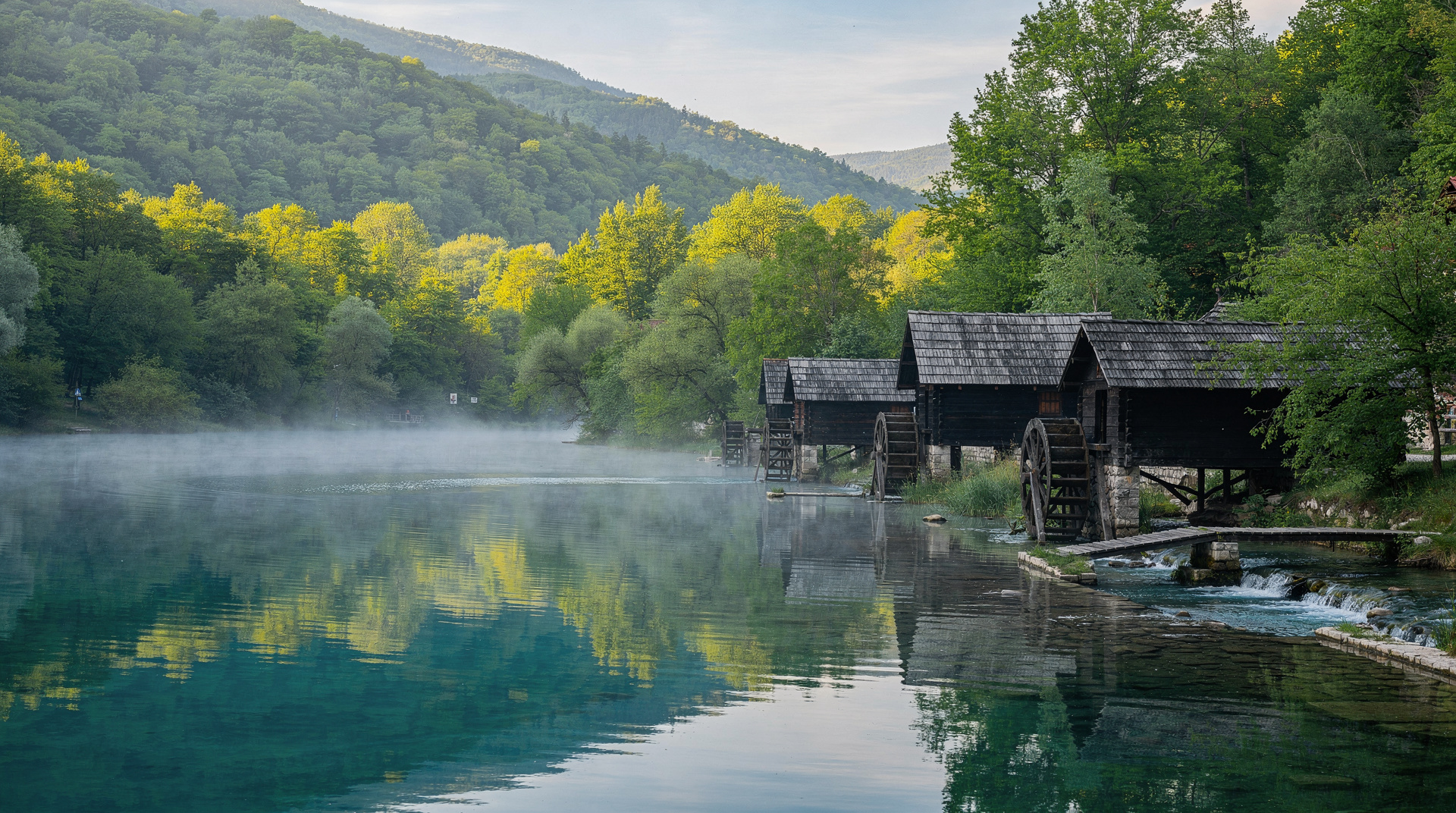
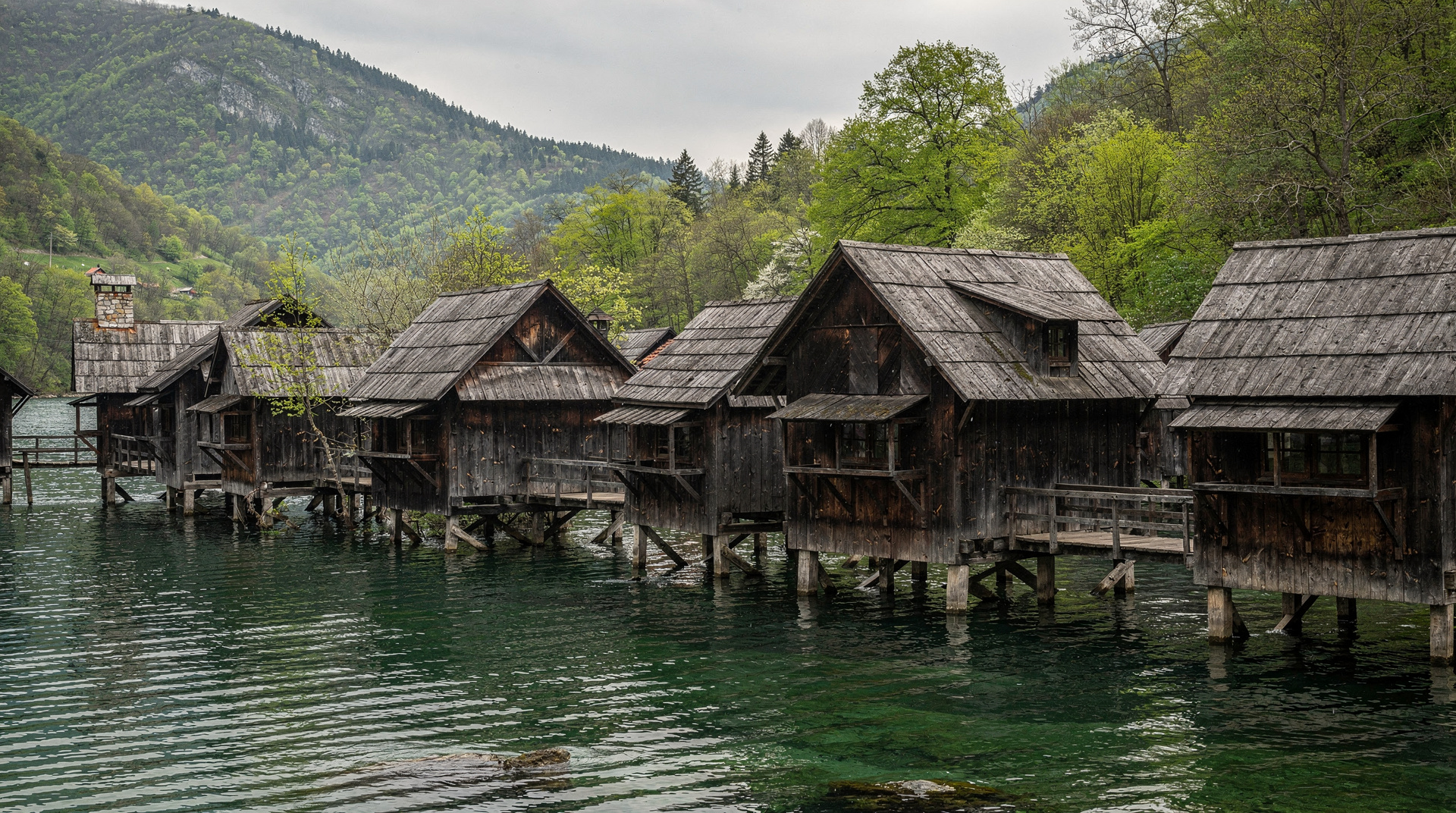
Three kilometres north of Jajce, the Pliva Lakes are two connected artificial lakes created by the medieval river management of the Pliva. At the narrow strait between the two lakes sits a row of small wooden watermills — the Mlins — built in the seventeenth and eighteenth centuries and still in reasonable structural condition.
The watermills are the most photographed site in central Bosnia after the Jajce waterfall itself: a line of small wooden buildings perched on timber piles over the rushing water of the straits, reflected in the calm lower lake. In autumn, the surrounding beech and oak forest turns gold and red.
The Pliva watermills guide covers access and the lakes walk.
Without a car, the simplest way to reach the strait is a guided trip from Sarajevo that combines Travnik, Jajce and the watermills, which covers the out-of-town stop that public transport handles poorly.
The watermills reward a slow visit. Go early or late if you want the reflections and the quiet, and leave time to simply sit by the water instead of ticking off a photo. If the lakes leave you wanting more time outdoors, the hiking in Bosnia guide and the kayaking guide suggest other ways to spend a day on the water or on foot in this part of the country.
The historical significance
Jajce was founded in the fourteenth century by a Bosnian noble and became the royal seat of the Bosnian kingdom — the last independent Bosnian state before the Ottoman conquest in 1463. The Bosnian king Stjepan Tomašević surrendered to the Ottomans at Jajce’s fortress; the Ottoman court had him executed shortly afterward.
Jajce remained under Ottoman rule for most of the subsequent four centuries. It changed hands several times between Ottoman and Hungarian forces in the fifteenth and sixteenth centuries, which is reflected in the mixture of medieval Christian and early Ottoman architectural elements in the town.
More recently, Jajce has a notable twentieth-century connection: it was here, on 29 November 1943, that the Anti-Fascist Council of the National Liberation of Yugoslavia (AVNOJ) held its second session and effectively proclaimed the foundations of socialist Yugoslavia, with Josip Broz Tito as leader. The building where this occurred is now a museum. For readers who want the wider arc of how that state later broke apart, the Yugoslav wars explained guide is useful background. And for the Ottoman period that shaped the town’s mosques, bridges, and market layout, see the Ottoman heritage in Bosnia guide.
Fitting Jajce into a longer trip
Jajce is a natural stop on a loop between Sarajevo and Banja Luka rather than a standalone destination for most travellers. If you’re coming from the north, Banja Luka is about 90 kilometres away and makes a sensible overnight base. If you’re building a longer trip, several of the multi-day itineraries — including the 10-day Bosnia itinerary — route through Jajce between Sarajevo and the northwest.
Planning the practicalities
Roads in central Bosnia are slower than the distances suggest, so allow more time than the map implies. The driving in Bosnia guide and the renting a car in Bosnia guide explain what to expect behind the wheel, while the buses in Bosnia guide and the getting around Bosnia guide cover the public-transport option. A car makes the Pliva Lakes far easier, since the watermills lie outside the centre.
If you are still deciding how long to give the country as a whole, the how many days in Bosnia guide helps you judge whether Jajce earns a place in your route, and the Bosnia 7-day itinerary shows how a shorter trip can be shaped. Travellers heading on to the northwest can look at the western Bosnia and Krajina itinerary, and those starting from the capital will find the best day trips from Sarajevo a useful comparison.
Getting there
Jajce is 160 kilometres northwest of Sarajevo — roughly 2.5 to 3 hours by car, longer by bus. It pairs naturally with Travnik, 50 kilometres south on the same route.
The Jajce and Travnik day trip guide covers this route from Sarajevo with specific timings and recommendations. It is a long day trip but a very rewarding one.
If you would rather not drive the mountain roads yourself, a guided option is an organised day tour from Sarajevo that links the town waterfall, Travnik and the Pliva Lake. It takes the logistics off your hands and lets you spend the journey looking out of the window rather than at the map.
From Banja Luka in the north, Jajce is about 90 kilometres south on reasonable roads.
When to visit
Jajce rewards visits in late spring (May–June) when the waterfall is at full volume from snowmelt, and in autumn (September–October) when the forest around the Pliva Lakes turns colour. Summer is warm and the site is pleasant, but the lakes can be busy with local families at weekends.
February is when this article was written about the town, and in winter Jajce is very quiet — just the waterfall, the fortress, and local life continuing in a town that does not depend on tourists to function. That version of Jajce has a particular quality that summer cannot replicate.
For a wider view of the seasons, the best time to visit Bosnia guide and the Bosnia in autumn guide help you match Jajce to the rest of your plans. Readers who like the autumn idea may also enjoy the autumn colours in Sutjeska story, and anyone building a first itinerary can start with the Bosnia travel guide.
Frequently asked questions about Jajce — the royal town with a waterfall in its centre
Is Jajce worth visiting as a day trip from Sarajevo? Yes, though it’s a long day — around 5–6 hours round trip on the road alone. Many travellers prefer combining it with an overnight, or pairing it with Travnik as covered in the Jajce and Travnik day trip guide.
How much time do you need in Jajce? Half a day covers the waterfall, fortress, and catacombs at a reasonable pace; a full day lets you add the Pliva watermills and lakes without rushing.
Top experiences
Bookable activities with verified prices and instant confirmation on GetYourGuide.