Travnik
Explore Travnik, Bosnia's former Ottoman capital — its hilltop fortress, the Many-Coloured Mosque, birthplace of Nobel laureate Ivo Andric.
Discover Travnik & Jajce: Culture, Nature & History Await
Quick facts
- Region
- Central Bosnia Canton
- Distance from Sarajevo
- 90 km northwest (1.5 h)
- Distance from Jajce
- 25 km southeast (30 min)
- Currency
- BAM (1 EUR = 1.95583 KM)
Travnik sits in a narrow green valley where the Lašva river cuts between two forested ridges, 90 kilometres northwest of Sarajevo. For nearly 150 years — from the mid-17th century until the arrival of the Austro-Hungarians in 1878 — it served as the seat of the Ottoman viziers who governed Bosnia, a role that left a rich architectural and cultural legacy that the town preserves more authentically than almost anywhere else in the country. It is also the birthplace of Ivo Andrić, who won the Nobel Prize in Literature in 1961 for his Travnik Chronicles and The Bridge on the Drina.
| At a glance | |
|---|---|
| Where | Central Bosnia, on the M16/M17.3, around 90 km northwest of Sarajevo |
| Cost | Fortress around 3 BAM; Andrić museum around 2 BAM; mosque courtyard free |
| Time needed | Around half a day, usually paired with Jajce |
| Getting there | Self-drive (1.5 h), bus (around 2 h), or as a stop on a Sarajevo–Jajce tour |
| Best time | April-October, weekday mornings for the fortress |
Getting to Travnik from Sarajevo
By car, Travnik is an easy 1.5-hour drive northwest on the M17.3 motorway toward Zenica, then the M16 toward Jajce. The motorway to Zenica is good quality; after that the road narrows. By bus from Sarajevo, multiple daily departures cover the route in approximately 2 hours for around 12-16 BAM (6-8 EUR).
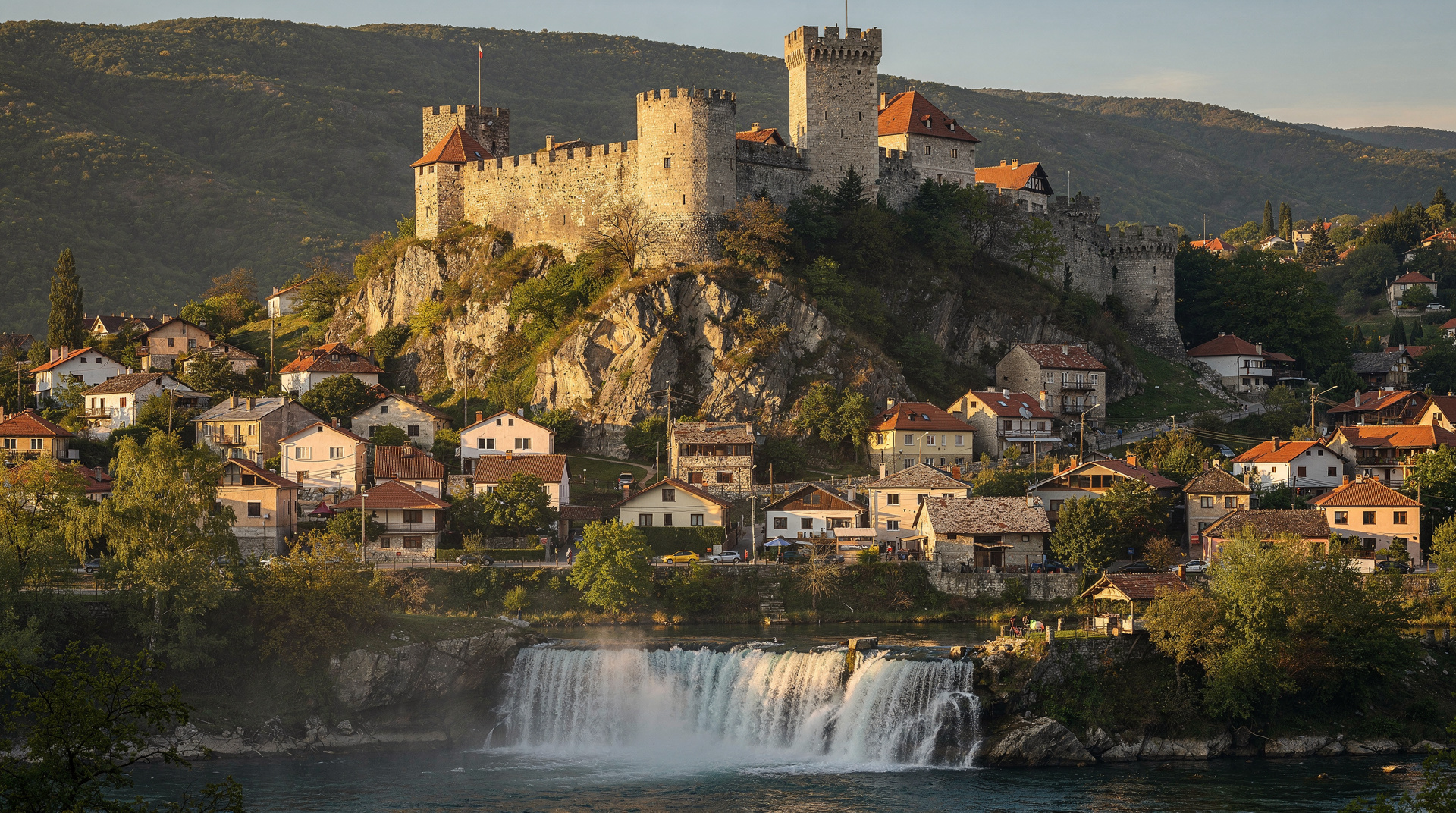
The most natural way to visit is as part of a pairing with Jajce, 25 kilometres further northwest. A Travnik and Jajce culture and history tour from Sarajevo combines both towns efficiently, with a guide to provide the Ottoman and medieval context that brings the fortresses and mosques to life.
The fortress
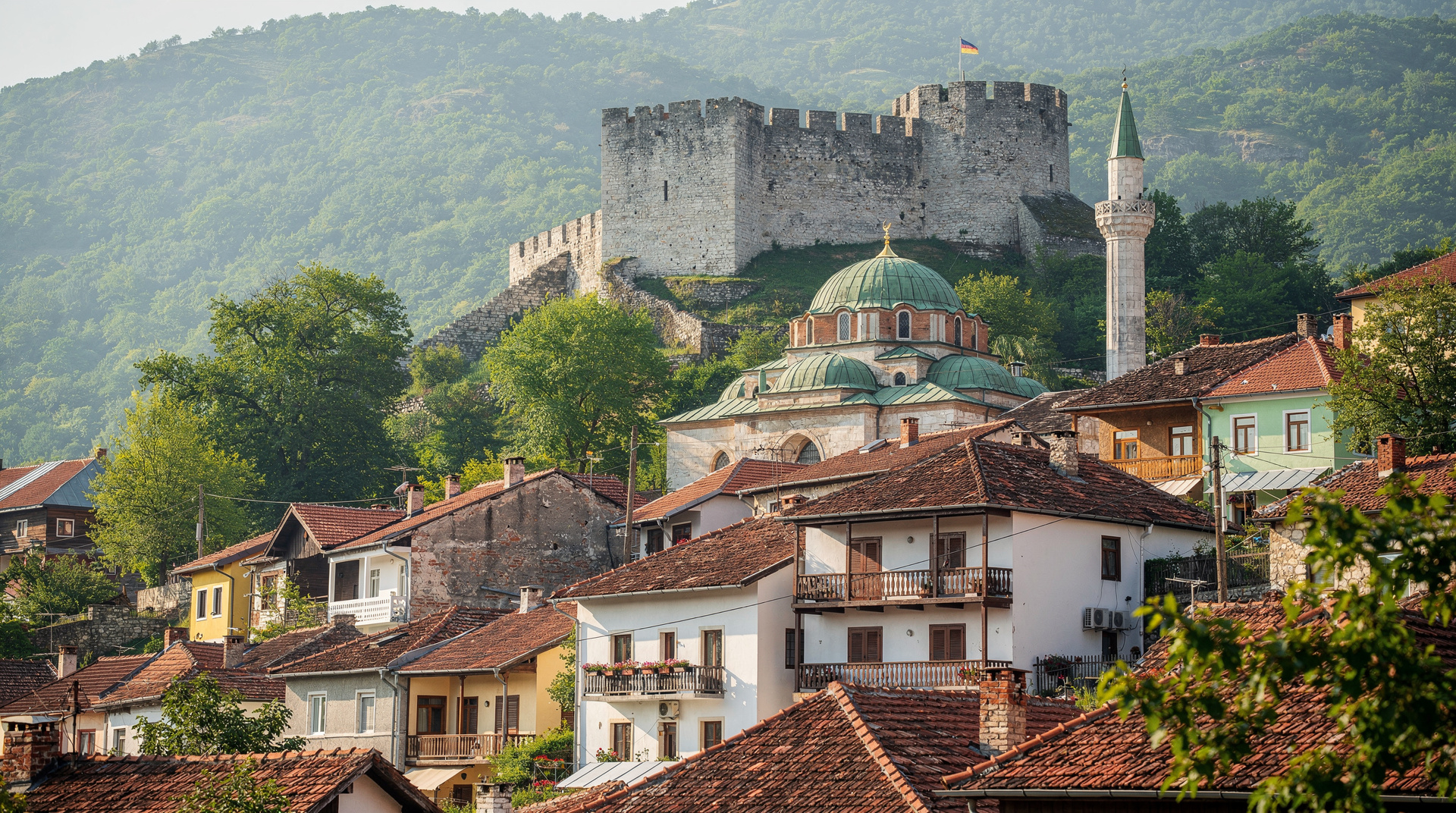
The Old Fortress (Stari Grad) dominates Travnik from a ridge above the town centre. Its towers and walls date primarily to the 15th-16th century Ottoman period, though the site was fortified before that. The climb from the main street takes about 15 minutes and is steep but well-maintained. Entry costs 3 BAM (1.50 EUR). From the upper towers, the view over the Lašva valley and the town’s minarets is one of the most satisfying urban panoramas in central Bosnia — compact, forested and distinctly Bosnian in character.
The fortress is sometimes included in the Ottoman heritage of Bosnia narrative alongside Počitelj and Blagaj in Herzegovina, though geographically and historically it belongs to the central Bosnian tradition.
What to look for on the walls
Take your time at the upper towers rather than photographing the view and heading straight back down. The walls give a useful sense of how the town was laid out: the bazaar quarter below, the mosques marking the old neighbourhoods, and the ridges that made this narrow valley easy to defend and easy to govern. Wear shoes with decent grip, since the path and the stone steps can be slippery after rain. If you are travelling with children, the fortress is usually a hit, but keep a close eye on them near unprotected edges. Families planning a wider trip will find more ideas in our Bosnia with kids guide.
The Many-Coloured Mosque
The Šarena džamija, or Many-Coloured Mosque, is Travnik’s most photographed building. Built in the early 18th century and repainted numerous times, it presents a polychrome exterior of cream, red and blue geometric patterns that is unusual in Bosnian Islamic architecture, which tends toward simpler whitewash. The interior is open to respectful visitors outside prayer times; dress modestly and remove shoes.
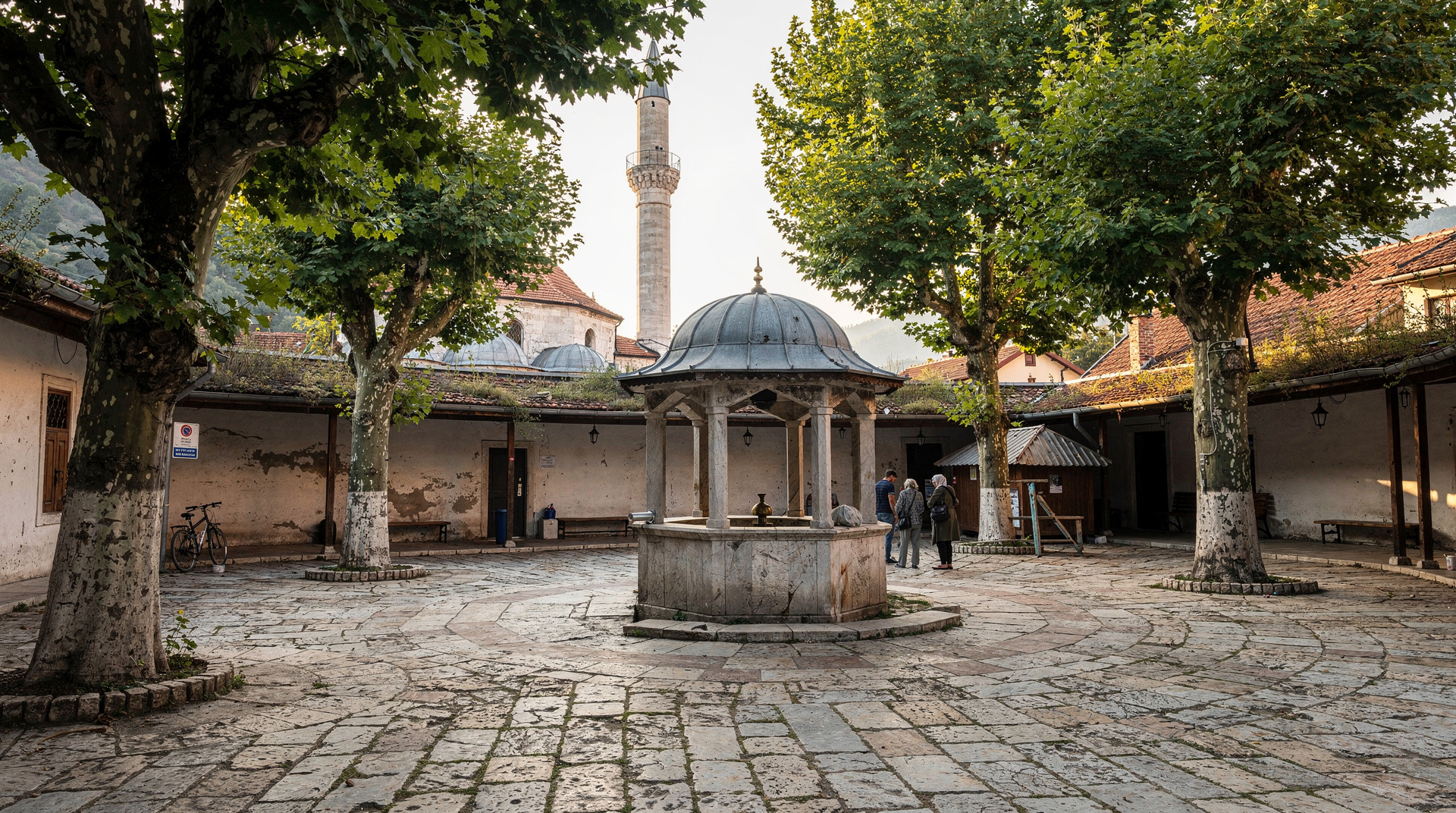
Beside the mosque is a türbe (Ottoman tomb) and a pleasant courtyard with a şadırvan (ablution fountain). The whole complex sits at the edge of the bazaar quarter, where a few goldsmiths and craftspeople still operate in the traditional çarşı (covered market) arrangement.
Mosque etiquette in practice
Mosques in Bosnia are working places of worship, not museums. Check whether prayers are under way before you step inside, keep your voice low, and ask before photographing anyone. Shoulders and knees should be covered for everyone, and a light scarf is handy for women who want to cover their hair. If you plan to visit other mosques on your trip, our Sarajevo mosques guide explains what to expect, and the Bosnian coffee culture guide is a good companion for the café stops that usually follow.
Ivo Andrić and the Travnik Chronicles
Andrić was born in Travnik in 1892, and his most famous novel set there — Travnik Chronicles (Na Drini ćuprija for The Bridge on the Drina is the better-known work internationally) — fictionalises the town’s life under the Ottoman viziers. The house where he was born is preserved as a small museum on the main street, with exhibits on his life and the historical period of the chronicles. Entry: 2 BAM. Even if you are not familiar with Andrić’s work, the museum gives useful context for understanding the texture of life in vizier-era Bosnia.
Reading Andrić before or after your visit
Travnik makes more sense if you have read a little of Andrić first, but it works the other way round too. The novels deal with outsiders arriving in a provincial capital where several faiths and several empires rub against each other, and walking the main street with that in mind turns an ordinary town centre into a stage set. For the wider backdrop, read our Bosnia history for travellers guide. Andrić’s other great setting is covered in the Višegrad bridge on the Drina guide and in Andrićgrad, so Travnik fits neatly into a literary route across the country.
The bazaar and eating
Travnik’s čaršija (old bazaar quarter) is compact but genuine: a few blocks of shophouses, a covered market selling vegetables and local dairy, and several ćevabdžinice (grilled meat restaurants) that serve the local version of ćevapi — smaller and fattier than the Sarajevo style, with raw onion and somun bread. Lunch for two at a local grill costs 20-30 BAM. The town is also known for its sirnica (cheese pita), which the local bakeries make particularly well; a portion is 2-3 BAM.
The day trip combining Sarajevo, Travnik, Jajce and the Pliva watermills includes stops at all the main Travnik sites before continuing to Jajce.
Food to try, and how to order
Order the ćevapi the way locals do, with somun, raw onion and a glass of something cold, and finish with a Bosnian coffee if you have time. Many grills are simple, quick and unpretentious, which suits a half-day stop. If you want to go deeper, our Bosnian food guide, the burek and pita guide and the ćevapi guide explain the dishes and the etiquette around them. A bakery stop for sirnica also makes a good picnic for the drive onward.
Combining Travnik with Jajce
Most visitors pair Travnik as a 2-hour stop on the way to or from Jajce. The natural itinerary from Sarajevo: leave early, reach Travnik by 09:30-10:00, see the fortress, the mosque and the bazaar by 12:00, drive the 25 km to Jajce for lunch and the afternoon, then return to Sarajevo by 18:00-19:00. This works comfortably in a single day.
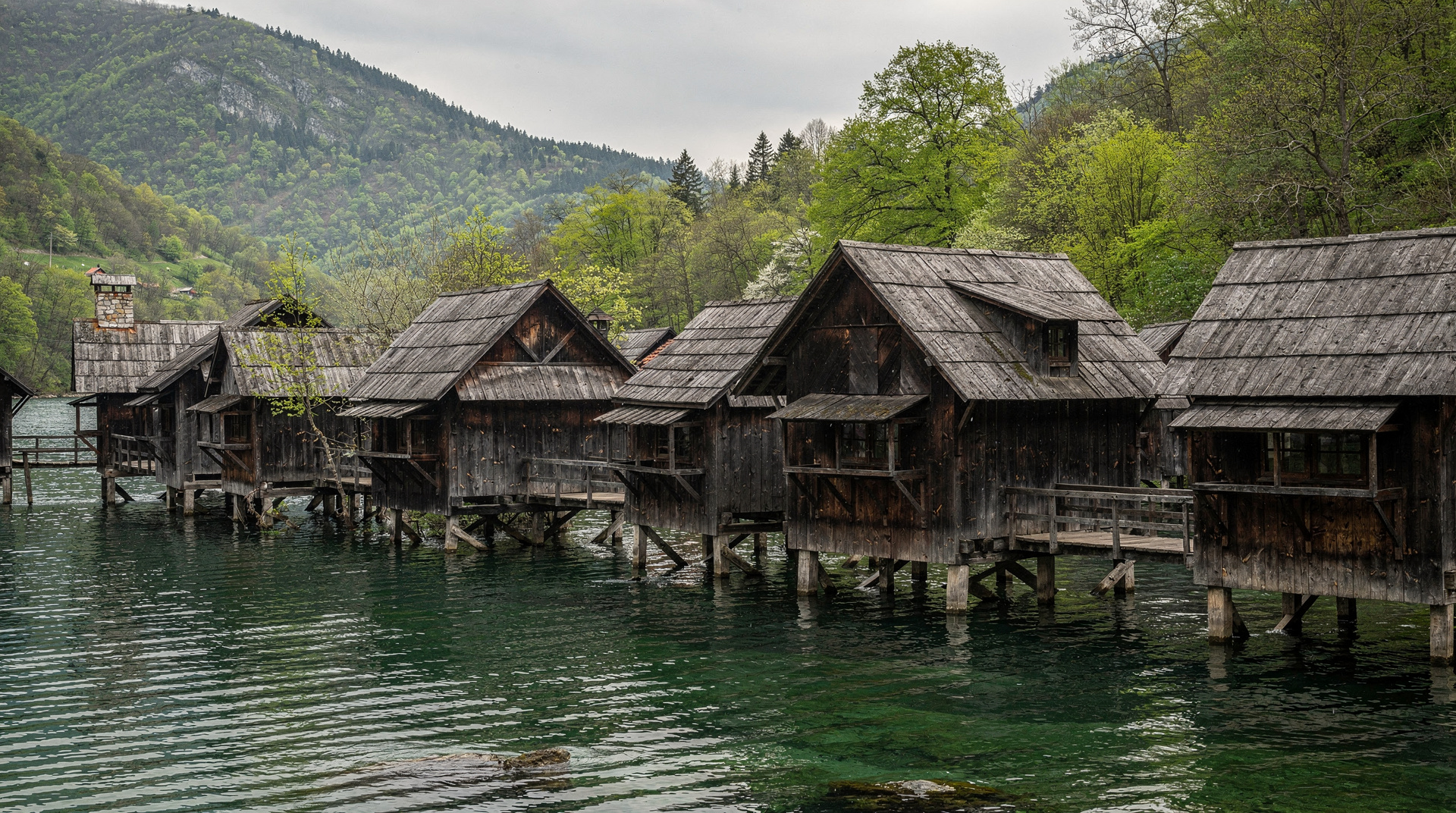
For those interested in the Pliva watermills north of Jajce, add another hour to the itinerary. Our Jajce watermills guide has route details for the mill circuit.
Doing the route independently
If you are driving yourself, read our driving in Bosnia guide and the advice on renting a car in Bosnia before you set off; mountain roads are slower than the map suggests, so leave generous margins. Without a car, the buses in Bosnia guide and getting around Bosnia cover how the network works, and the Bosnia by public transport itinerary shows how to link towns like this one. For a fuller look at the two towns together, see the Jajce and Travnik day trip guide and the Travnik Ottoman town guide. From Sarajevo, other options for the same day are listed in best day trips from Sarajevo.
When to go
Spring and autumn give the softest light and the most comfortable walking; our Bosnia in spring and Bosnia in autumn guides describe what else is on offer at those times. In summer, start early to avoid the heat on the fortress path. In winter the town is quiet and some things may be closed, so check Bosnia in winter before planning. The best time to visit Bosnia guide gives the wider picture, and the avoiding crowds guide helps if you want a quiet visit.
Practical tips
- The fortress can be crowded in the early afternoon in July and August; visit in the morning for the best light and fewer people.
- Street parking in the town centre is free; the old bazaar is best explored on foot.
- Travnik has no accommodation that would make it a destination in its own right; all visitors use it as a day stop from Sarajevo or Jajce.
- The local cheese (travnički sir) is one of Bosnia’s most celebrated dairy products — a crumbly white cheese somewhere between feta and cottage cheese. Buy it at the market for 5-8 BAM per 250g.
Travnik is a compact, unhurried town that rewards travellers who approach it with curiosity about Bosnia’s Ottoman past. It lacks the dramatic natural setting of Jajce or the urban energy of Sarajevo, but its fortress view, its coloured mosque and its quiet bazaar streets carry an authenticity that is increasingly rare.
How Travnik compares to Bosnia’s other Ottoman towns
Travnik is often mentioned alongside Počitelj and Blagaj as one of the country’s best-preserved Ottoman-era settlements, but the comparison only goes so far. Počitelj and Blagaj are stone hillside villages built around a single dramatic feature (a fortress-village, a dervish tekke by a spring); Travnik is a working town with a functioning bazaar, resident population and a layered history as a genuine seat of government. Travellers who want atmosphere and a photograph should prioritise Počitelj or Blagaj; those interested in how Ottoman Bosnia actually governed itself get more from Travnik. Our Ottoman heritage guide sets all three in context.
Building Travnik into a longer trip
Travnik also works as a pause between the capital and the northwest. It sits comfortably in a route that links Sarajevo, Travnik, Jajce and on towards Banja Luka or Bihać, which is the logic behind the western Bosnia and Krajina itinerary. If you are planning a bigger loop, the Bosnia 10-day itinerary and the Bosnia travel guide show where a half-day here fits. Travellers who want to understand the region’s Ottoman layer more thoroughly can combine Travnik with Sarajevo’s Bascarsija and the Austro-Hungarian Sarajevo story, which picks up where the viziers left off.
Is Travnik worth a stop on its own, or only with Jajce?
Almost every visitor sees Travnik as a stopover, and that is the right approach — the town itself does not have enough to fill a full day, and its only realistic overnight audience is travellers researching Andrić. If you are building a wider itinerary, our how many days in Bosnia guide and the Bosnia 7-day itinerary both treat Travnik as a half-day insert rather than a base.
Frequently asked questions about Travnik
Is Travnik worth visiting if I only have one day in central Bosnia? Yes, but pair it with Jajce rather than visiting alone — Travnik alone is a 2-3 hour stop, while Travnik and Jajce together fill a satisfying full day from Sarajevo.
Can I visit Travnik without a car or tour? Yes. Regular buses run from Sarajevo in around 2 hours for 12-16 BAM, and the fortress, mosque and bazaar are all within easy walking distance of the bus station.
Top experiences
Bookable activities with verified prices and instant confirmation on GetYourGuide.