Pliva Lakes
Explore the Pliva Lakes near Jajce — medieval wooden watermills, turquoise water and easy hiking just 2 km from the town waterfall.
From Sarajevo: Travnik, Jajce, Pliva Lakes & Watermills Trip
Quick facts
- Region
- Central Bosnia Canton
- Distance from Jajce
- 2 km northwest
- Distance from Sarajevo
- 152 km (2.5-3 h)
- Currency
- BAM (1 EUR = 1.95583 KM)
| At a glance | |
|---|---|
| Where | 2 km northwest of Jajce, Central Bosnia |
| Cost | Free lakeside path; around 2 BAM to access the mill owners’ terrace |
| Time needed | Half a day, or a full day combined with Jajce and Travnik |
| Getting there | 25-minute walk or 5-minute drive from Jajce old town |
| Best time | May-September, mornings before coach groups arrive |
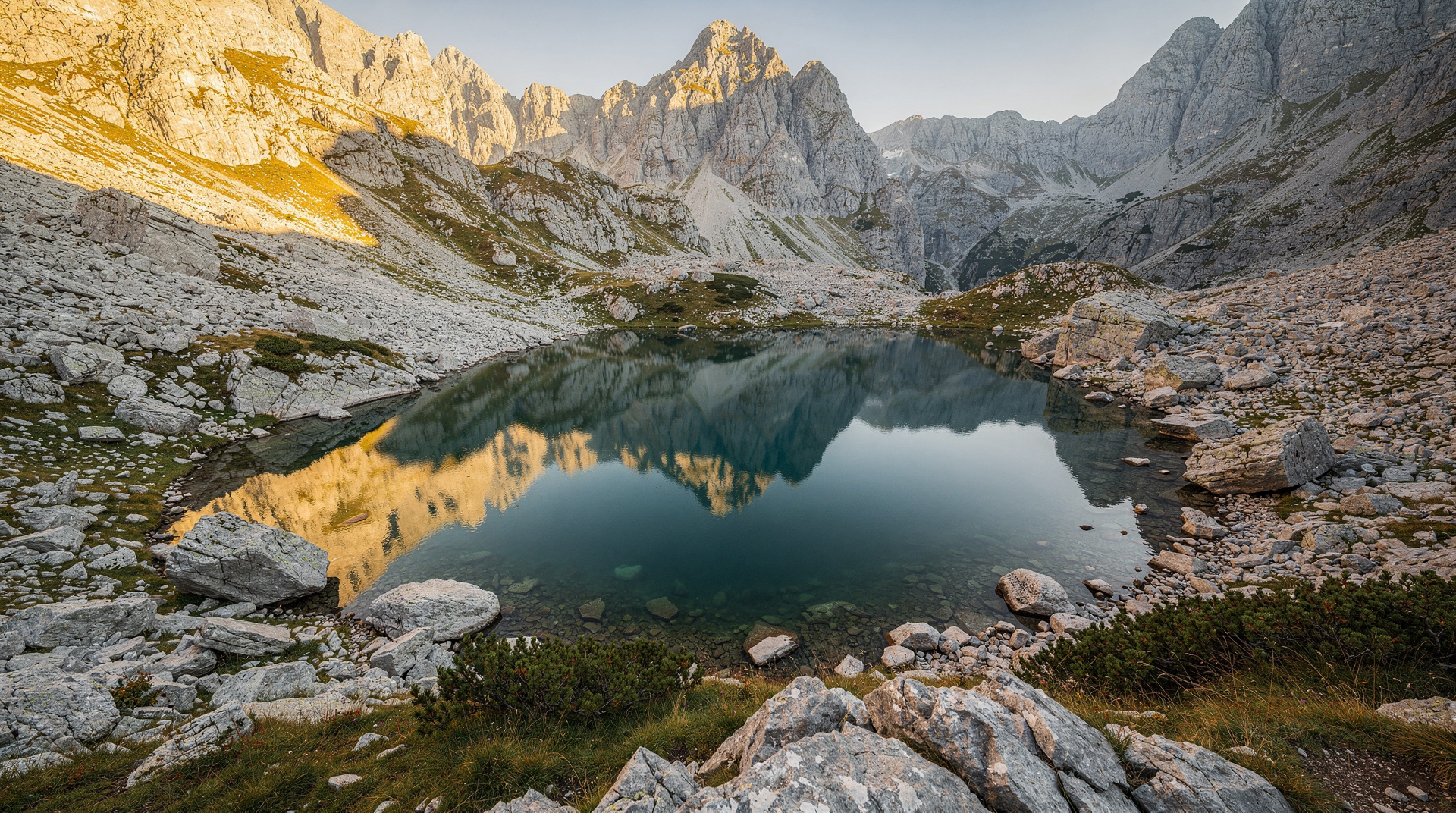
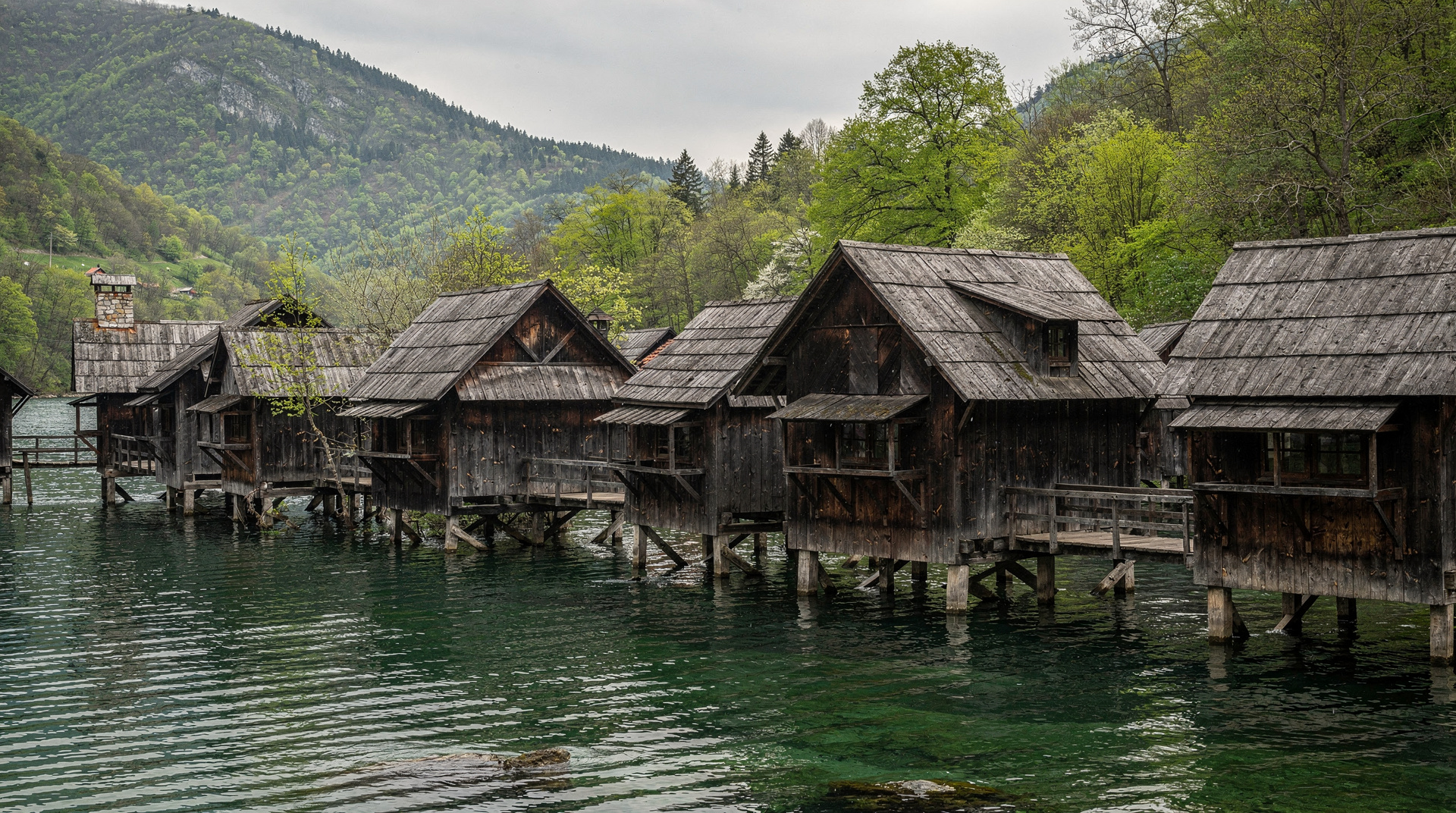
Two kilometres northwest of Jajce, the Pliva river widens into a pair of lakes — Malo Plivsko Jezero (Small Pliva Lake) and Veliko Plivsko Jezero (Large Pliva Lake) — that together form one of the most serene natural settings in central Bosnia. The Small Lake is famous for a cluster of medieval wooden watermills that stand at its outflow, their stilted structures built directly over the rushing water, and which have become one of the most reproduced images in Bosnian travel photography. The Large Lake, stretching several kilometres through a limestone valley, is largely undeveloped and excellent for swimming from June through August.
Getting to the Pliva Lakes
The lakes are accessed from the road northwest out of Jajce toward Banja Luka (the M-16.1). After crossing the town waterfall bridge, bear left and follow the lakeside road. There is a car park near the mill complex at the Small Lake outflow. The entire area is walkable from Jajce old town in about 25 minutes on foot, or 5 minutes by car.
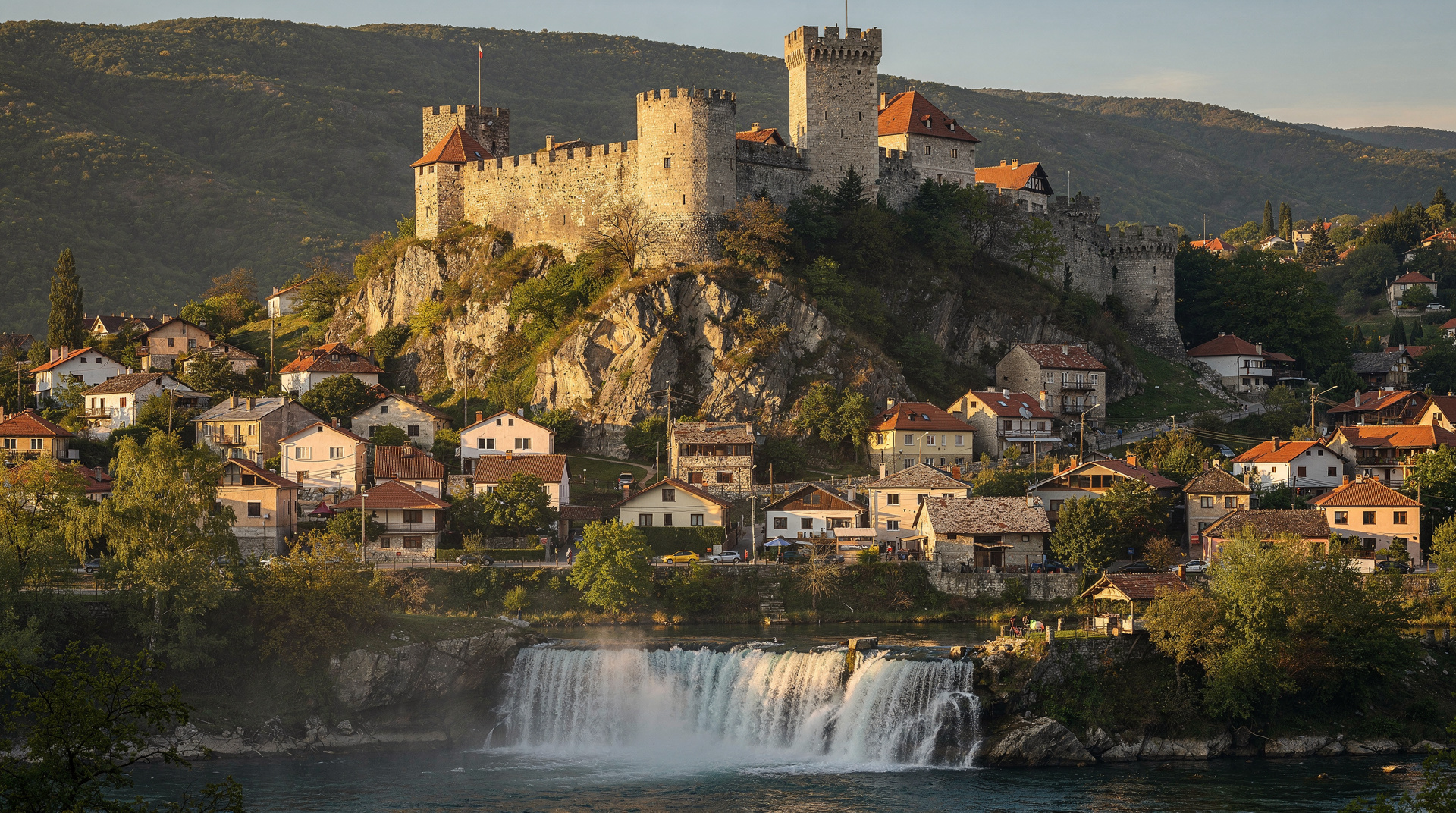
A guided excursion taking in Jajce, Travnik and the Pliva watermills covers the mills as part of a full central Bosnia day from Sarajevo, with a local guide explaining the history of the mills and their place in Bosnian rural life. This is the most efficient way to see the lakes alongside the town’s fortress and the Jajce waterfall.
The watermills of the Small Lake
The mill complex (mlinice) at the outflow of the Small Lake clusters a dozen or so wooden structures on a narrow strip of land between the lake surface and the fast-running channel below. Most are built on short wooden stilts directly over the water, with waterwheels operating on the current beneath. Some mills are privately owned and operational; during the summer tourist season a few grind grain on demonstration for visitors.
The photographic angle most commonly reproduced shows the mills reflected in the still lake surface, with the surrounding limestone cliffs and forested ridge as backdrop. Morning light from the east illuminates the scene best, particularly in May and June before the trees fully block the sky. Entry to the mill area is free from the lakeside path; there is a small charge (2 BAM) to access the mill owners’ private terrace.
The Jajce watermills guide traces the history of the mills from their medieval origins and explains which of the surviving structures are oldest.
Swimming in the Large Lake
The Veliko Plivsko Jezero is 3.5 kilometres long and up to 1.5 kilometres wide, filling a karst depression that was enlarged when the Pliva dam was constructed in the 1950s. The water is clear and cold in May, warming to a comfortable swimming temperature by late June. The best swimming spots are on the southern shore near the outflow; there are no formal beaches but several gravelly banks that local families use throughout the summer.
The lake has no commercial beach infrastructure — no sunlounger hire, no café on the waterfront. Bring your own food and water. The road along the southern shore is unpaved in sections but passable by car; a gravel track circles most of the lake for cyclists and walkers.
The Pliva waterfall (in Jajce town)
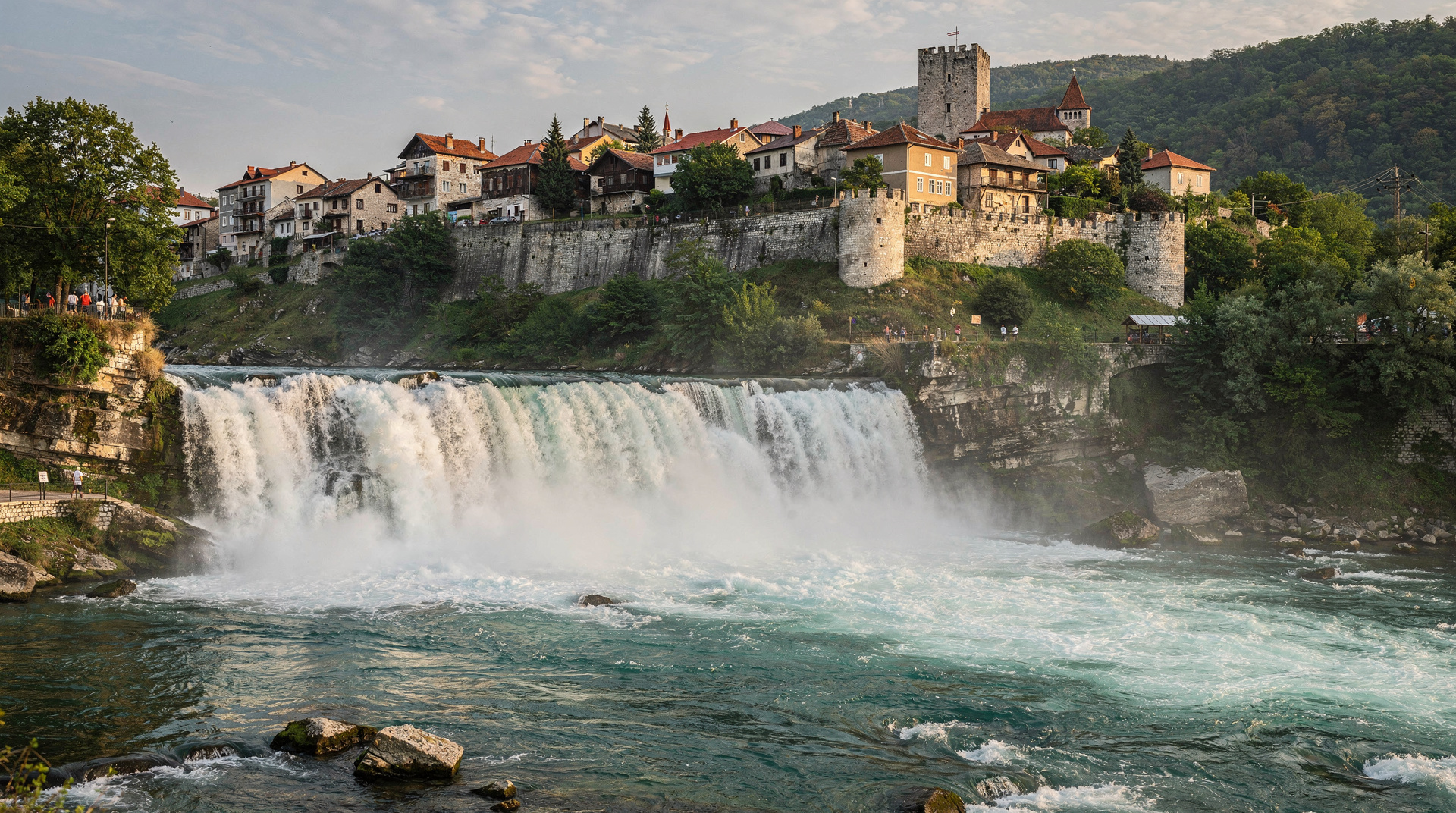
The Pliva waterfall itself is technically within the Jajce municipal boundary rather than at the lakes, but the two are part of the same hydrological system: water from the Pliva Lakes flows down through the town and over the 21-metre travertine drop at the edge of the old town. Our Pliva waterfall guide covers the falls in detail and explains how the travertine barrier formed. The falls are best visited before or after the lakes — together they form a coherent natural circuit that takes a comfortable half-day.
Combining with the broader day
Most visitors combine the Pliva Lakes with Jajce (see the fortress and waterfalls) and Travnik (Ottoman fortress, the Šarena džamija mosque, the Andrić museum) in a single long day from Sarajevo. The standard sequence is: Travnik in the morning, Jajce town and fortress in early afternoon, Pliva Lakes and mills in late afternoon before the return drive.
A day that includes all three can be long (12-13 hours return from Sarajevo) but is doable and rewarding. The Jajce, Travnik and Pliva waterfall day trip runs this circuit from Sarajevo with transport and guiding included.
Practical tips
- The mill area is best before 09:00 or after 17:00 to avoid coach groups that arrive mid-morning.
- The road around the Large Lake can be very quiet in the evening — a good time for a sunset drive along the water.
- There are no accommodation options at the lakes themselves; stay in Jajce or make this a day trip from Sarajevo.
- The Pliva river supports trout; local restaurants in Jajce serve fresh river fish that originates from the lake system.
- In early June the meadows around the lake margins are full of wildflowers — a particularly attractive time to visit.
The Pliva Lakes are not the most visited destination in Bosnia, which is precisely their appeal. A short detour from one of the country’s most interesting medieval towns, they offer swimming, mill photography and a quiet natural landscape that feels entirely off the standard tourist circuit.
Why the lakes exist and why the water is so clear
The lakes owe their present size to a hydroelectric dam built on the Pliva in the 1950s, which raised the water level of what were originally smaller natural lakes formed by travertine barriers — the same geological process that built the Jajce waterfall itself. Travertine deposits from dissolved limestone give the Pliva system its striking turquoise-green clarity, similar in origin to the barriers seen at Kravice Waterfalls further south, though the two systems are unconnected. Because the water is spring-fed and cold even in summer, algae growth stays low and visibility often exceeds several metres.
Central Bosnia beyond the lakes
Travellers using Jajce as a base for a night or two often extend outward to Travnik, the former Ottoman capital of Bosnia, or continue north toward Banja Luka for a different, more urban side of the Republika Srpska entity. For a structured route through the region, the Jajce, Travnik day trip guide and the Jajce fortress guide cover the logistics in more depth than this page.
How to pace a visit
The Pliva Lakes reward a slow rhythm. Rather than ticking off the mills and leaving, plan to arrive early, walk the lakeside path first while the light is soft, and only then decide whether the day calls for a swim. The mills are the obvious draw, but much of the pleasure here is in the in-between moments: the sound of water moving under the wooden floors, the smell of damp timber, the way the valley opens up as you leave the mill strip behind. If you rush from the car park to a single photograph and back, you will miss what makes the place different from the busier sights in town.
A sensible shape for the visit is simple. Start at the Small Lake and the mills, wander along the path at whatever pace suits you, then move on to the Large Lake if the weather is warm. If it is cool or overcast, the mills and the shoreline walk are enough on their own, and you can spend the saved time in Jajce itself. Many travellers find that the lakes work best as the quiet counterpart to the old town: the fortress and catacombs are about history and stone, while the lakes are about water, wood and air. Our Jajce fortress guide is the natural companion for the town half of the day.
Photography on and around the mills
Photographers tend to focus on the classic view of the mills from the lakeside, but it pays to move around. Low angles near the water give the stilted buildings a sense of height and emphasise how closely they sit to the current. Longer lenses compress the cliffs and forested ridge behind the roofs. On still mornings the reflection does half the work for you; on breezier days, look for texture in the weathered planks, the moss on the roof edges and the patterns the water makes as it slips past the wheels.
Be considerate around the mills. Some are privately owned and still in use, so treat them as working buildings rather than props. Ask before stepping onto anyone’s terrace, keep to the paths, and avoid blocking narrow walkways while you set up a tripod. A little courtesy goes a long way with the families who look after these structures. For the story behind the buildings, the Jajce watermills guide explains how they fit into village life, and the Pliva waterfall guide is worth reading before you photograph the falls in town, since the best viewpoints are not all obvious.
Walking and cycling the shoreline
The gravel track around the Large Lake is the quietest way to experience the valley. It is not a technical route, and ordinary shoes are fine for a short stroll, though sturdier footwear helps if the ground is wet. Cyclists will enjoy the mix of open stretches and shaded corners, and the lack of traffic makes it relaxed. Carry water and food with you, since there is nothing commercial along the way, and keep an eye on the weather because there is little shelter once you are away from the mills.
If you enjoy longer days outdoors, the lakes pair well with other quiet corners of the country. The hiking in Bosnia guide offers ideas for more demanding walks, while the kayaking guide and the family activities guide point to gentler ways of spending time on or beside the water. Families in particular will find the shoreline an easy, low-pressure outing, provided children are watched near the water and the current by the mills.
Seasons at the lakes
Late spring brings fresh green, high water and wildflowers in the meadows, which makes it a lovely time for walking and photography even if the water is too cold for swimming. Summer is the season for swimming and long evenings, and the lakes offer a welcome contrast to hot, busy towns elsewhere in the country; the Bosnia in summer guide helps you plan around the heat. Early autumn is calmer and the light turns warmer, a good moment if you prefer peace to swimming, and the Bosnia in autumn guide covers what else to combine with it. In winter the area is quiet and the mills look stark and atmospheric, but comfort drops and some services in town may be reduced, so check the Bosnia in winter guide before committing. For an overview across the whole year, see the best time to visit Bosnia.
Reaching Jajce and moving on
Most visitors arrive in Jajce by road, and the lakes are close enough that a car is convenient but not essential. If you are driving, the driving in Bosnia guide and the car rental guide cover what to expect on the road. If you prefer not to drive, the buses in Bosnia guide and the broader getting around Bosnia guide explain the alternatives, and a guided excursion removes the logistics entirely.
From Jajce you can continue to Travnik, return toward Sarajevo, or fold the lakes into a longer route. The western Bosnia and Krajina itinerary and the seven-day Bosnia itinerary both show how a visit here can fit into a wider trip, and the Jajce and Travnik day trip guide lays out a compact version. For a traveller’s account of the town and its surroundings, the blog post on Jajce, the royal town adds a personal perspective.
Respecting the place
The lakes are a living landscape, not a theme park. Take your rubbish with you, since bins are scarce away from the mills, and keep noise low so that the valley stays peaceful for everyone, including the local families who swim here. Stay on marked paths and tracks, and as a general rule in Bosnia, avoid wandering into unmarked ground; the landmine safety guide explains why this habit matters across the country. Treat the mills with care, support local owners where a small fee is asked, and you will leave the place as you found it.
Frequently asked questions about Pliva Lakes
Can you swim at the Pliva Lakes? Yes, mainly in the Large Lake (Veliko Plivsko Jezero), which warms to a comfortable temperature by late June. The Small Lake around the watermills is better for photography than swimming given the current near the mill outflow.
How much time do the Pliva Lakes need? Budget an hour or two for the mill area and a further hour if you plan to swim or walk the lakeshore track — a comfortable half-day when combined with the nearby Jajce waterfall.
Top experiences
Bookable activities with verified prices and instant confirmation on GetYourGuide.