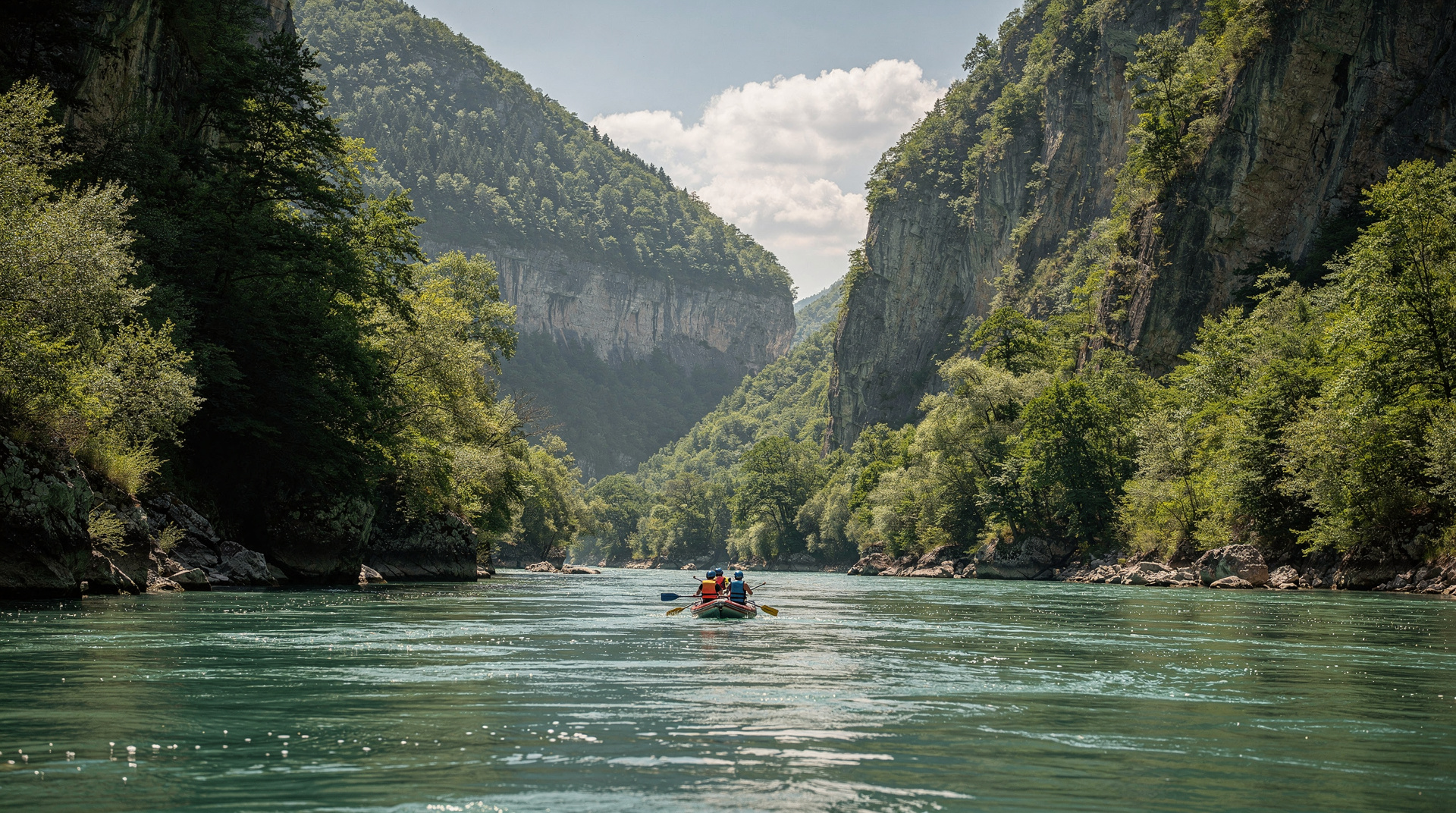
The Neretva canyon — adventure between Sarajevo and Mostar
The most common way to travel between Sarajevo and Mostar is by bus: two and a half hours on the M-17 highway, following the Neretva River south through its canyon. Most passengers watch the scenery and do not stop.
This is a shame, because the canyon between these two cities is one of the better adventure corridors in the Balkans — and the town of Konjic, roughly halfway, is one of the most underestimated places in Bosnia.
| At a glance | |
|---|---|
| Where | Konjic, roughly 65km south of Sarajevo on the road to Mostar |
| Cost | Rafting around 55-70 EUR/day; Tito’s Bunker around 25 BAM |
| Time needed | A full weekend (two nights) covers the bunker, rafting and both towns |
| Getting there | Bus or car from Sarajevo (around 1-1.5 hours) |
| Best time | May-June for high water rafting; September-October for lower, milder rapids |
The canyon as landscape
The Neretva rises in the mountains of eastern Herzegovina and flows northwest through Bosnia before curving south into Herzegovina and eventually into the Adriatic near Ploče. The section from Mostar north to Sarajevo cuts through limestone karst terrain — canyon walls rising steeply from the river, the water a dark green in the gorge shadows and a brighter turquoise where the sun reaches it.
The railway line between Sarajevo and Mostar (the spectacular, slow, beautiful Sarajevo-Mostar train that runs seasonally) hugs one side of the canyon. The road runs alongside it. Between them, the river.
From a car or bus window, this is beautiful. From a raft, in the water, it is something else.
Konjic
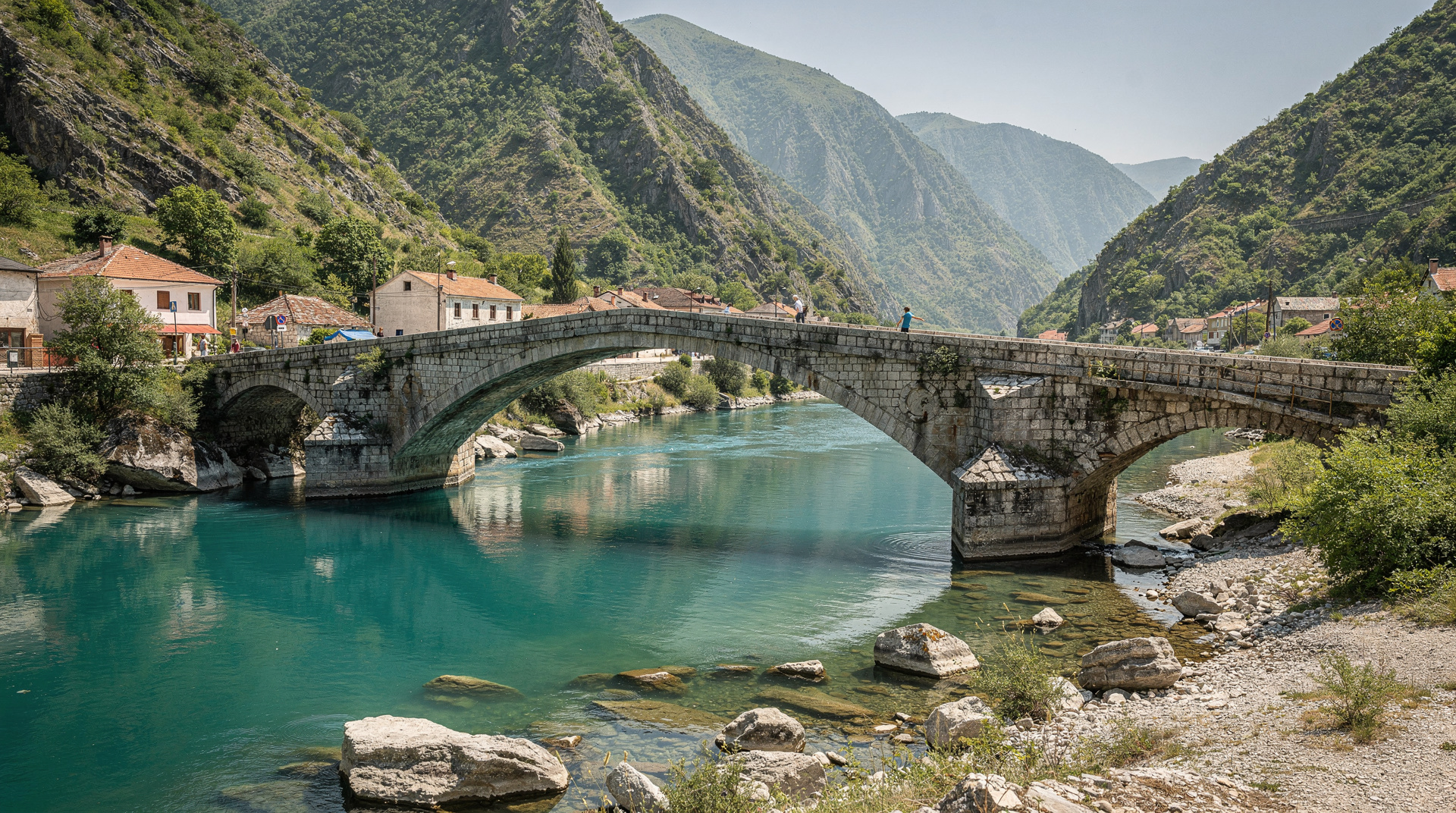
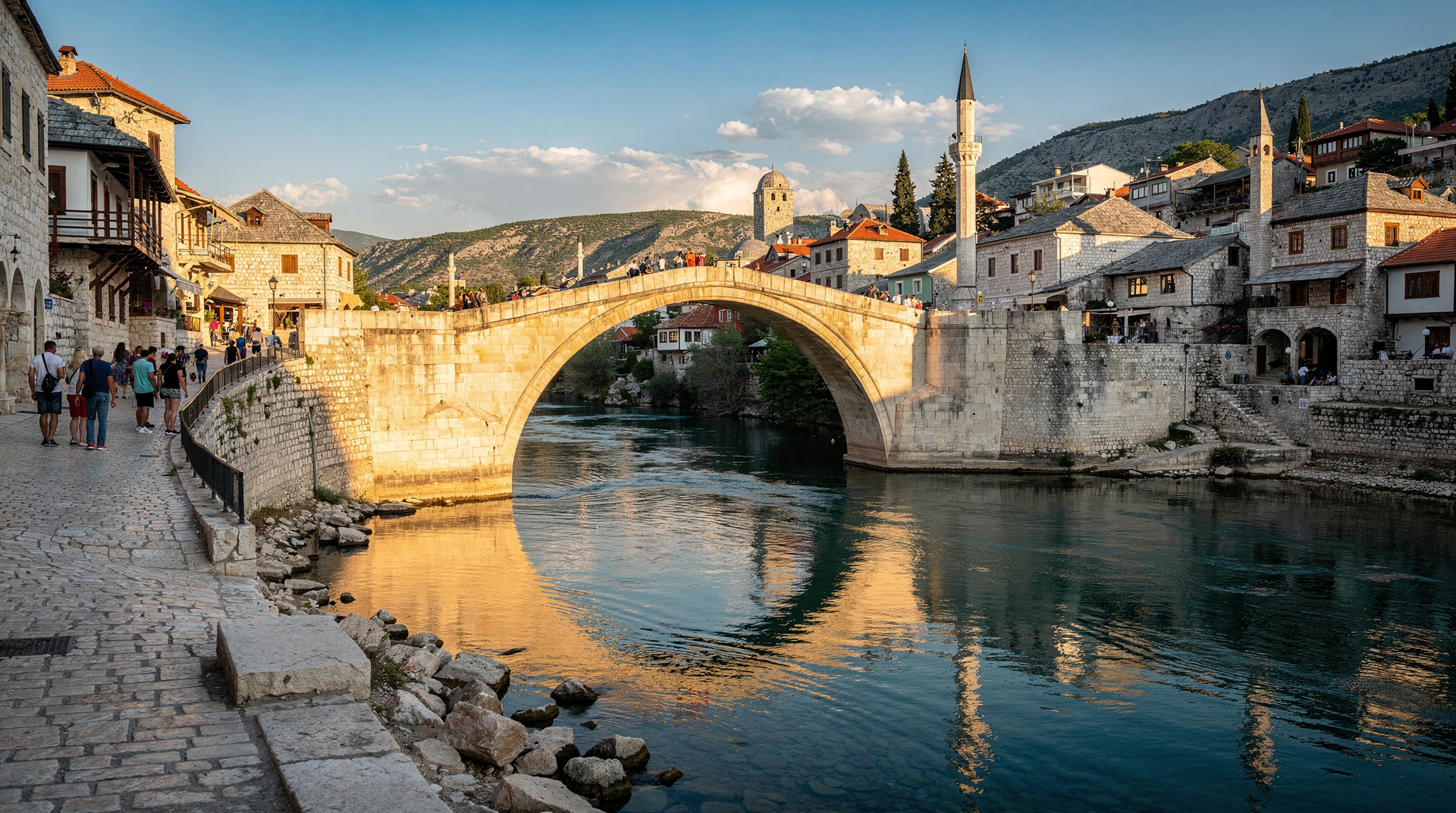
Konjic sits at the confluence of the Neretva and Tresanica rivers, roughly 65 kilometres south of Sarajevo. The town has been there in some form since Roman times; the current bridge — a seventeenth-century Ottoman stone structure with nine arches — is one of the most graceful in Bosnia.
Stop in Konjic. Walk across the bridge. Eat at one of the restaurants on the river terrace — trout is a reliable choice, the fish coming from the same cold mountain rivers you have been driving alongside. The town is not large, but it has a proper old bazaar area and a character that day-trippers on the Sarajevo-Mostar express tend to miss.
Tito’s Bunker
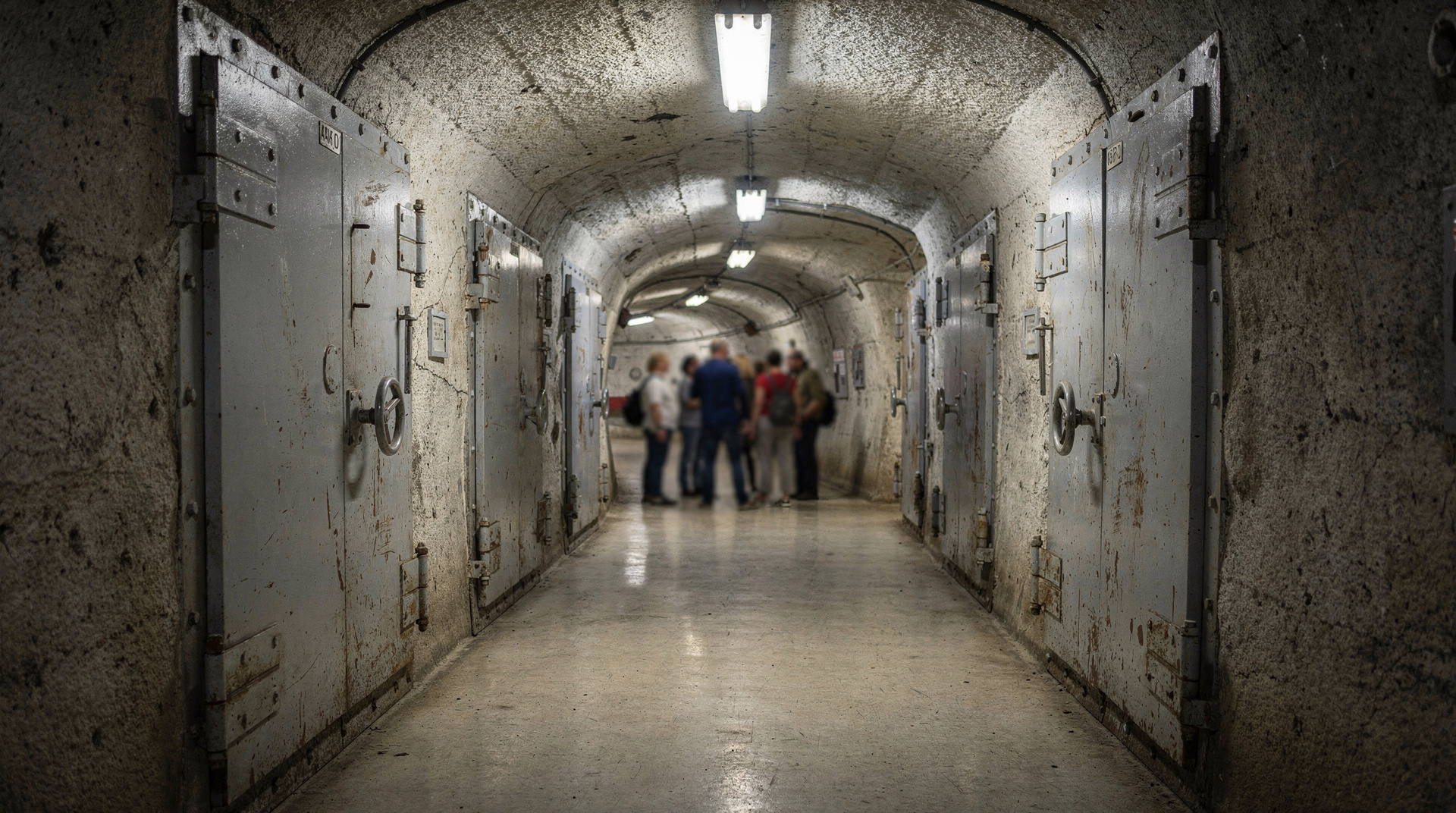
Five kilometres south of Konjic, buried under a hill called Bare, is ARK D-0: Tito’s Cold War nuclear bunker. The facility was built over 26 years in total secrecy, completed in 1979, and kept classified until 1992. It was designed to shelter the Yugoslav leadership and about 350 personnel through a nuclear strike and its immediate aftermath.
The scale of it, when you walk through it, is extraordinary. Six thousand square metres of corridors, briefing rooms, dormitories, communication centres, Tito’s personal apartments (with his-and-hers bathroom), and a meeting room large enough for the full Yugoslav leadership. The architecture is mid-century utilitarian with occasional flourishes — the furniture in Tito’s apartments is comfortable rather than spartan.
A visit to Tito’s Bunker (ARK D-0) requires advance booking — guided tours run at set times, and it sells out on busy weekends. The full Tito’s Bunker guide has current booking information.
Rafting the Neretva
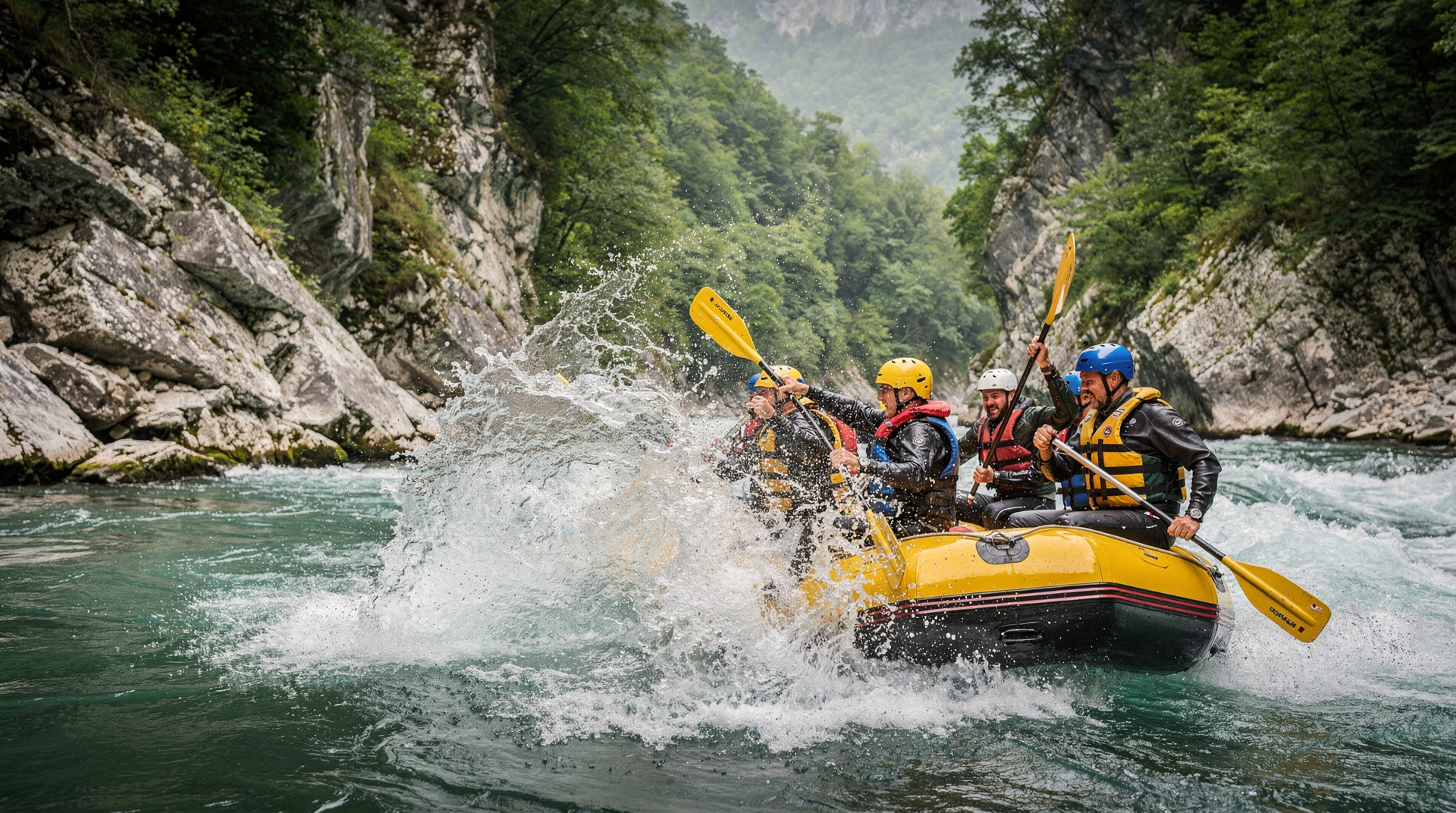
The Neretva rafting between Konjic and the Jablanica reservoir is the flagship adventure of the canyon: 22 kilometres of river at grades II to IV, through the limestone gorge below Konjic.
May and June are the best months — the snowmelt from the mountains means high water levels and the most powerful rapids. September and October remain good with lower but still workable levels.
A full-day trip typically includes lunch at a riverside camp. The logistics are straightforward: a Neretva rafting adventure from Konjic picks you up in the morning and returns you to Konjic in the afternoon.
The canyon from the water is a different experience than from the road above. The walls look higher. The water feels colder. The rapids, at grade III–IV, are not technically demanding but are genuinely exhilarating for first-timers.
Canyon hiking
The Neretva canyon has some hiking potential that is not as well-documented as the rafting. The banks above Konjic and the trails leading to viewpoints above the gorge give perspectives that neither road nor river provides. Some of these trails are unmarked; local guides (available through rafting operators) know them.
The mountain above Konjic to the east is part of the Prenj massif — the so-called “Bosnian Himalaya,” a high ridge of naked limestone peaks that is excellent for experienced hikers. The approach from the Neretva valley involves significant elevation gain but the views from the ridge are among the best in the country.
Rafting options compared
| Option | Length | Rapid grade | Best for |
|---|---|---|---|
| Neretva (Konjic to Jablanica) | 22km, full day | II-IV | First-timers wanting genuine excitement without technical difficulty |
| Una River (Bihać) | Varies, half to full day | II-III | Milder water, more scenic canyon in the northwest |
| Tara River (cross-border) | Multi-day possible | III-IV | Experienced rafters wanting a longer, wilder trip |
For most visitors based around Sarajevo or Mostar, the Neretva run near Konjic is the most convenient — it slots directly into the route between the two cities rather than requiring a separate trip north or south.
Building an adventure corridor trip
A two-night itinerary based around the canyon:
Night 1 in Konjic: Arrive from Sarajevo, visit the Ottoman bridge and the old bazaar, dinner on the river. Book Tito’s Bunker for morning.
Day 2: Tito’s Bunker in the morning (3 hours including travel). Afternoon: rafting the Neretva (4–5 hours). Return to Konjic, or push south to Mostar.
Night 2 in Mostar: The canyon opens to the Mostar valley. Old bridge and the evening old town.
This covers the canyon’s two major cultural sites (Ottoman Konjic + the Bunker) and its primary adventure activity (rafting) in a tight, sensible two-day structure. The Bosnia adventure itinerary builds this into a longer route.
Practical notes
Getting to Konjic: 65 kilometres from Sarajevo by road (around 1 hour by car, 1.5 hours by bus). Buses run frequently on the Sarajevo-Mostar route and stop in Konjic.
Tito’s Bunker booking: Advance booking strongly recommended. The bunker website (www.bihdestinations.ba) handles reservations; alternatively, book through local operators in Konjic. Cost around 25 BAM.
Rafting operators: Several in Konjic town; prices around 55–70 EUR for a full-day trip including lunch. Booking ahead in May–June is wise as tours fill.
Driving: The canyon road is scenic but winding. Expect the drive to feel longer than the map distance suggests.
Frequently asked questions about Neretva canyon — adventure between Sarajevo and Mostar
Is the Neretva canyon suitable for a day trip from Sarajevo? Yes for a single activity (either Tito’s Bunker or rafting), but combining both comfortably needs an overnight in Konjic rather than a rushed single day.
Do you need rafting experience for the Neretva trip? No — grade II-IV rapids near Konjic are exhilarating but not technically demanding, and guided trips are suitable for first-timers with basic swimming ability and a guide’s safety briefing.
Top experiences
Bookable activities with verified prices and instant confirmation on GetYourGuide.