Trebinje — the other Herzegovina
Every person I have spoken to who visited Trebinje said the same thing: they wished they had stayed longer.
At a glance
| Where | Trebinje, southernmost Herzegovina, near the Montenegro border |
| Cost | Wandering the old town and monastery hill is free; wine tastings and meals run modest local prices |
| Time needed | Half a day minimum, one to two nights for the full experience |
| Getting there | Around 45 minutes by car from Dubrovnik, 1h40 from Mostar, 3 hours from Sarajevo |
| Best time | Late spring to early autumn, when café terraces and the wine harvest (September) are at their best |
The town is 35 kilometres from Dubrovnik — close enough that a day trip is straightforward — and yet it sits in a part of Herzegovina that receives only a fraction of the attention given to Mostar or Sarajevo. There are no UNESCO inscriptions here (yet). There are no divers on famous bridges. There are cafés full of local people on a weekday afternoon, wine from grapes grown on the karst slopes above the valley, a sixteenth-century walled town built beside one of the more beautiful rivers in the south Balkans, and a hilltop monastery whose profile looks remarkably like something in Kosovo.
Trebinje is one of the genuinely surprising places I have found in the western Balkans.
Getting there
By car from Dubrovnik: roughly 45 minutes, crossing the border at Klek. The road is good and the border crossing is usually fast outside summer peak hours.
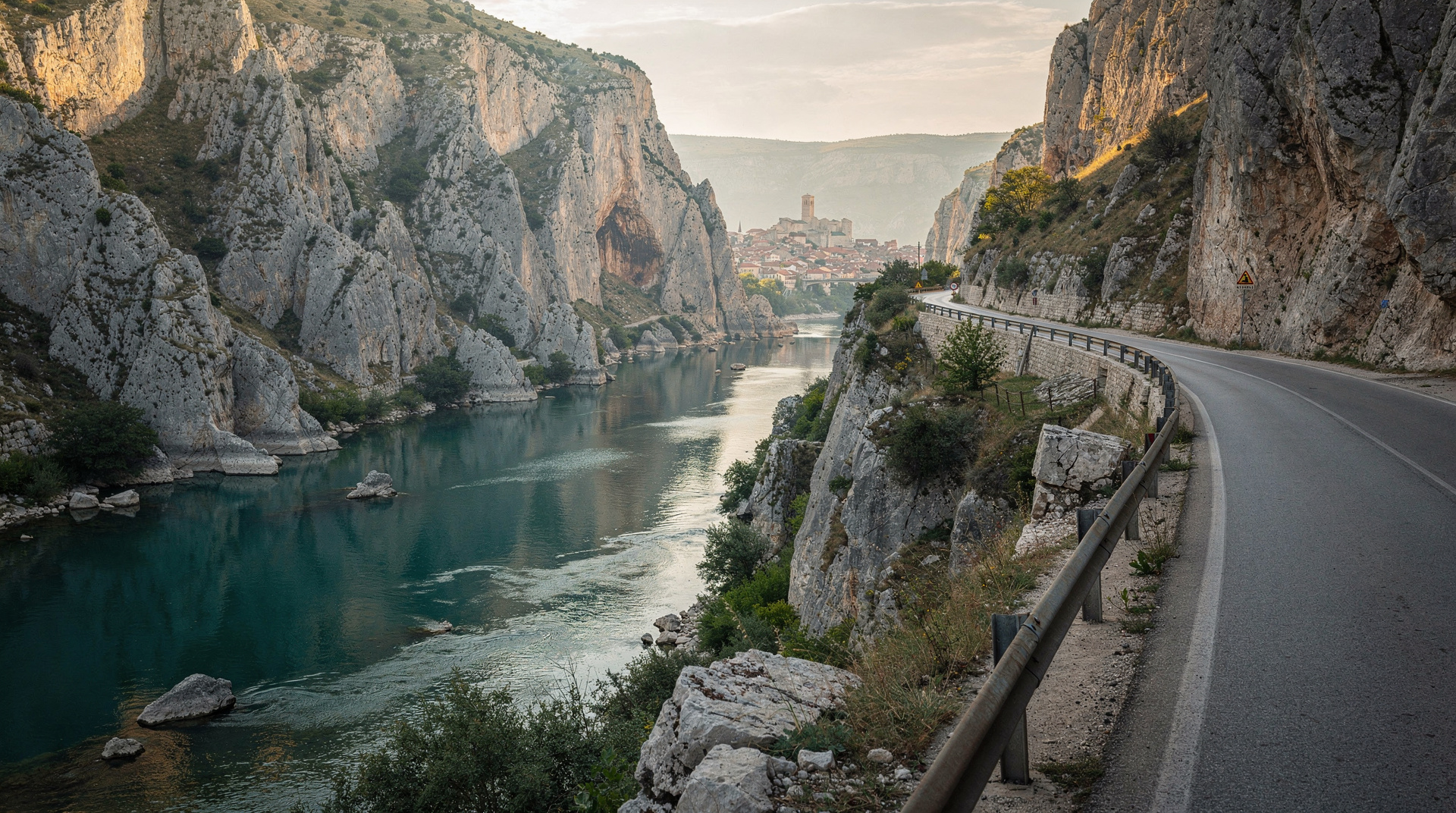
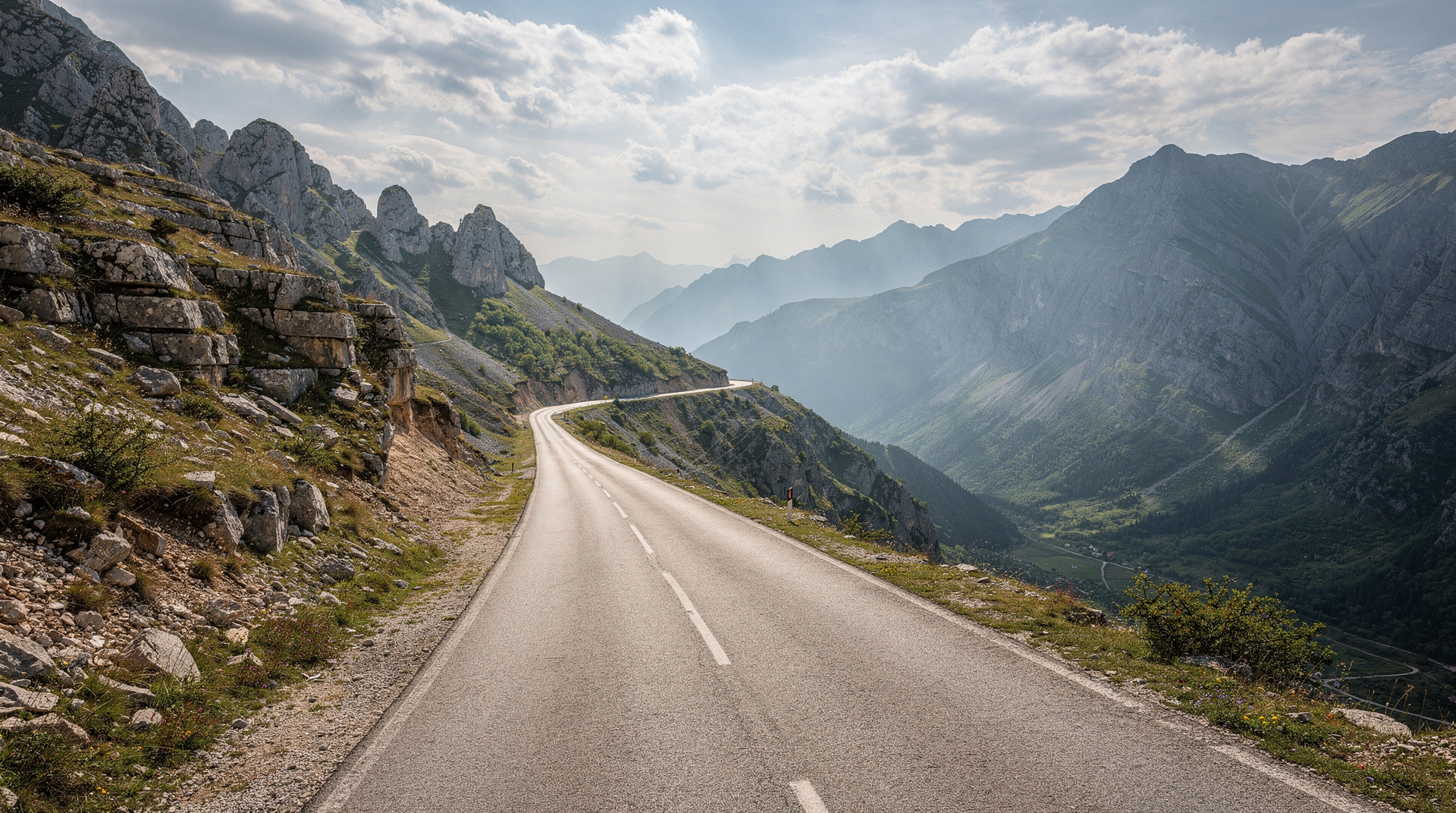
By car from Mostar: around 1 hour 40 minutes east along the valley floor — a beautiful drive through vineyards and karst.
From Sarajevo: about 3 hours. Not really a day trip from the capital.
Some operators run day tours from Dubrovnik that include Trebinje alongside Mostar — see the Balkans multi-country guide for context on combining sites.
If you would rather not drive, a guided option from the coast is a Trebinje tour with private transport and a wine tasting, which fits the town’s two main draws into one outing. Another route is a private tour into Bosnia and Herzegovina, useful if you want to set the pace and the stops yourself.
The old town
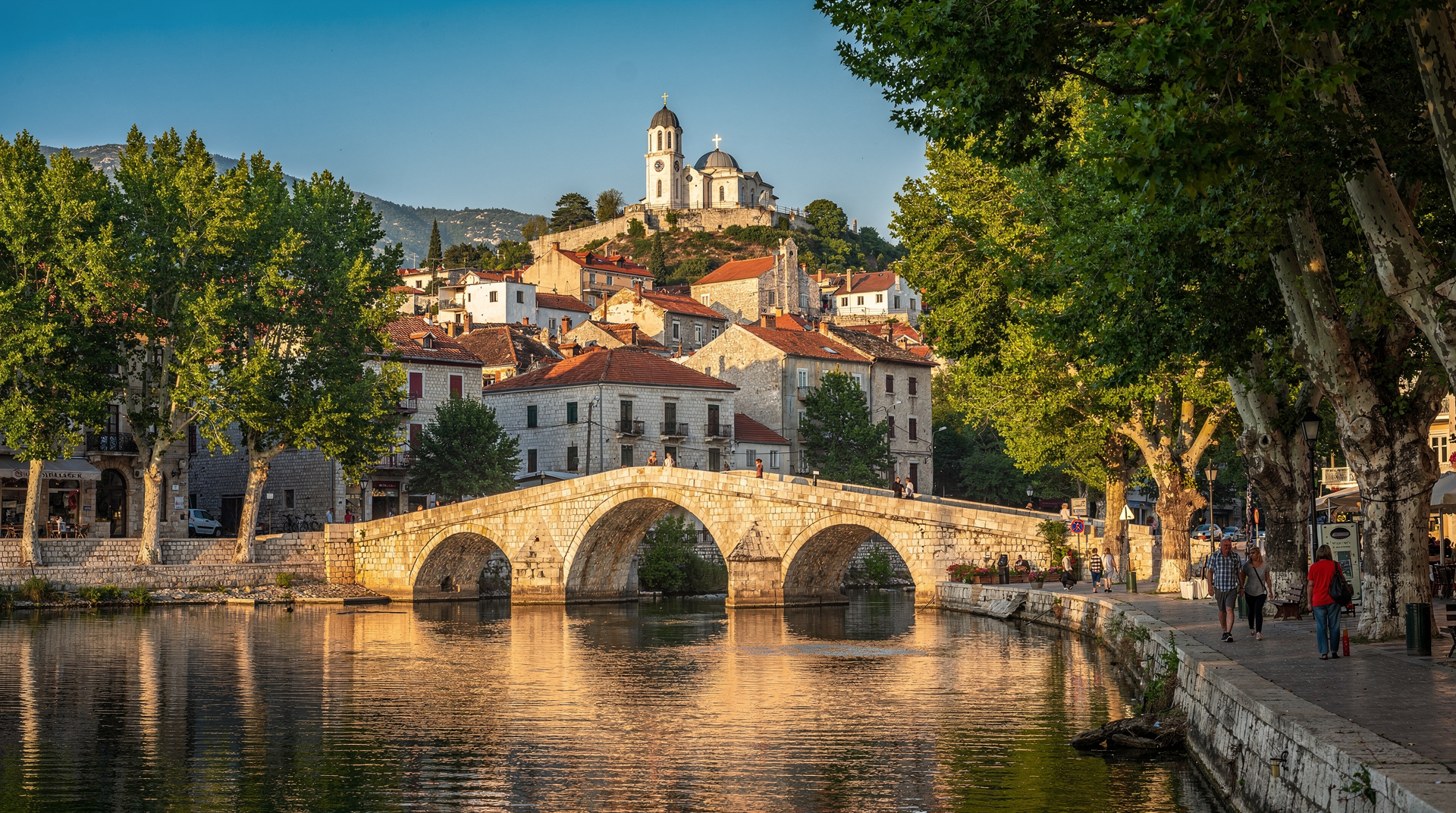
Trebinje’s Stari Grad is walled — literally, with stone fortification walls built by the Ottomans and maintained through subsequent centuries. The walls enclose a compact old town on a promontory above the Trebišnjica River: stone streets, a main square shaded by enormous old plane trees (platane), and buildings that are largely intact despite the upheavals of the twentieth century.
The central square, Trg slobode, is one of the most pleasant places to sit in Herzegovina. Wide, shaded, with outdoor café tables on most sides. On a September morning it has the quality of a town that has decided to take life at a reasonable pace.
The old town streets behind the square are quieter still — residential rather than tourist, with the odd artisan shop or small restaurant. Unlike Mostar’s old bridge area or Sarajevo’s Baščaršija, there is no tourist tide here. The vendors are not angling for your attention.
The wine
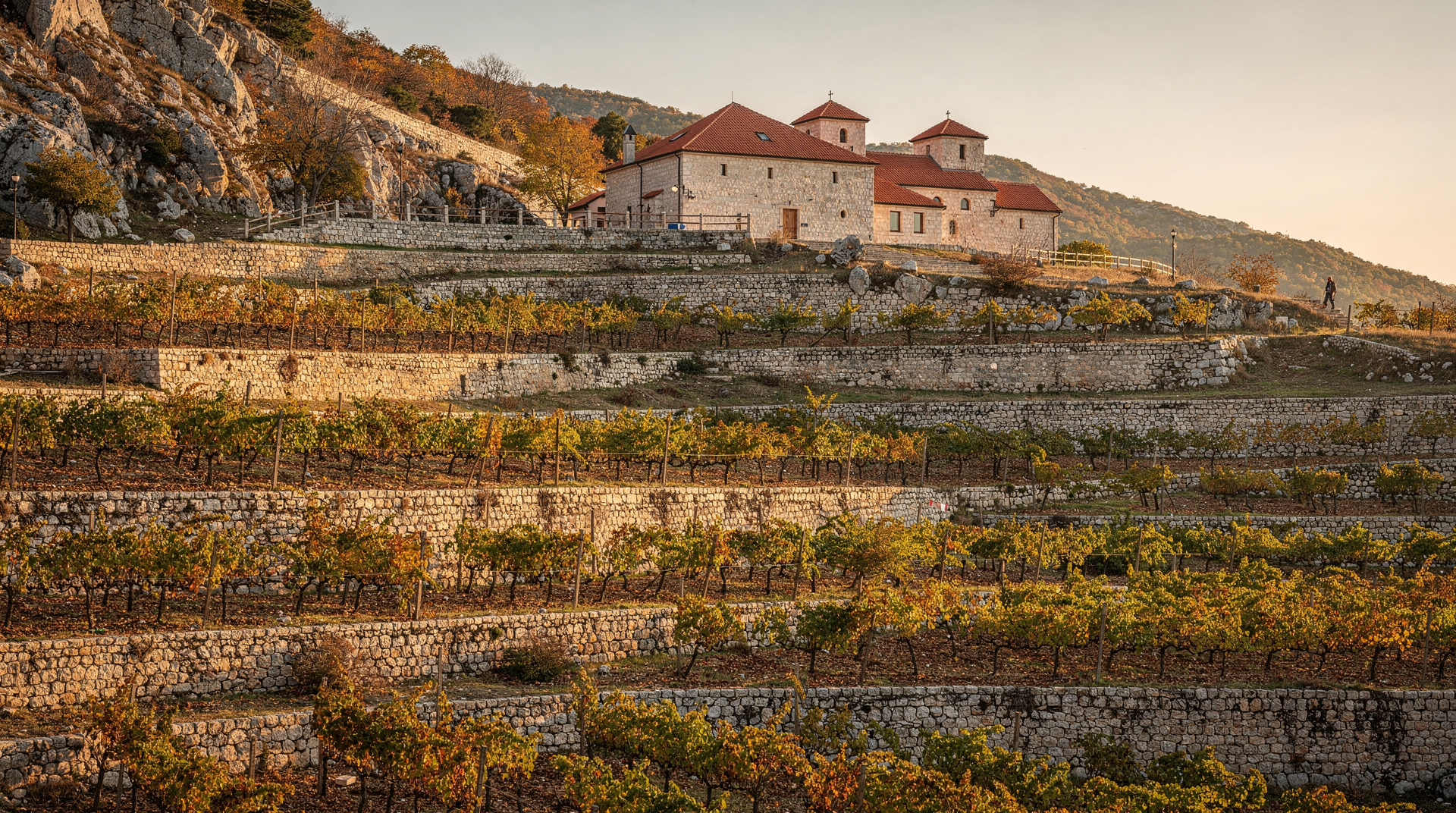
The Trebinje valley sits in a karst basin with a Mediterranean microclimate: 300 days of sun per year, warm dry summers, and limestone soils that produce grapes of high quality. The local varieties are Žilavka (white) and Blatina (red), both specific to Herzegovina.
Žilavka is a revelation if you haven’t encountered it before: dry, aromatic, with a mineral quality that recalls the karst terrain it grows in. Blatina is rougher and more tannic, better with grilled meat.
There are several small wineries in the valley that offer tastings. Vukoje, one of the oldest established wineries, is just outside town and worth visiting. Wine with a restaurant meal in Trebinje typically costs 5–10 BAM per glass.
Hercegovačka Gračanica
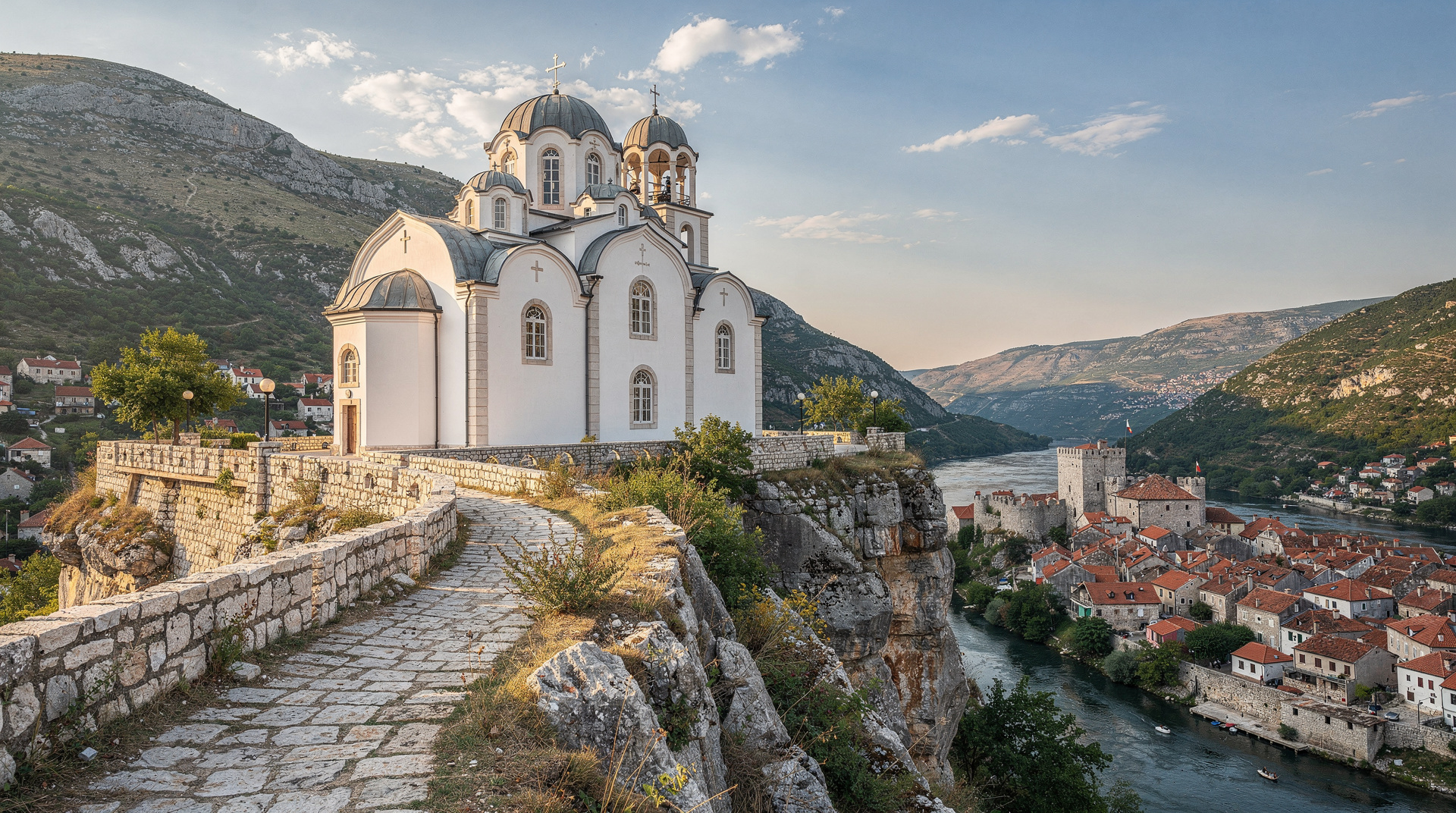
On the Crkvina hill above the old town stands Hercegovačka Gračanica: a Serbian Orthodox church built between 1996 and 2000 in conscious imitation of the medieval Gračanica Monastery in Kosovo. The resemblance is deliberate and striking — the same cross-in-square plan, the same cluster of domed towers.
The church was built as a memorial to the poet Jovan Dučić, a native of Trebinje who spent his later life as a Yugoslav diplomat and died in the United States in 1943. His remains were brought back here.
The view from the hill over the Trebinje valley — the town below, the Trebišnjica curving through the karst, the mountains of Montenegro to the south — is one of the better elevated views in southern Bosnia. The walk up takes about 15–20 minutes from the old town.
The Trebinje wine and monastery guide covers both the church and the wine region in more detail.
Eating and drinking
Trebinje’s restaurant scene is small but solid. Expect:
- Fresh trout from the Trebišnjica and Bregava rivers
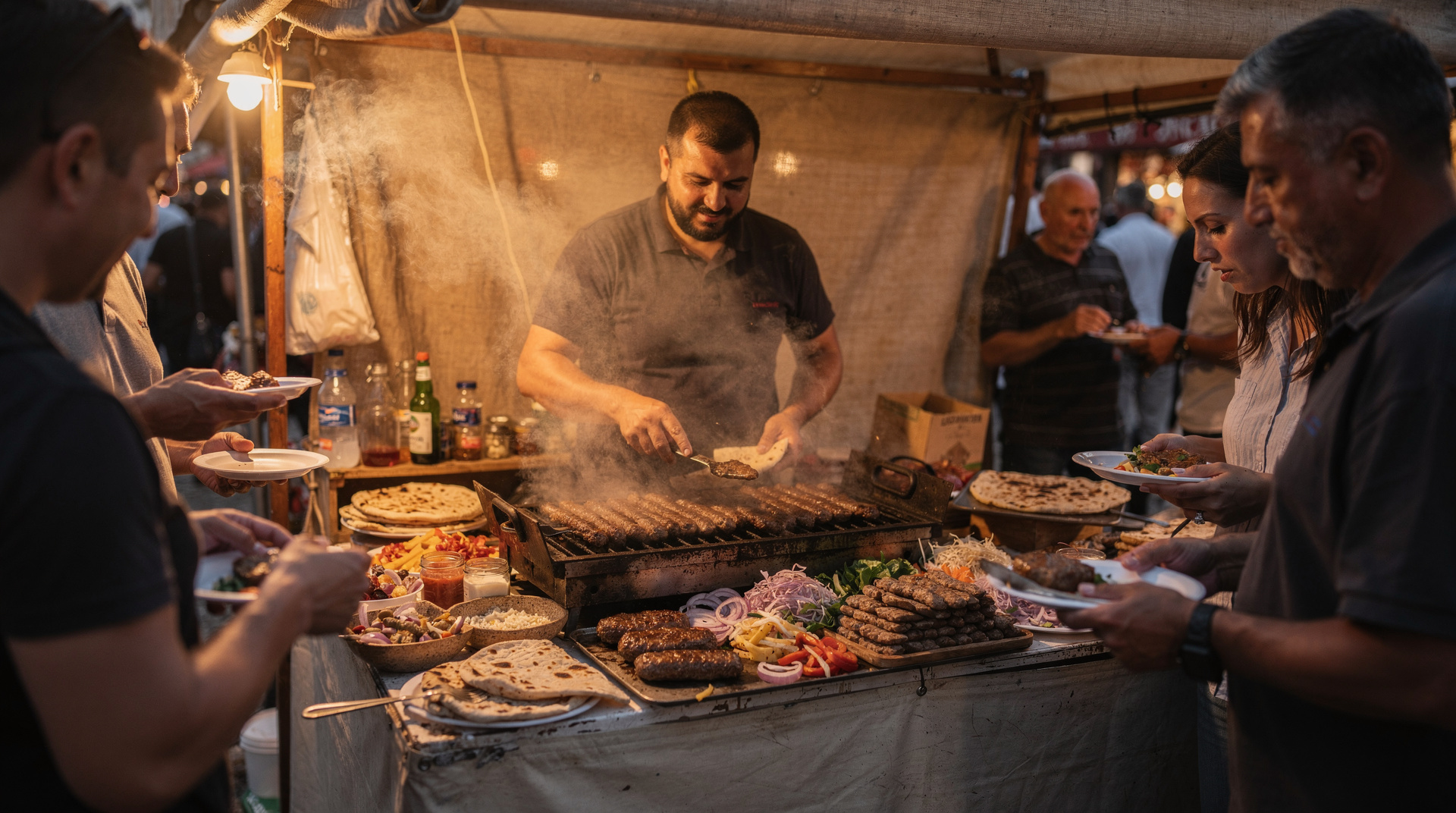
- Lamb dishes in the Herzegovinian tradition (roasted in a sač — a clay bell over embers)
- Local cheese and cured meats from the hills
- Žilavka by the glass at most restaurants for 4–6 BAM
The restaurants on the river terrace below the old town walls have outdoor seating with views over the water. Book for dinner on weekends in summer; at other times, simply turn up.
How long to stay
Half a day is the minimum; a full day is better. Staying one night changes the experience significantly — you see the town in the morning, when locals are going about their lives rather than sitting in tourist mode, and you can eat a proper dinner without rushing back to Dubrovnik.
Two nights is the sweet spot if you want to include a winery visit, the monastery, a walk along the Trebišnjica, and a relaxed morning in the old town.
Combining with other destinations
Trebinje pairs naturally with Dubrovnik — close enough to be a day trip, interesting enough to stay. It also makes a logical stopping point on the southern Herzegovina route that connects Mostar and the Adriatic coast.
If you are approaching from Montenegro, the border crossing into Bosnia near Trebinje is the main entry point for a route through southern Herzegovina — see the Bosnia from Kotor guide.
The one honest caveat
Trebinje is in the Republika Srpska entity of Bosnia-Herzegovina. The political context — the town was on the RS side of the front during the war, and its Serbian Orthodox cultural identity is prominent — is worth knowing about. It is not relevant to the visitor experience in any threatening or uncomfortable way. But it explains some of the demographic and architectural character of the town, which is different from the predominantly Bosniak cultural identity of Mostar or Sarajevo’s old town.
Bosnia is a complicated country, and Trebinje is part of that complexity. Being aware of it doesn’t diminish the enjoyment; it contextualises the walled old town, the monastery on the hill, and the comfortable coexistence of fine wine and complicated history.
Comparing Trebinje’s approach routes
| Route | Time | Notes |
|---|---|---|
| Dubrovnik → Trebinje | ~45 min | Border crossing at Klek, usually fast outside peak summer hours |
| Mostar → Trebinje | ~1h40 | Scenic valley drive through vineyards and karst |
| Sarajevo → Trebinje | ~3 hours | Long for a day trip; better paired with an overnight |
| Kotor/Montenegro → Trebinje | Variable | Main southern entry point into Bosnia, see the Bosnia from Kotor guide |
Beyond the old town
If you have more than a day, Trebinje makes a reasonable base for exploring the wider Herzegovina wine region — the karst valleys around the town hold several more producers beyond Vukoje, and many welcome visitors without a reservation outside peak season. The Trebinje wine region guide has specifics on which wineries to prioritise.
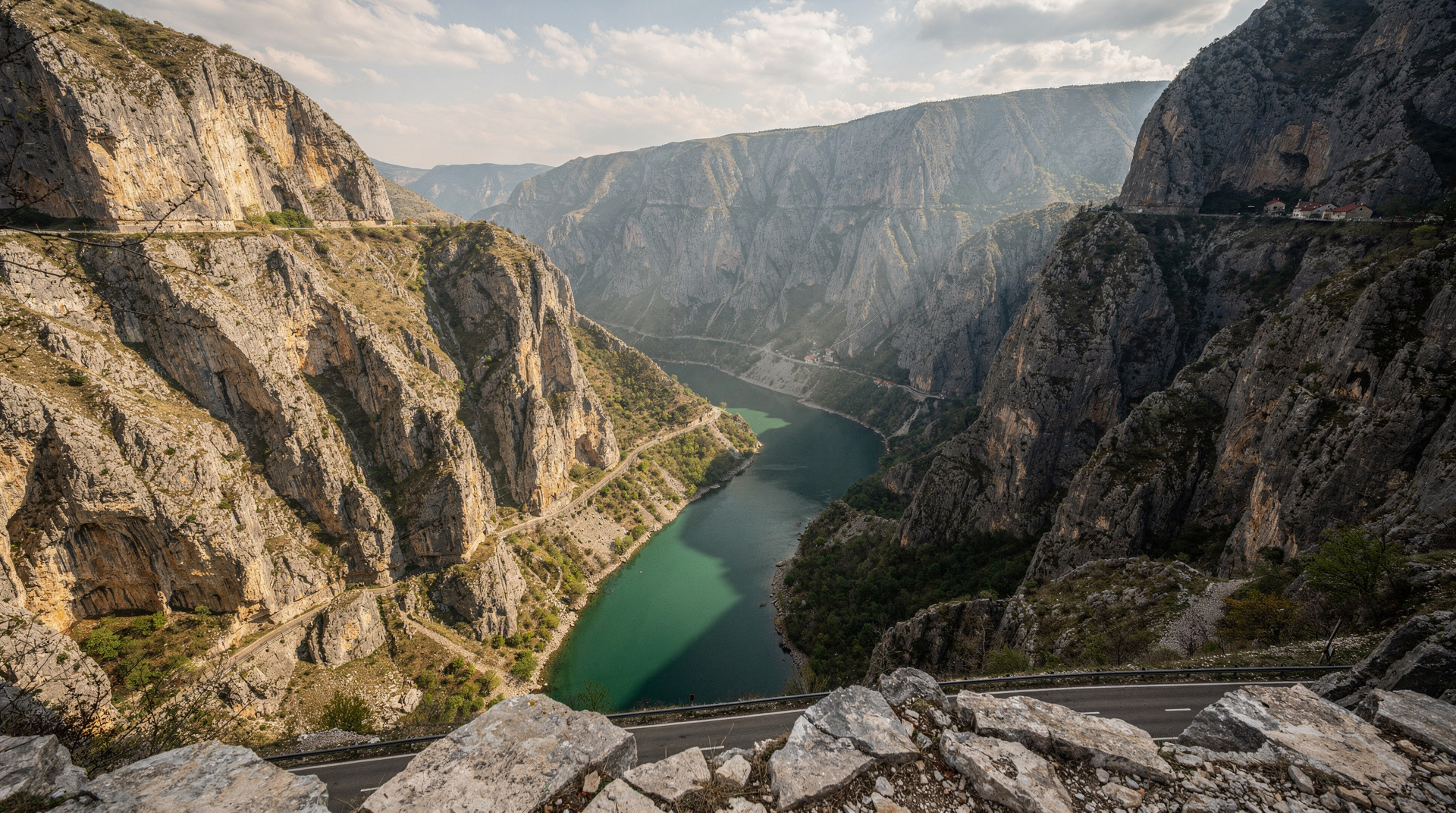
For travellers building a longer Herzegovina route, Trebinje also sits reasonably along the way to Blagaj and the Buna spring, or further into the Neretva canyon toward Mostar — worth considering if you are not backtracking to Dubrovnik the same way you came.
Slowing down in southern Herzegovina
The real appeal of Trebinje is what it asks of you: very little. You do not need a ticket, a schedule or a plan. Order a coffee on the square, watch the town go by, then decide whether the next hour belongs to the walls, the river or the hill. Visitors who arrive straight from the crowds of Stari Most often say the contrast is the best part.
If you want the wider picture of how the town fits into the country, the Bosnia travel guide gives the overview, and the Ottoman heritage guide explains why a walled town like this one looks the way it does. For the layers of history behind the landscape, Bosnia history for travellers is a useful companion read, and the Yugoslav wars explained helps with the context mentioned in the caveat above.
Practical notes for the drive
Most visitors reach Trebinje by road, so it is worth reading the driving in Bosnia guide before you set off, and the Croatia to Bosnia driving guide if you are coming from the coast. If you do not have your own vehicle yet, the car rental guide covers what to think about. Travellers relying on buses should check the buses in Bosnia guide and plan with extra margin, since services are thinner than on the main Sarajevo and Mostar corridors.
Fitting Trebinje into a longer trip
Trebinje works well as a quiet stop in a bigger loop. The Herzegovina weekend itinerary shows how to string together the region’s highlights, while the Croatia and Bosnia two-week itinerary places it between the Adriatic and the interior. If you are still deciding how long to give the country, how many days in Bosnia will help you weigh a night here against another night elsewhere. Wine drinkers can also read the Trebinje destination page for a shorter summary, and anyone starting from the coast may like the Split to Sarajevo route for ideas on where to break the journey.
Who Trebinje suits
Trebinje is not for travellers chasing a checklist of famous sights. There is no equivalent of Stari Most or the Baščaršija bazaar here. What it offers instead is the pace of a real Herzegovinian town: a plane-tree square, decent wine, a monastery view, and none of the tour-bus choreography of Mostar. If that sounds appealing, it delivers; if you are short on time and want maximum famous sights per day, Trebinje will feel like a detour.
Frequently asked questions about Trebinje — the other Herzegovina
Is Trebinje worth visiting if I only have one day in Herzegovina? If it’s your only day, prioritise Mostar or Blagaj first — Trebinje is better as an overnight add-on or a relaxed day trip from Dubrovnik rather than a first taste of Herzegovina.
Can I visit Trebinje without a car? It’s possible via organised day tours from Dubrovnik or Mostar, but public bus connections are limited; a car gives far more flexibility for wineries and the monastery hill.
Top experiences
Bookable activities with verified prices and instant confirmation on GetYourGuide.